Would you like a peaceful escape from the city without leaving Kathmandu? The Jamacho Gumba one day hike is just the place for you. The Jamacho Gumba One Day Hike is one of the most easy and peaceful hikes near Kathmandu. The hike is located in Shivapuri Nagarjun National Park and it is a short hike to escape the busy city. The hike is a combination of nature, culture, and mountain views.
Jamacho Gumba
Jamacho Gumba is a peaceful religious place, located at 2,128 metres above the sea level. The monastery is decorated with colorful prayer flags and a small stupa which gives a relaxed ambience. Locals will often come up to pray and meditate. Visitors are asked to remove shoes and not speak while walking inside the jamacho gumba. Once you reach the top, it no longer feels like you are in a busy city and the mountain top becomes a perfect place to rest, view and enjoy the journey.
The Hike: Location & Access
From Fulbari Gate near Balaju Bypass, where your journey will begin, just a short travel from 20–30 minutes from the center of Kathmandu.
What You’ll Need:
- Bring some cash for the park entry fee (you’ll pay this right at the gate)
- Remember your government-issued ID the army checkpoint checks for this before entry
- The park gate opens around 7:00 AM and closes by 5:00 PM
Here’s something important to keep in mind: the park gates close at 5:00 PM, no exceptions. This means you’ll want to plan your hike with enough buffer time to make it back comfortably.
The Hike: Distance and Time
The trek to Jamacho Gumba is about 5 kilometers of gently inclined uphill, making this an easy uphill climb. Plan for somewhere in the range of 2 to 3 hours to get to the gumba as this will depend on how often you stop to rest or enjoy the views.
The downhill is obviously quicker, but it should give you an idea that you are looking at about 4 to 6 of actual hiking time for the entirety of the return trip. There will be an opportunity to enjoy the peaceful environment at the top, check out the Gumba, and be back to the gate in plenty of time for them to close.
The Hike: Nature Environment
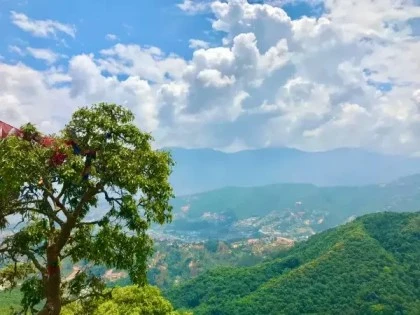
As the hike starts uphill you will hike through forests of pine and oak, bamboo and rhododendron. You will hear birds singing and see butterflies dancing during the hiking. Occasionally, you can also see monkeys in the trees or wild boar hiding in the bushes. The forest is different in every season. In spring the forests are full of colorful rhododendron flowers and in autumn and winter the clear weather you will see mountains and kathmandu cities. No matter when you visit it always feels different because of nature.
The Hike: Panoramic Views
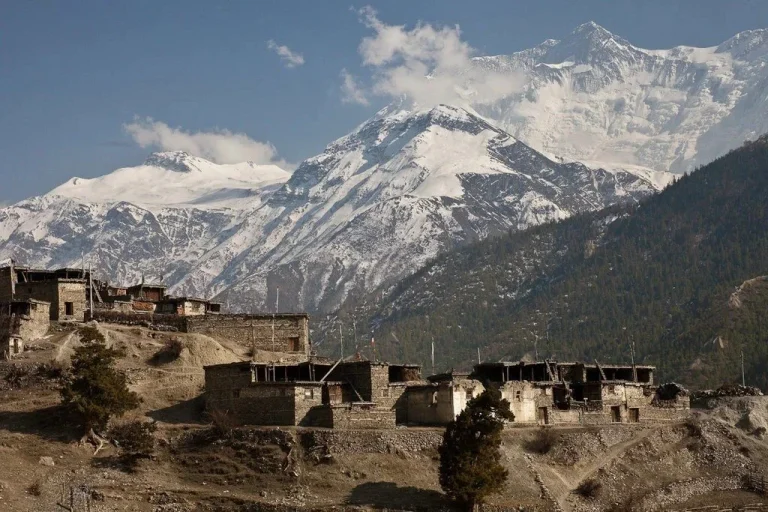
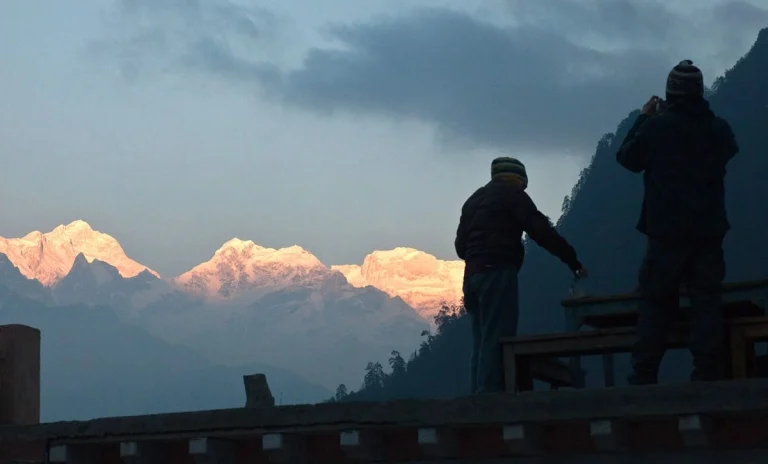
Jamacho Gumba sits in a prime location overlooking the beautiful Kathmandu Valley. On clear days, hikers can enjoy stunning views of the Langtang, Ganesh Himal, Manaslu, and Dorje Lakpa ranges. With excellent visibility, you may even catch a glimpse of the Annapurna range in the distance.
What to Bring
- Water (minimum 2 liters)
- Light snacks or a packed lunch
- Hat, sunscreen, and sunglasses
- Comfortable hiking shoes and a light jacket
- Rain gear during the monsoon season
- Camera or binoculars for mountain views and wildlife spotting
Why Visit Jamacho Gumba?
- Close to Kathmandu yet surrounded by peace and nature
- Suitable for beginners, families, and hikers of all ages
- Combines spiritual exploration with outdoor adventure
- Offers panoramic views of Kathmandu Valley and the Himalayas
- Provides an authentic glimpse into local culture and traditions
Cultural Etiquette at Jamacho Gumba
A visit to Jamacho Gumba offers more than a scenic hike. It provides insight into the region’s spiritual and cultural heritage. Since the monastery is a sacred site, visitors should follow local customs and respect religious practices.
- Remove shoes before entering the monastery.
- Maintain silence around meditation and prayer areas.
- Wear modest clothing.
- Ask for permission before photographing people.
- Photography is generally allowed outside the monastery.
Best Time to Visit
Spring (March–May)
Spring brings blooming rhododendrons, pleasant temperatures, and colorful forest landscapes.
Autumn (September–November)
Autumn offers clear skies and some of the best Himalayan views of the year.
Winter (December–February)
Winter provides cool weather and fewer visitors, creating a peaceful hiking experience.
Monsoon (June–August)
The forest becomes lush and green, but trails can be slippery and leeches may be present.
Hiking Tips and Practical Information
Travelers should begin their hike early, as the park closes at 5 PM. Carry small cash notes for the entrance fee. Mobile network coverage is generally available but may become weak in dense forest sections. Although the trail is entirely uphill, it remains manageable for beginners, children, and senior hikers at a comfortable pace. Vehicles are not permitted inside the park, so the journey must be completed on foot.
Wildlife Along the Trail
The forest around Jamacho Gumba supports a variety of wildlife. Hikers may spot monkeys, wild boars, butterflies, and numerous bird species along the route. During the monsoon season, leeches can be common, so carrying insect repellent or salt is recommended. Visitors should enjoy wildlife from a distance and avoid feeding or disturbing animals.
Final Thought
The Jamacho Gumba One-Day Hike is among your best options if you want a quiet escape from Kathmandu and experience Tibetan culture, the beauty of nature, and spiritual feeling in a single day’s time. It is a relatively short drive out of the noisy chaos of the city into the peaceful forest of Shivapuri Nagarjun National Park. The trail has a gentle incline that is not too challenging, but is beautiful as it takes you through pine, oak, and rhododendron forest, eventually reaching the hilltop monastery.
At 2,128 meters, Jamacho Gumba provides magnificent views of the Kathmandu Valley and nearby snowcapped peaks including Langtang, Ganesh Himal, and Manaslu if you happen to go on a clear day. The monastery also adds a spiritual aspect to the hike while it is adorned with colorful prayer flags and holds a small stupa, where locals come to meditate and visitors can quietly reflect.
This hike is recommended for beginners, families, or anyone who does not have much time but still wants to have some exposure to Himalayan views and nature’s tranquility. It does not require any advanced trekking skill and will offer just the right amount of outdoor adventure and Tibetan culture in less than a half a day’s time. For travelers who want something refreshing yet meaningful without having to leave the valley core, Jamacho Gumba is definitely one of the best options for a half-day trek near Kathmandu.
FAQ About Jamacho Gumba One-Day Hike
1. Where is Jamacho Gumba?
Jamacho Gumba is inside Shivapuri Nagarjun National Park, Close to Kathmandu.
2. How long is the hike?
Jamacho Gumba hike is usually 4-6 hours including the return.
3. How hard is the Jamacho Gumba hike?
The hike is an easy to moderate hike, suitable for beginners.
4. How long is Jamacho hike?
About 10 km round trip (5 km uphill and 5 km down).
5. What is the open and close time of Jamacho Gumba?
The open time is at 7:00 AM and close time is 5:00 PM.
6. Is a permit needed for this hike?
Yes, it is necessary to buy an entry ticket for Shivapuri Nagarjun National Park at the gate.
7. Is an ID required?
Yes, usually a government issued ID is asked at the entrance.
8. What type of views from the top?
You can see views of Kathmandu Valley and the Himalayan ranges namely Langtang, Ganesh Himal, Manaslu, and Annapurna.
9. Is food available on the trail?
No, there are no food stores, it is recommended to pack a lunch and snacks.
10. Can I find drinking water?
No, water sources are very unreliable, thus it is recommended to carry 2 liters of water.
11. Am I required to have guides for this hike?
There is no requirement for guides, since the trail is straightforward, but guides can be hired if you want cultural interpretation.
12. Can the hike be done alone?
Yes, a lot of people solo hike it, but it is recommended to have friends or at least other people to hike with for safety.
13. Can I camp at Jamacho Gumba?
No, it is not possible to overnight camp here because the hike is organized and intended as a day trip.
14. What clothing should I wear?
Comfortable hiking shoes are recommended, and light clothing in the summer, or a jacket in the winter.
15. Why is the Jamacho Gumba hike special?
It is special because it brings together nature and spirituality and beautiful mountain views, all together in one short day hike, conveniently in close proximity to the city of Kathmandu.