Everest Base Camp

Everest Base Camp Trek 2025/2026

trip-type

Trip Type

Trekking In Nepal

trip-type

Accomodation

Tea House

trip-type

Destination

Nepal

trip-type

Start Point

Kathmandu

trip-type

Region

Everest Region

trip-type

Duration

14 Days

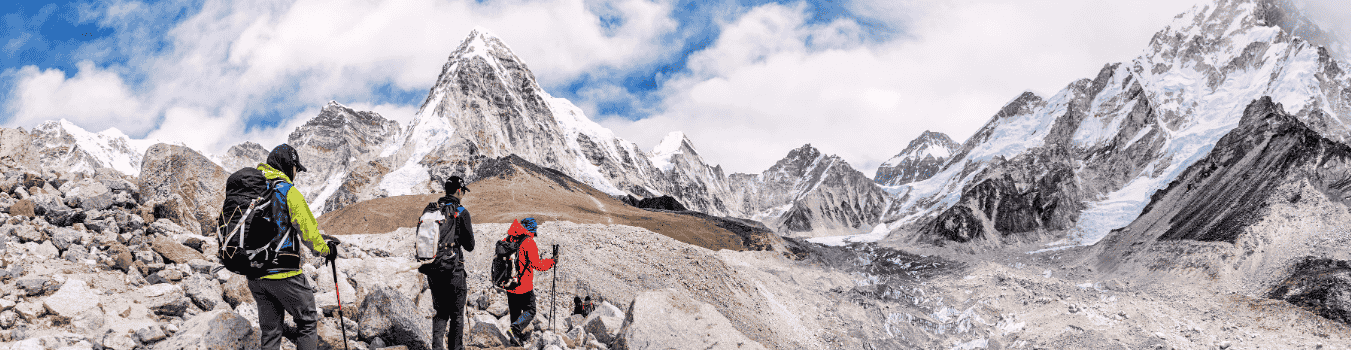
Everest Base Camp trek falls under the list of "To Do Before I Die" for adventurers around the world. The trek is a journey that offers more than just a glimpse of the world’s tallest peak. The Everest Base Camp trek distance stretches roughly 140 km round trip as it weaves through a stunning mix of landscapes, starting from rhododendron forests, terraced villages, and flowing rivers near Lukla, before ascending into the rugged high-altitude terrain.

Throughout the journey, you experience deep cultural immersion as you walk along the trail, passing spinning prayer wheels, fluttering prayer flags, and monasteries filled with the aroma of butter lamps. Every place and every stop reflects the beauty of Sherpa culture and traditions.

The best part of the trek is the calm presence of towering peaks like Nuptse, Lhotse, Makalu, Cho Oyu, Pumori, and Ama Dablam, which can be seen from Kala Patthar, Tengboche, and other viewpoints along the route. So, should the Everest Base Camp trek really be the one to test your spirit and endurance?

For every adventurer, the answer is yes. The Everest Base Camp trek is a once-in-a-lifetime journey that leaves you with unforgettable memories in the heart of the Himalayas.

Best Time for Everest Base Camp Trek

The weather is crucial in trekking, especially in high-altitude areas like the Himalayas. It directly impacts safety, trail conditions, visibility, physical comfort, and overall enjoyment. One important point to understand is that weather changes not only with the season but also with elevation. The higher the elevation, the lower the temperatures, the stronger the winds, and the more unpredictable the conditions.

The average drop in temperature is approximately 6–10°C per 1,000 meters of height gain. This means that while lower areas may feel warm, it can be frosty just a few hours further along the trail. Additionally, night temperatures are always lower than daytime temperatures, regardless of the season. For these reasons, choosing the most suitable trekking season is essential.

Spring and autumn are regarded as the most ideal and safest periods for trekking in Nepal. Summer coincides with the monsoon, and winter is extremely cold, requiring additional preparation and experience.

Spring Season (March – May)

Spring in Nepal is the most popular and scenic trekking season. Winter gradually recedes, and temperatures rise, especially at lower and medium altitudes. The region bursts with pink, red, and white rhododendrons, creating a stunning natural display.

Clear skies and excellent mountain views make this season ideal for Everest Base Camp and Annapurna Base Camp treks.

  • Lower altitudes (2,000–3,500 m): Daytime temperatures 10–15°C

  • Mid region (~4,000 m, e.g., Namche Bazaar): Daytime 0–5°C

  • Higher altitudes (>5,000 m): Nighttime temperatures can drop below -5°C

Although snowfall may occur in early spring, it usually melts quickly during the day, leaving trails in good condition. The mix of warmth, scenery, and safety makes spring an enjoyable trekking season.

Summer / Monsoon (June – August)

Summer coincides with the monsoon season, bringing heavy rainfall, especially below 3,500 meters. While rain enhances the scenic valleys, slippery trails, and poor visibility are common.

  • Lower altitudes: Daytime 15–25°C

  • Higher altitudes (>4,500 m): Daytime 5–10°C, nighttime around 0°C

Travelers should also be prepared for leeches in forested areas. Rain-shadow regions like Upper Mustang and Dolpo experience less rainfall and are better alternatives during this season.

Autumn Season (September – November)

Autumn is another ideal period for the Everest Base Camp trek. After the monsoon, the skies clear, revealing breathtaking peaks. The weather is predictable, dry, and stable.

  • Lower altitudes: Daytime 15–17°C

  • Everest Base Camp (~5,300 m): Daytime 0–5°C, nighttime -5 to -10°C

Mornings and evenings are cold, and exposed ridges feel even colder without adequate clothing. Trails are generally in good condition, and cultural festivals such as Mani Rimdu and Dashain add extra charm. This season is popular, so booking early is advised.

Winter Season (December – February)

Winter trekking is recommended only for experienced trekkers with proper gear. Skies are usually clear, but temperatures are extremely low.

  • Daytime at 2,500 m: 5–10°C

  • Above 5,000 m:- -10 to -20°C with strong wind chill

Snowfall can block high passes, and some roads may become impassable. Trails are quiet, but caution is required due to avalanches, frozen paths, and limited facilities. Proper insulation, technical clothing, and cold-weather experience are necessary.

Why EBC Trek with Nepal Outdoor Expeditions?

At Nepal Outdoor Expeditions, we focus on safety, local knowledge, and real trekking experiences. Our guides are experienced Everest trekking specialists who follow a well-planned Everest Base Camp trek itinerary that balances adventure and comfort. From smooth logistics to ethical trekking practices, we aim to deliver an authentic Himalayan journey.

Travel responsibly: We promote eco-friendly trekking and actively support local communities.

Highlights of the Everest Base Camp Trek 2025/2026

  • Lukla Arrival (2,860m): Begin the Everest Base Camp Trek with your first glimpse of the Ama Dablam Himalayan peaks, as a cold mountain breeze touches your face and welcomes you.
  • Phakding (2,610m): Enjoy a gentle walk along the Dudh Koshi River as you cross suspension bridges, greet locals along the trail, pass spinning prayer wheels, and admire fluttering prayer flags and the flowing river.
  • Namche Bazaar (3,440m): Make your way to the Sherpa hub, known for its lively markets and wide views of Thamserku and Kongde Ri.
  • Tengboche Monastery (3,860m): Continue the Everest Base Camp Trek toward the iconic monastery, set against Ama Dablam, Everest, and Lhotse. The area feels calm and deeply spiritual
  • Dingboche (4,360m): Walk through high-altitude meadows with open views of Lhotse, Island Peak, and seasonal wildflowers.
  • Lobuche (4,910m): Follow rocky moraine trails with views of the Khumbu Glacier and peaks like Gokyo, Cho Oyu, and Pumori, as you prepare for higher elevations.
  • Gorak Shep (5,164m): Just before Everest Base Camp, experience striking glacial landscapes and thinner air.
  • Everest Base Camp (5,364m): Stand at the foot of the world’s tallest peak, surrounded by icefalls, towering seracs, and colorful prayer flags.
  • Kala Patthar (5,545m): One of the best sunrise viewpoints, offering clear views of sunrays hitting the towering peaks of Everest, Nuptse, Lhotse, and Pumori. It is also an iconic photo spot.

Everest Base Camp Trek Route

The Everest Base Camp Trek route starts its journey with a flight to Kathmandu to Lukla, which is an incredible journey and a landing ground at one of the most renowned mountain airstrips across the globe. It is a rhythm of river valleys, suspension bridges and that initial impression of being in the high Himalayas which the trail follows out of Lukla and down to Phakding.

Everest Base Camp Trek distance is around 140 km north side of Everest. The climb starts at Phakding and gradually ascends to Namche Bazaar, which is the port town of the Everest Base Camp Trek. It is the mountain city, where there are bakeries and gear shops, teahouses and sweeping panoramas of snow-peaked mountains. Everest Base Camp Trek Elevation goes on increasing as the path then traverses mountains as elevated as river valleys all the way to Tengboche, which houses a religious monastery with Ama Dablam and Everest herself enwrapping it. 

Beyond Tengboche, the trail turns out of the woods into broad and dry valleys where the trees are lost, and the air becomes thinner. You go past Pangboche and make your way up to Dingboche, and take a side hike to acclimatize and then go up to Lobuche.

Lobuche is where you arrive at Gorak Shep, a group of lodges dangling on the fringe of Khumbu Glacier. A large number of trekkers leave Gorak Shep for the actual base camp of Everest itself, cross rocky moraines and glacier debris till the prayer flags mark the point where climbers make their final bid to the summit. Kala Patthar offers you the classic viewpoint, when the sunrise is golden, covering the summit of Everest, and the mountain walls are panoramic and engulf you in every direction.

Once saturated with the scenes and the air, the Everest Base Camp Trek Route takes a switchback route back to Dingboche, Tengboche, and Namche and finally a flight to Kathmandu and a plane back to Lukla. Everest Base Camp Trek is a circle that seems to undergo a metamorphosis; the forests and rivers, which are bright at the beginning, become pale and bare and then back to the beginning again when you walk out.

Short Itinerary ( 14 days )

  • Activity: Arrival, rest, light walk

  • Overnight: Kathmandu

The day of Everest Base Camp Trek begins as you land in Kathmandu, and our team will come to receive you from Tribhuvan International Airport. Furthermore, we will be taking you to your hotel, where you will be taking a break, and then you will be meeting our guides for further information on your trek for the very next day.

You can take the night to enjoy the lively market of Thamel and prepare for the eagerly awaited trek to Everest Base Camp Trek.


  • Walking time: 3–4 hours

  • Overnight: Phakding

Now the early morning starts from breakfast, getting up faster and heading straight to Tribhuvan airport to catch your short yet memorable flight, cutting through the narrow valleys with majestic peaks rising suddenly on either side. The plane weaves between mountains before landing on the short runway, and once safely down, passengers clap and cheer the pilot. Stepping out and starting the Everest Base Camp Trek, the cold air hits immediately, and the sudden altitude change feels strange for the first 20–30 minutes. 

After landing on the slopes of Lukla airstrip, there's time for tea while porters organize loads. The trek begins gently as you descend through pine forest and small Sherpa villages. Suspension bridges cross the Dudh Koshi river as the prayer flag flutters overhead and the pace remains relaxed. Phakding arrives just a few hours before you make this an ideal first walking


  • Walking time: 6–7 hours

  • Overnight: Namche Bazaar

After passing Monjo, you officially enter Sagarmatha National Park, the place where rangers check permits for Everest Base Camp Trek. The trail then climbs steadily through pine and rhododendron forests as it challenges your stamina. The switchbacks are the stretch uphill, and the air grows thinner as you ascend. Finally, the little mountain hamlet Namche Bazaar appears in front of you. A lively Sherpa town built into the mountainside with colorful shops, cafes, and buzzing marketplaces. Reaching Namche is both physically rewarding and culturally enriching.


  • Walking time: 3–4 hours (optional hike)

  • Overnight: Namche Bazaar

The exciting part of the Everest Base Camp Trek comes when you get the chance to acclimatize in Namche Bazar. In the lap of the Himalayas, you get to experience the first view of Everest as you hike to the hotel at the world's tallest point. Everest View Hotel, where you take a sip of hot coffee and clear mornings reveal the distant views of Everest, along with Lhotse and Ama Dablam. During the spring season, the scenery becomes even clearer and better, something many might miss out on. 

As you return to the Namche Bazaar in the afternoon, you allow your body to get proper rest, hydration and explore local culture at a gentle pace. Surrounded by the Himalayas, you get to explore the small bakeries, tea shops and the Sherpa museum that can give more insight into the local lifestyle. Mild headache or slight breathlessness are normal as your body needs to adjust to the higher altitude before ascending further. 


  • Walking time: 3–4 hours

  • Overnight: Namche Bazaar

Leaving Namche behind with a bagful of exciting memories and savourful food, the Everest Base Camp Trek trail now follows a wide and almost level path carved into the mountainside. Now comes the part where you get to walk among the scenic valleys of the trek. As the snow peaks line the horizon, the trail gradually descends to the Dudh Loshi River. After crossing the river, the trail climbs steadily through forests filled with rhododendron and pine. The ascent might be a bit long for you. But if you are consistent and pass shaded sections and open clearing as the forest thins, the trail reaches Tengboche, where the monastery stands prominently on a ridge surrounded by towering peaks.


  • Walking time: 5–6 hours

  • Overnight: Dingboche

Everest Base Camp Trek trail drops through the slopes of the forest towards the Imja Khola river, then rises again toward Pangboche village. Stone houses, ancient mani walls and grazing fields that will dominate the greenery of the route. Beyond Pangboche now comes the part where the other part of the hills and mountains, the rocky side, is shown. 

From here, you will see as trees disappear and your surroundings will be replaced by the dry alpine terrain and wide open valleys. The trail becomes broader and windier as you follow the river upstream. Ama Dablam still remains with its appealing nature throughout the day, guiding you throughout the walk. 

When you approach Dingboche, the path passes stone-walled fields designed to protect crops from cold winds. Walking feels slower here because the altitude is starting to settle in. Dingboche sits quietly in this open valley, surrounded by rock-walled fields built to shield crops from harsh winds.


  • Walking time: 4–5 hours

  • Overnight: Dingboche

The second acclimatization day begins as you wake up, freshen up, and get ready for the hike right behind Dingboche as you climb steadily up a barren hillside. The trail is narrow, dusty and fully exposed with little to no trees or shelter from the wind. But as you gain height, every step feels heavier, and breathing becomes deliberate and slow. The wind often grows stronger the higher you go, and makes the cold more noticeable. 

When you step on the top, the view opens up dramatically, the glaciers stretch below, and peaks like Makalu are somewhat visible in the distance on clear days. After spending time at altitude, the trail descends back to Dingboche, where rest becomes just as important as the hike itself. 


  • Walking time: 5–6 hours
     

  • Overnight: Lobuche

Following the trail, you will go through a gradual ascent through a wide alpine valley as it runs alongside the Khumbu Glacier. The ground becomes rougher underfoot with the combination of loose stones and uneven sections. Cold winds sweep through the valley, which often makes the stretch feel harsher than it looks. 

Reaching near Thukla, the trail steepens sharply as you will be climbing a short but exhausting slope. At the top lies the memorial pass where stone monuments honour all those climbers who have lost their lives on Everest and shown their bravery in the Himalayas. The surrounding atmosphere here is quiet and heavy. Right after the pass, the trail levels out but remains rocky until Lobuche comes into view, sitting starkly against the glacier towards Everest Base Camp Trek.


  • Walking time: 7–8 hours

  • Overnight: Gorak Shep

It is one of the most demanding days of the trek where trails hug the end of the Khumbu Glacier as you cross the loose rocks and moraine. In these shifting grounds, you might need to give constant attention. Since the progress is slow and the thin air makes even small climbs tiring.

After reaching Gorak Shep, the trail continues toward Everest Base Camp over rugged glacial terrain. There might be times during Everest Base Camp Trek when you will not get clear paths. Just a line of trekkers moving across rock and ice. But the final destination, the Everest Base Camp, will make all of it worth it. You can observe the Khumbu Icefall towers nearby, chaotic and powerful. After spending time taking photos and absorbing moments, the trail returns the same way to Gorak Shep


  • Walking time: 6–7 hours

  • Overnight: Pheriche

The day in Everest Base Camp Trek begins very early, as headlamps will cut through the cold darkness on the climb to Kala Pathhar. Your first step will be very steep as a narrow path of loose gravel and rock, so you have to be careful in certain sections. Remember that the altitude has thin air and very sharp wind and the cold breeze, so you have to breathe slowly, layer up, and make some frequent pauses.

During the pause, you can observe the calm smile of the peak standing right in front of you. Everest stands directly ahead, massive and close, its summit catching the first light of the morning. Nearby peaks like Nuptse and Pumori frame the view, making the moment feel suspended in time.

Now, after you spend some time and reach the summit, the trail descends carefully back to Gorak Shep. Here you take a downhill and retrace the rocky path past Lobuche and Thukla memorials. Since the elevation will drop, your body will start to feel relief almost immediately. Breath eases, steps feel lighter as the harsh alpine landscapes slowly give way to wider valleys. When you reach Pheriche, your exhaustion will be there, but it will be softened by the comfort of a lower altitude and the sense of Everest Base Camp Trek hardest part is behind you


  • Walking time: 6–7 hours

  • Overnight: Namche Bazaar

You leave Pheriche by descending the trail gradually, following the river through open valleys before entering areas with scattered shrubs and low vegetation. The path of Everest Base Camp Trek feels familiar now and somewhat easier. Crossing Pangboche brings a sense of life back into the trek with grazing yaks alongside those flapping chorten and spinning prayer wheels.

When you approach Tengboche, the forest begins to reappear and welcome you. The descent from Tengboche is steady as you pass through shaded pine and fir forest with pink and red rhododendron flowers before you cross the suspension bridge over a fast-flowing river. The trail then climbs slightly toward Namche Bazar. Re-entering Namche feels different this time as it is less intimidating, more comforting. Cafes, bakeries and familiar lodges will give you the treat after spending a few days at the higher altitude.


  • Walking time: 6–7 hours

  • Overnight: Lukla

Now comes the final day of your Everest Base Camp Trek. It begins with a long descent from Namche, dropping sharply toward the Dudh Koshi River. The trail passes over suspension bridges once again, with prayer flags waving overhead and the sound of water echoing through the gorge. Stone shops, village paths and forest trails blend together as you move steadily downhill. There are still short climbs scattered throughout the day. But nothing compares to the earlier ascents.

When you reach Lukla, you will notice the busier path filled with porters, yaks and trekkers heading both directions. The feeling is mixed, and relief comes over you, and you will realize the walking part is almost over. Among all of the rush in your feelings, you will get to realize the quiet sadness that the house through the mountains is ending of Everest Base Camp Trek


  • Walking time: None

  • Overnight: Kathmandu

The morning flight departs early, lifting off from Lukla's short and sloped runway. As the plane climbs, the mountains slowly fall away beneath the clouds. The thin air, silence and wide valleys of the Himalayas are replaced by the warmer and denser atmosphere of Kathmandu. The noise, traffic and movement of the city feel overwhelming at first. But you will feel the comfort as the trek ends, and you have a bagful of memories. The cold mornings, the quiet power of Everest Base Camp Trek, every memory will linger long after the trek ends.


After two whole weeks in the Himalayas of Everest Base Camp Trek, the day will be about rest. The city feels warm and bustling compared to the quiet trails, and every breath of thick air reminds you how high you were. Many trekkers use this day to explore cultural highlights—Durbar Square with its ancient palaces and temples, the sacred Pashupatinath Temple along the Bagmati River, or the colorful Boudhanath Stupa, a hub of Tibetan Buddhist activity. Street markets, local cafes, and traditional Newari cuisine offer a gentle reintroduction to city life.

Cost Includes

  • Transportation Cost
  • Accommodation Cost, including teahouse lodging during the trek and overnight hotel stay in Kathmandu.
  • Permit Cost
  • Meals Cost, covering breakfast, lunch, and dinner.
  • Guide and Porter Cost
  • First Aid and Emergency Cost, including the first aid kit provided by the company and emergency evacuation expenses.

Cost Excludes

  • Meals in Kathmandu 
  • The cost of an international flight
  • Your personal gear cost
  • Your personal expenses
  • Tips for guides and porters 

Accomodation

Accommodation is a very important consideration when organizing the Everest Base Camp trek, as it directly affects both comfort and safety. Whether you are staying in a hotel in Kathmandu or in a series of teahouses along the trail, your accommodation choices can influence the quality of your rest, recovery, and overall trekking experience.

Kathmandu Hotels Before the Trek

Kathmandu, the gateway to Everest, offers a wide range of accommodation options to suit different budgets and traveler expectations. Most trekkers spend one or two nights here to rest, organize their gear, and prepare for the altitude and climate of Nepal.

3-Star Hotels

  • Affordability Meets Comfort: These hotels are generally clean and provide basic amenities such as Wi-Fi, hot showers, and breakfast.
  • Convenience: Most are centrally located in Thamel, making it easy to arrange trekking permits, purchase gear, and connect with guides or trekking agencies.
  • Facilities: Single rooms, in-house restaurants serving local and international dishes, luggage storage, and 24-hour check-in are commonly available.

Three-star hotels are a popular choice as they allow travelers to rest comfortably without overspending. They strike a balance between affordability and a safe, organized start to the trek.

4–5-Star Hotels

  • Enhanced Comfort and Luxury: These hotels offer larger rooms, high-quality furnishings, gyms, spas, and multiple dining options.
  • Safety and Reliability: Hygiene standards, security, and staff professionalism are typically very high, which can be reassuring before a physically demanding journey.
  • Additional Services: Concierge support, airport transfers, and trekking assistance help simplify logistics, especially for first-time trekkers.

While more expensive, 4–5-star hotels provide superior comfort and a calm environment to prepare both physically and mentally before departing Kathmandu.

Teahouses Along the Trail

Once you leave Lukla and enter the Khumbu region at a higher altitude, accommodation becomes much more basic. Teahouses, which are small mountain lodges, provide shelter and communal spaces where trekkers gather.

Features of Teahouses

  • Basic Facilities: Teahouses offer shared or private rooms with beds, thin mattresses, and blankets. Electricity is sometimes available. Bathrooms may be shared, or simple squat toilets, and hot showers are often available for an additional charge.
  • Meals: Breakfast, lunch, and dinner are served, typically featuring local dishes such as dal bhat, noodles, soup, and porridge. Food is generally fresh, with prices increasing as altitude rises.
  • Social Environment: Teahouses serve as community hubs where trekkers share experiences, exchange route information, and interact with guides and porters.
  • Staying in teahouses requires a flexible mindset. Facilities vary by village, and remote locations tend to offer more basic conditions. Cleanliness, heating, and room size can differ significantly, especially during peak trekking seasons.

Selecting Teahouses Carefully

  • Altitude Factor: At higher altitudes in the remote villages, teahouses usually have fewer amenities and higher prices due to transportation challenges. During peak trekking seasons in spring and autumn, advance reservations help avoid accommodation shortages.
  • Facilities vs Cost: Some trekkers prioritize hot showers and private rooms, while others focus more on cost and location.

Preparation for the Everest Base Camp Trek

The trek to Everest Base Camp is more of a mental and logistical challenge than a physical one. You do not have to be a professional athlete, but you should be prepared to work hard, adjust to changing altitudes, and burn extra energy over an extended period at the elevation of Everest.

How to Physically Prepare for the Everest Base Camp Trek

The Everest Base Camp trek training plan does not require technical climbing skills, but it does require stamina. Expect long days with sloping paths, steep uphill and downhill sections, and hours carrying a daypack. Proper training helps prevent injuries, fatigue, and soreness.

Build a Strong Base

Start 8–12 weeks before your trek. This allows your body to adjust gradually and reduces the risk of overuse injuries.

Cardiovascular Conditioning: Do 3–4 sessions of moderate aerobic exercise each week, such as running, cycling, swimming, or brisk walking. Gradually adjust the duration of each session between 30 and 60 minutes. This strengthens the heart and lungs, which is important because oxygen levels decrease at higher altitudes.

  • Strength Training: Focus on muscles most used on the trail. Squats, lunges, step-ups, calf raises, planks, push-ups, and rows strengthen your legs, core, and upper body. Strength sessions should be done 2–3 times per week.
  • Hiking Simulation: Practice hiking with a loaded pack (7–10 kg) on uneven ground or stairs to simulate trail conditions. Whenever possible, include elevation gains to replicate real trekking conditions.
  • Flexibility and Mobility: Regular stretching and mobility exercises for the hips, hamstrings, and lower back help reduce stiffness and improve stride efficiency.

Psychological Exercise and Adaptation

The Everest Base Camp trek training plan should include mental preparation, as mental health can determine whether the trek is enjoyable or extremely difficult. Combined with physical training, mental preparation helps you cope with altitude, fatigue, and other unexpected challenges.

Visualization and Expectation Management: Be ready both mentally and physically for the beautiful moments and for times that bring fatigue. Expect discomfort so that it does not overwhelm you when it comes.

Mindfulness and Breathing Techniques: Focused breathing can reduce stress and fatigue while improving oxygen efficiency in the body.

Flexibility and Patience: Weather delays or changes in the itinerary are common. Being flexible helps you stay calm and focused during the trek.

Smart Acclimatization

Altitude sickness is real, and acclimatization should never be compromised.

  • Climb High and Sleep Low: Spend time at higher elevations during the day and return to lower altitudes to sleep. This helps the body gradually adjust to lower oxygen levels.
  • Add Rest Days: Planned acclimatization stops, such as at Namche Bazaar or Dingboche, are important to reduce the risk of acute mountain sickness.
  • Listen to Your Body: Persistent dizziness, nausea, or extreme fatigue are warning signs. Slow down or rest if symptoms become severe.

Nutrition and Hydration

A proper diet is essential for the Everest Base Camp trek. High-altitude trekking burns more calories than expected. Dehydration and reduced appetite are common, so sufficient nutrition and hydration are critical for energy, stamina, and recovery.

Hydration Strategies

  • Drink consistently: At elevations above 3,000 meters, aim for 3–4 liters of fluid daily. Sip frequently rather than waiting until you feel thirsty.

  • Warm fluids: Tea, herbal infusions, or broth provide hydration and warmth.

  • Electrolytes: Use electrolyte powders or tablets to replace salts lost through sweat and breathing.

Nutrition Tips

  • Carbohydrates: Rice, pasta, potatoes, oats, and energy bars provide long-lasting energy.

  • Protein: Supports muscle repair and recovery. Include eggs, lentils, nuts, or lean meat.

  • Healthy Fats: Nuts, seeds, and oils are calorie-dense and useful when appetite is low.

  • Frequent Small Meals: Above 4,000 meters, appetite may decrease. Eat small meals 4–5 times a day to maintain calorie intake without overloading digestion.

  • Local Foods: Meals like dal bhat provide carbohydrates, protein, and fluids in one dish, and are well-integrated into local culture.

Food on the Everest Base Camp Trek

Meals on the Everest Base Camp trek are designed to provide energy while also offering a taste of local cuisine. The staple is dal bhat, a mix of lentils, rice, seasonal vegetables, pickles, and sometimes meat. This meal provides a steady supply of carbohydrates, protein, and minerals to keep trekkers energized throughout the day.

Other options include noodles, fried rice, and soups, which are adjusted based on altitude and available ingredients. Breakfast usually consists of porridge, eggs, and toast, providing slow-release energy for uphill sections. Lunch is typically lighter, such as sandwiches or noodle bowls eaten on the trail, while dinner is heartier to aid recovery and keep warm.

Hot drinks and soups serve two purposes: replenishing fluids and providing warmth in the cold mountain climate. Trekking requires bursts of energy, so nuts, chocolates, energy bars, and water or herbal tea are consumed throughout the day to help prevent dehydration at high altitudes. Smaller, frequent meals are best above 4,000 m, where appetite naturally decreases.

Vegetarians and vegans need to monitor protein intake carefully, relying on lentils, soy, or eggs. Overall, meals on the Everest Base Camp trek are practical, keeping energy, warmth, and health intact while allowing trekkers to enjoy local Himalayan cuisine.

If you are interested in a similar adventure in Nepal: 

Equipments

One of the most significant things to do during the planning of an Everest Base Camp Trek in Nepal is to prepare a proper packing list. Trekking routes in the country have a great variety of altitudes and climates, and they go through lowland valleys (warm) to high mountain passes (cold). 

The weather is fast changing, and amenities are insufficient as you rise in altitude. Hence, trekkers have to pack the appropriate combination of clothing, technological equipment, and personal necessities. 

Clothing

Everest Base Camp Trek clothing in Nepal has to be done in accordance with the layering system. Such that it enables the trekkers to adapt quite easily to the varying weather conditions as they proceed with their day. Rather than having a single heavy outfit, multiple layers that are heavier should be used.

The base layer is the first one, and it is the one that adjoins the skin. Its primary role is to control the moisture and maintain the body dry. Three or four moisture-wicking T-shirts should be included in trekkers; they should be based on synthetic fabrics or merino wool. They should not be used on cotton since it takes a long time to dry and absorbs sweat. At the same time, two long-sleeved shirts will be handy in protecting against the sun in the daytime, and for light warmth in the evening. On colder nights, including those that are above 3500 meters, 2 pairs of thermal tops and bottoms (mid-weight) are advisable.

The second layer is referred to as the mid-layer and is insulating. A jacket or two fleece jackets or pullovers would be perfect. One can wear a lighter fleece when walking in cool weather. But a dense one during evenings and rest stops. Because the layer assists in trapping body heat without excessive weight.

Outer layer and lower body 

The protection of the outer layer is against wind, rain, and snow. A hardshell jacket with a hood is a waterproof, breathable jacket that is needed in all seasons. Try to get a lightweight and sturdy one. Similarly, waterproof rain pants should also be matched when it is monsoon or in snowy weather.

To the lower body, the trekkers are to carry two pairs of hiking pants, quick-drying, comfortable and flexible. At lower altitudes in Everest Base Camp Trek and on hot days, one pair of shorts would do. The undies must be around seven pairs of the synthetic briefs and sporting bras as required. Foot care is highly essential, so it is important to pack four or five pairs of thick wool-blend hiking socks as well as two to three sets of thin liner socks to avoid blisters.

Helmets and gloves may be carelessly neglected, but very significant. A large hat with a sun, which is kept back, prevents the overheated UV rays, and a buff or scarf may be put on to keep off the cold or dust. There is a need for a wool beanie during cold nights and mornings. The need to use sunglasses with 100 per cent UV protection is high at high altitudes. In the case of hands, trekkers can carry lightweight glove liners, as well as insulated waterproof gloves or mittens in the event of cold and windy weather.

Technical Equipment 

Quality technical equipment for Everest Base Camp Trek packing list enhances the safety, comfort, and confidence on the trail. A pair of trekking boots is the most significant thing. They are supposed to be waterproof, well broken and have good support on the ankles in case of rocky and uneven grounds. It is advised to buy boots that are a bit bigger than usual to accommodate swelling and heavy socks on the foot. B2 or B3 boots suffice even in more technical routes or high passes.

Gaiters come in handy, particularly when there is snow, mud or dusty trails. Waterproof gaiters cover the knees to ensure that they do not get snow, stones, or water into the boots. Crampons might be necessary in treks that involve icy parts or heights greater than 5,000 meters. Normal 12-point steel crampons, which can fit trekking boots, are mostly sufficient. Strap-on models are used in non-technical peaks.

Most of the trekkers in the Everest Base Camp Trek will greatly benefit from using trekking poles. The adjustable poles are manufactured using either aluminium or carbon, and they assist in keeping the balance and minimize the pressure on the knees, particularly when taking long steps. Rubber tips come in handy when there are rocky trails, and snow baskets are handy during winter seasons. An ice axe (approximately 60-70 cm) can be necessary as well to use in peak climbing or more technical routes, but it is not necessary in most standard trekking routes.

Optional Items 

Other devices are optional in Everest Base Camp Trek packing list, and these may significantly enhance comfort, particularly in high altitudes. A decent sleeping bag is quite desirable. A bag with a rating of -10 °C to -20 °C is expected to be suitable in most treks. Down or synthetic are both good, and a sleeping bag liner is an addition that offers additional warmth and cleanliness. Other trekkers also bring a light sleeping pad, inflatable, like additional insulation, as well as comfort, during the teahouses.

An extra battery on the headlamp is also necessary since there is a scarcity of power in remote locations. Simple repairs may require a small knife or a multi-tool. To stay hydrated, bring two 1 liter water bottles or a hydration bladder and a way of purifying water, like tablets, a filter or a UV purifier.

Personal products are represented by snacks such as energy bars, nuts, and electrolyte powders. The simplest medical set must include painkillers, blister treatment, bandages, and personal medicine. Most trekkers also carry altitude medicine after a doctor visit.

An electronics power bank with 10,000 mAh or higher will come in handy, since the prices of charging go up with altitude. carry a universal adapter and spares. The toiletries must be light and biodegradable, such as sunscreen (SPF 50+), lip balm, wet wipes, and a quick-dry towel. Some of the important documents are cash in small bills, passport copies, trekking permits, and travel insurance information. There should also be a lightweight day pack, dry bags, and a small repair kit.

How Much To Carry?

A majority of trekkers in the Everest Base Camp Trek in Nepal employ the use of porters to lug heavy luggage. The primary bag is a soft duffel bag (90-120 liters) that has a waterproof liner inside. The standard mass of one porter is 20 kg/client, including common things. A personal daypack must not weigh more than 10 kg and include things that are required throughout the day, including water, snacks, a camera, and warm clothes.

Every bag has your name on it. Porters are physically fit, but trekking agencies limit them because it is dangerous to their health. Packing cubes are useful in terms of organization, whereas wheeled suitcases are not to be used. One can use a small padlock to be safe. Tipping porters is the norm for Everest Base Camp Trek, and it is based on the length of the trek and the quality of service delivered.

Purchase or Hire Equipment in Kathmandu

Kathmandu, and in particular the Thamel area, is the centre for Everest Base Camp Trek Equipment. There are numerous shops with both buying and renting options. Expensive or bulky items such as down jackets, sleeping bags, crampons and trekking poles are good to rent. Prices are generally reasonable, but if you buy from a reputable shop, the quality is good.

When renting Everest Base Camp Trek Essentials, always thoroughly check items for damage, and clean zippers and general condition. Most shops require a copy of the passport and a refundable deposit. Bargaining is common, and prices can often be reduced. However, it is recommended to buy boots, socks, and personal clothing from home just to be sure that they fit and are comfortable. Returning rented gear on time, one is not charged extra, and the amount of rental money for a two-week trek is generally moderate.

Best Rental Shops in Thamel, Kathmandu

Thamel is the main centre for renting Everest Base Camp Trek Essentials trekking gear in Kathmandu. Most of the rental shops are based in small alleys such as Bhagwan Bahal, Jyatha and Saat Ghumti, all within walking distance from the centre part of Thamel. These shops are dominated by trekkers climbing to popular routes such as Everest Base Camp and Annapurna, and they stock a wide variety of equipment for short or long-term use.

Some of the well-known and trustworthy rental shops are Shona's Alpine, Himalaya Gears, and Gears Nepal. These stores are popular because they have their equipment maintained correctly and have a good variety of sizes and brands. When renting gear, trekkers should always inspect equipment carefully for damage, broken zippers or worn stitching. Bargaining is common, and prices can usually be knocked down by 20 - 40 per cent. Most shops require a refundable deposit, which is around 50 - 200 USD or NPR 8,000.

Everest Base Camp Trek Permit

Trekking to Everest Base Camp is regarded as a once-in-a-lifetime trek, but a large number of travellers do not realise the legal and administrative processes involved. Amongst them, trekking permits are one of the most misunderstood subjects. Conflicting advice on the Internet, outdated information, and frequent changes in policy have led to confusion - particularly in the case of independent trekkers.

This guide cuts through the noise. It explains exactly what kind of permits for Everest Base Camp Trek you need, why it's worth it, how to obtain permits, and why it's a needed and controversial system.

Do you require a Permit for the Everest base camp?

Yes. Every trekker, foreigner or not, even a Nepali, needs to carry two official permits to trek legally to Everest Base Camp. These permits are checked several times along the trail, and it is not allowed to trek without them.

Importantly, the TIMS card is not mandatory for Everest Base Camp Trek permits, as is still claimed to be the case by many outdated travel blogs.

The Two Everest Base Camp Permits 

Permit

Foreign Nationals

SAARC Nationals

Nepali Citizens

Sagarmatha National Park Permit

NPR 3,000

NPR 1,500

NPR 100

Khumbu Pasang Lhamu Rural Municipality Permit

NPR 3,000

NPR 3,000

NPR 100–500

1. Sagarmatha National Park

This permit grants access to Sagarmatha National Park (a sustainable development and protected area and a World Heritage Site selected by the World Wildlife Federation), a protected area including Mount Everest.

Why it exists:

  • Environmental conservation

  • Wildlife protection

  • Trail maintenance

  • Waste management

Where to get it:

  • Nepal Tourism Board Kathmandu office

  • Park entry booth near Monjo (Trekker who flies to Lukla)

Key points for travelers:

  • Mandatory for all trekkers

  • Intervalled at the official gate of the park

  • Must be carried at all times

2. Khumbu Pasang Lhamu rural municipality Permit

This permit is issued by the local government of the Everest region and replaces the TIMS card for this region.

Why it exists:

  • Funds local infrastructure

  • Supports trail repair, trail signage and emergency services

  • Keeps Tourism Money within the Community

Where to get it:

Lukla /Monjo (Can't get in Kathmandu)

Why This Permit is Controversial:

Many trekkers find the need to pay an extra local fee on top of a national park permit to be very confusing. However, this represents Nepal's model of decentralised governance, whereby the impacts of tourism are directly managed at the local level.

Why is TIMS not a Mandate for the Everest Base Camp?

TIMS (Trekkers' Information Management System) was devised, which aimed to keep track of trekkers and make trekking safer. However, in the area of Everest:

  • TIMS has been officially replaced by the local municipality permit

  • Enforcement is done locally as opposed to centrally

  • Carrying a TIMS card does not give them any legal advantage

  • This outdated belief is one of the mistakes first-time trekkers make most often.

Additional checkpoints of the route

Nobody believes the explanations or digital copies, which officials seldom accept

Missing or obtaining permits is subject to fines or being turned back

One way to do that is to emphasize compliance as much as possible before reaching a lake or stream (i.e., getting the paperwork in order ahead of time and then qualifying for certification/veterization can happen after the initial visit)

Everest Base Camp Trek Difficulty

The Everest Base Camp (EBC) trek is ranked as challenging, but it is not an extreme trek. It does not require technical climbing skills and no pre-existing mountaineering experience. However, the trek should not be underestimated as it includes walking for long days, high altitude, rough terrains and harsh weather conditions. For many of the trekkers, it is endurance and mental power that present the challenge - not physical risk. With the right preparation and expectations, the trek is attainable by the majority of healthy travelers.

How Many Hours Do You Walk on the EBC Trek Daily?

Everest Base Camp Trek Distance tourists will cover a distance of 5 to 7 hours daily on average, though occasionally it can be less or even more, related to the altitude and acclimatization needs. The initial phases of the trek are quite moderate, though it becomes exhausting with the rising altitude. The short ones might also be exhausting at higher heights due to the low concentration of oxygen in the atmosphere.

Everest Base Camp trek lasts between 10 to 14 days, and this implies that fatigue builds up as time passes by. In contrast to one long walk, the task involves a daily walk with little rest. There are also regular breaks, though stamina and pacing are also necessary to move continuously on other days.

Trails Of Everest Base Camp trek 

The landscape on the road to the Everest Base Camp trek is irregular and continues to change. Lower down, the road is composed of forest tracks, rock-cut and suspension bridges across deep valleys of rivers. These sections might appear to be easy to handle; however, there are numerous highs and lows, which are burdensome to the legs.

Towards the upper part of the mountain past Dingboche, the terrain becomes rocky, dry and exposed. The trekkers will be forced to walk on loose stones, glacier moraine and narrow trails which are sparsely vegetated. A steep downfall followed by a very long uphill walk is one of the most difficult sections, namely Namche Bazaar to Tengboche.

Though this is a well-marked Everest Base Camp Trek, the constant alternation of elevation and roughness of the ground exerts strains on the body, especially on the knees and ankles. Trekking poles are also commonly used to increase the accessibility of balance and power, and reduce the impact during downhill movement.

How Does the Weather Make a Thing More Difficult: The Trek?

The weather in the Everest Base Camp Trek region is highly unpredictable, and it does fluctuate. The mornings will be extremely cold, and the afternoons will probably be windy and cloudy, even in the most favourable seasons of trekking. In the higher regions, the climate changes suddenly at night, and it is usual at dusk and at night to find freezing.

Powerful winds close to the base camp of the Everest trek make walking at times uncomfortable and even colder. During winter, the trails are harder and even dangerous due to the snow and ice. As opposed to this, the monsoon season is characterized by rain, wet surfaces and poor visibility on low altitudes. The climate is usually more of an element in the increment to the challenge of the trek than the ground.

What are the Psychological Issues of Trekkers?

The Everest Base Camp hiking is also a psychologically demanding task. The higher the altitude, the lower the level of comfort. The accommodation is extremely simple, and the heating is sparse; the meals are plain and not very lavish. Low oxygen and cold nights may influence the quality of sleep, which may result in intake of fatigue and demotivation.

At an altitude of over 4500 meters, numerous trekkers go mad. It appears that things are moving more slowly, breathing suddenly becomes more difficult and your energy is lower. Having a positive mentality is an indispensable requirement and as stated earlier, mental toughness plays a significant part in ensuring the trek is successfully accomplished.

Can a normal person trek to Everest Base Camp?

Yes, first-timers have the ability to make it to Everest Base Camp, only that they have to be prepared and understand that it takes preparation and awareness. The EBC trek, unlike technical climbs, is open to individuals who have not been in the mountaineering field before. The trail is well established, there are places to stay, and most parts of the trail are not technical. Nonetheless, it is not an easy task as a beginner must be strong, patient and able to plan to conquer the trek.

Using Support System 

The support on the route is advantageous to beginners. Guided tours offer expert leadership, planned schedules and familiarity with the country. The beginners can save energy by transferring heavy luggage to porters. Lodges and teahouses offer food, accommodation, and first aid. The independent trekkers have to consider the logistics and yet manage to do it with success in case of appropriate preparation.

Preparation for the Everest Base Camp trek

The trek to the base camp of Everest is more of a mental and logistical issue than a physical one. You do not have to be a professional athlete, but you should be ready that you will have to work hard, change altitude, and consume additional energy on a long-term basis in the Himalayas.

How to physically prepare for the Everest Base Camp trek?

Everest Base Camp Trek Training Plan would not need any technical climbing abilities, but would need stamina. Long days with sloping fields, steep uphill and downhill, and hours with a daypack are to be expected. Correct training prevents you from being injured, feeling tired, and over-sore.

Build a Strong Base

Start 8-12 weeks before your trek. This period will enable gradual adjustment and minimize the chances of overuse injuries.

  • Cardiovascular Conditioning: Do 3-4 sessions of aerobic exercises of moderate levels of intensity (like running, cycling, swimming or brisk walking) weekly. The time taken per session should be gradually reduced and changed between 30-60 minutes. This improves the efficiency of the heart and lungs, which is of great importance since the level of oxygen reduces with increasing altitude.

  • Strength Training: Concentrate on the most utilized muscles on the trail. Squats, lunges, step-ups, calf raises, plank exercises, push-ups and rows are exercises that grow legs, core and upper body strength. It is best to do strength sessions 2-3 times a week.

  • Hiking Simulation: Have the clients practice hiking with a loaded pack (710 kg) over uneven ground or stairs to achieve a simulation of the trail. Whenever possible, include gaining elevation in order to replicate the conditions of a real trek.

  • Flexibility and Mobility: Hip, hamstring, and lower back mobility and dynamic stretching can be performed regularly to reduce stiffness and enhance the efficiency of the stride.

Psychological Exercise and Adaptation.

The Everest Base Camp Trek Training plan should include mental health. It is a factor that determines whether the trek will be an enjoyable experience or a nightmare. Combined with physical preparation, you are mentally prepared to deal with altitude, fatigue and other unforeseen difficulties.

  • Visualization and Expectation Management: Be prepared both mentally and physically for the beautiful moments and the moments that will bring fatigue to you. You will experience discomfort, so when it comes, you will not be so defeated.

  • Mindfulness and Breathing Techniques: Focused breathing is used to reduce stress, fatigue and to aid in efficient oxygen use in the body.

  • Flexibility and Patience: Weather delays or alterations of itinerary are the order of the day. The flexibility will make you calm and concentrate during the trek.

Smart Acclimatization

Altitude sickness is real. Acclimatization is not to be compromised.

  • Strategize on a Climb High and Sleep Low: Have a higher elevation in the day and then revert to a lower sleeping altitude. Further, it will assist the body to adapt gradually to low levels of oxygen.

  • Add Rest Days: Those such as planned acclimatization stops like Namche Bazaar or Dingboche are necessary to limit the chances of Acute Mountain Sickness.

  • Listen to Your Body: Dizziness, nausea, or tiredness should be persistent. Do not persevere in case of intense symptoms, slow down or have a rest.

Nutrition and Hydration

Everest Base Camp Trek Training Plan should include good food. Trekking in high altitudes burns your body a lot more calories than you would guess. Dehydration and lack of appetite may occur together, and therefore, sufficient nutrition and hydration are essential to energy, stamina and healing.

Hydration Strategies

  • Hydrate Reliably: At an elevation of greater than 3,000 meters, make an objective of 3-4 liters of liquids daily. Sip all the time rather than waiting till you get thirsty.

  • Warm Fluids: Tea, herbal infusions or broth are used in the process of hydration and warmth.

  • Electrolytes: Bear in mind electrolyte pills or powders to compensate for the electrolytes that are lost in sweat and breath.

Nutrition Tips

  • Carbohydrates: This is the major source of energy at altitude. Add rice, pasta, potatoes, oats and energy bars to get long days.

  • Protein: aids in muscle repair and recovery. Add eggs, lentils, nuts or low-fat meat products.

  • Healthy Fats: Nuts, seeds, as well as oils are very dense in calories and are useful when the appetite is low.

  • Frequent Small Meals: At an altitude exceeding 4,000 meters, the appetite may decrease. Eat little and often, 4 or 5 times each day, in order to have the calories but not too much to digest.

  • Local Foods: Delicious dishes such as dal bhat are a great way to have carbohydrates, protein, and liquids in a single meal, and this is practical and well integrated into the culture.

Trip FAQS

Everest Base Camp trek has been ranked as a non-technical, moderately challenging trek. It does not need any mountaineering skills, but the challenges are the long walking days, altitude and the simple lifestyle. The walks by the trekkers are usually 5 -7 hours a day on rough tracks with slight ups and downs. The importance of previous trekking experience is less important than one would have anticipated, e.g. physical fitness, mental hardiness and being able to handle the altitude.


The spring (March to May) and autumn (September to November) are the most appropriate seasons. Autumn has good visibility of the mountain, clear weather and good mountain visibility, whereas spring has blooming rhododendrons and a boisterous ambience owing to climbing expeditions. One can do winter treks, but it is very cold, and during the monsoon season, it is very wet, and there is a delay in flights.


The commonest itineraries cover 12-14 days, including acclimatization days, departure and arrival at Lukla. An itinerary with an adequate time allowance will commonly have two acclimatization points, usually Namche Bazaar and Dingboche or Lobuche. The faster pace of the trek makes one prone to altitude sickness, and thus, extra days are usually advisable.


The maximum altitude usually occurs at Gorak Shep, which is 5164 m and the Everest Base Camp is located at 5,364 meters. A hike to Kala Patthar (5,545 meters), which is the highest point that is reached and is ideally placed to give the best close-up views of Mount Everest, is part of many itineraries as well.


One of the issues prevalent in the Everest Base Camp trek is altitude sickness. These are symptoms such as headache, nausea, fatigue and loss of appetite. Adequate acclimatization, hydration, gradual ascent and listening to your body are all important in minimizing risks. The guides are trained in early recognition of the symptoms and in the event of worsening of the symptoms, descent is the best remedy.


Yes, the trekkers should have two permits: the Sagarmatha National Park Entry Permit and the Khumbu Pasang Lhamu Rural Municipality Permit. They are generally organized in Kathmandu or Lukla. In the case of trekking through an agency, the matter of permits is usually included in the package.


More Trip Informations

Culture on the Everest Base Camp Trek

Everest is not only geographically diverse but also culturally rich. The Sherpa people, renowned worldwide for their mountaineering skills, are deeply connected to Buddhism. Other ethnic groups, such as the Rai and Gurung, bring their own languages, music, and traditions, creating a vibrant cultural tapestry. Namche Bazaar and Tengboche are villages where daily life is closely tied to spiritual practice.

Prayer flags flutter along the roads leading up the mountains, and mani stones line the paths. Monasteries serve not only as places of worship but also as cultural landmarks, housing intricate art and religious artifacts.

Trekkers experience local customs throughout the journey. Respect is maintained through simple traditions, such as removing shoes before entering sacred areas, asking permission before taking photos, and maintaining silence inside monasteries. Sharing meals or speaking the local language helps trekkers connect with the communities and understand their way of life.

Porters on the Everest Base Camp Trek

Many trekkers underestimate the value of hiring porters. A porter can carry up to 20 kilograms of luggage, which allows you to focus on the trail and acclimatization instead of carrying heavy loads.

The cost of a porter is usually around 20 dollars per day. Although not mandatory, porters make a significant difference on steep or difficult stretches. In addition to carrying gear, porters often act as guides, offering local information, trail updates, and assistance in emergencies. They can also help navigate practical and natural obstacles along the way. Treating porters with respect and fairness enriches your trekking experience and reflects the dependence on support that is central to Himalayan life.

Electricity and Connectivity on the Everest Base Camp Trek

Staying connected and charging devices on the Everest Base Camp trek is possible, but conditions vary along the route. Phones, cameras, and other small electronics can usually be charged in guesthouses and teahouses for a small fee or donation. Power supply is more reliable in larger villages such as Namche Bazaar and Lukla, but becomes less dependable at higher altitudes.

Some remote lodges offer solar charging, which can be a useful alternative when the grid is unavailable. Carrying a power bank is recommended, as outages can occur, especially during high trekking season or bad weather.

Several teahouses provide Wi-Fi, but connections are often slow, and usage may be limited. Larger villages tend to have better bandwidth, while higher camps offer little or no access.

Mobile networks are available along most of the route, with providers such as Ncell and Nepal Telecom covering major settlements. A local SIM card can be purchased in Kathmandu or Lukla to maintain data and voice service. To stay connected, check network coverage maps, carry an extra SIM card, and rely on offline apps for maps or translation, as signal strength weakens at higher altitudes.

Altitude Sickness in the Everest Base Camp Trek

Acute Mountain Sickness (AMS), or altitude sickness, is a problem that many trekkers face when visiting Everest Base Camp. It occurs when the body cannot cope with reduced oxygen levels, usually above 2,500 meters. Knowing the symptoms, prevention methods, and emergency procedures is essential for a safe trek.

What Are the Symptoms of Altitude Sickness?

  • Mild AMS: Headache, nausea, dizziness, tiredness, loss of appetite, and shortness of breath during physical activity.

  • Severe AMS: This can progress to High Altitude Pulmonary Edema (HAPE) or High Altitude Cerebral Edema (HACE), with symptoms including continuous vomiting, extreme fatigue, confusion, and difficulty breathing at rest.

Recognizing these symptoms is crucial to avoiding serious complications.

How to Avoid Altitude Sickness

  • Gradual Acclimatization: Climb high during the day and sleep at lower altitudes to help the body adjust. Rest days at Namche Bazaar, Dingboche, or other key points are recommended.

  • Hydration: Drink 3-4 liters of water daily to ensure oxygen is efficiently delivered and to prevent dehydration.

  • Nutrition: Eat high-carbohydrate foods for long-term energy and avoid heavy, fatty meals that slow digestion.

  • Pacing and Rest: Do not rush, take frequent breaks, and avoid overexertion in the first days at higher altitudes.

Is Medication a Solution?

Medications such as acetazolamide may help reduce AMS symptoms, but only if prescribed by a doctor. Severe symptoms like confusion, persistent vomiting, or breathlessness at rest require immediate descent and emergency medical help. Portable oxygen can be used temporarily, but it is not a replacement for proper acclimatization.

Everything About Flying to Lukla for the Everest Base Camp Trek

The flight to Lukla can be considered the first major step for trekkers who want to reach Everest Base Camp, and it is important to know the logistics, challenges, and practical tips before flying.

The Tenzing-Hillary Airport in Lukla is often considered one of the most demanding airports in the world due to its short and sloping runway, unpredictable weather, and mountainous surroundings.

Most trekkers start their journey from Kathmandu. However, an alternative route through Ramechhap has also been developed, offering slightly more reliable conditions and flexibility in planning.

What Are the Flight Routes to Lukla?

The standard route is from Kathmandu. Flights take off early in the morning to ensure the best visibility and minimum weather problems at Tribhuvan International Airport.

The flight lasts about 30-40 minutes and offers spectacular views of the Himalayas, including peaks like Ganesh Himal and Thamserku. Flights, however, are often postponed or canceled due to fog, strong winds, or low visibility, especially during the monsoon and winter seasons.

The Ramechhap route is becoming a popular alternative for Everest Base Camp trekkers. Trekkers travel 3-4 hours by road from Kathmandu to Ramechhap Airport, then take a 20-30 minute flight to Lukla. This route may offer a more reliable schedule because Ramechhap usually has better morning visibility, reducing cancellations caused by Kathmandu’s weather. Both routes require early departures and patience since weather remains the biggest factor affecting flights.

What Is the Importance of Buffer Days?

Flying into Lukla is an operational challenge for Everest Base Camp trekkers. The short, sloping runway and unpredictable mountain weather can cause flight delays or rescheduling. Most trekkers include 1-2 buffer days in Lukla or Kathmandu to allow for cancellations without affecting the rest of the itinerary.

Buffer days also help with acclimatization, so trekkers are not rushed to higher altitudes unprepared. Nepal Outdoor Expeditions strongly recommends including these extra days, especially in spring (March-May) and autumn (September-November).

What Do I Need to Know About Baggage Allowance?

Flights to Lukla have strict weight limits, usually 10-15 kilograms per passenger, depending on the airline and aircraft. Oversized baggage may incur extra fees or need to be carried by porters, so careful packing is essential.

High-altitude, lightweight trekking equipment is best to ensure efficiency and avoid extra costs. Personal items may also be limited on flights, so carry essentials like water, snacks, and medication. Hard suitcases are not suitable; soft duffel bags are recommended because space on small planes is limited.

Advice for a Disrupted Flight at Lukla

  • Show up Early: Check in very early in the morning to be ready for boarding in limited spaces.

  • Travel Light: Only carry what the airline allows and keep valuables in your daypack.

  • Keep Track of Weather: Flight confirmation may happen the night before. Stay in touch with your agency or airline.

  • Be Flexible: Flight cancellations are common. Buffer days should be included in your itinerary, and patience is required.

  • Consider Ramechhap: If Kathmandu flights are canceled often, Ramechhap may be a better option with fewer weather problems.

Which Currency does Nepal run on, and How Should You Pay?

The Nepali currency is called Nepalese Rupee (NPR), and it is the main form of payment used in most local places on the Everest Base Camp Trek. While foreign currencies are useful for exchanging money, day-to-day expenses like meals, transport, trekking permits, and accommodation in teahouses must be paid in rupees. Tourists visiting trekking areas need to carry enough local currency because banking services are limited outside the bigger towns.

The best foreign currencies to exchange are US dollars, euros, British pounds, Australian dollars, Canadian dollars, and Singapore dollars. These are generally accepted at exchange counters in Kathmandu and Pokhara, where the rates are usually competitive. Money exchange services in other towns are limited and often give unfavorable rates. It is therefore better to handle all major transactions before leaving the cities.

Even with this convenience, credit and debit cards are mostly accepted only in tourist-quality hotels, airlines, and larger restaurants or shops in cities like Kathmandu, Bhaktapur, Patan, and Pokhara. The most accepted cards are Visa, MasterCard, and American Express. It is important to note that most travelers are usually charged around 3.5 percent on card payments, which increases overall costs. Credit facilities are also unreliable or unavailable in the trekking regions.

ATMs are common in Kathmandu and Pokhara, especially in Thamel, which is the main tourist area. Withdrawal limits vary across banks and machines. Some ATMs allow withdrawals of NPR 10,000 per transaction, while others may allow up to NPR 35,000. Each withdrawal usually comes with a fee of about 5 dollars, and your home bank may add extra charges. These factors make relying only on ATMs not advisable.

The most practical approach is to use a mix of cash and limited card payments for the Everest Base Camp trek. In the cities, travelers should carry enough rupees to cover trekking costs and emergencies, and use cards only when necessary. This strategy helps reduce costs and avoids problems in remote areas.

Is it possible to get a visa on arrival in Nepal?

Yes, most travelers can get a visa on arrival when entering Nepal, and the process is fairly straightforward. Visas are issued at Tribhuvan International Airport in Kathmandu, as well as at a few land border points such as Birgunj, Bhairahawa, Kakarbhitta, Nepalgunj, Dhangadi, Mahendranagar, and Belhiya. Travelers coming in or out of Tibet can also get a visa at the Kodari border, but there may be extra restrictions in that case.

Visitors can also apply for a visa in advance at a Nepalese embassy or consulate in their home country. This is not compulsory for most nationalities, but it can save time on arrival, especially during peak seasons.

What is the Nepal Tourist Visa price?

Nepal offers several types of tourist visas that allow visitors to travel in and out of the country within the validity period of the visa. The fees are the same whether the visa is obtained on arrival or from an embassy.

Current visa prices are as follows:

  • 15-day multiple-entry visa: USD 30 or equivalent

  • 30-day multiple-entry visa: USD 50 or equivalent

  • 90-day multiple-entry visa: USD 125 or equivalent

These fees can be paid in foreign currency or by card, depending on the facilities at the entry point. The passport must be valid for at least six months beyond the date of arrival.

Can you extend your visa in Nepal?

Yes, visas can be extended at the Department of Immigration offices in Kathmandu or Pokhara. Extensions are usually needed if travelers want to stay longer, if trekking takes more time, or if they fall ill or change plans. The process is usually smooth, but proper documentation is required and extra fees must be paid depending on the length of the extension.

For the most accurate and updated information, tourists are advised to visit the official Nepal Immigration website or contact the immigration offices directly.

Everest Base Camp Travel Insurance

Travel insurance is not a luxury, but a necessity on a trip like this, where altitude, weather, and remoteness can make problems happen very quickly.

Medical Coverage

You need a policy that covers sickness and injury, though not necessarily evacuation back to Kathmandu or your home country. Medical expenses are common due to mountain sickness, stomach illnesses, sprains, and altitude-related problems.

Rescue and Evacuation at High Altitude

High-altitude rescue is usually not included in standard travel insurance. For Everest Base Camp, you need coverage at least up to 5,500 meters, which is the height of Base Camp, and ideally higher to include Kala Patthar. This includes helicopter evacuation when weather allows, which can cost thousands of dollars without insurance.

Trip Interruption and Cancellation

This coverage pays back if you have to cancel before departure for covered reasons or if you get delayed during the trek. Many plans cover weather, illness, or political developments.

Lost or Damaged Gear

Trekking gear is expensive. Coverage for lost luggage or personal equipment protects you in case of airline accidents or theft.

How to Choose a Policy for Everest Base Camp Travel Insurance

  • Look for companies that specialize in adventure travel or trekking coverage

  • Make sure altitude restrictions are clearly stated in writing

  • Choose a policy that includes evacuation from remote mountains

  • Keep copies of your policy and emergency contacts with you

  • Check oxygen saturation and carry a portable pulse oximeter

When you contact a provider, explain your itinerary, the highest altitude you will reach, and that you are trekking in Nepal. Be specific about helicopter evacuation and altitude sickness coverage, because most standard travel policies do not include these unless you pay extra.

Everest Base Camp Trek Helicopter Return

If time or physical limits make the full trek difficult, helicopter transfers are an effective alternative to walking. Helicopters are common in the Everest region for logistics, sightseeing, and emergencies, and can also enhance the trekking experience when used selectively.

Helicopter return trips are popular for tourists who cannot do the full trek. These half-day trips typically include scenic flights from Kathmandu to Kalapatthar, with a chance to see Mount Everest up close and have breakfast at the Everest View Hotel. Despite being short, the flights offer dramatic Himalayan views and a memorable experience of the world's highest peak.

Helicopters can also take trekkers to Lukla, the start of the Everest Base Camp trail, for those still planning to hike. This reduces the risk of flight cancellations due to weather, as flights are available year-round, especially during peak season.

However, helicopter trips are expensive and usually shared among several passengers unless you charter privately. Weather is a major factor, and schedule flexibility is still needed.

Even though helicopters save time and reduce uncertainty, they must be used carefully. Gradual altitude gain is important, so helicopters should not replace proper acclimatization but should be part of a planned itinerary.

Everest Region Responsible Trekking and Sustainability

Everest Base Camp is becoming increasingly popular, which has both positive and negative impacts on the fragile Himalayan environment. Responsible trekking helps protect nature and supports local communities.

How Trekkers Can Reduce Environmental Impact

Small choices make a big difference. Using water purification and a reusable bottle reduces plastic waste. Limiting hot showers and charging electronics saves energy, since most teahouses rely on solar power or fuel brought in by locals. All non-biodegradable waste should be carried back down for proper disposal.

Porter and Guide Welfare

Porters and guides are the backbone of trekking in Everest Base Camp. Ethical trekking companies enforce safe weight limits, provide proper clothes and insurance, and pay fair wages. Respecting staff roles builds trust and makes the trek more enjoyable for everyone.

Promoting Local Culture

Stay in locally owned teahouses, buy Sherpa products, and learn simple greetings like Namaste or Tashi Delek. Always ask before taking photos. These gestures help form connections and show respect in monasteries and villages. Responsible behavior preserves the Khumbu region for future generations.

Reservation: Independent or Guided Trek?

One key decision is whether to trek independently or hire professional support.

Independent trekking appeals to experienced hikers who want flexibility and lower costs. It requires careful planning, navigation, and problem-solving without outside help.

Guided trekking provides structure and safety. Licensed guides handle permits, accommodation, routes, and emergency decisions while sharing cultural and historical knowledge. This option is more expensive but greatly reduces risk and stress, especially for first-time trekkers or those new to high altitudes.

Everest Base Camp Trek Emergency Evacuation

Trekking at high altitudes comes with its own risks, so it is important to be prepared and aware of them. Acute Mountain Sickness, HAPE, and HACE are conditions that can appear quickly if warning signs are ignored.

How can we get help in a medical emergency?

Helicopter evacuation is the most effective and safest option in difficult situations. Helicopters can fly in and out of major villages like Pheriche, Dingboche, and Lobuche, weather permitting, and can transport patients to hospitals in Kathmandu within hours. All-inclusive travel insurance that covers evacuation to at least 6,000 meters is essential because rescue costs are very high.

Do medical facilities exist on the trail?

The Himalayan Rescue Association has mountaintop-trained doctors working at aid posts in strategic locations. These centers provide diagnosis, basic treatment, and oxygen therapy. Some larger settlements also offer basic first aid services.

Guides also check trekkers’ oxygen levels and symptoms daily. Their training helps them decide on rest days, descents, or evacuation in time. In emergencies, coordination is fast thanks to communication systems like satellite phones.

A well-planned Everest Base Camp Trek emergency evacuation can turn a potentially dangerous situation into a manageable one.

Tipping Culture in Nepal

Tipping is common on the Everest Base Camp trek and is a way to show appreciation, not an obligation. A tip of around 10 percent is acceptable in restaurants and cafes if service charges are not included.

On the trek, guides and porters usually receive tips as a group at the end of the journey. The amount depends on group size, trek length, and satisfaction with the service. Private drivers receive individual tips, usually a small amount depending on distance and duration.

When done respectfully, tipping strengthens the relationship and acknowledges the effort of those who support the trek behind the scenes.


HOLIDAY PACKAGE OFFER

HOLIDAY SPECIAL 25% OFF !

Sign up now to recieve hot special offers and information about the best tour packages, updates and discounts !!

$ 1550.00
per person
whatsapp-icon