

Luxury Everest Base Camp Trek
Trip Type
Trekking In Nepal
Accomodation
Tea House
Destination
Nepal
Start Point
Kathmandu
Region
Everest Region
Duration
12 Days
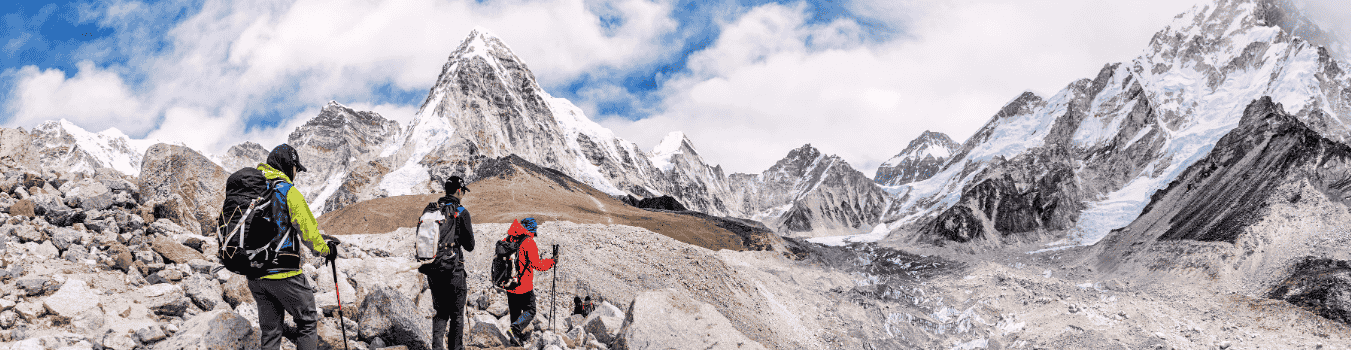
The Luxury Everest Base Camp Trek is the most famous trek to explore Everest Base Camp, offering luxury throughout the journey. It offers you the opportunity to explore the heart of the Khumbu region in a comfortable way. It offers the luxury of staying at a ⅘-star hotel in Kathmandu, as well as comfortable tea houses and lodges with extra services. This trek also includes the option of helicopter return, skipping the trek back to Lukla. You can enjoy an aerial view of the Himalayas on the way back. It offers service of private vehicles. This trek ensures that you have an amazing experience with style and comfort, unlike the traditional Everest Base Camp Trek.
During the expedition, the trekkers will be accommodated in some of the best mountain lodges along the Everest path, with their own bathrooms (where applicable), warm rooms, comfortable bedding, and clean dining areas. The expedition takes the classic route through Namche Bazaar, Tengboche, Dingboche, Lobuche, and Gokyo to reach Everest Base Camp, where one can get close to Everest, Lhotse, Nuptse, Ama Dablam, and the Khumbu Glacier. One of the essential attractions is cultural immersion, as the path passes through traditional Sherpa villages, old monasteries, prayer-flag-adorned passages, and centuries-old trade routes. The combination of luxury comfort and traditional Himalayan culture makes the whole experience incredibly enriching and transcends typical trekking.
One of the characteristics of this tour is the rational use of helicopter flights, which significantly save time on the way, enhance safety in adverse weather conditions, and offer magnificent views of the Himalayas from the air. The helicopter trip between Kathmandu and Kala Patthar not only eliminates the long trek down the mountain but also turns the end of the expedition into a scenic helicopter flight over glaciers, valleys, and high passes. Through this, trekkers can complete the Everest Base Camp trip in a short time without feeling that the quality of acclimatisation and experience has been compromised. The Luxury Everest Base Camp Trek, in general, offers an exclusive adventure that effectively combines exploration, comfort, efficiency, and Himalayan splendor into a well-planned itinerary.
Why Trek with Nepal Outdoor Expeditions?
At Nepal Outdoor Expeditions, we believe every trek should be a seamless blend of adventure, comfort, and cultural discovery. Our experienced team handles all the planning, so you can focus on enjoying the stunning Himalayan scenery, local traditions, and meaningful moments along the trail. Whether you're a first-timer or a returning traveler, we’re here to guide you through a trekking experience that’s smooth, rewarding, and truly unforgettable.
Highlights of the Luxury Everest Base Camp Trek
- Luxury Himalayan Lodging- Spend the night in the comfortable mountain lodges, heated rooms, quality bedding, and fine food even in the high altitude.
- Scenic Helicopter Transfers - Experience the best aerial sightseeing of the Himalayas in time-saving, comfort-oriented helicopters.
- Everest Base Camp Adventure - Walk at the base of the highest mountain in the world and be on the famous Khumbu Glacier.
- Kala Patthar Sunrise View - You can experience the most iconic panoramic sunrise over Mount Everest and the Himalayan range.
- Elite Comfort Trekking: This is an adventure without pain, with well-planned luxury logistics and the highest quality services.
- Professional High-Altitude Team- Trek- Experienced guides, porters and safety support to make the mountain trip safe enough.
- Individualized Experience - Small groups and individualized progression will enable personal attention and comfort during the trek.
- Less Strenuous Physical Work - With Helicopter returns, there are no lengthy descents, making the journey easier and more pleasant.
Route Overview
The luxury Everest Base Camp Trek route follows the famous trail in Nepal's Khumbu region and begins with an aerial flight from Kathmandu to Lukla, the gateway to Everest. The exercise begins at Lukla, ascending steadily down to Phakding and up the roaring Dudh Koshi River, crossing several suspension bridges hung with prayer flags, through pine and rhododendron forests.
The path continues to ascend steadily towards Namche Bazaar, the bustling Sherpa trading center and the country's cultural center. This first part of the trail is meant to help trekkers acclimatize to the rising altitude while also offering a magnificent first view of Everest, Lhotse, and Thamserku to start the high-altitude adventure.
Following a day of acclimatization in Namche, the trail continues to Tengboche and Deboche, crossing high hills and deep valleys with continuous Himalayan views. Trekking through traditional villages like Khumjung and Phunki Tenga, visitors arrive at Tengboche, the region's most significant monastery, which offers panoramic views of Ama Dablam, Everest, and Nuptse. It is at this point that the path continues into the alps, into the valley of Dingboche via open valleys, yak fields, and glacial rivers. As the flora grows lighter and the scenery turns rougher, trekkers witness the overwhelming shift from the forested hillsides to the stark Himalayan wildland, which gives them a strong sense of remoteness and scale.
The trail from Dingboche traverses the core of the high Himalayas, passing the memorial field of Thukla Pass and the rim of the Khumbu Glacier, then continuing to Lobuche and Gorakshep. The last path to the Everest Base Camp is a strenuous yet rewarding route through glacial moraine bands, ice formations, and rocky gorges to the base of Mount Everest itself. The peak of Kala Patthar provides the most iconic vantage point of the whole trek, offering a panoramic sunrise view of Everest, Pumori, Nuptse, and the great Khumbu glacier. The trip ends with a spectacular helicopter ride back to Kathmandu, offering an unforgettable aerial view of the route taken and a sight of all the points already visited, and providing a luxurious, time-saving way to return after an epic Himalayan adventure.
Best Season to Trek the Luxury Everest Base Camp
Visiting Everest Base Camp is a high-altitude experience that requires careful planning for fitness and gear, as well as the season. The season, trail conditions, visibility, and other cultural experiences differ greatly throughout the year, influencing the comfort, safety, and overall experience of the trek. Selecting an appropriate season also promises better mountain views, more secure trails, and a memorable Himalayan experience.
Spring (March to May)
The hiking season for the Luxury Everest Base Camp is considered one of the most attractive in spring, as the weather is favourable, the scenery is bright, and the mountain is clearly visible. Daytime temperatures at the lower elevation are 10°C - 20 °C, whereas higher elevations are -5°C-5 °C. The winter snow melts, and most trails are clear, leaving behind rich meadows, streams, and rock beds. The growing rhododendrons, primulas, and other alpine flowers color the landscape along the trekking path. Mountains such as Everest, Lhotse, Ama Dablam, and Nuptse are generally in good view and offer good photo-taking opportunities, especially in the early morning and late afternoon.
The spring trails are mostly medium in scale; however, trekkers must be wary of occasional snow deposits at high altitudes or slippery spots along streams of snow-melt. The wind is fresh yet not excessively strong, making the walk of an amateur and an experienced adventurer more comfortable. It is also the season of traditions, as the residents of this region are busy with festivals and farming, providing trekkers with insights into the lives of Sherpas. The season is popular among travelers, so lodges and tea houses may be crowded. Evenings may remain cold, particularly at elevations above 4,000 meters; therefore, suitable attire and warm sleeping material should be carried to keep you comfortable.
All in all, spring is an ideal blend of adventure and accessibility; it is full of natural beauty, the trail is tame, and the mountain views are breathtaking. The combination of temperate weather, floral scenery, and cultural vibrancy makes the season the best time for trekkers seeking both scenic and immersive Himalayan tours.
Autumn (September to November)
Autumn is considered the most popular trekking season in the Everest region, as the weather is stable, the skies are clear, and the mountain is at its best for viewing. The temperatures range from 12°C to 20°C in the lower areas and from -3°C to 7°C in the higher areas, which are conducive to long trekking days. The air in the post-monsoon season is cold and clear, and the views of Everest, Lhotse, Nuptse, and other nearby mountains are uninterrupted. Hiking is not a problem on the dry trails, and dangers such as slippery mud or swollen streams are not a threat as in other seasons. The scenery is also at its edges, and the rivers are running steadily, while the valleys mirror the area's natural colors, which are quite bright.
Autumn also offers rich culture, with villages along the path such as Namche Bazaar, Tengboche, and Deboche, which are lively with markets, local festivals, and religious ceremonies. This will enable trekkers to gain firsthand experience of Sherpa life and to witness Buddhist rituals, prayer flags, and architecture. Trails are not very difficult, though small snowfields can be seen even at Lobuche, Gorakshep, and Kala Patthar. The nights may be very cold, so one cannot do without good-quality sleeping bags and warm garments, particularly at higher altitudes. As a result of its popularity, lodges and tea houses are usually reserved in advance, so people intending to have luxury accommodation have to book in advance.
Simply put, autumn is the most promising period for clear skies, good mountain views, and good trekking conditions. It suits those travelers who prefer to make the most of their time in the Himalayas, without weather inconveniences, stunning views, and a diverse cultural experience.
Winter (December to February)
Trekking in the Everest region in winter is characterised by cold, especially at high altitude, where temperatures can drop to -10 °C at night. At low altitudes, temperatures are warm during the day, whereas on higher trails, there is a lot of cold, snow, and frozen areas around Lobuche, Gorakshep, and Kala Patthar. It is incredibly clear, with crisp air, and offers some of the best views of Everest and the rest of the mountain ranges, with dramatic skies and sun rays reflecting off snow-covered terrain. Winter is also an attractive season for serious photographers and those seeking seclusion, thanks to the low humidity and the absence of clouds, which create brilliant photographic opportunities.
The snow and ice make the trail that much harder in winter, requiring caution and, in some cases, crampons at higher altitudes. Nevertheless, hiking during this season is truly rewarding, as the mountain tracks are not that busy and it offers a calm, relaxing Himalayan adventure. Luxury lodges can be run with a minimal range of services; thus, it is necessary to plan in advance. However, the comfort and warmth offered in high-end lodgings will be sufficient for a pleasant stay. Proper layering, hydration, and pacing are stressed by guides to stay safe in colder weather and minimize the risk of altitude-related problems.
Winter is best suited to tourists who love calmness and beautiful mountain landscapes, as fewer people are on the trail. All this, with the bright skies, sharp mountains, and smooth scenery, makes it a memorable and reflective trekking experience, but only with adequate preparation for the cold and wind at higher altitudes.
Summer / Monsoon (June to August)
A monsoon climate is not very good for trekking because it usually rains heavily in the lower areas, and on occasion, it snows in the higher areas. The temperatures in the valleys range from 15°C to 25 °C, whereas areas at higher altitudes are cold and wet. The mountains are frequently shrouded in clouds, making them hard to see, and they are also less likely to offer panoramic views. The routes are muddy and slippery, the streams might be in full flow, and the landslide can at times interfere with the track, making walking more difficult and strenuous.
The Himalayas turn into a green paradise during the monsoon season despite these challenges. Rivers are enlarged, waterfalls drop down at a more impressive rate, and plants grow on the path. Trekkers can observe colorful plants, wildlife that flourishes, and the awesome contrast between storm clouds and towering mountains. The season also draws less traffic, and therefore, those willing to take the risk and venture out in the conditions receive a more intimate, quieter trek. Bad weather can sometimes delay or cancel helicopter flights, and trekking requires careful consideration of safety, especially on mountainous routes or when the trail is slippery.
Difficulty of the Luxury Everest Base Camp Trek
The Luxury Everest Base Camp Trek is rated moderate to challenging, and it should be undertaken by people of good fitness and experience in another trek. Although the trek is made more accessible by the luxury accommodations and helicopter options compared to more routine pathways, the high altitude, rugged landscape, and the days of trekking one must endure make it a challenge that requires preparation, stamina, and a strong mind.
Altitude Challenge
The major challenge is posed by the elevations, as the hiking route climbs around 2,900 meters to Lukla and 5,500 meters to Kala Patthar. Oxygen deficiency affects stamina, energy, and overall performance, and thus, appropriate acclimatisation is required to avoid altitude sickness. Days of continuous uphill hiking, 4-7 hours at a time, cause consistent body stress, particularly at higher elevations, where breathing becomes more labored.
Conditions of Terrain and Trail.
The walk starts on easy paths along the Dudh Koski River but gradually progresses to rough, mountainous terrain of rocky ridges, glacial moraines, and occasional snow or ice. Lower areas are through forest and villages and are quite stable and easier to walk through, whereas the high altitudes before and after Lobuche, Gorakshep, and Kala Patthar involve close walking and stamina. The path is characterized by long, continuous walks over flat ground, which require stamina.
Physical Endurance
The most important things for this trek are strength and stamina to complete it comfortably. Backpacking days are often long, often thin-air days, often uphill days, which demand proper pacing, nutrition, and hydration. Even luxury lodges are quite comfortable to recover in, yet trekkers will experience cumulative fatigue over several days. Extended distances like Namche Bazaar to Tengboche or Dingboche to Lobuche require energy reserves to cover the long distance.
Mental Challenge
Sightseeing in isolated, elevated areas is also a psychological challenge. Sharp descents, small paths, and frozen roads are not very pleasant to walk on, particularly to trekkers who are afraid of heights. Continued attention is needed to find safe ways to deal with uncomfortable heights, cold, or exhaustion. Mental fitness is equally important as physical fitness for completing the trek.
Preparation for Luxury Everest Base Camp Trek
Hiking to Everest Base Camp is a high-altitude expedition that cannot be undertaken without proper planning to not only keep one safe but also have fun. It is important to prepare both physically and mentally, as the trek involves long days of walking, changing terrain, altitude issues, and unpredictable weather. With adequate planning, trekkers will enjoy the magnificent Himalayan landscapes despite fatigue and injuries.
Physical Preparation
-
Endurance and Cardiovascular Fitness: The trek is a 4-7-hour walk over challenging, rugged terrain, often at high altitude. Several weeks of cardiovascular exercise through running, fast walking, cycling or climbing stairs before the trek enhances the stamina and efficiency of the body in the use of oxygen. Using interval training will help simulate the pain of uphill climbs.
-
Strength Training: Strength is needed in the legs, core, and back during trekking. Squats, lunges, step-ups, and core work, including planks and leg raises, are a few exercises that build the required strength. Bodyweight exercises are also relevant for training muscles to endure long trekking and carrying a daypack, even if you're not lifting weights.
-
Flexibility and Balance: Yoga, stretching exercises, and balance activities will help prevent injuries and improve stability on uneven surfaces. Hip, ankle, and knee flexibility are especially critical for navigating rocky trails, snow-covered areas, and glacial moraines.
-
Acclimatization and Altitude Training: Trekking at high altitude needs gradual acclimatization. Where feasible, practice increases in elevation or simulates elevation by stair climbing or incline running. It is essential to take acclimatization days during the trek, such as at Dingboche, to reduce the risk of Acute Mountain Sickness (AMS).
Mental Preparation
-
Resilience and Patience: The journey is physically challenging, and elevation can affect mood, energy, and inspiration. The psychological strength of the trekkers makes them resistant to fatigue, long-distance walks, cold weather, and some discomfort. Realistic goals, trek milestones, and focusing on the experience rather than the challenge will keep you motivated.
-
Stress Management: Hiking at high altitudes and in isolated locations may be stressful due to weather fluctuations, unfamiliar pathways, or physical exertion. In stressful or difficult times, meditation, breathing exercises, and mindfulness techniques can help you cope with stress and stay calm.
-
Attention and Concentration: The trail has some sharp drops, thin spots, and icy sections. Mental alertness makes navigation safer and reduces the risk of accidents. It can be helpful to train concentration and situational awareness through everyday activities or hiking prior to the trek.
-
Positive Visualization: Visualization is preparing mentally by imagining how you will finish the trek, arriving at the Everest Base Camp and standing at Kala Patthar is a way to build confidence and get you through the hard parts of the trail.
Luxury Everest Base Camp Trek Permits
To visit the Everest Base Camp, one must have official permits that grant legal access to the mountain, support conservation, and help maintain local communities. There are two permits that are vital: the Khumbu Pasang Lhamu Rural Municipality Permit, otherwise known as the Trek Card, and the Sagarmatha National Park Entry Fees. They are both compulsory and examined by authorities at strategic points along the trail, particularly around Monjo, Namche Bazaar, and Lukla.
Sagarmatha National Park Entry Permit
Everest Base Camp is located in the Sagarmatha National Park, a UNESCO World Heritage site and therefore highly regulated. The permit enables the trekkers to use the conserved region and donate to the parks and local causes.
-
The foreign nationals: NPR 3,000 each.
-
NPR 1,500 per person: SAARC nationals.
-
Citizens of Nepal: NPR 100 each.
The permit is issued in Kathmandu or by trekking agencies. This permit is verified by park rangers at the entrance point near Monjo among other checkpoints on the trail.
Khumbu Pasang Lhamu Rural Municipality Permit (Trek Card)
The Khumbu Pasang Lhamu permit is required to access the Khumbu region, replacing the previous TIMS card system. It guarantees that trekkers are registered with the local authorities and that they also support rescue and safety measures for trekkers in the event they are required.
-
Price: NPR 2,000/per person among foreigners.
It should be acquired in the town, normally in Lukla or Monjo, and is compulsory for all trekkers, including those using helicopters.
Additional Notes
-
Validity: Permits are valid for completing the trek within the designated region. Itineraries might involve a longer or extended itinerary, which must be confirmed or extended.
-
Validity: Permits are issued for the entire trek period of the area covered. Extended itineraries are subject to confirmation or extension.
-
Other Regions: If your expedition involves restricted or conservation areas in the surrounding areas (e.g., the Gokyo Lakes or the Gaurishankar Conservation Area), additional permits may be required.
Short Itinerary ( 12 days )
The hike starts when the trekking party is received at Tribhuvan International Airport in Kathmandu and driven to a 5-star hotel in the city. Once the guests are checked in, they have time to rest, unpack, and get used to Kathmandu's low-altitude climate. The hotel offers high-quality services, including comfortable accommodation, spa services, and good food, to ensure the trip begins on a good note. The city itself is a lively town with historic temples, busy streets, and local markets, providing trekkers with an understanding of Nepalese culture before they enter the Himalayan highlands.
Afterwards, in the afternoon, a complete trip briefing is conducted, covering itinerary details, safety measures at high altitudes, emergency procedures, trekking gear, etc. Guides discuss the benefits of acclimatization, proper hydration, and pacing to prevent altitude sickness, and answer trekkers' individual questions. The cultural and historical background of the Everest area is also presented in this orientation, which helps participants understand the importance of the villages, monasteries, and landscapes they will visit.
A welcome dinner will be held on the day, featuring traditional Nepali food in a lavish setting. Visitors can eat food cooked with locally produced fresh ingredients, and they can introduce them to other trekkers and staff members who will guide them through the hike. The night is a good time to relax and explore the city a little, setting the stage for a comfortable, well-equipped start to the expedition into the high mountains.
The expedition starts with an exciting flight from Kathmandu to Lukla, a port town in the Everest region. This scenic flight is about 45 minutes long and offers panoramic views of the Himalayan range, including the Ganges Himal and Langtang, terraced hillsides, deep valleys, and meandering rivers. The aerial view is interesting and enables trekkers to save energy by avoiding a lengthy, possibly difficult ride. On arrival in Lukla, trekkers are introduced to the guides and porters, briefed about the day's trek, and ready to embark on the first day of walking along the popular Everest trail.
The Lukla to Phakding walk is quite gentle, and one can enjoy the natural beauty of the place while introducing the body to a higher altitude. The route traces the Dudh Koshi River, traverses pine and rhododendron forests, and crosses a series of suspension bridges flanked by colourful prayer flags. The road is interspersed with small villages and tea houses that give one a glimpse of Sherpa life and day-to-day activities. The path is picturesque and quiet, offering a constant view of the surrounding hills and the faraway snow-capped mountains, and it is a good introduction to the Himalayan trekking experience.
When they arrive in Phakding, trekkers will be accommodated in a luxury lodge with hot rooms, clean bathrooms, and well-prepared meals. One can either relax, sightsee in the village, or have fun in the riverside environment. This first night on the trail is a crucial time to rest and take a break, so the body can adjust and become more agile for the more challenging journey to Namche Bazaar the following day. The comfort, scenery, and easy trekking will make sure that the introduction to the Everest journey is balanced and fun.
The third day will be the main milestone in the trek, as the path ascends between Phakding and Namche Bazaar, the Sherpa capital and a busy trading place in the Khumbu region. The path leads us to dense forest and rocky terrain, crossing by a lot of suspension bridges above the rivers of Dudh Koshi and Bhote Koshi. Trekkers can enjoy slow paces and wide vistas of the great Himalayan mountains, such as Thamserku, Kusum Kanguru, and Kongde Ri, which offer excellent photographic opportunities. The natural environment changes from forests to open valley landscapes as the trail nears Namche, providing a sense of what the alpine environment would be like farther into the Himalayas.
During the expedition, the trekkers are taken through the old Sherpa towns, where the people are agriculturalists who move around with yaks and run monasteries. The cultural heritage of these villages is abundant, as the travellers can see prayer flags, mani stones, and small stupas that signify spiritual importance along the path. The villages have tea houses and lodges that offer rest stops and opportunities to interact with local folk, giving trekkers insight into Sherpa culture, history, and life. The trek is also adventurous and educational, thanks to the blend of natural beauty and cultural exposure.
When one arrives in Namche Bazaar about 5-6 hours after Phakding, they are greeted with an awe-inspiring moment upon reaching the heart of the Everest region. The town has small markets, cafes, and high-quality lodges with luxury amenities like heated rooms and private bathrooms. The guests can go around town or just relax, taking in breathtaking views of Everest and other mountains from the lodge balcony, or savoring local food. Namche is also an acclimatization point where trekkers can acclimatize to high altitude before starting the more difficult parts of the trek.
The fourth day will be devoted to acclimatization, a significant measure to help prevent altitude sickness and make the most of the trekking experience. The trekkers take a brief walk to Everest View Hotel, at 3,880 meters, where one gets the first glimpse of Mount Everest, Lhotse, and Ama Dablam. This moderate climb offers the body a slow introduction to the higher elevation and, at the same time, offers trekkers some of the most recognizable Himalayan views. On their way, the visitors will cross the Sherpa villages, prayer wheels, and mani walls, which will provide the impression of the spiritual and cultural diversity of the area.
Besides the increase, trekkers will have the opportunity to explore Namche Bazaar, commonly referred to as the Gateway to Everest. The town is full of markets that sell traditional handicrafts, trekking equipment, and local delicacies. A trip to a nearby museum or communicating with the Sherpa residents will help understand their history, mountaineering past, and culture (Buddhism). Light activity, coupled with exploration of the culture, ensures that the body adapts effectively and enables one to appreciate the traditions of a region.
The night is passed once again in the luxury lodge, with a warm dinner, facilities available, and a mountainous view from the balcony. The guides can also provide optional little walks or advice on what to prepare for the following day's walk to Tengboche. This day balances activity and rest, ensuring physical and mental preparation for the higher-altitude sections ahead.
On the fifth day, the trail ascends steadily through pine forests, rhododendron groves, and open ridges, offering views of Everest, Nuptse, and Ama Dablam throughout the day. The mountain trail is surrounded by small Sherpa villages where prayer flags are blowing in the wind, and citizens are going about their daily routine. This is a medium-level walk that combines steep slopes and flat roads across the Dudh Koski River valley. Here, we also conduct intensive observation of the customary stone houses, mani stones, and religious monuments, which enable trekkers to connect with the cultural and spiritual heritage of the Khumbu region.
The climax of this day will be a visit to Tengboche Monastery, one of the most important and largest Buddhist monasteries in the area. The monastery stands on a hilltop with panoramic views of Ama Dablam and other nearby mountains, and also offers visitors a chance to observe the daily practices of the monks living there. The monastery is also a spiritual retreat, providing trekkers with time to take in the dramatic views of the Himalayas. This cultural visit is followed by a trek to Deboche, where luxurious accommodations are available, with warm rooms and nutritious food.
The night in Deboche is quiet, with views of a wide range of mountains and the sound of the valley. The trekkers can unwind in the comfort zone as they recap the day before, preparing both mentally and physically for the extra-long climb to Dingboche the following day. Trekking Leaders provide guidance on managing altitude, tips for trekking, and places to see on the next trek, so no one goes without the information they need about high altitudes.
This day brings the trekkers into the high alpine region of Khumbu, where the forest cover reduces, and the terrain gets rougher. The path runs through the open valleys of the glacial streams, yak pasture, and continuous glimpses of the tall mountains such as Lhotse, Island Peak, and Ama Dablam. The pace in this part of the trek should be maintained, as the altitude begins to test physical fitness, though the path is not difficult, with well-maintained trails and frequent rest stops. Trekkers have a taste of the Himalayan primordial atmosphere and mountain vistas with an eventual view of the Himalayan wildlife.
Along the trail, small settlements and teahouses can be found, allowing the trekker to take short breaks, have a bite to eat, and meet local Sherpa families. The immersion into the culture is furthered, and mani walls, prayer flags, and stone chortens line the trail. Photographic sights are also the order of the day along the route, and one can see glaciers, river valleys, and spectacular ridgelines that lend the Everest region its grandeur. It is a 5-6 hour journey to Dingboche, where trekkers take time to acclimatize to the higher altitude and appreciate the scenery.
When they finally reach Dingboche, the trekkers have warmed rooms, hot showers, and hot meals to look forward to, and at 4,410 meters, it is a much-needed comfort. The night is spent resting and getting used to it, and walking to the neighboring hills, which are optional but help improve adaptation. Guides also offer nutritional, hydration, and pacing advice to trekkers to prepare them for a more challenging trek to Lobuche and Gorakshep in the days to come. The comfort, culture, and high-altitude experience all add up to make Dingboche a satisfying destination and an essential acclimatization point.
Today is the time to acclimatize to a higher altitude and enjoy the spectacular alpine scenery. There is an optional excursion to Nangkartshang Peak, 5,121 meters, offering panoramic views of Ama Dablam, Lhotse, and the rest of the high Himalayas, giving an idea of the scale and magnificence of the region. The hike is of moderate difficulty and offers not only acclimatization but equally rewarding photographic possibilities through glacial moraines, rocky ridges, and open valleys.
On the climb, the trekkers pass through very sparse alpine vegetation and yak-grazing fields, stopping at the occasional teahouse for refreshments. This mountaineering adventure brings out the stark beauty of the Himalayas, which, in contrast to the forested lower areas explored earlier. Guides also stress on appropriate pacing, taking enough water, and watchful observation of signs of altitude sickness, so that the body can adapt comfortably to the rising height.
The night is spent again in the comforts of the luxury lodge in Dingboche, where warm food, cozy rooms, and good mountain views are the essentials at high altitude. Trekkers have the opportunity to reflect on the day's experiences and make the next day more challenging by ascending to Lobuche, which is longer and more strenuous. Acclimatization is a fairly productive and pleasant experience due to moderate activity, cultural immersion, and luxury accommodation.
The day will be about hiking deeper into the high Himalayas, leaving behind the pastoral scenery of Dingboche and entering harsh glaciers. The route passes through fields of memorials to those who lost their lives while climbing Everest, offering a time to reflect on the harsh environment. Trekker travelers follow rocky trails and moraines, with views of snow, making the Pumori, Nuptse, and Cho La iconic peaks clearly visible during the day. It is a middle-level difficulty that presupposes slow movement and consideration of altitude acclimatization.
Trekking through it, one can encounter small settlements and teahouses spread across the way, and they serve hot food, drinks, and rest areas. The high altitude and dramatic landscape make the environment feel more remote and adventurous, providing the traveler with a real Himalayan trekking experience. Trekking guides also mark important landmarks, local traditions, and safety measures to keep the trekkers informed and ready. This day is a fundamental part of the Everest Base Camp trail, a blend of physical challenge and scenic views.
On reaching Lobuche, trekkers are accommodated in a luxury lodge with warm rooms, comfortable bedding, and freshly cooked meals at extremely high altitude.
The night is spent resting and hydrating, and preparing for the trip to Gorakshep and Everest Base Camp, the highlight of the trip. This high-altitude stop is a memorable part of the trek, thanks to the lodge's awe-inspiring surroundings and its comfort.
The most memorable and gratifying day of the trek is Day 9, when the travelers reach Everest Base Camp. The trail leading out of Lobuche climbs gradually to Gorakshep through glacial moraines and high-altitude terrain, offering breathtaking views of Pumori, Nuptse, and the Khumbu Icefall. When trekkers reach Gorakshep, they are geared up for the last push to Everest Base Camp, which is a 2- to 3-hour walk across the Khumbu Glacier. This part is physically challenging yet very satisfying, leading to the base of the world's tallest peak.
The trekkers can see the icefalls, tents of climbers about to start up, and the eye-catching surrounding mountains at the Everest Base Camp. This is the final part of the trip, giving plenty of time to take pictures, contemplate, and rejoice about getting to one of the most legendary places in the world. It is the role of guides to ensure everyone is safe and moving at a slow enough pace on the high-altitude trek, avoiding altitude-related effects on trekkers. This day is memorable for its combination of success, landscape, and culture.
Trekking back to Gorakshep in the afternoon will enable trekkers to comfortably rest at the luxury lodge, with hot meals, hot beverages, and scenic mountain views. It is spent relaxing after the day's labor and getting ready to hike up to Kala Patthar in the early morning the following day. After one of the most demanding days of trekking, the lodge offers much-needed comfort at high altitude, easing the process of rest and acclimatization.
The day starts with an early morning walk to Kala Patthar, the highest point of the trek at 5,545 meters, where one enjoys the most spectacular panoramic views of Mount Everest, Lhotse, Nuptse, Pumori, and the huge Khumbu Glacier. The increase begins before sunrise, and the trekkers get the first light on the Himalayan mountains, which makes for a spectacular view and is frequently called the main highlight of the whole trip. The route is not very difficult or rocky, but can be overcome with gradual steps. A professional guide also helps ensure safety on the path during the hike.
At the top of Kala Patthar, trekkers are offered a panoramic view of Everest and other mountains without interruption, which gives them a clear photo opportunity and a sense of achievement. This is the only view of the Khumbu Glacier and Base Camp region, which allows trekkers to appreciate the scale of the Himalayan landscape. There is ample time to spend at the viewpoint, taking photographs, resting, and reflecting on the experience before returning to Gorakshep.
The Gorakshep to Kathmandu helicopter flight in the afternoon is safe and comfortable, offering a visual treat of the mountains, valleys, and glaciers without the long descent, and ensuring a smooth take-off and landing in Kathmandu. On their arrival in Kathmandu, the trekkers are taken to a luxury 5-star hotel, where they receive warm showers, fine food, and comfortable rooms, which provide a great relief. Leisure time, cultural and shopping in Thamel is free in the evening, and it provides a trekker with an opportunity to take time to reflect on the Himalayan adventure at ease.
This is the day of flexibility in Kathmandu, which will be used either to rest and recover or for further sightseeing following the high-altitude trek. When staying at the hotel, guests will have access to luxury services, including a spa, swimming pools, and dining at the restaurant, or they may visit the historic landmarks of Kathmandu, such as Swayambhunath (Monkey Temple), Boudhanath Stupa, Pashupatinath Temple, or Durbar Square. This day will be an easing back into low altitude, with the added perks of cultural immersion to augment the trekking experience.
It is also possible to do all the last-minute shopping, souvenir hunting, or individual exploration of Thamel and the surrounding areas during the free day. Tours of local art and handicrafts, as well as traditional Nepalese food, would be arranged for those interested. For trekkers who would enjoy time to reflect, the hotel is well-placed to offer a serene atmosphere for digesting the high-altitude experience and staying physically and mentally rejuvenated before they embark on the journey.
A farewell dinner is also usually held in the evening, upon the successful completion of the Everest adventure. This event is a time to exchange experiences with other trekkers and guides, tell the highlights of the trek, listen to folk music, and eat. This day marks the perfect end to the Himalayan expedition, offering luxury comfort, cultural exposure, and reflection.
The last day of the Luxury Everest Base Camp Trek includes a hassle-free transfer from the hotel to Tribhuvan International Airport so you can fly onwards. Depending on the flight times, travelers can have a relaxed morning in the hotel, pack, and spend the last few hours sightseeing. It is the culmination of an adventure tour of high levels, comfort, mixed with cultural exposure in one of the most beautiful places in the world.
The airport transfer is usually arranged in a private car with the aid of guides, making it a convenient and safe event. In the morning, trekkers will be able to reflect on the memories they have made over the last 12 days, the exotic streets of Kathmandu, the quiet Himalayan scenery, and the final success of reaching Everest Base Camp and Kala Patthar.
Leaving can be both painful and fulfilling for many, as at the end of the trip, one is satisfied with a sense of achievement, memorable panoramic views, and cultural experiences that characterize the Everest region. These three components of the luxurious accommodation, helicopters, and the professional support for the trekker make it certain that the adventure will be completed on an elevated note, with the traveler having a recollection of the comfort and the adrenaline rush in the Himalayas.
Cost Includes
Included:
-
Cost of luxury accommodation.
-
Cost of standard meals like western, Nepali and indian cuisine.
-
Cost of permits
-
Cost of private porters and Guides(licensed)
-
Cost of helicopter return
-
Cost of domestic flight to Lukla.
-
Government and local taxes.
Cost Excludes
Excluded:
-
International flights
-
Personal expenses(snacks, drinks,wi-fi, laundry, hoy showers)
-
Tips to guide/porters
-
Travel insurance
-
Visa and airport fees
Accomodation
And here is where the luxury part will actually begin to mean something, not just a mere name. Your destinations are not the traditional teahouses with rickety floors and shared bathrooms, but are high-quality lodges and luxury mountain houses. Consider warm beds, fine linen, and, in some instances, even hot shower-baths a weird, delightful luxury after a 7-hour journey through rocky terrain. At the lower elevations, rooms can even have Wi-Fi and electricity, which is fantastic when you recall the fact that only a day ago, you were passing by yak herders and prayer flags.
In even more remote areas, such as Dingboche or Lobuche, where infrastructure is bound to decline, the lodges are still selected based on cleanliness, warmth, and the little extra effort to make a location feel like home. Warmed rooms, and electric blankets, and as far as possible good bathrooms. It is not five-star hotel level, of course, but when your feet are screaming, and the wind is tearing off your fingers, it seems as near as you can come to being luxurious in the Himalayas. Weirdly enough, even minor gestures, such as a warm cup of tea in the room, a chair by the window to watch the sunset, etc., may be considered as a sort of unquestionable luxury.
Food Along the Trek
Food, now, however, as it is more than fuel, is oddly a morale booster. Breakfasts are substantial, even muesli, pancakes, eggs, or freshly baked bread, and coffee, which really tastes like coffee, the gift of 3,500 meters. Lunch and dinner combine traditional Nepali dishes such as dal bhat, momos, and thukpa with pasta, grilled vegetables, and sometimes meat, such as yak steak. It is a good menu, the type of menu that makes you stop halfway through eating and say to yourself,
The nutrition of high altitude is not only about the taste, but also about maintaining a constant energy level. Meals are balanced, snacks are served (including fruit, chocolate, or energy bars), and at some lodges, even herbal teas and hot chocolate are offered to relax exhausted muscles. In exceptional situations, when your club is small, you can hire a personal chef, who could prepare foods based on your dietary preferences, vegan, vegetarian, gluten-free, etc. It is a strange but still delightful contrast: the rough, crass Himalayas outside and in, and this cosy, refined food that continues to make you smile despite the elevation.
Although supply lines get sketchier the closer you get to Base Camp, the focus on fresh, well-prepared, hygienic meals persists. And the last celebratory meal in Kathmandu, of course, is always a sort of period with which you can say, Yes, you have done it, now you can have something civilised.
Guide and Porter Luxury Everest Base Camp Trek
Thus, it is one of the first things that strikes you about this luxurious trek that you do not end up wandering without any clue in the mountains, which, frankly, is a good thing. You have a government-licensed English-speaking guide who has been following you everywhere, or perhaps I had better say leading you, since they are not trailing you, but explaining the mountains to you. These guides are not GPS devices with legs; they know the path like the back of their hand, can explain why prayer flags fly in a specific pattern, and they will likely identify a caravan of yaks somewhere in the distance or a monastery somewhere in the hills. And they are also, by the way, closely monitoring your breathing to ensure that you are not succumbing to altitude sickness, delicate but very vital.
Then there are the porters, who somehow manage to lighten the entire thing. You drop your duffel bag, say 15 kilograms or so, and then your back can really feel like it is having a nice time instead of screaming at you after the first two hours. One porter per two trekkers is the standard ratio, and this appears to be generous until you consider the amount of baggage a human being can ferry up and down those paths. They also assist with room setup, equipment placement, and even pushing you up the obstinate parts of the trail. You would love to leave it all to them, but lose some of the little successes of getting to a vantage point and saying to yourself,
A small point: although the package will include guides and porters (food, accommodation, insurance, everything), the socially required aspect is at the end, when you give a tip or a small present. Suppose it is like tipping, not only with money but with thanks. They have had you in freezing mornings, the thin air, and long stretches of trail where your legs were really asking you about your life choices.
Equipments
The trail has fluctuating temperatures, moderate altitudes, and evolving weather patterns; therefore, having a plan or packing strategically will help us be ready for both the physical and cultural needs of the journey.
Clothing Essentials
-
Layering Clothing: Base layers: moisture-wicking, Mid-layers: insulation, outer-layers: wind and rain. In higher villages, it may drop to 5°C, whereas in Pokhara it can reach 20°C; thus, layering is a good option, as it offers a range.
-
Trekking Jacket: This is an essential waterproof and windproof jacket for rainy days when one hasn't foreseen the weather.
-
Trekking Pants: Light, fast-drying pants for long walks; for warmer weather, wear thermal pants.
-
Warm Clothing: Beanie, gloves, and scarf during mornings and evenings when the altitude is higher.
-
Trekking Socks: Thick, moisture-wicking socks to keep feet warm and prevent blisters.
-
Hat and Sunglasses: Sun protection: Sometimes it is a good idea to wear a hat and sunglasses because the sun is very strong, even at moderate altitudes.
Footwear
-
Trekking Boots: Waterproof boots with good ankle support, which are strong enough to go through steep and rocky or slippery trails.
-
Camp Shoes / Sandals: Light shoes to wear in the evening and rest in tea houses.
Backpack and Daypack
-
Main Backpack (30-40L): This bag is used to carry personal belongings, clothes, and equipment.
-
Daypack (15-20L): To keep water, snacks, camera, and other necessities on daily hikes.
Sleeping and Camping Gear
-
Sleeping Bag: Lightweight, small and can withstand temperatures down to -5 °C when used overnight in high altitudes.
-
Travel Pillow: This is not necessary, but it will make the journey to tea houses more comfortable.
Personal and Health Essentials
-
Water Bottle/Hydration System: 2 liters minimum, purification tablets or a water filter suggested.
-
Sunscreen and Lip Balm: SPF 30+ to resist powerful UV rays.
-
Personal Toiletries: Toothbrush, toothpaste, biodegradable soap, hand sanitizer, quick-dry towel.
-
First Aid Kit: Bandages, antiseptic, blister care, painkillers, over-the-counter medications for minor ailments, and altitude sickness medication (e.g., Diamox, but only with advice).
-
Trekking Poles: Can be used in steep ups/downs and in cases where the knee is strained.
Technology and Navigation
-
Camera / Smartphone: To take panoramic shots and other cultural scenes.
-
Power Bank: Necessary because of a power deficiency in the trail.
-
Headlamp/Flashlight: This comes in handy when an early start is required or tea houses have low lighting.
-
Offline Maps / GPS Device: It is important when geographical connectivity is low.
Travel Documents and Money
-
Passport and Visa: Have photocopies as insurance.
-
Cash Nepali: Small-value currency is required, as most tea houses do not accept cards.
Optional Items
-
Fast foods and power bars to give energy for long walks.
-
Pen or paper to note down your trip.
-
Smart and lightweight binoculars for seeing birds or mountains.
Culture Everest Base Camp Trek
The need to hike to the Everest Base Camp does not just lie in the fact that there are dramatic peaks and sweeping valleys that make up the Khumbu region but also, the cultural tapestry that makes the region up are also intriguing. The trekkers travel on their way to the base camp of Everest through Sherpa villages whose characteristics and heritage are different and unique as they ascend Lukla to Everest Base Camp. These villages are located very far above the tree line and at the same time have deep connections to very old traditions and they mix their daily lives with very old forms of spirituality.
The area has a majority religion of Buddhism, and monuments, mani walls, chortens, prayer flags, and ritual stupas can be found along the path. As an illustration, the Tengboche Monastery is one of the most important spiritual centres of Khumbu, where people can not only pray to God but also see Everest, Ama Dablam, and other mountains that surround the region, reminding us of how the world of Khumbu is connected to its landscape and religion.
Meetings with the representatives of local Sherpa groups display the strength of mountain life and the friendliness. The trekkers can see farming, caravans of yaks and the old-fashioned stone houses. Even a bow showed respect and simple gestures such as walking clockwise around mani walls, or taking note of the local customs is welcome and adds to the experience. This is because the cultural rhythm one experiences on the trail is what provides depth and meaning to the physical adventure, and therefore, the trek is more than a scenic adventure, but also a cultural experience.
Everest Base Camp Trek Travel Insurance
The travel insurance is a crucial part of the planning of a trip to the Everest Base Camp. Before travelling, policies need to be insured and should not simply include such aspects of trip cancellation or lost baggage, but also include such items as medical costs, emergency evacuation, and high-altitude rescue. This would particularly be crucial considering the rugged topography and high altitude in question, as the evacuation of the helicopters or a medical operation could be very costly.
Policies are not vetted at every checkpoint, but most reputable trekking operators require evidence of travel insurance before they can guarantee participation in the trek. An appropriate policy must also address trekking up to not less than 6,000⁻ above and provision of emergency helicopter evacuation as a minimum. Certain insurers will offer specific high-altitude trekking packages, whereas others will require an add-on rider for these activities.
Other coverages under which travel insurance is offered include delay of the trip, cancellation, personal liability as well as medical repatriation. Even though not all travellers will opt for such cover, the dangers involved, especially at high altitudes, make the insurance a wise addition to the list of activities rather than a luxury.
Visa on Arrival for Nepal
Majority of the international tourists arriving in Nepal are able to acquire tourist visa upon arrival at Tribhuvan international Airport in Kathmandu or at specific land border entry points. This is a required visa to enter Nepal, and one must obtain it before commencing any trekking activity.
Depending on the time that one wishes to stay, visa charges differ. The existing fee rates are around USD 30 /15 days, USD 50 /30days and USD 125 /90 days but these rates are subject to change and must be verified before travelling. Payments are usually made in cash. International visitors need to be able to provide a passport that has a minimum of six months in its validity before the scheduled departure date.
One can also apply in advance for a Nepal visa at any embassy or consulate. Others who are trekkers opt to do so so that they save time wasted in the long queues during arrival. In whichever way, it is a must to get the right visa prior to the trek to be legally allowed to enter and onwards travel trouble free to the Everest region.
Trip FAQS
The optimal trekking windows are spring (March–May) and autumn (September–November). Spring brings blooming rhododendrons and clear skies, while autumn offers stable weather and crisp mountain views. Winter (December–February) is colder, with shorter daylight hours and risk of heavy snow, whereas the monsoon season (June–August) brings rain, slippery trails, and limited visibility. Luxury packages often schedule treks in peak seasons to ensure comfort and safety.
The trek is moderately strenuous to strenuous, covering long daily walks (5–7 hours on average) with significant altitude gain. Altitudes reach up to 5,364 m at Everest Base Camp and 5,545 m at Kala Patthar. Trekking at high altitude requires endurance, core and leg strength, and acclimatization. Luxury packages reduce strain by providing guides, porters, and carefully planned rest days to mitigate altitude sickness.
Two main permits are mandatory:
-
Sagarmatha National Park Entry Permit: NPR 3,000 for foreign nationals (NPR 1,500 for SAARC).
-
Khumbu Pasang Lhamu Rural Municipality Permit: NPR 2,000 for foreign nationals.
Agencies typically arrange these permits on your behalf, ensuring smooth processing and compliance with local regulations.
Yes. Luxury trekking packages provide licensed English-speaking guides and professional porters, typically at a 1:2 ratio (one porter for two trekkers). Guides handle navigation, acclimatization advice, and cultural insights. Porters carry luggage, set up rooms, and assist during challenging sections of the trail. Their salaries, accommodation, and insurance are included in the package.
Luxury packages offer premium lodges and boutique mountain homes along the trail. Rooms usually feature comfortable beds, private bathrooms where possible, and heating at higher altitudes. At lower elevations, some lodges include Wi-Fi and electricity, while higher lodges focus on cleanliness, warmth, and comfort despite logistical limitations.
Meals are nutritionally balanced and diverse, combining Nepali, Tibetan, and international cuisine. Breakfasts might include eggs, pancakes, porridge, and fresh bread. Lunches and dinners feature dal bhat, momos, thukpa, pasta, and vegetables, sometimes including meat dishes such as yak steak. Snacks, herbal teas, and hot chocolate are available throughout the day to maintain energy at high altitude.
At lower elevations (Lukla, Namche Bazaar), lodges offer electric outlets and sometimes Wi-Fi, often for a small fee. Higher up (Dingboche, Lobuche, Gorakshep), electricity is limited to solar or generator power, and connectivity is patchy. Mobile networks such as Ncell and Nepal Telecom may work sporadically. It’s recommended to carry a power bank and plan for intermittent internet access.
Comprehensive travel insurance is mandatory, covering medical emergencies, high-altitude trekking, helicopter evacuation, and trip interruption. Policies should explicitly cover trekking up to at least 6,000 m. Insurance protects against high costs associated with rescue, medical care, or unexpected delays in remote regions.
More Trip Informations
If you are interested in similar adventures: