The Annapurna Circuit Trek is one of the world’s most famous long-distance hikes. It loops around the impressive Annapurna Massif in central Nepal. For decades, it has attracted adventure seekers, nature lovers, and photographers from around the globe—especially from the United States.
This trek is more than just walking through the Himalayas. It’s an adventure that blends high mountain passes, Buddhist monasteries, deep valleys, and warm local hospitality. For American travelers seeking a life-changing experience, the Annapurna Circuit is an excellent choice. It offers physical challenges, cultural immersion, and breathtaking scenery.
In this guide from Nepal Outdoor Expeditions, you’ll learn how to plan, prepare for, and enjoy the Annapurna Circuit safely. From route details to permits, packing lists, and insider tips, this is your complete resource for making the most of your Himalayan journey.
For American travelers seeking adventure, authenticity, and breathtaking views, the Annapurna Circuit Trek offers a truly unforgettable experience. You’ll walk ancient trails, cross high passes, and explore the rich cultures of Nepal’s mountain communities.
At Nepal Outdoor Expeditions, we ensure your trek is safe, well-organized, and unforgettable. Our local team takes care of everything—permits, mountain lodges, guides, and logistics—so you can focus entirely on enjoying your journey.
Quick Facts
Region: Located in the Annapurna Conservation Area (ACA), covering Lamjung, Manang, Mustang, and Myagdi districts. The route circles the Annapurna Massif, home to Annapurna I (8,091 m).
Trip Duration: Typically 15–20 days; shorter 8–12 day options available with jeep transfers or flights.
Best Months:
- Autumn (Sept–Nov): Clear skies and best mountain views.
- Spring (Mar–May): Flowers in bloom and pleasant weather.
- Avoid the Monsoon (Jun–Aug) due to slippery trails and mid-winter (Dec–Feb) if you dislike cold and snow.
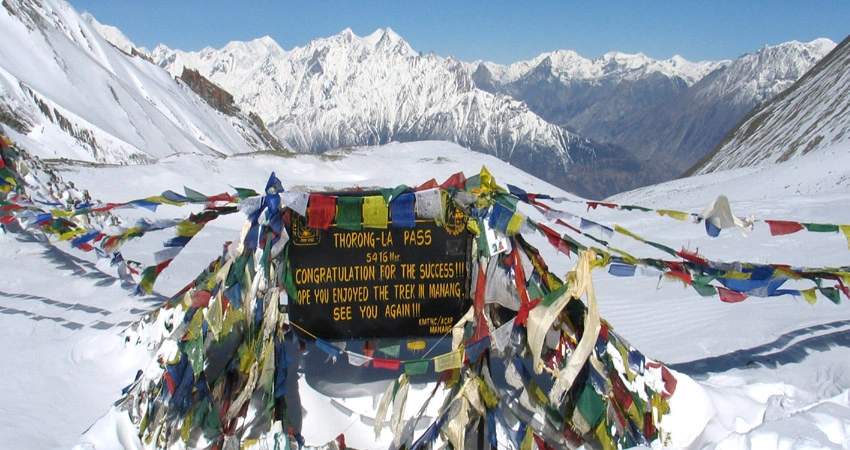
Max Elevation: Thorong La Pass — 5,416 m (17,769 ft), one of the world’s highest trekking passes.
Difficulty Level: Moderate to challenging; requires good physical fitness and readiness for extended walking days and high-altitude conditions.
Key Attractions: Thorong La Pass, Muktinath Temple, Manang Valley, Tatopani hot springs, diverse landscapes, and close-up views of Annapurna and Dhaulagiri ranges.
Why American Travelers Love the Annapurna Circuit
For travelers from the United States, the Annapurna Circuit offers a uniquely fulfilling adventure. It blends nature, culture, and personal growth in a way that commercial tourist destinations rarely can.
Trekking in Nepal is about simplicity, connection, and authenticity. Along the way, you’ll pass through traditional villages, unwind in cozy tea houses, and share stories with locals and fellow hikers from around the world.
Why It’s Perfect for Americans
Easy International Access – Kathmandu is easily accessible from major U.S. cities through reliable transit hubs, including Doha (Qatar Airways), Dubai (Emirates), and Delhi (Air India).
Budget-Friendly Experience – Compared to trekking or skiing in the Rockies or the Alps, the Annapurna Circuit offers an affordable yet world-class adventure.
Rich Cultural Immersion – Americans often appreciate cultural discovery, and here you’ll experience Buddhist and Hindu traditions up close.
Safe and Supportive Environment – Nepal is renowned for its warm hospitality, well-marked trails, skilled guides, and reliable trekking infrastructure.
At Nepal Outdoor Expeditions, we’ve hosted many travelers from the U.S., including solo adventurers, couples, and small groups. Many describe the trek as “a reset button for life” — a chance to disconnect from digital noise and reconnect with nature, clarity, and purpose.
Trek Insights
How to Reach the Starting Point (h3)
Your journey begins in Kathmandu, Nepal’s capital city. Most American travelers arrive at Tribhuvan International Airport (KTM) via connecting flights through Doha, Dubai, or Delhi.
From Kathmandu:
-
Option 1: Drive 6–8 hours to Besisahar by tourist bus or private jeep — the traditional starting point of the trek.
-
Option 2: For a shorter version of the trek, you can drive from Besisahar to Chamje or Chame by jeep.
The trail circles the Annapurna range counterclockwise and typically ends in Jomsom or Pokhara. From there, you can fly or drive back to Kathmandu.
Transportation Options
Tourist Bus: Affordable option, around 8 hours to Besisahar.
Private Jeep: Faster and more comfortable — ideal for groups.
Domestic Flights: Available from Jomsom to Pokhara and from Pokhara to Kathmandu.
Nepal Outdoor Expeditions arranges all your transfers to ensure a smooth travel experience from arrival to trek completion.
Accommodation
You’ll stay in teahouses — family-run lodges offering basic rooms, warm meals, and a welcoming atmosphere.
-
Lower regions: Attached bathrooms and Wi-Fi available.
-
Higher regions: Shared facilities and limited electricity.
Rooms are simple but cozy, often with stunning mountain views.
Packing Essentials
Pack light but smart. Important items include:
-
Layered clothing (base, mid, outer layers)
-
Down jacket and sleeping bag (rated to –10°C or below)
-
Broken-in trekking boots
-
Headlamp, power bank, and water purification tablets
-
Trekking poles and a quick-dry towel
-
Personal medications and a basic first-aid kit
-
Passport, permits, and travel insurance documents
Nepal Outdoor Expeditions provides a comprehensive gear checklist, and key items, such as down jackets and sleeping bags, are available for rent.
Estimated Costs (Packages)
Costs vary depending on the services you choose:
-
Standard Package: $1200–$1500 (guide, porter, meals, accommodations, permits, transfers)
-
Luxury Package: $1800–$2500 (higher-end lodges, private transfers, domestic flights)
-
Independent Trekkers: $40–$60 per day
Trekking in Nepal offers exceptional value compared to similar multi-day treks worldwide.
Permits
Required permits include:
-
ACAP (Annapurna Conservation Area Permit): NPR 3,000 (~$22)
-
TIMS Card (Trekkers Information Management System): NPR 2,000 (~$15)
Nepal Outdoor Expeditions can prepare both permits prior to your arrival.
Full 15-Day Itinerary
Day 1: Arrival in Kathmandu (1,400 m) – Welcome to Nepal
Upon arrival at Tribhuvan International Airport, a representative from Nepal Outdoor Expeditions will greet you and transfer you to your hotel. Your first day is relaxed, allowing time to recover from the long journey. In the evening, you will meet your trekking guide for a detailed briefing on the route, permits, gear, and weather conditions. You can also explore the vibrant Thamel area, known for its trekking shops, cafés, and Nepali restaurants. Overnight stay at a comfortable hotel in Kathmandu.
Day 2: Drive from Kathmandu to Besisahar and Continue to Bhulbhule (840 m)
After breakfast, we begin the journey along the Prithvi Highway, passing terraced fields, hillside villages, and local markets. The drive to Besisahar takes around 6–7 hours. From there, a short drive brings us to Bhulbhule, a peaceful riverside village that marks the official start of the Annapurna Circuit. You’ll get your first authentic taste of rural Nepal — calm, green, and full of culture. Overnight stay in a cozy teahouse in Bhulbhule.
Day 3: Trek from Bhulbhule to Jagat (1,300 m)
Your first trekking day begins with gentle trails along riverside paths and terraced hills. You’ll cross suspension bridges and enjoy scenic views of waterfalls, cliffs, and small farming villages. Gurung and Tamang settlements offer opportunities for tea stops and snacks. Lunch is typically eaten midway through the trek — dal bhat is a favorite among trekkers for its energy-boosting and nutritious properties. After 6–7 hours of walking, you’ll reach the stone village of Jagat, surrounded by lush vegetation. Overnight at a local teahouse.
Day 4: Jagat to Dharapani (1,960 m)
After breakfast, the trail gradually ascends through subtropical forests and stone stairways. You’ll cross multiple suspension bridges and walk alongside the Marsyangdi River. The climate becomes cooler as you enter Manang District, and prayer flags and chortens reflect the region’s Buddhist influence. After 6–7 hours of trekking, you’ll arrive at Dharapani, a lively village where several trekking routes converge. Overnight at a teahouse.
Day 5: Dharapani to Chame (2,670 m)
The trail to Chame, the administrative center of Manang, winds through pine and fir forests. You’ll enjoy impressive views of Annapurna II and Lamjung Himal. The region is renowned for its apple orchards, traditional wooden homes, and serene atmosphere. After a 5–6 hour trek, you’ll reach Chame, where you can relax in nearby natural hot springs — a perfect way to unwind. Overnight in Chame.
Day 6: Chame to Pisang (3,200 m)
Today’s route passes through dense forests and narrow valleys, with dramatic cliffs and snow-capped peaks dominating the landscape. As the valley widens, the scenery becomes more open and arid. After approximately 5–6 hours, you’ll arrive in Pisang, a scenic mountain village beneath Annapurna II. You can explore the upper village, home to a beautiful monastery and traditional stone houses. Sunset views are especially stunning here. Overnight in Pisang.
Day 7: Pisang to Manang (3,540 m)
This is one of the most scenic days of the trek. The trail climbs gradually, offering panoramic views of Tilicho Peak, Annapurna III, and Gangapurna. You’ll pass through charming villages like Humde and Braga, each with distinctive architecture and ancient monasteries. By afternoon, you’ll reach Manang — a lively town known for its bakeries, cafés, and incredible mountain views. Trek slowly here as the altitude becomes more noticeable. Overnight at a teahouse.
Day 8: Acclimatization Day in Manang
Today is dedicated to rest and acclimatization. To support altitude adjustment, we take a short acclimatization hike — either to Gangapurna Lake or, for more experienced trekkers, Ice Lake (4,600 m). Both options offer excellent views. You can also visit the Himalayan Rescue Association center for safety advice about high-altitude trekking. In the afternoon, relax at a café and try Manang’s famous apple pie. Overnight in Manang.
Day 9: Manang to Yak Kharka (4,050 m)
After breakfast, the trail climbs steadily through juniper forests, alpine meadows, and yak pastures. The area becomes quieter and more remote, with fewer settlements and more expansive mountain views. The trek takes about 4–5 hours at a gentle, acclimatization-friendly pace. Yak Kharka — meaning “yak pasture” — features a few teahouses that offer warm meals and a comfortable resting place. Overnight in Yak Kharka.
Day 10: Yak Kharka to Thorong Phedi (4,450 m)
This trek is shorter but essential for proper acclimatization. The trail ascends through rocky terrain, crossing small wooden bridges and glacial streams. After around 3–4 hours, you’ll reach Thorong Phedi, the base camp for the Thorong La Pass. Many trekkers choose to stay here and rest early, while others may continue for another hour to High Camp (4,880 m) for improved acclimatization, spending the night in Thorong Phedi or High Camp.
Day 11: Cross Thorong La Pass (5,416 m) – Trek to Muktinath (3,800 m)
This is the most demanding yet rewarding day of the trek. We begin before dawn — usually around 4:00 AM — to cross the Thorong La Pass while the weather is calm. The ascent takes 3–4 hours and offers breathtaking views of the sunrise over the Himalayas. Reaching the top of the pass is an unforgettable achievement. Prayer flags flutter in the wind as the peaks glow golden in the early sunlight. After taking photos and resting, we begin the long descent to Muktinath, a sacred pilgrimage site for both Hindus and Buddhists. Overnight in Muktinath.
Day 12: Muktinath to Jomsom (2,720 m)
After breakfast, we descend through the Kali Gandaki Valley. The landscape becomes drier, with desert-like terrain, rugged cliffs, and sandy trails. We pass through Kagbeni, a traditional Tibetan-style village, where you can stop for tea or explore its monastery. By afternoon, we arrive in Jomsom, known for its strong winds and locally made apple brandy. Overnight stay in Jomsom.
Day 13: Fly or Drive to Pokhara (820 m)
Weather permitting, we take an early 20-minute scenic flight from Jomsom to Pokhara, offering stunning mountain views. If flights are delayed, we travel by road instead. Once in Pokhara, you can enjoy lakeside cafés, mild weather, and a relaxed atmosphere. Spend the day boating on Phewa Lake, visiting the World Peace Pagoda, or simply unwinding with views of Machhapuchhre (Fishtail Mountain). Overnight at a lakeside hotel.
Day 14: Drive or Fly Back to Kathmandu (1,400 m)
After breakfast, we return to Kathmandu via a 6-hour scenic drive or a short 25-minute flight. Back in the capital, you can shop for souvenirs or visit cultural landmarks such as Swayambhunath Stupa or Patan Durbar Square. In the evening, Nepal Outdoor Expeditions hosts a farewell dinner featuring traditional Nepali cuisine and cultural music. Overnight in Kathmandu.
Day 15: Departure Day
After breakfast, our team will transfer you to the airport for your departure flight. You leave Nepal with lasting memories — breathtaking mountain views, friendly encounters, and the achievement of completing one of the world’s most iconic trekking routes.
Tips & Recommendations
-
Train before your trip: Practice hiking 6–8 hours with a light pack.
-
Acclimatize properly: Do not rush; use rest days in Manang effectively.
-
Carry cash: ATMs are scarce and only found in major towns.
-
Stay hydrated: Aim for 3–4 liters of water per day.
-
Hire guides/porters: Supports the local economy and improves safety.
-
Get proper insurance: This must include coverage for high-altitude trekking and helicopter evacuation.
-
Respect local culture: Dress modestly and ask before photographing people or monasteries.
People Also Ask
1) How Long Does It Take to Complete the Annapurna Circuit Trek?
Typically, 15–20 days. It depends on where you start and finish, as well as the number of acclimatization days you include.
2) Do I Need Prior Trekking Experience?
No, but good physical fitness helps. Walking 5–8 hours daily on varied terrain is expected.
3) What Is the Highest Altitude, and Is Altitude Sickness a Concern?
The highest point is Thorong La Pass (5,416 m). Acclimatization days and slow ascents minimize the risk of AMS.
4) Is It Safe for Solo American Travelers?
Yes. Nepal is known for its safety and friendly locals. Many Americans trek solo or in small guided groups.
5) What Kind of Food Is Available on the Trek?
Mainly, there are Nepali and Tibetan dishes. You can also find a few Western options, like dal bhat, noodles, pasta, pancakes, and soups.
6) Are Vegetarian and Vegan Options Available?
Yes. Most tea houses offer vegetarian meals. Vegan travelers can find a wide range of plant-based options.
7) Do I Need Travel Insurance?
Absolutely. It must include emergency helicopter evacuation coverage up to 6,000 m.
8) Can I Rent Trekking Gear in Nepal?
Yes. Kathmandu and Pokhara have many rental shops for sleeping bags, jackets, and poles.
9) What About Phone and Internet Connectivity?
Wi-Fi is available in most villages for a small fee. Local SIM cards (NTC or Ncell) offer decent coverage.
10) How Much Cash Should I Carry?
Around NPR 300–400 for snacks, charging, hot showers, and tips.
11) What Type of Weather Can I Expect?
Cool mornings and evenings. Daytime is warm in lower areas, but nights above 3,500 m are freezing.
12) Are Guides and Porters Necessary?
While not mandatory, hiring them adds safety and supports local livelihoods. Nepal Outdoor Expeditions provides experienced, English-speaking guides.
13) Is Drinking Water Safe?
Tap water is not. Use purification tablets, filters, or buy bottled water (available almost everywhere).
14) What Permits Do You Require?
ACAP and TIMS are both easily arranged through Nepal Outdoor Expeditions.
15) Why Choose Nepal Outdoor Expeditions for This Trek?
We’re a trusted, local trekking company. We have experience with American travellers and offer ethical pricing. Our expert guides provide personalised support before and after your trek.