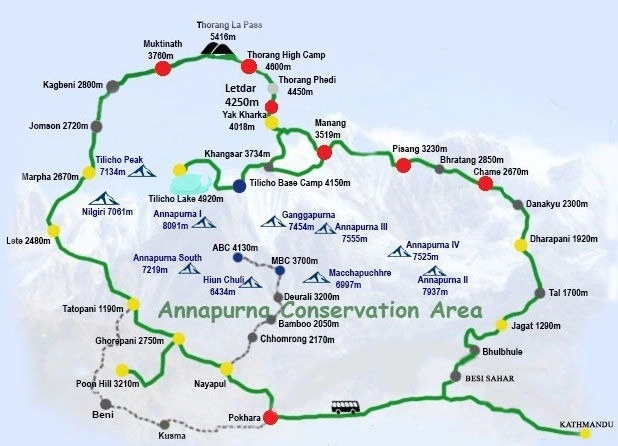
The Annapurna Circuit Trek is one of Nepal’s most popular trekking destinations. It circles Annapurna, the 10th-highest mountain in the world. The name “Annapurna” translates to “Goddess of Food.” This trek offers an unforgettable blend of culture, natural beauty, and adventure—a truly unforgettable experience of a lifetime. The itinerary and cost of the Annapurna Circuit Trek may vary depending on preferences and duration.
Many travelers assume that trekking the Annapurna Circuit is expensive, but that’s not necessarily the case. Nepal Outdoor Expeditions believes the Annapurna Circuit is for everyone—not just luxury trekkers.
Our affordable Nepal Annapurna Circuit trekking packages are designed for budget-conscious travelers and first-time trekkers who want to experience Nepal’s beauty, challenge, and culture without compromising on comfort or safety.
Quick Facts
-
Region: Annapurna Region, Central Nepal
-
Trek Duration: 12-18 days (depending on route and pace)
-
Best Months: March-May and September-November
-
Max Elevation: 5,416 meters (Thorong La Pass)
-
Difficulty Level: Moderate to Challenging
-
Key Attractions: Thorong La Pass, Manang Valley, Muktinath Temple, Tilicho Lake, Jomsom, diverse ethnic villages, and panoramic views of Annapurna I, Dhaulagiri, and Machhapuchhre
The Magic of the Annapurna Circuit
The Annapurna Circuit Trek is often called the “Classic Himalayan Trek” — and for good reason. It takes you through diverse landscapes in the central part of Nepal, offering panoramic views of nearly the entire Annapurna range. The route showcases everything from subtropical forests to high-altitude terrain, making it one of the most scenic and rewarding treks in the world.
The journey usually begins through lush lowlands and gradually ascends toward Gurung and Thakali villages. Along the way, trekkers encounter the rich culture, traditions, and warm hospitality of the local people. As you climb higher, the scenery transforms dramatically — snow-covered peaks, colorful prayer flags, and crisp mountain air create a truly magical atmosphere.
Highlights of the Annapurna Circuit Trek
-
Crossing Thorong La Pass (5,416 m): One of the highest trekking passes in the world.
-
Visit Muktinath Temple: A sacred pilgrimage site for both Hindus and Buddhists.
-
Cultural Diversity: Experience the shift from Gurung culture in lower altitudes to Buddhist traditions at higher elevations.
-
Majestic Mountain Views: Enjoy breathtaking sights of Annapurna II, III, and IV, Dhaulagiri, and Machhapuchhre (Fishtail).
-
Poon Hill Sunrise: Witness a mesmerizing sunrise over the Dhaulagiri and Annapurna ranges.
Why Choose Affordable Annapurna Circuit Trekking Tours
The word “affordable” often makes travelers think of something cheap or of low quality. However, with Nepal Outdoor Expeditions, affordability means smart travel — offering the best possible experience without unnecessary luxury costs. Here’s why our budget treks deliver exceptional value:
Same Spectacular Experience, Lower Price
Choosing a budget-friendly Annapurna Circuit trek doesn’t mean missing out. You’ll walk the same iconic trails, cross the same suspension bridges, and conquer the same Thorong La Pass as other trekkers. The only difference lies in efficient planning — spending wisely on what truly matters: the trail, the scenery, and the experience, all at a fraction of the cost.
Authentic Local Experience
Budget trekking keeps you closer to authentic Himalayan culture. You’ll stay in locally owned teahouses, enjoy home-cooked Nepali meals like dal bhat, and share stories with friendly locals. It’s not just about saving money — it’s about genuine cultural connection and experiencing life in the mountains as part of the community.
Small Groups and Personalized Care
At Nepal Outdoor Expeditions, we believe smaller groups lead to better experiences. Our Annapurna Circuit trekking packages are designed for small groups, ensuring personalized attention, flexible pacing, and a deeper connection with our guides. This approach blends adventure with comfort and care.
Quality Logistics and Safety
Affordability never means compromising safety. Our budget packages are carefully organized with professional planning, reliable transportation, and experienced guides. Each itinerary includes proper acclimatization days and safety briefings. We handle all logistics so you can focus entirely on your Himalayan adventure.
Transparent Pricing
With Nepal Outdoor Expeditions, what you see is what you get. Our 12-day Annapurna Circuit Trek, priced at USD 795 per person, covers all essentials — lodging, meals, guide, porter, transportation, and permits. No hidden fees or surprise charges. This transparent pricing ensures you know exactly where your money goes — toward real value and comfort.
Trek Insights
How to Reach the Location
The Annapurna Circuit Trek begins in Besisahar, a small town about 175 km west of Kathmandu. You can reach Besisahar by a local or tourist bus, taking approximately 6–7 hours depending on road conditions. While the early section of the trail is less scenic, many trekkers opt for a local jeep ride to save time. The trek usually concludes in Jomsom or Pokhara, from where you can take either a short domestic flight or a road trip back to Kathmandu.
Transportation Options
Traveling through the Annapurna region is flexible, with several transport choices available. From Kathmandu to Besisahar, you can take a local bus, tourist bus, or private jeep. Jeeps are faster but costlier, while tourist buses offer comfort and safety at a lower price. After completing the trek, travelers in Jomsom can either fly to Pokhara (a 25-minute flight) or enjoy a scenic 8–to 9–hour drive. From Pokhara, you can return to Kathmandu via a 6–8 hour bus ride or a 30-minute flight.
Accommodation
The Annapurna Circuit is well-equipped with teahouses and guesthouses offering clean beds and hearty meals, making it one of Nepal’s most comfortable treks. Most rooms are twin-shared with basic amenities, and some have attached bathrooms. Wi-Fi, hot showers, and charging facilities are available at lower altitudes, though limited at higher elevations. Budget trekkers can find affordable stays, while upgraded teahouses offer more comfort and mountain views for those willing to spend a bit extra.
Estimated Costs (Packages)
Trekking costs vary depending on the comfort level and services chosen:
-
Budget Packages: USD 600–900 (12–15 days) — basic teahouse lodging, local meals, permits, and a group guide.
-
Mid-Range Packages: USD 1,000–1,400 — added comfort, semi-private rooms, better food, and improved transport options.
-
Luxury Packages: USD 1,800+ — private guides, premium lodging, porters, and optional flight transfers.
No matter your choice, each package guarantees an authentic Himalayan experience tailored to your travel style and budget.
Permits
To legally trek the Annapurna Circuit, you’ll need two permits:
-
Annapurna Conservation Area Permit (ACAP): NPR 3,000 (~USD 22)
-
TIMS Card (Trekkers’ Information Management System): NPR 2,000 (~USD 15)
Both can be obtained in Kathmandu or Pokhara before your trek.
Sample Annapurna Circuit Trek Itinerary (12 Days)
Day 1: Kathmandu to Besisahar Drive (800 m): Starting your trip with the picturesque ride from Kathmandu to Besisahar will take you through terraced hills, river gorges, and Nepalese countryside villages, giving you an idea of what life in the Nepali countryside looks like.
Day 2: Walking between Besisahar and Dharapani (1,860 m): The path follows the Marsyangdi River and passes through beautiful villages and green forests. You will cross some suspension bridges and feel the cool mountain air upon arriving at Dharapani.
Day 3: Trek to Chame (2,670 m): The route leads further into the Annapurna region. You will walk through pine forests, cross waterfalls, and have your first close-up views of Annapurna II and Lamjung Himal before arriving at Chame, the district headquarters of Manang.
Day 4: Trek to Pisang (3,200 m): The trail gradually ascends, and the landscape becomes more dramatic. The skyline fills with snow-capped mountains as you pass through the village of Pisang, where you are greeted by Buddhist prayer wheels and Mani walls.
Day 5: Trek to Manang (3,540 m): The route leads to Manang, a beautiful Himalayan village surrounded by towering peaks. Here, you will start to notice the dry, desert-like scenery characteristic of the upper region. You usually stay near monasteries and admire the surrounding views.
Day 6: Individual Acclimatization in Manang: A rest day in Manang is necessary for a safe ascent. Short hikes to viewpoints such as Gangapurna Lake or Bhojo Gompa help your body adapt to the altitude. It is also an excellent opportunity to rest and get acquainted with the local mountain culture.
Day 7: Trek to Yak Kharka (4,050 m): Departing Manang, you’ll hike further into the alpine area. The air becomes thinner, and you may see grazing yaks in open grasslands. The views of Annapurna III and Gangapurna are particularly impressive along this section.
Day 8: Trek to Thorong Phedi (4,450 m): This is a short but steep climb leading to Thorong Phedi, the base camp of the Thorong La Pass. It’s a day to rest early and prepare for the big climb the next morning.
Day 9: Traverse Thorong La Pass (5,416 m) and Walk to Muktinath (3,800 m): The highlight of the trek is crossing the iconic Thorong La Pass. It’s not an easy climb, but every step is worth it when you stand on one of the highest trekking passes in the world. The panoramic Himalayan views from the top are breathtaking. You will then descend to Muktinath, a sacred pilgrimage site for Hindus and Buddhists.
Day 10: Trek to Jomsom (2,720 m): After visiting the Muktinath Temple, you will hike down the windy Kali Gandaki Valley to the town of Jomsom, a picturesque place known for its apple orchards and stunning mountain scenery.
Day 11: Drive to Pokhara (820 m): A picturesque road trip will take you from Jomsom to Nepal’s lakeside city, Pokhara. Here, you can relax, enjoy a good meal, and appreciate the peaceful scenery of Phewa Lake.
Day 12: Drive Back to Kathmandu (1,350 m): The trip ends with a pleasant drive back to Kathmandu. As you pass through rolling hills and scenic landscapes, you’ll leave with unforgettable memories of the mountains, people, and experiences that defined your Annapurna Circuit adventure.
Tips for Trekking the Annapurna Circuit on a Budget
- Carry a reusable water bottle and purification pills: Purchasing bottled water daily adds unnecessary cost and plastic waste. Save money and protect the environment by using purification pills or a reusable water filter.
- Get equipment locally and pack light: You can save a lot of money by renting jackets, sleeping bags, and trekking poles at affordable prices in Kathmandu or Pokhara.
- Order local food: Choose the local Nepali meal dal bhat — it’s hearty, healthy, and often served in unlimited portions. For trekkers on a tight budget, it’s the perfect choice.
- Small group travel: Traveling in smaller groups allows for cost-sharing on guides and porters, keeping prices low while offering flexibility.
- Use local transport: Consider using local buses instead of hiring a private jeep. They are slower but much cheaper and provide a more authentic travel experience.
- Book with a reputable local company: When you book with a Nepali-owned travel agency such as Nepal Outdoor Expeditions, you’ll receive fair pricing without overpaying foreign operators. Plus, your money directly supports the local economy.
FAQs
1. How Much Cash to Take on the Annapurna Circuit Trek?
It’s best to carry around USD 200–300 worth of Nepali rupees for personal expenses during the trek. This includes snacks, Wi-Fi, hot showers, charging fees, and occasional treats. Beyond Besisahar and Manang, ATMs become scarce, so it’s wise to withdraw enough cash before starting. In remote villages, credit cards are rarely accepted, making cash the most convenient and essential option for emergencies.
2. Can a Beginner Do the Annapurna Circuit Trek?
With proper preparation, yes, beginners can successfully complete the Annapurna Circuit Trek. The trail’s gradual altitude gain makes acclimatization easier. A decent level of fitness and preparation—such as walking or hiking 5–6 hours a day a few weeks before your trip—will greatly help.
3. Which Is Better: ABC or the Annapurna Circuit?
Both treks are incredible, but they offer different experiences. The Annapurna Circuit is longer and more diverse, featuring everything from lush meadows to arid highlands and the famous Thorong La Pass (5,416 m). The ABC Trek is shorter (7–10 days) and takes you straight into the Annapurna Sanctuary, surrounded by towering peaks.
4. How Difficult Is the Annapurna Circuit Trek?
The trek ranges from moderate to difficult. Expect 6–7 hours of walking daily, often on steep terrain and at high altitudes. The most challenging section is crossing Thorong La Pass, where thin air and freezing temperatures test endurance. Still, clear trails, teahouse accommodation, and acclimatization days make it achievable for trekkers with good physical fitness.
5. Are There ATMs on the Annapurna Circuit?
ATMs are available in Besisahar, Chame, and Manang, but they can be unreliable due to poor connectivity. Beyond Manang, the next ATMs are in Jomsom or Pokhara. To avoid payment issues, it’s best to withdraw enough cash in Kathmandu or Pokhara before the trek.
6. Can We Customize Our Annapurna Circuit Trek Itinerary?
Yes, absolutely! The Annapurna Circuit is highly flexible based on your time, interests, and fitness level. You can shorten sections with jeep rides, add acclimatization days, or include scenic detours like Tilicho Lake or the Nar-Phu Valley. Most local trekking agencies can tailor itineraries to fit your budget and comfort.
7. Do I Need Travel Insurance?
Yes, it’s highly recommended. Your insurance should cover high-altitude trekking (at least up to 5,416 m) and emergency helicopter evacuation. Medical facilities are limited in remote areas, so proper insurance ensures you’re covered in case of illness, injury, or trip cancellations due to weather or unforeseen events.
8. How Long Does It Take to Cross Thorong La Pass?
Crossing Thorong La Pass (5,416 m) usually takes 7–9 hours depending on weather and pace. Trekkers start around 4 a.m. to avoid strong winds and snow later in the day. The climb is gradual but demanding due to altitude and cold, and reaching the top followed by the descent to Muktinath is one of the trek’s most rewarding moments.
9. What Are the Best Side Treks on the Annapurna Circuit?
-
Tilicho Lake (4,919 m): One of the world’s highest lakes with stunning turquoise water.
-
Ice Lake (4,600 m): A steep but scenic day hike from Manang.
-
Nar-Phu Valley: A culturally rich and less-traveled route showcasing traditional Tibetan villages.
-
Milarepa Cave: A spiritual side trip near Braga offering serene mountain views.
These side trips add variety and deeper experiences to your trek without straying far from the main circuit.
10. What Wildlife Can Be Seen on the Annapurna Circuit Trek?
The Annapurna region is rich in wildlife. Trekkers may spot blue sheep, Himalayan tahr, langur monkeys, and colorful pheasants. Occasionally, you might glimpse a musk deer or even tracks of the elusive snow leopard at higher altitudes. Birdwatchers can enjoy sightings of Himalayan griffons, golden eagles, and other rare species throughout the trail.