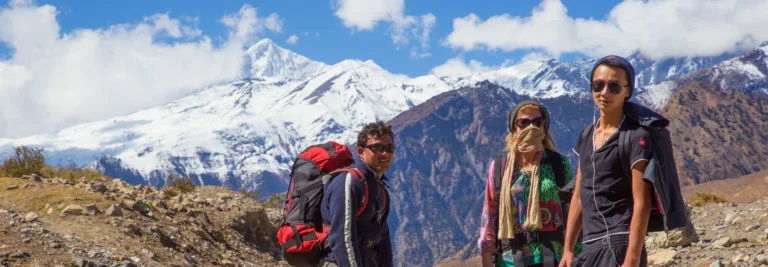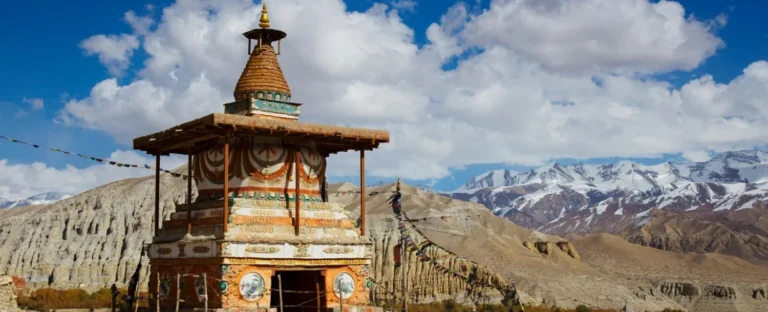

Imagine being in the Himalayas and not merely going somewhere but experiencing each moment of the journey. This is what yoga trekking is all about.
Yoga trekking is a combination of both, a strong practice of trekking in the wilderness and the mindful practice of yoga. You do not have to run, waiting at the next checkpoint, but rather stop on your way and have a break, stretch, meditate, and get in touch with yourself. It unites physical movement, breathwork, and inner awareness in one of the most beautiful landscapes on earth.
The majority of individuals tend to consider trekking as a physical challenge, and so it is. However, the main focus of regular trekking is on distance, elevation, and forward power of the body. Yoga trekking is different. It is a deliberate slowing down.
You begin your mornings with yoga or meditation and then go out to the trail. You do breathwork on ascent. You also make conscious pauses to look at the mountains, the silence, and the sensation your body is experiencing at that time. The trail is no longer a race; it is more of a moving meditation.
This type of adventure is for those who seek something beyond the physical adventure. It is particularly excellent among those who already engage in yoga and wish to exercise that practice in an environment that is meaningful.
It is also excellent with hikers who are fed up or stressed and need something to revitalize them and not get them tired. And even when you are a person who has never practiced yoga before but feels like it, yoga trekking in Nepal is one of the most natural ways to begin, since the mountains are able to make stillness feel utterly effortless.
In simple terms, in case you are looking to return to a trek feeling not only fit but also relaxed, yoga trekking may be the answer to your prayers.
Why Choose Nepal for Yoga Trekking?
The number of places to trek in the world is numerous, and the number of places to practice yoga is also numerous. And hardly any other country combines them as easily as Nepal does.
Nepal is a spiritual country, and the energy cannot be described but experienced. Being the birthplace of Lord Buddha and the land of the ancient monasteries, mountain temples, and centuries of the meditation tradition, this country makes it look all too natural. And when you get there, something goes slack in you.
The Himalayas are able to make everything stronger. A yoga session in front of snow-capped mountains and fresh mountain air in your lungs is an entirely different experience to a yoga session in a studio. The best aspect of nature is so overpowering here that you can hear your mind emptying itself. There is no need to coerce.
And in Nepal, yoga is not a trend, as in many other places. Mindfulness, simplicity, and compassion are values that have been generations old in this culture. That sense of authenticity manifests itself in the individuals you encounter, the educators with whom you train, and the general mood of the experience.
Nepal does not simply provide a beautiful country to hike in. It provides you with the right environment to turn inward, which is what yoga trekking is about.
Benefits of Yoga Trekking in Nepal
Yoga trekking is not just a holiday. It is one of those experiences that transforms you in aspects that you do not realize fully until you are at home. Combine the physical challenges of trekking with the grounding exercise of yoga in a place as potent as Nepal, and the results are far more substantial than exercising or sightseeing. This is what the majority of people learn during the experience.
Physical Benefits
- Creates strength and stamina and flexibility simultaneously.
- The yoga stretches can be done every day to minimize the muscle soreness caused by the long trail days.
- Practices of breathing enhance the size of the lungs, which is particularly beneficial in high altitudes.
- Improved posture and body awareness as a result of movement with mindfulness.
- Better sleep due to fresh mountain air and physical activity.
- A natural reset for your body off screens, processed foods, and a sedentary life.
Mental Health Benefits
- Importantly lowers stress and anxiety.
- Clears the mental fog and enhances concentration and clarity.
- Daily exposure to nature is known to be a relaxing experience.
- Taking a break and distancing yourself aids in being more in touch and down-to-earth.
- The feeling of achievement after doing the trek and the practice on a daily basis.
- Learns patience, perseverance, and a less noisy relationship with yourself.
Spiritual and Emotional Benefits
- Provides room to examine oneself, which is not always possible in everyday life.
- Enhances your yoga or meditation experience in a significant real-world environment.
- The fact that one is surrounded by Buddhist culture and holy places makes the journey deep.
- A lot of individuals go home with a better idea of what is actually important to them.
- Forms a true bond with other trekkers who have the same motive.
- Makes you feel rejuvenated and not tired.
Best Yoga Trekking Routes in Nepal
The number of trekking routes in Nepal is so large that it may seem difficult to select one. However, when it comes to yoga trekking in particular, there are certain trails that are more impressive than others due to their views, speed, and general spirit. These are the ones that most people have really memorable.
Annapurna Base Camp Yoga Trek
The Annapurna Base Camp trek is one of the most popular trails in Nepal, and it is a very good trail to be combined with yoga trekking. The path leads you through the terraced fields, classic Gurung villages, dense rhododendron forests, and finally to a mountain amphitheater full of drama with some of the highest peaks in the world. The diversity of the scenery ensures that the trip is new each and every day.
The rhythm is what makes this route particularly good in yoga trekking. The climb is slow enough that you still have the energy at the end of every day to have a proper yoga practice or morning meditation. Most of them meditate in the Machhapuchhre Base Camp or in the Annapurna Base Camp, where you will never forget sitting in yoga with those giant mountains surrounding you. The hike typically lasts between 12 and 14 days, which is a good option for those who prefer a complete and comprehensive experience.
Everest Base Camp Yoga Trek
The trekking to Everest Base Camp is already on the list of many people. It is even made more significant with the addition of yoga to it. This path leads you through the well-known Sherpa area, monasteries, prayer wheels, and yak herds, and with each day that passes, Everest is gradually becoming larger in the distance. The scenery is rugged, expansive, and terribly humbling.
The breathwork and yoga are particularly significant on this hike due to the altitude. The higher you get, the thinner the air is, and the slow and deliberate breathing will really help your body cope with the altitude. Waking up early to do yoga in areas such as Namche Bazaar or Dingboche and seeing Himalayan giants around you gives you that feeling of being uninterrupted, which is extremely difficult to experience elsewhere. This is a trek to be done by people who have a little experience in trekking, yet the fruits are well-rewarded.
Langtang Valley Yoga Trek
Langtang is also referred to as the hidden gem in Nepal, and it truly is. The valley is only a matter of a few hours north of Kathmandu and provides breathtaking mountain scenery, Tibetan-inspired culture, and a trail that is not nearly as busy as the Everest or Annapurna trails. The silence is, in fact, one of the strongest points of the yoga trekking.
It is a lot easier to go inward in the peaceful atmosphere of Langtang. You are not overtaking trekking parties by the hour. You instead get long lengths of trail on which it seems that the mountains are yours. The valley is also full of Buddhist culture, and the path is lined with monasteries and mani walls that give a natural spiritual touch to the entire experience. Langtang is a great option for those who want to have something profound but not be with the crowd.
Short Yoga Retreat Treks (For Beginners)
Not all people have the two-week time to spend on a long hike, and not all are prepared to take high-altitude paths immediately. That is entirely alright, since Nepal also has some equally beautiful shorter ones that are ideal when one is a beginner or just requires a softer initiation to yoga trekking.
Trails around Kathmandu Valley, Nagarkot, Pokhara, and the lower Annapurna foothills have easy to moderate trails that can be accomplished in a period of three to six days. These journeys are commonly accompanied by yoga lessons every day, meditation, and tours around local temples and monasteries. The elevation remains within reach, and the speed is not too fast, and you still have lots of natural beauty to practice with. This is an excellent opportunity to feel what yoga trekking would be like without making a full expedition in the first place.
Best Time for Yoga Trekking in Nepal
When you travel, there is a bigger difference than most people would anticipate. There are four seasons in Nepal, and each of them is a very different experience on the trail. Yoga trekking is most popular in spring (March-May) and in autumn (September-November).
Such seasons include good weather, clear skies, and the type of mountain scenery that makes all the hustle and bustle worth it. The trails are in operation, the energy is good, and generally the conditions are safe and enjoyable to most levels of fitness.
With that said, there is still some appeal in the other seasons based on what you are after. The winter season, between December and February, is cold and silent. The numbers are reduced, the prices are lowered, and the trail is still, which is, in fact, the experience of yoga trekking.
Even the lower-altitude routes can be done. June to August is the monsoon season, and there is a lot of rainfall and leeches on the trail, which most people do not want to be associated with.
But the scenery becomes extraordinarily rich and green, and provided you are not averse to getting a little wet, some mountaineers will find the isolation of the season very restful. This is because knowing what every season feels like enables you to select the experience that would be appropriate to what you really require out of the trip.
Permits and Requirements
There are two permits that you will have to clear before hitting the trail in Nepal, and thankfully, the entire procedure is quite simple. The first is the TIMS card, which is short for Trekkers Information Management System.
It is a simple registration that assists the government in monitoring trekkers in order to ensure their safety. It allows the authorities to know your destination, and it is easier to trace you in the event of an emergency.
Most of the popular trekking routes use the TIMS card, which is available either in Kathmandu or in Pokhara, either at the Nepal Tourism Board or at a registered trekking agency. It is not very expensive, and your trekking company will most likely assist you in getting it sorted out before you leave.
The second one is a national park or conservation area permit, and this is dependent on the route you are taking. As an example, the Annapurna region needs an Annapurna Conservation Area Permit, and the Everest region needs a Sagarmatha National Park entry permit. Langtang also has its permit.
These permits are invested in conservation activities, and they preserve the ecosystem and community, which makes these trekking routes so unique in the first place. When you book with a trekking company, they will not only do both permits on your behalf but will also charge you.
When you are planning the trip on your own, you will only need to ensure that you have them sorted out before you go to the trailhead since roadblocks along the road will detain you and make you produce them.
Essential Packing List for Yoga Trekking
Packing for a yoga trekking trip is a little different from packing for a regular trek. You need gear that handles the trail but also a few items that support your yoga practice along the way. The key is to pack smart and keep things light because you will be carrying your bag every single day.
Trekking Gear
- Sturdy trekking boots with good ankle support
- Moisture-wicking t-shirts and trekking pants
- a warm fleece jacket and a down jacket for higher altitudes
- Waterproof rain jacket and cover for your backpack
- Trekking poles
- Comfortable broken-in hiking socks
- Sunglasses, sunscreen, and a wide-brimmed hat
- Headlamp with extra batteries
- Reusable water bottle and water purification tablets
- Basic first aid kit and any personal medications
- Altitude sickness medication such as Diamox is recommended by your doctor
Yoga-Specific Items
- A lightweight travel yoga mat
- Comfortable and stretchy yoga clothes that layer well
- A light meditation cushion or a small folded blanket
- Journal for reflection and personal notes along the way
- Breathable and flexible base layers that work for both trekking and yoga
- Small speaker or earphones if you like to practice with music or guided meditation
Tips for First-Time Yoga Trekkers
In case this is the first time taking a yoga trekking trip, some preparation will go a long way. Physical trekking and day-in, day-out yoga may seem more challenging than you think, so the right mindset and habits will help the entire process a lot easier and more enjoyable.
Preparation
- Begin exercising at least 6 to 8 weeks prior to traveling to gain base fitness.
- Always do yoga before you depart, even though it may be only 20 or 30 minutes a day.
- Practice your breathing exercises and, in particular, pranayama, as it will help a great deal in high altitude.
- Wear in your trekking footwear early enough before the adventure to prevent blisters on the trail.
- Get a little information about altitude sickness in order to be aware of what symptoms to observe.
- Keep yourself heavily hydrated a couple of weeks before you leave.
- Study the path you are following to prevent being caught by the geography.
- Have a basic health checkup, particularly when you have some underlying conditions.
Common mistakes to avoid
- There is no need to hurry the process of acclimatization; slow and steady really keeps you safe.
- Do not miss yoga because you are feeling tired after the trek.
- Do not over pack; a heavy bag will wear you down faster than the altitude will
- Do not compare your practice or speed with those of other members of your group.
- Never disregard the initial symptoms of altitude sickness in the hope that they will resolve themselves.
- It is advisable not to eat heavy meals immediately before a yoga lesson on the trail.
- Do not forget to actually disconnect from your phone and be present on the journey
- Never have strict expectations; some of the best experiences are found by simply letting things play out.
FAQs
1. What is yoga trekking in Nepal?
Yoga trekking Nepal involves trekking in the Himalayas and doing yoga during the trek. You do not rush to get somewhere but relax, take your breath, stretch, and remain alert during the journey. It is an intentional trek, and Nepal is among the finest destinations on the globe to do so.
2. Do I need prior yoga experience for a yoga trek?
Not at all. It is not necessary to be a good yogi to participate in a yoga trek. The majority of programs are created to accommodate all levels, including complete beginners. Trail yoga is typically soft and aimed at breathing, stretching, and rest, as opposed to complicated poses. To be open-minded is all you need.
3. Is yoga trekking suitable for beginners in trekking?
It can be, of course, when you take the correct way. Smaller and less steep walks in and around Pokhara, Nagarkot, or the Annapurna foothills are highly doable by beginners. Yoga trekking is also a slower and more conscious pace compared to regular trekking, and this, in fact, makes it a bit easier for the first-timers.
4. What is the best time for yoga trekking in Nepal?
Spring, between March and May, and autumn, between September and November, are the best. There is stable weather, clear mountain views, and comfortable temperatures on the trail in both seasons. These are the windows when most yoga trekking groups run their programs as well.
5. How difficult is a yoga trek compared to a regular trek?
The physical part is the same in trekking, but in yoga trekking, the whole activity feels less intense due to the slower and more conscious pace. The yoga and breath work that is added actually allows your body to recover better every day. With that said, you must have a reasonable degree of fitness, particularly in longer or higher-altitude routes.