
Offering group discounts!
Reserve with a 20% deposit. The balance isn't due until 60 days before departure, and cancellations more than 60 days out get a full deposit refund. How booking works →
 Region
Annapurna Region
Region
Annapurna Region
 Duration
10 Days
Duration
10 Days
 Difficulty
Moderate
Difficulty
Moderate
 Max. Altitude
4500 m
Max. Altitude
4500 m
 Prime Activity
Trekking In Nepal
Prime Activity
Trekking In Nepal
 Season
(March-May) (September-November)
Season
(March-May) (September-November)
 Group Size
1-12 people
Group Size
1-12 people
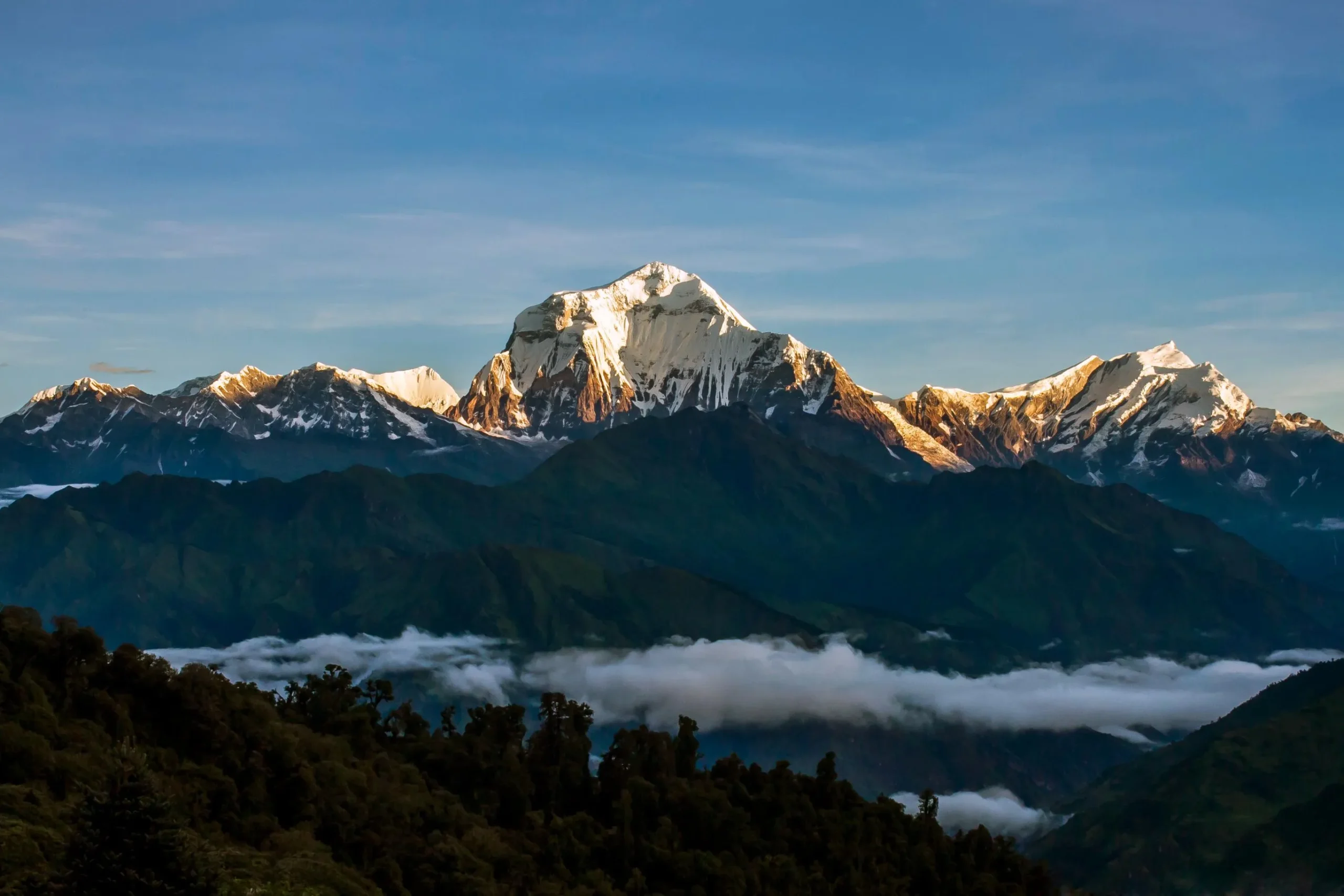
The Khopra Ridge Trek is a beautiful off-the-beaten-path adventure in Nepal's Annapurna region, offering peaceful trails, remote landscapes, and spectacular Himalayan scenery away from the crowds. From Khopra Ridge, trekkers enjoy breathtaking close-up views of towering peaks, including Dhaulagiri, Tukuche, Nilgiri, Annapurna South, and Annapurna Fang (Varaha Shikar). The combination of dramatic mountain panoramas and tranquil surroundings makes this one of the region's most rewarding hidden treks.
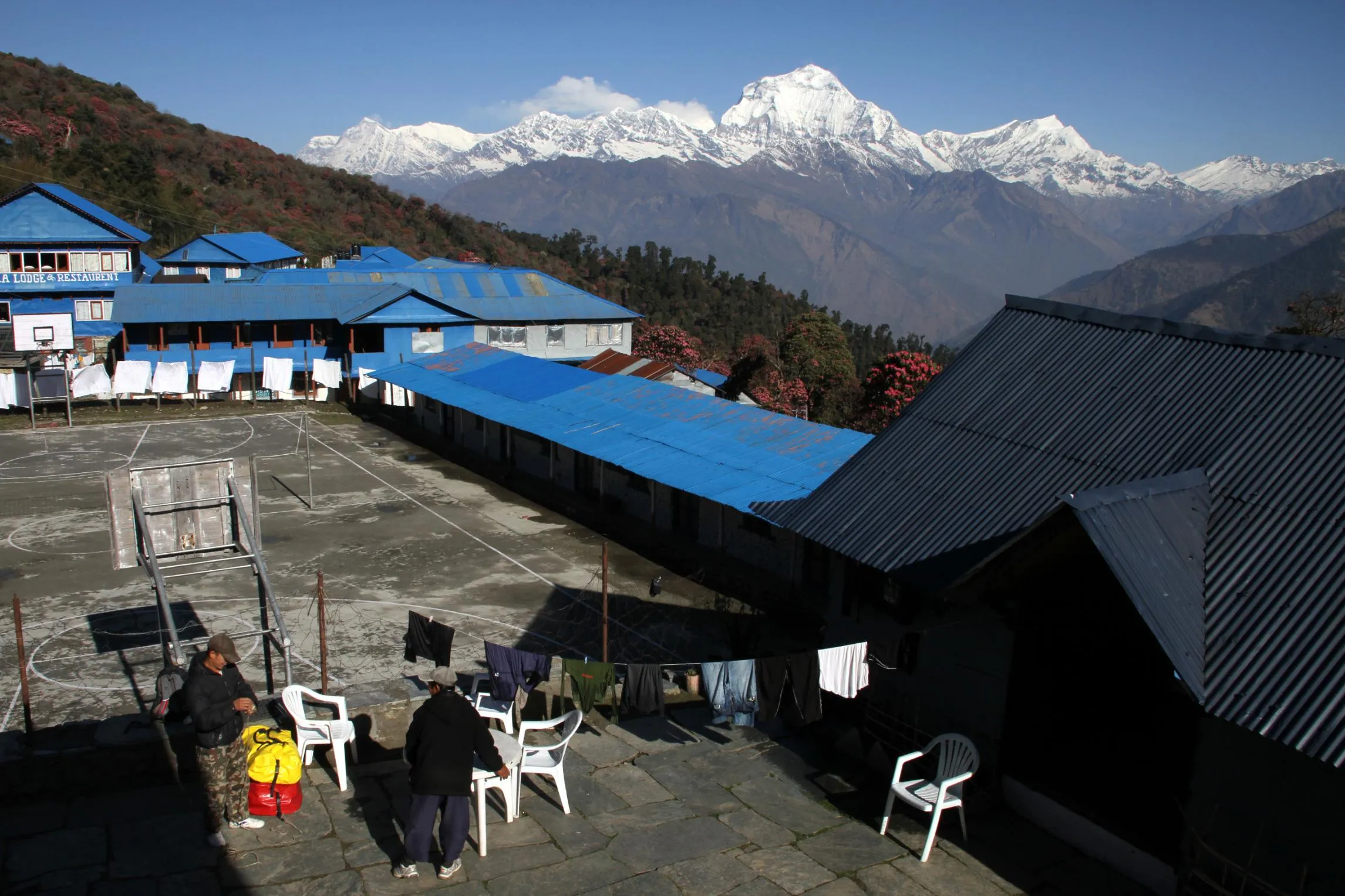
The journey begins through traditional Gurung and Magar villages, where you can experience authentic mountain culture and warm local hospitality. The trail winds through rhododendron forests, alpine meadows, and quiet mountain paths before reaching the popular village of Ghorepani. An early morning hike to Poon Hill (3,210 m) rewards trekkers with one of Nepal's most iconic sunrises, featuring panoramic views of Dhaulagiri, Annapurna, Machhapuchhre (Fishtail), Manaslu, and the surrounding Himalayan peaks.
Beyond Poon Hill, the trail leaves the busy trekking route and enters a quieter section of the Annapurna region. Passing through forests and alpine terrain, the route eventually reaches Khopra Ridge, where dramatic mountain views dominate the landscape. Trekkers can also take an optional hike to the sacred Khayer Lake, a high-altitude glacial lake revered by local communities. This challenging 5–6 hour round-trip hike offers unforgettable scenery and a unique cultural experience, especially during the Janai Purnima festival when pilgrims visit the lake for traditional religious ceremonies.
After exploring Khopra Ridge and Khayer Lake, the trail descends through forests of rhododendron, oak, pine, fir, and magnolia before reconnecting with the main trekking route near Tadapani. The journey continues to the picturesque Gurung village of Ghandruk, where traditional stone houses, local culture, and stunning mountain views provide a memorable conclusion to the trek. A short drive then returns you to Pokhara, the gateway to the Annapurna region and the perfect place to relax after your adventure.
The best time for the Khopra Ridge Trek is during spring (March to May) and autumn (September to November), when clear skies provide outstanding mountain views. Spring transforms the forests with colorful rhododendron blooms, while autumn offers crisp weather, excellent visibility, and ideal trekking conditions.
If you're looking to explore more of the Annapurna region, you may also be interested in our Annapurna Circuit Trek – 12 Days, which showcases even more of Nepal's diverse landscapes, mountain passes, and Himalayan culture.



The Khopra Ridge Trek offers a perfect blend of cultural experiences and natural beauty. Along the trail, you pass through remote villages inhabited by Gurung and Magar communities, where you can experience their traditional lifestyle, warm hospitality, and mountain culture. Villages like Ghandruk provide deeper insights into local history, customs, and craftsmanship, with attractions such as the traditional Gurung Museum. During autumn, trekkers may also experience vibrant festivals like Dashain, Tihar, and Lhosar celebrated by local communities. You can also visit the sacred Khayer Lake, an important pilgrimage site where Hindu devotees gather during the Janai Purnima festival.
From a natural perspective, Khopra Ridge is known for its spectacular Himalayan scenery and peaceful landscapes. The famous Poon Hill viewpoint (3,210 m) offers breathtaking sunrise views over the Annapurna and Dhaulagiri ranges. The trail passes through beautiful rhododendron, oak, pine, and fir forests, which become especially colorful during spring. Along the journey, trekkers may also spot wildlife such as Himalayan monals, langurs, Himalayan thar, mountain goats, and other mountain species.
Modern trekkers look for a balance between adventure, comfort, and connectivity during their Himalayan journey. The Khopra Ridge Trek offers a rewarding experience while meeting many expectations of today’s travelers:
Accommodation on the Khopra Ridge Trek is provided in traditional tea houses and mountain lodges operated by local families. These lodges offer a clean, comfortable, and welcoming place to rest after each day of trekking. While facilities are simple, they provide everything needed for a pleasant stay and an authentic Himalayan experience.
Tea houses in villages such as Ghorepani and Ghandruk offer slightly more amenities, while lodges near Khopra Ridge are more basic due to their remote location. Even so, the warm hospitality, peaceful surroundings, and stunning mountain scenery make every overnight stay memorable.
Meals on the Khopra Ridge Trek are freshly prepared at local tea houses and provide the energy needed for each day’s hike. The menus feature a combination of traditional Nepali cuisine and a selection of popular international dishes, ensuring there are options for most trekkers.
The traditional Nepali meal dal bhat is the most popular choice, offering rice, lentil soup, vegetables, and pickles with free refills at many tea houses. Breakfasts usually include porridge, eggs, toast, pancakes, tea, or coffee, while lunch and dinner menus often feature noodles, fried rice, soups, potatoes, pasta, and seasonal vegetables.
Although the Khopra Ridge Trek is suitable for beginners, it involves several uphill and downhill sections and long walking days. Preparing with basic fitness training before your trip will make the trek more enjoyable. Regular walking, stair climbing, or light cardio exercises can help build the stamina needed for the journey.
Most trekking equipment, including sleeping bags, down jackets, trekking poles, and other essentials, can be rented in both Kathmandu and Pokhara before the trek begins.

Tenzing Sherpa
Have questions? Our travel specialists are here to help plan your perfect adventure.
Chat on WhatsAppThe journey to Pokhara is honestly half the fun. If you're flying, you get a short but breathtaking 30-minute hop over the hills. If you prefer the road, the overland drive rolls through some genuinely scenic stretches of Nepal's highway, and depending on the size of your group, a private car makes the whole thing feel quite relaxed. Either way, by the time you arrive in Pokhara, you'll understand why people keep coming back to this city. We'll get you settled into a hotel right near Phewa Lake, and the afternoon is yours to enjoy. Take a slow stroll along the lakeside, grab a coffee, watch the boats on the water. No rush today.
After breakfast, a short drive takes you out of Pokhara and into the foothills, passing through towns and villages with the Annapurna peaks and the iconic fishtail summit of Mt. Machhapuchare rising ahead of you. Once you reach Nayapul, the walking begins. You'll head through Bhirethati village and join a trail that has been walked for centuries, an ancient salt trade route that merchants once used to carry goods between Nepal and Tibet through Ghorepani and deep into Mustang. You'll share the path with other trekkers and probably a mule train or two. The route climbs gently past farm villages with waterfalls spilling down the hillsides, and by the end of the day you'll be sitting down to dinner in a comfortable lodge in Tikhedhunga. A satisfying first day on foot.
Today has a bit of a reputation, and it's well earned. The morning starts with a solid two-hour climb up stone steps to Ulleri village. It's steep, there's no getting around that, but the views of Annapurna South and Machhapuchare that open up along the way make every step worth it. Once you reach Ulleri, the trail eases into something much more pleasant, winding through cool forest filled with oaks, pines and rhododendrons. There's a lovely rhythm to walking through these trees, especially when the light filters through in the morning. You'll gain more height as the afternoon goes on, eventually arriving at Ghorepani, a village that sits right on that same ancient salt trade route and looks out toward the mighty Dhaulagiri range, the world's seventh highest mountain. This is also the village that serves as the gateway to Poon Hill, which tomorrow morning will make a lot of sense.
Wake up early. It's worth it, we promise. The short hike up to Poon Hill before dawn is one of those experiences that's difficult to describe without sounding like you're exaggerating. As the sky lightens, the peaks begin to appear one by one: Dhaulagiri, Manaslu, the entire Annapurna range, Machhapuchare, and all the way east toward Ganesh Himal. The sunrise colours change everything. Take your time up here. After heading back down to Ghorepani for a proper breakfast, the day continues downhill through Chitre village and then onto a quieter path that most trekkers don't take, leading you to the small farm village of Sauta. It's a peaceful spot, tucked into a forest of rhododendrons, magnolias, and oaks, with Dhaulagiri and Annapurna South still keeping you company on the horizon.
Today's walking takes you off the well-worn trails and into a quieter side of the Annapurna region. From Sauta, the route moves through farm fields and small scattered settlements, passing in and out of rhododendron and bamboo forest as the altitude gradually climbs. By the end of the afternoon, you'll arrive at Chistibung, a small, no-frills place with a few teahouse huts. It's simple, but there's something genuinely refreshing about being this far from the crowds. A good night's rest here before the day that makes this whole trek special.
This is the day the whole trip has been building toward. The climb to Khopra Ridge starts in the morning and it's steep, but as the trees thin out and you move above the treeline into alpine shrubs and open sky, the surroundings become something else entirely. Keep your eyes open along the way. Himalayan Thar, sure-footed wild goats, are sometimes spotted on the slopes, and if you're lucky you might catch a glimpse of the Danphe, Nepal's national bird, flashing its iridescent colours across the hillside. When you finally reach Khopra Ridge, the payoff is enormous. Dhaulagiri's full range spreads out in front of you, with Vara-Shikhar (also known as Annapurna Fang) and Annapurna South completing a panorama that feels almost too grand to take in all at once. This is your home for tonight.
A rest day at Khopra Ridge, and you've earned it. Sit with your tea, watch the mountains, and let the altitude and the views do their thing. If you've still got energy in your legs, the hike to Khair Lake at 4,247 m is absolutely worthwhile. This high-altitude glacial lake holds deep religious significance for the communities living in the valleys below. Every August, pilgrims make their way up here for a festival dedicated to Lord Shiva, bathing in the icy water as an act of devotion. Even outside of festival season, there's something quietly powerful about the place.
After a couple of nights on the ridge, it's time to head east. The morning's walking is a long, satisfying descent through grazing pastures and into the rhododendron forest, the kind of walking where your legs feel good and the scenery keeps changing around you. Dobato is a summer grazing ground where local herders bring their cattle when the weather warms. It's a simple, open place with big views of Annapurna South and Machhapuchare, and a very welcome overnight stop after the day's descent.
From Dobato, the trail drops down to Tadapani, a small village perched with lovely views of the Annapurna peaks, before continuing downhill toward the large Gurung village of Ghandruk. Ghandruk is worth exploring. It's one of the most well-known villages in the Annapurna region, with stone-paved lanes, traditional Gurung architecture and a history closely tied to the Gorkha soldiers who have served in the British and Indian Armies for generations. Spend the afternoon wandering through the village, talking to locals if you get the chance. There are worse ways to spend an evening.
The last morning of walking eases you out gently. A gradual descent for about an hour brings you down to the Modi River and then through terraced rice fields and farm villages to the road. From there, it's a drive back into Pokhara and to your hotel by the lake. You've walked from Nayapul to Khopra Ridge and back out through Ghandruk. Not a bad week's work.
See what past travelers are saying about their experience with Nepal Outdoor Expeditions.
Because your next adventure is impatiently waiting for you.
Last Minute Note: Grab incredible deals on the last minute departure / Book spontaneous trips to hip destinations with limited-time offers and discounted price
Not sure of your dates yet? Hold a departure with a 20% deposit. Cancel more than 60 days out and your deposit is refunded in full. Your first date change is free. If a departure doesn't reach minimum numbers, we'll offer you the nearest alternative date or a full refund, and we'll let you know at least 30 days out.
Before you think of or actually plan any adventurous or relaxing tours, travels, or treks with Nepal Outdoor Expeditions.
If you cancel more than 60 days before departure, we refund your deposit in full. Between 30 and 60 days, the 20% deposit is retained. Inside 30 days the trip cost is non-refundable, since by then we've already paid for your permits, flights, and teahouse bookings. Full detail on our booking page.
20% to reserve your place, with the balance due 60 days before departure. On this trek that's $155 to book and $620 two months before you fly. If you're booking within 7 days of departure, the full amount is due at booking.
Yes, as long as you let us know at least 30 days before your original departure date, your first change is free. Any change after that, or a change requested inside 30 days, is $200 per person.
Khopra Ridge Trek