
Offering group discounts!
Reserve with a 20% deposit. The balance isn't due until 60 days before departure, and cancellations more than 60 days out get a full deposit refund. How booking works →
 Region
Everest Region
Region
Everest Region
 Duration
11 Days
Duration
11 Days
 Difficulty
Challenging
Difficulty
Challenging
 Max. Altitude
5545 m
Max. Altitude
5545 m
 Prime Activity
Trekking In Nepal
Prime Activity
Trekking In Nepal
 Season
(March-May) (September-November)
Season
(March-May) (September-November)
 Group Size
1-12 people
Group Size
1-12 people
The Budget Everest Base Camp Trek is designed for trekkers who want the full Everest experience without paying for unnecessary extras. You still follow the same trail, stay in the same mountain villages, and stand at the same Everest Base Camp as trekkers on more expensive packages. The difference is simply where the savings come from.
This trek keeps things practical. You stay in standard teahouses rather than upgraded hotels, join a small group instead of booking a private trip, and follow a streamlined itinerary without unnecessary extra days. What you don't compromise on is safety and support. You'll still trek with a licensed and experienced guide who knows the route, monitors you for signs of altitude sickness, and handles permits and logistics throughout the journey.
Along the way, you pass through Sherpa villages, cross the Dudh Koshi River on suspension bridges, and take one of the world's most scenic mountain flights to reach Lukla. It's a genuine Himalayan adventure at a price that makes sense for students, backpackers, and travelers on a tighter budget without feeling like a stripped-down version of the experience.
Many budget Everest treks are marketed with vague promises. Here's what genuinely makes this trek worth considering.
The lower price comes from removing unnecessary comforts, not essential services. You're not paying for premium hotels with attached bathrooms or private vehicles that you don't need. You're paying for what matters most: your guide, permits, flights, accommodation, and the trekking experience itself.
This setup works well for students and backpackers who want to reach Everest Base Camp without draining their savings. It also suits travelers who prefer to spend wisely and don't see the value in paying more for additional comforts when trekking at high altitude.
You still get an experienced, licensed guide who has walked this route many times and knows how to recognize the early signs of altitude sickness. Accommodation is provided in standard teahouses, the same type of lodges used by most trekkers regardless of budget, as luxury lodges are available in only a handful of villages. You also fly along the same scenic route to Lukla as other trekkers, with the Himalayas visible from your window seat.
You'll reach Everest Base Camp and Kala Patthar just like other trekkers on the trail. The difference is what you paid to get there, not what you experience once you arrive.
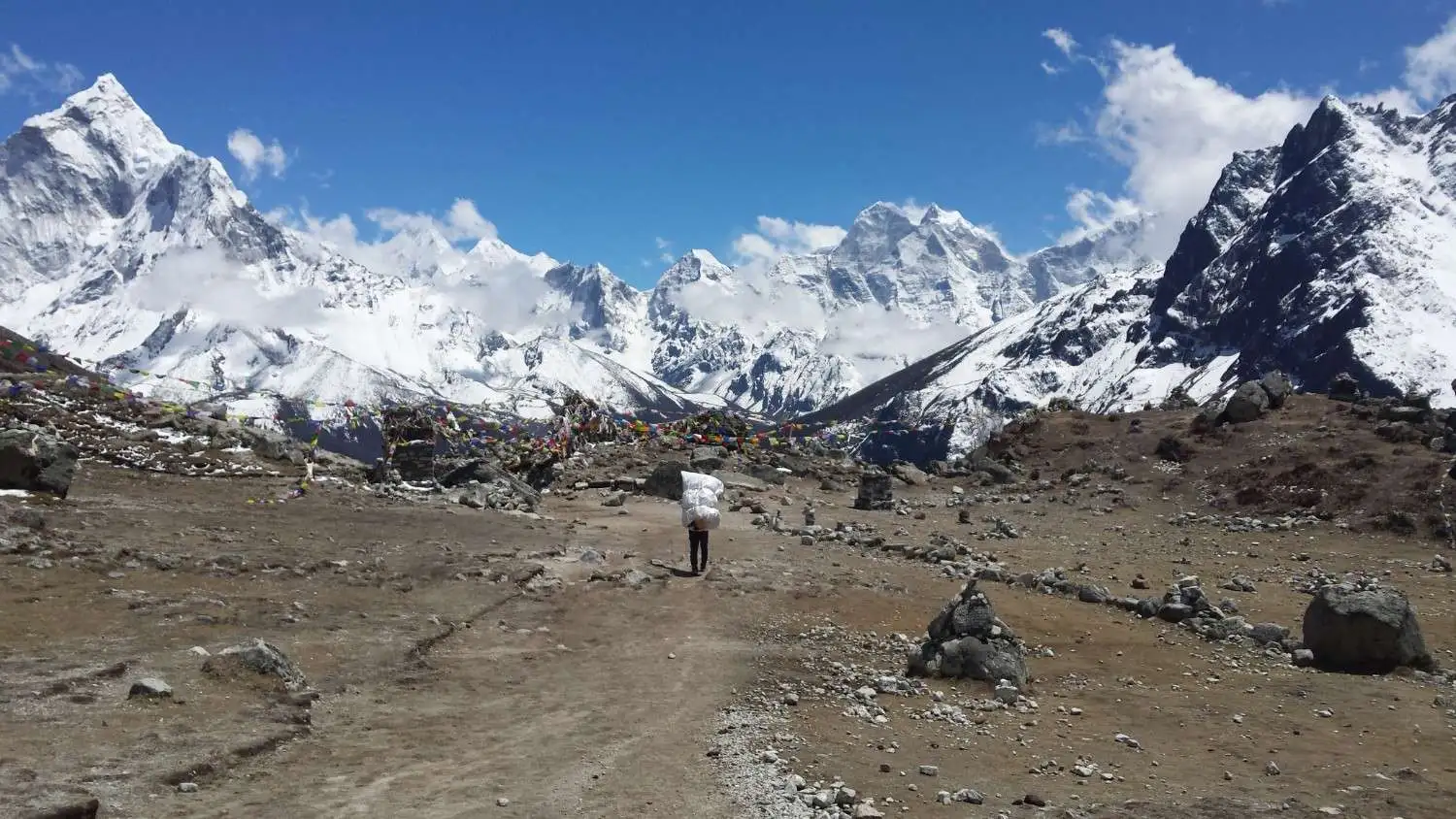
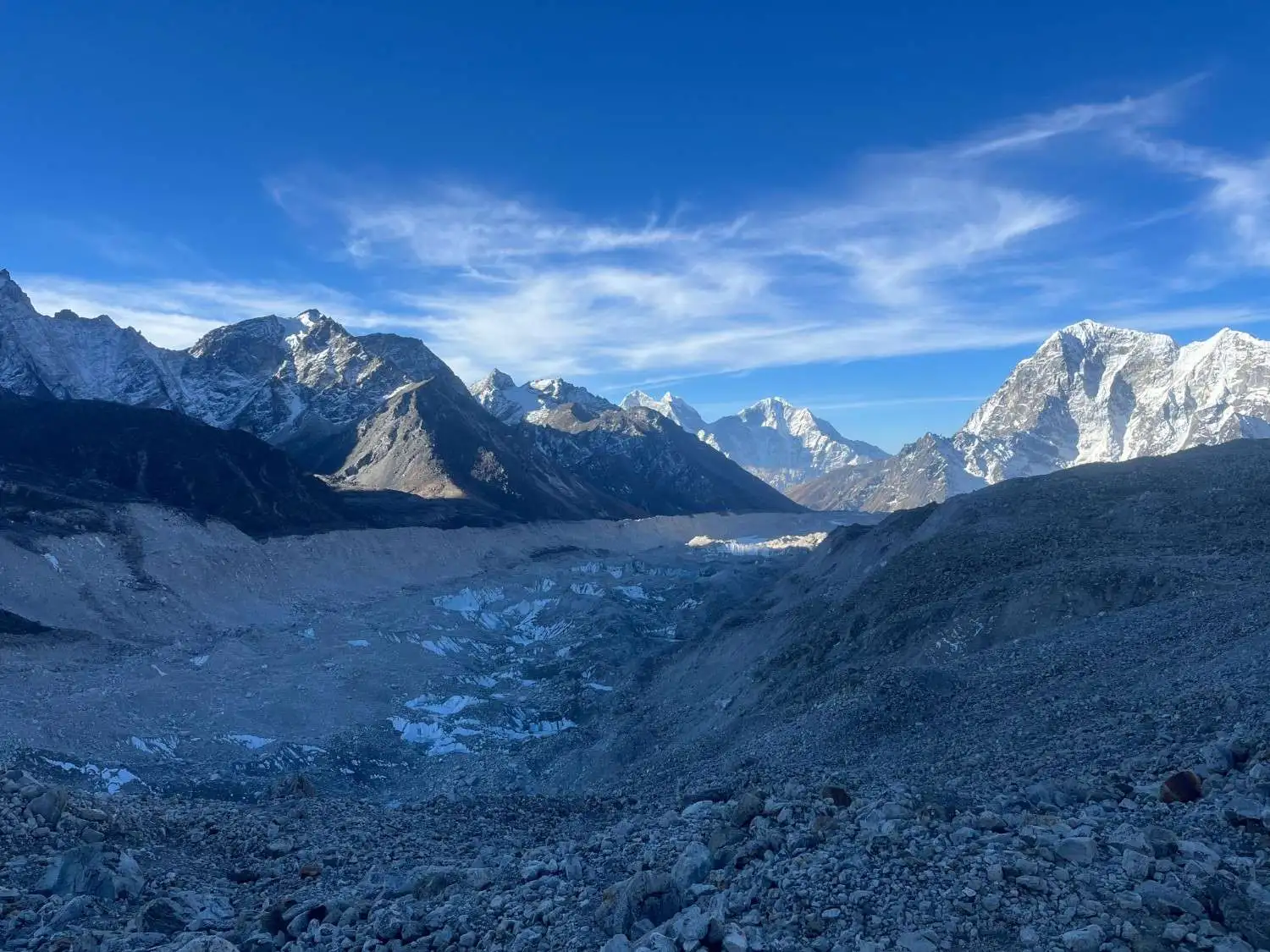

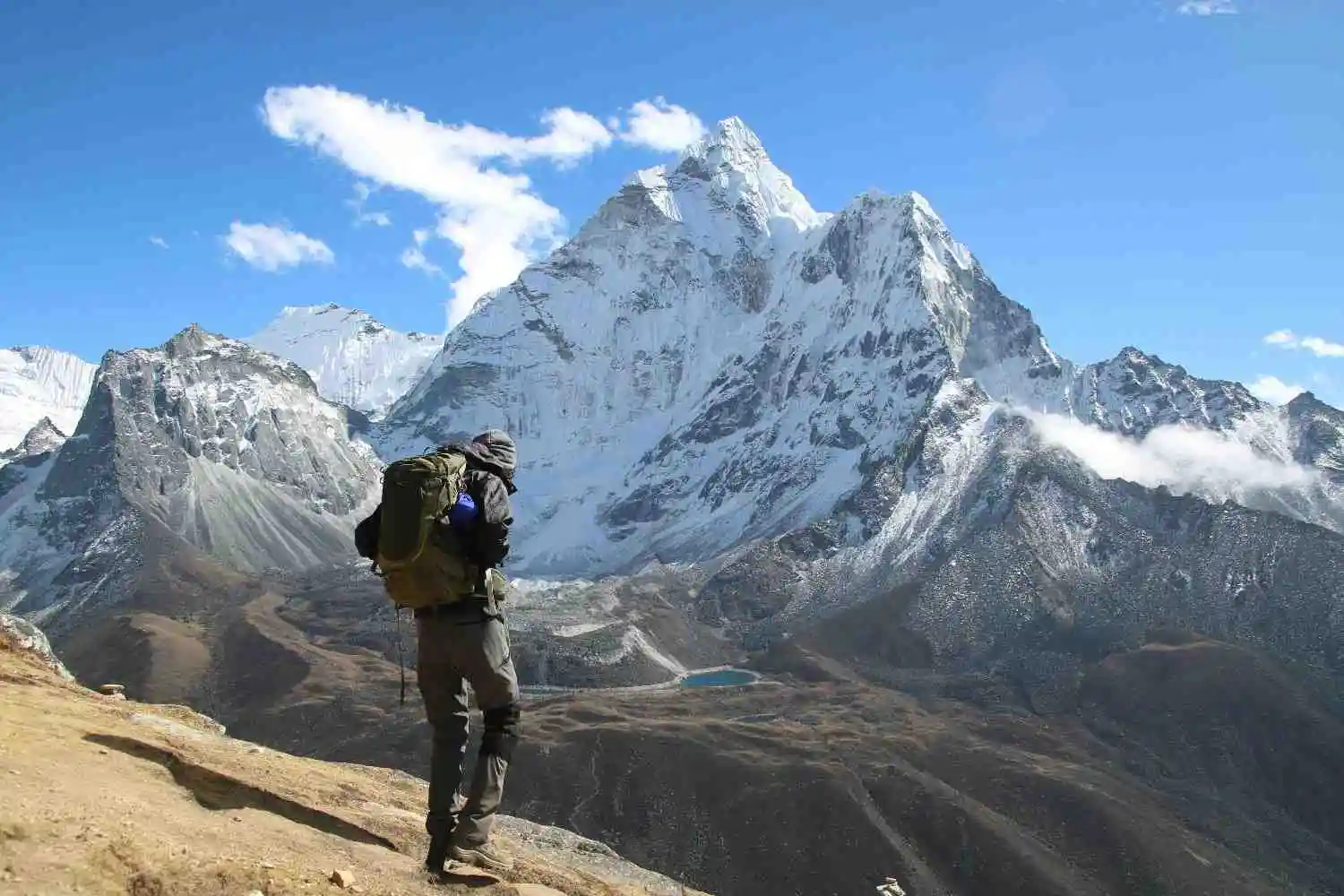
Spring is one of the best times to trek to Everest Base Camp, with clear skies on many mornings and rhododendrons blooming along the lower sections of the trail. This is also the main Everest climbing season, so you’ll see more activity around Everest Base Camp. Trails become busy, particularly around Namche Bazaar and Tengboche, and teahouses can fill quickly, making advance reservations worthwhile.
Summer falls during the monsoon season, so expect frequent rainfall, muddy trails, cloud cover, and reduced mountain visibility. Flights to Lukla can also face additional delays because of weather conditions. This is generally the least favorable season for trekking to Everest Base Camp.
Autumn is widely considered the best season for the Everest Base Camp Trek. Skies are generally clear, temperatures are comfortable, and mountain visibility is excellent. It is also the busiest trekking season, so teahouses can become crowded and booking your trek and accommodation in advance is recommended.
Winter brings cold temperatures, clear skies, and significantly fewer trekkers than spring or autumn. Days can offer crisp conditions and excellent visibility, while nights become extremely cold, particularly above Dingboche. Some higher-elevation teahouses may operate with limited facilities or reduced services during the winter, but the trail generally remains accessible with proper preparation and suitable clothing.
This trek is moderately challenging. You’ll hike over stone staircases, rocky trails, suspension bridges, and uneven mountain paths. No technical climbing skills are required, but a reasonable level of fitness can make the longer trekking days much more manageable.
The highest point where you sleep is Gorak Shep at 5,164 metres. Kala Patthar reaches 5,545 metres and is visited as a day hike. Two acclimatization days are built into the itinerary to give your body time to adjust to the increasing altitude.
Mild altitude-related symptoms, such as headache or shortness of breath, can occur as you gain elevation. Your guide will monitor your condition throughout the trek and respond appropriately if more concerning symptoms develop.
Most days involve around 5 to 6 hours of walking, although some sections, particularly the Everest Base Camp and Kala Patthar days, can take approximately 7 to 8 hours depending on the pace, trail conditions, and acclimatization schedule.
This trek is suitable for people with a good level of fitness who can walk for several hours on consecutive days. Previous trekking experience is not essential, although regular walking and cardiovascular training before the trek can make the journey more comfortable.
It is not intended as a leisurely hike. Anyone with an existing medical condition that could affect their ability to trek at high altitude should seek appropriate medical advice before joining the trek.
The lower price comes from smart cost savings, not cutting corners. Group departures bring the per-person cost down because expenses such as guide fees and allowances are shared among several trekkers instead of being covered by one traveler.
Accommodation is another factor. You stay in standard teahouses rather than premium lodges, with rooms generally shared on a twin-sharing basis instead of private rooms. Transportation also remains basic, without private vehicles or additional transfers that can increase the overall cost.
The itinerary itself is more efficient. It follows the same route and includes the same major stops as a standard package, simply without additional buffer days designed primarily for comfort rather than necessity.
What doesn’t change is anything related to safety. You still get a licensed, experienced guide, all required permits, and the same planned acclimatization schedule as more expensive packages. The savings come from comfort and convenience, not from the things that matter most for a safe trek.
The package price covers the essentials, but additional expenses can arise along the way that first-time trekkers often overlook.
This budget trek isn’t the right fit for everyone, and it’s worth understanding what you are choosing before booking.
If you’re looking for luxury lodges with attached bathrooms, heating, and upgraded meal options, a premium Everest package may suit you better. The same applies if you prefer a private helicopter return instead of flying back from Lukla, as this provides a very different level of comfort and convenience.
Trekkers who prefer a personalised pace, additional rest days, or a slower itinerary built around their individual comfort may also benefit from a customised trekking plan. Similarly, if you feel you would benefit from additional acclimatization days beyond those included in this itinerary, a longer package can provide more time for your body to adjust to the altitude.
None of this means the budget trek is less enjoyable. It simply means that travelers have different priorities, and the best approach is to choose the package that matches what you value most.
A few practical recommendations from guides who have led this route many times can make your preparation easier.
Choosing the right trekking company is just as important as choosing the right itinerary.
Our guides have years of hands-on experience on the Everest route, not just certifications on paper. They know the trail, the villages, and how altitude can affect different trekkers. That experience can make a real difference when unexpected situations arise.
Pricing stays transparent from the start. What you see in the fee breakdown is what you pay, with no hidden add-ons introduced later. We also keep our groups small so your guide can properly monitor everyone rather than managing a large crowd.
Safety has always been a priority, not an afterthought. Our team understands the region and the conditions along the route, which helps when weather changes or plans need to be adjusted.
Logistics run smoothly because we handle permits, flights, and accommodation directly rather than outsourcing them. Support remains available 24/7 throughout your trek, so assistance is never far away when you need it.
Porters on our treks are also treated fairly, with appropriate pay, proper equipment, and reasonable load limits. Fair treatment of trekking staff should be standard practice, and we are committed to making it part of every trek we operate.
Accommodation on this trek is simple, and that’s exactly the point. You’ll stay in standard teahouses along the route, the same type of accommodation used by most trekkers. Upgraded lodges are available only in a few villages, such as Namche Bazaar and Deboche.
Rooms are generally on a twin-sharing basis, with single beds and basic furnishings. Blankets are provided, but many trekkers still carry a sleeping bag because blankets alone may not provide enough warmth above 4,000 metres. Bathrooms are shared, and most are located outside the rooms. Squat toilets are common at higher elevations, while lower villages often have Western-style toilets as well.
Hot showers and battery charging usually cost extra, with prices generally increasing at higher elevations. Wi-Fi is available in many villages, but connections become slower and less reliable as you climb higher.
Comfort gradually decreases as you gain altitude. Rooms become colder and facilities more basic, but this is normal for teahouse trekking throughout the Khumbu region and is not specific to the budget package.
Meals are included on trekking days, although the available options vary as you gain altitude.
Dal bhat remains a popular choice throughout the trek because it often comes with refills and provides a reliable source of energy for the following day’s walk.
Food prices increase as you climb higher. Supplies above Namche Bazaar must be transported by porters or pack animals, so even basic items cost more at higher elevations. This reflects the real cost of transporting supplies into the mountains.
Getting to and from the trek begins with a flight rather than an overland journey. You’ll fly from Kathmandu to Lukla, with the flight taking around 30 minutes and forming an exciting part of the journey itself. During peak trekking seasons, particularly spring and autumn, some flights may operate from Ramechhap Airport instead of Kathmandu. In that case, you’ll need to travel approximately 4 hours by road from Kathmandu to Ramechhap before the flight.
Airport transfers in Kathmandu are covered, so you can be picked up and dropped off without arranging your own transport. Once you land in Lukla, the journey continues entirely on foot. There are no roads beyond Lukla along the main trekking route.
Mountain weather is unpredictable, and Lukla flights can face delays, particularly during cloudy mornings or periods of poor weather. Keeping a buffer day at the end of your itinerary is a smart precaution in case your return flight is delayed. Guides generally have contingency plans in place, but some flexibility in your schedule can make the journey much smoother.

Tenzing Sherpa
Have questions? Our travel specialists are here to help plan your perfect adventure.
Chat on WhatsAppStart your morning with a hearty breakfast in Kathmandu before boarding a short scenic flight into the mountains. Landing at Tenzing Hillary Airport in Lukla is an experience in itself. Nestled between steep cliffs and a short runway that drops straight into the valley below, it is one of the most thrilling approaches in aviation. Some nerves are completely normal here! Once on the ground, you will meet your guides and Sherpas, people who will quickly feel less like staff and more like old friends. After a quick rest and some introductions, the trek begins. The trail to Phakding winds through pine forests, small farming villages, and across a series of swinging suspension bridges that give you your first real taste of Himalayan walking. By the time you reach Phakding and settle into your lodge or teahouse, you will already feel the mountains pulling you in.
Today is one of those days you will talk about for years. The trail crosses five suspension bridges, each one swinging gently over rushing glacial rivers below. You pass through the charming villages of Benkar, Manjo, and Jorsalle before reaching the entrance of Sagarmatha National Park at Monjo, where your permits are checked. From there, the forest gets denser and greener, the sound of streams fills the air, and the towering shapes of Thamserku and Kusum Kangaru come into view. The final climb up to Namche Bazaar is steep and will test your legs, but just before you arrive, if you turn at the right spot on the trail, you catch your first glimpse of Mount Everest. That moment makes every uphill step worth it. Namche is a lively, welcoming town. Settle in, look around, and rest well tonight.
Rest days in the mountains are not really rest days at all. To help your body adjust to the altitude, we take a morning hike up toward the Hotel Everest View. On a clear day, the panorama from up there is simply jaw-dropping. Peaks like Tabuche, Nuptse, Everest, Lhotse, Ama Dablam, and Thamserku line the horizon like something out of a painting. After the hike, the afternoon is yours to explore. Namche Bazaar has a surprisingly vibrant little hub of bakeries, gear shops, restaurants, and even a few bars. If you are up for more walking, the nearby Khumjung Village is well worth a short visit. By sleeping at the same altitude you climbed to, your body quietly does the hard work of adjusting while you eat, chat, and take it all in.
The morning starts on a gentle note as the trail stays mostly flat until Kyangjuma before dipping down to Phungi Thanga. From there, you climb back up through forests thick with rhododendron, pine, and fig trees, the kind of forest that feels ancient and quiet. Arriving at Tengboche feels like walking into another world. The monastery sits in one of the most dramatically beautiful settings you could imagine, with the massive triangle of Ama Dablam rising directly behind it and the wide Khumbu Valley stretching out on both sides. On a clear afternoon, Everest peers over the ridgeline too. If you time your arrival right, you can attend the 3 pm prayer ceremony at the monastery. The sound of horns and chanting echoing through the mountains is something you will not forget.
Today the landscape starts to shift noticeably. The trail passes through the villages of Pangboche and Somare, and gradually the trees thin out and give way to low scrub and open hillsides. The Himalayas have a way of stripping things back the higher you go, and there is a raw beauty to it. Ama Dablam stays with you almost the entire way, its distinctive shark-fin summit appearing from different angles as you walk. By the time you roll into Dingboche, a sizeable village with a good handful of teahouses and lodges, your body will be ready for a warm meal and an early night.
After breakfast, the trail leads you into a wide valley cradled by the Lobuche and Tabuche peaks. The terrain here feels big and open in a way that is hard to describe until you are standing in it. Lunch is in Thukla, and just above the village sits the Thukla Memorial, a collection of stone cairns and plaques dedicated to climbers who lost their lives on Everest. The names include legends of mountaineering like Babu Chhiri, Pasang Lhamu, Scott Fischer, and Rob Hall. It is a quiet, moving place that reminds you of the very real stakes of what lies ahead. After some time there, the trail continues upward, with Mt. Pumori keeping you company in the distance all the way to Lobuche.
This is the day you have been building toward. After breakfast, the trail follows a great valley running alongside the Khumbu Glacier, and the path to Gorak Shep is steady and deliberate. At this altitude, every step feels a little more earned. You drop your bags at the lodge in Gorak Shep, have lunch, and then head out for Everest Base Camp. The route hugs the edge of the Khumbu Glacier, climbing steadily over rocky, uneven ground. The infamous Khumbu Icefall comes into view before you reach the base, and the sight of it is staggering, a churning, frozen river of blue-white ice splitting the face of the mountain. When you finally arrive at Base Camp, take a moment. Breathe it in, literally and figuratively. The mountains surround you on all sides, and there is a particular kind of silence up there that feels earned. Take your photos, soak it up, and then head back down to Gorak Shep for the night.
You will be up before sunrise today, and it is completely worth it. The pre-dawn climb to Kala Patthar is cold and quiet, the headlamp lighting up just a few steps ahead at a time. But when the sun begins to rise over Everest and the surrounding peaks catch that first golden light, you will understand why people come back to do this again and again. The views from up here are widely considered the finest on the entire trek. After soaking it all in, you head back down to Gorak Shep for a well-deserved breakfast. Then it is time to pack up and begin the long descent toward Pheriche. Going downhill feels easier on the lungs, but take it steady on those knees. The drop in altitude brings a gradual loosening of breath, and by the time you reach Pheriche, the air feels noticeably richer.
Heading back along a familiar trail is a different experience than people expect. The pressure of the summit push is gone, you know what is coming, and somehow that lets you actually see things you missed on the way up. The views shift as you move in the opposite direction, and the lower you descend, the more the world softens around you. You pass back through Tengboche with its monastery and that unmistakable backdrop before finally arriving in Namche Bazaar. There is something genuinely satisfying about walking back into town having done what you set out to do.
A long but happy day of walking. The trail back to Lukla is full of familiar sights now carrying new meaning: the bridges, the forests, and the villages along the river. Your guides and Sherpas have been with you every step of this journey, and tonight is a chance to properly celebrate together. The evening is spent the way all good adventures should end, with good food, cold drinks, Nepali folk music, laughter, and stories from the trail. Raise a glass to the mountains and the people who helped you reach them.
This morning, you take one last look at the Khumbu region before boarding your flight back to Kathmandu. The 30-minute flight over the mountains carries a completely different feeling than the one that brought you here. You are the same person sitting in the same small plane, but everything feels a little different now. Back in Kathmandu, a vehicle will take you from the airport to your hotel. The city will feel loud and warm and wonderfully alive.
See what past travelers are saying about their experience with Nepal Outdoor Expeditions.
Because your next adventure is impatiently waiting for you.
Last Minute Note: Grab incredible deals on the last minute departure / Book spontaneous trips to hip destinations with limited-time offers and discounted price
Not sure of your dates yet? Hold a departure with a 20% deposit. Cancel more than 60 days out and your deposit is refunded in full. Your first date change is free. If a departure doesn't reach minimum numbers, we'll offer you the nearest alternative date or a full refund, and we'll let you know at least 30 days out.
Before you think of or actually plan any adventurous or relaxing tours, travels, or treks with Nepal Outdoor Expeditions.
If you cancel more than 60 days before departure, we refund your deposit in full. Between 30 and 60 days, the 20% deposit is retained. Inside 30 days the trip cost is non-refundable, since by then we've already paid for your permits, flights, and teahouse bookings. Full detail on our booking page.
20% to reserve your place, with the balance due 60 days before departure. On this trek that's $220 to book and $879 two months before you fly. If you're booking within 7 days of departure, the full amount is due at booking.
Yes, as long as you let us know at least 30 days before your original departure date, your first change is free. Any change after that, or a change requested inside 30 days, is $200 per person.
Budget Everest Base Camp Trek