Offering group discounts!
Reserve with a 20% deposit. The balance isn't due until 60 days before departure, and cancellations more than 60 days out get a full deposit refund. How booking works →
 Region
Restricted Region
Region
Restricted Region
 Duration
22 Days
Duration
22 Days
 Difficulty
Strenuous
Difficulty
Strenuous
 Max. Altitude
5110 m
Max. Altitude
5110 m
 Prime Activity
Trekking In Nepal
Prime Activity
Trekking In Nepal
 Season
(March-May) (September-November)
Season
(March-May) (September-November)
 Group Size
1-12 people
Group Size
1-12 people
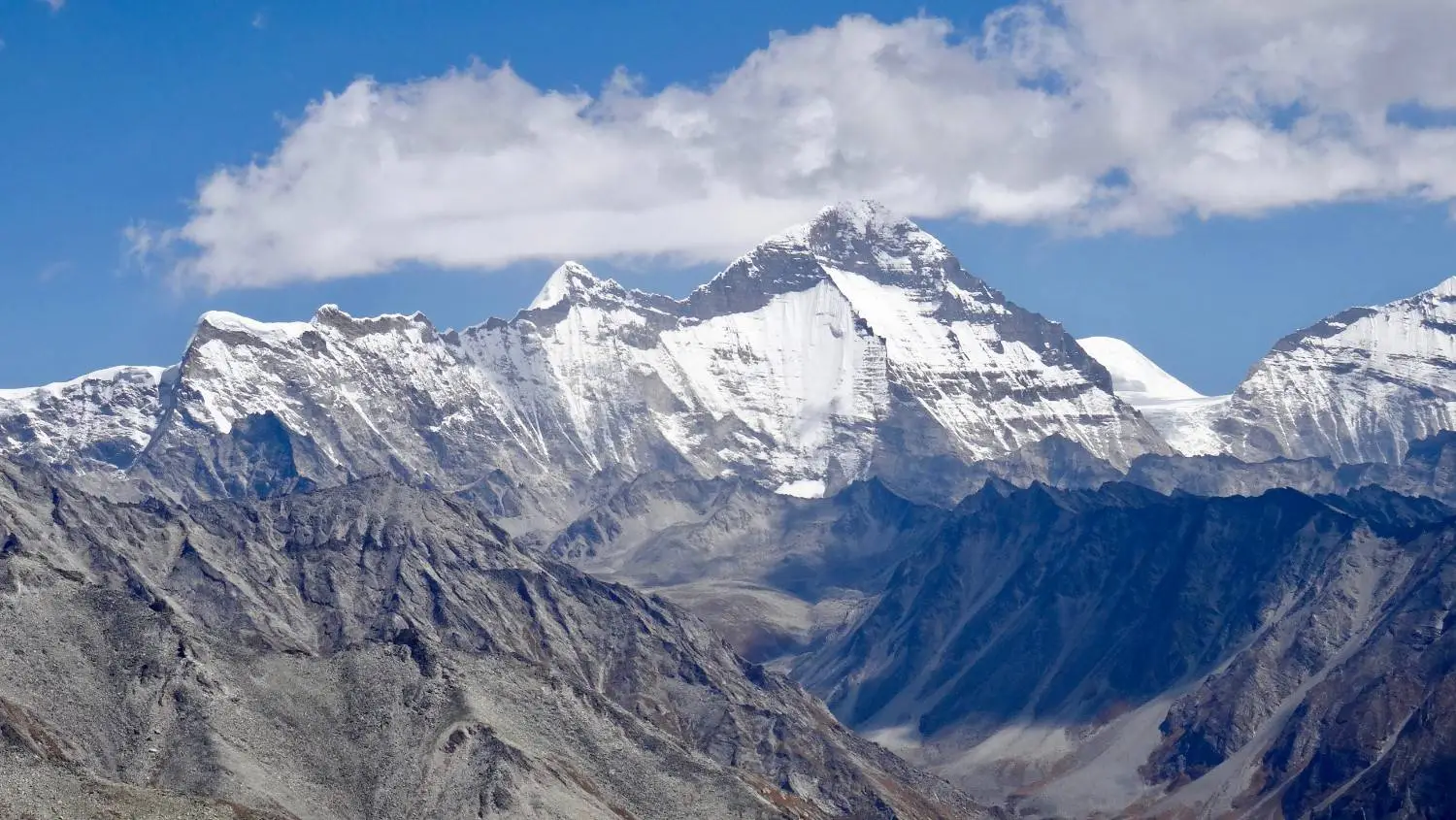
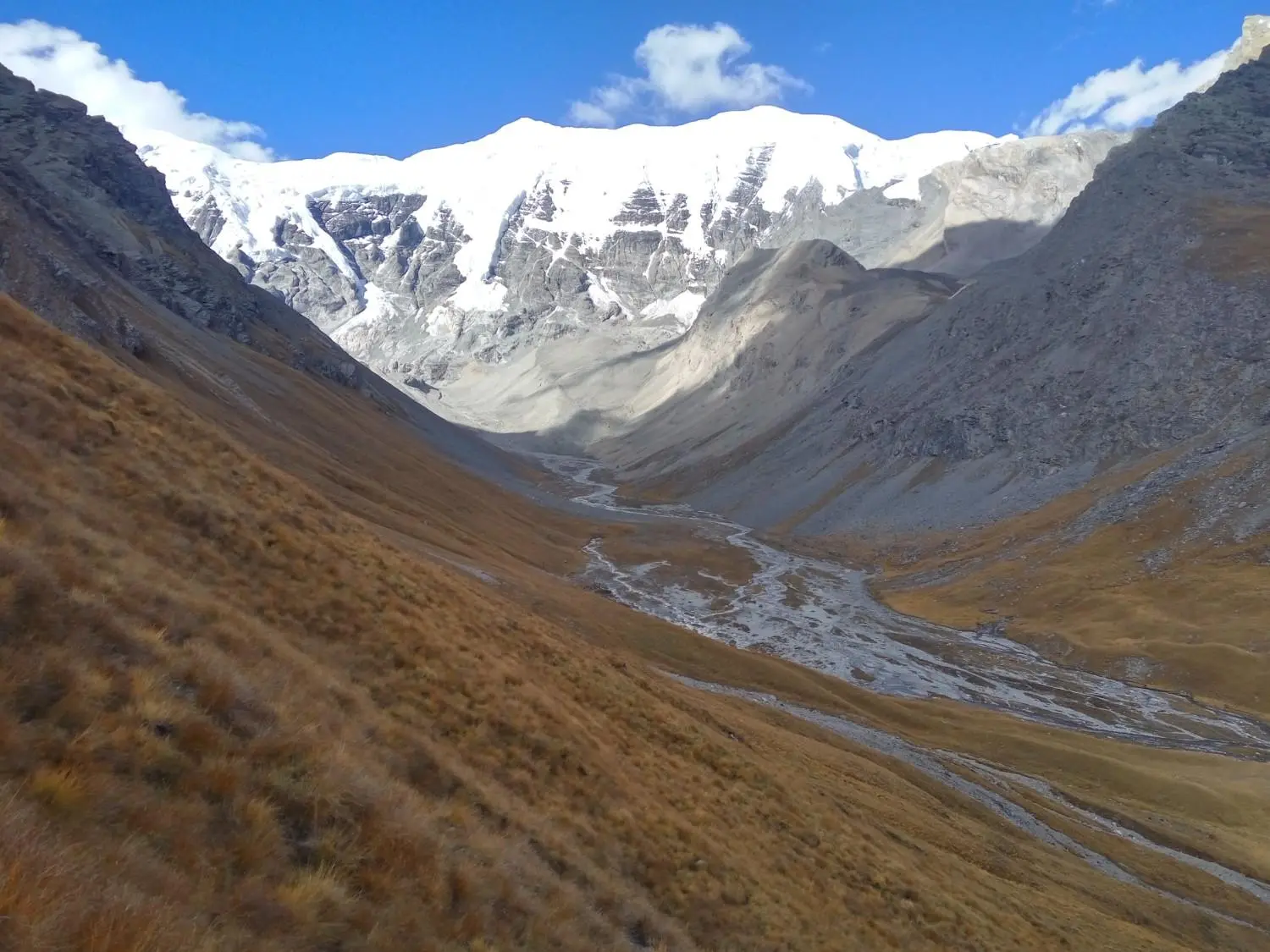
Upper Dolpo Trek is one of those rare journeys that still feels untouched and far removed from the usual trekking routes of Nepal. Tucked away in the remote far-western Himalayas, this region offers a raw and peaceful beauty that’s hard to find elsewhere. The landscapes shift constantly as you walk, from green valleys and forested hills filled with pine, fir, and Himalayan spruce to dry, rugged terrain that almost feels like a high-altitude desert. Towering above it all are snow-covered peaks like Kanjibroba, Kagmara, and even distant views of the Dhaulagiri range, creating a backdrop that stays with you long after the trek ends.
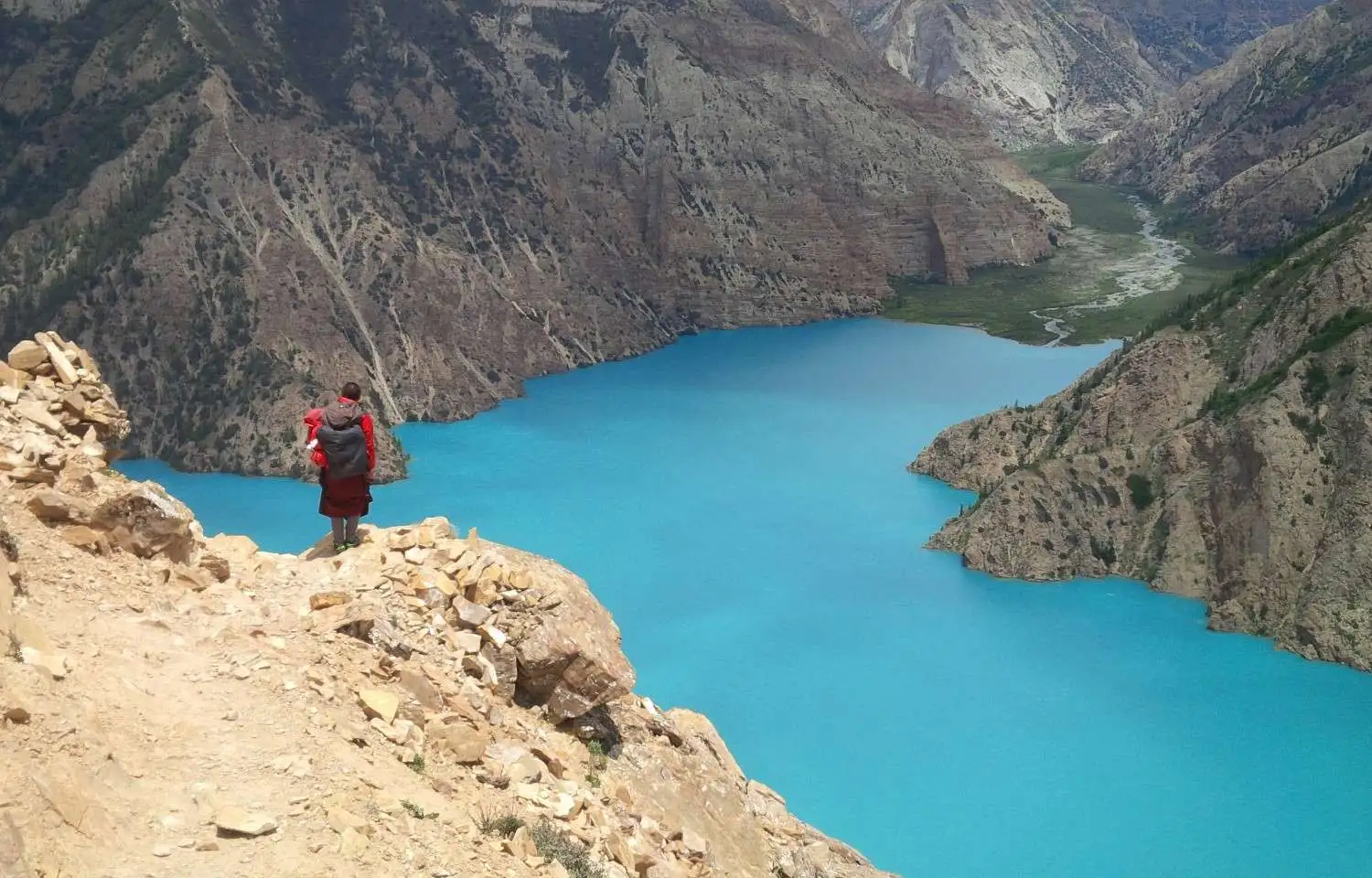
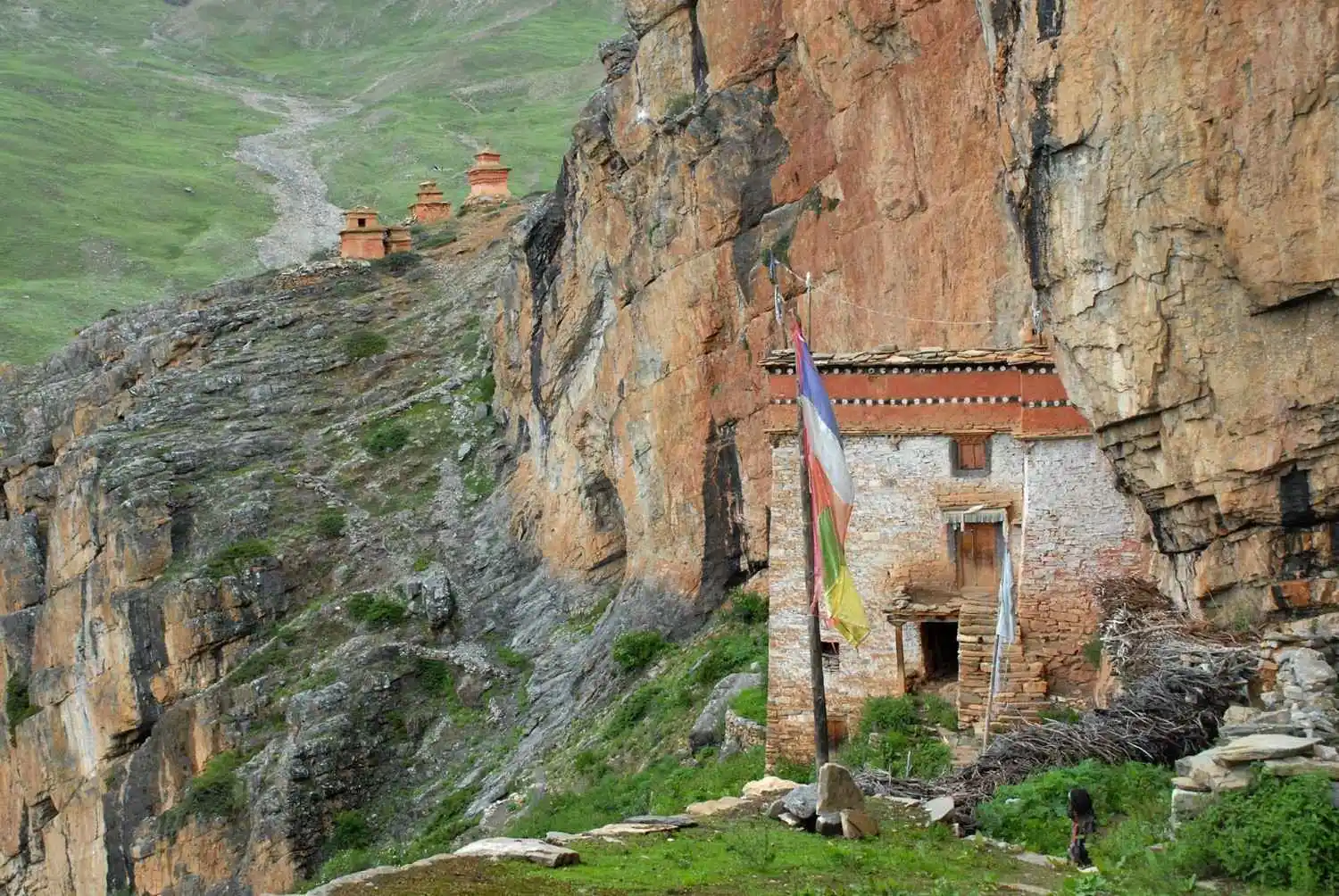
This hidden corner of Nepal gained attention through the classic book The Snow Leopard by Peter Matthiessen, who explored Dolpo in the late 1970s. The region’s beauty was also captured in the Oscar-nominated film Himalaya in 1998. But beyond the stories and films, being there in person is something entirely different. Walking beside the deep turquoise waters of Phoksundo Lake or reaching the peaceful Shey Gompa, often called the Crystal Monastery, feels almost surreal. These places carry a quiet, spiritual energy that makes the journey even more meaningful.
Upper Dolpo is also home to Shey-Phoksundo National Park, the largest national park in Nepal. This vast area is rich in wildlife and plant life, including rare medicinal herbs and endangered species like the snow leopard and blue sheep. It’s not just the scenery that makes this trek special, but also the sense of stepping into a place where nature still feels wild and untouched.
Equally fascinating is the culture of the local people. The villages you pass through are deeply rooted in ancient traditions, where Bon practices, which existed before Buddhism, still live alongside Buddhist beliefs. Life here moves at its own pace, and spending time in these communities gives you a glimpse into a way of living that has remained unchanged for generations.
The journey usually begins with a flight from Kathmandu to Nepalgunj, followed by another short flight to Jhupal. From there, the trek starts, gradually leading you through villages and farmland and into the heart of Dolpo. You’ll pass through Dunai, the district headquarters, before making your way toward the stunning Phoksundo Lake near Ringmo village.
After spending some time exploring the lake and the surrounding village, the trail climbs higher, crossing Kang La Pass to reach Shey Gompa. The monastery sits in a peaceful, isolated setting near a unique crystal mountain, and inside, you’ll find ancient scriptures, paintings, and statues that reflect both Bon and Buddhist traditions.
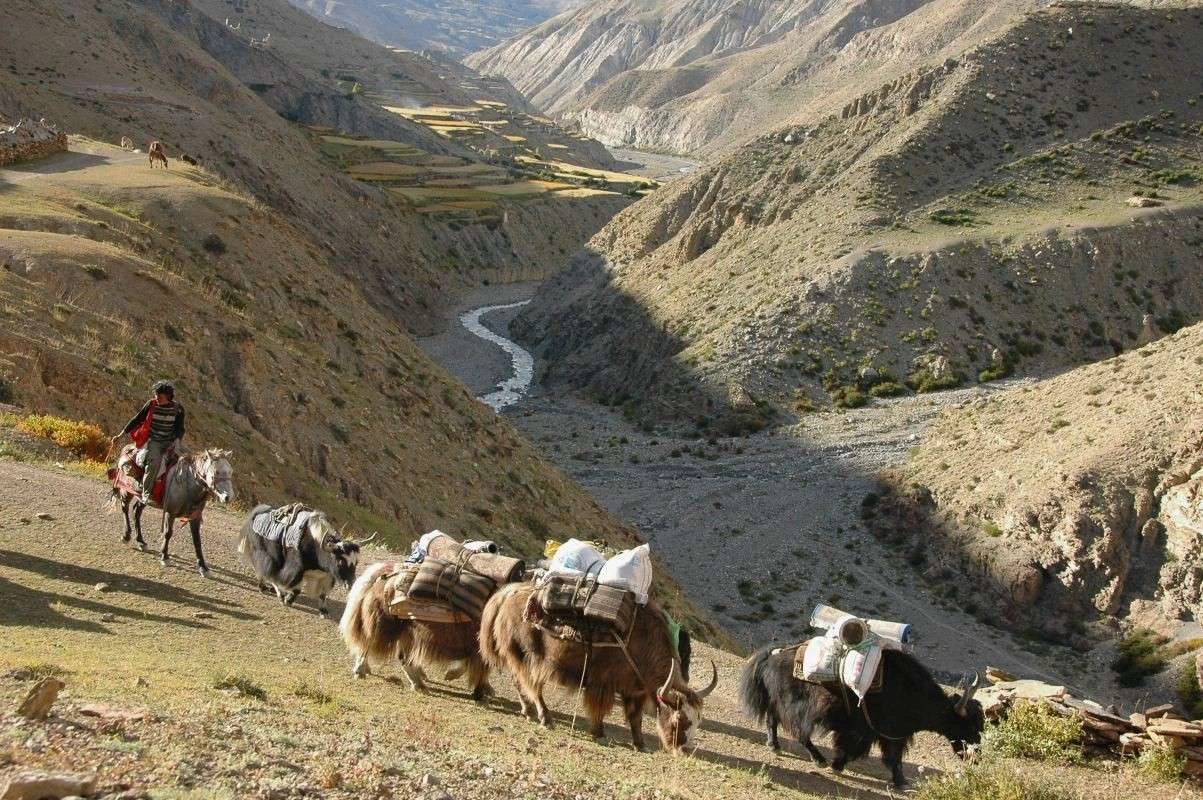
The return journey takes you across several high passes with wide views of the Himalayas. You’ll pass through villages like Saldang and Tokyu, where you can explore local life a little more closely. The trail then leads into the long Dho Tarap valley, once part of an old salt trade route connecting Dolpo with Tibet.
As the trek comes to an end, you descend toward the historic village of Tarakot and eventually back to Jhupal. From there, a flight takes you back to Kathmandu via Nepalgunj, bringing your journey through Upper Dolpo to a close. It’s not just a trek but an experience that stays with you, both for its natural beauty and its deep cultural richness.
Accommodation during the Upper Dolpo Trek is quite simple, but that’s part of what makes the experience feel real and grounded. In the lower sections, you’ll mostly stay in basic teahouses or small lodges run by local families. These places are modest but welcoming, with shared rooms, wooden beds, and simple blankets. As you move deeper into remote areas like Shey Gompa or Dho Tarap, teahouses become limited, and camping is often the only option. Your trekking crew will usually set up tents, manage sleeping arrangements, and handle everything needed to keep you comfortable in such isolated places.
Food along the trek is hearty and filling, even though the options are not very wide. In teahouses, you’ll commonly find meals like dal bhat, noodles, soups, potatoes, and sometimes fried rice or simple pasta. Dal bhat is a favorite for a reason; it’s fresh, warm, and gives you the energy needed for long walking days. In more remote sections where camping is required, meals are prepared by the trekking staff. They usually cook a mix of local dishes and simple international meals using fresh ingredients carried along the route.
You won’t find luxury here, but you will find something more meaningful. Warm meals after a long day, a simple place to rest, and the genuine hospitality of people who live in one of the most remote regions of Nepal. That’s what makes the experience special.
Preparing for the Upper Dolpo Trek is not just about packing your bag; it’s about getting yourself ready for a journey into one of the most remote corners of Nepal. The conditions can be tough at times, so having the right gear and a bit of planning really helps you stay comfortable and enjoy the experience fully.
When it comes to clothing, layering is your best friend. Early mornings and evenings can be very cold, while the daytime sun can feel quite warm. A good down jacket, thermal layers, fleece, and a waterproof outer layer will help you adjust easily. Don’t forget a warm hat, gloves, and something like a buff or scarf to protect you from wind and dust. A strong pair of trekking boots that you’ve already used before is essential, along with good quality socks to prevent blisters.
Since parts of the trek involve camping in remote areas, a warm sleeping bag is very important. Even if your trekking company provides one, it’s always safer to carry something you trust. A headlamp with extra batteries, trekking poles for steep trails, and a sturdy backpack are also things you’ll be glad to have with you.
Preparation is not only about gear. Your body needs to be ready too. You don’t have to be extremely fit, but you should be comfortable spending long hours on the trail each day, often at higher altitudes. Regular exercise like walking, light jogging, or short hikes before your trip can really help build stamina.
Mental preparation matters just as much. Upper Dolpo is not a luxury trek. Facilities are basic, internet and communication are limited, and weather can change quickly. If you go with a flexible mindset and a positive attitude, you’ll enjoy the journey much more.
It’s also a good idea to carry a small first aid kit, water purification tablets or a filter, sunscreen, and basic personal items. Because the region is so remote, it’s always better to be prepared in advance rather than depend on finding things along the way.
In the end, it’s not about carrying too much, but about carrying what truly matters. When you’re well prepared, you can focus on the beauty around you and fully take in the unique experience that Upper Dolpo offers.

Tenzing Sherpa
Have questions? Our travel specialists are here to help plan your perfect adventure.
Chat on WhatsAppYour journey begins with a short domestic flight from Kathmandu, roughly 55 minutes in the air, and already the views from the window make it worth it. As the plane climbs, the entire Himalayan chain spreads out before you, from Langtang and Ganesh in the east, sweeping past Manaslu, Annapurna, all the way to the Dhaulagiri range. It is the kind of view that makes you press your face against the glass. Nepalgunj which is at an altitude of 150 meters sits close to the Indian border and carries a strong cultural flavor from the neighbouring state of Uttar Pradesh. It is warmer here, noticeably so, and the streets feel and sound different from Kathmandu. Spend the afternoon wandering around, taking in the local rhythm of life in this corner of Far South Western Nepal before a good night's rest.
Up early for breakfast before heading back to the airport. This time you board a smaller plane for the short hop into Dolpo, landing at Jhupal where the rest of the camping crew and porters will be waiting to greet you. From Jhupal, a drive through farm villages and patches of forest brings you into Dunai (2,140 m), the main hub and administrative headquarters of the entire Dolpo district. It is a proper town with markets, local tea shops, and a pace of life that feels genuinely unhurried. Walk around, chat with the locals if you can, and soak up the Far Western Nepalese culture before settling in for the night at a simple local lodge.
The walking begins in earnest today. Leaving Dunai, you cross a bridge over the Thulo Bheri River and climb to a ridge where the Phoksundo River valley opens up ahead of you, with the Kagmara peaks sitting sharp on the horizon. The trail winds down through walnut tree gardens and quiet farm villages, passing through Dhera before a short climb brings you to Raha-Gaon, a village of the Thakuri people, a Hindu indigenous community with deep roots in Nepal's Far West. From there, the path drops into forested terrain and leads you into Chepka (2,838 m), a small farming settlement where camp is set for the night.
A short climb out of Chepka starts the day, followed by a descent into forest near the river. The trail climbs again as the trees thin out, then drops to cross a small bridge at Ryajik village before continuing on to Samdua at an altitude 2,960 meters. It is a straightforward but satisfying day of walking. Samdua sits right at the doorstep of Phoksundo National Park, so there is a sense of anticipation in the air as you settle into camp knowing what tomorrow holds.
This is the day many people look forward to most. The trail heads up through the Pungmo Khola valley, descending to follow the upper stretch of Phoksundo Khola before reaching Ringmo, a small village of Tibetan origin with mud-plastered chortens and long mani walls lining the path. Just beyond Ringmo, Phoksundo Lake (3,630 m) appears, and it genuinely stops you in your tracks. The color of the water is unlike anything most people have seen before, a deep turquoise that seems almost unreal against the surrounding cliffs and peaks. Camp is set near the lakeshore, and the evening light on the water is something you will not forget quickly.
Take your time today. There is no rush, no distance to cover. Walk along the lake, sit with a cup of tea and just look at it, or head into Ringmo village to meet the people who call this extraordinary place home. The Kagmara peaks frame the scene above, and the whole setting feels far removed from the rest of the world. Enjoy every moment of it.
Today marks the start of the push into Upper Dolpo. The trail narrows and the terrain grows more serious, contouring along rocky ledges high above the river, with some sections that demand careful footwork. Past the upper end of the lake, the valley widens and the walking eases as you follow summer grazing fields used by yaks and other cattle. Camp tonight is at Phoksundo Khola (3,750 m), by the stream.
A shorter day in terms of hours but one that gains significant altitude. The trail climbs north from the stream, steadily working up the hillside. As you approach the ridge, the valley spreads out green and wide below you, with Kang La Pass visible in the distance. That pass is tomorrow's challenge. For now, camp is on a pleasant stretch of summer pasture with good views all around.
The highest point of the entire journey. The climb to Kang La is steep, and the path is rocky, but the rewards at the top are extraordinary. Snow peaks stretch in every direction, with Dhaulagiri visible far to the south. Take a moment at the pass because you have earned it. The descent drops down past a river to an increasingly remote landscape dotted with chortens and mani walls. And then, finally, Shey Gompa (4,160 m) comes into view below Crystal Mountain, one of the most sacred and atmospheric places in the entire Himalayas. This is the destination that Peter Matthiessen wrote about in his celebrated book The Snow Leopard, and standing here, it is easy to understand why this place captured his imagination so completely. Copies of the book are widely available in Thamel if you want to read it before or during the trip.
Spend a full day at Shey Gompa and let the place work on you. Visit the Crystal Monastery, walk the kora around Crystal Mountain if you feel up to it, and simply sit in the quiet. There are few places on earth that feel quite this far from everything. The combination of the landscape, the altitude, and the age of the monastery creates an atmosphere that is genuinely hard to put into words.
The route today passes through a walled canyon before climbing to Sela La, also known as Gela La, at just over 5,000 meters. The views from the top take in a wide sweep of the Dhaulagiri range before the trail descends to Namgung (5,094 m) Gaon for the night. Another high pass, another set of views that remind you just how deep into the mountains you have come.
A dusty, windswept trail through open terrain leads you on to Saldang (3,770 m), one of the larger and more impressive villages in this part of Dolpo. It sits high on a broad plateau that feels strikingly similar to the landscape of Far Western Tibet just across the border. The village is worth exploring at a slow pace before dinner and sleep.
Following the Nang Chu River with gentle ups and downs, you pass Sugu-Gaon and Dechen Lapran, a settlement used by cattle herders, before arriving at Chagoan Village. The village has an old Rapa Gompa that predates Buddhism in this region, tied to the ancient Bon-Pa tradition. It is a fascinating stop for anyone interested in the deeper layers of Himalayan religious history.
Heading south towards the Tarap valley, the trail passes through Tokyu and Dho Tarap villages before crossing the river through terraced farm fields and climbing into yak herder territory. Camp tonight is set at Dachu Khola at an altitude 4,700 m, a peaceful spot at high altitude with the smell of yak dung fires drifting through the air if the herders are nearby.
The trail follows a river in the morning, and you may well cross paths with caravans of yaks and mules heading towards Tibet. This ancient Trans-Himalayan Salt Trade Route has been used for hundreds of years by traders from Nepal's Far West and Tibet, and meeting a caravan on the trail is one of those moments that connects you directly to that long history. The climb to Jyanta La is steep and steady, but the panorama from the top is massive. A long descent follows, heading in the direction of Tokyu village and lower ground.
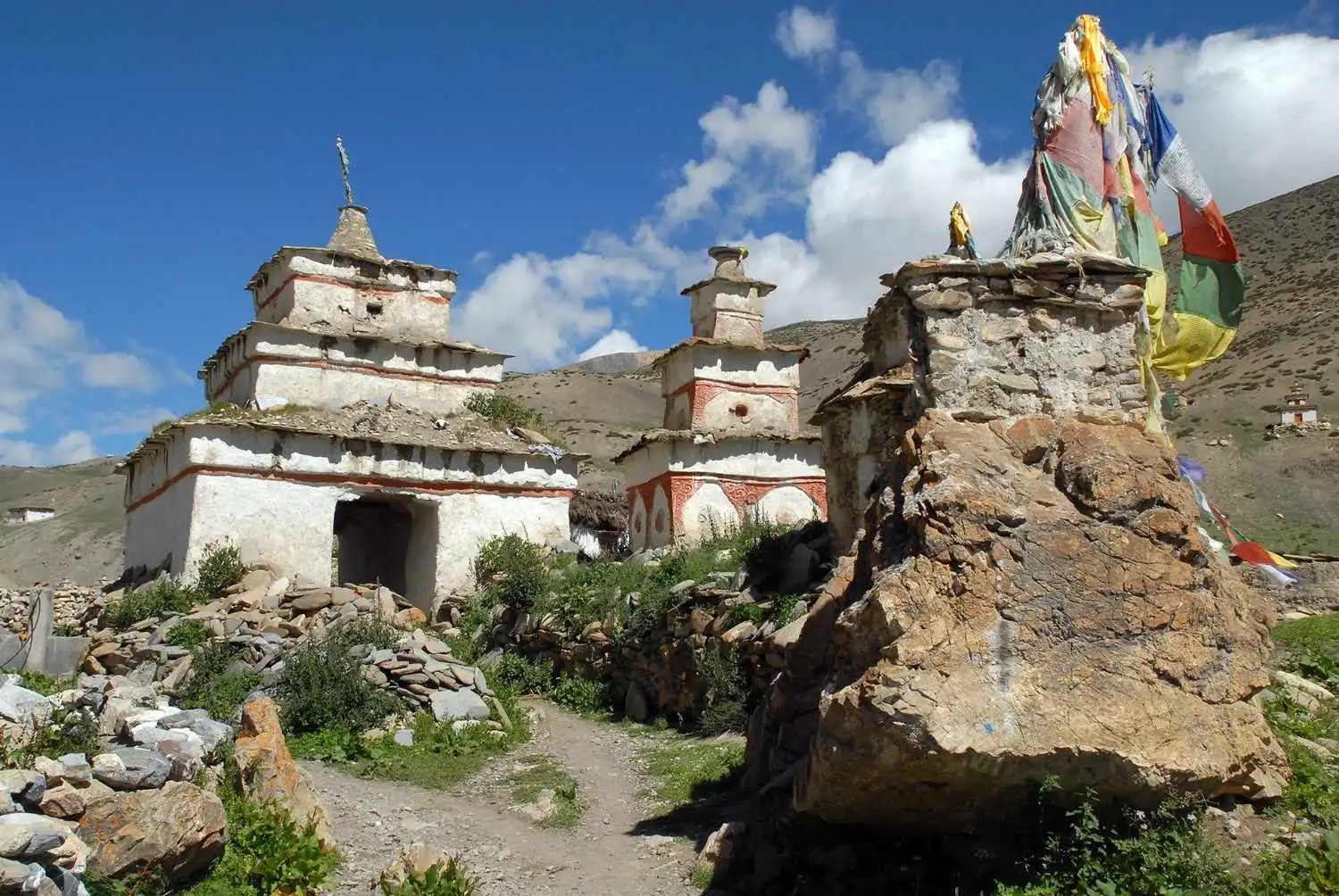
After a tough climb over Jeng La, the trail eases into a comfortable walk down to Tokyu Gaon at an altitude of 5,090 m, one of the larger settlements in inner Dolpo. More than ten villages are spread across this area, surrounded by carefully tended farm fields and a scattering of old monasteries. It is a living, working community that feels worlds away from any tourist trail.
A lovely day of walking down through the broad Tarap Chu valley, past shepherds and cattle herders with yaks and sheep grazing on either side of the trail. Dho Tarap (3,944 m) is a mixed village with roots in both Tibetan and Magar culture, giving it a distinct character of its own. A good camp spot and a satisfying end to the day.
The Tarap valley is one of the longest in all of Dolpo, stretching nearly 20 kilometers from the Tarap Chu River all the way to where it meets the Thuli Bheri near Tarakot. Today's walk takes you through much of it. You pass through Langa, where waterfalls tumble down the cliffs beside the trail, before continuing through Sisaul and Kesila to reach camp at Ghyamgar at an altitude 3,759 meters.
Leaving the open valley, the trail squeezes into a narrow gorge lined with juniper and wild rose. At Tol-Tol, a large overhanging cave makes for an interesting rest stop before the path continues down to the confluence of the Tarap Chu and Lang Khola rivers. Camp is set by the water, a pleasant spot to wash off the day's dust and listen to the river running past.
Following the river, the trail drops through a small wooded section all the way to Tarakot at an altitude of 2,540 m, a historically significant village that once guarded this stretch of the Trans-Himalayan Salt Trade Route from its hilltop position. The terraced fields here are beautifully maintained, and the setting has a quiet grandeur to it. Visit Sandul Gomba, the monastery perched at the junction of the Barbung Khola and Tarap Chu rivers, before settling into camp.
The last day of walking. The trail drops down through the Thuli Bheri valley back to Dunai, which already feels like a familiar place after all these weeks in the mountains. From Dunai, a jeep carries you along to Jhupal (523 m) for the final overnight stop before tomorrow's flight. The drive gives you time to look back at the hills you have been walking through and let the journey begin to settle.
A short walk to the Jhupal airstrip, a small plane, and then you are in the air once more, retracing that scenic flight back to Nepalgunj. There is time to freshen up and rest at the hotel there before the connecting flight back to Kathmandu (1,400 m). Landing in the capital, it is hard not to feel the contrast after so long in the remote highlands of Dolpo. Transfer to your hotel, and take a moment to appreciate just how far you have been.
See what past travelers are saying about their experience with Nepal Outdoor Expeditions.
Because your next adventure is impatiently waiting for you.
Last Minute Note: Grab incredible deals on the last minute departure / Book spontaneous trips to hip destinations with limited-time offers and discounted price
Not sure of your dates yet? Hold a departure with a 20% deposit. Cancel more than 60 days out and your deposit is refunded in full. Your first date change is free. If a departure doesn't reach minimum numbers, we'll offer you the nearest alternative date or a full refund, and we'll let you know at least 30 days out.
Before you think of or actually plan any adventurous or relaxing tours, travels, or treks with Nepal Outdoor Expeditions.
If you cancel more than 60 days before departure, we refund your deposit in full. Between 30 and 60 days, the 20% deposit is retained. Inside 30 days the trip cost is non-refundable, since by then we've already paid for your permits, flights, and teahouse bookings. Full detail on our booking page.
20% to reserve your place, with the balance due 60 days before departure. On this trek that's $840 to book and $3,360 two months before you fly. If you're booking within 7 days of departure, the full amount is due at booking.
Yes, as long as you let us know at least 30 days before your original departure date, your first change is free. Any change after that, or a change requested inside 30 days, is $200 per person.
Upper Dolpo Trek