
Offering group discounts!
Reserve with a 20% deposit. The balance isn't due until 60 days before departure, and cancellations more than 60 days out get a full deposit refund. How booking works →
 Region
Everest Region
Region
Everest Region
 Duration
10 Days
Duration
10 Days
 Difficulty
Challenging
Difficulty
Challenging
 Max. Altitude
5645 m
Max. Altitude
5645 m
 Prime Activity
Trekking In Nepal
Prime Activity
Trekking In Nepal
 Season
(March-May) (September-November)
Season
(March-May) (September-November)
 Group Size
1-12 people
Group Size
1-12 people
For many trekkers, reaching Everest Base Camp is a dream that usually takes around two weeks to complete. Most classic itineraries last 12 to 16 days, allowing plenty of time for gradual walking and acclimatization along the way. However, not everyone has that much time to spare. If you're physically fit, have previous trekking experience, and want a faster-paced adventure, the 10-Day Everest Base Camp Trek offers an exciting alternative.
This itinerary is one of the fastest ways to trek to Everest Base Camp and back while still following the classic route through the heart of the Khumbu region. Rather than spreading the journey over two weeks, it maintains a steady pace with longer walking days, making it best suited to experienced trekkers who are comfortable covering greater distances each day.
Although the trek is shorter, the experience remains just as rewarding. You'll still pass through breathtaking mountain landscapes, traditional Sherpa villages, and iconic viewpoints that have made the Everest region world-famous. Along the way, you'll be surrounded by towering Himalayan peaks, lush forests, glacial rivers, and a rich mountain culture that has been preserved for generations.
The adventure begins with a scenic flight from Kathmandu to Lukla, one of Nepal's most memorable mountain flights. As the aircraft lands on the famous hillside airstrip, the excitement of entering the Everest region truly begins. From Lukla, the trail descends gently to Phakding, a peaceful village beside the Dudh Koshi River.
Over the following days, the trail climbs deeper into the Khumbu Valley toward Namche Bazaar, the vibrant Sherpa town known as the gateway to Everest. Here, trekkers enjoy their first spectacular Himalayan views while exploring local markets, cafés, and the region's unique culture.
From Namche, the route continues to Tengboche, home to the famous Tengboche Monastery, one of the Everest region's most significant spiritual landmarks. Set against the dramatic backdrop of Ama Dablam, it is one of the trek's most memorable highlights.
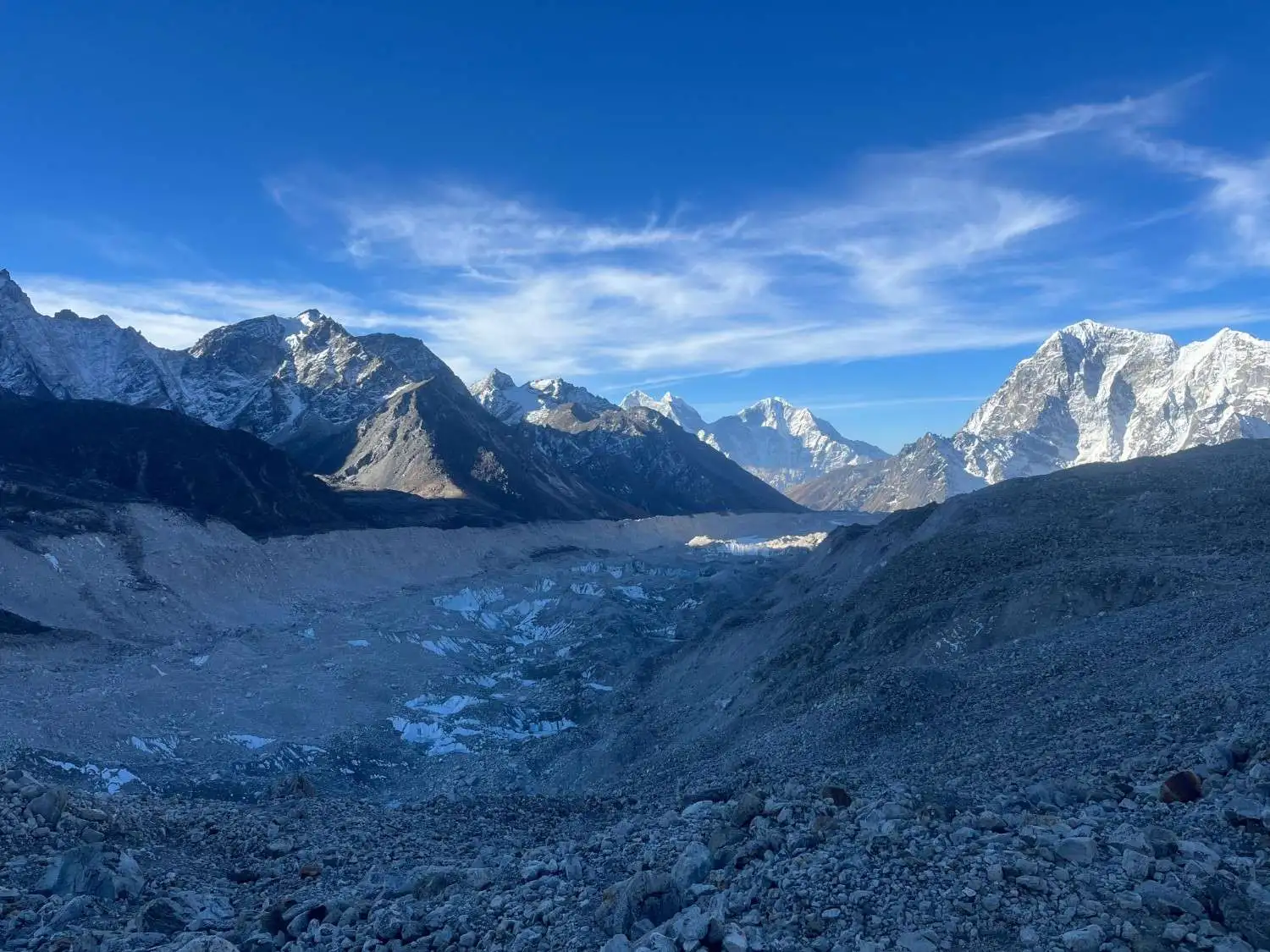
The trail then passes through Dingboche, Lobuche, and Gorakshep, where the landscape gradually transforms into a rugged alpine environment dominated by glaciers, rocky terrain, and towering peaks. With every step, the mountains feel closer and more impressive.
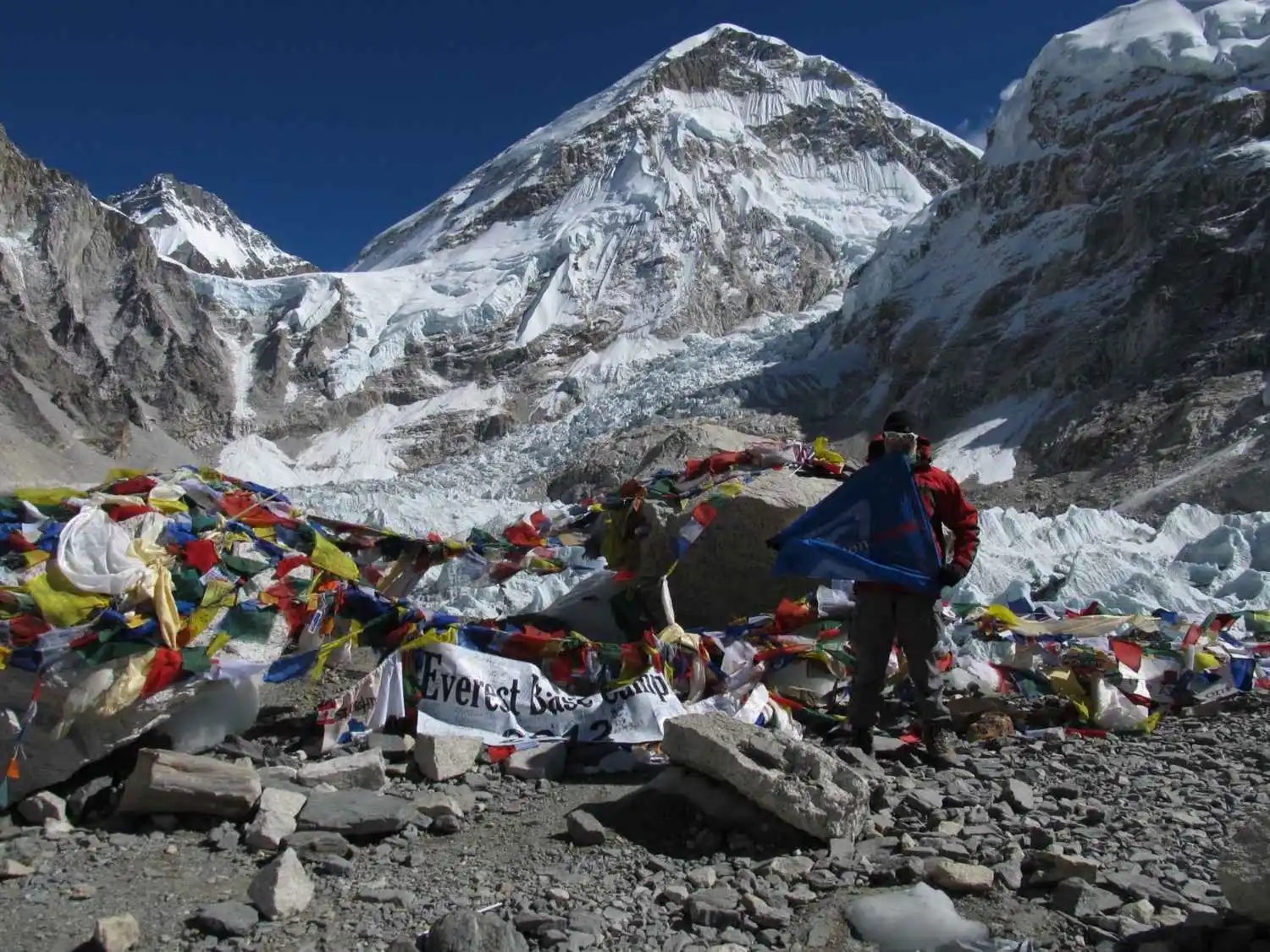
The ultimate highlight arrives at Everest Base Camp. Standing at the foot of the world's highest mountain is an unforgettable experience. Colorful prayer flags flutter in the wind, glaciers stretch across the valley, and the immense presence of Mount Everest creates a moment few trekkers ever forget.
Another unforgettable experience is the climb to Kala Patthar, the region's most famous viewpoint. From its summit, trekkers enjoy breathtaking panoramic views of Everest and the surrounding Himalayan giants. Watching the sunrise cast golden light across the snow-covered peaks is often considered the defining moment of the entire trek.
After reaching these iconic destinations, the return journey follows the same trail through Pheriche, Tengboche, Namche Bazaar, and Phakding before arriving back in Lukla for the flight to Kathmandu.
Unlike the standard Everest Base Camp itinerary, this trek skips additional acclimatization days and maintains a consistently faster pace throughout. As a result, it is recommended only for trekkers with excellent physical fitness, previous high-altitude trekking experience, and confidence walking long distances at elevation.
For those ready to take on the challenge, the 10-Day Everest Base Camp Trek offers a rewarding adventure that delivers the beauty, culture, and grandeur of the Everest region in a shorter timeframe. If the traditional 12- to 16-day itinerary feels too slow, this fast-paced version provides an exciting way to fulfil the dream of standing at the base of the world's highest mountain.

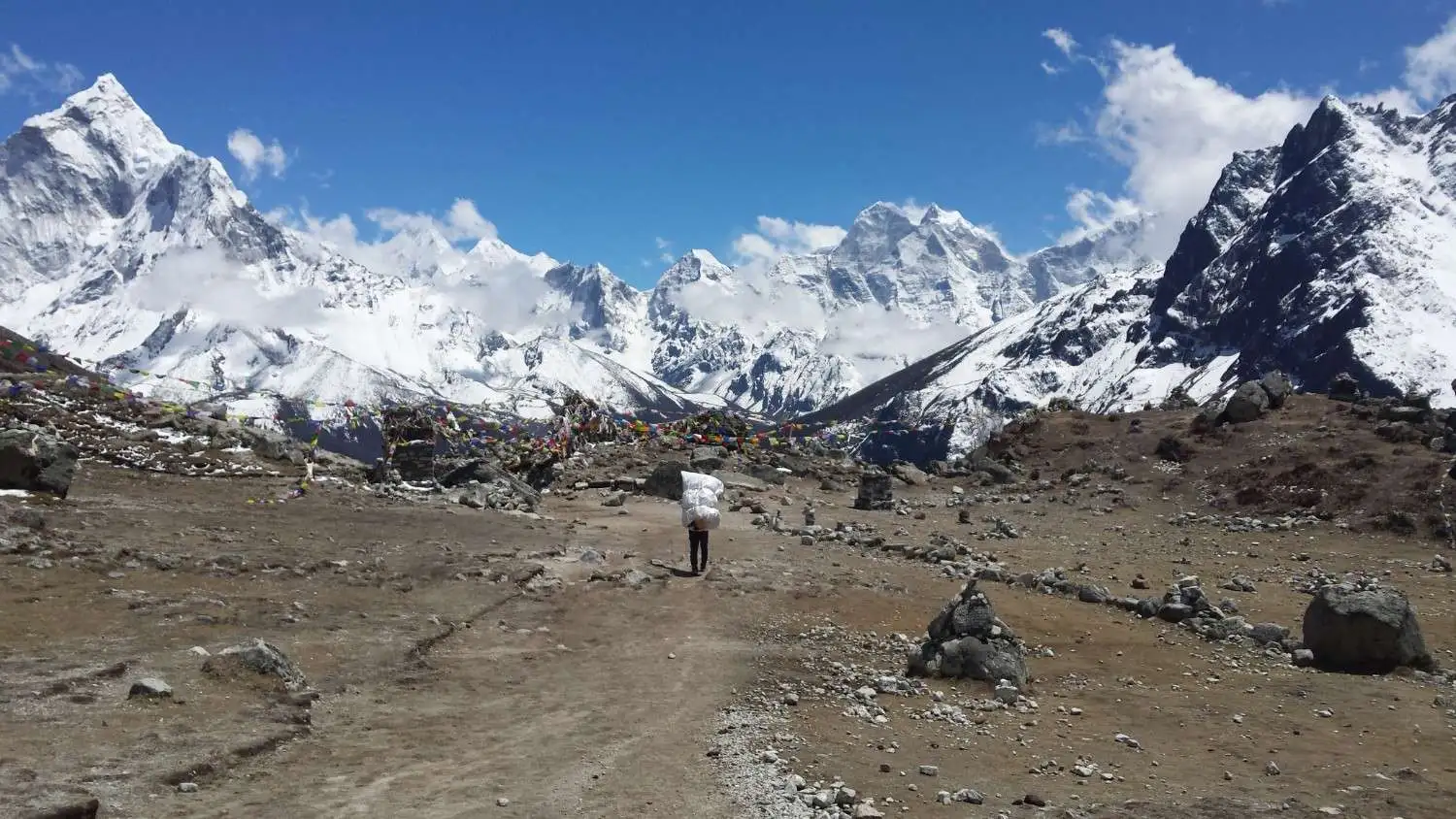
The 10-Day Everest Base Camp Trek offers far more than spectacular mountain scenery. It also provides an opportunity to experience the unique culture of the Sherpa community, whose traditions have shaped life in the Khumbu region for centuries. As you pass through villages such as Namche Bazaar, Tengboche, and Dingboche, you’ll encounter colorful prayer flags, intricately carved mani stones, ancient chortens, and peaceful monasteries that reflect the region’s deep Buddhist heritage. One of the cultural highlights is Tengboche Monastery, where trekkers can experience a tranquil spiritual atmosphere while enjoying magnificent views of Ama Dablam and the surrounding Himalayan peaks.
The trek also showcases an incredible variety of landscapes. Lower elevations feature forests of pine, fir, and rhododendron, while higher sections gradually transition into rugged alpine valleys, glacial moraines, and dramatic mountain terrain. Wildlife enthusiasts may spot Himalayan tahr, musk deer, Himalayan monals, and other native bird species along the trail. As the altitude increases, the scenery becomes increasingly wild and dramatic, culminating in the glacial landscapes surrounding Everest Base Camp and Kala Patthar.
Because this itinerary follows a compressed schedule without dedicated acclimatization days, choosing the right season is even more important than on the standard Everest Base Camp Trek. Stable weather and clear visibility significantly improve both safety and the overall trekking experience.
Spring is one of the best seasons for this trek. March and April typically offer stable weather, comfortable daytime temperatures, and excellent mountain visibility. Rhododendron forests bloom at lower elevations, adding vibrant colours to the trail. Although May remains a popular trekking month, increasing pre-monsoon clouds can reduce visibility later in the season, making March and April the preferred months for the 10-day itinerary.
October is widely considered the ideal month for the 10-Day Everest Base Camp Trek. After the monsoon, the air is exceptionally clear, providing outstanding panoramic views of the Himalayas. Daytime trekking conditions are pleasant, although temperatures become much colder at higher elevations. November also offers excellent visibility with fewer trekkers on the trail, but overnight temperatures above 4,500 metres frequently fall below -15°C.
Although experienced trekkers sometimes complete the classic Everest Base Camp Trek during winter, the faster 10-day itinerary leaves little flexibility for weather-related delays. During the monsoon, heavy rainfall, slippery trails, poor visibility, and frequent Lukla flight disruptions significantly increase the challenges of an already demanding schedule.
Recommended trekking period: Mid-October to early November for the clearest mountain views, or late March to mid-April for warmer temperatures and blooming rhododendron forests.
This itinerary is specifically designed for experienced trekkers who are comfortable with a faster pace and understand the additional challenges of trekking at high altitude without scheduled acclimatization days.
This trek is ideal if you:
This trek may not be suitable if you:
In these situations, the 14-Day Everest Base Camp Trek offered by Nepal Outdoor Expeditions is generally the better option. The 10-day version is intentionally fast-paced and delivers the full Everest experience while demanding a higher level of fitness and preparation.
The 10-Day Everest Base Camp Trek is graded strenuous. It is more demanding than the standard Everest Base Camp itinerary because it removes the traditional acclimatization days while maintaining the same maximum altitude.
On the traditional 12- to 16-day itinerary, trekkers spend additional nights in Namche Bazaar (3,440 metres) and Dingboche (4,410 metres). These acclimatization days allow the body to gradually adjust to decreasing oxygen levels, reducing the likelihood of Acute Mountain Sickness (AMS) while helping trekkers recover before climbing higher.
On the 10-day itinerary, trekkers continue ascending without these scheduled rest days. Instead of acclimatizing through planned breaks, your body must adapt while continuing to gain altitude, making careful pacing and hydration even more important.
Because of the quicker ascent, many trekkers experience more noticeable altitude-related symptoms than they would on a longer itinerary. Mild headaches, reduced appetite, interrupted sleep, and increased fatigue above 4,000 metres are relatively common. These symptoms can usually be managed through proper hydration, steady walking, and close monitoring by experienced guides.
Nepal Outdoor Expeditions’ professional guides carry pulse oximeters and regularly monitor each trekker’s oxygen saturation throughout the journey. If a trekker shows signs of significant altitude illness or unsafe oxygen levels, the guide will make the decision to descend immediately. Safety always takes priority over completing the itinerary.
Day 6 is generally the most physically challenging stage of the entire journey. Trekkers walk from Lobuche to Gorakshep before continuing to Everest Base Camp (5,364 metres) and returning to Gorakshep for the night. The round-trip typically involves 7 to 8 hours of trekking across rocky glacial terrain at elevations approaching 5,400 metres, where even gradual climbs require considerable effort. Before sunrise the following morning, trekkers make the final ascent to Kala Patthar, one of the finest viewpoints in the Everest region, before beginning the long descent back toward Lukla.
During the 10-Day Everest Base Camp Trek, you will stay in local teahouses and mountain lodges along the classic Khumbu trail. These accommodations are simple, comfortable, and designed specifically for trekkers. While luxury facilities are unavailable at higher elevations, the teahouses provide a warm and welcoming place to rest after each day’s hike.
Most rooms are arranged on a twin-sharing basis, with two single beds, mattresses, pillows, and blankets. The rooms are basic, often featuring wooden interiors and minimal furnishings, but they offer everything needed for a good night’s sleep. As you ascend through Dingboche, Lobuche, and Gorakshep, facilities become more modest, reflecting the remote mountain environment. Despite the simplicity, the hospitality of local hosts makes every stay enjoyable.
Shared bathrooms are standard throughout most of the trek. In lower-elevation villages such as Lukla and Namche Bazaar, some lodges offer attached bathrooms and hot showers for an additional fee. At higher altitudes, however, shared toilets and limited shower facilities are the norm, providing an authentic Himalayan trekking experience.
Evenings are often spent in the communal dining hall, where trekkers gather around a warm stove to enjoy hearty meals, exchange stories, and prepare for the next day’s adventure. These shared moments create a welcoming atmosphere and are often among the most memorable parts of the trek.
The teahouses serve a wide variety of freshly prepared meals that provide the energy needed for long days on the trail. The most popular choice is dal bhat, Nepal’s traditional meal of rice, lentil soup, seasonal vegetables, and pickles. Rich in carbohydrates and nutrients, it is the preferred meal for many trekkers, and most lodges even offer free refills, giving rise to the famous saying, “Dal Bhat Power, 24 Hour.”
In addition to Nepali cuisine, teahouses offer a selection of Tibetan and international dishes. Popular options include fried rice, noodles, pasta, soups, potatoes, momos (dumplings), chow mein, Tibetan bread, pancakes, and omelettes. Breakfast typically consists of eggs, toast, porridge, muesli, pancakes, or Tibetan bread, accompanied by tea, coffee, or hot lemon.
As you climb higher into the Everest region, transporting food becomes increasingly difficult. Most supplies are carried by porters, yaks, or mules, so menu options become slightly more limited and meal prices gradually increase with altitude. Even so, the food remains fresh, filling, and carefully prepared by local lodge owners.
Although accommodation and dining facilities are basic, they provide everything needed for a comfortable trekking experience. Cozy teahouses, nourishing meals, and the genuine hospitality of the Sherpa community add a unique charm to the journey, making the 10-Day Everest Base Camp Trek memorable both on and off the trail.
Proper preparation is essential for completing the 10-Day Everest Base Camp Trek safely and comfortably. Since this itinerary follows a faster pace than the standard route, good physical fitness and the right equipment are even more important.

Tenzing Sherpa
Have questions? Our travel specialists are here to help plan your perfect adventure.
Chat on WhatsAppThe journey begins with that familiar mix of nerves and excitement as you make your way to Kathmandu's domestic terminal. The flight to Lukla is only 30 minutes, but honestly, those 30 minutes might be some of the most jaw-dropping of your life. Mountains everywhere you look, filling every window of the aircraft. Landing at Lukla feels like a proper adventure in itself. The airport is unlike anything most people have seen, and touching down there makes it all feel very real. You're in the Khumbu now. From Lukla, the trail descends gently through town and opens up into a lovely walk along the banks of the Dudh Koshi River. A few Sherpa villages dot the route, and the pace is easy and relaxed. By the time you reach Phakding, you'll feel settled in and ready for what's ahead.
After a good breakfast, you hit the trail toward Namche, and today has a little bit of everything. Suspension bridges swaying over the Dudh Koshi River, dense forest once you enter Sagarmatha National Park, and if you're lucky with the clouds, your first real peek at Everest somewhere along the upper stretch of the climb. The villages of Monjo, Benkar, and Jorsalle each have their own quiet charm. The final push up to Namche is steep, and it'll make your legs work, but arriving in Namche Bazaar always feels worth it. It's a surprisingly lively place for somewhere so high up, and there's a real energy to it in the evenings.
Leaving Namche, the trail climbs and then opens onto one of those wide, flat stretches that seem almost too good to be true. Ama Dablam stands out like something from a painting, and Everest and Lhotse fill in the background. It's the kind of view you stop walking for, more than once. The path later dips into the forest and drops back down toward the river before climbing again toward Tengboche. It's a satisfying day of varied terrain. Tengboche itself sits in a beautiful spot, right next to the famous monastery. If you arrive with some daylight left, spending a quiet moment around the monastery grounds is something most trekkers remember long after the trip.
This one is a gentler day, and that's not a bad thing at all. A slow morning around the monastery before breakfast, then a gradual descent toward Pangboche. Ama Dablam keeps you company for much of the walk, and it never really gets old looking at it. Past Pangboche the trail tilts upward again, but nothing too punishing. The altitude is crossing 4,000 meters today, so there's good reason to take it slow and just enjoy the scenery rather than push hard. Arriving in Dingboche with time to spare is ideal. It gives you a chance to explore the village a little and get a feel for the high valley before dark.
The walk to Lobuche is shorter in distance, but the altitude starts to make itself known a bit more. The morning climb toward Dukla is steady, with the peaks of the region sitting all around you. After Dukla, there's one proper uphill stretch that asks a bit more of you. At the top of that climb, you'll come across an area filled with memorials and shrines, a place of remembrance for mountaineers lost in these mountains. It's quietly moving and worth a moment of pause. From there it's only about 30 minutes more to Lobuche, where you'll spend the night with the mountain named after the village sitting above you.
This is the day. You know it when you wake up. The walk out of Lobuche starts on a relatively flat trail running alongside the Khumbu Glacier's moraine. After about an hour, the trail pushes uphill to Gorakshep, a two-hour climb that feels long but manageable. Lunch and a rest at Gorakshep, and then you go. The hike to Base Camp is an hour of ups and downs across rocky, glacier-carved terrain. And then you're there. Prayer flags, the EBC marker, the glacier all around you, and Everest right above. It's one of those places where you just stand for a while and let it sink in. The walk back to Gorakshep for the night feels lighter somehow, like the weight of anticipation has been replaced with something much better.
You're up before the sun today, and for very good reason. The hike up to Kala Patthar in the early hours is cold and a little breathless, but the view waiting at the top is the best you'll get of Everest from any trekking point. A full 360-degree panorama, glaciers below, peaks in every direction, and a sunrise that does things to you that are hard to put into words. Take your time up there. Photograph everything. Then head back down to Gorakshep for a well-deserved breakfast before making your way toward Pheriche. The route traces back past the Khumbu Glacier, through Lobuche and Thukla, and into the wide valley where Pheriche sits. It's a long day but a rich one.
Heading back now, and the descent brings a different quality to the walk. The body feels easier going downhill, and the views, which you may have rushed past on the way up, are worth proper attention this time around. There's no real need to hurry, and pushing too fast downhill is a reliable way to wake up with sore legs. Take the time to notice things you missed. The way the light hits a particular ridge, a teahouse you didn't stop at, a stretch of trail you barely registered on the way up. It all looks different coming back. Namche will feel familiar and welcoming by the time you walk back in.
The last day of trekking. That's a bittersweet feeling for most people, and it tends to settle in somewhere between breakfast and the first suspension bridge. The trail back to Lukla follows the Dudh Koshi River, crossing and recrossing it over bridges that feel like old friends by now. There are uphills and downhills along the way, and the day is long, but it has a celebratory quality to it. When you walk into Lukla, the full weight of what you just did tends to hit people differently. Some get quiet, some get loud, and most just smile a lot. Either way, it's a night worth marking.
Weather permitting, the morning flight back to Kathmandu brings the journey full circle. About 45 minutes in the air, the same mountains out the window, but everything looks a little different when you know what's underneath them now. Back in Kathmandu, checked into the hotel, the 10-day Everest Base Camp Trek is complete. What you carry home isn't just photographs. It's the cold early mornings, the thin air, the kindness of the people along the route, and the quiet satisfaction of having walked all the way there and back.
See what past travelers are saying about their experience with Nepal Outdoor Expeditions.
Because your next adventure is impatiently waiting for you.
Last Minute Note: Grab incredible deals on the last minute departure / Book spontaneous trips to hip destinations with limited-time offers and discounted price
Not sure of your dates yet? Hold a departure with a 20% deposit. Cancel more than 60 days out and your deposit is refunded in full. Your first date change is free. If a departure doesn't reach minimum numbers, we'll offer you the nearest alternative date or a full refund, and we'll let you know at least 30 days out.
Before you think of or actually plan any adventurous or relaxing tours, travels, or treks with Nepal Outdoor Expeditions.
If you cancel more than 60 days before departure, we refund your deposit in full. Between 30 and 60 days, the 20% deposit is retained. Inside 30 days the trip cost is non-refundable, since by then we've already paid for your permits, flights, and teahouse bookings. Full detail on our booking page.
20% to reserve your place, with the balance due 60 days before departure. On this trek that's $240 to book and $959 two months before you fly. If you're booking within 7 days of departure, the full amount is due at booking.
Yes, as long as you let us know at least 30 days before your original departure date, your first change is free. Any change after that, or a change requested inside 30 days, is $200 per person.
10 Days Everest Base Camp Trek