Offering group discounts!
Reserve with a 20% deposit. The balance isn't due until 60 days before departure, and cancellations more than 60 days out get a full deposit refund. How booking works →
 Region
Everest Region
Region
Everest Region
 Duration
7 Days
Duration
7 Days
 Difficulty
Strenuous
Difficulty
Strenuous
 Max. Altitude
5364 m
Max. Altitude
5364 m
 Prime Activity
Trekking In Nepal
Prime Activity
Trekking In Nepal
 Season
(March-May) (September-November)
Season
(March-May) (September-November)
 Group Size
1-12 people
Group Size
1-12 people
The 7-Day Everest Base Camp Trek is a shorter yet thrilling journey into the heart of the Himalayas. Designed for travelers who want to experience the magic of Everest in a limited time, this trek takes you through some of the most beautiful and remote landscapes of Nepal. Although the itinerary is compact, it still captures the essence of trekking in the Everest region—dramatic mountain scenery, peaceful villages, and the unforgettable feeling of walking beneath the world’s highest peaks.
The adventure takes place in the Solukhumbu district of northeastern Nepal, a region famous for its rugged terrain and breathtaking Himalayan views. Throughout the journey, trekkers are constantly surrounded by the snow-covered peaks of the Mahalangur Himalayan range, including the towering presence of Mount Everest and its neighboring giants. The trail involves several uphill and downhill sections, making the journey both exciting and physically rewarding.
One of the most special aspects of this trek is the variety of landscapes you experience along the way. The trail winds through lush forests, rushing rivers, waterfalls, rocky trails, alpine meadows, and glacier-filled valleys. Suspension bridges stretch across deep river gorges, and the changing scenery keeps the trek interesting every single day.
Much of the trail lies inside Sagarmatha National Park, a protected area that preserves the fragile ecosystem of the Everest region. This national park is home to several unique plants and animals, and if you are lucky, you may spot wildlife such as Himalayan tahr, musk deer, or colorful mountain birds along the route.
The trek is not only about nature; it is also a journey through the cultural heart of the Himalayas. The trails pass through villages where the Sherpa community has lived for generations. Along the way, you will also encounter people from other ethnic groups, such as Bhotia, Tamang, and Gurung. Their traditions, lifestyle, and strong connection to the mountains add a meaningful cultural layer to the adventure. Prayer flags flutter in the wind, and Buddhist landmarks like monasteries, chortens, and gompas quietly stand along the trail.
The journey begins in Kathmandu, where you board a scenic mountain flight to Lukla. The short flight, which takes about 35 to 40 minutes, offers incredible aerial views of the Himalayas and sets the tone for the adventure ahead. After arriving in Lukla and taking a short rest, the trekking journey officially begins.
From Lukla, the trail gently leads toward the peaceful village of Phakding. Along the way, you pass through charming settlements such as Monjo and Jorsale before gradually climbing up to Namche Bazaar, the vibrant hub of the Everest region. Namche Bazaar is a lively mountain town filled with small cafés, bakeries, restaurants, shops, and lodges, making it one of the most interesting stops during the trek.
Beyond Namche, the trail continues through forests and mountain paths toward Tengboche, home to the famous Tengboche Monastery. This monastery sits in a stunning location surrounded by some of the most beautiful Himalayan peaks. It’s a peaceful place where trekkers often pause to take in the incredible views and enjoy the calm atmosphere.
As the trek continues higher, the landscape becomes more rugged and alpine. The trail leads toward villages such as Dingboche and Lobuche, where the air becomes thinner and the environment more dramatic. Trekkers need to move carefully in these high-altitude areas, as the body is adjusting to the elevation.
Eventually, the journey reaches Gorakshep, the final settlement before Everest Base Camp. From here, trekkers make the final push toward the legendary Everest Base Camp. The trail can be challenging, with rocky paths and steep sections, but reaching the base of the world’s highest mountain is an unforgettable moment.
Standing at Everest Base Camp, surrounded by glaciers and towering peaks, is truly special. The crisp mountain air, the vast Himalayan landscape, and the sense of accomplishment make it one of the most rewarding experiences for any trekker.
After spending time at base camp and enjoying the incredible views, the journey becomes even more exciting. Instead of trekking all the way back, you take a scenic helicopter flight from Gorakshep to Lukla. Flying above the mountains offers a completely different perspective of the Everest region, with sweeping views of glaciers, valleys, and towering Himalayan peaks.
Once back in Lukla, the adventure concludes with another beautiful mountain flight returning to Kathmandu, bringing this short but unforgettable Everest journey to an end.


The best season for this trek is spring (March–May). In this season, the weather is stable with clear skies and rhododendron blooms. It is the best for photography and a comfortable trekking experience. You get to see the view of Mount Everest, Cho Oyu, Lhotse, and Makalu. Likewise, the autumn (September–November) season is also a recommended season. In this season, the weather is stable with pristine mountain vistas. It is a peak trekking season as well as the festive season of Sherpas. The temperature is moderate by day and chilly at night. In winter (December–February), the temperature is cold. There are high chances of snowfall, and the route is also difficult for trekking. Therefore, it is only recommended for highly experienced trekkers. This season is challenging but peaceful. In Monsoon (June–August), frequent rainfall occurs. The trail is slippery and there is a high risk of landslides. The visibility of the view is less due to fog and cloud cover. It is the least recommended season.
For the cultural aspect, you can explore Namche Bazaar. It is the vibrant town of Sherpas known for its monasteries, bakeries, and trading market. Namche Bazaar is the economic hub of the Khumbu region and a center of Sherpa culture. You can visit Thame Monastery, which is a century-old Buddhist monastery that provides spiritual insights. You can experience Tibetan-influenced culture, and you can participate in the Dumji Festival and the Mani Rimdu Festival. Similarly for Natural Insights, you can witness the panoramic view of Mount Everest along with other Himalayan peaks. You can encounter snow leopards, Himalayan tahrs, yaks, and Danphe. You get to trek through lush rhododendron forests and alpine meadows.
Food and accommodation are important parts of any trekking journey, and the Everest Base Camp trek is no different. Along the trail, you will find plenty of teahouses and small mountain lodges that welcome trekkers and provide a comfortable place to rest for the night. In the lower villages, the facilities are usually a bit better, but as you move higher into the mountains, things gradually become simpler. Even so, the lodges offer everything you need after a long day of walking.
Most rooms in these teahouses are twin-sharing, with two beds equipped with mattresses, pillows, and warm blankets. Some places may also offer extra blankets if the weather gets colder at night. In popular villages like Namche Bazaar, you may find additional facilities such as hot showers, Wi-Fi, and charging stations, though these services often come with a small extra cost. At higher altitudes, these comforts become more limited, and bathrooms are usually shared and located outside the rooms.
When it comes to food, the teahouses serve simple but nourishing meals that help trekkers stay energized throughout the journey. The most common dish along the trail is the traditional Nepali meal dal bhat, which includes rice, lentil soup, vegetables, and pickles. It is a hearty and satisfying meal that many trekkers enjoy regularly during the trek.
Apart from local dishes, many teahouses also offer other popular options such as momos (dumplings), chow mein noodles, fried rice, soups, pancakes, and eggs. While the menu may become slightly limited as you climb higher, the food is always freshly prepared and served with genuine hospitality by the lodge owners.
Warm drinks are especially comforting in the mountains. Trekkers often enjoy tea, coffee, and garlic soup, which is quite popular in the Everest region and is believed to help with acclimatization at higher altitudes. It’s also a good idea to carry a few snacks like chocolate bars, energy bars, or dry fruits to keep your energy up during the long walking days.
If you’re interested in exploring more of the Everest region, there are several other incredible trekking options as well. Popular routes like the Gokyo Lake Trek, the adventurous Everest Three High Passes Trek, and the beautiful Everest Panorama Trek each offer their own unique way of experiencing the Himalayas. Whether you prefer a challenging expedition or a more relaxed journey, the Everest region has something special for every trekker.

Tenzing Sherpa
Have questions? Our travel specialists are here to help plan your perfect adventure.
Chat on WhatsAppYour adventure begins with an early morning flight from Kathmandu to Lukla, one of the most thrilling mountain flights in the world. As the small aircraft climbs above the clouds, you'll catch your first proper glimpse of the Everest Mahalangur range stretching across the horizon. It's one of those moments that really sets the tone for everything ahead. Once you land at Lukla's Tenzing-Hillary Airport, the trek begins. The trail winds through charming hill landscapes, moving up and down through terraced fields and small villages. Nothing too strenuous on day one, which is a good thing because your legs will thank you later. By the time you roll into Phakding, you'll have had a genuine taste of what the Khumbu region feels like underfoot. Settle into your teahouse, take a slow walk around the village, and get a good night's rest.
After breakfast, you leave Phakding behind and head toward one of the most iconic villages in the Himalayas. Today's trail is a mix of riverside walking, swinging suspension bridges, and gradual climbs that slowly reveal just how big the mountains around you actually are. Crossing above the Dudh Koshi river on those famous suspension bridges, flags fluttering in the breeze, is a highlight many trekkers remember long after they've returned home. You'll pass through Monjo, where you'll register your permits and officially enter Sagarmatha National Park, a UNESCO World Heritage Site and home to some of the most dramatic scenery on the planet. From here, the trail climbs more seriously toward Namche Bazaar. Namche itself is a pleasant surprise for most first-timers. It's a proper little town tucked into a natural amphitheater, complete with bakeries, coffee shops, gear stores, and even a few bars. After days of trail ahead, this is a good place to soak it all in before things get quieter and higher.
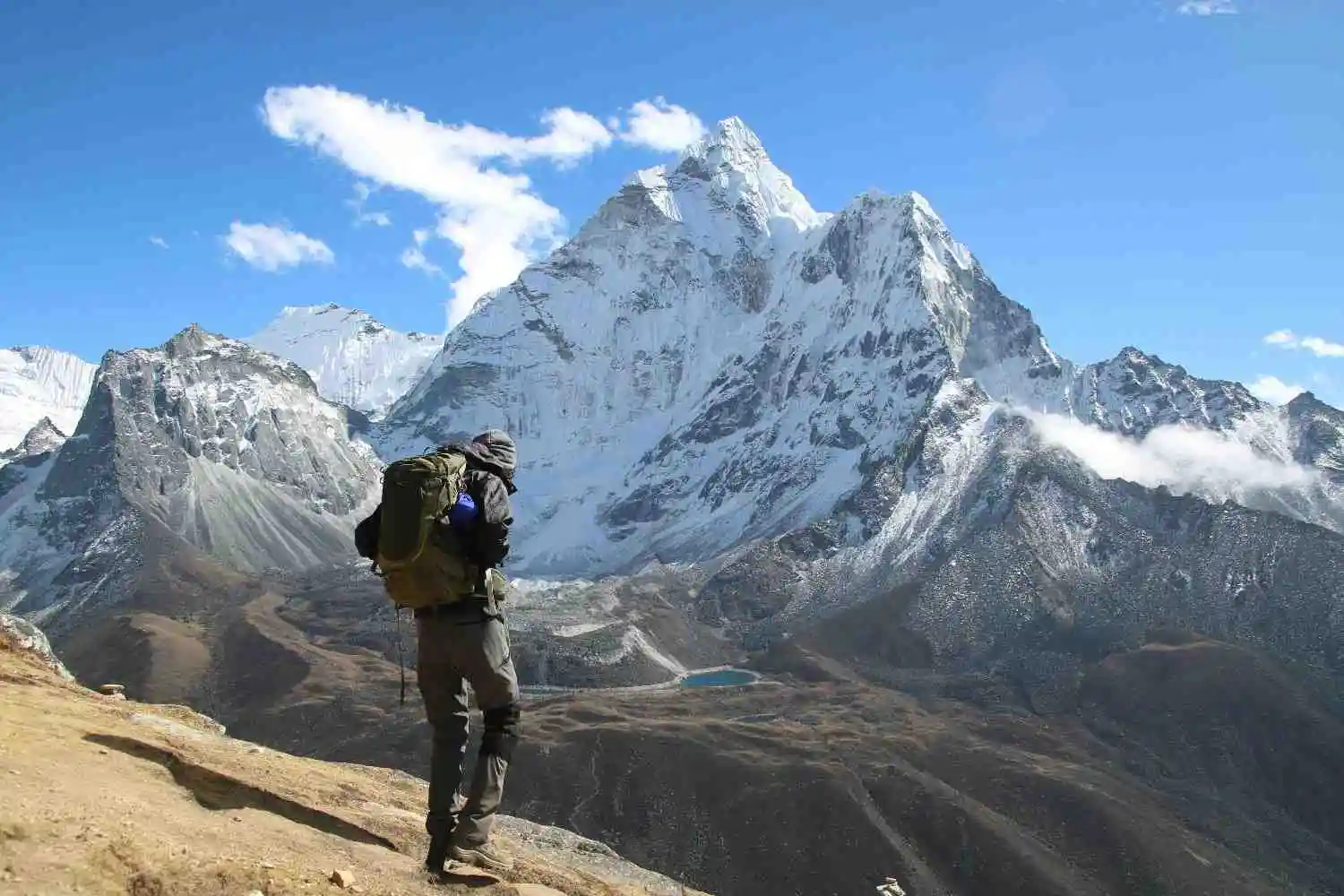
Leaving Namche, the trail opens up beautifully. You'll walk through forests of rhododendron and pine, with the Everest Mahalangur range keeping you company the whole way. There's a stop at Kyanjuma, where the views across to the peaks are absolutely worth pausing for, even if just to sit quietly for a few minutes and take stock of where you are. From Kyanjuma, the path drops down toward the Phunki Tenga river before climbing up again to Tengboche. That final ascent is steep but short, and the reward at the top is one of the great views in the entire Himalayas. Tengboche Monastery sits at the ridge with Ama Dablam rising magnificently in the background. If you're lucky, you might catch the monks at evening prayers. It's a deeply atmospheric experience that reminds you this landscape has a spiritual significance that goes far beyond just the trekking.
Wake up early if you can. The Himalayan sunrise from Tengboche is something that photographs really cannot do justice to. Once you've had breakfast and watched the morning light hit the peaks, you'll head off on a trail that descends through thick fir and rhododendron forest before crossing suspension bridges above Pangboche. The landscape gradually shifts as you gain altitude. The trees thin out and the valley opens wide, giving way to stone walls, yak pastures, and the big open skies that define the higher Khumbu. After a well-earned lunch stop, the final stretch into Dingboche feels wonderfully remote. At 4,400 meters, you're well into altitude territory now, and the air is noticeably thinner. The teahouse here is cozy, and an early night is never a bad idea at this stage of the trek.
The trail today gets more serious. You'll be climbing steep terrain with the kind of thin air that makes every uphill step feel more deliberate than usual. But this is also where the scenery becomes almost otherworldly. Everest, Makalu, Ama Dablam, and the rest of the giants line up around you, close enough to feel almost unreal. The path passes through Thukla, a good spot to rest and catch your breath, before the final push up to Lobuche. That last section after Thukla, climbing past the memorial chortens built in honor of climbers lost on Everest, is one of the more quietly moving stretches of the entire trek. Take your time on this part. You'll arrive at Lobuche in the afternoon, with plenty of time to rest and prepare mentally for the big day ahead.
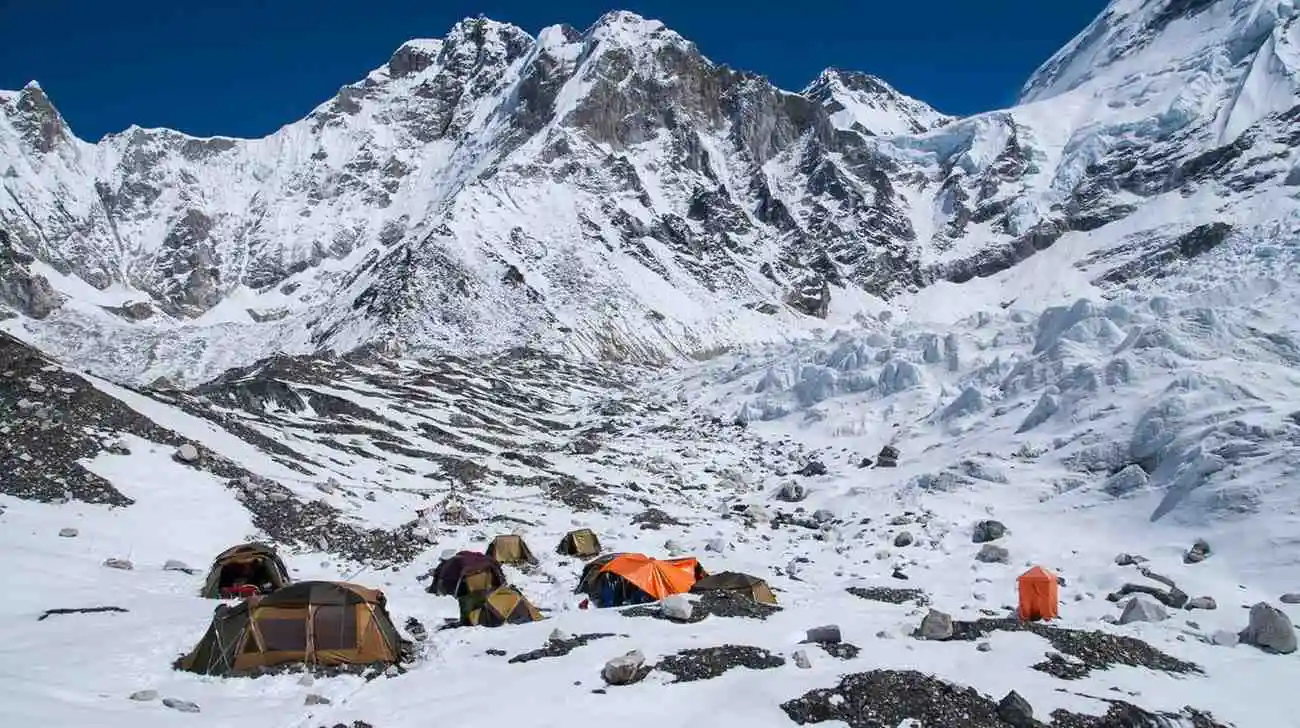
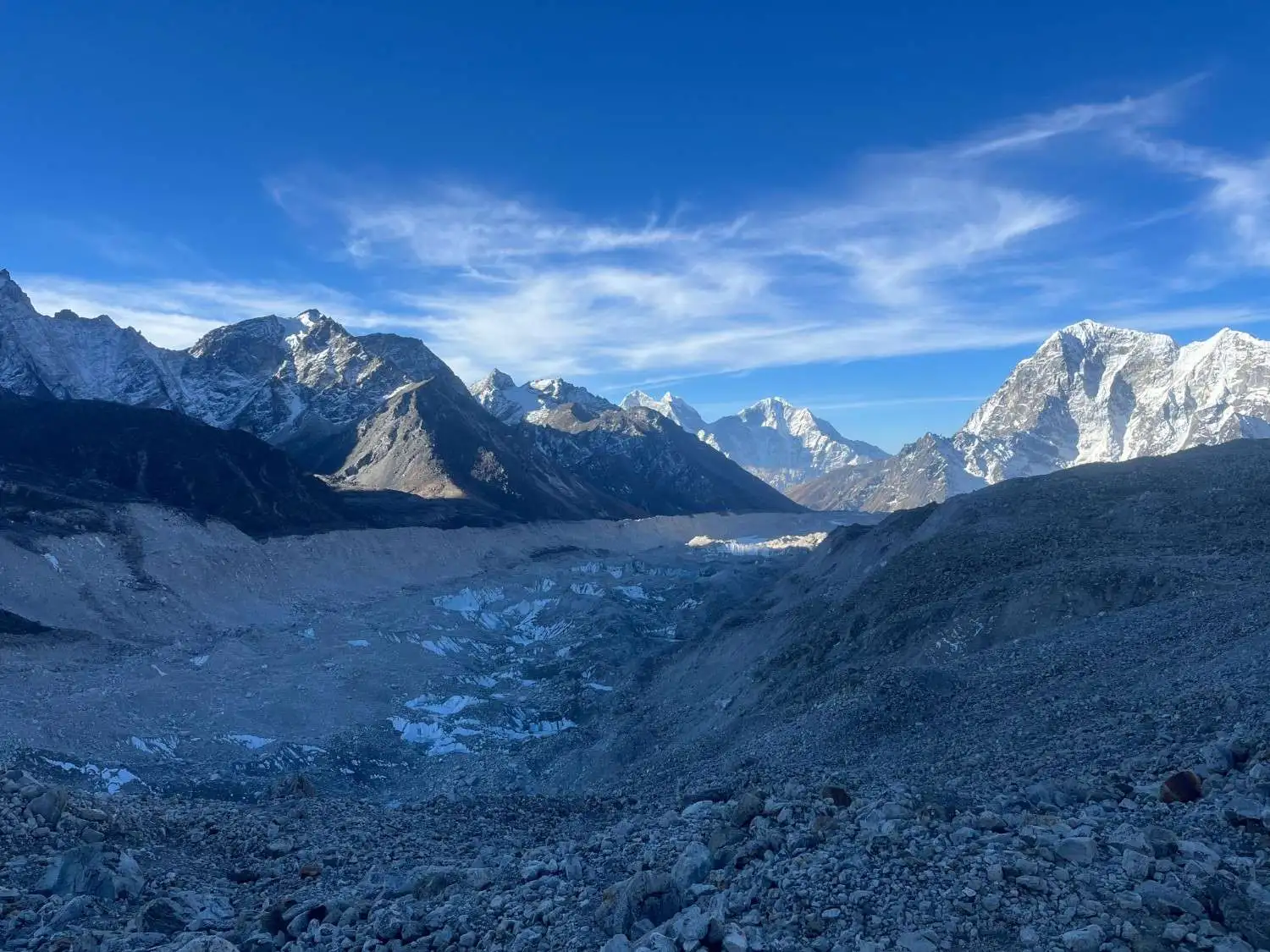
This is the day everything has been building toward. After an early breakfast, you set off toward Gorak Shep, the last stop before Base Camp. The trail follows the edge of the Khumbu Glacier, a strange and beautiful landscape of ice, moraine, and ancient rock. From Gorak Shep, the route to Base Camp is rough and rocky, winding through glacial debris that demands your full attention. And then you arrive. Everest Base Camp at 5,365 meters is not the most beautiful spot on the trek, but standing there, looking up at the Khumbu Icefall with the prayer flags snapping in the wind, is an experience you won't easily forget. During the climbing season, the camp is alive with expedition teams from around the world, and the energy is electric. After taking it all in and getting your photos, you head back to Gorak Shep for lunch. Then comes something a little special: a helicopter ride back to Lukla. Flying over the glacier, the valleys, and the high ridges you've spent the last six days walking through gives you a completely different perspective on the journey. You'll be back in Lukla in about 20 minutes, a journey that took you days on foot. Spend your last night in the mountains at a teahouse in Lukla.
The final morning in the mountains has a bittersweet feel to it. You'll board your flight from Lukla as the sun rises over the peaks, and as the plane banks and climbs, you'll get one last sweeping look at the Himalayas before dropping down toward Kathmandu. The entire flight takes around 35 to 40 minutes, which feels almost absurdly short given everything you've covered over the past week. Back in Kathmandu at 1,400 meters, the air will feel thick and rich compared to what you've been breathing up on the trail. From here, you're free to head wherever the journey takes you next.
See what past travelers are saying about their experience with Nepal Outdoor Expeditions.
Because your next adventure is impatiently waiting for you.
Last Minute Note: Grab incredible deals on the last minute departure / Book spontaneous trips to hip destinations with limited-time offers and discounted price
Not sure of your dates yet? Hold a departure with a 20% deposit. Cancel more than 60 days out and your deposit is refunded in full. Your first date change is free. If a departure doesn't reach minimum numbers, we'll offer you the nearest alternative date or a full refund, and we'll let you know at least 30 days out.
Before you think of or actually plan any adventurous or relaxing tours, travels, or treks with Nepal Outdoor Expeditions.
If you cancel more than 60 days before departure, we refund your deposit in full. Between 30 and 60 days, the 20% deposit is retained. Inside 30 days the trip cost is non-refundable, since by then we've already paid for your permits, flights, and teahouse bookings. Full detail on our booking page.
20% to reserve your place, with the balance due 60 days before departure. On this trek that's $470 to book and $1,880 two months before you fly. If you're booking within 7 days of departure, the full amount is due at booking.
Yes, as long as you let us know at least 30 days before your original departure date, your first change is free. Any change after that, or a change requested inside 30 days, is $200 per person.
Everest Base Camp Trek 7 Days