
Offering group discounts!
Reserve with a 20% deposit. The balance isn't due until 60 days before departure, and cancellations more than 60 days out get a full deposit refund. How booking works →
 Region
Langtang Region
Region
Langtang Region
 Duration
8 Days
Duration
8 Days
 Difficulty
Moderate
Difficulty
Moderate
 Max. Altitude
3870 m
Max. Altitude
3870 m
 Prime Activity
Trekking In Nepal
Prime Activity
Trekking In Nepal
 Season
(March-May) (September-November)
Season
(March-May) (September-November)
 Group Size
1-12 people
Group Size
1-12 people
The Langtang Valley Trek is more than just a journey into the Himalayas; it is an experience that stays with you long after you return home. As you walk through blooming rhododendron forests, quiet bamboo groves, and trails beside clear mountain streams, you begin to feel truly connected to nature. Each day brings fresh mountain views, peaceful valleys, and welcoming village life.
The trip is more about the inner experience than just the external scenery. Unlike the more crowded trails in Everest or Annapurna, the Langtang Valley Trek offers a peaceful, culturally rich, and scenic journey ideal for those looking to explore less crowded Himalayan trails.
The highlight of this trek is the cultural experience. Traveling through Tamang villages, meeting local people, learning about their traditional lifestyle, and visiting Kyanjin Gompa monastery provide a deeper understanding of Himalayan culture. You can also observe local livelihoods, including traditional cheese production in Kyanjin, and experience village rituals if your visit coincides with a local festival. These cultural encounters add a meaningful spiritual and cultural element to the natural beauty of the region.
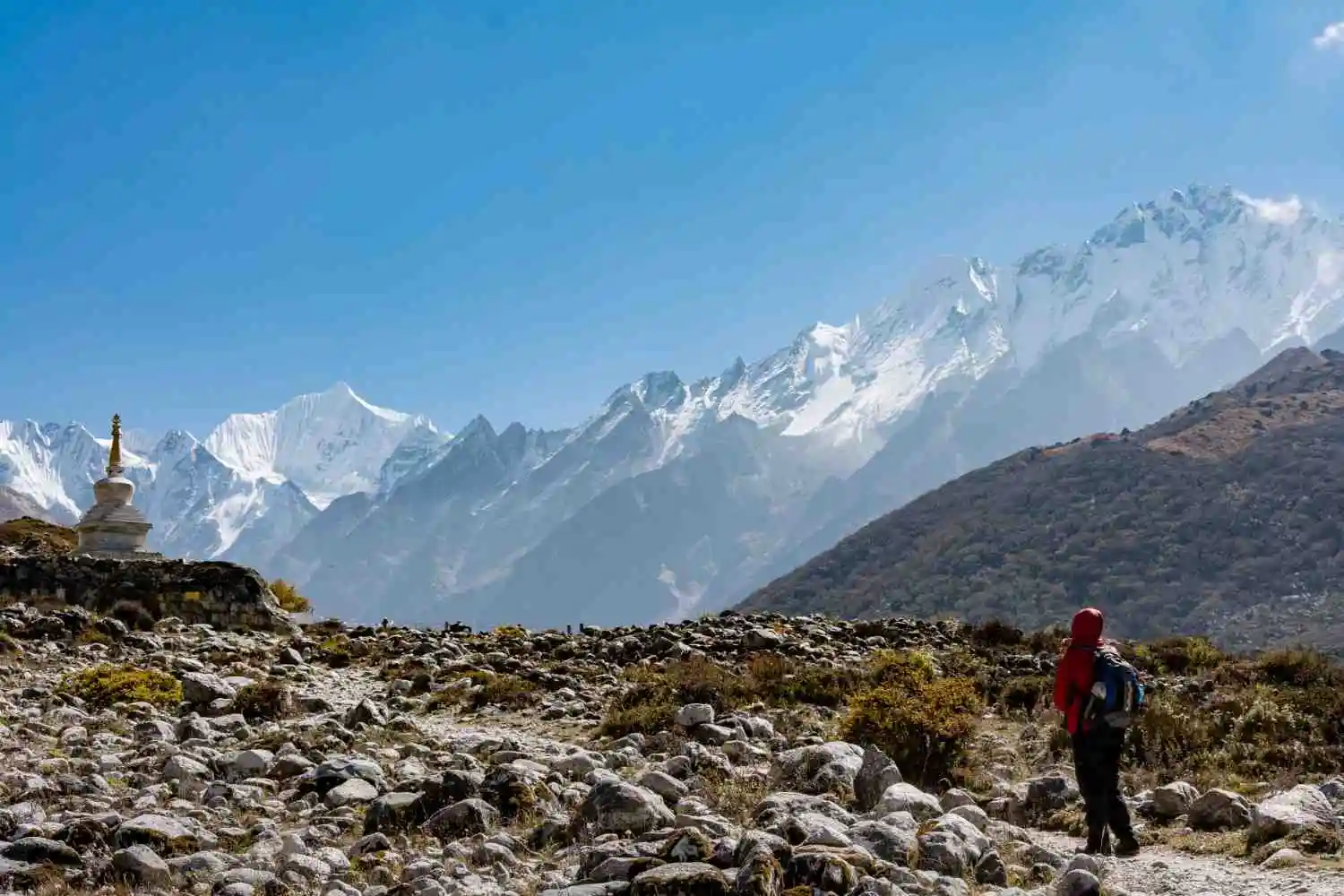
This trek rewards you in many ways. Each day, you walk alongside the Himalayas, with Langtang Lirung rising dramatically above the valley and peaks like Dorje Lakpa and Gangchempo appearing as the trail opens up. Early morning hikes to Tserko Ri or Kyanjin Ri are especially memorable, as the first sunlight touches the mountains and creates a peaceful atmosphere across the valley.
The trail itself also transforms you. Crossing suspension bridges, climbing steady uphill paths, and walking through changing landscapes naturally build your stamina and confidence. More than anything, the journey feels calm and refreshing. You experience the Himalayas closely and peacefully, away from the crowds and pressure often found on the Everest and Annapurna routes.
The more challenging sections of the trek usually begin above 3,000 metres. The air becomes thinner, your pace slows naturally, and uphill sections require more effort. The climb towards Kyanjin Gompa and the side hikes to higher viewpoints include steep sections that test your endurance. During spring, you may encounter small patches of snow, while rainfall can make trails slippery, making trekking poles and a steady pace helpful.
You will also adjust to longer walking days and simple teahouse living, with basic rooms, shared dining areas, and limited facilities. However, these experiences become part of the adventure. As you adapt to mountain life, each day feels more rewarding, and reaching the viewpoints brings a strong sense of achievement. By the end of the trek, you appreciate not only the mountains but also the effort required to experience them.




Travel insurance is strongly recommended for all trekkers. It provides coverage for medical emergencies, accidents, or any unforeseen incidents during the trek. The remote geography and elevation, with the highest point at 3,870 metres at Kyanjin Gompa, present risks such as falls, slips, illness, altitude sickness, and severe weather, making insurance essential.
Insurance allows trekkers to focus on the adventure, scenery, and cultural experiences without worrying about risks.
Most travelers can obtain a visa on arrival in Nepal, which is a straightforward process. Visas are issued at Tribhuvan International Airport in Kathmandu and several land border points, including Birgunj, Bhairahawa, Kakarbhitta, Nepalgunj, Dhangadi, Mahendranagar, and Belhiya. Visitors entering from Tibet may obtain a visa at the Kodari border, though additional restrictions may apply.
Travelers can also apply for a visa in advance at a Nepalese embassy or consulate in their home country. While not compulsory for most nationalities, this can save time on arrival, especially during peak seasons.
Payment can be made in foreign currency or by card, depending on the facilities available at the entry point. Passports must be valid for at least six months after arrival.
Visa extensions are available at the Department of Immigration offices in Kathmandu or Pokhara. Extensions may be required if the trek takes longer than expected due to illness or itinerary changes. The process is generally straightforward but requires proper documentation and payment of additional fees.
For the most current information, travelers should consult the official Nepal Immigration website or contact immigration offices directly.
The Langtang Valley Trek is a moderate trek and is suitable for first-time trekkers with reasonable fitness. Although it is less crowded, the region still feels remote and peaceful. It does not involve technical climbing or extreme altitudes like high passes or technical climbs such as Manaslu, but altitude remains an important factor.
You typically walk 4–6 hours per day, with longer days of 6–7 hours if you include side hikes such as Tserko Ri or Kyanjin Ri. The trail includes forest paths, rocky sections, suspension bridges, and gradual uphill climbs, demanding stamina, balance, and moderate fitness.
Daily walking is steady rather than extreme, but trekkers may feel tired and sore, especially if they are not used to multi-day hiking. Carrying a daypack (usually 5–8 kg with a porter, or around 8–12 kg without one) adds to the physical effort. Hiring a porter is recommended.
The highest overnight point is Kyanjin Gompa (3,870 m), while optional hikes reach higher elevations such as Tserko Ri (4,984 m). These elevations may cause mild acute mountain sickness (AMS) in some trekkers. Symptoms can include headaches, fatigue, nausea, and shortness of breath, especially when ascending too quickly or skipping acclimatization days.
Although these sections are not as strenuous as high Himalayan climbing, AMS remains a possibility. Trekkers should ascend gradually, stay hydrated, and take acclimatization days when needed.
Langtang Valley Trek is non-technical, meaning no rock climbing, glaciers, or ropes are required. The trails are well-marked and maintained; however, trekkers may encounter:
These sections become manageable through trekking poles, good footwear, and proper pacing. The trail suits most trekkers, but basic fitness and some hiking experience make it safer and more enjoyable.
Although the walk is not extremely difficult, it can also challenge you mentally. Several days of walking in remote areas, simple accommodation, limited comforts, altitude effects, and unpredictable weather require patience, concentration, and a positive attitude.
When trekkers set realistic expectations, they enjoy the journey more, as the scenery, culture, and sense of achievement make the effort worthwhile.
All trekkers who wish to legally trek in the Langtang region must acquire two major permits. These permits support safety management and conservation efforts.
A TIMS card is compulsory for trekkers in Nepal. It is issued through the Nepal Tourism Board or registered trekking agencies.
Key Details:
Where to Get:
The Langtang Valley lies within Langtang National Park, so trekkers must obtain a park entry permit.
Key Details:
Validity:
Normally valid throughout the trek.
Where to Get:
If you are interested in a similar adventure in Nepal:
The main accommodation along the Langtang Valley Trek is teahouses, which are locally owned lodges that host trekkers and offer a warm, family-friendly atmosphere after a hard day on the trail. Teahouses are found throughout villages and settlements along the way, such as Syabrubesi, Lama Hotel, Langtang Village, and Kyanjin Gompa. Facilities are basic but generally adequate, offering practicality along with cultural immersion.
Rooms are usually twin-sharing, though single rooms may be available in quieter seasons. The majority of rooms are basic, with a bed, blankets, and simple furniture, while larger teahouses offer heating using gas or wood fires during the colder seasons. Showers can be limited, particularly in smaller communities, but in larger villages such as Kyanjin Gompa, hot showers are usually available at an additional cost. Trekkers should bring a sleeping bag rated around -10°C to -15°C for comfort at higher elevations.
The teahouse dining spaces serve meals, usually local and familiar, such as dal bhat (rice, lentil soup, and vegetables), noodles, vegetable curries, and occasionally meat dishes. Breakfast, lunch, and dinner are typically available, and hot drinks such as tea or coffee help trekkers warm up on chilly mornings or evenings. Staying in teahouses not only provides comfort but also gives trekkers the opportunity to socialise with locals, learn about Tamang culture, and observe village life directly.
The accommodation experience is one of the highlights of the trek, as teahouses are not just places to rest. They offer social interaction with other trekkers, the exchange of stories, and valuable knowledge from experienced guides. Although teahouse standards are lower than those of hotels in Kathmandu, they increase the authenticity of the journey, connecting travelers to the mountain lifestyle and the Himalayan setting.
Food on the Langtang Valley Trek is a significant part of the trip, providing energy, warmth, and a taste of local Himalayan culture. Most meals along the trail are served in teahouses, which offer a mix of local Nepalese cuisine and dishes familiar to trekkers from around the world.
Teahouses often serve breakfast with porridge, eggs, toast, pancakes, or noodles, accompanied by tea, coffee, or hot chocolate to start the day with energy. Lunch is typically a substantial meal, such as dal bhat (rice with lentil soup and vegetables), vegetable noodles, fried rice, or momos (Tibetan-style dumplings). Dinner usually includes rice, lentils, vegetables, and sometimes meat, providing calories to restore energy after a long day of trekking.
Hydration and nutrition receive special attention. Hot drinks such as tea, coffee, and ginger tea help warm trekkers in the cold mornings or evenings. Trekkers are advised to drink plenty of water, which can be replenished in teahouses or natural springs along the trail, and water purification tablets or filtration systems are recommended for safety.
In larger villages like Kyanjin Gompa, food choices expand to include baked goods, soups, and local specialties such as yak cheese and butter tea. Meals not only provide nourishment but also offer the chance to learn about local cuisine. Food in teahouses may not be as complex as in Kathmandu, but it is fresh, local, and sufficient to sustain trekkers throughout the journey.
The Langtang Valley Trek has limited electricity and communication facilities, mostly available at the lower entrances to the mountains. Villages such as Syabrubesi and Lama Hotel have more consistent power, usually supplied by hydropower or solar panels.
As the trail rises toward Langtang Village and Kyanjin Gompa, electricity relies more on solar power and is therefore subject to weather conditions. Most teahouses offer basic mobile phone and camera charging services, as well as power bank charging, often for a small additional fee. Due to limited power, charging is usually available only during specific hours, so trekkers are advised to carry a power bank or spare batteries to avoid inconvenience.
Communication in the Langtang region is basic and intermittent. Mobile networks from Nepali telecom providers cover certain parts of the trail, though signals often fade or disappear in isolated areas. In larger villages such as Kyanjin Gompa, a few teahouses provide Wi-Fi, though speed and reliability are generally poor, especially during peak trekking seasons.
Internet connections are suitable for simple updates or short messages, but not for heavy data use. Connectivity may also be disrupted by weather or power shortages. Trekkers are advised to inform family or friends beforehand that they may not have regular contact. Many travelers use the Langtang Valley Trek as an opportunity to disconnect from electronic life and immerse themselves in nature.
Although electricity and communication are available in strategic areas, preparing for limited access ensures a more comfortable and enjoyable trekking experience.
Good guides and porters are crucial for ensuring a safe, comfortable, and enriching trekking experience. With Nepal Outdoor Expeditions, trekkers are assisted by professionally trained local guides who have extensive knowledge of the Langtang area, including its topography, climate, culture, and trekking logistics.
The guides are fully certified by TAAN (Trekking Agencies’ Association of Nepal) and have received recognized training in mountain safety, first aid, altitude awareness, and emergency response. They provide guidance not only on the trail but also professional advice for making decisions under difficult mountain conditions.
Guides monitor the trek with safety and acclimatization as the top priority, closely observing trekkers for signs of altitude sickness and adjusting the pace when necessary. They organize daily itineraries, coordinate with teahouses, and navigate the route, allowing trekkers to walk confidently and calmly.
Guides also serve as cultural interpreters, providing information about Tamang culture, Buddhism, local festivals, and village life, transforming the trek into a cultural experience rather than just a walk through the valley.
Porters are equally important, carrying heavy backpacks, shared equipment, and supplies to reduce the physical burden on trekkers and make the trek more comfortable. Our porters are well-trained, properly equipped with appropriate clothing and footwear, and adhere to ethical weight limits. Hiring local porters also supports the regional economy and directly contributes to the livelihoods of mountain communities.
The Langtang Valley Trek offers a rich cultural experience that naturally unfolds along the trail, making the journey as meaningful as it is scenic. As trekkers move north from Syabrubesi, they enter the heart of the Langtang region and encounter the Tamang community, one of Nepal’s oldest Himalayan ethnic groups.
The Tamang people have preserved a lifestyle strongly influenced by Tibetan Buddhism, which is reflected in their language, clothing, architecture, and traditions. Stone houses, carved wooden windows, and terraced fields showcase a way of life shaped by the mountain environment and generations of heritage.
Along the trail, trekkers encounter mani walls, prayer wheels, chortens, and prayer flags carrying deep spiritual significance. Locals often rotate prayer wheels clockwise while reciting mantras, reflecting their strong connection with the land and mountains, which they consider sacred.
Kyanjin Gompa, an ancient Buddhist monastery, is one of the most culturally significant sites in the valley. Here, trekkers can observe traditional Buddhist practices, experience moments of peace, and learn about Himalayan spiritual values.
The cultural exchange continues through teahouse stays, where trekkers interact with local families, enjoy traditional meals, and hear stories about mountain life. Many families depend on yak herding, farming, and cheese production for their livelihoods.
In Kyanjin Gompa, visitors can also explore a local cheese factory and learn about traditional yak cheese production, offering insight into the self-sufficient lifestyle of Himalayan communities.
The 2015 earthquake also shaped the recent history of Langtang. Many villages have been rebuilt with resilience, allowing local communities to preserve their traditions while adapting to change.
Respecting local customs by dressing appropriately, observing cultural practices, and being considerate in religious areas helps create meaningful interactions. The culture experienced during the Langtang Valley Trek adds a human connection to the Himalayan landscape beyond the mountain views.
The Langtang Valley Trek requires proper preparation to ensure a safe, enjoyable, and comfortable journey. Although considered a moderate trek, it involves long walking days, uneven terrain, and high-altitude exposure that require both physical and mental readiness.
Training should begin at least 4–6 weeks before the trek. Hiking, brisk walking, climbing stairs, and cycling improve cardiovascular endurance for uphill and downhill sections.
Strengthening your legs, core, and back improves stability on uneven trails. Practising hikes while carrying a loaded backpack also helps reduce fatigue during the actual trek.
Physical preparation should be combined with mental readiness. Trekkers should be prepared to adapt to changing weather, trail conditions, and simple mountain routines.
Reviewing the itinerary, understanding daily walking distances, and preparing essential equipment such as layered clothing, trekking shoes, sleeping bags, water purification tools, and first-aid supplies help create a smoother trekking experience.
Since the Langtang Valley Trek reaches an altitude of 3,870 metres at Kyanjin Gompa, altitude sickness or Acute Mountain Sickness (AMS) can affect trekkers who ascend too quickly. Understanding altitude risks and following proper acclimatization practices are important for a safe journey.
Common symptoms of AMS include:
Recognising symptoms early helps prevent more serious altitude-related conditions.
TAAN-trained guides play an important role in monitoring trekkers’ health and preventing altitude-related problems. They maintain a safe pace, adjust schedules when needed, provide first aid, and organize emergency support if required. With proper acclimatization, guidance, and preparation, trekkers can safely enjoy the Langtang Valley Trek.

Tenzing Sherpa
Have questions? Our travel specialists are here to help plan your perfect adventure.
Chat on WhatsAppThere's something quietly exciting about that first morning, bags packed, the city of Kathmandu still waking up as you hit the road north. The drive to Syabrubesi takes around seven to eight hours, covering roughly 80 kilometers, but trust us, it doesn't feel like a chore. The northern highway winds through dramatic mountain terrain, hugging the banks of the Trishuli River for long stretches, and the scenery keeps you glued to the window the whole way. You'll pass through little hillside hamlets that look almost untouched by time, with terraced farms clinging to steep slopes and the occasional glimpse of snow-capped peaks in the distance. By the time you roll into Syabrubesi, a quiet mountain village sitting inside Langtang National Park at 2,380 meters, you'll feel the city stress starting to melt away. Settle into your lodge, rest your legs, and soak it all in. The real adventure starts tomorrow.
This is the day your boots finally meet the trail. After breakfast, you'll step into Langtang National Park and begin following the path that traces alongside the Bhote Koshi river. The forest here is thick and alive; rhododendrons and oak trees crowd the trail, and if you're lucky, you'll spot colorful birds flitting between the branches. The midday stop is at Bamboo Village (1,850 m), a welcome rest and a good meal before pushing on through the dense forest. The trail is mostly stable and well-worn through this section, though there's a short uphill stretch through a bamboo grove near the end of the day that'll get your heart pumping. That climb brings you out at the Lama Hotel at an altitude 2,560 m, a simple, welcoming spot that feels like a proper reward after a full day on your feet. Sleep well; you've earned it.
The third day is where the valley really starts to reveal itself. The trail climbs steadily through rhododendron and pine forests, the kind of peaceful walking where you find a rhythm and just go. After about three hours, you'll reach Ghora Tabela, a lovely, open spot surrounded by wildlife and dotted with wild herbal shrubs. It's a great place to sit down, breathe it all in, and have lunch before the afternoon leg. From Ghora Tabela, it's another three hours or so to Langtang village. The scenery becomes more open and dramatic as you gain altitude, and by the time the village comes into view, you'll understand why people fall in love with this valley. After a full day of walking through some genuinely beautiful terrain, arriving at Langtang village, which is at an altitude of 3,540 m feels deeply satisfying. Rest up; you're well into the heart of the Himalayas now.
A shorter day on the trail, but don't let that fool you; Kyanjin Gompa has more than enough to keep you busy once you arrive. The three- to four-hour walk from Langtang village is a pleasure, gradual and scenic, with the mountains growing larger and more imposing with every step. Kyanjin Gompa (3,900 m) itself is one of those places that sticks with you. There's an ancient Buddhist monastery at its heart that carries a real sense of calm and history, and the surrounding hamlet has a character all its own. One of the more unexpected highlights is the government-run cheese factory. Yes, really, and the local cheese is surprisingly good. On a clear day, the views of Ganchempo and Langtang Lirung are simply breathtaking. Take a walk up the small hill nearby for an even wider panorama that takes in Langshisa, Dorje Lakpa, and more. This is a place worth lingering in.
Set your alarm a little earlier than usual; you'll want the morning light for this one. The hike up to Tsergo Ri at 4,985 meters is without question one of the highlights of the entire trek. It's a tough climb, but the views waiting at the top are the kind that make you forget your tired legs instantly. From the summit, the panorama stretches across Langtang Lirung, Yubra Himal, Naya Kanga, Yala Peak, and more, with mountain ranges rolling across the horizon in every direction. It's genuinely humbling. Along the way, you'll also reach the Langtang glacier and pass through Langshisa Kharka, a wide yak pasture that has a wonderfully remote, end-of-the-world feel to it. You'll return to Kyanjin Gompa in the evening, tired in the best possible way.
After the high-altitude exertion of Tsergo Ri, today's descent feels like a gentle exhale. The trail back down to Rimche is a six- to seven-hour walk, but heading downhill through the same landscapes you climbed through earlier in the week gives you a whole new perspective on them. Details you missed on the way up suddenly catch your eye. Rimche sits at 2,399 meters, noticeably warmer and thicker with air than where you've just come from, and that first deep breath at a lower altitude always feels like a small luxury. It's a quieter stop on the route, which makes it a genuinely restful place to end the day.
The final day of walking is a fairly swift descent back to where this whole journey began. The trail back to Syabrubesi is familiar now, the bamboo groves, the rhododendron forests, and the sound of the river, and there's something bittersweet about retracing those early steps knowing the trek is nearly done. It's a five- to six-hour walk that moves quickly downhill, and most people find themselves back in Syabrubesi (1,450 m)feeling a strange mix of tired, proud, and a little reluctant for it to end. Tonight is your last night on the trail. Have a good meal, swap stories with fellow trekkers, and let it all sink in.
The road to home. You'll pile back into the vehicle and trace the same scenic route back to Kathmandu, the river, the hillside villages, and the mountains slowly receding behind you. Seven or eight hours on the road gives you plenty of time to replay the best moments of the past week and stare out the window at the landscapes that made it all possible. By the time Kathmandu (1,400 m), comes back into view, you'll be carrying something you didn't have when you left: the kind of quiet confidence and perspective that only comes from spending real time in the mountains. After a hotel transfer on arrival, the eight-day Langtang Valley trek officially comes to a close. But honestly? The memories are just getting started.
See what past travelers are saying about their experience with Nepal Outdoor Expeditions.
Because your next adventure is impatiently waiting for you.
Last Minute Note: Grab incredible deals on the last minute departure / Book spontaneous trips to hip destinations with limited-time offers and discounted price
Not sure of your dates yet? Hold a departure with a 20% deposit. Cancel more than 60 days out and your deposit is refunded in full. Your first date change is free. If a departure doesn't reach minimum numbers, we'll offer you the nearest alternative date or a full refund, and we'll let you know at least 30 days out.
Before you think of or actually plan any adventurous or relaxing tours, travels, or treks with Nepal Outdoor Expeditions.
If you cancel more than 60 days before departure, we refund your deposit in full. Between 30 and 60 days, the 20% deposit is retained. Inside 30 days the trip cost is non-refundable, since by then we've already paid for your permits, flights, and teahouse bookings. Full detail on our booking page.
20% to reserve your place, with the balance due 60 days before departure. On this trek that's $135 to book and $540 two months before you fly. If you're booking within 7 days of departure, the full amount is due at booking.
Yes, as long as you let us know at least 30 days before your original departure date, your first change is free. Any change after that, or a change requested inside 30 days, is $200 per person.
Langtang Valley Trek