Sunrise viewpoints in Nepal are places where guests watch the primary light remove darkness from the Himalayas, valleys, lakes, and hill landscapes. These viewpoints vary from clean hill stations near towns to multi-day trekking destinations within the Everest and Annapurna regions. What makes them particular is the aggregate of Himalayan panoramas, changing mountain colorations throughout golden hour, and the peaceful ecosystem of early mornings.
Why Sunrise Views in Nepal Are So Special
Sunrise in Nepal is different from most other places, and there are a few simple reasons as to why. It is not merely about the rising of the sun but about the combination of the mountains, light, and culture in a single moment.
The alignment of the Himalayan range is one of the key reasons. The mountains are broad and far across the horizon, and there are a lot of viewpoints that are in the right position to have a view of these mountains. This implies that you are able to see clearly and freely the well-known mountains without any obstructions. The tall peaks are seen well even in the lower hills, and the sunrise view is wide and impressive.
The other magical aspect is the golden hour effect on the snow-covered mountains. As the first light falls on them, they gradually shift. Initially, the mountains are soft and pale, then pink, and eventually warm and golden in the light. This color transition happens quickly, so each minute becomes special. It is one of those instances when you simply want to stop and absorb it all.
Nepalese culture and spirituality also play a big role in the sunrise experience. It is a common view among many that the early morning is a clean and quiet period of the day. When in the mountains, you may hear prayer chants carried by the wind, prayer flags, or locals starting their day with silent practices. The experience of experiencing a sunrise in such a serene environment offers the feeling of peace and connection, which makes the experience more important than a beautiful view.
12 Most Popular Sunrise Viewpoints in Nepal
1. Poon Hill
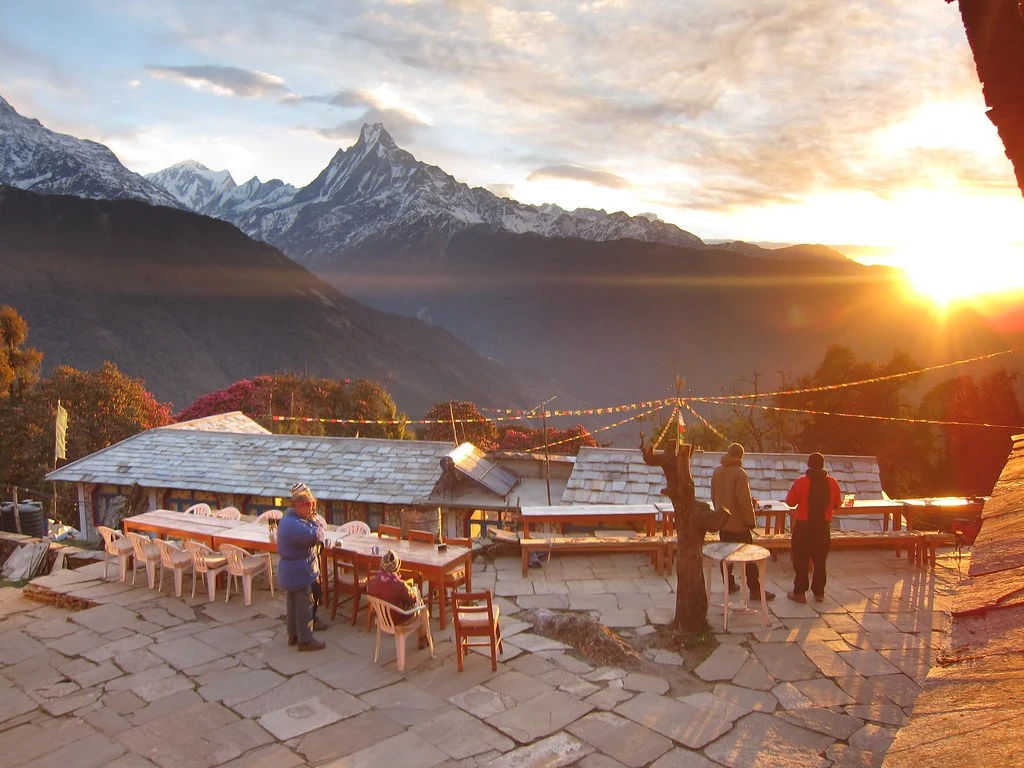
Poon Hill is among the most popular and accessible sunrise points in Nepal, as it is situated in the Annapurna region. It is also famous due to its broad panoramic views of the Himalayan range, and thus, it is a favorite among novice trekkers as well as seasoned travelers. It is a quick climb to the summit before sunrise and is easy yet satisfying because you arrive at the vantage point in time to watch as the mountains gradually brighten. When the sun rises, mountains such as Annapurna and Dhaulagiri shine, and it makes a lovely and unforgettable scene.
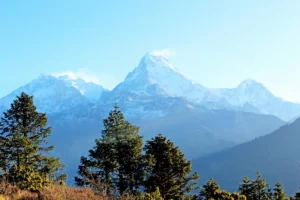
Key Highlights:
- Short and simple hike that can be taken by novices.
- Sightseeing of panoramic views of the Annapurna and Dhaulagiri ranges.
- Brilliant golden sunrise on snowy mountains.
- Famous and well-structured trekking trail.
2. Kala Patthar
Kala Patthar is among the most iconic and high sunrise points in Nepal, which is found in the Everest region. It provides one of the nearest and clearest views of Mount Everest without the necessity to climb it. Kala Patthar is not an easy place to reach; it is located in the Everest Base Camp trek, yet it is well worth the effort. The experience of observing the sunrise in this location is strong, as the sunlight falls upon Everest and neighboring mountains, forming a captivating and memorable image.
Key Highlights:
- Best close-up view of Mount Everest.
- It is in a high-altitude area with spectacular views.
- One of the popular Everest Base Camp hikes.
- Amazing sunrise and spectacular mountainous views.
3. Sarangkot
One such hilltop observation point is Sarangkot, a popular viewpoint on the hill close to Pokhara, which is easily accessible with stunning sunrise views in the Annapurna range. It is among the few areas where you can have the mountainous view together with the view of the city and the Phewa Lake below. Many visitors come in the morning, either with a short trip or a short walk, to see the first rays of light on the mountains. The air is still, and as the sun comes out, the mountains slowly brighten and give a cool and fresh beginning of the day.
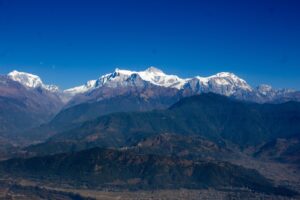
Key Highlights:
- Accessible by road or a short hike in Pokhara.
- Good views of Machhapuchhre and Annapurna.
- Mountain, lake, and city mix.
- Paragliding and sunrise tourist attractions.
4. Nagarkot
Nagarkot is among the most visited sunrise points in the Kathmandu region, which has extensive Himalayan views and a tranquil environment. It is an excellent choice for people who would like to experience a mountain sunrise without a long hike. During a clear day, you get a long view of the Himalayas, including the faraway mountains, which are gleaming in the morning sun. The experience is serene and relaxing, particularly due to the cool temperature and the silence of the night, which makes the sunrise more extraordinary.
Key Highlights:
- Close to Kathmandu and easy to reach
- On clear days, wide Himalayan views are visible.
- A fresh and peaceful hill station.
- Suitable for short trips.
5. Mardi Himal Viewpoint
A lesser-known gem of the Annapurna region, Mardi Himal Viewpoint has a peaceful and less tourist-filled sunrise. The path will lead you through a picturesque ridge, and at the point where the view is obtained, you are almost touching the mountains. This makes the sunrise more intimate and dramatic when Machhapuchhre is directly in front of you. With the first rays of light reaching the mountains, the whole landscape seems to be serene and undisturbed, so it is a unique destination for those who prefer less crowded trails.
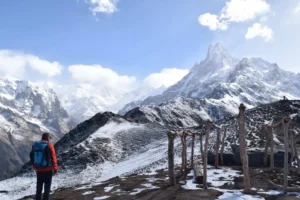
Key Highlights:
- Easy to moderate difficulty
- Approximate duration: 4-5 days
- Viewpoint altitude around 4,200 m
- Close views of Machhapuchhre and Annapurna South
- Approximate package cost: $500
6. Gokyo Ri
One of the most suitable high-altitude locations in the Everest region that has a wide and beautiful panorama of the Himalayas is Gokyo Ri. It stands above the beautiful Gokyo Lakes, and the ascent to the summit is tough but most rewarding. You get a glimpse of the tallest mountains in the world, such as Everest, and bright blue lakes below, all the way from the summit. The morning light here is also magical; the mountains and the lakes gradually light up and make for an experience that is really memorable.
Key Highlights:
- A 360-degree view of Everest and the adjacent mountains.
- Offers a spectacular view of the Gokyo Lakes.
- Rewarding mountaintop views.
- Unique combination of mountains and lakes at sunrise
7. Ghorepani
Ghorepani is the mountain village in which trekkers live before hiking to Poon Hill for dawn. The perspective itself is reached in approximately 45 minutes from the village.
It is surrounded by forests and hills, which form a serene environment where you can have the early morning atmosphere and proceed to the viewpoints around. Spending the night in Ghorepani enables you to experience the tranquility of the village and get ready to see the sunrise in a non-hurried manner. The new mountain air and serene environment make the entire experience seem straightforward but unforgettable.
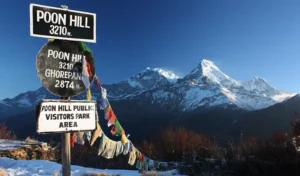
Key Highlights:
- Picturesque village with woods and hills.
- A typical rest spot on the Poon Hill hiking path.
- Overnight stay: hike peacefully before sunrise.
- Experience the real mountain village.
8. Bandipur Hilltop
Bandipur Hilltop is a lovely hill station that can offer an alternative experience of sunrise from a high mountain viewpoint. This ancient town is situated between Kathmandu and Pokhara, and its culture and peaceful streets have been preserved. On the hilltop, you can have a glimpse of the Himalayas in the distance and some rolling hills and valleys. It is a peaceful and relaxing sunrise here with fewer people and slower movement that allows you to enjoy the moment.
Key Highlights:
- A culturally beautiful hilltop town.
- Mountain and hill scenes in the distance.
- A less crowded and peaceful environment
- Easily accessible from Kathmandu and Pokhara.
9. Chandragiri Hill
A hill near Kathmandu, Chandragiri Hill, is easy to climb and has wide Himalayan views. The best alternative is to take the short hike or a ride on a cable car to the top, since it is an excellent place to go when you need to have a quick getaway out of the city. On the hilltop, there is a vast expanse of mountains as well as a stunning view of the Kathmandu Valley below. This sunrise is invigorating, with the initial light gradually illuminating the mountains and the city, providing a calm beginning to the day.
Key Highlights:
- Cable car or a short walk.
- Panoramic Himalayan views
- Overlooks Kathmandu Valley
- Ideal for short trips and to get there in time to see the sunrise.
10. Australian Camp
Australian Camp is a small and undisturbed vantage point in the Annapurna area, which is ideal for going on a short and relaxing trek. It is situated close to Pokhara and can be accessed in a few hours, and is, therefore, ideal for beginners. It also has open views of the Annapurna range, and the sunrise here is less crowded and calmer than in the other popular locations. The experience is very easy yet easy to enjoy as one watches the mountains illuminated from such a serene background.
Key Highlights:
- Short and easy trek from Pokhara
- The clearly visible Annapurna range.
- Less crowded and peaceful.
- Perfect for first-time trekkers and on short journeys.
11. Tengboche Viewpoint
Tengboche Viewpoint is a serene and picturesque site within the Everest region, and its most remarkable aspect is its close association with the renowned Tengboche monastery. This is an isolated location with high mountains surrounding it, which provides a serene and spiritual atmosphere where the sunrise seems more significant. When the first light strikes the mountains, such as Everest, Ama Dablam, and other mountains around it, the entire place becomes silent and beautiful. This perspective stands out against the rest because of the combination of natural beauty and spiritual atmosphere.
Key Highlights:
- Breathtaking views of Ama Dablam and Everest.
- It is in the vicinity of the renowned Tengboche Monastery.
- Peaceful and spiritual environment
- One of the sections of the Everest Base Camp hiking trail.
12. Khopra Ridge
This is a more tranquil and less popular point of view in the Annapurna region, so one will have a more peaceful and unique sunrise experience. The path is not so busy, and the ridge provides unrestricted views of the other mountains. Peaks such as Dhaulagiri and Annapurna South are high at the top and are facing you. The mornings in this place are quiet and undisturbed, and you have an opportunity to see the beauty of the Himalayas without a lot of people.
Key Highlights:
- Off-the-beaten-path trekking experience
- Large panoramas of Dhauligiri and Annapurna South.
- Less congested and serene perspective.
- Perfect with travelers who want to see peaceful mountainous scenes.
Trekking Regulations and Permits for Sunrise Treks (2026)
Several sunrise viewpoints in Nepal are placed interior National Parks and Conservation Areas. Since 2026, foreign trekkers can no longer hike independently in these areas and must journey with certified guides.
This applies to hiking viewpoints, which include Poon Hill, Kala Patthar, Mardi Himal, Gokyo Ri, Tengboche, and Khopra Ridge.
Nepal has additionally replaced traditional paper TIMS permits with the Blue e-TIMS machine. The permit is now digitally demonstrated through QR checkpoints and usually requires Himalayan hiking coverage insurance.
Best Time to See Sunrise in Nepal
The best time to see the sunrise in Nepal depends on the weather and season. Overall, autumn and spring are regarded as the most ideal ones. In autumn, which falls between September and November, the skies are normally very clear following the monsoon season. This means you can enjoy clear and sharp views of the mountains with minimal haze. The period of spring, between March and May, is also an excellent one since the weather is predictable and the scenery is still clear, not to mention the fact that there are rhododendrons blooming along the trails and hills.
Winter can be particularly cold in elevated regions, but it is extremely chilly in the early morning. The seasons of summer and monsoon are not so trustworthy when it comes to sunrise, as clouds and rain usually cover the mountains. So the sunrise still occurs, but more likely you will not see clear peaks at that time.
Another significant aspect in regard to sunrise views is visibility. The weather is a major factor, as the best experience is during clear weather. Sometimes clouds make it beautiful, yet sometimes they cover the mountains with clouds. At lower levels, you may experience pollution and haze, which may hamper your clear view of the sunrise, particularly around urban areas. A higher perspective tends to have cleaner air, thus forming sharper and more beautiful views. The season and a clear morning can also make a great difference in the experience of the sunrise, hence the need to find the right season and a clear morning.
Typical Sunrise Timing by Season
|
Season |
Typical Sunrise |
|
Spring (Mar–May) |
5:15–5:45 AM |
| Autumn (Sep–Nov) |
5:45–6:15 AM |
| Winter |
6:30–7:00 AM |
Tips for the Best Sunrise Experience
Watching the sunrise in Nepal is not complicated, although some preparation can make it even better. Because the majority of the perspectives involve an early start and occasionally a hike in the dark, it is advisable to plan so as to avoid stress and enjoy the experience to the fullest. The experience can be seamless and unforgettable experience with simple equipment, the right time, and a basic understanding of the weather.
Tips:
- Rise early and begin your hike at least 30-60 minutes before the sun begins to rise.
- Check the weather the day before so that it is clear.
- Bring warm clothes, as it might be cold in the morning, even in warmer weather.
- Bring a headlamp or flashlight in case you are walking at night.
- Arrive at the viewpoint early to have a good position without people.
- Carry a mobile phone or camera with enough battery to take pictures.
- Keep photography settings simple, or simply have fun and be in the moment.
- Bring a small water bottle and snacks.
- Hire licensed guides for trekking to viewpoints inside protected regions.
- Obtain digital Blue e-TIMS permits before trekking.
- Carry insurance suitable for Himalayan trekking.
- Drone photography requires CAAN approval.
- Drones are restricted around several mountain viewpoints.
Drone photography has become more common, but mountain regions have stricter rules. Flying drones requires approval from the Civil Aviation Authority, and many protected trekking regions restrict drone usage without permits.
FAQs
1. What is the best sunrise viewpoint in Nepal?
Poon Hill remains Nepal’s most famous sunrise perspective because of its accessibility and panoramic Annapurna perspectives. However, Pikey Peak has turned out to be increasingly famous for travelers in search of broader Himalayan panoramas with fewer crowds. For Everest views, Kala Patthar stays unrivaled.
2. Do I need to trek to see sunrise viewpoints in Nepal?
Not always. Sarangkot and Nagarkot are some of the very accessible locations by road. However, the more distant perspectives can only be reached after a brief or multi-day hike.
3. What time should I wake up for sunrise in Nepal?
Most people wake up at approximately 4.30-5.00 AM in relation to the place and time of the year. It’s important to reach the viewpoint before sunrise so you can enjoy the full change of colors on the mountains.
4. Which season is best for sunrise views in Nepal?
The best season would be autumn (September to November) when the skies are clear. It is also a good time of the year in spring (March to May), when the weather is a little bit warmer, and the scenery is gorgeous.
5. Is it very cold during sunrise hikes?
Yes, it can be very cold, particularly in elevated areas such as Gokyo Ri. Early mornings, even in spring, are always cool, and warm clothing is always a good choice.