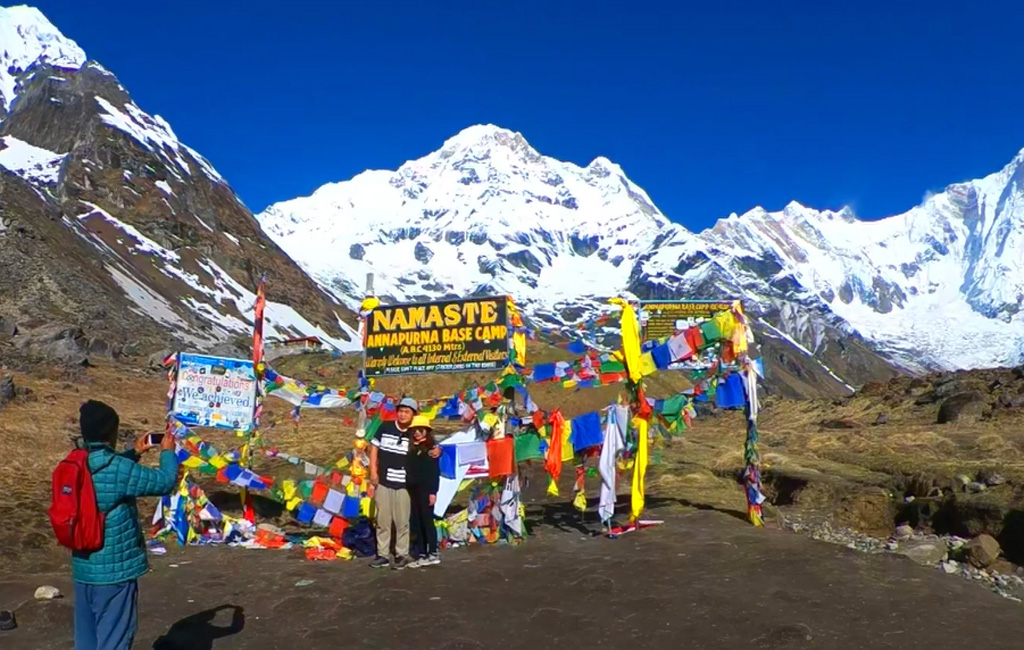
Annapurna Base Camp weather is best in October and November, right after the monsoon clears, when skies are driest and mountain views are sharpest. March to May is the strong second choice, with warmer days and rhododendrons in bloom. June to August (monsoon) and the depths of winter are the two stretches most trekkers should plan around, not through.
That’s the short version. Our guides run this route across every season, so here’s what the weather actually does at 4,130 meters, month by month, and what it means for what’s in your pack.
Annapurna Base Camp weather by month: best time to trek
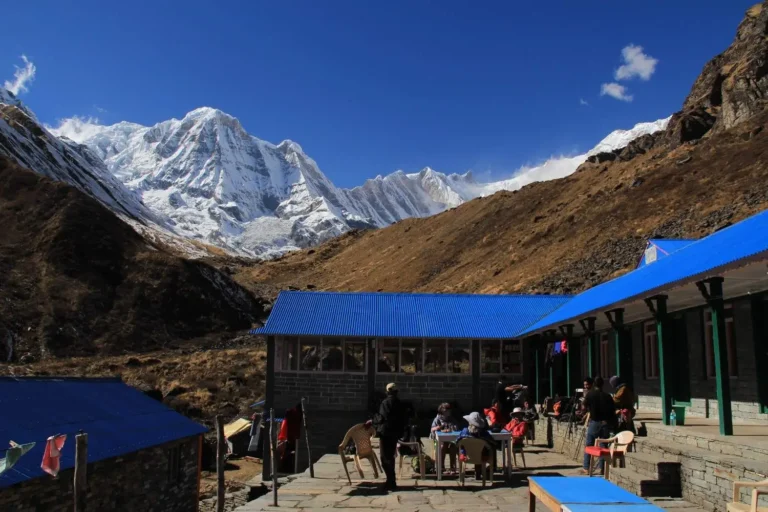
Two windows work well: October–November and March–May. Autumn gets the edge. The monsoon has just washed the dust out of the air, so the peaks around the Sanctuary, Annapurna I, Machhapuchhre, Hiunchuli, tend to sit fully uncovered for days at a stretch. Spring runs it close, with milder nights and the added bonus of rhododendron forests turning the lower trail red and pink through Ghorepani and Ghandruk.
Trade-off: October is also the busiest month on the trail. If you’d rather have the teahouses to yourself, November gives you nearly the same weather with noticeably fewer people.
Autumn (September–November): the main season
September is the transition. The monsoon is tapering off, not gone, so expect a mix of clear stretches and afternoon showers as the month goes on. Trails stay damp and leeches haven’t fully cleared out at lower elevations, but visibility improves week by week.
Annapurna Base Camp weather in October is where it comes together. Daytime temperatures typically run somewhere in the 10–16°C range, dropping well below freezing overnight, teahouse rooms at altitude regularly sit around -5°C after dark, so a proper sleeping bag matters even if the days feel mild. Rain is minimal and skies are usually clear. This is peak season, which means good weather and a crowded trail in the same sentence.
November holds onto that clarity while cooling off. Daytime highs ease down, nights get colder, but the trade for that chill is a quieter trail and photography conditions that are arguably better than October’s, since the crowds thin out first.
Winter (December–February): cold, quiet, and not for everyone
Winter turns the Sanctuary into a different trek. Snow is common at altitude, overnight temperatures at base camp can fall well below -10°C, and in heavier snow years, snow has closed the upper sections of the trail outright for safety.
There’s a real upside: near-empty trails and stark, quiet mountain views that autumn’s crowds never get. The trade-off is real cold-weather gear, shorter daylight hours, and a route that’s genuinely tougher for a first-timer. We wouldn’t recommend winter as a first Himalayan trek.
Spring (March–May): the rhododendron season
March starts cold, this is still winter’s tail end at altitude, with base camp lows that can drop close to -8°C and daytime highs hovering in the single digits Celsius. Snow from winter is still melting off the higher sections early in the month.
Annapurna Base Camp weather in April and May is spring at its best: daytime temperatures climbing into the comfortable teens Celsius, stable conditions, and the rhododendron forests between Ghorepani and Chhomrong in full bloom, one of the more genuinely photogenic stretches of any trek in Nepal. Nights still drop well below freezing at altitude, so the pack list doesn’t get lighter just because it’s spring.
Late May brings the first pre-monsoon showers, a sign the season’s closing.
Monsoon (June–August): the season to skip
This is the stretch most operators, us included, steer first-timers away from. Daily rain is the norm rather than the exception, trails turn slick and muddy, leeches show up in the lower forested sections, and cloud cover means you can walk for days without a clear mountain view. River levels also rise fast during heavy rain, worth taking seriously rather than treating as routine bad weather; flash flooding has damaged sections of trail and road access in the region during past monsoons.
It’s not without a real upside. The hillsides are at their greenest, the trail is close to empty, and if you don’t mind wet boots, there’s a genuine appeal to seeing the Sanctuary this way. It’s just not the trek to book if this is your first time in the Himalaya, or if a clear view of Annapurna is the point of the trip for you.
What Annapurna Base Camp weather means for your pack list
Regardless of season, the same rule holds at 4,130 meters: the day and the night are two different climates. A warm, sunny afternoon at base camp can drop 15–20°C by the time you’re back in your teahouse room after dark. Layers, a sleeping bag rated for well below freezing even in “warm” months, and rain protection that actually works, not just a light jacket, cover you in any season you choose.
FAQ
What is the best month to trek Annapurna Base Camp?
October, for the combination of dry weather, clear skies, and stable trail conditions. November is a close second with a quieter trail and comparable visibility.
What is the temperature at Annapurna Base Camp?
It swings widely by season and by time of day. Autumn daytime highs typically sit in the 10–16°C range with nights well below freezing. Winter nights can drop past -10°C. Spring daytime highs climb into the teens Celsius by April and May, with cold nights year-round at that altitude.
Can you trek Annapurna Base Camp in the rainy season?
Yes, but it’s the hardest season to recommend. Expect daily rain, muddy and slippery trails, leeches at lower elevations, and mountain views that are frequently clouded over. It’s a realistic option for experienced trekkers who don’t mind the trade-offs, not an ideal first Himalayan trek.
Is Annapurna Base Camp cold at night?
Yes, in every season. Even in the warmest months, nighttime temperatures at base camp regularly drop below freezing. Pack for genuine cold regardless of when you go.
Do I need a guide regardless of season?
Yes. Nepal has required a licensed guide for foreign trekkers in the Annapurna region since April 2023, and that requirement doesn’t change with the season.
Is winter trekking to Annapurna Base Camp safe?
It can be, with the right gear and a guide who knows current snow conditions, but it’s a harder, colder trek than autumn or spring, and upper sections can close after heavy snowfall. It’s not the season we’d recommend for a first Himalayan trek.