
Offering group discounts!
Reserve with a 20% deposit. The balance isn't due until 60 days before departure, and cancellations more than 60 days out get a full deposit refund. How booking works →
 Region
Everest Region
Region
Everest Region
 Duration
10 Days
Duration
10 Days
 Difficulty
Challenging
Difficulty
Challenging
 Max. Altitude
5360 m
Max. Altitude
5360 m
 Prime Activity
Trekking In Nepal
Prime Activity
Trekking In Nepal
 Season
(March-May) (September-November)
Season
(March-May) (September-November)
 Group Size
1-12 people
Group Size
1-12 people
People often say that Nepal is a trekker’s paradise, and once you step onto its trails, it’s easy to see why. The country is blessed with an incredible range of landscapes—from lush forests and deep river valleys to dramatic alpine scenery and towering Himalayan peaks. These natural wonders feel even more special when explored on foot. The Gokyo Valley Trek is one of those journeys where you experience the true essence of Nepal’s beauty all at once.
Nepal is home to countless trekking routes, each offering its own story and scenery. Among them, the Gokyo Lake Trek stands out as a remarkable adventure. It is a journey filled with stunning mountain views, peaceful glacial lakes, and moments that stay with you long after the trek ends.
Along the way, trekkers also get the chance to experience the culture and daily life of the people who call this region home, especially the Sherpa community. Passing through small mountain villages, visitors can observe local traditions, visit monasteries, and sometimes even take part in local gatherings or cultural celebrations. These moments often become some of the most memorable parts of the journey.
Gokyo Lake itself is one of the most beautiful trekking destinations in northeastern Nepal and often appears on the bucket list of trekkers from around the world. The trek covers roughly 98 kilometers and begins with a flight to Lukla, the gateway to the Everest region. From there, the trail gradually winds through forests, river valleys, and traditional villages before eventually reaching the peaceful Gokyo Valley.
As the trail climbs higher, trekkers pass through villages scattered along the route and walk through forests filled with rhododendron and pine trees. Suspension bridges sway gently over rushing rivers, and the trail occasionally becomes rocky and uneven as it winds deeper into the mountains.
The path follows the banks of the Dudh Koshi River for much of the journey, steadily gaining elevation through a series of switchbacks. Along the way, the surrounding forests are home to wildlife such as Himalayan tahr, musk deer, and even the elusive snow leopard, though sightings are rare.
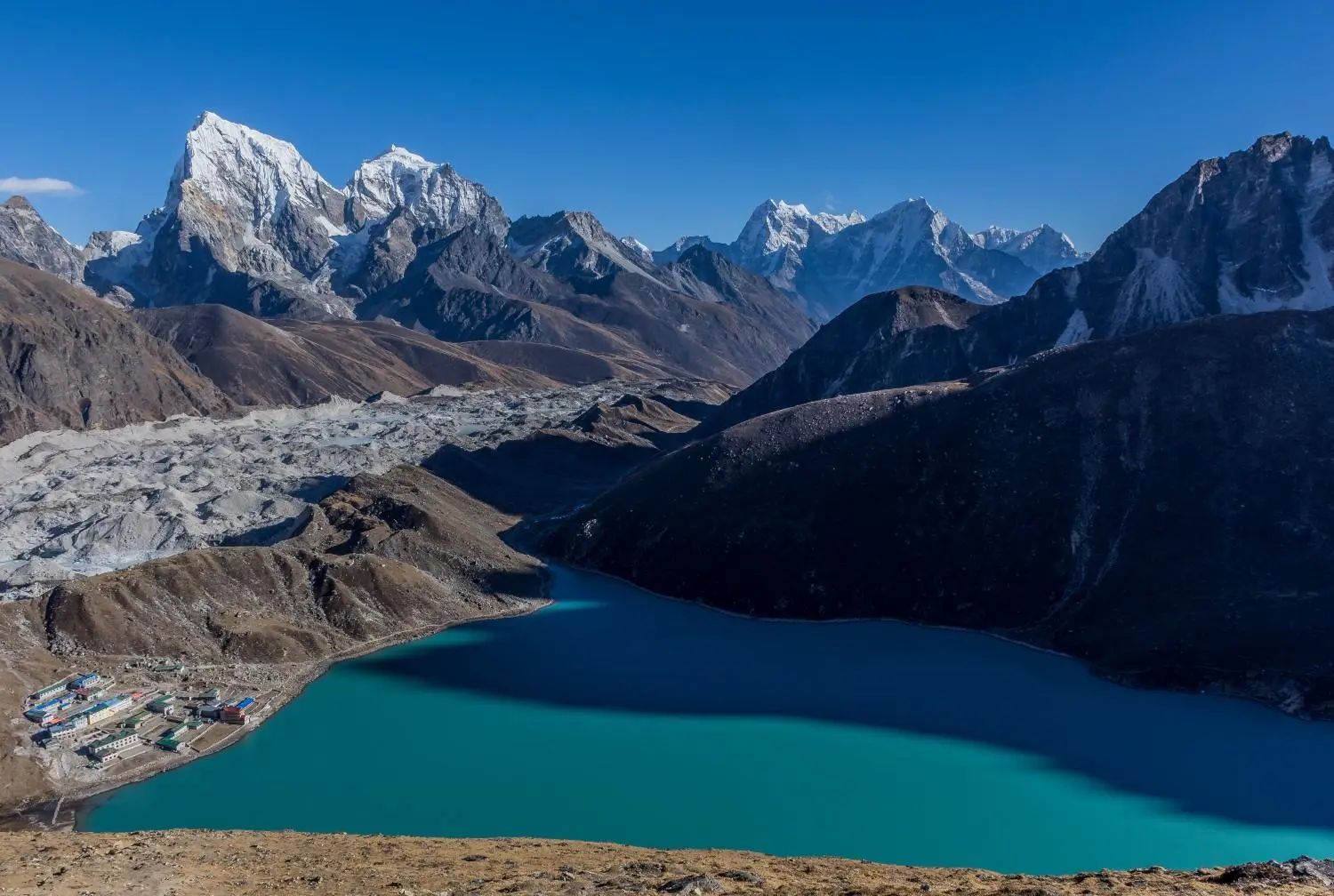
Trekkers also pass through remote settlements like Dole and Machhermo before finally reaching the village of Gokyo. From here, the views open dramatically toward the vast Ngozumpa Glacier—the largest glacier in the Everest region. Just above the village stands Gokyo Ri, a famous viewpoint that offers breathtaking panoramas of the surrounding Himalayan giants as well as the stunning glacial lakes scattered across the valley.
The trek from Machhermo to Gokyo may be relatively short, but it can feel demanding. The trail becomes rough and rocky, with sections of boulders and glacial debris making the walk more challenging. The climb to Gokyo Ri is equally steep, following rugged terrain and glacial moraines, but the reward at the top makes every step worth it.
From the summit, trekkers are treated to an unforgettable view of some of the world’s highest mountains, including Lhotse, Makalu, and Cho Oyu. Below, the famous Gokyo Lakes shimmer in the mountain light—a chain of six beautiful freshwater lakes that create one of the most spectacular landscapes in the Himalayas.
Among these lakes, Thonak Cho is the largest, resting at around 16,400 feet above sea level. Nearby are other striking lakes such as Dudh Pokhari, Gyazumpa Cho, and Tanjung Cho. These pristine lakes are fed by the melting ice of the massive Ngozumpa Glacier, giving the entire valley a peaceful, almost surreal atmosphere.
The Gokyo Valley Trek is certainly challenging at times, but the combination of stunning scenery, rich culture, and the quiet beauty of the Himalayan lakes makes it a journey that trekkers never forget.

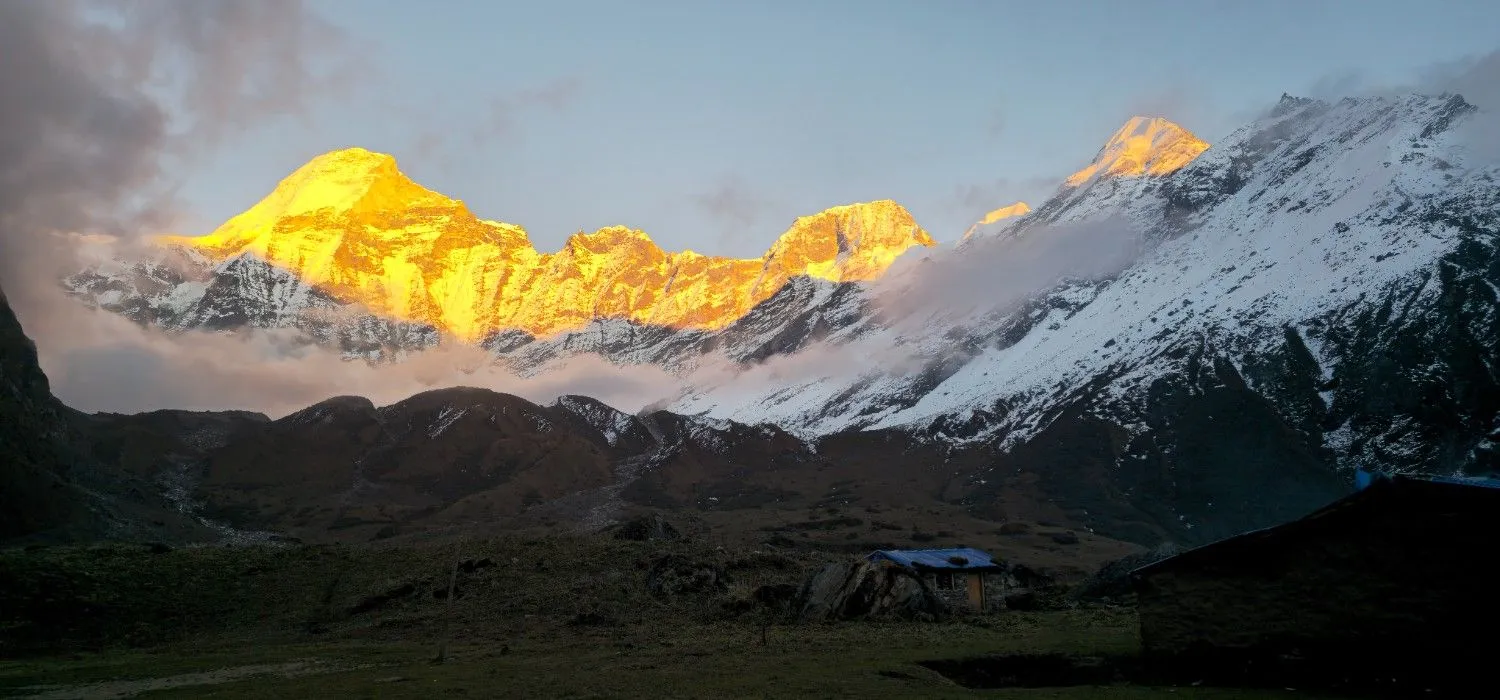
As the season is very crucial for the experience of trekkers, here is a guide for you to decide in which season to trek. The best season for this trek is spring (March–May). In the spring season, the temperature is mild and you can see clear skies. The blooms of rhododendrons. It is also best for photography and panoramic views. Likewise, monsoon/summer (June–August) is not recommended. In this season, heavy rainfall takes place, and due to that, the view is not visible. There is a high risk of landslides in the lower region. Autumn (September–November) is a peak season. The weather is stable, and the temperature is moderate. The trekking conditions are ideal. In winter (December–February), the season is least crowded for trekking as it is very cold, like -20 Celsius at night. You can see snowy landscapes.
In cultural insights, you can learn about Sherpa’s heritage and Buddhism. You can explore Namche Bazaar, which is the capital of the Sherpas. You can see cafés, monasteries, and markets. The region is spotted with prayer flags and mani stones that reflect the spiritual connection of people. You can take a detour to visit the largest monastery, which is Tengboche Monastery. Naturally, it is a paradise with diverse landscapes, as you can see:
As of today’s generations, they seek the mix of adventure, comfort, and connectivity outside the camp. Here are some expectation that we try to meet:
At Nepal Outdoor Expeditions, we’re passionate about creating safe, exciting, and truly memorable adventure treks throughout Nepal’s legendary trails and hidden gems. With deep-rooted local knowledge and years of hands-on experience, our expert team ensures every trek is smooth, culturally immersive, and well-supported. Whether you’re summiting high mountain passes or exploring off-the-beaten-path valleys, we handle the details, so you can focus on the journey.
Finding a place to stay along the Gokyo Valley trek is usually not a problem. Even though the region feels remote and peaceful, there are plenty of accommodation options along the trail. Trekkers can stay in simple lodges, cozy guesthouses, or traditional teahouses that welcome travelers passing through the valley.
In most villages, guesthouses are the most budget-friendly option. They are simple but comfortable enough after a long day of walking. Rooms usually come with basic furniture, and guests are provided with essentials like a bed, pillow, blanket, and sometimes a hand towel. The cost is quite reasonable as well, often ranging from around USD 2 to USD 5 per night, depending on the location and season.
As you move higher into the mountains, teahouses become the most common form of accommodation. These teahouses typically offer twin-sharing rooms, giving trekkers enough space to rest and recharge. The facilities are quite basic, and most rooms do not have attached bathrooms, so trekkers usually share common bathrooms with other guests. Despite the simplicity, the warm hospitality of the hosts often makes the stay feel welcoming and comfortable.
Food is also served in these teahouses and lodges, giving trekkers the energy they need for the journey. The most common meal you’ll find is the traditional Nepali dal bhat — a wholesome dish of rice, lentils, vegetable curry, and pickles. It’s simple, filling, and perfect for refueling after a long day on the trail. Besides dal bhat, trekkers can also enjoy dishes like fried noodles, dumplings (momos), pancakes, and a few other simple meals.
Breakfast in most lodges usually includes items such as soup, bread, eggs, muesli, and tea or coffee. In larger villages, the variety can be a bit wider, but as you climb higher into the mountains, food choices tend to become more limited.
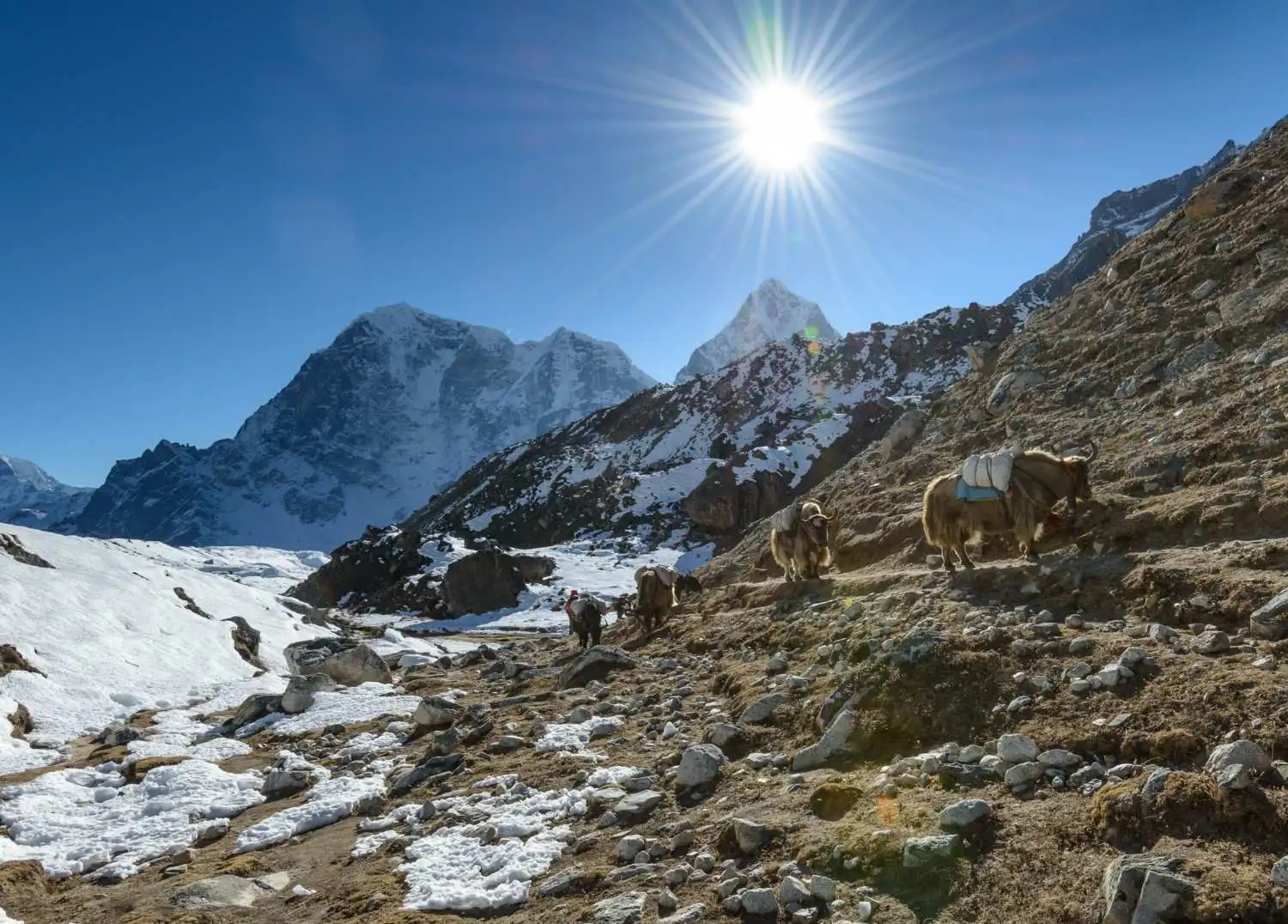
Because the region is so remote, transporting food and supplies is not easy. Goods are often carried along the trail by porters or yaks, which naturally increases the cost of food in higher areas. This is why meals tend to be more affordable in the lower villages compared to the higher settlements near Gokyo.
You need a Sagarmatha National Park Permit and a Khumbu Pasang Lhamu Rural Municipality Permit.

Tenzing Sherpa
Have questions? Our travel specialists are here to help plan your perfect adventure.
Chat on WhatsAppThe adventure kicks off with a short but breathtaking flight from Kathmandu to Lukla. Roughly 30 minutes in the air, but don't let that fool you. The views from the window, rolling hills giving way to roaring waterfalls below, are worth the early wake-up call. Once we land, we'll get introduced to our crew, sit down for a proper breakfast, and then get our boots on the ground. The first stretch of trail runs beside the Dudh Koshi River, one of those rivers that sounds exactly as dramatic as it looks. We pass through Chaurikharka Village before dropping down toward the river, where the views start doing the talking. It's a gentle, well-traveled path, and by the time we walk into Phakding, you'll already feel the mountains pulling you in.
Today is a proper trekking day. The 5.8-mile route to Namche asks a fair bit from your legs, but it gives back just as much in scenery. The trail follows the Dudh Koshi River for a good stretch, and the suspension bridges you'll cross along the way are the kind that make you stop and take a breath, both from nerves and from the sheer beauty of the gorges below. The Hillary Suspension Bridge is the highlight of the morning. After crossing it, the trail pushes through quiet villages and eventually enters Sagarmatha National Park. Once we sort out our permits, the path climbs through pine forest, and on a clear day, you get your first proper look at Everest. That first glimpse never gets old. The final push into Namche Bazaar is uphill and unforgiving, but arriving in this lively mountain town makes every step worth it.
Today is not a rest day in the passive sense. It's actually one of the more important days of the whole trip. Gaining altitude too quickly is a real concern up here, so we stay put in Namche and let our bodies adjust. After breakfast, we make our way up to the Everest View Hotel. It's a 2- to 3-hour walk, and the payoff at the top is extraordinary. Mt. Everest stands in full view, flanked by Thamserku, with sharp ridgelines and subtropical forest filling out the landscape below. The walk back down to Namche is equally rewarding, lined with snow-capped peaks at every turn. We return to the same guesthouse, have a good meal, and rest up for what lies ahead.
With acclimatization done, it's time to head higher. The trail out of Namche is rocky and climbs steadily, winding through forested sections before separating from the main Everest Base Camp route. About two hours in, we reach Mong La Pass, where the views of Ama Dablam and Mt. Khumbila are the kind that make you stop mid-step. From here, the path dips down through rhododendron and pine forests into Phortse Tenga, a riverside village that feels very far from the rest of the world. After a short break, the trail climbs again into Dole. That final ascent is tiring, but the village sits in a quiet, open valley that makes the effort feel well spent.
Leaving Dole, the trail climbs continuously, moving through wide-open yak pastures dotted with prayer flags and small religious shrines. There's something quietly powerful about trekking through these spaces. The flags flap in the wind, the yaks graze without a care, and the mountains just keep getting bigger. The views today are stunning. Cho Oyu, Lhotse Shar, Ama Dablam, and Nuptse all make an appearance as the trail passes through the small villages of Lapharma and Luja. By the time we settle in at Machhermo, the altitude is real and the air is noticeably thinner. A good meal and an early night are exactly what's needed.
The walk to Gokyo is shorter today, but don't underestimate it. After crossing the yak fields near Phanga, the terrain gets rougher. Stone memorials along the trail mark lives lost to past landslides, a quiet reminder of how wild and unpredictable these mountains can be. As the altitude climbs, so do the rocks underfoot, and the path narrows with each step. But then Gokyo appears. One of the highest villages in Nepal, sitting right on the eastern shore of the third Gokyo Lake with Gokyo Ri towering overhead. The color of the lake is something you genuinely cannot prepare for. We stop for lunch, take a slow walk through the village, and let the place sink in. Tonight, we rest in the teahouses right here at the edge of that incredible lake.
This is the day people talk about for years afterward. We start early after breakfast and head for the summit of Gokyo Ri. The trailhead begins on the west side of Ngozumpa Glacier, and the 2-kilometer climb to the top takes between 1.5 and 2 hours depending on your pace. The path goes straight up the whole way, with loose rocks underfoot and no flat sections to catch your breath. It's tough, but you push through it. At the top, 5,357 meters above sea level, four of the world's eight-thousanders are visible at once. Everest, Lhotse, Makalu, and Cho Oyu spread across the horizon. The Ngozumpa Glacier stretches below like a frozen river. It's one of the finest viewpoints in the entire Himalaya. After taking it all in, we make our way back down to Gokyo and then continue descending to Dole. The trail moves through glacial moraines, past stone chortens, and along stretches where Thamserku and Kantega walk beside you like old companions. A long day, but a deeply satisfying one. Optional: Instead of heading back to Dole, you can stay an extra day at Gokyo and explore the 5th Lake and the full stretch of all four Gokyo Lakes. Just let us know, and we'll add the day to your itinerary.
Seven miles separate Dole from Namche, and the trail between them is one of the more enjoyable stretches of the whole trek. It's not technically difficult, but it's long, rolling through dense forests, passing Tibetan monasteries and ancient chortens that feel like they've been standing here forever. The route descends through Sanasa and Phortse Tanga before climbing up to Mong, then drops into Namche. The town feels almost cosmopolitan after the high alpine quiet of the past few days. Good food, warm rooms, and that dramatic mountain backdrop that makes Namche one of the most memorable places on earth. Rest up. You've earned it.
The last full trekking day is a long one, but the trail is familiar now. Down the steep hillsides, back across Hillary's suspension bridge, and along the Dudh Koshi River Valley. Everything feels different walking this route a second time. You notice things you missed on the way up. Arriving in Lukla on the final evening carries a particular feeling. The town is small, and the airstrip perched on the edge of a ridge is unlike anything else in the world. We clean up, settle in at the lodge, share a meal with the crew, and mark the end of what, for many people, turns out to be one of the most meaningful journeys they've ever taken.
An early start gets us to Lukla airport for the short flight back to Kathmandu. Thirty minutes in the air, and the mountains slowly give way to the valley and the city. Our team will be waiting on arrival to transfer you to the hotel, where you can spend the rest of the day however you like. Some people sleep. Some head out shopping. Either way, you'll go home with something the mountains tend to leave with people who visit them.
See what past travelers are saying about their experience with Nepal Outdoor Expeditions.
Because your next adventure is impatiently waiting for you.
Last Minute Note: Grab incredible deals on the last minute departure / Book spontaneous trips to hip destinations with limited-time offers and discounted price
Not sure of your dates yet? Hold a departure with a 20% deposit. Cancel more than 60 days out and your deposit is refunded in full. Your first date change is free. If a departure doesn't reach minimum numbers, we'll offer you the nearest alternative date or a full refund, and we'll let you know at least 30 days out.
Before you think of or actually plan any adventurous or relaxing tours, travels, or treks with Nepal Outdoor Expeditions.
If you cancel more than 60 days before departure, we refund your deposit in full. Between 30 and 60 days, the 20% deposit is retained. Inside 30 days the trip cost is non-refundable, since by then we've already paid for your permits, flights, and teahouse bookings. Full detail on our booking page.
20% to reserve your place, with the balance due 60 days before departure. On this trek that's $240 to book and $959 two months before you fly. If you're booking within 7 days of departure, the full amount is due at booking.
Yes, as long as you let us know at least 30 days before your original departure date, your first change is free. Any change after that, or a change requested inside 30 days, is $200 per person.
Gokyo Valley Trek