Offering group discounts!
Reserve with a 20% deposit. The balance isn't due until 60 days before departure, and cancellations more than 60 days out get a full deposit refund. How booking works →
 Region
Everest Region
Region
Everest Region
 Duration
7 Days
Duration
7 Days
 Difficulty
Moderate
Difficulty
Moderate
 Max. Altitude
4065 m
Max. Altitude
4065 m
 Prime Activity
Trekking In Nepal
Prime Activity
Trekking In Nepal
 Season
(March-May) (September-November)
Season
(March-May) (September-November)
 Group Size
1-12 people
Group Size
1-12 people
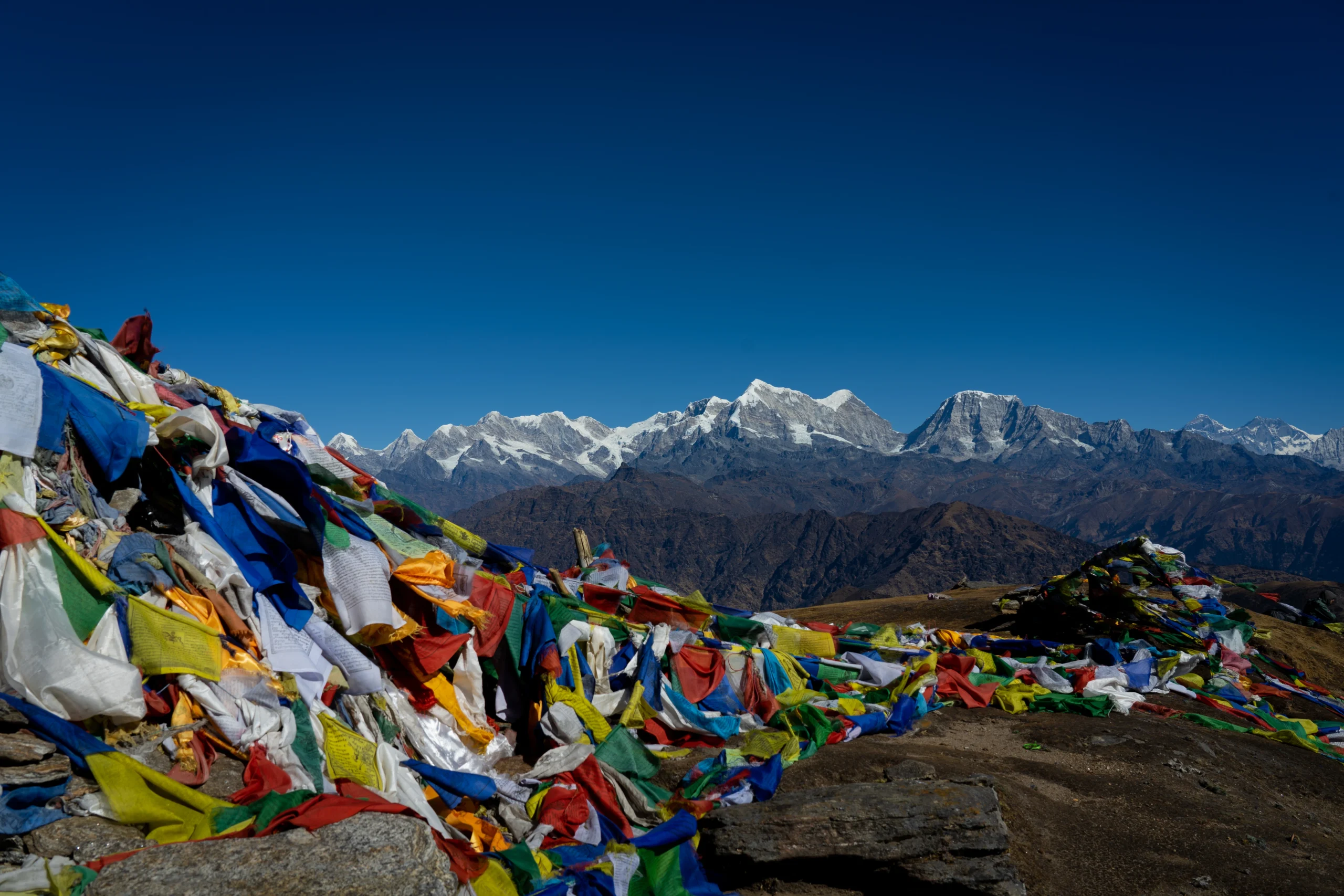
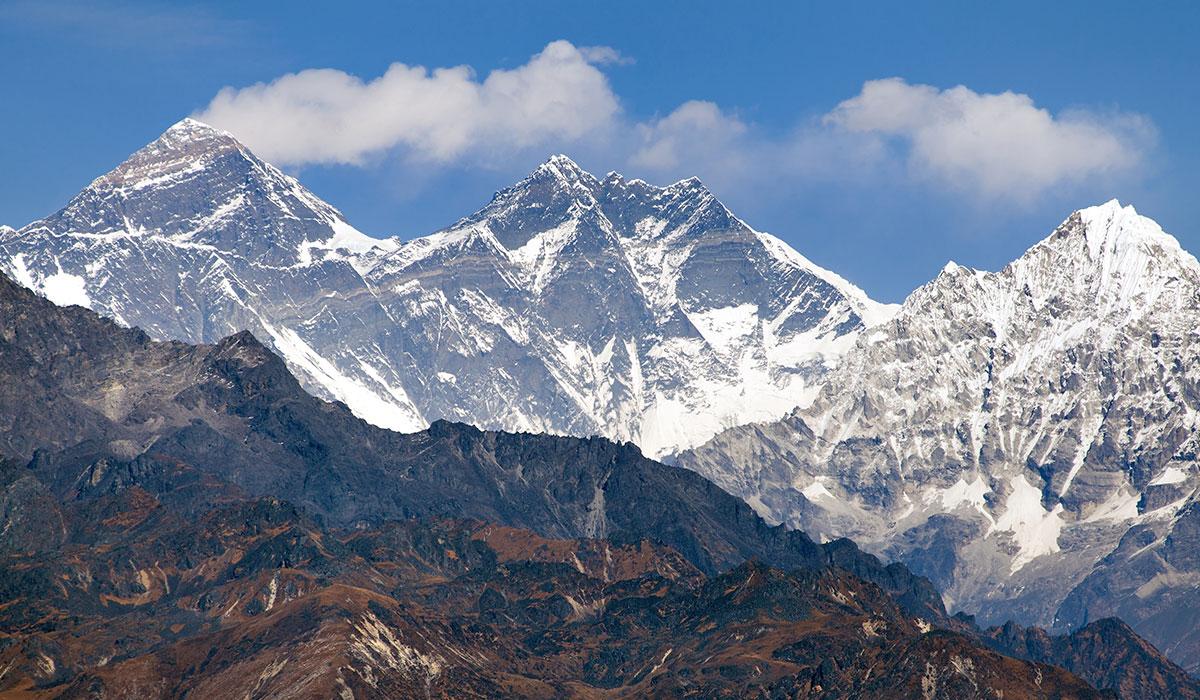
Pikey Peak is more than just another short trek in the Everest region. At 4,065 metres, it is one of the few viewpoints where you can enjoy an uninterrupted sweep of the Himalayas, including Everest, Lhotse, Makalu, Kanchenjunga, and Numbur Himal, all from one summit without crossing 4,100 metres. Sir Edmund Hillary reportedly referred to the sunrise from Pikey Peak as one of the finest mountain perspectives in Nepal.
What makes Pikey unique compared to the usual Everest itineraries is the pace. You walk through authentic Sherpa villages, pass centuries-old monasteries and mani walls, and follow trails that see only a fraction of the foot traffic found on the Everest Base Camp route. There is no queue for photos at the summit, no crowded teahouses at 3 AM, and no need to rush past a monastery to stay on schedule. Instead, you get to experience the trail at a more relaxed pace, with the mountains and local culture taking centre stage.
Because the trek remains below 4,100 metres, the risk of altitude-related illness is generally lower than on higher routes such as the Everest Base Camp or Gokyo treks. This makes Pikey Peak an accessible option for first-time trekkers with reasonable fitness. It is also short enough to fit into a standard holiday, typically taking 7 to 9 days, without sacrificing the mountain views you came to Nepal to experience.
If your priority is Everest-grade panoramas, authentic Sherpa culture, and a quieter trail, Pikey Peak offers all three at a fraction of the altitude and crowds found on Nepal's classic Everest routes.
The Pikey Peak Trek begins with a scenic drive from Kathmandu to Dhap, following the BP Highway past Dolakha's terraced hills and the Sun Koshi River before climbing into the lower Solu region. From Dhap, the trail continues on foot towards Jhapre, a small ridge village offering your first clear views of Everest and Numbur Himal. The route then climbs gradually through rhododendron and pine forests to Pikey Base Camp.
An early morning ascent takes you to the Pikey Peak summit for sunrise, followed by a descent towards Jasmane Bhanjyang and down to Junbesi. This traditional Sherpa and Tibetan village is home to several of the region's most significant monasteries. From Junbesi, the trail continues to Phaplu, where the trek concludes before a private vehicle returns you to Kathmandu.
The route covers roughly 50–60 km on foot, combined with road transfers at both ends of the trek. This makes it a convenient way to experience high-Himalayan landscapes and authentic Sherpa culture without committing to a prolonged trekking itinerary.
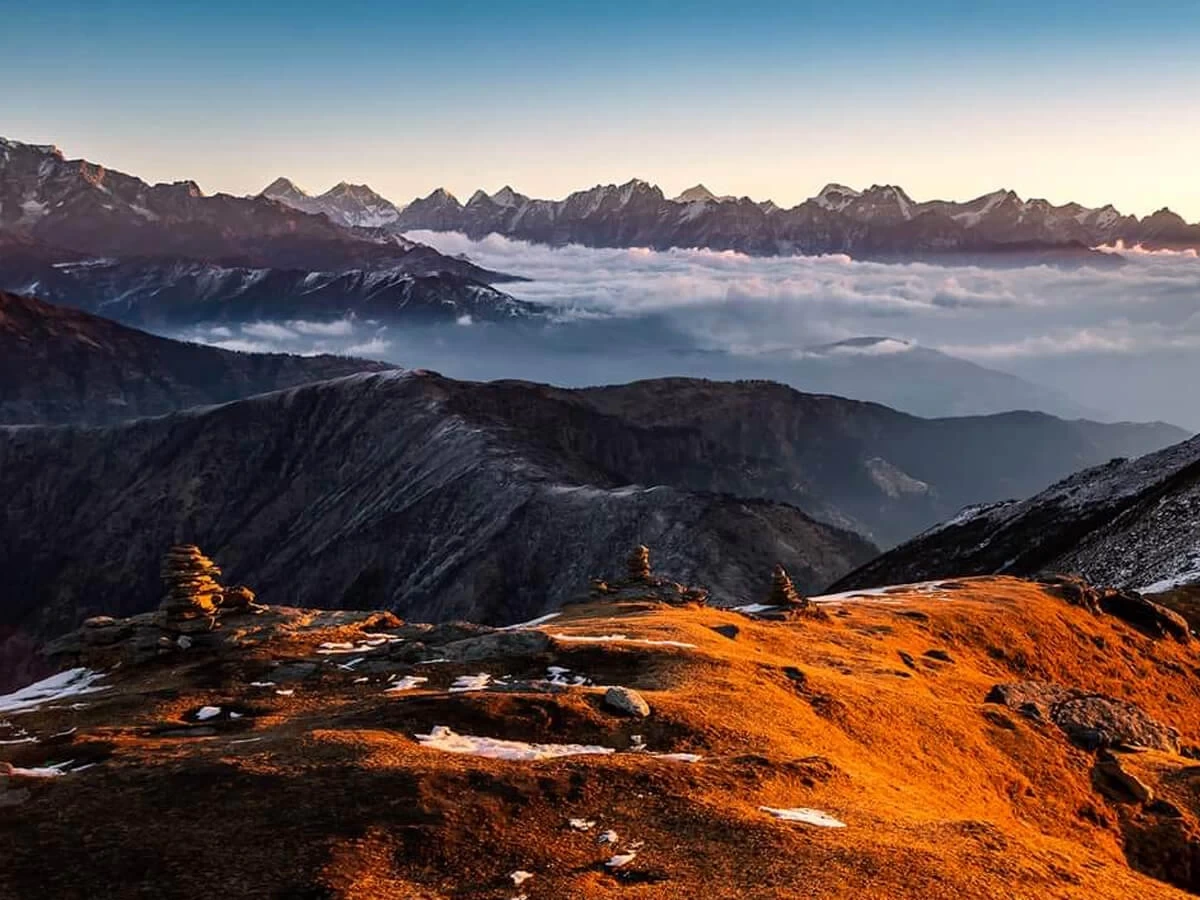
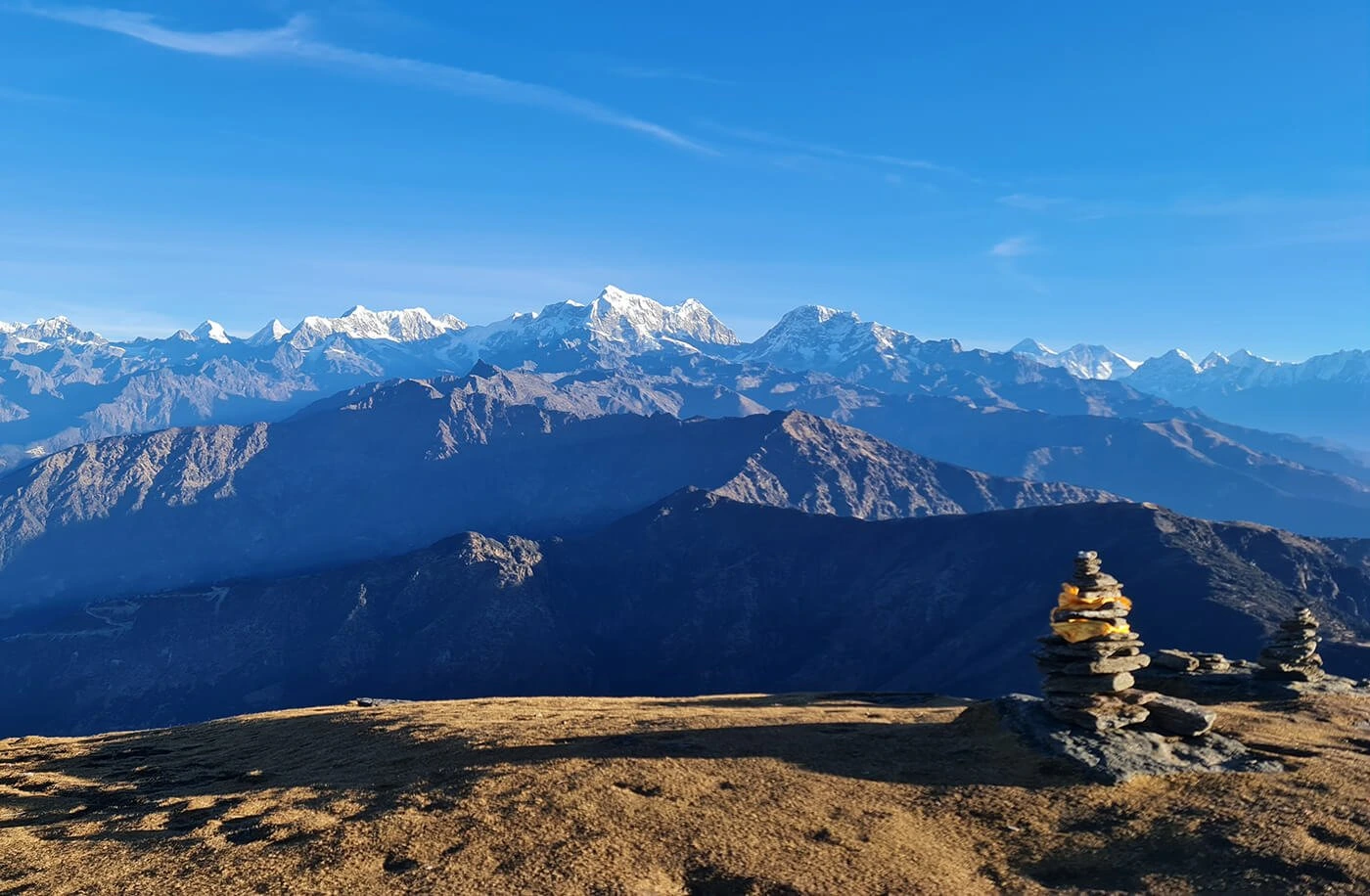
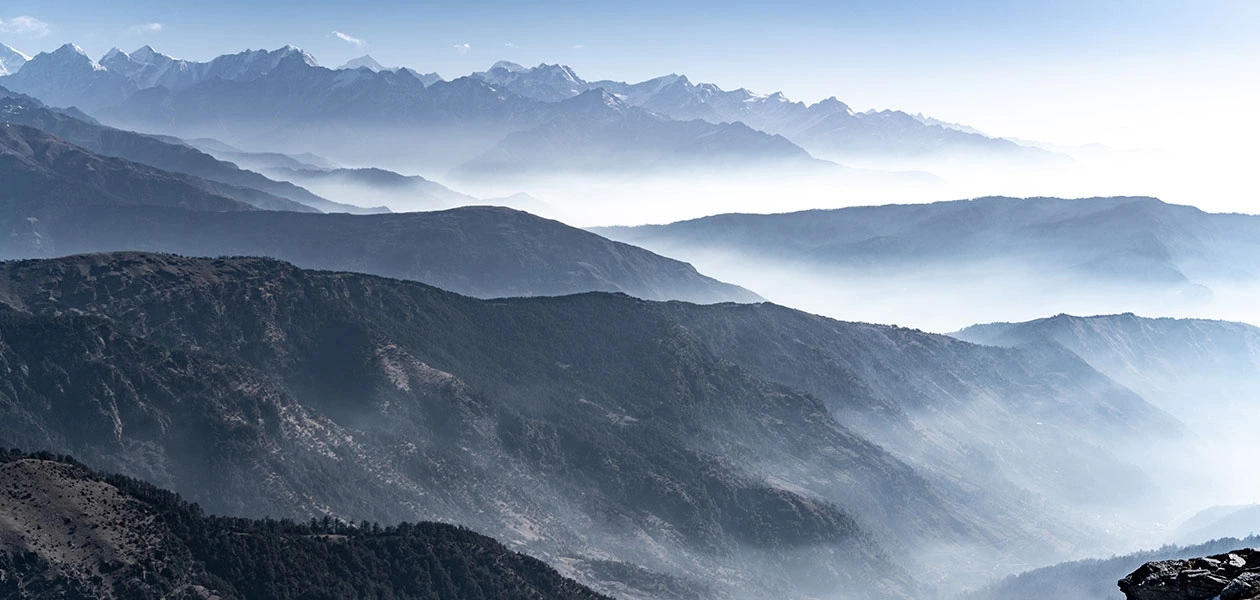
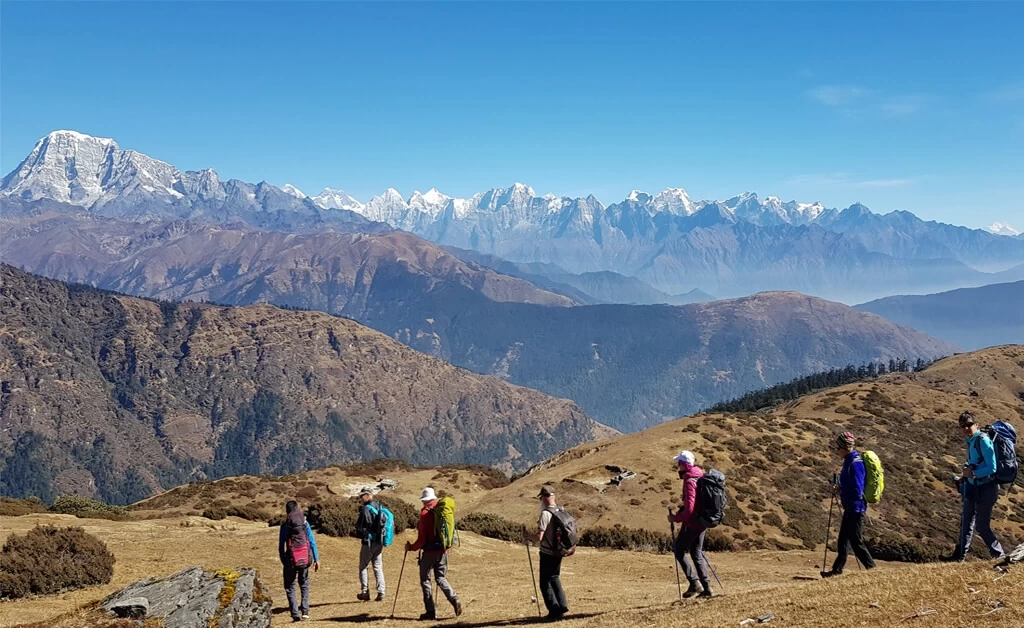
Pikey Peak looks and feels different throughout the year. Here’s what to expect each season so you can plan around the conditions and mountain views that matter most to you.
Spring brings the rhododendron forests into full bloom along the lower trails, covering the hillsides in shades of red, purple, pink, and white. Mornings are generally clear, offering excellent visibility for sunrise views from the summit. Daytime temperatures are comfortable for trekking, although it remains cold at higher elevations before dawn. Crowds are moderate and busier than autumn, but the trail remains far quieter than the Everest Base Camp route.
This is the least predictable season for mountain views. Frequent rainfall brings clouds that can obscure the peaks and make trails muddy, while leeches may be present in the forested lower sections. In return, the landscape becomes lush and green, and trails are often nearly empty. This makes summer a good option for trekkers who prioritise solitude and scenery over guaranteed mountain views.
Autumn typically brings the clearest skies of the year, making it the most reliable season for sunrise photography from Pikey Peak. Weather conditions are generally stable with minimal rainfall, while daytime temperatures remain comfortable. Nights become colder as the season progresses. Autumn is also the peak trekking season, so trails and teahouses are busier than at other times of the year, although Pikey Peak remains much quieter than the Everest Base Camp route.
Winter can bring snow at higher elevations, particularly around Pikey Base Camp and the summit. Visibility is often sharp and clear, but mornings and nights are bitterly cold. In return, winter is the quietest time to trek, with minimal crowds and a greater chance of enjoying the summit and surrounding trails in solitude. Trekkers should be properly equipped for freezing temperatures and possible snow.
Pikey Peak’s lower altitude generally makes it a more accessible high-altitude trek. However, that does not mean safety planning becomes less important. Here’s what you should know before setting out.
The trek’s highest point is 4,065 metres at the summit of Pikey Peak, which is lower than the elevations reached on routes such as Everest Base Camp. However, Acute Mountain Sickness (AMS) can still occur at this altitude. Symptoms may include headache, nausea, dizziness, and fatigue, particularly if you ascend too quickly, become dehydrated, or push yourself too hard.
Our guides monitor trekkers throughout the journey, checking in daily and watching for early signs of altitude-related discomfort. Staying properly hydrated and drinking around 3–4 litres of water per day, depending on conditions and individual needs, can support healthy acclimatization.
In the event of a medical emergency, helicopter evacuation may be possible from accessible points along the route, weather and operational conditions permitting. All trekkers should therefore have travel insurance that covers high-altitude trekking and emergency helicopter evacuation.
Mobile network coverage is available in some lower villages but can become intermittent or unavailable near Pikey Base Camp. Our guides carry appropriate communication equipment for emergencies where mobile coverage is unavailable.
Weather along the route is generally manageable, but conditions can change rapidly at higher elevations. If conditions become unsafe, your guide may adjust the itinerary, pace, or route to prioritise the safety of the group.
We’re not the largest trekking agency in Kathmandu, and we don’t try to be. Here’s what you can expect when you book the Pikey Peak Trek with us.
Our guides are local professionals who have walked these trails for years, not seasonal staff simply following an itinerary. That experience matters when it comes to knowing the local teahouses, understanding the trail conditions, and deciding when to maintain the pace or slow down before the summit push. Several members of our team are from the Solu-Khumbu region itself, so the Sherpa villages along the route are more than places on a map. They are communities our guides have personal connections with.
Safety comes first on every trek. Guides monitor the group throughout the journey, carry communication equipment for areas without cellular coverage, and are trained to make conservative decisions about pace, rest days, and itinerary changes when conditions require them. We keep our groups small, typically under 12 people, so the experience remains personal and guides can properly look after each trekker rather than manage a large crowd.
Itineraries can be adjusted to suit your fitness level, schedule, or interests, whether that means adding a rest day, spending more time in Junbesi, or starting a day earlier to avoid busier periods on the trail. Our pricing is also transparent from the initial quotation, with no hidden costs added after booking and no unclear exclusions designed to surprise you later.
No inflated claims here. Just a team that knows the trail, communicates clearly, and treats your trek like it matters.
A little preparation goes a long way on the Pikey Peak Trek. These practical tips come from guides who have led this route through different seasons and can help you enjoy the trek rather than struggle with it.
Accommodation on the Pikey Peak Trek is in local teahouses, family-run lodges that have hosted trekkers in this area for decades. Rooms are simple, with twin beds, pillows, and blankets, which are generally sufficient for most seasons. During colder months, particularly from November to February, we recommend bringing your own sleeping bag for additional warmth.
Bathrooms are shared and generally located outside the rooms, with squat or Western-style toilets depending on the teahouse. Hot showers are available at most lodges for a small additional charge. They are usually heated using fuel or solar power, although availability can be limited at higher elevations such as Pikey Base Camp.
Electricity is available in most lodges through solar or micro-hydro power, with charging facilities usually available in the dining area for a small fee. Carry a power bank as a backup, particularly at higher elevations. Wi-Fi is available in lower villages such as Dhap and Junbesi, often for an additional charge, but it becomes unreliable or unavailable near Pikey Base Camp. It is best not to rely on staying connected around summit day.
Do not expect luxury. The teahouses are simple but generally clean, and the real comfort comes from the warm dining hall, wood-burning stove, hot food, and genuine hospitality of Sherpa families who have welcomed trekkers for generations.
Food on the Pikey Peak Trek is simple, hearty, and freshly prepared at each teahouse. Meals are generally cooked to order rather than prepared in advance. Breakfast options typically include porridge, eggs, Tibetan bread, toast, pancakes, and tea or coffee, providing enough energy for a full day of trekking.
Lunch is generally eaten at a teahouse along the trail, with choices such as fried noodles, fried rice, momos, soup, or bread. These meals are simple and filling, allowing you to refuel before continuing your trek.
Dinner is usually the main meal of the day. Dal bhat, Nepal’s staple combination of rice, lentil soup, and vegetable curry, remains a popular choice among trekkers. Refills are often available, making it an excellent source of energy for early starts and long climbs.
Along the route, you also get the opportunity to try local Sherpa dishes such as thukpa, a hearty noodle soup, tsampa made from roasted barley, and, in some villages, yak cheese. These local foods offer a taste of the region that you may not find on standard Everest Base Camp menus.
Drinking water is available for purchase at teahouses, or you can treat water from local sources using purification tablets or a water filter. The latter options are generally more economical and help reduce plastic waste along the trail. Snacks such as chocolate, biscuits, and energy bars are worth carrying from Kathmandu because options become more limited at higher elevations.
Vegetarian meals are readily available throughout the trek. Vegan and other dietary requirements can generally be accommodated with advance notice. Let your guide know about any dietary requirements before the trek begins.
Kathmandu to Dhap: A private or shared jeep covers the roughly 248 km journey in 7 to 8 hours along the BP Highway. The route follows the Sun Koshi River through Dolakha and Okhaldhunga before reaching Dhap.
Phaplu to Kathmandu: The return drive takes approximately 8 to 9 hours and follows the same general route back to Kathmandu.
Private Jeep vs. Shared Jeep: Private jeeps provide greater comfort, flexibility, and fewer stops, making them ideal for smaller groups. Shared local jeeps are more affordable but can take longer because of additional stops and passenger pickups.
Road Conditions: Most of the route is paved, although some rough and unpaved sections remain near Dhap and Phaplu. Expect a bumpy final section of the journey at both ends of the route.
For physical fitness:
For Packing Essentials:

Tenzing Sherpa
Have questions? Our travel specialists are here to help plan your perfect adventure.
Chat on WhatsAppThe journey kicks off with a long but rewarding drive out of the Kathmandu Valley. As you leave the city behind and pass through Dulikhel, the urban sprawl gradually gives way to something far more peaceful: rolling green hills, terraced farmland, and the kind of quiet that reminds you why you came here in the first place. You'll wind your way along the BP Highway through Mulkot and Khurkot, where the road hugs the hillside in tight curves before you turn right toward Okhaldunga. Along the way, keep an eye out for the walls lined with small mirrors. Locals hang them as a mark of remembrance for those who lost their lives on the highway, or simply as a way to ward off misfortune. It's a small detail, but it says a lot about the people who live here. The drive offers a genuine slice of rural Nepal: the pale ribbon of the Sun Koshi River rushing through the valley below, forested ridges on either side, and the occasional farmhouse clinging to the hillside. After about eight hours on the road, you'll roll into Dhap Bazaar. Step out of the vehicle, stretch your legs, and look north. That first glimpse of the Everest range is something you won't forget in a hurry.
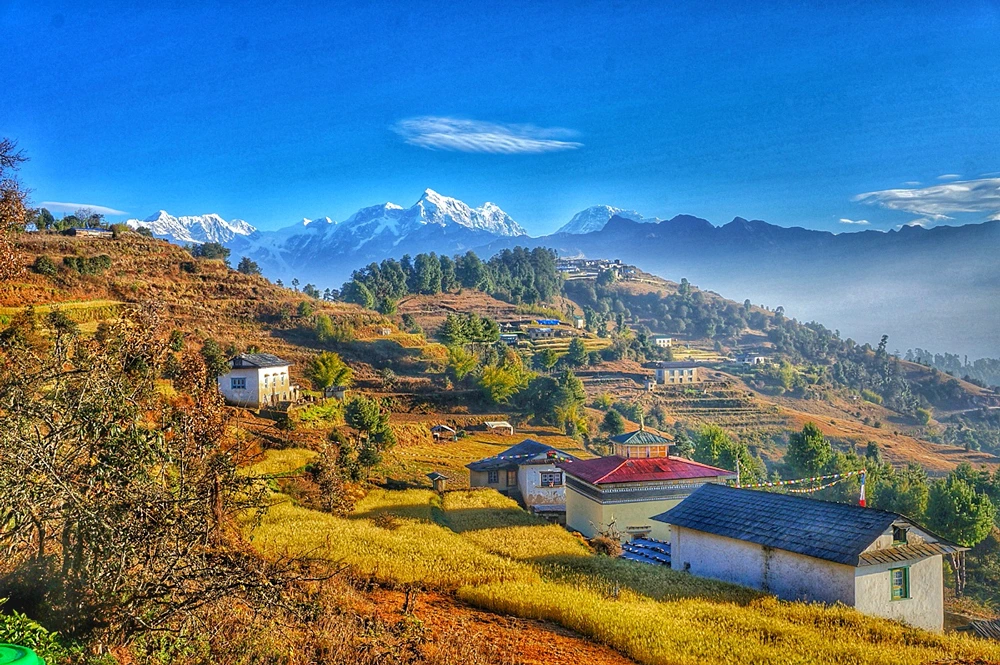
Your first proper day on foot begins here. The trail starts on a dusty road, which isn't the most glamorous introduction to trekking, but it settles into something more enjoyable as you reach the small village of Sigane, a good spot to catch your breath and take stock of the surroundings before pushing on. The path to Jhapre passes through sections that are still under construction, so expect a bit of rough terrain along the way. It's nothing unmanageable, and once you arrive, any memory of the dusty stretches fades quickly. The views of Mt. Everest and Numbur Himal from Jhapre have a way of doing that. Take some time to wander through the village. The old stupas and gombas tucked between homes give you a real sense of how deeply spiritual life is woven into everyday existence here. The viewpoint on the northern edge of the village is worth the short walk, and if you find yourself losing track of time, that's perfectly normal. The evenings in Jhapre are quiet and unhurried, which is exactly what you need before the days ahead.
Today's trail feels like the mountains are slowly drawing you in. You leave the prayer flags and monastery walls of Jhapre behind, but the Everest range stays with you, visible through gaps in the tree line for much of the morning. The path to Bulbule takes you through a landscape that opens up beautifully: wide grassy meadows framed by tall pine trees. In spring, the rhododendrons are in full bloom, and the hillsides turn a deep shade of red and pink that almost doesn't look real. It's one of those things that photographs rarely do justice to. From Bulbule, the trail continues to Chepsa. The route gets a little rocky in places, but the scenery more than makes up for it. Higher up, the trail follows the ridge with constant mountain views before dropping into a broad pastureland where yaks graze without a care in the world. You'll pass a Mani wall and then enter a thick forest of rhododendrons, junipers, and other high-altitude trees that feel almost otherworldly in the mist. After about two hours through the forest, the trees thin out and Pikey Base Camp comes into view. Drop your pack, breathe in the cool air, and get a good night's sleep. Tomorrow is an early start.
This is the day everything builds toward. You'll want to be up before sunrise, so set your alarm early and don't argue with it. The climb from base camp to the summit takes about an hour, but the trail is steep, and the wind picks up sharply as you gain elevation, cutting through whatever layers you thought were enough. It wakes you up in the most immediate way possible. At the top, the reward is extraordinary. The Himalayan range stretches from east to west in a single unbroken panorama, and as the sun rises, it lights up the snow-covered peaks in shades of gold and orange that shift by the minute. A small temple draped in prayer flags marks the highest point, and on lucky days you might find Sherpa people gathered here, offering prayers to their mountain deity with song and dance despite the biting cold. There's something deeply moving about witnessing that. After taking it all in, you follow the ridge south toward Jasmane Bhanjyang, about half an hour's walk away. This is a good place to sit, watch the yaks, and treat yourself to some fresh milk, cheese, or butter from the herders nearby. The final stretch of the day brings you down to Kande, where a warm meal and a bed are waiting.
The descent today takes you from high alpine terrain back into the world of villages and valleys. After leaving Kande, you cross the Lamjura La and follow the trail down to Taktor, a quiet little settlement surrounded by rhododendron and oak forest. The path continues through the trees before eventually opening out onto meadows and cultivated fields. By the time you reach Junbesi, you'll feel like you've arrived somewhere genuinely special. It's a living, breathing village that has been home to Sherpa, Magar, and Tibetan communities for generations, and that layered heritage is visible everywhere, from the architecture to the way people greet you on the street. There's a good selection of teahouses to choose from, so take your time settling in. Once you've dropped your bags, the afternoon is best spent exploring the two major monasteries nearby. Thupten Choling lies across a suspension bridge to the north of the village and was built by Lama Trulshik Rinpoche after his journey from Tibet. The golden figures and painted murals inside are stunning, and the atmosphere is one of genuine calm. If you have the energy, the Junbesi monastery further up toward Numbur Himal is well worth the extra walk. It's the kind of place that stays with you.
The final day of trekking is a gentle one, which feels appropriate. The trail from Junbesi winds down through a mix of fields and farmhouses, and the pace of life here is unhurried in a way that makes you want to slow down and pay attention to the small things: a woman carrying a basket up a steep path, children running between houses, smoke rising from a kitchen somewhere out of sight. You'll eventually hit a dusty jeep track that leads into Phaplu, a small town that many trekkers know as a starting point for longer routes into the Solu Khumbu region. For you, it's a welcome finishing line. Phaplu is dominated by Chiwong Monastery, and the sounds of monks chanting carry through the town at various points throughout the day. If you arrive with enough time and energy, visit the monastery before the light fades. It's a fine way to close out this journey, sitting quietly while the prayers fill the air around you and the mountains stand watch in the distance.
You're up early again, but this time it's the road calling rather than the mountain. The drive back covers roughly 275 km, retracing much of the route you came in on: uphill through the Solu regions to Okhaldhunga, then back alongside the Sun Koshi River on the BP Highway through Khurkot, Mulkot, and Dulikhel before the city begins to reassemble itself around you. It's a long ride, and somewhere between the window views and the drowsiness of the return journey, you'll probably find yourself turning the past week over in your mind. The sunrise from Pikey Peak. The monasteries. The yaks. The way the mountains looked on the first morning from Dhap Bazaar. By the time you reach Kathmandu and check into your hotel, those seven days will already feel like more than a week's worth of experience. That's usually the sign of a trip well taken.
See what past travelers are saying about their experience with Nepal Outdoor Expeditions.
Because your next adventure is impatiently waiting for you.
Last Minute Note: Grab incredible deals on the last minute departure / Book spontaneous trips to hip destinations with limited-time offers and discounted price
Not sure of your dates yet? Hold a departure with a 20% deposit. Cancel more than 60 days out and your deposit is refunded in full. Your first date change is free. If a departure doesn't reach minimum numbers, we'll offer you the nearest alternative date or a full refund, and we'll let you know at least 30 days out.
Before you think of or actually plan any adventurous or relaxing tours, travels, or treks with Nepal Outdoor Expeditions.
If you cancel more than 60 days before departure, we refund your deposit in full. Between 30 and 60 days, the 20% deposit is retained. Inside 30 days the trip cost is non-refundable, since by then we've already paid for your permits, flights, and teahouse bookings. Full detail on our booking page.
20% to reserve your place, with the balance due 60 days before departure. On this trek that's $139 to book and $556 two months before you fly. If you're booking within 7 days of departure, the full amount is due at booking.
Yes, as long as you let us know at least 30 days before your original departure date, your first change is free. Any change after that, or a change requested inside 30 days, is $200 per person.
Pikey Peak Trek