Offering group discounts!
Reserve with a 20% deposit. The balance isn't due until 60 days before departure, and cancellations more than 60 days out get a full deposit refund. How booking works →
 Region
Everest Region
Region
Everest Region
 Duration
14 Days
Duration
14 Days
 Difficulty
Challenging
Difficulty
Challenging
 Max. Altitude
5545 m
Max. Altitude
5545 m
 Prime Activity
Trekking In Nepal
Prime Activity
Trekking In Nepal
 Season
(March-May) (September-November)
Season
(March-May) (September-November)
 Group Size
1-12 people
Group Size
1-12 people
If you’re someone who wants to experience the Everest region but would prefer a quieter trail than the usual 12-day Everest Base Camp trek—and also avoid the uncertainty of flights to Lukla—then the Salleri to Everest Base Camp Trek could be a perfect option for you.
Unlike the classic route that begins with a flight from Kathmandu to Lukla, this journey starts with a scenic drive from Kathmandu to Salleri, the administrative center of Solukhumbu. The drive is long, but it’s filled with beautiful landscapes that make the journey worthwhile. Along the way, you’ll pass through lush green hills, rivers cutting through deep gorges, terraced farmlands, and small rural settlements that reflect everyday life in the Nepali countryside.
From Salleri, the journey continues with a short drive to Surke, where the actual trekking begins. The trail winds through charming villages, quiet forest paths, and small streams. You’ll walk through pine and alpine forests while enjoying the peaceful surroundings that feel far less crowded than the regular Everest trails. One of the highlights along this route is the impressive view of Numbur Himal, which appears strikingly close from certain points on the trail.
A special thing about trekking from Salleri is that this was the original route trekkers used before flights to Lukla became common. Because the trek starts at a lower elevation, it naturally gives your body more time to adjust to the altitude, which makes acclimatization easier and the journey more comfortable.
As the trek continues, the peaceful path eventually joins the main Everest Base Camp trail. From here, you’ll cross suspension bridges over rushing rivers and enter Sagarmatha National Park, a UNESCO World Heritage Site known for its rich natural beauty and biodiversity. The forests here are filled with blue pine, fir, and rhododendron trees, and if you’re lucky, you might even spot wildlife such as Himalayan monals, blood pheasants, or the shy musk deer.
The cultural experience along the way is just as memorable as the scenery. Traditional Sherpa villages like Namche Bazaar, Khumjung, and Tengboche welcome trekkers with their warm hospitality. You’ll see ancient monasteries, colorful prayer flags, mani walls, and chortens that reflect the deep Buddhist traditions of the region.
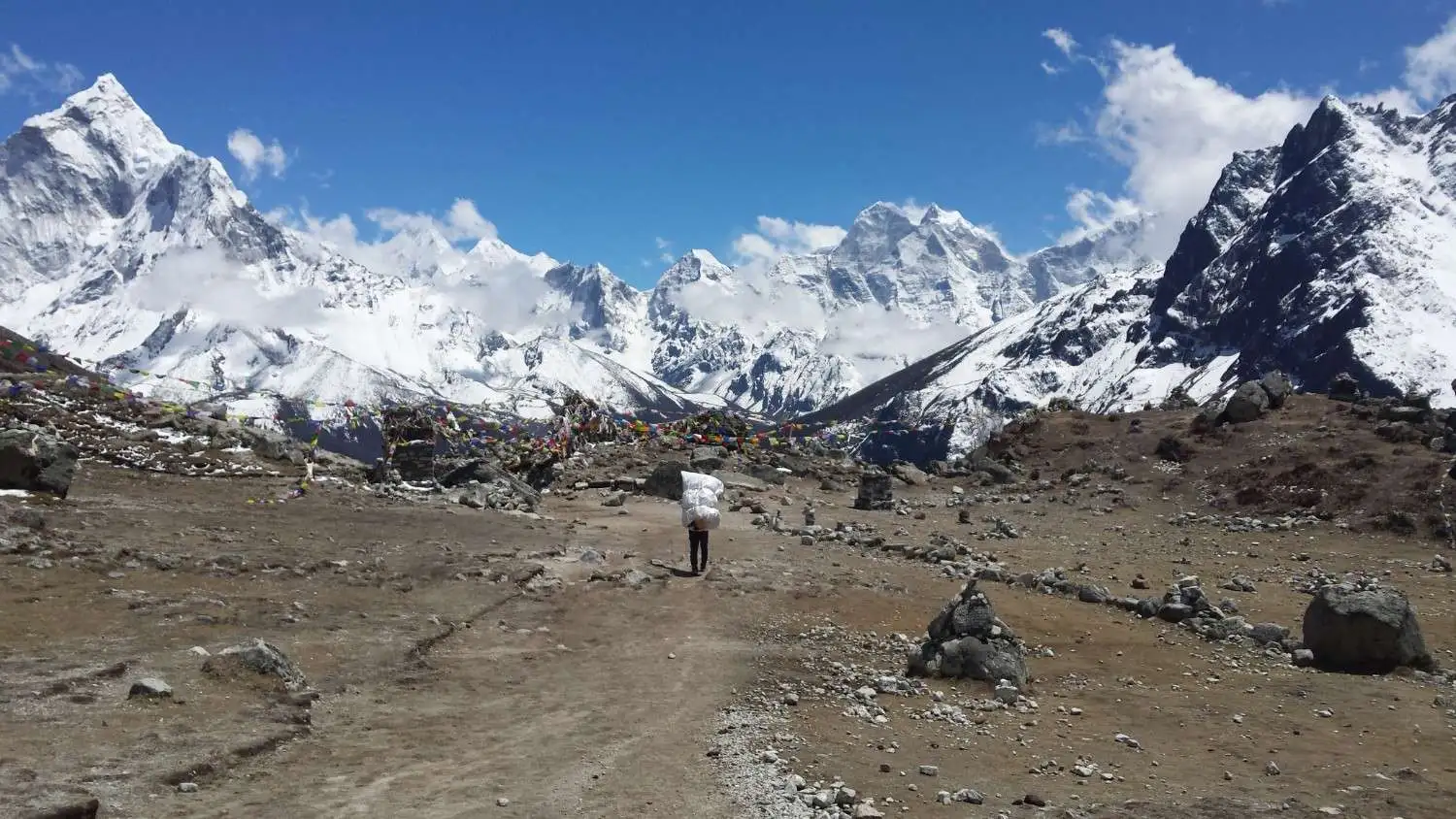
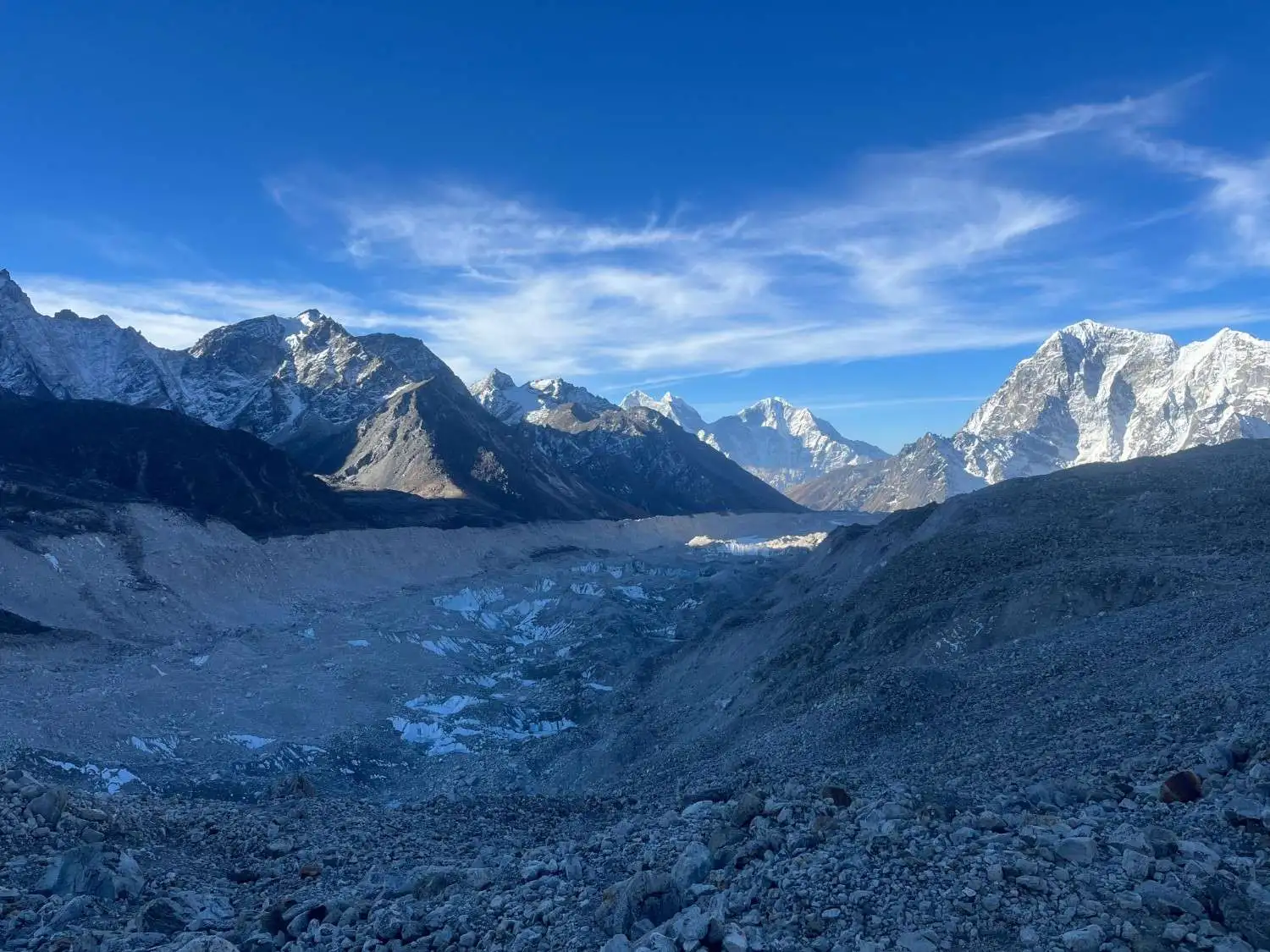
Gradually, the landscape becomes more rugged as the trail follows glacial moraines toward Everest Base Camp. Reaching the base of the world’s highest mountain is already a special moment, but the journey becomes even more unforgettable when you hike up to Kalapatthar. Watching the sunrise from here, with the golden light touching Everest and the surrounding peaks, is truly one of those moments that stays with you forever.
For the best experience, spring (March–May) and autumn (September–November) are considered the most ideal seasons for this trek, offering clear skies, stable weather, and the most spectacular mountain views.


Short Treks You Might Like:
During the Salleri to Everest Base Camp trek, you will stay in local teahouses and small mountain lodges along the trail. These places are simple but welcoming, offering trekkers a comfortable place to rest after a long day of walking. The facilities are basic, yet they are more than enough to meet the needs of travelers in the mountains.
Most rooms usually come with two single beds, a mattress, pillow, and warm blankets. The rooms are modest and not luxurious, but they provide a cozy space to relax and sleep. In most teahouses, the bathrooms are shared with other guests. As you move higher into the mountains, the facilities gradually become simpler compared to the lower villages where services are slightly more developed.
Food during the trek is fresh, warm, and surprisingly satisfying after a day on the trail. The most common meal you will find is Dal Bhat, a traditional Nepali dish made of rice, lentil soup, vegetables, and pickles. It is filling, nutritious, and perfect for maintaining energy during trekking. Besides Dal Bhat, teahouse menus often include items like fried rice, noodles, momos, pancakes, soups, and sometimes simple pasta or eggs.
Hot drinks such as tea, coffee, and hot lemon are easily available along the route and are especially comforting in the colder mountain air.
It’s also a good idea to carry a few snacks or energy bars in your backpack. They can be helpful during long walking days when you need a quick boost of energy or simply want something different to munch on along the way.
Physical Fitness: Cardiovascular exercise is essential. You also need strength training to handle long walking days and should practice regular hikes.
Packing List
Permits: You must obtain the Sagarmatha National Park Permit and the Khumbu Pasang Lhamu Rural Municipality Permit.

Tenzing Sherpa
Have questions? Our travel specialists are here to help plan your perfect adventure.
Chat on WhatsAppLet's be honest, a 10-hour jeep ride is not the most glamorous start to a trek, but it is absolutely worth it. You leave Kathmandu in the early morning, still half-asleep with a thermos of tea in hand, and slowly watch the city fade behind you. The first stretch takes you through Bhaktapur and Sanga before a breakfast stop at Dhulikhel, where the Newari architecture and mountain views wake you up better than any coffee could. From there, the BP Highway carries you smoothly through Nepalthok and Khurkot to Ghurmi, with the Sun Koshi River popping in and out of view like an old friend running alongside the road. After Ghurmi, you join the Mid-Hill Highway, locally called Madhya Pahadi Lokmarga. The roads get narrower here and the ride gets bumpier, but the scenery more than makes up for it. Pine forests and rhododendrons crowd the hillsides, and the air starts to feel noticeably fresher as you gain altitude. A fuel and snack stop at Okhaldhunga Bazaar gives your legs a stretch before the final push through remote villages, small river crossings and the odd waterfall. By the time you roll into Salleri, you are ready to drop your bag and call it a day. The bazaar here is lively and colorful, full of teahouses and local shops. Get a good night's sleep. The adventure is just getting started.
Day two is another road day, and the jeep earns its keep today. Once you leave Salleri, the roads turn gravelled and rough, so brace yourself for a bumpy ride through some genuinely narrow stretches and steep drops that will test your trust in the driver. The route swings through Ringmo, where Numbur Himal suddenly appears above the hills like it has been waiting to show off. You pass through Takshindo and then Nunthala, a friendly little village where many trekkers have stopped for a quick rest over the years. From Nunthala, you head toward Kharikhola, rattling across suspension bridges and pushing deeper into the Khumbu region. The landscape keeps shifting between terraced fields, quiet hillside villages and stretches of pine forest thick enough to block out the afternoon sun. Stone houses, prayer flags and chortens remind you that you are getting closer to Sherpa country. Surke is where the jeep finally stops and the walking begins tomorrow. It sits just below Lukla beside the Dudh Koshi River, quiet and unpretentious. For those who prefer skipping the notorious Lukla flights altogether, this is where the real journey on foot begins. Settle in at the lodge, have a warm meal and get to bed early.
This is the moment you have been building toward—lacing up your boots and stepping out onto the trail. Starting from Surke keeps you away from the busy Lukla crowds, and the trail has a calm, unhurried character that is hard to find elsewhere in the Khumbu. You begin with a climb up from the village, moving through terraced fields before hitting the stone steps that wind up through the forest. It is a decent workout to start the day, but the steps are well-worn and manageable. At the top, you reach Chaurikharka, a neat Sherpa village decorated with mani walls, prayer wheels and chortens that are clearly well-tended and loved by the community. A descent to Chheplung follows, which is a good spot to sit down with a cup of tea and let the legs settle. This is also where the main trail coming down from Lukla joins yours, so from here the path becomes a little more social. Heading northeast, you cross several suspension bridges over the Dudh Koshi River and pass through the Sherpa village of Ghat before eventually walking into Phakding. It is a riverside village that feels welcoming after a first day on the trail. There are plenty of lodges to choose from, the sound of the river is constant, and the mountains above hint at what is coming. A good first day.
Today is one of those days that every Everest Base Camp trekker remembers. It is not the hardest day on the trail, but the climb to Namche Bazaar has a way of making an impression. Leaving Phakding, the trail begins gently along the Dudh Koshi River with easy ups and downs. The five suspension bridges along the route add some fun and the views of Thamserku above the valley start filling the horizon. Benkar is the first village you pass through, sitting beside a waterfall, and it makes a fine excuse to slow down for a moment. At Monjo, you officially enter Sagarmatha National Park. Have your permits ready, as there is a checkpoint here. After a short rest, you drop down to Jorsale for lunch at the confluence of the Dudh Koshi and Bhote Koshi rivers. What comes next requires a bit of mental preparation. The Hillary Suspension Bridge, the fifth and highest of the day, marks the beginning of the steep climb to Namche. The ascent through pine forest is long and relentless, but the trail is well-built, and trekkers keep each other going with the occasional nod or encouragement. A police checkpoint at Mislung signals you are almost there, and then Namche appears like a reward. On a clear day, your first glimpse of Everest from this point is something you will not forget in a hurry. Well-earned rest tonight.
Do not let the word "rest day" fool you. Your body is working hard today even if you are not. At 3,440 m, altitude sickness becomes a real concern, and skipping acclimatization to push ahead is one of the most common mistakes trekkers make. Today is not wasted time. It is an investment in the rest of your trek. Start the morning with a walk up to the Sherpa Culture Museum. The exhibits cover mountaineering history, local wildlife and Sherpa traditions, and the viewpoint outside offers a brilliant spread of peaks including Everest, Lhotse, Ama Dablam, Thamserku and Kongde Ri, all at once. From there, the itinerary takes you up to Hotel Everest View at 3,880m, one of the highest luxury hotels in the world. Having tea on that terrace with those 360-degree views around you feels quietly surreal. You then descend to the villages of Khumjung and Khunde, sitting at around 3,700 to 3,780 m. These are lived-in, working Sherpa villages. The Hillary School, the Khumjung Monastery, and the Khunde Hospital each have their own story, and walking through stone-walled fields and past traditional homes gives you a far better sense of the Khumbu than any teahouse conversation could. Back in Namche by the afternoon, take time to wander the bakeries, gear shops, and restaurants. Your legs will thank you tomorrow.
The trail out of Namche starts at a comfortable pace, climbing gradually to Kyanjuma, where a few teahouses offer a good excuse to catch your breath and take in the views before the work begins. From Kyanjuma, the path drops sharply through dense pine forest all the way down to Phunki Tenga, a flat riverside spot that almost feels too peaceful for what comes next. Most trekkers stop here for tea or lunch, knowing the climb ahead deserves a proper send-off. The ascent to Tengboche is the hardest section of the day. Steep switchbacks wind upward through the trees and it takes patience to find your rhythm. But the trail is solid underfoot, and the forest around you is beautiful, which helps. As the trees thin out and the gradient eases, Ama Dablam begins appearing between the branches, growing larger and more dramatic with every step. And then the trail levels out into a wide open meadow, and you have arrived. Tengboche is one of those places that stops you in your tracks. The Tengboche Monastery, the largest in the Khumbu, sits here with a quiet authority. If the monks are holding an evening prayer ceremony, try to attend. The low chanting, incense, and candlelight inside the monastery against the backdrop of the mountains outside are the kinds of things that stay with you long after the trek is over.
Today's trail is moderate, without anything as demanding as yesterday's climb into Tengboche. That said, it opens with a steep descent to Debuche, where a small nunnery sits quietly beside a handful of teahouses. Worth a look if you have a few minutes. The descent continues through pine forest until you cross the suspension bridge over Imja Khola, after which everything changes direction. From here you begin climbing toward Pangboche, a village sitting at around 3,930 m that most trekkers quickly come to love. It has a slower pace than the busier stops on the route, and the Pangboche Monastery, the oldest in the region, carries a sense of history that you can feel the moment you walk in. Ama Dablam has been a constant companion on this stretch, its distinctive ridgeline impossible to ignore no matter where you look. As you climb past the villages of Shomare and Orsho, the landscape opens into alpine terrain where blue sheep sometimes graze on the hillsides and eagles circle overhead without apparent hurry. A junction near Pheriche offers two paths, and you take the right branch, crossing a wooden bridge before the gradual uphill walk brings you into Dingboche. The village sits in a wide valley that feels surprisingly sheltered and warm for its altitude, which is part of why locals call it the "summer valley." A good meal and early sleep tonight. You have earned it.
You have climbed roughly 960 m since your last acclimatization day in Namche, so another rest and adjustment day here is not optional. Your body needs it, even if your ambition is saying otherwise. The main activity for the day is a hike to Nangkartshang Peak at 5,083 m. It is a moderate hike, but the elevation gain is steep in places, and it will push you. The effort is worth it. From the summit, you get a sweeping view of Island Peak, Makalu, Lhotse, and Ama Dablam, along with the shimmering lakes of the Imja Valley laid out far below. The principle at work here is "climb high, sleep low," a simple but effective method of helping your body adapt to thinning air without overtaxing it. You hike up, take in the views, and then come back down to Dingboche for the night. The rest of the afternoon is yours. Dingboche has small bakeries and internet cafes where you can write a message home, flick through your photos or simply sit with a warm drink and let the mountains fill the window. By now, you are deep enough into the trek that the altitude and the silence have a way of clearing your mind in a way that is hard to explain to anyone who has not been here.
An early breakfast, a deep breath of cold air, and you are on your way. The trail out of Dingboche begins with a gentle uphill through wide open alpine meadows, and the two-hour walk to Dughla (also called Thukla) is one of the more peaceful stretches of the entire trek. Dughla is a small settlement at the base of a moraine, with a few teahouses that serve as a natural lunch stop before the climb ahead. The path up to Thukla Pass is steep, rocky, and zigzagging, and it demands attention underfoot. As you near the memorial area at the top of the pass, the mood shifts noticeably. This is where cairns have been built to honor climbers who did not come home from Everest. Names like Rob Hall and Scott Fisher are inscribed in stone here. Most trekkers pause without being asked to. It is a quiet, respectful moment on a route that is otherwise full of ambition and energy. The mountains do not distinguish between the two. From the pass, the trail levels into a gradual incline over rocky ground and past yak pastures before arriving at Lobuche. It is a small cluster of stone lodges and teahouses that feels exposed and a little raw at nearly 5,000 m. The view of Nuptse from here is outstanding, and the Khumbu Glacier visible below it makes you feel like you are standing at the edge of something enormous. Get to bed early. Tomorrow is the day.
This is it. The day you have been building toward since Surke, since Kathmandu, perhaps since long before either. Leave Lobuche early and follow the rocky, uneven path with its short, steep sections toward Gorakshep. The landscape here is raw and otherworldly, all glacial debris, boulders, and enormous silence. Gorakshep itself is a seasonal settlement built on a sandy flat surrounded by towering peaks on all sides. Check in, eat something warm and leave your heavy gear behind. The trail to Base Camp is not a straight march uphill. It twists and rolls constantly over moraines, loose rocks, cairns, and icy formations, requiring steady focus rather than brute effort. The higher you go, the more the Khumbu Icefall comes into view, and the scale of it is genuinely hard to process at first. Glacial ponds, crevasses, and the colored expedition tents scattered across the ice make it feel like a different planet. When you finally arrive at Everest Base Camp, there is no single dramatic moment. It tends to settle on you slowly, the realization of where you are and what it took to get here. Everest's summit stays hidden behind Nuptse from this angle, but everything else around you—the icefall, the peaks, the prayer flags, the cold thin air—is more than enough. Take your time. Take too many photos. Then make your way back down to Gorakshep as the light fades and the temperature drops fast.
Set your alarm for before dawn. You need to be moving in the dark. Kalapatthar, at 5,545 m, is the highest point of the entire trek, and more importantly, it is where you finally see the summit of Everest without anything in the way. The climb from Gorakshep is steep, and the cold at that hour is serious, so layer up before you leave. The path climbs over sandy, rocky ground and through switchbacks before the final section scrambles over large stones to the top. What you see from the summit is hard to put into words without it sounding like a cliché. Everest's peak catching the first light of the day, with Lhotse, Nuptse, Pumori, and Ama Dablam all around it, is one of the finest views available to any person on foot anywhere in the world. Stay as long as you want. After descending to Gorakshep for breakfast, you retrace your steps to Lobuche and then past the Thukla Pass memorial once more before branching off toward Pheriche rather than Dingboche. The descent is long, but the trail is familiar by now. Pheriche feels warm and generous after a night above 5,000 m. The air is richer here, the temperature kinder, and the Himalayan Rescue Association's aid post is a reassuring presence in this valley. Rest well.
Breakfast early, because today's return leg to Namche is a full day's work. Start with a gradual descent that reconnects you with the main trail near Pangboche, passing the ancient monastery once more. There is something different about seeing these places on the way back, a quiet familiarity that was not there on the way up. The trail continues down through rhododendron forest to Debuche, then across the suspension bridge over Imja Khola, followed by the brief climb up to Tengboche and then the long descent to Phunki Tenga. Take trekking poles for this section if you have them, especially into Phunki Tenga, where the downhill is steep and the knees feel every step. Another river crossing and then a climb to Kyangjuma, followed by the final walk into Namche. By the time the lodges of Namche come into view, you are more than ready to stop. Drink plenty of water today, take breaks when your body asks for them, and do not try to rush. Going down may feel easier than going up, but it has its own way of tiring you out. Namche tonight. A good meal and real sleep.
The final day on the trail, and it is a long one. After breakfast in Namche, you begin the descent on stone steps through pine and rhododendron forest, heading back toward the Dudh Koshi River and the lower valleys. You cross the river by suspension bridge and follow the main trail through the now-familiar villages of Monjo and Benkar, passing mani walls and waterfalls that you may have barely noticed on the way up but feel like old landmarks now. Phakding comes and goes without a stopover this time. Past Phakding, you walk through Ghat village and arrive at Chheplung, the fork in the road where this whole journey diverged from the Lukla route on day three. Here you take the branch heading down toward Surke rather than up toward Lukla. It is a steady descent and by now your legs know the drill. After roughly six to seven hours of walking, you arrive back in Surke. The same quiet village beside the Dudh Koshi where it all began. There is something satisfying about closing that loop on foot. The trek is done. The road home starts tomorrow.
Today you trade your boots for a jeep seat, and most people find that to be an entirely welcome trade. After breakfast, the vehicle picks its way down through Chaurikharka and Paiya before reaching Kharikhola along a steep and narrow section of road that demands patience from everyone inside. From Kharikhola, the route climbs again through hillside terraces and small settlements before passing through Ringmo and Jubing on the way to Nunthala. The road winds through forests and farmlands in this section, quiet and largely empty of other traffic. The final stretch to Salleri is dusty and bumpy, but by the time you arrive, you are looking at the landscape with different eyes than when you drove through here two weeks ago. The hills and valleys that seemed just scenic on the way out now feel like something you have a relationship with. Salleri tonight, one last overnight in a lodge before the long drive back to Kathmandu tomorrow. Well done for getting this far.
The last day. An early start is needed because the drive is long and Kathmandu traffic has no patience for late arrivals. From Salleri, the jeep heads through Okhaldhunga, then down through Ghurmi and Khurkot before the roads improve and the drive smooths out for the final stretch into the valley. The BP Highway is well-paved and significantly more comfortable than what you have been navigating over the past few days, which makes the journey feel almost luxurious by comparison. You drive through terraced hills, rivers, and small towns, descending from the cool mountain air back into the warmth of the Kathmandu Valley. The city slowly appears through the windshield, and for a moment it feels strange to be back among noise and traffic and people in ordinary clothes going about ordinary lives. You are dropped at your hotel. You have walked to the foot of the world's highest mountain and back. Two weeks of driving, trekking, climbing, and descending, and now a warm shower and a proper bed. That is a good trade. Rest, eat well, and be proud of yourself.
See what past travelers are saying about their experience with Nepal Outdoor Expeditions.
Because your next adventure is impatiently waiting for you.
Last Minute Note: Grab incredible deals on the last minute departure / Book spontaneous trips to hip destinations with limited-time offers and discounted price
Not sure of your dates yet? Hold a departure with a 20% deposit. Cancel more than 60 days out and your deposit is refunded in full. Your first date change is free. If a departure doesn't reach minimum numbers, we'll offer you the nearest alternative date or a full refund, and we'll let you know at least 30 days out.
Before you think of or actually plan any adventurous or relaxing tours, travels, or treks with Nepal Outdoor Expeditions.
If you cancel more than 60 days before departure, we refund your deposit in full. Between 30 and 60 days, the 20% deposit is retained. Inside 30 days the trip cost is non-refundable, since by then we've already paid for your permits, flights, and teahouse bookings. Full detail on our booking page.
20% to reserve your place, with the balance due 60 days before departure. On this trek that's $240 to book and $959 two months before you fly. If you're booking within 7 days of departure, the full amount is due at booking.
Yes, as long as you let us know at least 30 days before your original departure date, your first change is free. Any change after that, or a change requested inside 30 days, is $200 per person.
Salleri to Everest Base Camp Trek