Offering group discounts!
Reserve with a 20% deposit. The balance isn't due until 60 days before departure, and cancellations more than 60 days out get a full deposit refund. How booking works →
 Region
Makalu Region
Region
Makalu Region
 Duration
15 Days
Duration
15 Days
 Difficulty
Technical
Difficulty
Technical
 Max. Altitude
6476 m
Max. Altitude
6476 m
 Prime Activity
Peak Climbing In Nepal
Prime Activity
Peak Climbing In Nepal
 Season
(March-May) (September-November)
Season
(March-May) (September-November)
 Group Size
1-12 people
Group Size
1-12 people
Mera Peak, known as the highest trekking peak in Nepal, lies tucked away in the quiet Hinku Valley of the Everest region. It actually has three summits, Mera South (6,065 m), Mera Central (6,461 m), and Mera North (6,476 m), but most climbers aim for Mera Central. What makes this climb special is not just the summit itself but the journey through less crowded, peaceful trails of the Khumbu region. Compared to other Himalayan climbs, it’s considered relatively straightforward, with fewer technical challenges, which is why it’s often chosen by those stepping into mountaineering for the first time.
The Mera Peak expedition can usually be completed in about three weeks, making it one of the more accessible Himalayan adventures in terms of time. The route takes you through the remote and untouched landscapes of the Hinku Valley, where the feeling of isolation and raw natural beauty really stands out. It’s perfect for beginners dreaming of bigger Himalayan climbs, as well as experienced trekkers looking to add another summit to their journey. There’s something incredibly special about walking through such quiet wilderness, far from the busy trekking routes, where every step feels like a personal discovery.
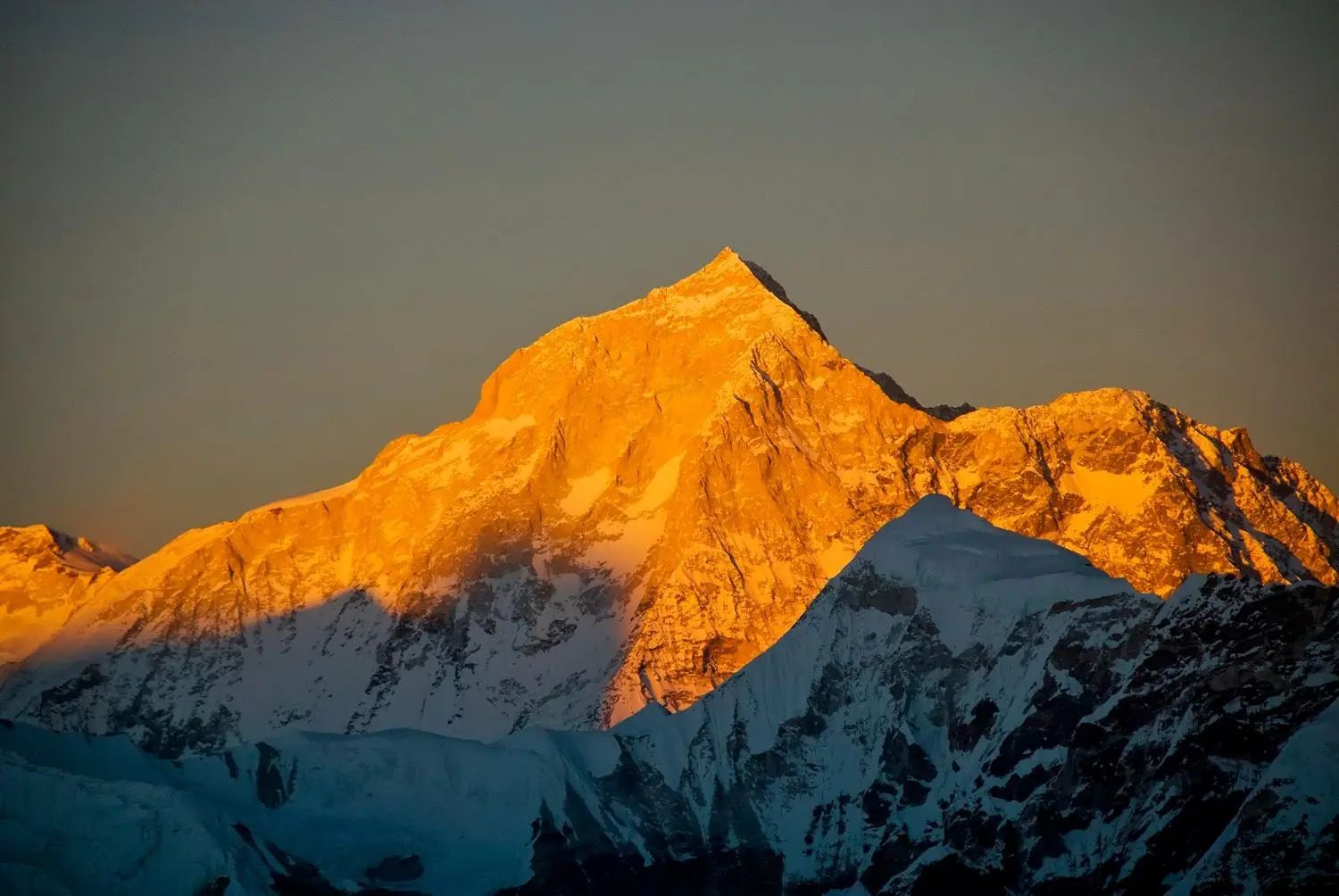
Reaching the summit is a moment you don’t easily forget. On a clear day, you’re rewarded with breathtaking views of some of the world’s tallest mountains, Everest, Makalu, Kanchenjunga, Lhotse, and Cho Oyu, all standing proudly around you. It’s a view that makes every bit of effort worthwhile.
Mera Peak was first climbed on May 20, 1953, by Colonel Jimmy Roberts and Tenzing Norgay. Since then, it has become a favorite among climbers, especially those attempting their first Himalayan peak. Many see it as a starting point, a mountain that builds confidence and opens the door to even greater adventures ahead.
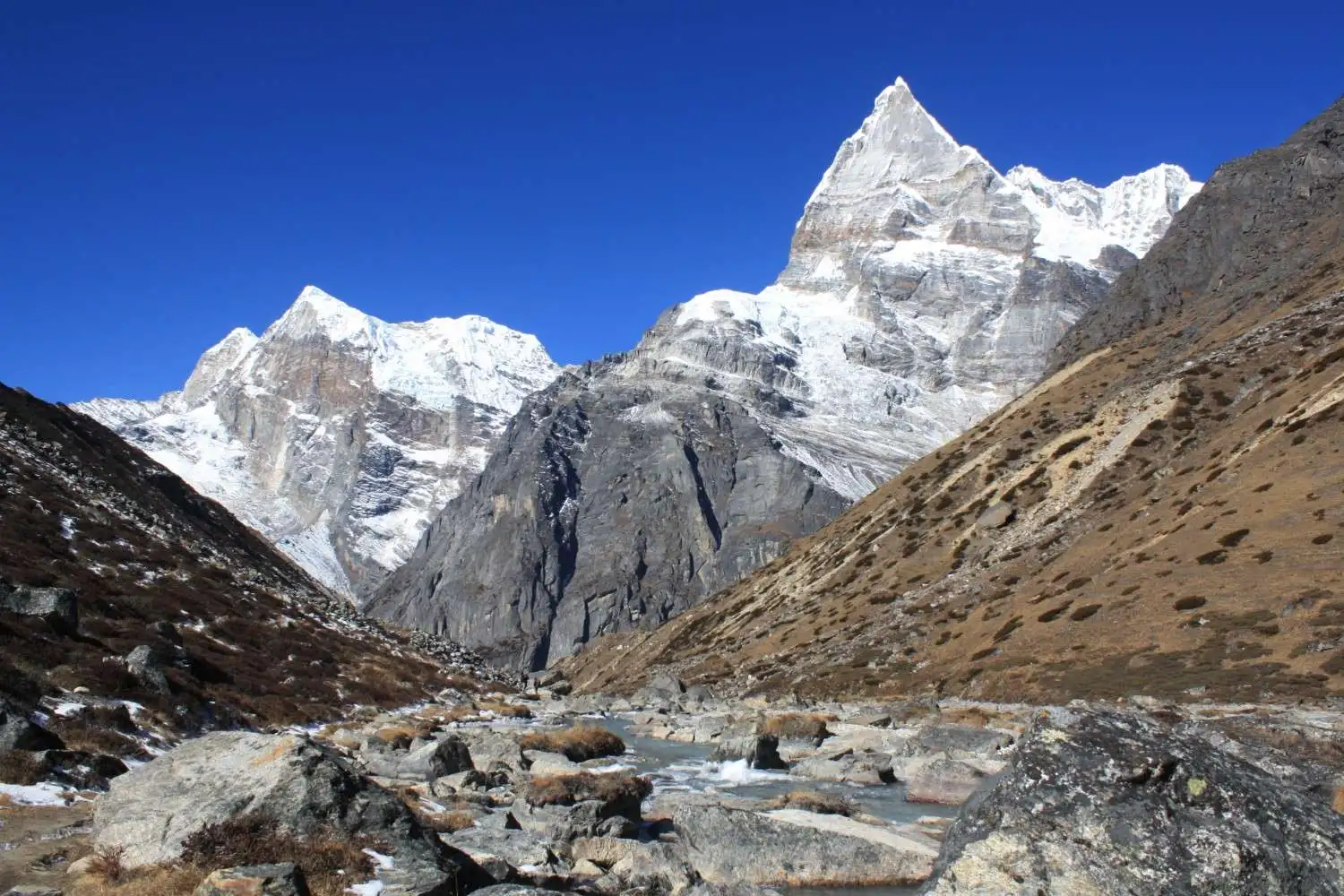
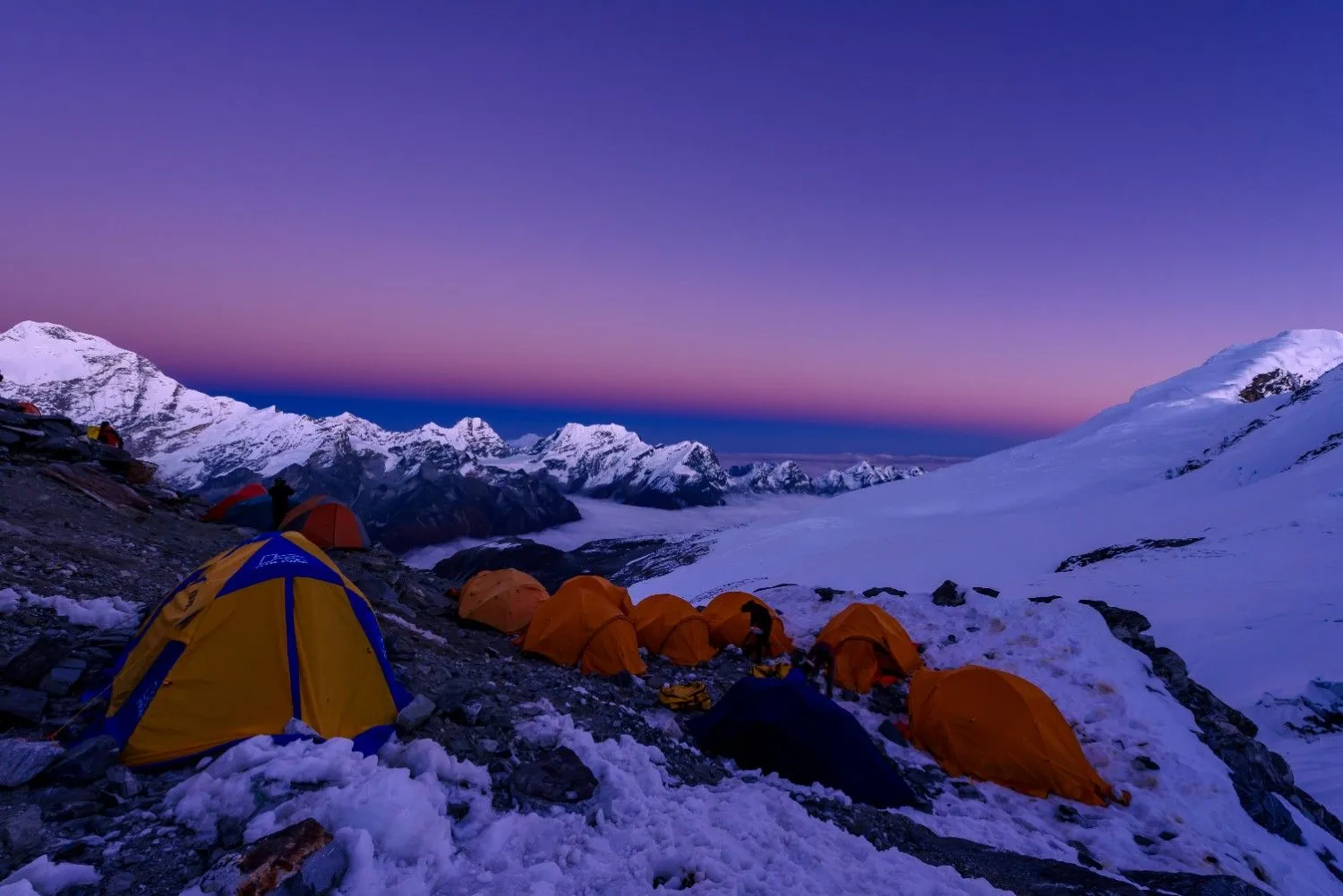
At Nepal Outdoor Expeditions, we offer a range of journeys, whether you’re hiking to a legendary base camp or pushing toward a high-altitude summit. Each trip is thoughtfully designed to match your pace, experience level, and sense of adventure. From scenic trails to thrilling climbs, we’re here to guide you every step of the way.
Here are a few unforgettable adventures you might like:
Accommodation during Mera Peak climbing is a mix of simple comfort and raw mountain experience. In the lower regions, you’ll stay in small teahouses run by local families. These places are basic but welcoming, often with wooden rooms, twin beds, and a warm dining area where everyone gathers in the evening. As you move higher and leave the villages behind, the teahouses disappear and camping becomes part of the journey. Tents are set up in quiet, open landscapes surrounded by mountains, and while it’s more rugged, there’s something special about sleeping under the stars in such a remote place. Nights can get quite cold at higher altitudes, but good sleeping gear and the shared camp atmosphere make it manageable—and even memorable.
Food along the trail is simple, filling, and just what your body needs for the long days of walking and climbing. In teahouses, you’ll find a variety of meals like dal bhat, noodles, soups, rice dishes, potatoes, and sometimes even pancakes or eggs for breakfast. It’s not fancy, but it’s warm, fresh, and surprisingly comforting after a day on the trail. Once you’re in the camping phase, meals are prepared by the expedition crew, and they do a great job of keeping you well-fed with hot, nutritious food. You’ll often have soup, rice, vegetables, pasta, or porridge, along with tea or coffee to keep you going.
What really stands out is not just the food or the place you sleep but the feeling around it. Sitting in a cozy dining room with a cup of tea, sharing stories with fellow trekkers, or enjoying a quiet meal in the middle of the mountains—these small moments become some of the most memorable parts of the whole experience.
Preparing for Mera Peak isn’t just about packing gear; it’s about getting yourself physically and mentally ready for a high-altitude adventure. Even though it’s considered a beginner-friendly climb, the altitude and conditions still demand proper preparation.
In terms of equipment, you’ll need a good balance of trekking and basic climbing gear. Clothing should be layered, because the weather changes quickly as you gain altitude. Start with moisture-wicking base layers, add insulating layers like fleece or down jackets, and finish with a waterproof outer shell to protect against wind and snow. A warm hat, gloves, and good-quality sunglasses are essential, especially higher up where the cold and glare can be intense. Footwear is just as important; you’ll need sturdy trekking boots for the lower sections and insulated mountaineering boots for the glacier and summit push.
For climbing, basic gear like crampons, an ice axe, a harness, helmet, and ropes are required, but these are usually provided or arranged by your expedition team. A sleeping bag suitable for extreme cold, a comfortable backpack, trekking poles, and a headlamp are also must-haves. Small items like water bottles, energy snacks, sunscreen, and a first-aid kit might seem minor, but they make a big difference during the climb.
Preparation goes beyond gear. Building your stamina is really important, so regular hiking, cardio exercises, and some strength training before the trip can make the journey much easier. You don’t need to be an expert climber, but having basic knowledge of using climbing equipment and walking with crampons helps boost confidence. Acclimatization is another key part, taking your time to adjust to the altitude is what keeps you safe and allows you to actually enjoy the experience.
In the end, it’s not about having the fanciest gear or being the strongest person; it’s about being well-prepared, patient, and ready to embrace the challenges. With the right mindset and preparation, Mera Peak becomes less intimidating and more of an exciting, rewarding journey.

Tenzing Sherpa
Have questions? Our travel specialists are here to help plan your perfect adventure.
Chat on WhatsAppThe journey begins early. You'll be picked up and taken to the domestic terminal at Tribhuvan International Airport, where a short but breathtaking morning flight whisks you away to Lukla, sitting at 2,800 meters and popularly known as the gateway to Everest. There's always something exciting about landing at Lukla; the runway alone is enough to get your heart pumping. Once you've met your expedition teammates and sorted your gear, you'll head out on the trail toward Paiya. The route descends northward from Lukla through some genuinely lovely forest, thick with rhododendron, juniper, pine, and magnolia. You'll pass through Surke before making your way to Pakhapani and then over Chutok La Pass at 2,945 meters. From there, it's a comfortable walk down to Paiya, a quiet little settlement nestled in the Himalayas that greets you with views of Kongde Ri, Khatang, Tang Ragi Tu, and several neighboring peaks.
You leave Paiya after breakfast and drop down into the valley, crossing a wooden bridge before the trail starts working its way toward Panggom. Fair warning: the stretch around Kari La Pass at 2,800 meters can get slippery, so watch your footing and take it steady. Once you're past the pass, the path softens into a lovely forested corridor fragrant with rhododendron, bamboo, and pine. You'll skirt past Phaplu Village and walk alongside the terraced fields bordering the Dudhkoshi River as you approach Panggom. This village has long served as both a farming settlement and a small trading hub, and depending on the time of year you visit, you might find the surrounding fields bursting with color. It's a welcoming place to end the day.
Today is one of the more rewarding days on the trail. You set off from Panggom toward Ningsow through forests layered with bamboo and rhododendron, passing Buddhist monasteries, chortens, and stones carved with prayer inscriptions. The route carries a quiet spiritual weight that many trekkers find unexpectedly moving. Crossing Panggom La Pass at 3,174 meters opens up your first proper views of bigger Himalayan faces, including Naulekh, Mera's south face, and the Kongde Peaks. What follows is a long, steep descent into the valley. It's tough on the knees but the scenery keeps you distracted. You'll cross the Hinku River over a suspension bridge before a solid two-hour climb brings you up to Ramailo Dada, perched beautifully on the eastern side of the valley.
One of the most visually stunning days of the entire expedition. The rhododendron forests along this stretch are extraordinary, with red and pink blooms lighting up the trail in a way that feels almost theatrical. The path rolls up and down through the forest before you cross into Makalu Barun National Park, one of Nepal's most ecologically rich protected areas. Keep your eyes open here. The park is home to red pandas, snow leopards, Himalayan black bears, wild boar, and the occasionally spotted Himalayan marmot, among others. You'll follow the Pasang Lhamu Trail as it winds down toward Chhatra Khola. It's a long day, but you'll arrive to one of the nicer lodges along the route and that makes it very much worth it.
Today you rejoin the main Mera Peak route. The trail climbs above the Hinku Valley and moves through rhododendron, hemlock, and birch forests before the trees begin to thin as altitude takes hold. Walking alongside the Majang Khola, you'll eventually reach the point where it joins with the Hinku Khola, and the route straightens out heading north. Trashing Ongma makes for a natural rest stop; there are seasonal tea shops here and it's a good place to refuel before the final push. From there, you cross a bridge over the Sanu Khola and arrive at Kothe, your base for the night. The elevation gain today is real, so don't rush it. Drink water, walk steadily, and enjoy the forest as it gives way to the wider mountain views above.
A shorter day, and a welcome one. You follow the ridge of the Hinku Khola as you gain altitude, and the transformation in landscape is noticeable: the trees disappear behind you and wide open kharkas take over, dotted with yaks grazing peacefully against a backdrop of glaciated peaks. It feels like a different world up here. Lunch is at Gondishung, where you can sit with your food and take in views of Charpati Himal, Kusum Kanguru, Thamserku, and Mera Peak itself, which now looks very real and very close. In the afternoon, you continue up toward Thaknak, passing the 200-year-old Lungsumgba Gompa, a Buddhist shrine with a quiet, timeless atmosphere. Thaknak is a summer grazing settlement with a handful of teahouses. It's simple but perfectly positioned.
Short in distance, significant in altitude. The golden rule today is to go slow. Drink more water than you think you need. Rest when you need to rest. Altitude above 5,000 meters asks something different from your body, and the best thing you can do is listen to it. You'll climb gently toward the Dig Glacier first, pausing to take in the Charpati Himal and the northern Hinku Glacier stretched out before you. Then it's a descent through the Dig Kharka, with Mera Peak growing larger in the frame, before a steady uphill walk brings you into Khare. This is the base camp for your Mera Peak summit, sitting at 5,045 meters. The teahouses here are stocked with climbing gear rentals if you need anything, and the crews are experienced at hosting summit-bound climbers. Your guides will sit with you in the evening to go over plans for the days ahead.
Rest days at altitude are not actually rest days. Your body is doing serious work adapting to the reduced oxygen, and today is dedicated entirely to supporting that process while also preparing you for the climb ahead. Your mountaineering guides will run a proper training session covering the practical skills you'll need on the mountain: belaying, rappelling, tying the right knots, using your harness correctly, and handling ice axes and crampons with confidence. These aren't formalities. Getting comfortable with your gear in a low-stakes environment genuinely matters when you're on the mountain in the cold at 3 in the morning. The day closes with a full gear check and a proper briefing on what to expect on summit day. If you realize you're missing something or want to upgrade any personal gear, the rental shops at Khare have you covered. Sleep well tonight.
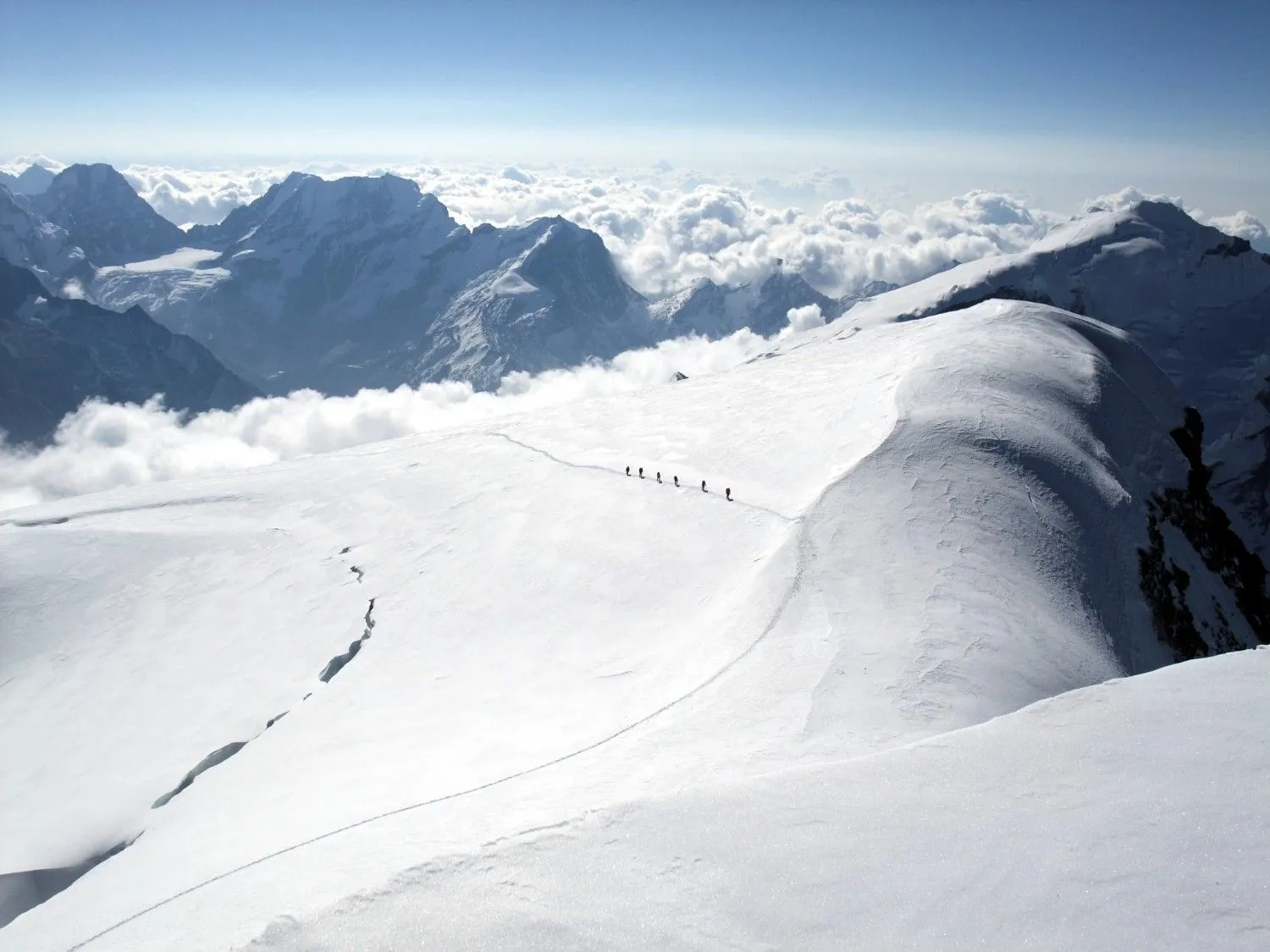
This is where the expedition shifts into a different gear. You set off from Mera Base Camp at 5,300 meters, climbing a steep boulder-strewn slope toward Mera La at 5,400 meters. From there, you move onto the Mera Glacier, and the scale of the mountain starts to become very apparent. Mera Peak has three summit points: Mera North at 6,476 meters, Mera Central at 6,461 meters, and Mera South at 6,065 meters. Your objective is Mera Central, and the route from here follows a gradual glacier incline with no technical climbing required to reach the high camp. What makes it demanding is the cold and the altitude, both of which intensify with every hundred meters you gain. Arriving at Mera High Camp at 5,780 meters, you'll be welcomed with warm drinks and soup. Eat well. Sleep as best you can. Tomorrow is summit day.
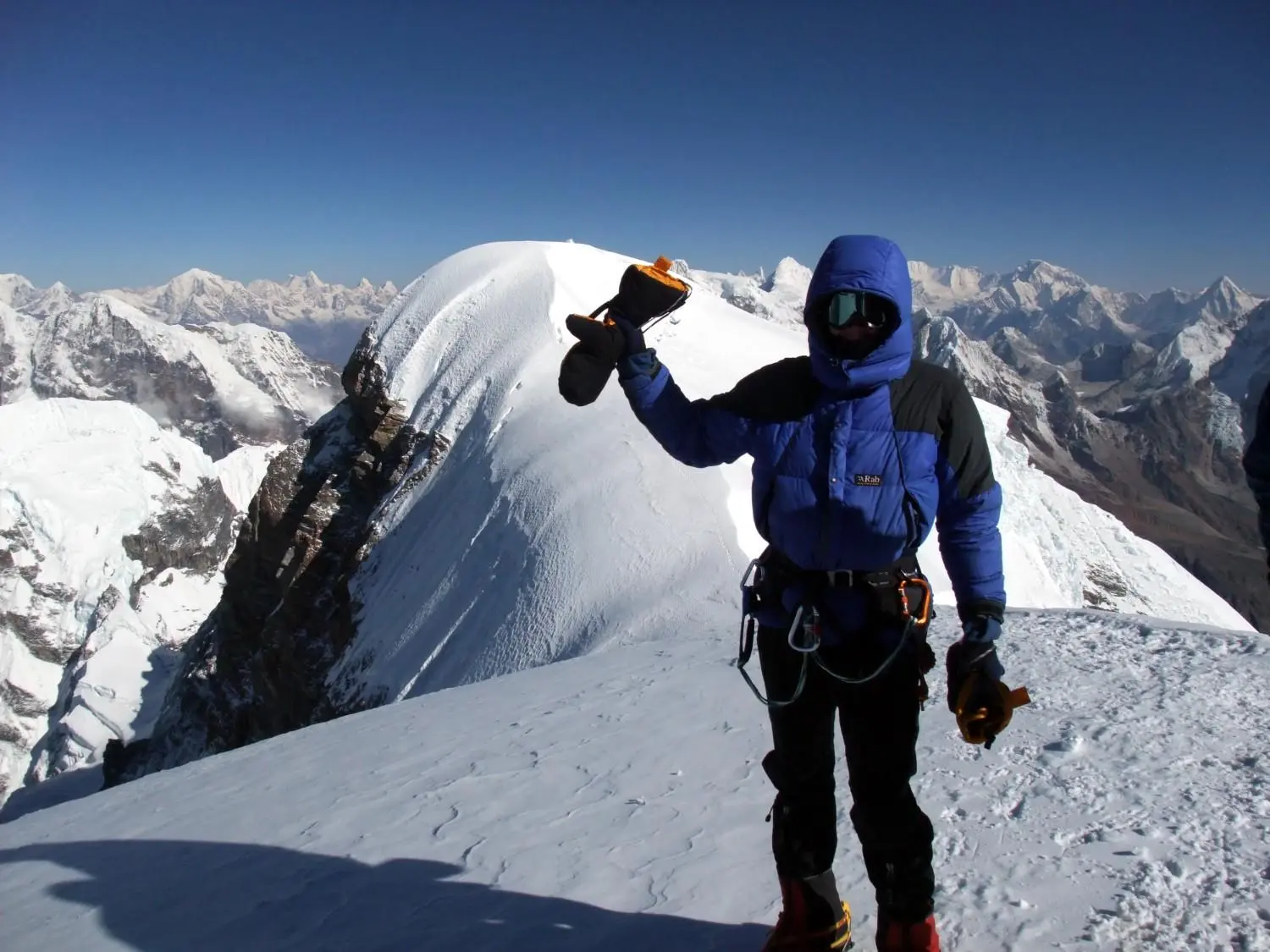
You'll start in the dark. Pre-dawn departures are standard at this altitude, and the stars above the Himalayas on a clear morning are something you won't forget quickly. You'll be roped together as a team and move steadily up the mountain slopes with your guides setting the pace. The climb to the summit is not technically extreme for most of the route, but the cold, the altitude, and the physical exertion are very real challenges. The final 40 to 50 meters before the summit require jumars and fixed rope as you push up through the steeper snowy dome section toward the top. Standing on the summit of Mera Peak at 6,461 meters, you'll have a 360-degree panorama of some of the highest peaks on the planet: Everest, Kanchenjunga, Lhotse, Cho Oyu, Baruntse, Chamlang, Gaurishanker, and more. Take your time up there. You've earned every second of that view. After descending to high camp for a brief rest and a meal, you'll continue all the way down to Khare, where the tea and celebration await.
Every well-planned expedition builds in a buffer, and this is yours. Whether it's a weather window that didn't cooperate, a team member who needed an extra recovery day, or simply the mountain being the mountain, having this day available takes the pressure off the entire schedule. If everything goes smoothly and the buffer isn't needed, this day becomes a bonus. Use it for a short exploration in the region, revisit a viewpoint you didn't have enough time to appreciate, or save it as an extra day in Kathmandu for exploring the city, shopping for souvenirs, or just recovering before your flight home.
The descent begins. After days at high altitude, coming back down feels strangely easy on the lungs, even if the legs have their own opinion. You retrace the route through Tangnang, a tiny yak-farming settlement, and continue down over rocky pasture land as the landscape gradually softens beneath you. The moment the fir trees and rhododendron reappear, you'll feel the air change. Greener, warmer, fuller. Kothe greets you with terraced fields and a sense of normalcy that feels genuinely wonderful after the stark beauty of the glaciers and snowfields above.
After breakfast you head out from Kothe on what is a genuinely tough stretch of trail. The descent from Kothe is steep and demands attention, threading through forests of rhododendron, fir, and bamboo. The path is beautiful but unforgiving in places, so poles and careful footing go a long way. Chetarwa is a welcoming spot to arrive at by late afternoon. The local hospitality here is warm, and the views of the surrounding peaks make for a lovely final mountain backdrop before the lower valleys take over on the way home.
A big final day on the trail. You start with a climb, which feels a little cruel after so many days on your feet, but the ascent through rhododendron forest toward Zatrwa La Pass at 4,600 meters is genuinely beautiful. Small teahouse settlements at Toktar offer a chance to pause before you reach the pass. From Zatrwa La, you get one last proper look at Mera Peak rising behind you. It's a moment worth stopping for. Then the trail drops down through the Lukla Valley in a long, rewarding descent. By the time you reach Lukla, the expedition is complete. Tonight you sleep in a proper bed with a hot meal, the mountains behind you and your stories very much intact.
The final morning in the mountains. An early flight from Lukla carries you back toward Kathmandu, the Himalayas visible one last time through the aircraft window as you cross the valleys heading south. It's a short flight, but it covers a lot of ground, literally and otherwise. On landing at Tribhuvan International Airport, our representative will be there to take you back to your hotel. The rest of the day is yours: visit Thamel, explore Pashupatinath or Boudhanath, pick up a few last souvenirs, or simply sit somewhere quiet and let the whole experience sink in. Thank you for taking on this adventure with us. We hope Mera Peak gave you everything you came for and a few things you didn't expect. Safe travels home, and we hope to see you again in these mountains.
See what past travelers are saying about their experience with Nepal Outdoor Expeditions.
Because your next adventure is impatiently waiting for you.
Last Minute Note: Grab incredible deals on the last minute departure / Book spontaneous trips to hip destinations with limited-time offers and discounted price
Not sure of your dates yet? Hold a departure with a 20% deposit. Cancel more than 60 days out and your deposit is refunded in full. Your first date change is free. If a departure doesn't reach minimum numbers, we'll offer you the nearest alternative date or a full refund, and we'll let you know at least 30 days out.
Before you think of or actually plan any adventurous or relaxing tours, travels, or treks with Nepal Outdoor Expeditions.
If you cancel more than 60 days before departure, we refund your deposit in full. Between 30 and 60 days, the 20% deposit is retained. Inside 30 days the trip cost is non-refundable, since by then we've already paid for your permits, flights, and teahouse bookings. Full detail on our booking page.
20% to reserve your place, with the balance due 60 days before departure. On this trek that's $455 to book and $1,820 two months before you fly. If you're booking within 7 days of departure, the full amount is due at booking.
Yes, as long as you let us know at least 30 days before your original departure date, your first change is free. Any change after that, or a change requested inside 30 days, is $200 per person.
Mera Peak Climbing