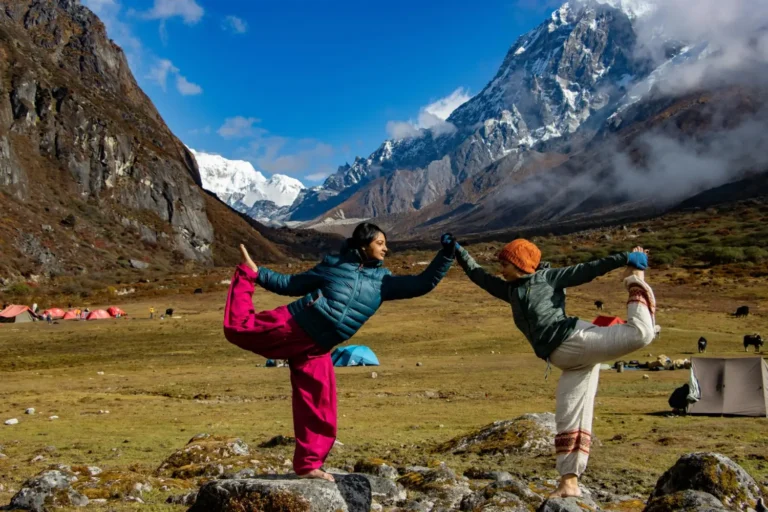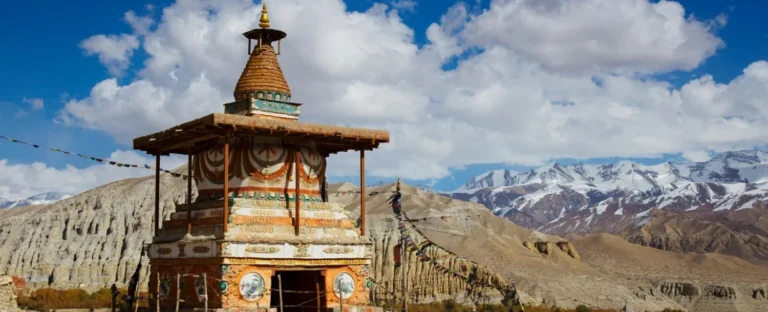

This is what occurs to you when you visit the mountains. It is difficult to describe this experience until you live it yourself. All of the chaos and noise in your head slowly comes to silence. Your footsteps develop their own pace, and between both the physical challenge of climbing up to the majestic peaks and its quietness, you begin to feel like yourself again.
The Annapurna Base Camp Yoga Trek is designed around this exact experience. It uses one of the most amazing trails in the world to ask the most basic of questions: What would happen if we slowed ourselves down long enough to appreciate everything around us? Yes, the view alone will be enough to leave you breathless. But there is so much more here than that. There is the cold air against your skin at first light. There is the rush of the unseen river. There is the exhaustion in your muscles from days of hiking over challenging terrain.
The adventure involves the classic Annapurna Base Camp trek accompanied by daily yoga and mindfulness classes conducted by professional instructors. However, the trek is not just about fitness or a wellness experience with mountains in the background; the trip is designed to transform your life without you realizing how. Individuals may start off with the idea of experiencing natural wonders but finish their trip with something unexpected and priceless.
Annapurna of Nepal is a place that is hard to describe with mere words since it is among the most incredible sites on earth. The area boasts snow-capped peaks, breathtaking landscapes with terraced villages, colorful rhododendrons during spring season, and hospitable communities of Gurungs who will introduce you to a new lifestyle that we have long forgotten. You will experience Annapurna’s beauty as you move at the natural pace of locals instead of being a tourist in a hurry to check some boxes off his or her checklist.
What Is the Annapurna Base Camp Yoga Trek?
In simpler terms, this is a trekking expedition that breathes. Rather than rushing through the trail to cover distances and meet the demands of the schedule, this trekking trip allows you ample time to acclimatize to your surroundings.
The trekking trail itself follows the popular Annapurna Base Camp Trek trail that takes you along the Modi Khola Valley, up the hills past rhododendron and bamboo forests, across suspension bridges, and finally to the base camp, which sits 4,130 meters above sea level amidst the world’s tallest mountains. The trail remains unchanged, but how you traverse it differs.
Each day has a yoga session led by an instructor. These yoga classes take place early in the morning before setting out on the trail or after trekking and returning to the base camp in the evening when tired muscles would appreciate the care. The yoga sessions are not rigorous training routines that aim to challenge you physically. They are calming practices adjusted to the high altitudes and physical fatigue of trekking.
Unlike the traditional trek to ABC, this is done at a leisurely pace, ensuring that you have enough time to experience the most interesting places. The schedule has been carefully crafted to ensure this.
For whom is this trek? Well, it’s wider than you might imagine. It could be for those who have been doing yoga for quite some time but would like to explore their skills in a different environment; it could be for lovers of mountains seeking a higher meaning, or it could be for those who need a total overhaul in life.
You don’t have to come prepared. You only have to show up.
Why the Annapurna Base Camp Yoga Trek Is More Than Just a Trek
Most trekking trips offer a destination point. But this journey is going to provide you with something else that was always inside of you, something that you never realized. The Annapurna Base Camp Yoga Trek transforms your body, mind, and soul through the process of trekking and yoga, making you experience changes that cannot be described in words but will definitely remain within you even after you return home.
The Physical Benefits of Combining Trekking and Yoga
It may sound ridiculous that trekking and yoga can go hand in hand, but during this expedition, you will see how both complement each other perfectly well. While trekking helps build your stamina in terms of leg muscles and lungs, yoga takes care of everything that is affected negatively by walking through the mountains. Thus, your hips will open up, your backaches will subside, and your breathing will become steady, all of which play a key role when climbing to the high altitude. While most trekkers simply endure the aches, you get to enjoy the process.
Mental Clarity and Stress Reduction in the Himalayas
The mountains begin to do something for your psyche from the very first moment you step into them. This practice of yoga in the mountains only enhances it further. The absence of technology, deadlines, or any sort of external distraction allows you to start unclenching physically and then mentally. Breath work and meditation are an intrinsic part of every day, but these practices are by no means daunting or difficult to grasp. They merely serve as a guidepost to allow you to be fully present in the present. Trekkers always tend to report a sudden epiphany while trekking when the problem that has been bothering them begins to slip away. The Annapurna Sanctuary becomes the quickest location for such an epiphany.
Spiritual Connection in the Annapurna Sanctuary
The Annapurna Sanctuary is unlike anything else the moment you set foot inside its borders. The Gurung culture has long deemed the area holy, and truly, it is impossible not to see why the moment you enter it. Engaging in a yoga session in the early mornings at the sanctuary, surrounded by Machhapuchhre in all its glory and prayer flags fluttering around, triggers an unexplainable emotion. People who have never been spiritual before end up returning from this location spiritually altered. It requires no specific religious beliefs on your part for you to feel it. The mountains themselves possess such a power.
Quick Facts About Annapurna Base Camp Yoga Trek
- Location: Annapurna Conservation Area, Nepal
- Duration: 8 to 14 days (depending on itinerary and yoga sessions)
- Difficulty Level: Moderate (suitable for beginners with good fitness)
- Maximum Elevation: 4,130 meters (Annapurna Base Camp)
- Best Seasons: Spring (March to May) and Autumn (September to November)
- Permits Required: Annapurna Conservation Area Permit (ACAP) and Trekkers’ Information Management System (TIMS) card
Annapurna Base Camp Yoga Trek Itinerary (Outline)
- Day 1: Kathmandu to Pokhara to Ghandruk
- Day 2: Ghandruk to Chhmorung
- Day 3: Chhomrong to Himalaya
- Day 4: Himalaya to ABC
- Day 5: ABC to Dovan
- Day 6: Dovan to Jhinu Dadha
- Day 7: Jhinu Dadha to Pokhara
- Day 8: Pokhara to Kathmandu
Yoga Experience During the Trek
Yoga during the trek is far from being an add-on feature. The sessions are designed specifically to meet your personal needs of the moment, including taking into consideration the natural environment, your current physical state, and the conditions of your daily life up on the mountain.
Types of Yoga Practiced (Hatha, Vinyasa, Breathing Techniques)
The yoga style during the journey depends greatly on the particular day’s agenda but mostly consists of several practices such as Hatha yoga, Vinyasa yoga, and pranayama. The basis of the program includes traditional Hatha yoga with its slow and controlled postures that help you relax physically after the whole day spent walking. During more active days, you will perform some Vinyasa yoga with its flowing sequences that give a sense of meditative flow while doing poses. And, finally, pranayama or breathing techniques can be easily regarded as the most useful practice learned here. Inhaling slowly and intentionally is not only great for practicing yoga but also beneficial for adjusting to high altitude.
Morning vs Evening Sessions
Magic happens during the morning hikes. You venture out while the hiking trails are still quiet, the air feels sharp and cool, and the mountains are beginning to be lit by the sun. This practice session will help you start the hike feeling energized since it focuses on waking up your body and preparing your muscles and joints to deal with all the walking that is coming. The evening hikes create a feeling of entering an entirely different dimension. Your backpack is removed, your legs are already done with the hiking, and you are ready for relaxation. It will focus on helping your muscles release some of the tension and get ready for a good night of sleep induced by the clean mountain air.
Role of Certified Yoga Instructors
In addition to leading us through different poses, the teachers during the trekking are not just guides but also play an important role in shaping our entire experience. They are aware of how the elevation impacts our bodies and modify each yoga class based on reality rather than going against what is required at that particular time. They are always observing the class and taking note of those who have had a tough time trekking and those who haven’t been as tired, then designing the class according to individual needs rather than sticking to the schedule. In addition to yoga classes, they create an environment for the entire adventure that invites people to be themselves without fear of judgment from others.
Best Time for Annapurna Base Camp Yoga Trek
Timing plays an essential role in this journey, since the Annapurna Circuit has its own atmosphere at different times of the year. Your choice of timing may affect your overall trip experience; luckily, you have two excellent seasons during which you can travel. Let us discuss each of them.
Firstly, spring, March to May, offers many perks that can make your trip memorable. This period is when rhododendrons bloom in bright red and pink hues along the trail. Temperatures are perfect for hiking and yoga, and the atmosphere is pleasant since it is not too cold or hot. Besides, you may expect clear views of the mountains most of the time.
Spring in the Himalayas has a unique energy of revival that you can feel in your bones; moreover, practicing yoga in this location will be a fantastic experience due to the mountain landscape, fresh air, and snow-capped peaks towering above you.
The autumn period from late September through November is also equally charming, and to be honest, many trekkers who have undertaken this journey more than once find this season more appealing. Once the rains pass, the sky changes color to an indigo hue that you may never have seen before. It seems like the purity of the air you breathe here has no match in any other place you have visited before.
Visibility in these periods tends to be at its peak, which is why you can easily be taken aback by the breathtaking views from base camp. There are slightly cooler temperatures, mainly in the evening, but that doesn’t make the experience less enjoyable. Ending your yoga routine with the sunset and sipping on some tea from base camp sounds like a blissful experience, to be honest.
Accommodation and Food During the Trek
Comfort is another area that may cause some concern regarding this kind of a journey. Are the beds going to be cozy enough? Is the food going to be good? What will one be able to eat after all the walking during the day? Here is the truth: the teahouses on the Annapurna trail are going to surprise you, for the better, of course.
Teahouses in the mountains cannot offer the same comfort as hotels do. Nevertheless, there is something in these establishments that makes them cozy and welcoming, unlike any other place on Earth. During your trip you will be sleeping in simple little rooms where there are comfortable beds, which are going to seem extremely cozy to you after a full day of walking and practicing yoga.
The common dining room is the place where one can find the true spirit of the tea house, with trekkers from various countries sitting around wooden tables, chatting about what they saw on the trail. People sitting around the stove talking in the cold evening are always remembered by travelers because of the hospitable atmosphere here.
Contrary to expectations, food available on the trek route is quite hearty and diverse. The traditional Nepalese dish of dal bhat, which includes lentil soup, rice, and vegetables, can be found everywhere, and there are good reasons for that. It is warming, nourishing, and provides slow-release energy that will last you throughout the whole day.
There are many other options such as noodles, pasta, porridge, eggs, and freshly baked bread available in teahouses; hence, it would be challenging to go hungry. Portions are generally quite big, and food is prepared carefully.
To stay healthy while hiking in Nepal while practicing yoga, one has to approach the problem of food consumption consciously. In this case, your body needs to burn calories efficiently due to intense physical activity and meditation. The best way to achieve it is by opting for warm, easily digestible foods rather than cold and difficult-to-digest meals.
Hydration plays an equal role, and daily water intake should be considered mandatory. The yoga instructors on this trek are usually happy to offer simple guidance on eating in a way that supports both your practice and your energy levels, so do not hesitate to ask.
Permits, Costs, and Package Details
Before embarking on this trek, however, there are a couple of logistical aspects to address first, and getting permits is perhaps one of the foremost among these. You would require two permits to be able to make a trek in this area. The first permit you would require is the Annapurna Conservation Area Permit, which is also popularly called the ACAP.
Then you will also have to get a TIMS card, which stands for the Trekkers Information Management System. It will not be too difficult for you to get the two permits since most trekking companies will help you get these easily in Kathmandu or Pokhara.
In terms of prices, there may be some variation based on the provider as well as the duration and contents of the trek package. A reliable provider will offer accommodations in teahouses, food during the trek, a trained guide, a yoga teacher, and required permits in addition to insurance and porters.
Some providers may also offer a transport service from the airport as well as accommodation in Pokhara both before and after the trek. To give you an idea of what the price might be like, a typical price range would be between 1,200 and 2,500 US dollars.
It is important that you read the fine print regarding what is and isn’t offered before booking. Always be sure to ask questions of the provider if something isn’t clear.
Essential Packing List for Annapurna Base Camp Yoga Trek
Packing for this adventure is a matter of finding the right balance between packing enough and carrying too much, which will wear you out even before you set foot on the trail. This expedition requires not just a climb up the mountain but also a yoga routine every day, so you need to plan accordingly.
Trekking Gear
- Sturdy trekking boots with ankle support
- Moisture-wicking trekking socks
- Waterproof jacket and pants
- Warm fleece or down jacket
- Trekking poles
- Comfortable daypack
- Sleeping bag rated for cold temperatures
- Headlamp with extra batteries
- Sunglasses with UV protection
- Trekking pants and base layers
Yoga Essentials
- Lightweight travel yoga mat
- Comfortable and stretchy yoga clothes
- Warm layer for outdoor morning sessions
- Small towel or yoga mat strap
- Reusable water bottle
Health and Safety Items
- Basic first aid kit
- Altitude sickness medication such as Diamox
- Sunscreen with high SPF
- Lip balm
- Hand sanitizer and wet wipes
- Personal prescription medications
- Water purification tablets
- Blister plasters
- Insect repellent
Practical Tips for a Successful Yoga Trek
It will be helpful to prepare properly before the trek. With proper understanding of how to look after yourself both physically and mentally, you will enjoy the process much more than just survive it. Here are some tips for doing so.
- Never rush during the climb but proceed steadily and calmly. In order to adapt to the altitude, the body requires adequate time; otherwise, this will be the most frequent error made by trekkers.
- Always drink enough fluids even if you do not have thirst at the moment since dehydration occurs quickly at altitude.
- Apply breathing methods recommended by your instructor on the trek itself, not only in your yoga class. Controlled breathing during ascending will positively affect the body.
- If necessary, pause during climbing since the trekking is not a race and you are not in a hurry. There will always be mountains.
- Try to practice mindful listening while trekking. The sound of the river, the sensation of the ground, and the cool air blowing into your face, all these are interesting experiences.
FAQs
What is the difference between the Annapurna Base Camp trek and the Annapurna Base Camp Yoga Trek?
Same path, but the entire experience is drastically different. In the traditional version, the emphasis is on traveling the trail effectively, with reaching the end point being the objective. Yoga trekking incorporates slower pacing, daily yoga and meditation exercises, and more time spent in the most interesting areas along the way. Same trail, different experience.
Do I need prior yoga experience to join the Annapurna Base Camp Yoga Trek?
Nothing could be further from the truth! All classes are geared towards both beginners and experts alike. The teachers always provide easier alternatives, and there are no pressure or expectations to follow others. The whole idea is to breathe, move smoothly, and feel comfortable hiking through the mountains, which anyone can achieve.
How difficult is the Annapurna Base Camp Yoga Trek for beginners?
Of course it is a serious trek, and it requires physical effort, but it is regarded as one of the more manageable high-altitude treks in Nepal. In fact, the yoga trekking option is less intense compared to the traditional route since the latter moves faster and doesn’t pay much attention to group fatigue levels. As long as you’re an active individual and put in some training before the trek, everything will work out perfectly well.
What type of yoga sessions are included during the trek?
The sessions incorporate aspects from Hatha yoga, light Vinyasa yoga flows, and pranayama breathing techniques. Early mornings tend to be more active to get your body ready for the trails, whereas evenings tend to be focused on stretches and relaxation. The sessions will always be customized depending on the group and weather, so everything feels seamless and natural.
What is the best time to do the Annapurna Base Camp Yoga Trek?
The spring season spans from March to May and is characterized by blooming rhododendrons and pleasant weather. Meanwhile, the autumn season extends from late September until early November and features crystal-clear skies and the most beautiful vistas in the mountains all year round.