
Nepal has something that attracts people even before they arrive. Perhaps it is the pictures of snow-capped mountains rising above green hills or the tales that friends have returned home with about sunrises that rendered them speechless. Whatever it might be, once you begin to research treks around Pokhara, you are guaranteed to come across the Dhampus Sarangkot Trek, and rightly so.
Once people hear about this trek, the most common reaction is, “Wait, that’s it? That’s all it takes to see the Himalayas like that?”
In fact, it is not the type of expedition that requires weeks of training and months of planning. Additionally, you do not have to take a month off work or worry about altitude sickness. The Dhampus Sarangkot Trek is brief, picturesque, and truly gratifying. Because of its simplicity, it suits first-time trekkers, families, and couples, and individual travelers who just wish to go on a stroll in one of Nepal’s lovely highest areas and not to make a big deal about it.
Before you decide, you may want to know how much this hike costs, what you will get out of it, and if it is worth the money before you pack your bag. That is what this guide is all about.
What Is the Dhampus Sarangkot Trek?
The Dhampus-Sarangkot Trek is the link between two of the most beautiful viewpoints over Pokhara: Dhampus Village and Sarangkot Hill. As a result, it is a path that meanders through rhododendron woods, terraced fields, and sleepy Gurung villages where stone houses sit beside panoramic scenery of the Annapurna Range.
At the same time, Dhampus lies at 1,650 meters and is home to the Gurung community, one of the most hospitable hill communities in Nepal. As you stroll through the village, people go about their daily lives in a calm and unhurried way. The highest point (around 1,600 meters) is what is commonly referred to as the sunrise viewpoint above Pokhara, especially Sarangkot. Annapurna South, Machhapuchhre (Fishtail), Dhauligiri, Hiunchuli, and Lamjung Himal can be seen all together on a clear morning, glowing in gold and orange as the sun rises.
Many trekkers describe the moment as “the kind of sunrise that makes you forget you woke up at 4 AM.”
Along the way, the trail is lush and forest-lined with suspension bridges, terraced rice fields, and small settlements. You are not just on a tourist experience but experiencing real Nepal.
Highlights:
- The Dhampus Sarangkot Trek is a short and easy walk around Pokhara, so it is ideal for beginners, families, or those seeking a quick nature break without spending their days hiking.
- The most memorable experience of the trek is witnessing the sunrise at Sarangkot when the initial light reaches the Annapurna range and Machhapuchhre, leaving the viewer with a serene and memorable experience.
- Dhampus Village is a place that offers a friendly insight into the Gurung culture of the locals, as you can take a walk around the traditional houses and terraced fields with the simplicity and authentic hospitality of the locals.
- The trek is filled with beautiful scenery at all times, with expansive Himalayan views, green hills, forests, and tranquil landscapes that make every step enjoyable.
- It is the ultimate nature and comfort trek because you can see beautiful things but still be in nice teahouses that serve decent food so that the entire experience is relaxed and refreshing.
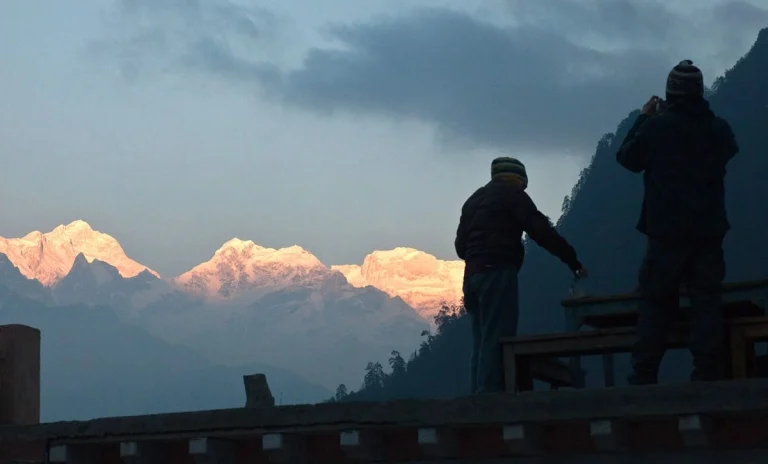
Peaceful mountain morning at Sarangkot with stunning Annapurna views.
Dhampus Sarangkot Trek Cost: The Full Breakdown
The Dhampus Sarangkot Trek price will also depend on the days, the trekking company you are joining, the group size, and what the package entails. To help you understand better, this is a realistic breakdown.
Package Cost from Nepal Outdoor Expeditions
Dhampus Sarangkot Trek with Paragliding is a 5-day package proposal by Nepal Outdoor Expeditions, which begins at USD 575 per person. This package will provide you with a full experience that will involve the trek and one of the most exciting things that Pokhara has to offer: paragliding off Sarangkot above Phewa Lake and the Pokhara Valley.
This is a very competitive price, which makes it a very appealing option for individuals who wish to do more than trek. You experience the mountains both on foot and from the air.
What Is Included in the Package
When you book the Dhampus Sarangkot Trek with Paragliding through Nepal Outdoor Expeditions, here is what comes with your cost:
- Guided Pokhara sightseeing tour
- Standard meals (breakfast, lunch, and dinner) throughout the trek
- A government-certified, English-speaking guide
- Guide salary, food, accommodation, and insurance
- Tea house and lodge accommodation during the trek
- All land transportation to and from the trek
- Paragliding charge from Sarangkot
- Two nights in a standard hotel in Pokhara
- Comprehensive first aid kit
- All government taxes and official expenses
What Is Not Included
However, a few things fall outside the package cost, so it helps to be aware of these before you budget:
- International airfare and airport taxes
- Nepal entry visa fee
- Travel insurance (compulsory, so factor this in)
- Lunch and dinner while in Kathmandu or Pokhara city
- Personal expenses like snacks, extra drinks, and souvenirs
- Alcoholic beverages and bottled cold drinks during the trek
- Tips for your guide and porter (these are expected and appreciated)
Budget Breakdown for Independent Travelers
To give you a rough idea of what various costs would look like, here is the budget you would put together or compare options:
- Trek permits: You require a TIMS card and an Annapurna Conservation Area Permit (ACAP). All these cost about USD 30 to 40 for foreign nationals.
- On the trail: Tea houses and guesthouses in Dhampus and Sarangkot are around USD 5 to 15 per night, depending on the season and shared or own room.
- Meals on the trail: Plan on spending USD 10 to 20 a day on food when not on a package. The most common foods include dal bhat, noodles, soup, and breakfast foods.
- Transport: Pokhara to trailhead (Phedi): USD 5-10 by taxi or shared jeep.
- Guide fee: USD 25-35 a day is the cost of a certified local guide.
- Porter fee: To hire a porter (as suggested), you can expect USD 20–25 per day.
- Paragliding: It is an optional activity, and it costs approximately USD 80 to 100 to have a tandem flight between Sarangkot and Pokhara lakeside.
A 3-day hike would cost about USD 200-350 each, including everything: meals, a guide, and a porter, not to mention permits, transportation, and personal costs.
Dhampus Sarangkot Trek Cost Breakdown (2025/2026)
|
Cost Category |
Details |
Estimated Cost (USD) |
|
Package Cost (with Agency) |
Nepal Outdoor Expeditions-5 Days with Paragliding | From $575 per person |
| Trek Permits | TIMS Card |
$10 – $20 |
| Trek Permits |
Annapurna Conservation Area Permit (ACAP) |
$30 |
|
Accommodation |
Tea house/Guesthouse on trail (per night) |
$5 – $15 |
| Accommodation |
Hotel in Pokhara (per night) |
$20 – $50 |
|
Meals |
Per day on the trail (if independent) |
$10 – $20 |
|
Transportation |
Pokhara to Phedi (trailhead)-taxi/shared jeep |
$5 – $10 |
| Transportation |
Kathmandu to Pokhara-tourist bus |
$15 – $20 |
|
Guide Fee |
Per day (government certified) |
$25 – $35 |
|
Porter Fee |
Per day (1 porter per 2 trekkers) | $20 – $25 |
|
Paragliding |
Tandem flight, Sarangkot to Pokhara lakeside |
$80 – $100 |
| Travel Insurance | Compulsory, recommended with trek coverage |
$30 – $80 |
|
Personal Expenses |
Snacks, extra drinks, souvenirs, etc. | $50 – $100 |
|
Tips (Guide + Porter) |
Guide: $5–$10/day; Porter: $3–$5/day |
$30 – $60 |
| Nepal Entry Visa | On arrival at Tribhuvan International Airport |
$30 – $50 |
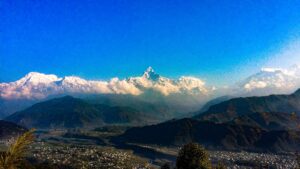
Clear morning panorama of Machhapuchhre (Fishtail) rising over Pokhara Valley.
Day-by-Day Itinerary
- Day 1: Drive to Pokhara: Start your morning with a hearty breakfast before hitting the road toward Pokhara along the Prithvi Highway. The drive itself is honestly half the experience, roughly 6 to 7 hours of winding roads hugging river valleys and terraced hillsides that’ll have you reaching for your camera more than once. By the time you roll into Pokhara, you’ll already feel the pace of life slow down. Spend the evening wandering at your own leisure, grab a lakeside tea, watch the boats drift on Phewa Lake, or simply soak in the mountain air. Tonight is yours. Overnight at a hotel in Pokhara.
- Day 2: Drive to Phedi and Trek to Dhampus: A short half-hour drive along the banks of the Seti River sets the tone for the day, and what a tone it is. Once you reach Phedi, the boots go on and the real adventure begins. The trail climbs steadily uphill, and yes, it earns its reputation, but every step rewards you with views of golden rice terraces, quiet village settlements, and forests that smell like the kind of green you can’t find in a city. Around 3 to 4 hours later, Dhampus welcomes you with open arms and stunning Himalayan backdrops. Overnight at a hotel in Dhampus.
- Day 3: Trek to Sarangkot: Breakfast in Dhampus deserves a slow morning; eat well, look around, and let it sink in that you’re having a meal with the Annapurnas in the background. Then it’s time to lace up again and head toward Sarangkot, weaving through rice paddies and rolling hills that feel almost too picturesque to be real. By the time you reach Sarangkot, the reward is waiting: a jaw-dropping panoramic sweep of the entire Annapurna range, painted gold by the setting sun. This is one of those evenings you’ll talk about for years. Overnight at a hotel in Sarangkot.
- Day 4: Paragliding to Pokhara & Half-Day Pokhara Sightseeing: Wake up before the sun does; trust us on this one. The sunrise over the Himalayas from Sarangkot is the kind of thing that quietly changes you. And if that wasn’t enough, the morning gets even better: you’ll paraglide your way back to Pokhara, riding thermals high above the valley like you genuinely own the sky. It’s equal parts terrifying and glorious, and it never gets old. Back on solid ground, check into the hotel, enjoy a well-deserved lunch, and then head out for an afternoon of exploring the International Mountain Museum, the thundering Davis Falls, the serene World Peace Pagoda at sunset, and a few of Pokhara’s shimmering lakes along the way. Overnight at a hotel in Pokhara.
- Day 5: Drive back to Kathmandu: The road back to Kathmandu feels different somehow, quieter, more reflective. After breakfast, you’ll retrace the scenic Prithvi Highway with a full camera roll and a head full of memories that are entirely your own. Once back in the capital, the city’s energy pulls you right back in. Use the evening to wander through local markets, pick up a few meaningful souvenirs, and maybe sit with a cup of something warm and think about how good the last five days actually were. Overnight at a hotel in Kathmandu.
Useful Information
Best Time to Do the Dhampus Sarangkot Trek
When you go influences how your trip will be and the price of the trip, in some cases.
- Spring (March-May): It is among the two peak seasons. The hilly terrain is lined with flowering rhododendrons, the climate is pleasant and sunny, and the mountainous landscape is spectacular. It is a holiday season, and be a reservist.
- Autumn (September-November): The second season and, possibly, the finest of them all. The air has been cleared by the monsoon, the skies are clear and blue, and everything is at its best. This is your chance to have the best mountain views.
- Winter (December to February): Reduced numbers of tourists, reduced prices in certain instances, and clear mountain views remain. It is cold in the mornings and evenings, but the trail is not difficult. Winter may be a surprisingly nice time to go, provided you do not mind the chill.
- Monsoon (June-August): Rainfall may be heavy and make the trails slippery and cause poor visibility. It is not the season recommended, but the woods are so very lush and green.
Permits Required for the Dhampus Sarangkot Trek
To do this trek you will require two permits:
- TIMS Card (Information Management System at Trekkers): This card documents your trek in order to be safe. It will cost you approximately USD 10 to 20 with or without an agency for trekking.
- ACAP (Annapurna Conservation Area Permit): This permit contributes to the conservation activities of the Annapurna area and costs about USD 30 to the foreigners. You can get both permits in Kathmandu at the Nepal Tourism Board office or in Pokhara at the local trekking office.
When you book the Nepal Outdoor Expeditions, they will take care of all the permit arrangements at your package
Difficulty Level: Who Can Do This Trek?
The Dhampas Sarangkot Trek is easy-moderate. The peak of the trail is approximately 1,650 meters, far less than the altitude at which acclimatization will be a critical consideration. There is no previous trekking experience, special equipment or rigorous physical conditioning required.
The number of hours you will walk will be 3 to 6 hours a day, based on your speed and day. There are some steep areas on the trail, most notably the ascent between Phedi and Dhampus, but nothing that cannot be managed by a reasonably fit individual.
Families that have an older child, older adults, and beginners have no problems completing this trek. You can do this trek as long as you are able to walk uphill a few hours at a comfortable pace.
Accommodation on the Trek
The lodges and tea houses on the Dhampus-Sarangkot trail are simple yet cozy. At Dhampus, you can expect a basic twin or double room with a communal bath. Facilities in Sarangkot are more advanced, and some lodges have separate rooms with their own bathrooms and Wi-Fi. You should not expect luxury, but you will have a pillow and a warm blanket, and your meals will be freshly prepared every day.
The majority of tea houses also have the ability to charge your phone and camera, which is actually handy after a long day on the trail.
Food on the Dhampus Sarangkot Trek
The food on this trek is simple, fresh, and filling, as you will take meals in local teahouses along the route. Dal bhat is the most popular meal served with free refills. Noodles, fried rice, pasta, soups, pancakes, eggs, and even a few bakery items can also be found in major stops like Dhampus and Sarangkot.
Breakfast usually includes porridge, toast, eggs, and tea or coffee, which provide sufficient energy for the day. Hot beverages such as milk tea, black tea, and ginger tea are served nearly everywhere, and they are the best after a vigorous walk. The food remains simple but satisfying, but it is warm, cozy, and perfect for trekking.
Packing Essentials
| Category | Items | Notes |
| Clothing | Light trekking shirts, warm jacket, fleece, trekking pants | Weather can change, so layering is important |
| Footwear | Comfortable trekking shoes, extra socks | Make sure your shoes are well broken in. |
| Accessories | Hat, sunglasses, gloves (in colder months) | Protects from sun and cold |
| Rain Gear | Lightweight rain jacket or poncho | Useful especially in monsoon season |
| Backpack | Daypack (20–30L) | Enough for personal essentials |
| Water & Snacks | Water bottle, energy bars, dry fruits | Stay hydrated and energized |
| Personal Items | Sunscreen, lip balm, toiletries | The sun can be strong even in short treks |
| Health & Safety | Basic first aid kit, personal medicines | Always carry your own essentials |
| Documents | ID, permits (if required) | Keep them safe and handy |
| Extras | Camera, power bank, flashlight | Useful for memories and convenience |
Why Add Paragliding to Your Trek?
Sarangkot is one of the most popular paragliding launch sites in Asia. Together with the constant presence of thermals, the spectacular mountainous scenery, and the glittering Phewa Lake below, it is truly extraordinary.
The paragliding flight between Sarangkot and Pokhara lakeside takes approximately 20 to 30 minutes. You are flying with a qualified pilot; hence, no experience is required.
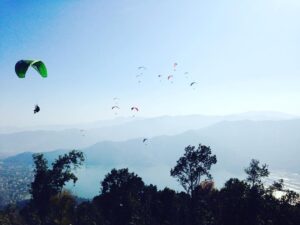
Sky filled with paragliders flying from Sarangkot over Pokhara.
Paragliding is a part of the Nepal Outdoor Expeditions package that involves a 5-day itinerary to the mountain, so you literally fly down the mountain to the city. It is an experience that is a little ridiculous when you hear about it, but when you are in it, it becomes the one that you talk about years later.
Practical Tips to Keep Your Costs Down
To help you budget without losing the experience, a few things can help you:
- Book during shoulder season: The best months are October and November and March and April. You may also get a slightly lower price with some companies in February or early December.
- Travel in a small group: Lots of agencies have better rates per person when the group consists of 2 or more. Traveling with one other can even help you save a significant amount per person.
- Carry your own snacks: Food in tea houses is cheap, yet additional food or beverage along the route is expensive. Carrying along a few energy bars or nuts in Pokhara makes the expenses affordable.
- Book directly with a reputable local company: Reservations via intermediaries that introduce commission charges can increase the expenses unnecessarily. By dealing with a company directly such as Nepal Outdoor Expeditions, you are guaranteed a decent price and communication.
- Avoid single-use plastic: In addition to being more environmentally friendly, a reusable water bottle and water purification tablets will save you money on bottled water during the trek.
Conclusion
The Dhampus Sarangkot Trek is a short trek in Nepal that is as authentic as its price: real mountains, real villages, and real moments that do not in any way resemble the tourist experience most people settle on.
You are getting outstanding value for the experience. You are getting either the 5-day package of Nepal Outdoor Expeditions, which will cost USD 575 with paragliding included, or you will assemble your own 3-day independent trek at USD 200-350.
The sunrise of Annapurna as seen at Sarangkot, the serene trails in Dhampus, the hospitability of the Gurung people, and, no doubt, even more, the paragliding adventure to Pokhara are not something that will be forgotten. And that says a lot, considering what they cost.
If you are unsure whether this trek is worth it as to whether this trek is worth it, I suppose this is your answer: it is.
As one trekker put it perfectly, “Nepal does not just show you mountains. It shows you what it feels like to be small in the best possible way.”
FAQs
1. How much does the Dhampus Sarangkot Trek cost in total?
Overall, the price depends on the type of package you choose and the time of year. The 5-day Dhampus-Sarangkot Trek with Paragliding provided in Nepal Outdoor Expeditions starts from USD 575 per person. In other words, this package includes accommodation, meals on the trek, a certified guide, transportation, paragliding, and sightseeing in Pokhara. On the other hand, if you trek independently with a guide and porter, a 3-day trip costs USD 200 to 350 per person, including the permits, food, transportation, and accommodation. Additional personal costs, such as tips, souvenirs, and extra drinks, are not covered in either case, so it is better to reserve another USD 50-100 to cover them.
2. What permits do I need and how much do they cost?
First, you need two permits to complete the Dhampus Sarangkot Trek. To begin with, the TIMS card costs between USD 10 and 20, depending on whether you use an agency or not. Next, the Annapurna Conservation Area Permit (ACAP) costs about USD 30, abbreviated as ACAP, that costs approximately USD 30 to foreigners. Both permits can be obtained in Kathmandu at the Nepal Tourism Board office or in Pokhara. When you book with a well-established agency such as Nepal Outdoor Expeditions, then In that case, they usually include permit arrangements in your package with your package, so you will not need to worry about putting them together yourself.
3. Is the Dhampus Sarangkot Trek worth the cost for beginners?
Absolutely. Overall, experts rate the trek as easy to moderate; In fact, the trek does not require any previous experience in trekking, and the trail does not climb high to such heights that altitude sickness will be a real issue. The highest point is 1,650 meters. Your days will be spent walking 3-6 hours a day on clearly marked paths, traversing forests, villages, and terraced agricultural farmland. At the same time, you get some of the best mountain scenery in Nepal, the Annapurna range, and Machhapuchhre (Fishtail); an experience of authentic Nepalese culture in the Gurung villages; and a sunset/sunrise experience in Sarangkot that many people say was one of the most memorable moments of their entire Nepal visit.
4. Does the cost include paragliding, and is paragliding safe?
The Nepal Outdoor Expeditions 5-day package is inclusive of paragliding at USD 575 per person. When you reserve a shorter or tailor-made trek, then paragliding out of Sarangkot is an option at USD 80-100 as a tandem flight. In fact, paragliding is one of the most well-regulated adventure sports in Nepal in Pokhara. A qualified and experienced pilot flies you, and thus there is no personal skill or experience needed. It takes off from Sarangkot and lands along the shore of the Phewa Lake of Pokhara, and On average, the flight lasts between 20 and 30 minutes on average, according to the thermals. Overall, experts consider it safe, and thousands of visitors do it every year.
5. What is the best time of year to do this trek, and does the season affect the cost?
Generally, the Dhampus Sarangkot Trek is best done in spring (March to May) and in autumn (September to November). During these seasons, conditions are ideal of year to see the mountain; the weather is steady, and walking is most comfortable. Additionally, the trail features blooming rhododendrons in the spring that also contribute to the landscape. The winter (December to February) is colder, yet it is still manageable, and the accommodation rates may be a bit lower. However, we do not usually recommend the rainy season because of the heavy rainfall, slippery pathways, and low visibility. As a result, peak seasons can slightly increase costs of guides and accommodation, and therefore, it is always good to book in advance, regardless of the time of the year you plan to take your trip.
6. Can I do the Dhampus Sarangkot Trek without a guide?
Technically, yes. Overall, the path is fairly easy, and Therefore, some experienced trekkers complete it alone. Nevertheless, However, we strongly recommend hiring a guide, particularly when you are a novice trekker or you are unfamiliar with the area. A local guide is the icing on the cake: For example, they know the trail well, can assist in communicating with local people on your behalf, can offer a cultural background that you and they would be unaware of, and are trained to take care of any first aid or emergency that might occur on the trail. The daily guide fees range between USD 25 and 35, Although this adds to your budget, it remains a reasonable cost due to the safety and expertise that they will offer. All their packages have a government-certified guide, Nepal Outdoor Expeditions.