The Poon Hill Trek is considered one of Nepal’s most popular short trekking routes, offering spectacular Himalayan views, accessible trails, and a rich blend of local culture. Each month adds its own color and character to the journey.
Whether it’s golden light spreading across giants such as Annapurna South, Machhapuchhre (Fishtail), and Dhaulagiri, or the seasonal variations in sunrise views, Poon Hill looks remarkably different throughout the year. Some months are misty and full of flowers, others offer crystal-clear skies, while peak seasons bring lively teahouses and busy trails.
By examining the Poon Hill Trek month by month, travelers can better understand weather patterns, trail conditions, crowd levels, and the likelihood of witnessing snow-covered ridges, blooming rhododendrons, or unobstructed mountain vistas. Whether one prefers the vibrant spring months, lush monsoon greenery, or the crisp clarity of autumn, each season offers something unique.
Quick Facts
Region: Annapurna Region, Gandaki Province, Nepal
Trip Duration: 3–5 days (standard), extendable up to 7 days
Best Months: March–May and September–November
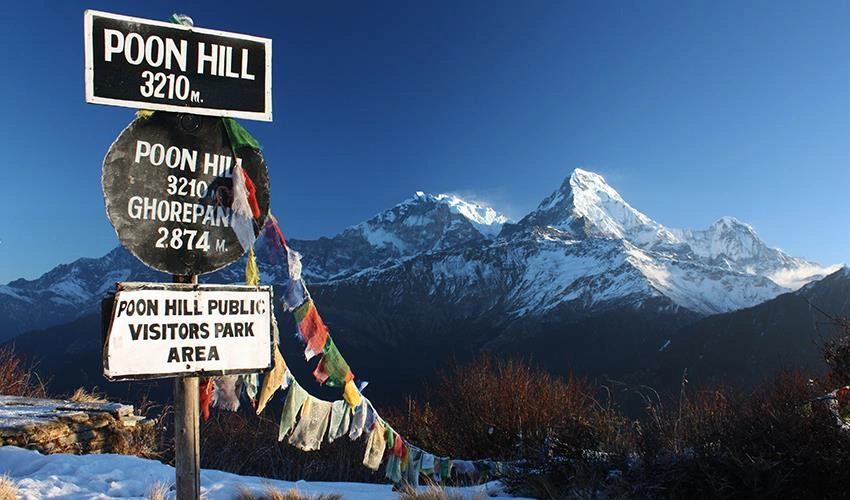
Max Elevation: 3,210 meters (Poon Hill Viewpoint)
Difficulty Level: Easy to Moderate
Key Attractions: Panoramic sunrise views of Annapurna & Dhaulagiri ranges, rhododendron forests, Gurung & Magar culture, charming villages such as Ghorepani, Ghandruk, and Ulleri, terraced fields, waterfalls, and lush landscapes
Understanding the Poon Hill Trek Through All 12 Months
Seasonal changes are what make the Poon Hill Trek truly remarkable. Some months bring endless blue skies, while others introduce clouds, mist, flowers, or snow. Knowing what each month has to offer—weather, visibility, crowd levels, and scenery—helps travelers choose the ideal time for their trek.
1) January: Cold but Magical (Quiet Trails & Clear Views)
January is the coldest month on the Poon Hill trail, yet surprisingly, it offers some of the best visibility. The winter air is crisp and clear, providing breathtaking morning views of Annapurna South, Machhapuchhre, Dhaulagiri, and Hiunchuli.
What to Expect in January
-
Sunny and mild days with extremely cold mornings and nights
-
Very few hikers on the trail
-
Possible snow around Ghorepani
-
Ideal conditions for photographers seeking unobstructed mountain views
2) February: End of Winter with Bright Skies
February marks the transition from winter to early spring. Days gradually become warmer while mornings remain chilly. Trekkers can still enjoy crisp Himalayan views, but without the extreme cold of January.
Why February Is Fantastic:
-
Pleasant daytime temperatures
-
Low crowd levels
-
Light, manageable snowfall possible
-
First rhododendron blooms appear
3) March: Rhododendron Season Begins (Vibrant & Clear)
March brings life and color back to the Annapurna region. Rhododendrons begin to bloom, brightening forest trails, while warm days and clear skies create ideal conditions for viewing sunrise from Poon Hill.
Highlights:
-
Crystal-clear mountain views
-
Comfortable trekking temperatures
-
Colorful forest trails
-
Energetic, lively villages
4) April: Peak Spring & Peak Beauty
April is one of the most stunning months to trek to Poon Hill. Rhododendrons are in full bloom, temperatures are perfect for hiking, and visibility is excellent. It’s also one of the busiest months, thanks to ideal weather and natural beauty.
What Makes April Special:
-
Ideal weather conditions
-
Forests at their most vibrant
-
Long daylight hours
-
Dry, stable climate
Things to Remember:
-
Trails and teahouses are crowded
-
Advance bookings are recommended
5) May: Warm Days & Dynamic Skies
May offers warm temperatures and long days, making it comfortable for trekkers who prefer bright, sunny weather. Although the monsoon season approaches, early May still provides good visibility and colorful forest trails.
Expect:
-
Warm, sunny days
-
Occasional clouds, especially late May
-
Remaining spring colors
-
Moderate crowds
6) June: Start of Monsoon (Quieter Trails)
June marks the beginning of the monsoon, with increased humidity and frequent afternoon rain. However, mornings—especially early in the month—can still bring clear views. Trails become lush and vibrant, with fewer trekkers around.
June Trail Experience:
-
Higher chance of afternoon rain
-
Slippery trails
-
Deep green forests
-
Surprisingly clear mountain views after rainfall
7) July: Peak Monsoon (Rainforest Experience)
July brings peak monsoon conditions. Forests turn incredibly lush, mist wraps around the hills, and the landscape feels enchanted. While rain and slippery trails pose challenges, the atmosphere is peaceful and intimate.
What Trekking Is Like:
-
Frequent rainfall
-
Leeches in lower forests
-
Quiet, relaxed villages
-
Misty, mystical landscapes
8) August: Monsoon Slowly Fades
August continues to be rainy, but conditions gradually improve toward the end of the month. Sunshine, showers, and dramatic cloud formations blend into beautiful scenery. Waterfalls are abundant, and greenery is at its peak.
Expect:
-
Slippery trails
-
Rain followed by bursts of sunshine
-
Dramatic cloud-covered mountain views
-
Numerous waterfalls along the route
9) September: Start of Autumn (Clear Skies Return)
September signals the start of the autumn trekking season. With monsoon rains fading, the skies clear up, trails are freshly washed, and terraced fields turn golden. The weather remains cool and pleasant, with fewer crowds compared to October.
Why September Is Amazing:
-
Clean, bright skies
-
Comfortable temperatures
-
Excellent visibility
-
Beautiful, golden landscapes
10) October: Peak Autumn & Best Weather of the Year
October is widely considered the best month to trek in Nepal. Skies are consistently clear, temperatures are ideal, and the mountains glow beautifully at sunrise. It is also the busiest month, with lively trails and festive energy.
You’ll Like:
-
Exceptional visibility
-
Perfect trekking temperatures
-
Energetic, vibrant trail atmosphere
-
Reliable weather conditions
11) November: Clear, Calm & Stunning
November maintains the superb autumn weather, with cooler mornings and evenings. Mountain views remain exceptionally clear, and the trails become quieter following the October rush.
Why November Is Ideal:
-
Mild daytime temperatures
-
Zero rainfall
-
Crystal-clear mountain scenery
-
Fewer crowds
12) December: Start of Winter (Quiet & Clear)
December offers excellent mountain visibility and calm trails, along with early winter cold. Days remain sunny and pleasant, making it a peaceful time to trek if you can manage lower temperatures.
Expect:
-
Clear skies
-
Dry weather
-
Cold mornings and evenings
-
Less-crowded teahouses
Which Month Is Best Overall?
Best Weather & Views:
October, November, March, and April offer the clearest skies, most stable temperatures, and best conditions for photography and comfortable trekking.
Quiet Trails (January, February, December):
Cold but peaceful, with excellent visibility and minimal crowds.
Greenest Scenery (July, August):
Lush forests, waterfalls, and vibrant landscapes for those who don’t mind rain.
Warm-Weather Lovers (May):
Long, bright days with warm but manageable temperatures.
Festive Atmosphere (October – Dashain/Tihar):
Beautiful weather combined with Nepal’s biggest festivals.
FAQs
1. How Many Hours Do We Trek Per Day on the Poon Hill Route?
Typically 4–6 hours per day, depending on pace and rest stops. The morning hike to Poon Hill is shorter but steeper.
2. Is It Possible to Trek Poon Hill with Children or Older Family Members?
Yes. The trek is family-friendly for anyone with reasonable fitness. Shorter days and more breaks are recommended.
3. Do Teahouses Provide Charging Facilities?
Yes. Charging is available but usually comes with a small extra fee. Higher areas rely on solar power.
4. What Type of Food Is Available on the Trek?
Teahouses serve Nepali, Tibetan, and basic international dishes including dal bhat, soups, noodles, fried rice, pasta, pancakes, chapati, and potato-based meals.
5. Is Travel Insurance Required?
Not mandatory, but highly recommended—especially policies covering medical issues and emergency evacuation up to 3,200 meters.
6. Can I Trek Poon Hill Independently?
Yes. The trail is well-marked. Guides add safety and cultural insight, and porters help with carrying loads.
7. Are Drinking Water Refill Points Available?
Yes. Teahouses and small shops sell bottled water and offer refills. Carrying filters or purification tablets helps reduce plastic waste.
8. Is Mobile Network Coverage Available?
Coverage varies by area, but NTC and Ncell signals are available in most major settlements.
9. Is the Poon Hill Sunrise Crowded During Peak Season?
Yes. October, November, March, and April attract many trekkers. Arriving early helps secure a good viewpoint.
10. Can Poon Hill Be Combined with Other Treks?
Absolutely. Popular combinations include Khopra Ridge, Mardi Himal, and Annapurna Base Camp (ABC) for longer, more diverse itineraries.