Every year, a handful of trekkers on the trail to Everest Base Camp find out the hard way that their travel insurance stopped protecting them long before they reached Base Camp itself. It usually isn’t a dramatic accident. It’s altitude sickness at Lobuche, or a knee that gives out near Dingboche, or a Lukla flight cancellation that turns into three lost days, the ordinary stuff of high-altitude trekking. The problem shows up only when they call for help and hear the words no one wants to hear from an insurer: “that altitude isn’t covered under your policy.”
In short: For the Everest Base Camp trek, you need travel insurance that explicitly covers high-altitude trekking to at least 6,000 metres, includes emergency helicopter evacuation, and treats acute mountain sickness (AMS, HAPE, HACE) as covered medical conditions, not exclusions. EBC itself sits at 5,364m, but Kala Patthar, the classic sunrise viewpoint almost every itinerary includes, climbs to 5,545m, which is enough to void a policy that caps out at 5,000m. Most standard travel insurance plans stop covering you between 3,000m and 5,000m, right around the altitude where you’ll actually need them most.
That single number, the altitude ceiling printed in the small print of your policy, is the difference between a helicopter picking you up within the hour and a $5,000–$10,000 bill landing on your credit card from a hospital bed in Kathmandu.
Let’s make sure that never happens to you.
Why Everest Base Camp Insurance Isn’t Optional (Even Though It’s Not “Required”)
Here’s a technicality that trips up a lot of first-time trekkers: Nepal’s immigration authorities do not legally require travel insurance to issue you a TIMS card or Sagarmatha National Park permit for the EBC trek. You could, in theory, walk to Base Camp without a single dollar of coverage.
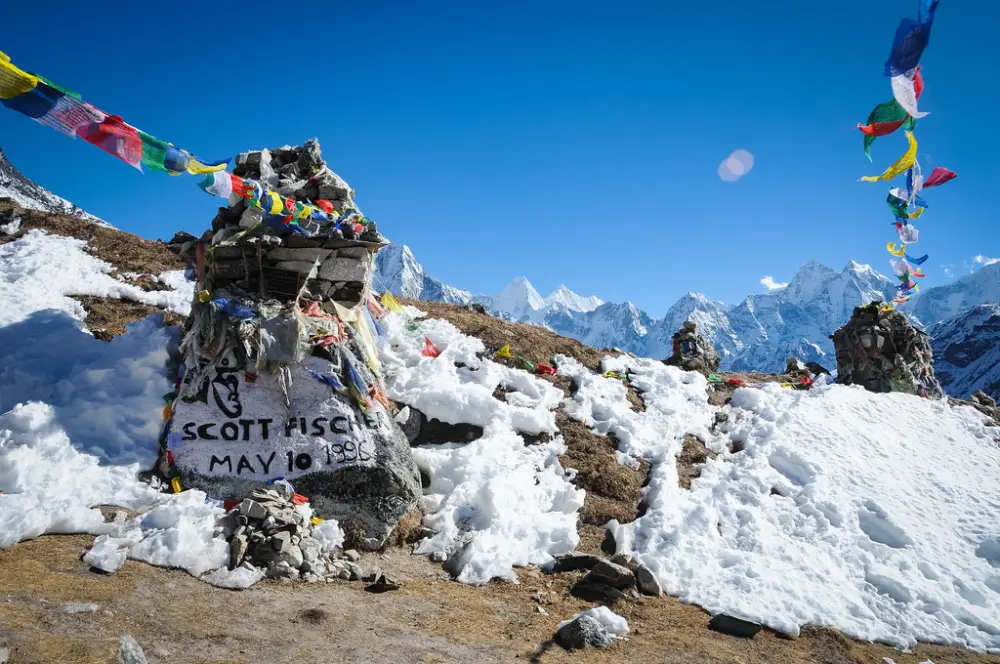
You shouldn’t. And in practice, you probably won’t be allowed to anyway; almost every reputable trekking operator (us included) will ask for proof of insurance with altitude and evacuation coverage before you’re allowed on the trail. It’s not bureaucracy for its own sake. It’s because we’ve seen what happens when someone skips this step and altitude sickness turns serious at 4,900m, three days’ walk from the nearest road.
Think of it this way: the permit lets you walk the trail. Insurance is what gets you off it alive if something goes wrong. Those are two very different jobs, and only one of them is legally mandatory.
The Altitude Gap: Why Your Regular Travel Insurance Won’t Save You
This is the single most important thing to understand about Everest Base Camp insurance, so we’re going to say it plainly: most travel insurance policies are not built for what you’re about to do.
The travel insurance you’d buy for a beach holiday in Thailand, a city break in Bangkok, or even a moderate hike in the Annapurna foothills typically caps its altitude coverage somewhere between 3,000m and 5,000m. Above that line, the policy doesn’t just reduce your coverage; it usually excludes you entirely, as if you were never insured in the first place.
Here’s why that’s a problem specific to EBC. Walk through the trail’s altitude profile against a typical 5,000m coverage cap, and the gap becomes obvious:
| Location | Altitude | Typical 5,000m Coverage |
|---|---|---|
| Lukla | 2,860m | Covered |
| Namche Bazaar | 3,440m | Covered |
| Tengboche | 3,860m | Covered |
| Dingboche | 4,410m | Covered |
| Lobuche | 4,940m | Borderline — right at the edge of the cap |
| Everest Base Camp | 5,364m | Not covered |
| Kala Patthar | 5,545m | Not covered |
Notice the pattern? You’re fully covered for the easy, low-risk part of the trek, and the coverage quietly disappears exactly where the air gets thin, the risk of altitude sickness spikes, and the odds of needing a rescue actually climb. A policy that stops at 5,000m is, for EBC purposes, essentially decorative.
This is why every credible source on this topic, insurers, trekking agencies, and mountain rescue teams alike, converges on the same rule of thumb: buy a policy rated for at least 6,000m. That buffer covers Base Camp, Kala Patthar, and any acclimatization side-trips your itinerary includes, with room to spare.
What a Genuine EBC Insurance Policy Must Cover
Don’t just skim the insurer’s marketing page; that’s written to sell you the policy, not to protect you on the mountain. Read the actual policy wording (usually a PDF buried a few clicks deep) and confirm these five things are explicitly named.
1. High-Altitude Trekking Coverage to 6,000m+
The word “trekking” needs to appear in your coverage, not just “hiking” or “walking tours.” Some insurers quietly classify anything above a certain altitude as “mountaineering,” which is often excluded or requires an expensive add-on, even though you’re not touching a rope or an ice axe anywhere on the standard EBC route.
2. Emergency Helicopter Evacuation
This is the coverage that actually matters most. It should specifically name helicopter rescue/evacuation from remote areas of Nepal, including the Khumbu region. General “emergency transport” language isn’t good enough; you want a policy that explicitly says helicopter.
3. Acute Mountain Sickness (AMS, HAPE, HACE)
Altitude sickness isn’t a freak accident at 5,000m+; it’s a genuine, common medical risk, and it needs to be treated as a covered illness, complete with hospitalization and medical treatment in Nepal, not filed under some vague “pre-existing condition” or “self-inflicted risk” exclusion. Good acclimatization also lowers your actual risk of ever needing that claim; see our guide to preventing altitude sickness on the EBC trek for how our itineraries are built around proper rest days.
4. Adequate Medical Treatment & Hospitalization Limits
Aim for a policy offering medical benefits in the region of USD 100,000 or more. Hospital stays, oxygen therapy, and follow-up care in Kathmandu add up fast, and you don’t want to discover your limit was too low after the bill arrives.
5. Trip Delay and Interruption Cover
Lukla’s Tenzing-Hillary Airport is famous for two things: being one of the most dramatic airstrips on Earth, and being weathered-in for days at a time. Trip delay/interruption cover cushions you against missed flights home, extra teahouse nights, and rebooking costs when the weather (not you) decides your schedule.
Baggage and gear cover is worth having but genuinely secondary; losing a duffel bag is an inconvenience; being stuck at 5,000m without a helicopter policy is a crisis.
What Helicopter Evacuation Really Costs Without Insurance
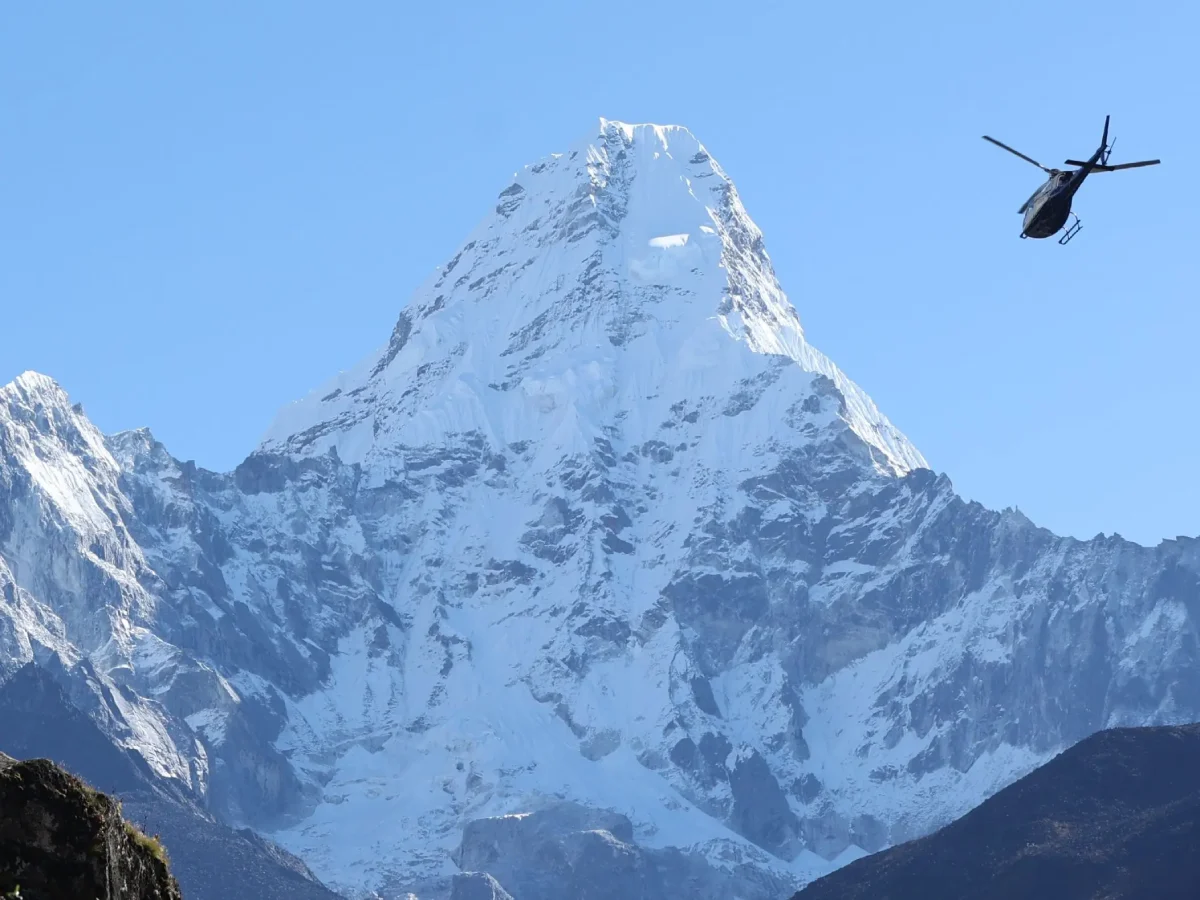
Let’s put a number on the risk you’re weighing here. A helicopter evacuation from the Khumbu region, say, from Lobuche or Gorak Shep down to Kathmandu, typically runs USD 5,000 to 10,000, payable immediately or guaranteed by your insurer before the helicopter will even lift off in many non-life-threatening cases.
Compare that to the cost of a proper high-altitude travel insurance policy: usually somewhere in the range of USD 100–250 for a two-to-three-week trip, depending on your provider, age, and coverage limit.
That’s not a close call. It’s one of the very few places in trip planning where spending a little more removes almost all of the downside risk.
Kala Patthar and Other “Hidden” High Points on Your Itinerary
Most trekkers picture “Everest Base Camp” as the trip’s highest point. It isn’t. Kala Patthar, at 5,545m, is higher than Base Camp itself, and it’s the viewpoint every classic EBC itinerary builds in for that iconic sunrise-over-Everest photo.
This matters enormously for your insurance because a policy advertised as “covers up to 5,400m” sounds like it covers EBC, and it does, but it will not cover you on Kala Patthar, which is where a meaningful share of altitude-related emergencies actually happen, precisely because it’s the final, hardest push of the trip.
The rule of thumb: don’t insure for your destination. Insure for the highest point your feet will actually touch, then add a safety margin. For EBC, that means the 6,000m threshold, not 5,364m.
Trekking From Nepal vs. Trekking From Abroad
Most Everest Base Camp insurance advice online is written for international visitors flying in from the US, UK, Australia, or Europe, and most of that advice applies to you if that’s your situation.
But if you’re a Nepali resident, or an expat currently based in Nepal, there’s a wrinkle worth knowing: many international travel insurance policies are only sold to, and only valid for, residents travelling from their home country. If you’re already in Nepal, some of the big-name global insurers simply won’t issue you a policy at all.
If that’s your situation, look specifically for:
- Insurers who explicitly sell to Nepal-based residents
- Policies that cover domestic high-altitude trekking, not just “international travel”
- Confirmation that helicopter evacuation is included for domestic policyholders, not just inbound tourists
This is a detail that trips up a surprising number of people, so check it before you assume you’re covered.
How to Actually Verify a Policy Before You Buy It
Insurance marketing pages are optimized to make you feel reassured, not to explain the fine print. Before you hand over your card details, run through this checklist:
- Read the actual policy document, not the landing page. Search it (Ctrl+F is your friend) for “altitude,” “helicopter,” and “trekking.”
- Confirm the altitude limit covers your real itinerary, including Kala Patthar, not just Base Camp.
- Ask directly whether helicopter evacuation needs pre-authorization. Many insurers will refuse to reimburse a self-arranged rescue if you didn’t call their emergency line first. Save that number somewhere offline before you leave Kathmandu.
- Check the exclusions list for pre-existing conditions, alcohol/drug-related incidents, solo trekking without a guide, and trekking without a licensed operator — some policies quietly require a guide to remain valid.
- Carry your certificate number and 24/7 emergency contact in printed form and as an offline copy on your phone. Give a copy to your guide too. In the Khumbu, phone signal is not something you can count on; check our Everest Base Camp packing list for what to bring so you’re not relying on connectivity you won’t reliably have.
One more practical note: some helicopter operators in remote areas want payment confirmation before dispatch for non-life-threatening situations. A policy with a strong, responsive 24/7 assistance line, one that can guarantee payment to the helicopter company directly, genuinely speeds this process up when minutes matter.
Where to Buy: International vs. Local Nepal-Based Insurers
Broadly, EBC trekkers choose between two routes:
International Specialist Providers
Global travel insurers with adventure-travel or “active” add-on packages that explicitly extend altitude and helicopter coverage. These work well for most overseas visitors and are easy to buy online before you fly.
Nepal-Based or Regional Specialist Providers
Insurers or rescue-package providers with direct relationships to helicopter companies operating in the Khumbu. These can offer faster, more localized coordination during an actual emergency, and are often the more practical route for Nepal-based residents who don’t qualify for international policies.
Whichever route you choose, the checklist in the section above applies identically. The provider’s home country matters far less than whether the policy, in writing, covers your actual altitude and names helicopter evacuation.
How Nepal Outdoor Expeditions Helps You Get This Right
Every trekker booking the Everest Base Camp trek with Nepal Outdoor Expeditions must show proof of insurance before departure. The policy must cover altitudes up to 6,000m and include helicopter evacuation. Our ground team also carries your insurance certificate number and emergency contact details throughout the trek. Our guides can recognise early signs of AMS, HAPE, and HACE, helping them flag problems before they become emergencies.
If you’re not sure whether a policy you’re considering actually qualifies, get in touch with our team before you buy it; we look at the fine print of insurance for a living and are happy to save you the headache. You can also browse our full Everest region trek packages if you’re still deciding on an itinerary.
Frequently Asked Questions
Is travel insurance mandatory for the Everest Base Camp trek?
It’s not a legal requirement from Nepal’s immigration or park authorities. Still, almost all trekking operators require proof of insurance with altitude and helicopter evacuation coverage before you’re allowed to join a trek. Practically speaking, it’s essential; a self-funded helicopter rescue can cost thousands of dollars.
What altitude should my Everest Base Camp insurance cover?
Your policy should explicitly cover trekking up to at least 6,000 metres. Base Camp itself is 5,364m, but Kala Patthar, included in almost every EBC itinerary, reaches 5,545m, so a policy capped below 6,000m may not actually cover your full trip.
Does travel insurance cover helicopter evacuation from Everest Base Camp?
Only if the policy specifically names helicopter rescue or evacuation; general “emergency transport” wording isn’t sufficient. Many insurers also require trekkers to get pre-authorization from their emergency assistance line before reimbursing a self-arranged evacuation. Confirm the process before you trek.
How much does a helicopter rescue cost from the Everest region?
A helicopter evacuation from the Khumbu region typically costs between USD 5,000 and 10,000 if you’re paying out of pocket, which is why insurers usually require payment guarantee or pre-authorization before dispatch in non-critical situations.
Does regular travel insurance cover altitude sickness on the EBC trek?
Only if AMS, HAPE, and HACE are explicitly listed as covered medical conditions. Standard travel policies often exclude altitude-related illness above a certain elevation, or bundle it under vague “self-inflicted risk” exclusions — always check the wording directly.
Can I buy Everest Base Camp insurance if I already live in Nepal?
Not always through international insurers, many of which only sell policies to residents travelling from their home country. Nepal-based trekkers should look for insurers who explicitly cover domestic high-altitude trekking and helicopter evacuation for local residents.
What’s the difference between EBC’s altitude and the trek’s highest point?
Everest Base Camp sits at 5,364m, but Kala Patthar, a side-hike almost every itinerary includes for its Everest sunrise views, reaches 5,545m — making it the actual highest point most trekkers will stand on, and the number your insurance needs to cover.
Final Word
Everest Base Camp will test your legs, your lungs, and your patience with teahouse Wi-Fi. It shouldn’t test your bank balance because you made a careless $150 insurance decision six months before departure. Read the policy, confirm the 6,000m altitude limit, and make sure it explicitly covers helicopter evacuation. Then, enjoy the trek you’ve been dreaming about, knowing that if the mountain throws something at you, someone can come to get you off it.