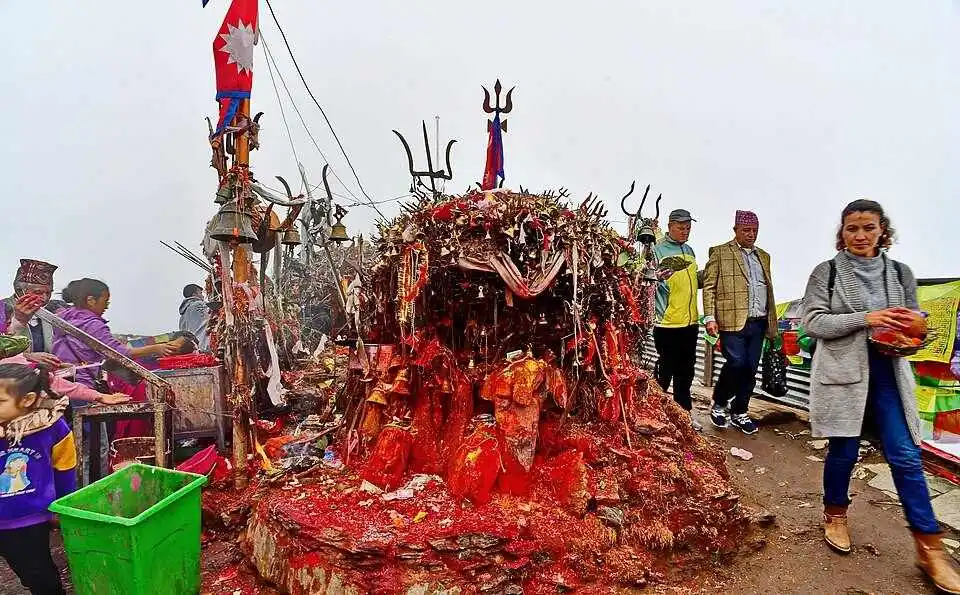
The Kalinchowk Bhagwati Temple is a sacred mountain shrine situated high up in the hills of eastern Nepal, and it is here that faith, nature, and transformative experiences intersect. The temple is literally and spiritually above the clouds, being situated at almost 3,800 meters above sea level.
Over centuries, communities around these mountains have ascended these mountains and paid homage to Goddess Bhagwati, and they believe the mountain is alive with the divine energy. The site is currently a spiritual sanctuary as well as a spectacular Himalayan panorama and, therefore, a singular location where both spiritual worship and nature coexist.
Why Kalinchowk Matters to International Travelers
Kalinchowk offers international travelers more than a picturesque stop or a snow-covered mountaintop. It symbolizes Nepal’s deep connection between religion, geography, and culture. Unlike temples in cities or historic squares, Kalinchowk draws much of its spiritual power from its remote mountain setting.
The journey itself forms part of the experience. Visitors travel along winding roads, pass through changing climates, and adjust to the thin mountain air as they climb higher. This physical effort reflects a spiritual idea common in Himalayan cultures: reaching a sacred place often requires patience, humility, and respect for nature.
Visitors should understand the difference between a pilgrimage site and a tourist destination, especially at Kalinchowk. Pilgrims do not see the temple simply as a viewpoint or photo opportunity. They come to pray, make offerings, and fulfill personal vows. Many visitors arrive with deeply personal hopes, seeking protection, good health, success, or blessings.
Devotees see the mountain, the weather, and the goddess as interconnected elements of the sacred landscape. For international visitors, Kalinchowk offers a valuable glimpse into Nepalese spirituality, where nature forms the foundation of religious life. Here, mountains represent more than scenery; they remain living parts of Nepal’s culture, identity, and everyday life.
Where Is Kalinchowk Bhagwati Temple Located?
Kalinchowk Bhagwati Temple stands in Dolakha District, about 150 kilometers northeast of Kathmandu, in the east-central highlands of Nepal. The temple sits atop Kalinchowk Hill, a high mountain ridge overlooking nearby villages and the surrounding valley. Himalayan cultures have traditionally used elevated places as sites of worship because people associate them with greater proximity to divine energy and spiritual clarity.
The temple stands at about 3,842 meters (12,605 feet) above sea level. As visitors climb beyond the greenery of lower elevations, they encounter rocky terrain and cold alpine landscapes. The weather can change rapidly, and first-time visitors often feel the effects of the thin air. These physical challenges add to the journey, making Kalinchowk more than just another travel destination.
Kalinchowk lies within the Gaurishankar Conservation Area, a sensitive environmental zone that protects diverse wildlife and sacred mountain landscapes. On clear days, visitors can enjoy stunning views of Gaurishankar Himal, a peak that both Hindu and Buddhist communities consider sacred. Clouds often float below the temple, reinforcing the sense that Kalinchowk brings nature and faith together.
Religious Significance of Kalinchowk Bhagwati
Kalinchowk honors Goddess Bhagwati, a powerful form of Shakti, which Hinduism describes as universal feminine energy. Hindus view Shakti as the power that creates, nourishes, and preserves life. Rather than treating this energy as remote or abstract, devotees see it as an active force that influences nature. At Kalinchowk, devotees closely associate the goddess with the mountain, making the entire landscape a sacred site.
Devotees consider Kalinchowk Bhagwati a holy place where the goddess hears their prayers and protects those who approach her with a pure heart. During major festivals, thousands of pilgrims travel long distances to make offerings and fulfill personal vows. Although written records do not confirm the reported miracles, generations of devotees have maintained their faith in the goddess’s power, giving the temple lasting spiritual significance.
Kalinchowk also reflects Nepal’s tradition of religious coexistence. Although Hindus primarily worship at the temple, Buddhists also visit and respect the site because of its connection to the sacred Gaurishankar region. Nepal’s religious communities often share spiritual spaces rather than separating them strictly, and Kalinchowk exemplifies this tradition. For international visitors, this harmony offers a glimpse into Himalayan spirituality, where people often connect religious devotion with deep respect for nature rather than rigid religious boundaries.
History and Origins: What We Know and What We Believe
Oral traditions surrounding the Kalinchowk Bhagwati Temple carry more weight than its written historical records. Communities in Dolakha have passed down stories about the goddess for generations, long before roads and tourism reached the region.
Unlike ancient temples that preserve their history through stone inscriptions and royal documents, Kalinchowk relies mainly on community memory. This makes its history difficult to document and requires researchers and visitors to respect local beliefs while recognizing the limits of historical evidence.
Over time, local communities gradually developed worship practices at Kalinchowk. Early traditions likely centered on nature worship, with people viewing mountains, weather, and the surrounding landscape as living forces.
As Hindu belief systems became more structured in Nepal, local communities gradually incorporated these traditions into broader Shakti worship. Devotees began worshipping Goddess Bhagwati as a form of Shakti, and the shrine gradually evolved from a simple sacred site into the temple visitors see today.
Many stories about Kalinchowk, including accounts of miracles and apparitions of the goddess, remain legends rather than established historical facts. These stories hold deep cultural importance, but historians cannot independently verify them.
International travelers should understand this distinction. Kalinchowk derives its significance not from documented dates or ancient monuments, but from centuries of faith and the enduring connection people feel with the mountain and Goddess Bhagwati.
Cultural Practices, Festivals, and Pilgrimage Traditions
Religious activity is at its peak during special Hindu festivals, the biggest one being Dashain at Kalinchowk Bhagwati Temple. In the process, thousands of pilgrims visit the hilltop shrine to seek the blessings of the goddess, whom they connect to protection and triumph over negative forces.
Other significant occasions include Chaite Dashain and Janai Purnima, where worship coincides with seasonal changes and community gatherings.
Kalinchowk has undergone a transformation regarding the rituals. Traditionally, rituals included animal sacrifice, which in many beliefs was seen as a way of offering life energy to the goddess.
These practices are not as common today, which has been influenced by changing social values and legal restrictions as well as increasing ethical awareness. Flower offerings, coconuts, lamps, and prayers are now substituted by many devotees. This transformation demonstrates that traditions can evolve and preserve their spiritual essence.
Kalinchowk and Modern Tourism Development
Reaching Kalinchowk once required days of difficult walking through steep hills and remote villages, making a visit to the Bhagwati Temple a long and demanding journey. Pilgrims walked for hours and often spent the night along the route, turning the journey itself into a religious practice.
Only in recent decades did road improvements make Kalinchowk more accessible from Kathmandu. This development marked a major turning point, transforming the temple from a distant pilgrimage center into a destination visitors could reach within a day.
The introduction of the Kalinchowk cable car brought the biggest change by significantly reducing the effort required to reach the top. A journey that once took hours of uphill walking now takes only a few minutes.
The cable car has made the site more accessible to elderly pilgrims, families with children, and international visitors who have little experience with high-altitude regions. However, it has also changed the traditional pilgrimage experience by replacing the gradual climb with a rapid ascent.
Tourism has brought significant economic benefits to the region. Visitors now support hotels, restaurants, transportation services, and small shops, making many local businesses increasingly dependent on tourism. However, this growth has also created cultural pressures.
Overcrowding during the high season, excessive noise, poor waste management, and disrespectful behavior have raised concerns among locals and devotees. Kalinchowk now stands at a crossroads: tourism continues to benefit the region, but local communities must manage its growth carefully to protect the site’s spiritual and cultural identity.
Best Time to Visit Kalinchowk Bhagwati Temple
The best time to visit Kalinchowk depends on what you seek, which could be mountain views, religious festivals, or simply a cultural experience. Due to the altitude, the weather has a significant impact on determining the safety and experience in general.
Autumn (September to November)
The ideal season to visit Kalinchowk is during autumn. Weather conditions are mild, with clear skies and favorable temperatures during the day. It is also the period when there are great festivals such as Dashain, and the temple is vibrant with devotion and cultural aspects. Although crowds can be large, the ambiance can be used to gain a comprehensive understanding of the local religious existence.
Winter (December to February)
During winter, Kalinchowk is blanketed in snow, attracting tourists eager to experience snowfall and breathtaking mountain views. The weather is chilly, and wind velocities are fierce; all the same, the views are spectacular on a sunny day. Snow is likely to cause delays on the way; therefore, a visitor must be adaptable and equipped. For most visitors, winter is beautiful, yet not always very comfortable.
Spring (March to May)
The spring is warmer, and vegetation blooms beautifully at lower elevations. Snow starts thawing and accessibility improves and at the same time, there is cool mountain air. This is an ideal time for those seeking fewer people to be around and pleasant weather. Religious activities are less intense compared to autumn festivals.
Monsoon (June to August)
The least recommended period for visiting Kalinchowk is the monsoon. Heavy rainfall increases the risk of landslides, road blockages, and low visibility. Mountain views are usually covered with clouds, and travel plans can change suddenly. Nevertheless, this season appeals to seasoned travelers who enjoy nature more than landscape.
How to Reach Kalinchowk Bhagwati Temple (From Kathmandu & Beyond)
Whether via newly developed roads or available modes of transport, reaching Kalinchowk Bhagwati Temple is now much easier than in the past. Depending on the time, the comfort level, and interest in adventure, travelers have the option of road travel, cable car rides, or even hiking paths.
Transportation Options
- By Road: The temple is a 6-8-hour drive from Kathmandu, depending on road conditions and weather. The trail cuts across picturesque hills and villages, with Charikot serving as the main hub before reaching Kalinchowk. There is regular transport of buses and shared jeeps between Kathmandu and Charikot. From there, local jeeps continue to the Kalinchowk base area, but roads can be in poor condition, particularly during the monsoon and winter seasons.
- By Tour Package: A good number of travelers opt to choose organized tours where all the transportation, lodging, and cable car tickets are included. This option is ideal for international visitors unfamiliar with the country and local travel logistics in the country.
The Kalinchowk cable car has become the most popular mode of transport to reach the temple, starting at the base station. It transports visitors quickly to the hilltop without having to climb the hill steeply, eliminating the steep climb. The ride itself offers expansive views of valleys and mountains, making the journey itself part of the experience.
The cable car increases accessibility for people of all ages, but since it serves a religiously active site, it is important to remember that visitors must treat the temple with respect.
Trekking is also an option for those seeking a more immersive and engaging experience. Several walking paths connect local villages through forest trails to the top of the hill, allowing visitors to experience the local lifestyle and the changing landscapes.
This is a more strenuous and time-consuming trek that requires good physical fitness, but it follows the traditional pilgrimage route to Kalinchowk in the past. This option appeals to visitors seeking slow travel, cultural connection, and a more authentic approach to reaching the sacred site.
Practical Travel Tips for International Visitors
Visiting Kalinchowk Bhagwati Temple is not simply a sightseeing experience. The temple is located in a remote mountain setting at high altitude and continues to serve thousands of worshipers.
The weather could shift rapidly, facilities are limited, and compared to urban areas, international travelers may not be familiar with the cultural expectations. Being aware of these realities beforehand will help avoid discomfort and ensure a more fulfilling experience.
- Acclimatize to the altitude by ascending slowly and drinking plenty of water.
- Dress in layers, as the weather can change rapidly at any time, even on sunny days, and have a windproof or waterproof jacket.
- Use sturdy, non-slip footwear because paths may be rocky, icy, or muddy at any given time of the year.
- Dress modestly around the temple and remove shoes before entering sacred areas.
- During prayers or festivals, maintain a quiet demeanor and be patient.
- Respect local customs and guidance even if they differ from your own customs.
- Ask permission before photographing people, and refrain from photographing during ceremonies.
- Avoid standing on prayer mats, walkways, or doorways when taking pictures.
- Pack out all trash and never leave waste near the temple.
FAQs
1. Is Kalinchowk Bhagwati Temple suitable for elderly visitors or people with limited mobility?
Elderly visitors can reach the temple using the cable car, which significantly reduces physical exertion. However, the final walking paths around the temple are uneven and can be slippery, and assistance and caution are recommended.
2. Are there accommodation options near Kalinchowk for overnight stays?
Basic to mid-range hotels and lodges are available near the Kalinchowk base and surrounding villages. Luxury should not be expected, but with an overnight stay, visitors can experience sunrise and enjoy a more peaceful spiritual experience.
3. Is it necessary to hire a guide to visit Kalinchowk Bhagwati Temple?
A guide is not necessary, especially for those traveling by road or cable car. However, hiring a local guide can enhance understanding of the cultural practices, beliefs, and local history, particularly for international visitors unfamiliar with Nepal’s religious traditions.
4. Are food and drinking water easily available at the temple area?
Small restaurants and teahouses are available at the base and near the temple during peak season. However, options are limited, and establishments may close during inclement weather; hence, bringing drinking water and light snacks is highly recommended.
5. What should visitors do if weather conditions suddenly worsen during their visit?
If weather conditions deteriorate suddenly, prioritize safety and descend immediately, avoid exposed ridges, and follow local advice. Cable car service may be suspended during strong winds or heavy snow, so remain flexible with travel plans.
You Can Read Our Other Articles