
Offering group discounts!
Reserve with a 20% deposit. The balance isn't due until 60 days before departure, and cancellations more than 60 days out get a full deposit refund. How booking works →
 Region
Manaslu Region
Region
Manaslu Region
 Duration
19 Days
Duration
19 Days
 Difficulty
Strenuous
Difficulty
Strenuous
 Max. Altitude
5210 m
Max. Altitude
5210 m
 Prime Activity
Trekking In Nepal
Prime Activity
Trekking In Nepal
 Season
(March-May) (September-November)
Season
(March-May) (September-November)
 Group Size
1-12 people
Group Size
1-12 people
The Manaslu and Tsum Valley Trek is a remarkable Himalayan adventure that combines the spectacular Manaslu Circuit with the remote and culturally rich Tsum Valley. This journey offers a perfect blend of dramatic mountain scenery, diverse landscapes, traditional villages, and centuries-old Tibetan Buddhist culture. Unlike Nepal's more popular trekking routes, this trek provides a quieter and more immersive experience, allowing trekkers to explore one of the country's best-preserved Himalayan regions.
The adventure begins at Soti Khola, where the trail follows the Budhi Gandaki River through lush forests, terraced fields, and picturesque villages. As the trek progresses, the landscape gradually transforms into rugged valleys surrounded by towering peaks. A major highlight is the journey into Tsum Valley, where ancient monasteries, prayer walls, chortens, and traditional settlements showcase the region's deep spiritual heritage. Visiting Mu Gompa, one of the highest and most significant monasteries in the valley, offers a fascinating insight into the local Buddhist way of life.
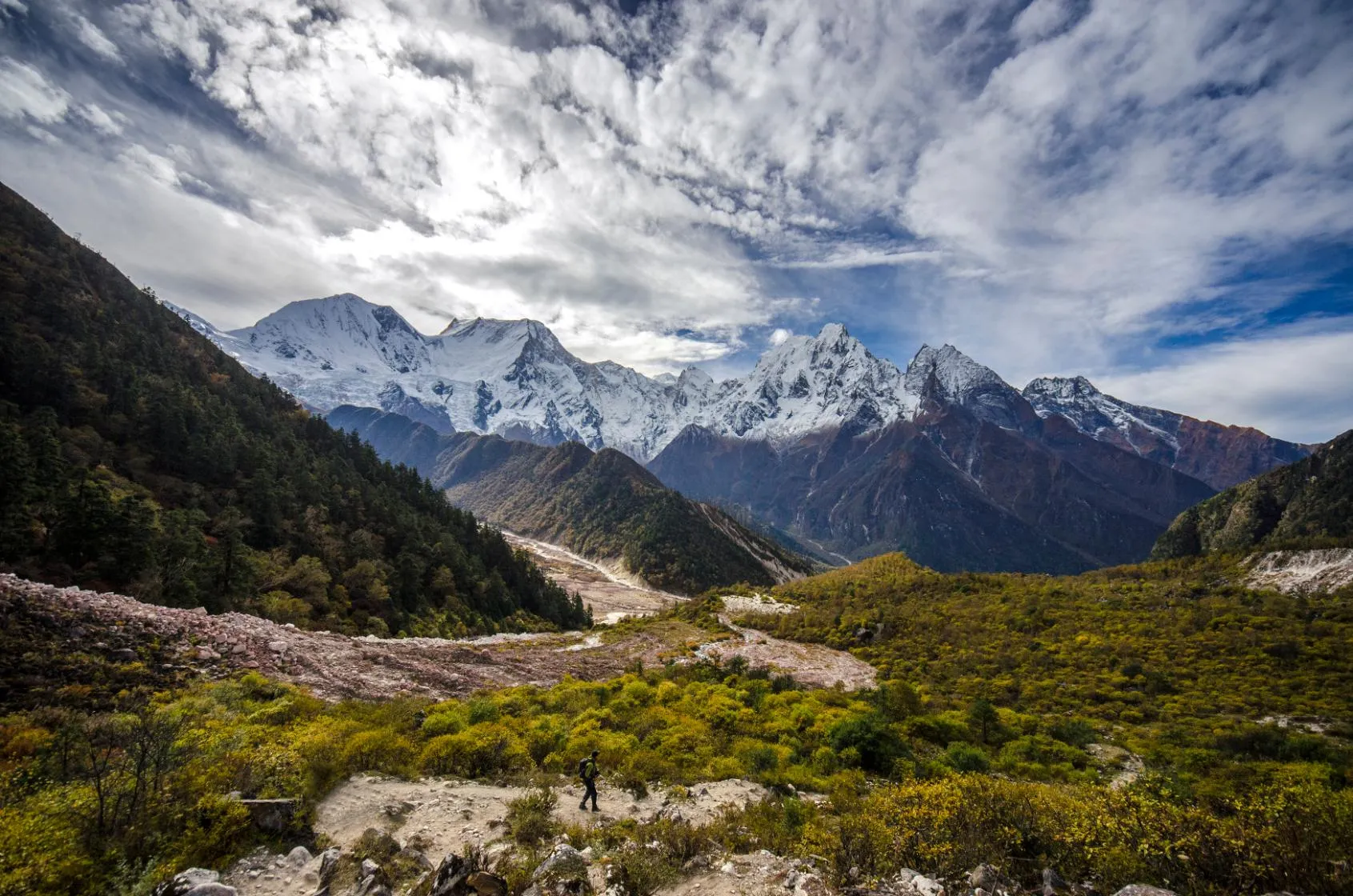
After exploring Tsum Valley, the trail rejoins the Manaslu Circuit and continues toward the highest point of the trek, Larkya La Pass (5,213 metres). Crossing this spectacular mountain pass rewards trekkers with breathtaking panoramic views of Manaslu, Himlung Himal, Cheo Himal, Kang Guru, and Annapurna II. Following the pass, the trail descends through alpine landscapes and traditional villages before reaching Dharapani, where the trek concludes.
What makes this trek truly unique is the opportunity to explore Tsum Valley, often referred to as the "Hidden Valley." Due to its remote location and restricted access for many years, the valley has preserved its ancient monasteries, traditional Tibetan culture, and peaceful way of life. Walking through its quiet villages feels like stepping back in time, offering an authentic cultural experience rarely found on more commercial trekking routes.
For trekkers seeking a journey that combines adventure, cultural discovery, and spectacular Himalayan scenery, the 19-day Manaslu and Tsum Valley Trek is an exceptional choice. From remote valleys and sacred monasteries to high mountain passes and breathtaking landscapes, every stage of the trek creates lasting memories while showcasing one of Nepal's most rewarding trekking experiences.




Modern trekkers look for the perfect balance between adventure and comfort. While preserving the authenticity of the Himalayas, we strive to provide services that make your journey safer, more convenient, and more enjoyable.
At Nepal Outdoor Expeditions, we believe every trek should be more than just reaching a destination. Our experienced local guides, carefully planned itineraries, and dedicated support team ensure you enjoy a safe, comfortable, and memorable adventure from start to finish. Whether you’re seeking spectacular mountain scenery, authentic cultural experiences, or a challenging Himalayan journey, we’re here to make it happen.
Accommodation on the Manaslu and Tsum Valley Trek is simple, comfortable, and reflects the authentic lifestyle of the Himalayan villages. Most nights are spent in traditional teahouses operated by local families, offering a warm and welcoming place to rest after a full day of trekking. While the facilities are basic, they provide everything needed for a comfortable stay in the mountains.
Rooms typically feature twin beds with mattresses, pillows, and warm blankets. Furnishings are minimal, but the rooms are clean and practical. As the trek reaches higher elevations, temperatures drop significantly, so carrying a quality sleeping bag is recommended for additional warmth and comfort during the night.
Most teahouses have a communal dining hall, which serves as the social center of the lodge. In the evenings, trekkers gather around a wood-burning or yak-dung stove to enjoy freshly prepared meals, hot drinks, and conversations with fellow travelers. These cozy dining areas create a welcoming atmosphere and offer a chance to experience genuine Himalayan hospitality.
Bathroom facilities vary depending on the village and altitude. Lower-elevation teahouses may provide attached bathrooms, Western-style toilets, and hot showers. At higher settlements approaching Larkya La Pass, facilities become more basic, with shared bathrooms and limited hot water. Many teahouses offer hot water in buckets for washing, while showers may require an additional fee.
Food on the Manaslu and Tsum Valley Trek is wholesome, nutritious, and prepared to fuel long days of trekking. Despite the region’s remoteness, teahouses offer a varied menu featuring traditional Nepali, Tibetan, and Indian-inspired dishes.
The most popular meal is dal bhat, Nepal’s traditional combination of rice, lentil soup, seasonal vegetables, and pickles. Rich in carbohydrates and protein, it provides long-lasting energy and is often served with free refills, making it the preferred meal for many trekkers.
Breakfast options commonly include toast, eggs, porridge, pancakes, Tibetan bread, chapati, muesli, tea, and coffee. These simple but filling meals provide an excellent start before heading onto the trail.
Lunch and dinner menus typically include momo (dumplings), chow mein, fried rice, pasta, spaghetti, thukpa (Tibetan noodle soup), vegetable curries, and, in some higher villages, locally sourced yak meat dishes. Freshly prepared and served hot, these meals help replenish energy after hours of walking.
Popular drinks along the route include ginger tea, lemon tea, milk tea, black tea, coffee, and hot chocolate. These warm beverages are especially appreciated during cold mornings, evenings, and high-altitude sections of the trek.
Although accommodation and food remain simple throughout the journey, they are an important part of the overall trekking experience. Staying in family-run teahouses, sharing meals with fellow trekkers, and experiencing the genuine hospitality of local communities add authenticity and lasting memories to the Manaslu and Tsum Valley Trek.
Preparing for the Manaslu and Tsum Valley Trek is essential for enjoying this challenging high-altitude adventure. The trek involves long walking days, steep ascents and descents, and the demanding crossing of Larkya La Pass (5,106 metres). Good physical preparation helps reduce fatigue, improves endurance, and allows you to enjoy the spectacular landscapes and cultural experiences throughout the journey.
If you have previous high-altitude trekking experience, you may already be familiar with the physical demands of the Himalayas. However, first-time trekkers should begin training at least four to six weeks before departure. Regular exercise helps your body adapt to sustained physical activity, uneven terrain, and higher elevations, making the trek safer and more enjoyable.
Even if you already maintain an active lifestyle, it is worth assessing your fitness level and gradually increasing the intensity of your training before the trek.
The Manaslu and Tsum Valley Trek requires both muscular strength and cardiovascular endurance. Strengthening your legs, core, and upper body helps you maintain balance, reduce fatigue, and comfortably carry a daypack over long distances.
Exercises such as squats, lunges, step-ups, planks, deadlifts, push-ups, and resistance training are excellent ways to build trekking-specific strength. Adding stair climbing or hill walking while carrying a loaded backpack closely simulates trekking conditions and prepares your body for continuous uphill and downhill sections.
Good cardiovascular fitness is equally important for trekking at higher altitudes. A strong heart and lungs allow your body to use oxygen more efficiently, making long trekking days and higher elevations easier to manage.
Activities such as hiking, jogging, cycling, swimming, rowing, brisk walking, or stair climbing are excellent ways to improve stamina. Combining cardio workouts with strength training creates the best preparation for this demanding Himalayan adventure.
You do not need to be a professional athlete to complete the Manaslu and Tsum Valley Trek, but a good level of fitness, preparation, and determination are essential. Trekking at high altitude places additional stress on the body, so traveling at a steady pace and following proper acclimatization practices are just as important as physical fitness.
With consistent preparation, the Manaslu and Tsum Valley Trek becomes a rewarding and achievable adventure. Strong fitness, proper acclimatization, and the right mindset will help you fully appreciate the region’s spectacular mountain scenery, ancient monasteries, and unique Himalayan culture.

Tenzing Sherpa
Have questions? Our travel specialists are here to help plan your perfect adventure.
Chat on WhatsAppThe journey begins right after breakfast as you load up and head out of the busy streets of Kathmandu. The drive itself is honestly one of the underrated parts of this whole trip. You'll roll through the Prithivi Highway, watching the landscape shift from the dense urban sprawl of the city into wide green hills, deep river valleys, and small roadside villages that feel worlds away from the capital. Your first stop along the way is Malekhu, a good spot to stretch your legs. From there, the road traces the Trishuli River through Dhading and Arughat, eventually winding through Gola Bhanjyang and picking up the trail at Soti Khola. The last 1.5 to 2 hours bring you into Machha Khola (870m) . If the skies are clear, keep your eyes up because the peaks of Manaslu, Ganesh Himal, and their neighbors make for a stunning introduction to what lies ahead.
Today you finally lace up your boots and hit the trail. The path runs alongside the Budhi Gandaki River for most of the day, and it's the kind of walking that reminds you why you came here in the first place. There's a pleasant rhythm to it, climbing gently through lush hillsides, dropping back down, passing through the small settlement of Khola Besi, and eventually reaching Tatopani where natural hot springs bubble up along the riverside. Many trekkers pause here, and honestly, it's hard to walk past without at least dipping your hands in. The afternoon gets a bit more physical. You'll cross a suspension bridge over the Budhi Gandaki and work your way up a rocky stretch to reach Doban, then cross a second bridge over the Yaru Khola. A solid climb through Thado Bharayng brings you up to the ridge where Jagat sits, marking the official entrance into the Manaslu Conservation Area.
This is the day the Tsum Valley adventure properly begins. The morning starts with a steady climb up to Salleri, then the trail follows the Budhi Gandaki once again before crossing a long suspension bridge into Philim. A little further along, you'll reach Ekle Bhatti, a quiet fork in the road where trails split between the Tsum Valley and the Manaslu Circuit. You take the Tsum route. From here the path winds through a handful of high-altitude villages, hugging the right side of the valley as it climbs. The scenery opens up beautifully, and if you're lucky with the weather, Boudha Himal, Himalchuli, Shringi Himal, and Ganesh Himal will be watching over you most of the day. Following the Syar River upstream, you'll eventually walk into Lokpa (2,240 m) as the afternoon light softens over the hills.
Today's trail takes you along the ridge that skirts the base of Ganesh Himal, and the views from up here are something you'll likely want to stop and photograph more than once. The trail is quieter on this stretch, fewer settlements, fewer people, just the crunch of your footsteps and the occasional rustling of the rhododendron and pine forests that line the trail as you descend into the Lungwa River Valley. There's a peaceful solitude to this section that veteran trekkers of the Tsum Valley often mention as one of their favorite parts of the whole route. After crossing the Syar Khola, the path climbs up again to reach Chumling, and then pushes a little higher to arrive at Dumje which is at an altitude of 2,460 m, the gateway to what's called the Lower Tsum Valley.
The Upper Tsum Valley begins in earnest today, and this is where many trekkers feel the real cultural character of this region start to come alive. The trail moves through Bgakyu Leru, where you can spot farmers tending to surprisingly fertile fields at altitude, and continues through Lamagaon before reaching one of the more memorable spots of the day: the Milarepa Piren Phu Cave near Burji Village, nestled at the foot of a dramatic rocky cliff. The cave is associated with the revered Tibetan saint Milarepa and feels genuinely ancient. It's worth pausing here before crossing the Shiar River to make the final push into Nile. Just 20 minutes beyond Nile lies Chhule (3,360 m), the last permanent settlement in the Upper Tsum Valley, a reminder that you're now deep into one of Nepal's most remote corners.
An early start sets the tone for a relatively manageable but deeply rewarding day. The trail follows the west bank of the valley, running close to the Tibetan border, across open yak pastures where the views stretch wide in every direction. It takes around 3 to 4 hours to reach Mu Gompa, and the approach through the open grasslands with the mountains rising all around you is genuinely special. Mu Gompa at an 3,710m is the largest monastery in the Tsum Valley and a place that carries a real sense of quiet reverence. Inside, you'll find a life-sized statue of Tara, along with figures of Guru Padmasambhava and Avalokiteshvara, as well as the sacred Kangyur texts. Just a short walk away is the Dhephu Doma Gompa, another ancient monastery worth exploring before you settle in for the night.
Once you cross the 3,500-meter mark, your body needs time to adjust, and this rest day is built right into the itinerary for good reason. But "rest day" doesn't quite capture it. Start the morning with a light hike around the ridges above the monastery, where the views on a clear morning are worth every step. The landscape here is heavily influenced by Tibetan culture and you notice it everywhere, in the prayer flags, the architecture, the sounds, and the pace of daily life. Spend the afternoon wandering at your own speed, poking around the monastery, chatting with the monks if the opportunity arises, and just letting the altitude slowly settle into your lungs. You'll sleep better tonight for it.
A gentler day follows the acclimatization rest, and it's a welcome change of pace. The trail descends from Mu Gompa down into the Shiar Khola Valley, and the walk has a pleasant, almost meditative quality to it. Rachen Gompa comes into view sitting in a stunning natural setting right at the Nepal-China border. This nunnery is home to nuns from the Ngak-Pa Sect and is one of the largest religious communities in the Tsum Valley. What catches most visitors off guard is the sheer scale of the 1,000 Avalokiteshvara statues on the monastery premises. It's a quiet, humbling place and one that tends to stay with trekkers long after they've returned home.
Fair warning: today is a long one. The trail from the nunnery winds down through a series of elevation changes, passing through Chhokung Paro and heading toward Gho. The wide-open Himalayan views along this section make up for the effort, particularly on the stretch just before the suspension bridge near Gho. After crossing the bridge, the path passes through Rainjam Village before the trail commits to a long descent back down into the Tsum Valley floor. By the time you reach Chumling (2,386 m), your legs will know they've done a full day's work. The lodge here is a warm and welcoming place to recover, and a good meal goes a long way after a trek like this one.
After yesterday's long haul, today comes as a relief. The trail descends at a comfortable pace, first tracking along the Shair Khola toward Lokpa Village, then dropping down through open grazing land where it's common to encounter large flocks of Himalayan sheep and goats wandering the hillsides. There's something deeply unhurried about this stretch. The views of Ganesh Himal and Manaslu are outstanding as the trail crosses several gorges before reaching a solid bridge over the Budi Gandaki River. The river leads you through narrow gorges with a few ups and downs before the trail passes through a scenic stretch of bamboo forest and delivers you into Deng at an altitude of 1,860m is a traditional Gurung settlement with warm lodges and cold evenings.
Today's trek has a bit of everything. It starts with an uphill push out of Deng before dropping briefly to the Budhi Gandaki, then climbs steadily through Rana, Bhimphedi, and over the Serang Khola to reach Ghap. From Ghap the trail steepens, but the forest keeps things interesting as you move through dense patches of rhododendron and bamboo, filling your lungs with cool mountain air. The final stretch crosses a couple of wild rivers before landing you in Namrung at an 2,630m is a village with a notably Tibetan character. It's considered the entry point to the Nupri region, and you can feel the shift in both the architecture and the culture as you settle in for the evening.
Buddhism is woven into every part of today's walk. Right from the morning climb through forested terrain above Namrung, the trail begins to reveal mani walls, prayer flags, and chortens at regular intervals. It's the kind of walking where you can lose track of time. Passing through Lihi and into the Simnang Valley, you'll eventually reach Sho Village, and the view from here is one of the best of the entire trek. Manaslu North (7,157m) and Manaslu itself rise sharply above the valley, and on a clear day it's simply breathtaking. Continuing through the valley, you arrive at Lho, a village with traditional Tibetan-influenced stone architecture and a small monastery that's worth a quiet visit before dinner.
A lighter day in terms of distance, though the mountain scenery turns it into something memorable. Leaving Lho with Peak 29 watching from above, the trail follows the river toward Shyala Village, where Manaslu, Himal Chuli, and Phungi make for a striking backdrop as you stop for tea. The walk into Samagaun (3,500 m) feels like a reward. It's a well-established village close to the Tibetan border, anchored by the famous Sama Gaon Monastery. The elevation here is enough to notice, and many trekkers spend the late afternoon sitting quietly, watching the mountains shift color as the sun goes down.
Your second scheduled rest day, and this one comes just before the hardest stretch of the trek. The highlight is a hike up to Pungyen Gompa, perched on a hilltop above the village. The views from there are jaw-dropping: a panorama of snow-capped peaks and glittering glaciers that makes the short climb completely worth it. Take the afternoon slowly. Wander through the village, eat well, drink plenty of fluids, and let your body do its quiet work of adjusting. A good acclimatization today means a safer and more enjoyable crossing of Larkya La in the days ahead.
An early morning start gets you onto the trail while the air is still crisp. The path moves alongside terraced fields and mani walls before joining the route of the Budhi Gandaki River, which you cross on a wooden bridge. From there a mani wall marks the beginning of the long ascent toward Larkya La, though today you're only climbing part of the way. The second half of the walk is more gradual, with prayer flags fluttering along the trail as it traces the river through several open ridges. Samdo that sits at an altitude of 3,860m, appears ahead with the impressive Samdo Peak (6,335m) towering behind it. It's a small and welcoming community, and the views from the village in the evening light are hard to leave.
The Larkya Glacier makes its first appearance today, and its presence adds a raw, glacial drama to the walk. The trail climbs steadily from Samdo, crossing two streams along the way before moving through the Salka Khola Valley. The landscape at this altitude is stark and beautiful, all rock and ice and sky. The final push up to Dharamsala (4,480 m) is tiring but worthwhile. This high stone guesthouse, also known as Larkya La Phedi, is one of the most atmospheric places to spend a night on the entire route. From the lodge, you have unobstructed views of Manaslu and the Larkya Glacier spreading across the valley below. Go to bed early tonight. Tomorrow is a big day.
This is the day that defines the whole trek. You'll be up before the sun, breakfast eaten quietly in the dark, headlamps on and boots tightened. The pass needs to be crossed before midday when strong winds start hammering the ridge, so there's no lingering over coffee. The climb starts across open moraine before the trail dips slightly toward a frozen lake and then gets serious, pushing up a steep grassy slope to two stone cairns. From there, four frozen ledges bring you to the final steep pitch to the top of Larkya La at 5,213 meters. The views from the pass on a clear morning are some of the finest in all of Nepal, with Himlung Himal, Kanguru, Cheo Himal, and Annapurna II lined up across the horizon. The descent down the western side is long and the moraine makes it technical in places, but the trail gradually softens as you lose elevation, eventually leading through meadows and past a mani wall before opening up into the wide, peaceful meadow at Bimtang. You'll be tired, but it will be the good kind.
After the high drama of the Larkya La, today is about coming back down to earth in the most literal sense. The trail leaves the glacial terrain behind and drops quickly into thicker vegetation, the greenery returning in a rush after so many days above the treeline. It's a long descent through Sangore Kharka and Hompuk, with continuous mountain views, particularly of Cheo Himal, Himlung Himal, Manaslu North, and Phungi Himal. You'll pass through a landslide zone before climbing briefly over a ridge down to the river at Gho, then continue toward Tilje through the Marsyangdi Valley. A suspension bridge over the Dudh Khola brings you into Thonje, and from there it's a short walk to Dharapani which is at an altitude of 1,960 meters, a familiar crossroads for anyone who has done the Annapurna Circuit. The Himalayan journey is nearly complete.
The final chapter. After breakfast, you pile into a private vehicle and start the long drive back to Kathmandu at an1,400 m. The first four hours to Besisahar are on rougher mountain roads, but once you hit the paved highway the ride becomes much more comfortable. Along the way, you pass through small towns like Bhulbhule and Khudi before the road joins the Prithvi Highway, following the Marsyangdi and Trishuli Rivers all the way back to the capital. The scenery out the windows, terraced fields, forest-covered riverbanks, and occasional Himalayan peaks on the horizon, is a gentle reminder of the landscapes you've spent the last 18 days walking through. By the time you arrive in Kathmandu, there's a mix of exhaustion and satisfaction that is hard to put into words. Our representative will drop you at your hotel, and depending on the time, the city's restaurants and cafes are right there waiting. It's been a privilege trekking with you. Safe travels ahead.
See what past travelers are saying about their experience with Nepal Outdoor Expeditions.
Because your next adventure is impatiently waiting for you.
Last Minute Note: Grab incredible deals on the last minute departure / Book spontaneous trips to hip destinations with limited-time offers and discounted price
Not sure of your dates yet? Hold a departure with a 20% deposit. Cancel more than 60 days out and your deposit is refunded in full. Your first date change is free. If a departure doesn't reach minimum numbers, we'll offer you the nearest alternative date or a full refund, and we'll let you know at least 30 days out.
Before you think of or actually plan any adventurous or relaxing tours, travels, or treks with Nepal Outdoor Expeditions.
If you cancel more than 60 days before departure, we refund your deposit in full. Between 30 and 60 days, the 20% deposit is retained. Inside 30 days the trip cost is non-refundable, since by then we've already paid for your permits, flights, and teahouse bookings. Full detail on our booking page.
20% to reserve your place, with the balance due 60 days before departure. On this trek that's $315 to book and $1,260 two months before you fly. If you're booking within 7 days of departure, the full amount is due at booking.
Yes, as long as you let us know at least 30 days before your original departure date, your first change is free. Any change after that, or a change requested inside 30 days, is $200 per person.
Manaslu and Tsum Valley Trek