
Offering group discounts!
Reserve with a 20% deposit. The balance isn't due until 60 days before departure, and cancellations more than 60 days out get a full deposit refund. How booking works →
 Region
Everest Region
Region
Everest Region
 Duration
15 Days
Duration
15 Days
 Difficulty
Technical
Difficulty
Technical
 Max. Altitude
6145 m
Max. Altitude
6145 m
 Prime Activity
Peak Climbing In Nepal
Prime Activity
Peak Climbing In Nepal
 Season
(March-May) (September-November)
Season
(March-May) (September-November)
 Group Size
1-12 people
Group Size
1-12 people
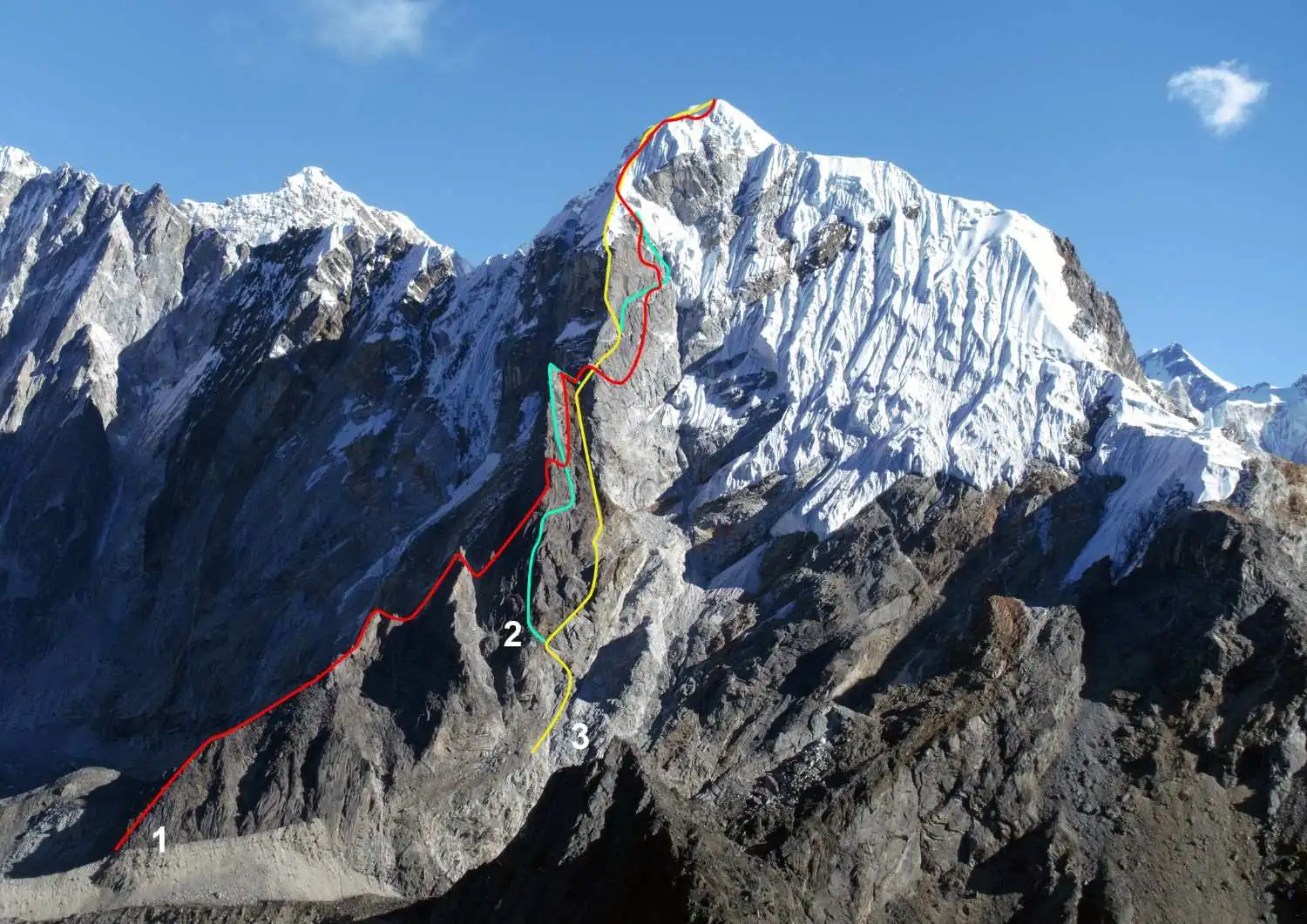
Standing at 6,119 meters (20,075 feet), Lobuche East Peak is one of the most popular climbing peaks in the Khumbu region, second only to Island Peak. Even though it’s classified as a “trekking peak,” it offers a real taste of mountaineering, which is why many climbers choose it as a stepping stone before aiming for bigger expeditions like Everest or other 8,000-meter giants.
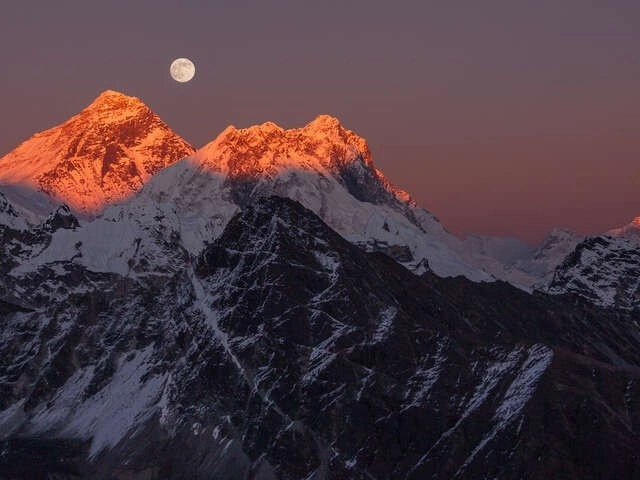
What truly sets Lobuche East apart is the view from the top. On a clear day, the summit feels like a natural viewpoint over the Himalayas. You can see some of the world’s highest mountains lined up in front of you: Everest, Lhotse, Cho Oyu, Makalu, and even Kanchenjunga in the distance. It’s one of those moments that makes all the effort feel worth it.
The journey to Lobuche East usually follows the classic Everest Base Camp trail, which means the experience is not just about the climb. Along the way, you’ll trek through iconic Sherpa villages, reach Everest Base Camp itself, and hike up to Kalapatthar for that unforgettable sunrise view over Everest. Only after soaking in all of that do you move on to the main challenge, the climb to Lobuche East’s summit.
Whether you’re just starting out in mountaineering or already have some experience and want to push yourself further, Lobuche East offers a perfect balance. It’s challenging enough to test you, but still accessible enough to help you grow your confidence in the high mountains.


Whether you’re dreaming of peaceful trails or high-altitude summits, Nepal Outdoor Expeditions is here to guide you every step of the way. From classic treks to thrilling peak climbs, we offer expertly curated journeys that match your goals, pace, and experience level.
Here are a few unforgettable adventures you might like:
When it comes to high-altitude trekking, people usually prepare for about 4 to 7 weeks. But Lobuche Peak is a different story. Even though it’s often called a “trekking peak,” it doesn’t feel like a regular trek at all. You’ll be spending a good amount of time on snow and ice, moving through proper alpine terrain, and there are sections where basic mountaineering skills actually come into play.
Because of that, it’s a good idea to start preparing at least 2 to 3 months before your climb. Giving yourself that extra time really helps your body adjust and builds the kind of strength and endurance you’ll need up there.
Lobuche Peak is physically demanding, no doubt about it. The fitter you are, the more you’ll actually enjoy the experience instead of just pushing through it. Before you begin, it’s worth taking a moment to honestly assess your current fitness level. From there, you can slowly build up a routine that works for you.
If possible, getting advice from a fitness trainer or even your trekking guide can make a big difference. They can help you understand where you stand and guide you in creating a training plan that suits your goal.
To get you started, here are some exercises you can include in your preparation:
Building strength is essential, especially for your legs, core, and upper body. You’ll be carrying your own gear, walking on uneven terrain, and using ropes in certain sections, so your body needs to be ready for it.
You can keep your strength routine simple and effective with exercises like the following:
The goal isn’t to lift the heaviest weights but to build steady strength and endurance over time.
Cardio is what keeps you going when the days get long and the air gets thinner. It helps improve your stamina and makes those uphill climbs feel a bit more manageable.
You can mix things up with activities like:
Try to stay consistent and gradually increase your intensity. Even simple workouts, if done regularly, can make a big difference once you’re out there on the mountain.

Tenzing Sherpa
Have questions? Our travel specialists are here to help plan your perfect adventure.
Chat on WhatsAppThere's something about that early morning drive to Tribhuvan International Airport that gets your heart going. You know the mountains are waiting. The flight to Lukla is short, roughly 35 minutes, but it's one of those experiences you'll be talking about long after the trip is over. As the small aircraft climbs out of the Kathmandu Valley, the hazy city gives way to rolling green hills, and before long, the white giants of the Khumbu start filling your window. Landing at Tenzing Hillary Airport is its own little adventure; the runway is famously short and perched on a hillside, and the moment the wheels touch down, you'll feel the excitement shift into something very real. Once you're on the ground in Lukla, take a breath and look around. This is the gateway to Everest country, and it earns that title. You'll meet the rest of the team here, sort out your gear, and grab a warm cup of tea before heading out. The afternoon walk down to Phakding is a gentle introduction to trekking life in the Khumbu. The trail follows the Dudh Koshi River, dipping through small Sherpa villages like Kyangma and Cheplung. You'll cross your first suspension bridge of many, sway a little, maybe laugh at yourself, and then carry on through the mani walls and prayer flags that line the path into Phakding. It takes about 3 to 4 hours and is a perfect warm-up for the days ahead.
Today is one of those days that earns its reputation. The trail to Namche Bazaar is beautiful, no question, but it also asks something of you, and by the time you arrive, you'll feel it in your legs and your lungs. You leave Phakding along the river, walking through forests of pine and rhododendron with Buddhist chortens dotting the path. The villages of Toktok and Bhenkar pass by, each one a little window into the daily rhythm of Sherpa life. At Monjo, you'll officially enter Sagarmatha National Park, and there's a checkpoint here where you'll show your permits before continuing toward Jorsale. The highlight of the day comes at the Hillary Suspension Bridge, hanging more than 125 meters above the river gorge. Cross it slowly if you like; most people do. After that, a long, steady 3.2 km climb up the hillside brings you into Namche Bazaar. Somewhere on that final push, if the sky is clear, Mt. Everest will peek over the ridge for the very first time. That first glimpse has a way of stopping people mid-step. The views from Tope Danda also open up to peaks like Thamserku, Khumbila, Tawache, and Konde Ri spread across the horizon.
You've crossed the 2,500 meter mark, which means your body needs a day to catch up with where your ambition has brought you. Acclimatization days can feel frustrating if you're eager to push on, but this one is genuinely enjoyable. The morning starts with a hike up to the Sagarmatha National Park Headquarters. It's a well-worn trail and the views from the top are remarkable, with Everest, Lhotse, Ama Dablam, and Thamserku all visible on a good day. From there, you'll stop by the Sagarmatha National Park Museum, which is worth more than a quick browse, before continuing up to the Hotel Everest View at 3,880 meters, said to be the highest hotel in the world. Stop for tea and take in the setting; it's quite something. The trail then winds through the Sherpa villages of Khumjung and Khunde, two of the more authentic and less touristy settlements in the region. By midday you're back in Namche with the afternoon to yourself. The town has a surprising amount going on: the Syangboche airstrip, the Tenzing Norgay Memorial Stupa, the Sherpa Culture Museum, and yes, a pub or two. If you happen to be there on a Saturday, the weekly Haat Bazaar is worth exploring, traders come from all over the Khumbu Valley and the scene is lively and colorful.
After breakfast, the trail climbs steadily for about two hours to Kyangjuma at 3,600 meters, moving through alpine meadows and mixed forests of rhododendron and pine. It's a lovely section of trail, especially in spring when the rhododendrons are in bloom and the hillsides turn shades of pink and red. At Kyangjuma the path splits, one fork heading toward the Gokyo Valley and another continuing to Everest Base Camp. You'll keep to the EBC route, passing through the small settlement of Sansa before descending to Phunki Thenga by the river. This is a popular lunch spot, sitting right at the water's edge with a cool breeze coming off the Dudh Koshi. It's one of those simple, peaceful moments that stays with you. After lunch, the trail climbs steeply through the forest. It's a workout, but you know what's waiting at the top. Tengboche Monastery sits at 3,874 meters and the views from the grounds are genuinely breathtaking. Everest, Nuptse, Lhotse, Ama Dablam, and Thamserku all come into full view here. On a lucky day, you might also spot musk deer or Himalayan thar along the forested slopes.
Starting the morning with a blessing from the monks at Tengboche Monastery feels like the right way to begin a day in the mountains. It's a quiet, grounding ritual before you set off. The trail drops down from Tengboche and follows the Imja Khola, a glacial river fed by the snowfields of Everest and its neighbors. The path moves through dense rhododendron, birch, and pine forests before opening up at Pangboche, the highest permanent village on this route. It's worth spending a little time at the Pangboche Monastery, one of the oldest in the Khumbu region, before continuing. Beyond Pangboche, the landscape begins to change. The trees thin out, the valley widens, and the trail reaches the junction between Pheriche and Dingboche. You'll head toward Dingboche, descending briefly to cross the Lobuche River before climbing steeply into the valley. The arrival is rewarding. Dingboche sits in a wide, open bowl surrounded by stone-walled fields, a farming system that has protected crops from wind and grazing animals for generations. The peaks here are enormous and close: Ama Dablam, Cholatse, Nuptse, Lhotse, and Island Peak all crowd the skyline in the most remarkable way.
This is your second acclimatization day, and by now you understand why these rest days are built in. The altitude at Dingboche is serious, and your body will thank you for the patience. The morning hike up to Nagarjuna Hill at 5,100 meters is one of the better day hikes of the entire trip. The views from the top are wide and unobstructed: Nuptse, Lhotse, Ama Dablam, Makalu, and Island Peak all laid out in front of you. It's a steady climb that takes a couple of hours, and coming back down into Dingboche you'll feel the benefit of having pushed a little higher before descending again, which is exactly how acclimatization is supposed to work. The afternoon is yours. Some people visit the local Buddhist gompas and mani walls, others simply sit outside and watch the clouds move around the peaks. Either way, it's a good day to slow down and appreciate where you are.
Don't let the relatively short distance fool you today. The elevation gain is significant and the air is noticeably thinner. Walk slowly, drink water steadily, and resist the urge to rush. This is sound advice for every day on the trek, but it matters most today. The trail climbs out of the Pheriche Valley and moves toward Thukla at 4,600 meters, which makes for a natural lunch stop. Above Thukla, the path rises to Thukla Pass at 4,800 meters. This is the memorial ground for climbers who lost their lives on Everest's slopes, and the rows of stone cairns and prayer flags make for a sobering and deeply moving scene. Take a moment here. From the pass, the trail follows the lateral moraines of the Khumbu Glacier into a landscape that feels increasingly high and raw. The mountains close in around you. Lobuche Peak, Pumori, Khumbutse, Lingtren, Mahalangur, Tawaache, and Ama Dablam are all visible and feel almost close enough to touch. Lobuche sits just ahead, and tonight you'll rest there in one of the region's teahouses, quietly getting your mind and body ready for what comes next.
There are certain days in the mountains that feel different from the start, and today is one of them. You're heading to Everest Base Camp. The route follows the glacial moraine of the Khumbu Glacier, a slow-moving river of ice and rock that crunches underfoot. The terrain is uneven and the trail weaves through rocky ridges and sandy flats, passing a pyramid-shaped signpost before reaching the small settlement of Gorakshep, perched on the edge of a frozen lake bed. You'll drop your bags here and rest briefly before heading out to Base Camp. The walk from Gorakshep to Everest Base Camp takes about 2 hours and covers some genuinely tricky ground, glacial ridges, rocky paths, and a few sharp little climbs. But when you finally arrive, standing at 5,364 meters with the Khumbu Icefall rising above you and the tents of the Everest expedition teams spread across the moraine, the effort simply disappears. During spring season, Base Camp is alive with climbers preparing for their summit bids, and the atmosphere is electric. Nuptse, Pumori, and Khumbutse form the walls of this high, frozen world. Soak it in before heading back to Gorakshep for the night.
Gorakshep Elevation: 5,180 meters | Kalapatthar Elevation: 5,545 meters | Elevation Gain: 365 meters The alarm goes off before first light, and for good reason. Kalapathar at sunrise is one of the finest experiences in the entire Himalayas, and getting up there early, while the sky shifts from deep blue to orange and gold, is worth every second of lost sleep. The climb from Gorakshep to Kalapathar takes about 2 hours at altitude and it is steep, but the 360-degree panoramic view from the top is simply extraordinary. Everest stands right in front of you, along with Changtse, Nuptse, Ama Dablam, Pumori, Lingtren, and Khumbutse, and the entire sweep of the Khumbu Valley below. Photographs don't quite capture it, but you'll take them anyway. After descending back to Gorakshep, the afternoon takes you in a new direction: down toward Lobuche Base Camp, following rocky moraines and glacial terrain. This is where the climbing expedition truly begins. The team will have set up camp, the tents will be ready, and a hot meal will be waiting. Tonight, the real adventure is just one sleep away.
This is the day the expedition shifts into its final phase. From Base Camp, the route crosses the Lobuche Glacier and threads through rocky moraines before rising steadily to High Camp. It takes roughly four hours, and while the elevation gain is considerable, the pace is manageable. The mountain opens up around you as you climb, giving you a good look at the terrain you'll be navigating on summit day. At High Camp, the crew will set up a safe and comfortable campsite and get lunch going while you rest and settle in. The afternoon is used for practice climbing under the guidance of the mountaineering experts on the team. They'll walk you through technique, rope use, and how to handle the specific tools you'll be using on the slopes. It's also the final checkpoint for your gear. Everything gets checked, everything gets confirmed. Then it's an early dinner and an early night, because tomorrow the alarm goes off very early indeed.
This is it. The day everything has been building toward. You'll set off in the dark, headlamps on, crampons biting into the snow and ice. The route from High Camp to the summit is steep, technical, and relentless, demanding your full focus. Fixed ropes guide much of the ascent, and you'll be using your ice axe and full mountaineering kit throughout. Unlike Island Peak, Lobuche has no crevasse crossings to worry about, but the terrain is more technical and it asks more of you as a climber. The push to the summit takes 5 to 6 hours from High Camp. When you finally step onto the top at 6,119 meters, the world opens up in every direction. Everest, Lhotse, Ama Dablam, Makalu, Cho Oyu, Pumori, and Cholatse are all laid out before you in one sweeping, unforgettable view. Take your photos, share the moment with your team, and let the feeling settle in. You've earned it. The descent back to Lobuche Base Camp is slow and careful. By the time you're back at camp, the warmth of the tent, a hot meal, and the quiet satisfaction of what you've just done will feel like the best things in the world.
After the intensity of summit day, the descent back toward lower ground feels like a release. The trail follows the main Everest Base Camp route down through familiar terrain, and at lower altitude the legs move more freely and the breath comes easier. The first major stop is Pheriche, a well-known rest point for trekkers and climbers that offers a warm meal and a chance to sit for a bit. From there, the trail continues down through Pangboche, with Ama Dablam, Thamserku, Kantega, and Pokalde escorting you the whole way. The forests return gradually as you descend, rhododendron and pine and juniper, and the change in landscape marks the shift back toward lower, greener country. Pangboche makes for a fine place to spend the night. The monastery here is one of the oldest in the Khumbu Valley, and visiting it on your last evening in the high mountains feels like a fitting way to close out the expedition before the long walk home begins.
The trail back to Namche Bazaar passes through Tengboche and feels like a pleasant stroll compared to what's been behind you. The Imja Khola guides the path downward, and the forests thicken again with birch, conifer, and rhododendron as the altitude drops. Several small Sherpa settlements punctuate the route and make for natural rest stops along the way. Below Tengboche, the suspension bridges over the Dudh Koshi River reappear, and crossing them with weary but satisfied legs is a different experience than crossing them on the way up. Through Phunki Thenga and Kyangjuma, the trail curves back into Namche Bazaar. Arriving in Namche after so many days above it feels strangely like coming back to civilization. The lodges are comfortable, the menus are generous, and the views of Everest, Lhotse, Ama Dablam, Nuptse, and Kwangde Ri from the town remind you just how close you still are to the mountains you've been living among.
Saying goodbye to Namche is always a little bittersweet. You'll retrace the familiar trail through pine, rhododendron, and juniper forests along the Dudh Koshi River, passing Monjo and the edge of Sagarmatha National Park one last time before arriving in Phakding, where this whole adventure began just two weeks ago. The final section of today's walk crosses the Bhote Koshi River on suspension bridges three times, before a steep 45-minute climb brings you up into Lukla. It's a satisfying finish to a long day of walking. Your last evening in the mountains arrives quietly and the peaks, Everest, Lhotse, Thamserku, Nuptse, Kongde Ri, Khatang, and Karyolung, make one final appearance on the horizon before the light fades.
The expedition comes full circle this morning. The early alarm, the walk to Tenzing Hillary Airport, the small aircraft pointing down the hillside runway and then lifting off over the valley. The flight back to Kathmandu offers one last look at the Himalayas from above, the white peaks catching the morning light as you leave them behind. Back in Kathmandu, you'll be transferred to your hotel, where a proper bed and a hot shower will feel like genuine luxuries after everything the mountains have put you through. The rest of the day is yours to wander, shop for souvenirs, or simply sit somewhere quiet and let the whole experience settle in. The evening closes with a farewell dinner hosted by Marvel Adventure, a chance to celebrate the journey together and reflect on what you've accomplished. Thank you for being part of this adventure. We hope the mountains call you back.
See what past travelers are saying about their experience with Nepal Outdoor Expeditions.
Because your next adventure is impatiently waiting for you.
Last Minute Note: Grab incredible deals on the last minute departure / Book spontaneous trips to hip destinations with limited-time offers and discounted price
Not sure of your dates yet? Hold a departure with a 20% deposit. Cancel more than 60 days out and your deposit is refunded in full. Your first date change is free. If a departure doesn't reach minimum numbers, we'll offer you the nearest alternative date or a full refund, and we'll let you know at least 30 days out.
Before you think of or actually plan any adventurous or relaxing tours, travels, or treks with Nepal Outdoor Expeditions.
If you cancel more than 60 days before departure, we refund your deposit in full. Between 30 and 60 days, the 20% deposit is retained. Inside 30 days the trip cost is non-refundable, since by then we've already paid for your permits, flights, and teahouse bookings. Full detail on our booking page.
20% to reserve your place, with the balance due 60 days before departure. On this trek that's $490 to book and $1,960 two months before you fly. If you're booking within 7 days of departure, the full amount is due at booking.
Yes, as long as you let us know at least 30 days before your original departure date, your first change is free. Any change after that, or a change requested inside 30 days, is $200 per person.
Lobuche East Peak Climbing