The major difference between a 5-Day and 7-Day Everest Base Camp Trek depends on how much time you have and how you want to enjoy Everest. The 5-day trek takes you to Base Camp and Kala Patthar via helicopter, while the 7-day version has you walking each step to the base camp. Both are real, legitimate Everest experiences. They’re just built for different types of trekkers.
At a Glance: The Key Differences Between the 5-Day and 7-Day EBC Trek
Before we get into the details, here’s a side-by-side look at both packages offered by Nepal Outdoor Expeditions, so you know exactly what you’re comparing.
| Feature | 5-Day EBC Trek | 7-Day EBC Trek |
| Price | USD $2,150/person | USD $2,350/person |
| Duration | 5 days | 7 days |
| Difficulty | Moderate | Moderate |
| How do you reach EBC? | Helicopter from Namche Bazaar | On foot, all the way |
| Max altitude on foot | Namche Bazaar (3,440m) | EBC (5,365m) |
| Helicopter coverage | Namche to Kala Patthar + EBC, then Kala Patthar to Lukla | Gorakshep to Lukla only |
| Trek days | 2 days (Lukla to Namche) | 5 full trekking days |
| Acclimatization | 1 rest day in Namche Bazaar | Built progressively |
| Tengboche Monastery | Not visited | Yes, Day 3 |
| Dingboche / Lobuche | Not visited | Yes, Days 4 and 5 |
| Khumbu Glacier | Seen from a helicopter | Walked alongside on Day 6 |
| Kala Patthar | Helicopter landing | Mentioned as a sunrise highlight |
The 5-Day Everest Base Camp Trek: EBC Without the Weeks
If you only have a few days to spare and trekking to the Everest Base Camp has been on your list for years, the 5-day package is exactly designed for you. This isn’t a watered-down version of the conventional trek. It’s an extraordinary format that takes you to the equally iconic locations, just through a combination of trekking and a helicopter journey.
The package costs USD $2,150 per person and covers the Everest Region (Khumbu).
How the 5-Day Trek Actually Works
You fly into Lukla from Kathmandu on Day 1 and begin trekking. The first 2 days take you through the traditional trail: Lukla to Phakding, then as far as Namche Bazaar at 3,440m. This is the highest point you reach on foot during the trek.
Day 3 is your acclimatization day in Namche Bazaar. This rest day is included for a reason. Even though a helicopter takes you higher on Day 4, your body, nevertheless, needs time to adjust before the sudden altitude gain.
Then comes Day 4, and this is where the 5-day itinerary really stands out.
The Dual Helicopter Landing: Kala Patthar and EBC in One Day
Most people do not count on this from a 5-day option; however, on Day 4, your helicopter lands at 2 separate locations: Kala Patthar at 5,555m and Everest Base Camp at 5,364m. These aren’t flyovers. You, in reality, land at both.
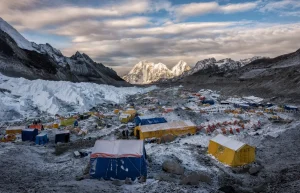
Standing at Kala Patthar, you get one of the clearest views of Everest’s summit anywhere on the mountain. Prayer flags snap around you, the air is thin, and the Khumbu Icefall sits directly in front of you. Then the helicopter takes you down to Base Camp itself, where tents from expedition groups dot the glacier and Everest towers directly above.
After each landing, the helicopter flies you back to Lukla. Day 5 is your return flight to Kathmandu.
Who is the 5-Day Everest Base Camp Trek Package For?
This package deal is the right choice if:
- You have 5 to 6 days maximum, and can’t stretch your ride longer.
- You need to physically stand at Everest Base Camp and Kala Patthar, not simply see them from a distance.
- You’re comfortable with a helicopter having the rapid altitude gain.
- You want a guided trekking experience without weeks of preparation.
One thing worth mentioning: because you fly above 5,000m without gradually hiking to that altitude, the altitude hit can feel sharper. The acclimatization day in Namche helps; however, your body may not get the same gradual acclimatization that 5 full trekking days provide. That doesn’t make it hazardous; each application is rated Moderate, but it is something to keep in mind.
The 7-Day Everest Base Camp Trek: Walking Every Step to the Roof of the World
If you’ve got the time and need to earn every meter of altitude on foot, the 7-day EBC trek is the one for you. This is the classic Everest Base Camp experience: Sherpa villages, high mountain trails, glacier views, and the total cultural journey that the Khumbu region is known for. The package expenses USD $2,350, consistent with the individual, and covers the Everest Region (Solukhumbu).
How the 7-Day Trek Unfolds Day by Day
You fly from Kathmandu to Lukla to begin the trek, same as the 5-day model. But from there, the experience is completely different.
- Day 1 takes you from Lukla down to Phakding, following the Dudh Koshi river through pine forests and small Sherpa settlements.
- Day 2 is the climb up to Namche Bazaar at 3,440m, the main trading hub of the Khumbu region and your gateway into the higher Himalayas.
- On Day 3, you visit Tengboche Monastery at 3,876m, one of the most respected Buddhist monasteries in Nepal. The perspectives of Everest, Lhotse, and Ama Dablam from here are something you really can’t get from a helicopter window.
- Day 4 brings you to Dingboche at 4,410m, where the landscape opens up, and the altitude begins to feel real.
- Day 5, you push to Lobuche at 4,940m, with the Khumbu Glacier running along you for maximum of the walk.
- Day 6 is the biggest. You trek from Lobuche to Gorakshep, leave your bags, and walk to Everest Base Camp at 5,365m on foot. This is the moment the entire trek builds towards. After that, your helicopter takes you up from Gorakshep and flies you back to Lukla.
- Day 7 is your flight returning to Kathmandu.
The Cultural Layer: Tengboche, Sherpa Villages, and the Khumbu Glacier
This is where the 7-day trek stands apart from the 5-day trek in a manner that a comparison table can not fully convey.
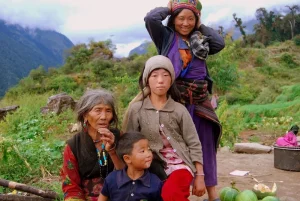
Walking through Sherpa villages like Phakding and Namche Bazaar, you get a closer look at how people actually live in one of the world’s most remote mountain areas. Sitting in the interior of Tengboche Monastery, with priests chanting and incense in the air, is a completely different experience from flying over the same area.
Then there’s the Khumbu Glacier. On the 5-day trek, you see it from a helicopter. On the 7-day trek, you walk beside it on Days 5 and 6. The scale of it, the sound of it, the way it reshapes the valley around you, none of that comes through from the air.
This is what the 7-day trek offers that no shorter trek can replicate: time on the ground, inside the tradition, at altitude.
Who is the 7-Day Everest Base Camp Trek Package For?
This trek is the right fit if:
- You can take 7 to 10 days off and want to apply every one of them properly.
- The cultural aspect of the trek inside Sagarmatha National Park matters to you as much as reaching Base Camp.
- You want to mention you walked to EBC, not flew to it.
- You’re seeking out a Nepal hiking experience that offers more than just reaching Base Camp.
The 7-day is also the better option in case you’re in for a moderate to high altitude trek. The gradual acclimatization built into the itinerary offers your frame more time to modify, which normally means a more comfortable experience above 4,000m.
Which Trek Is More Difficult? Difficulty and Fitness Compared
Of course, the 7-Day Everest Base Camp Trek is more difficult if we compare these 2. However, both trek packages are rated Moderate, but that label covers 2 very specific physical experiences. Understanding the difference helps you pick out the trek that fits your modern fitness level realistically.
Physical Demand on the 5-Day Trek
On the 5-day Everest Base Camp version, your legs take you from Lukla to Namche Bazaar at 3,440m. That’s it as far as trekking goes. The trails among Lukla, Phakding, and Namche are well-maintained and manageable for most people with good health.
The real challenge here isn’t the walking. It’s the altitude jump on Day 4. When your helicopter lands at Kala Patthar at 5,555m, after which at Everest Base Camp at 5,364m, your body goes from 3,440m to over 5,500m within minutes. The acclimatization day in Namche Bazaar on Day 3 helps prepare you for this; however, the soar is still considerable. Headaches, shortness of breath, and fatigue are not unusual at that altitude, even for fit trekkers.
Physical Demand on the 7-Day Trek
The 7-day trek demands more physical activity over a longer period. You’re trekking for 5 full days, gaining altitude gradually from Lukla all the way to Everest Base Camp at 5,365m, walking. By the time you attain Gorakshep on Day 6, your body has had nearly every week to adjust to the growing elevation.
The days to Lobuche and Gorakshep are the toughest on the trail. The terrain gets rockier, the air gets thinner, and your tempo slows down clearly. But because the altitude advantage is unfolded throughout multiple days, most trekkers find it more possible than the sudden altitude jump the 5-day trek involves.
Altitude Risk: What to Know Before Either Trek
Acute Mountain Sickness (AMS) can affect anyone, no matter age or health status. Neither trek is immune to it.
On the 5-day, the hazard is focused on Day 4 due to the rapid altitude advantage by helicopter. On the 7-day, the risk is lower on any single day but builds gradually as you push higher.
For each trek, understanding the early signs and symptoms of AMS, headache, nausea, dizziness, and being honest along with your guide in case you experience them is the most crucial component you can do. Both packages consist of an experienced guide who is aware of this terrain and those conditions properly.
If you have no prior experience at high altitude, the 7-day slow ascent is the more secure and extra cushty advent to Himalayan hiking.
Cost Breakdown: 5-Day ($2,150) vs 7-Day ($2,350)
What’s Included in Both Packages
Whether you book the 5-day at $2,150 or the 7-day at $2,350, both packages include:
- Airport transfers in Kathmandu.
- All necessary trekking permits.
- Accommodation throughout the trek.
- Meals during the trip.
- An experienced guide and porter.
- Domestic flights (Kathmandu to Lukla and back).
- The helicopter segment specific to each package.
Neither package cuts corners on the essentials. You’re not paying more for the 7-day just to get a guide or a bed. The core support structure is the same across both.
What’s Not Included in Either Package
Before you budget, make sure you account for these separately:
- International flights to and from Nepal.
- Nepal visa fees.
- Travel insurance.
- Personal expenses.
- Drinks and snacks beyond included meals.
- Tips for your guide and porter.
These costs apply to both packages equally, so they don’t change the $200 comparison between the two.
Is the $200 Difference Worth It?
This is the question most people are actually asking when they search for an assessment between those treks.
Here’s an honest way to have a look at it. The 5-day trip at $2,150 offers you a helicopter trip from Namche Bazaar to Kala Patthar and EBC, plus the return flight from Kala Patthar to Lukla. You’re getting extensive helicopter insurance for a decreased price because the trek itself is shorter.
The 7-day Everest Base Camp trek at $2,350 gives you 5 full days on the trail, a deeper cultural experience through villages like Tengboche and Dingboche, and a helicopter return from Gorakshep to Lukla. You’re paying $200 more for 2 more days of guided hiking, meals, accommodation, and the whole lot that includes a longer time in the Khumbu area.
When you break it down that way, $200 for 2 extra fully supported days in one of the most iconic hiking regions in the world is absolutely affordable. But if those greater days are not available to you, then the 5-day offers you a strong price for what it promises.
Price alone should not determine your decision. Your available time and what type of enjoyment you are after should.
Things You’ll Only Experience on the 7-Day Trek
Some things about the entire EBC trek actually can’t be replicated from the air. If you select the 7-day package, these are the reports that are yours and mine.
1. Tengboche Monastery: A Stop the 5-Day Misses Completely
On the third day of the 7-day trek, you pass Tengboche Monastery at 3,876m. This is one of the highest and most substantial Buddhist monasteries inside the Himalayas. You walk into a courtyard framed by Everest, Lhotse, and Ama Dablam on 3 sides. If you arrive in the course of morning or evening prayers, the sound of horns and chanting fills the thin mountain air in a manner that remains with you long after the trek ends.
The 5-day trek does not visit Tengboche at all. This cultural practice is exclusive to the longer path.
2. Walking Alongside the Khumbu Glacier
On the 7-day trek, you stroll alongside the Khumbu Glacier on Days 5 and 6. This is not a far-off view. The glacier is right there after you, a slowly shifting mass of ancient ice that has formed the whole lot around it. The creak of moving ice, the deep blue of crevasses, the sheer scale of it at ground level, none of this comes through from a helicopter window.
On the 5-day trek, the Khumbu Glacier is something you spot from above. On the 7th day, it is something you experience under your boots.
3. Dingboche and Lobuche: The High Altitude Villages
The 7-day itinerary takes you via Dingboche at 4,410m on Day 4 and Lobuche at 4,940m on Day 5. These aren’t just waypoints on a map. They’re small, far-off settlements sitting at altitudes that maximum human beings in the world will never reach on foot.
Spending a night at Dingboche and pushing further to Lobuche tomorrow gives your body the gradual acclimatization it wishes for the very last push to EBC. It also offers you a ground-level experience of the Khumbu region that no quick Everest Base Camp trek can provide.
4. The Full Walk to Everest Base Camp at 5,365m
This one is subject to lots of trekkers more than anything else. On the 7-day, you stroll to Everest Base Camp, taking walks. Every meter of altitude from Lukla to EBC at 5,365m is earned little by little across 5 hiking days via Sagarmatha National Park.
When you arrive at Base Camp after days on the path, the feeling isn’t the same as landing there by helicopter. That’s not a judgment on the 5-day enjoyment. It’s just a sincere description of what the 7-day offers that nothing else can.
Things You’ll Only Experience on the 5-Day Trek
The 5-day package has its own set of experiences that the 7-day package in reality cannot provide. These aren’t secondary experiences. They’re true highlights that make the shorter format really worth thinking about on its own terms.
1. The Dual Helicopter Landing at Kala Patthar and EBC
This is the standout function of the complete 5-day package and one that catches most people off guard. On Day 4, your helicopter doesn’t just fly over the high camps. It lands at separate locations: Kala Patthar at 5,555m and Everest Base Camp at 5,364m.
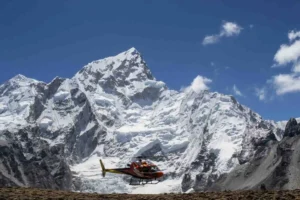
At Kala Patthar, you step out onto one of the best Everest viewpoints on the whole mountain. The summit is at once in front of you, prayer flags snap in the wind around you, and the Khumbu Icefall sits below. Then the helicopter takes you right down to Base Camp itself, where excursion tents are pitched on the glacier, and Everest fills the sky above.
Two landings above 5,000m in a single day. That’s something the 7-day trek, for all its depth, does not consist of.
2. Aerial Views of the Khumbu Region
When your helicopter lifts off from Namche Bazaar and climbs closer to Kala Patthar, you get an aerial view of the Khumbu region that no amount of walking can provide you with. The entire valley opens up under you. You see the glacier systems, the ridgelines, the scale of the Himalayas in a single sweeping view.
For many travelers, the fastest way to attain Everest Base Camp, this aerial perspective is one of the most memorable parts of the trip.
3. A Complete Everest Experience in Less Time
The 5-day trek is the right answer for everybody trying to find Nepal trekking packages for a short holiday. You still fly into Lukla, you continue to trek via the lower Khumbu trails, and you still stand at Everest Base Camp. The experience is real and complete. It’s just structured differently to match within a tighter window.
If your vacation time is limited and Everest Base Camp has been on your list for years, the 5-day layout means you don’t have to keep waiting for a longer journey that can never come together.
Best Time to Do Either Trek
Proper timing plays an important role when choosing between these 2 trekking packages. The Everest place has 2 reliable seasons for both hiking and helicopter flights.
Pre-Monsoon (March to May)
- March and April are the sweet spot: stable climate, clear skies, and appropriate helicopter conditions.
- Trails are busy and fully operational throughout this period.
- May remains possible, however, cloud cover increases in the direction of the month, giving up as the monsoon approaches.
- If you are on the 5-day package deal, book in advance in this window because helicopter operations want clear skies.
Post-Monsoon (September to November)
- Late September to October is the ideal duration for any Everest Base Camp trek.
- Skies are sharp and clear after the monsoon, and visibility is first-rate.
- October is widely considered the best month for Himalayan trekking overall.
- November is still possible, but temperatures drop sharply above Namche Bazaar, especially on the 7-day course toward Lobuche and Gorakshep.
What to Avoid
- Monsoon (June to August): Slippery trails, heavy rainfall, and unreliable helicopter schedules make this a poor season for both itineraries.
- Winter (December to February): Extreme cold above 4,000m and potential hurricane disruptions affect each trek, mainly the 7-day direction.
Our Verdict: Which Everest Base Camp Trek Should You Choose?
Choose the 5-Day Trek If
- You have 5 to 6 days and can’t extend your trip.
- You need to physically stand at both Kala Patthar and Everest Base Camp without spending weeks on the path.
- You’re snug with a helicopter covering the high-altitude section.
- You’ve been planning this trip for years because an extended window never opens up.
- You need a complete, legitimate Everest experience that fits a tight schedule.
At USD $2,150 per person, the 5-day package deal supplies precisely what it guarantees: 2 helicopter landings above 5,000m, an actual trek through the lower Khumbu trails, and a guided, fully supported trek from beginning to end.
Choose the 7-Day Trek If
- You have 7 to 10 days available and need to spend all of them on the trail.
- Walking each step to Everest Base Camp at 5,365m matters to you personally.
- You need the cultural intensity that includes Tengboche Monastery, Sherpa villages, and time alongside the Khumbu Glacier.
- You’re more recent to high altitude hiking and want the slow acclimatization the longer route offers.
- The journey to Base Camp matters just as much as arriving there.
At USD $2,350 per person, the 7-day bundle gives you 5 complete days on one of the most iconic hiking routes in the world, with a helicopter return from Gorakshep to Lukla to close it out.
The Honest Bottom Line
The $200 charge difference is not what must decide this. Time is.
If you’ve got 5 days, book the 5-day. If you’ve got 7 days, book the 7-day. Both packages are run via the same area, with the same high-quality of assistance, and both get you to Everest Base Camp. The format is unique, the experience is different, neither one is the wrong option for the visitor it’s designed for.
What could be the incorrect desire is selecting the shorter choice when you sincerely have the time for the whole trek, or waiting indefinitely for an extended trip that in no way happens when the 5-day trip should get you there this year.
FAQs
How many days do I need for the Everest Base Camp trek?
It relies upon your schedule. You can do it in as few as 5 days with the helicopter-assisted bundle or take the entire 7-day direction, taking walks. Both are valid alternatives, just designed for different trekkers and different timeframes.
What is the fastest way to reach Everest Base Camp?
The 5-day package is the quickest way to attain Everest Base Camp. You trek from Lukla to Namche Bazaar on foot, acclimatize for a day, then fly by helicopter to Kala Patthar at 5,555m and EBC at 5,364m on Day 4. Two landings above 5,000m in a unmarried day.
Is the 5-day EBC trek safe without full acclimatization?
Yes, with the proper preparation. The itinerary consists of a dedicated acclimatization day in Namche Bazaar earlier than the helicopter ascent. Both applications are rated Moderate, and your guide monitors you throughout. That said, understanding the early signs of altitude illness before you cross is usually a clever move.
Can I really reach EBC in 5 days?
Absolutely. The 5-day package deal takes you to Everest Base Camp at 5,364m and Kala Patthar at 5,555m on Day 4 by helicopter. It’s not a limited experience. You actually land at each location.
What is the EBC trek cost in 2026?
The 5-day package deal is priced at USD $2,150 in step with character and the 7-day package deal at USD $2,350 per person. Both encompass permits, lodging, meals, guide, porter, domestic flights, and the helicopter segment. International flights, Nepal visa, and tour insurance are separate.
Do both treks start and end in Kathmandu?
Yes. Both programs start and end in Kathmandu. You fly from Kathmandu to Lukla through fixed-wing aircraft at the start and go back in the same manner at the end. The helicopter segments are within the trek itself, not the Kathmandu connection.
Ready to Book Your Everest Base Camp Trek?
Still figuring out which option suits your ride? We’re here to help you decide, not just promote a package to you.
At Nepal Outdoor Expeditions, we’ve helped lots of trekkers reach Everest Base Camp, whether they had 5 days or 7. We know the trails, we understand the conditions, and we recognise that the proper package depends entirely on your situation.
Reach out to our trek expert, Tenzing Sherpa, directly on WhatsApp at +977 9767998270 or contact us directly. Tell him your tour dates, what number of days you have got, and any questions you are sitting on. He’ll give you a sincere recommendation based on what definitely works for you.
No stress. Just actual advice from someone aware of this mountain.