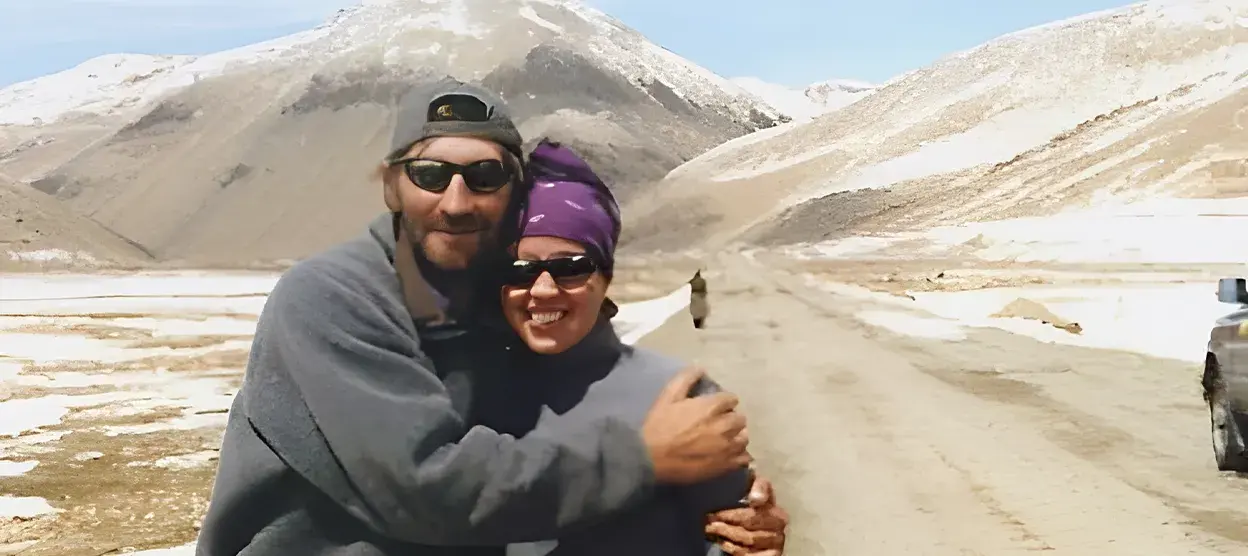
Sergei Arsentiev was the husband of Francys Arsentiev, the American climber who made history on Mount Everest. In May 1998, the couple attempted the summit together without supplemental oxygen, a choice that defined both their success and their tragedy. Francys reached the top and was the first American woman to summit Everest without bottled oxygen. But neither she nor Sergei made it back alive.
Their 1998 expedition remains one of the most talked-about stories in Everest history, not just because of what Francys completed, but also because of what Sergei did while he found out she was lacking. He turned and returned to the death zone by myself to find her.
This is the whole tale of Sergei Arsentiev on Everest, covering who he was, why the couple chose to climb without oxygen, what passed off at some point of their final summit push, and why their expedition still matters in mountaineering nowadays.
Who Was Sergei Arsentiev?
Sergei Arsentiev was an incredibly experienced Russian mountaineer with a long record of high-altitude mountain climbing. Born within the Soviet Union, he honed his skills via many years of expedition climbing on some of the world’s most challenging peaks. By the time he and Francys set their sights on Everest, Sergei had already built a reputation as a technically robust climber with a deep understanding of high-altitude situations.
He met Francys Distefano in the 1980s, and the two shared a passion for mountaineering that was the muse of their courtship. They married and started mountain climbing together, sooner or later setting their sights on the ultimate goal: Everest without supplemental oxygen.
Sergei turned into an informal fanatic. He had previously summited Everest in 1994 without supplemental oxygen, which placed him in a very small group of climbers who had done that feat at the time. That experience gave him firsthand knowledge of what the mountain demanded and what it took to live to tell the tale above 8,000 meters.
His climbing philosophy targeted on alpinism in its purest shape: attaining the summit, the use of the simplest body herbal capacity to acclimatize and bear. This was not recklessness. It was a planned desire rooted in years of training and experience. For Sergei, mountain climbing without oxygen was a matter of principle as a great deal as skill.
Francys and Sergei’s Dream of Climbing Everest Without Supplemental Oxygen
Climbing Everest without supplemental oxygen is one of the most physically stressful things an individual can attempt. Above 8,000 meters, the air holds more or less one-third of the oxygen available at sea level. The body begins to deteriorate rapidly. Decision-making slows. Muscles weaken. Every step requires significantly more effort. Most climbers rely upon bottled oxygen to manipulate these effects, a small variety select to climb without it.
Sergei and Francys have been a part of that small group, and their choice has now become one not made lightly.
Sergei had already proven it was feasible for him. His 1994 Everest summit without oxygen gave him the self-assurance and the data point that his body could handle the altitude. For Francys, the purpose carried an additional layer of importance. No American girl had ever summited Everest without supplemental oxygen. She wanted to be the first.
The couple had attempted Everest together before 1998, which meant their 1998 excursion was built on experience, not ambition on my own. They understood the acclimatization process, the bodily cost of the demise sector, and the slender climate windows that Everest permits every spring season.
Climbing without oxygen additionally meant their margin for mistakes was smaller than most. Any delay, any surprising deterioration in weather, or any physical setback above the demise quarter could be far more difficult to get over. They typical that chance as a part of the fashion they’re devoted to.
Their aim was clear: reach the summit of Everest collectively, without bottled oxygen, and do it in a manner that contemplated their values as alpinists.
Timeline of the 1998 Everest Expedition
The 1998 expedition followed the north side of Everest through Tibet, a route that Sergei knew well from his previous summit attempt. Below is a chronological overview of how the expedition unfolded.
| Date | Event |
| Spring 1998 | Sergei and Francys arrive in Tibet and establish Base Camp on the north side of Everest |
| April–May 1998 | Acclimatization rotations between Base Camp and higher camps |
| May 20, 1998 | Sergei and Francys begin their summit push from high camp without supplemental oxygen |
| May 22, 1998 | Francys reaches the summit, becoming the first American woman to summit Everest without supplemental oxygen. Sergei submits separately. |
| May 22–23, 1998 | The couple begins their descent but moves slowly due to exhaustion and oxygen deprivation. They spend an unplanned night in the open above 8,000 meters. |
| May 23, 1998 | South African climbers Ian Woodall and Cathy O’Dowd encounter Francys alive but incapacitated on the mountain. They attempt to assist her but are unable to bring her down safely. |
| May 23, 1998 | Sergei reaches camp, realizes Francys is missing, and immediately turns back into the death zone to find her. He is never seen alive again. |
| May 24, 1998 | Other climbers find that Francys has died on the mountain. Sergei’s disappearance is confirmed. |
| 2007 | Ian Woodall returns to Everest and moves Francys’ body to a respectful resting place on the mountain. |
For a deeper observation of those occasions that befell on the mountain, the Rainbow Valley Everest: The Frozen Graveyard of Mount Everest covers the north aspect terrain and explains why the descent path is so unforgiving.
What Happened After Reaching the Summit?
The Summit Came Late in the Day
Francys and Sergei both reached the summit on May 22, 1998, but the climb had taken longer than planned. By the time they summited, their bodies had already been working at an intense altitude for a prolonged length without supplemental oxygen. The physical price was excessive, and the clock was no longer on their side.
The Descent Slowed to a Dangerous Pace
Moving down a technical course above 8,000 meters while exhausted and oxygen-deprived is some distance more difficult than most human beings outside mountain climbing understand. As daytime diminished, it was clear they would not make it again to high camp earlier than dusk. They ended up spending an unplanned night inside the open above 8,000 meters, one of the most dangerous situations a climber can face.
A Night in the Open Above 8,000 Meters
Temperatures at that altitude drop significantly after dark, and the body’s capability to generate and maintain heat is already compromised. Spending even a few hours exposed at that elevation without supplemental oxygen causes the body to become worse rapidly. Cognitive function drops. Coordination suffers. The climber will become increasingly less able to make sound choices or move successfully.
Separation in the Dark
During the nighttime, Francys and Sergei have become separated. By morning, Francys had a serious problem and had not made it back in the direction of camp. Sergei had. What was observed was no longer a survival situation. It has become a rescue state of affairs in one of the most inhospitable environments in the world, in a region wherein even wholesome and properly-rested climbers function at the very fringe of their physical limits.
Why Did Sergei Arsentiev Return to the Death Zone?
He Reached Camp, and Francys Was Not There
When Sergei made it back to high camp, Francys was nowhere to be found. He turned around and climbed back up into the death zone to find her.
Other Climbers Had Already Encountered Francys
On May 23, 1998, Ian Woodall and Cathy O’Dowd observed Francys alive, however, unable to transport on her own. They attempted to assist her, but could not convey her down adequately without risking their personal lives. They made the painful selection to preserve their descent.
Why Rescue Above 8,000 Meters Is Nearly Impossible
Above 8,000 meters, the body is already in a state of significant decline. Physically assisting another climber at that altitude calls for electricity and coordination that the body simply cannot produce in those situations. Rescue attempts in the death sector have killed would-be rescuers before, and the mountain makes no exceptions.
Sergei Went Back Anyway
He understood precisely what he was mountaineering back into. He was there earlier than. The selection is now not made out of a lack of understanding. He was by no means seen alive once more.
For readers who want to understand the terrain where this happened, the Rainbow Valley Everest North Side vs South Side explains why the north aspect descent is, in particular, unforgiving.
How Did Sergei Arsentiev Die?
After Sergei left the excessive camp to look for Francys, no one noticed him alive again. The actual collection of what happened to him above 8,000 meters is not completely documented; that’s not unusual for deaths that arise within the death zone, in which witnesses are scarce, and situations make investigation almost not possible.
Sergei’s remains were later observed on the mountain. Based on where his body was found, it is believed he died during his rescue attempt on the upper slopes of the north aspect of Everest. The maximum possible reason was a mixture of exhaustion, hypothermia, and the bodily collapse that follows extended exposure at severe altitude without supplemental oxygen.
It is not recognized exactly when Sergei died, whether he observed Francys before he collapsed, or how far he made it up the mountain again. The death zone leaves very little room for investigation, and this information has certainly passed what all and sundry may want to determine, given the circumstances.
Here is a quick breakdown of what is confirmed and what remains uncertain about Sergei’s final hours:
| Confirmed | Uncertain |
| Sergei left the camp to search for Francys | Exact time and location of his death |
| His remains were found on the mountain | Whether he reached Francys before he died |
| He died during or after his rescue attempt | The precise cause of death |
| He was last seen alive at high camp | How far up the mountain did he climb |
What Happened to Francys Arsentiev?
Francys was determined to be alive but incapacitated on the mountain on May 23, 1998, by Ian Woodall and Cathy O’Dowd. She was aware but couldn’t focus on her personal life. Despite their efforts to help her, the pair could not get her down safely and were forced to continue their descent. Francys died at the mountain quickly after, having spent too long exposed inside the death sector without supplemental oxygen.
She was forty years old. Her body remained on the north face of Everest for nearly a decade, seen by passing climbers on the route, earning her the name “Sleeping Beauty” due to how non-violent she appeared in her final resting place.
Her story is one of the most particular and discussed tales in Everest history, masking her history, her ancient summit, the hours she spent on my own on the mountain, and the lasting impact her tale has had on the climbing community.
For the complete account of what came about to Francys, her very last hours at the mountain, and the way she came to be referred to as Everest’s Sleeping Beauty, study the full tale here: Everest’s Sleeping Beauty: The True Story of Francys Arsentiev.
Ian Woodall’s 2007 Recovery Mission
Ian Woodall was one of the last humans to see Francys Arsentiev alive. He and Cathy O’Dowd had attempted to help her on the mountain in 1998, but had been forced to show lower back. That experience stayed with him for years.
In 2007, Woodall returned to Everest with the precise aim of transferring Francys’ body to a more respectful resting place. For nearly a decade, her body has been visible to climbers passing along the north facet path. He wrapped the body in an American flag and moved her to a location far away from the main mountaineering direction, restoring some dignity to her very last resting location.
Sergei’s remains were not moved and are believed to nevertheless be on the mountain. His final resting area at the north face is less precisely documented than Francys’.
Woodall’s return reflects a broader conversation in mountaineering about how the network treats people who die on the mountain and what duty surviving climbers carry toward the dead.
The Legacy of Francys and Sergei Arsentiev
The 1998 day trip left in the wake of greater than a tragedy. It raised questions that the mountaineering network nevertheless debates nowadays.
Francys performed something historical. She has become the first American female to summit Everest without supplemental oxygen, a report that stands as a real milestone in high-altitude climbing. That achievement does not disappear because of how the expedition ended. If anything, it consists of extra weight, knowing what the price is.
Sergei’s legacy is quieter, however, equally sizeable. He was an experienced climber who had already demonstrated himself on Everest. His decision to move again into the death region for Francys was no longer the act of someone who underestimated the mountain. It was a planned choice made with full knowledge of the threat. That is what makes it so difficult to simplify.
Their story additionally added renewed attention to the ethics of mountain climbing without supplemental oxygen and the limits of rescue in the dying region. When professional and skilled climbers with a couple of Everest attempts between them couldn’t live on the descent, it pressured a sincere communication about how thin the margin is above 8,000 meters.
For climbers and lovers who want to comprehend Everest beyond the summit facts, the tale of Francys and Sergei is one of the most complete illustrations of what the mountain truly demands. If you are thinking about experiencing Everest from the ground stage, the Everest Base Camp Trek offers a way to connect to the mountain and its history in a way that no e-book or article can absolutely mirror.
FAQs
Who was Francys Arsentiev’s husband?
Francys Arsentiev’s husband was Sergei Arsentiev, a noticeably skilled Russian mountaineer. The two shared a passion for high-altitude mountaineering and tried to climb Everest together in 1998 without supplemental oxygen.
Did Sergei Arsentiev die trying to rescue Francys?
Yes. After attaining excessive camp and realizing that Francys had gone missing, Sergei was again in the death region to discover her. He was by no means visible alive once more. His remains were later located on the mountain.
Was Sergei Arsentiev an experienced climber?
Yes. Sergei had formerly summited Everest in 1994 without supplemental oxygen, setting him amongst a very small group of climbers to have performed that at the time. He had a long time of excessive-altitude climbing experience before the 1998 expedition.
Did Francys and Sergei reach the summit?
Yes. Both Francys and Sergei reached the summit on May 22, 1998. Francys was the first American lady to summit Everest without supplemental oxygen. Neither survived the descent.
Why were they climbing without oxygen?
Climbing without supplemental oxygen was a deliberate preference rooted in their climbing philosophy. Sergei had already achieved it before, and Francys wanted to be the first American lady to attain the same. It was several alpinist precepts as well as personal ambition.
Who found Sergei Arsentiev?
Sergei’s remains had been located at the north face of Everest after his disappearance; however, the exact information on who found him and whilst aren’t extensively documented. His very last moves after leaving the high camp are only partly known.
Where are Sergei Arsentiev’s remains?
Sergei’s remains are believed to still be at the north face of Everest. Unlike Francys, whose body was moved through Ian Woodall in 2007, Sergei’s resting place has no longer been officially documented or altered.