Climbing Mount Everest takes anywhere from 6 to 9 weeks for most expeditions. From the moment you land in Kathmandu to the day you return after the summit, the complete journey is a multi-week expedition that demands extreme preparation, endurance, and physical fitness.
One thing well worth clearing up before we move similarly: a whole lot of human beings confuse trekking to Everest Base Camp with actually climbing Everest. These are two very different things. The Base Camp trek takes approximately 12 to 16 days and calls for no technical mountaineering abilities. The full summit excursion, on the other hand, is a completely different challenge that can stretch up to two months.
If you’re here to understand what the actual Everest climbing timeline looks like and why it takes this long, you’re in the right region. This guide breaks everything down, week by means of week.
Quick Answer: How Long Does It Take to Climb Mount Everest?
For maximum climbers, a complete Everest excursion takes 6 to 9 weeks from beginning to finish. This consists of the trek to Base Camp, more than one acclimatization rotation, the summit push, and the descent back off.
| Stage | Duration |
| Arrival & Preparation | 2–4 Days |
| Trek to Base Camp | 8–12 Days |
| Acclimatization Rotations | 3–5 Weeks |
| Summit Push | 5–10 Days |
| Descent & Return | 4–7 Days |
| Total Duration | 6–9 Weeks |
The motive it takes this long has nothing to do with the physical distance to the summit. It is about what occurs on your frame at excessive altitude. Above 8,000 meters, you’re in what climbers name the “loss of life region,” where the oxygen level is so low that your frame is slowly deteriorating. You cannot rush that process. Your frame desires time to evolve, and skipping that time can feel like you’re losing your existence.
This is why even the most experienced climbers in the world spend weeks at Base Camp earlier than they ever attempt the summit.
Trekking to Base Camp vs. Climbing Everest: Know the Difference First
This is one of the most common factors of bewilderment for people studying Everest for the first time. When a person says, “I need to do Everest,” it could imply two absolutely different things, depending on who you ask.
Here is a clear side-by-side comparison to help you understand the difference:
| Factor | Everest Base Camp Trek | Everest Summit Expedition |
| Duration | 12–16 Days | 6–9 Weeks |
| Maximum Altitude | 5,364m | 8,849m |
| Technical Skill | No | Yes |
| Cost | Lower | Significantly Higher |
| Ideal For | Trekkers | Experienced Climbers |
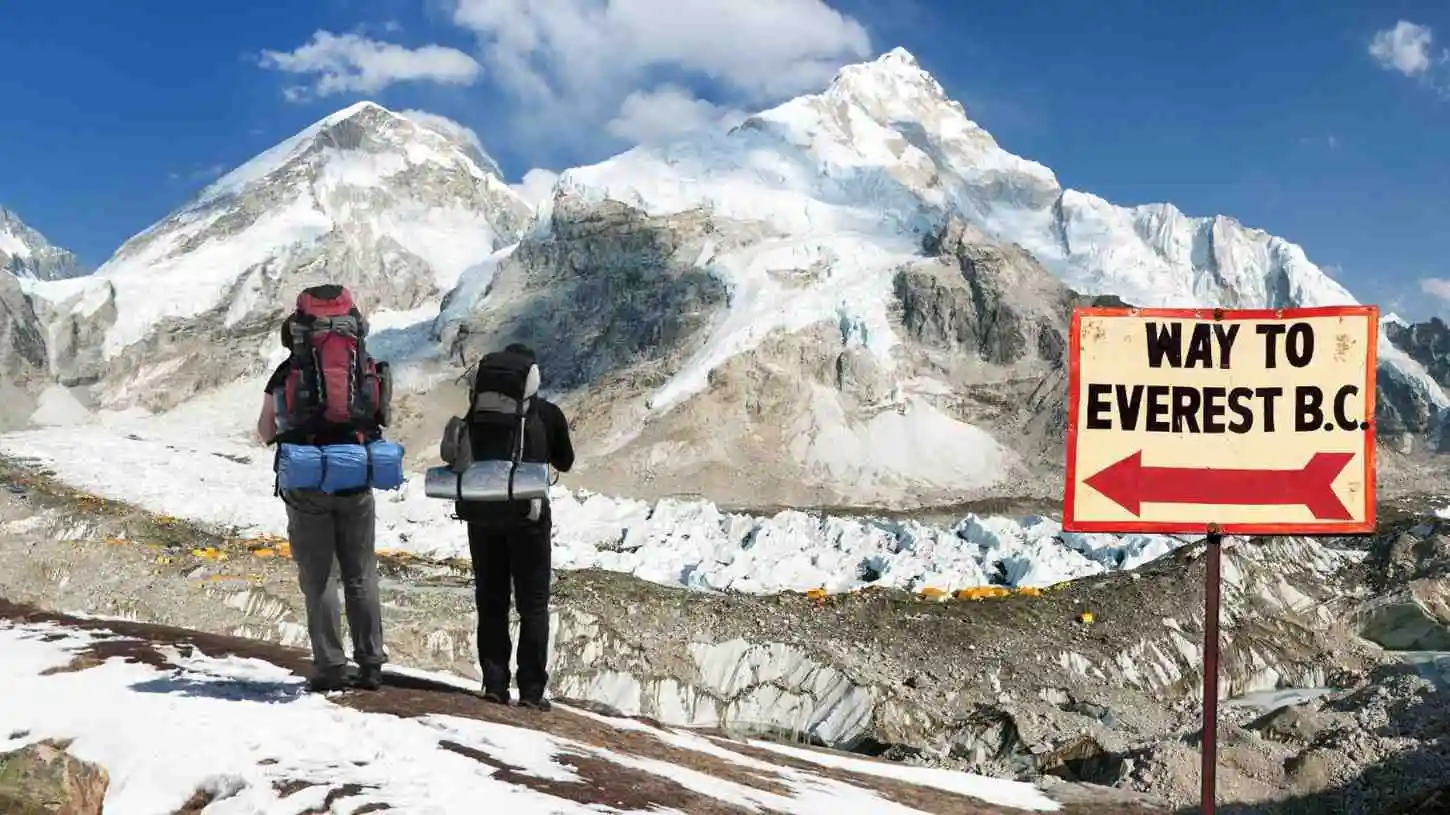
The Everest Base Camp Trek is a trekking path. It is hard and rewarding; however, it does not require ropes, ice axes, or any climbing equipment. Thousands of people of all fitness levels attend it each year.
The Everest Summit Expedition is a completely different level. You are climbing through the Khumbu Icefall, dozing at excessive altitude camps, the usage of supplemental oxygen, and pushing your physical and mental limits. It requires years of excessive altitude mountaineering experience earlier than you should even do not forget attempting it.
If you are simply starting or want to experience the magic of the Everest region without the intense hazard, the Base Camp trek is a great choice to explore. You can also take a look at our Luxury Everest Base Camp Trek or the Short Everest Base Camp Trek, depending on your time and preference.
Why Climbing Everest Takes 6–9 Weeks
If you look at Everest purely on a map, the distance does not seem like it should take two months. So why does it?
The answer comes down to four main reasons.
Acclimatization
Your body isn’t built for excessive altitude. As you climb higher, the air becomes thinner, and your frame receives much less oxygen with each breath. To live at 8,849 meters, your frame needs time to slowly adapt to those conditions. This technique is referred to as acclimatization, and it can not be rushed. Climbers spend weeks going up and coming back down again and again just to teach their bodies to handle the altitude before the real summit attempt.
Camp Rotations
Acclimatization does not appear through sitting at Base Camp. Climbers make more than one journey up to higher camps, spend a night or two, and then return to Base Camp to recover. This cycle is repeated several times throughout the week. It is demanding, and that’s exactly why it works. But it’s far from the only proven way to prepare your body for the summit.
Weather Delays
Everest has its own weather system, and it does not care about your schedule. Storms, excessive winds, and bad visibility can shut down all climbing activities for days or even weeks at a time. Every day trip builds buffer time into the plan just to account for this.
Summit Windows
There are only a handful of days every season when the weather is strong enough to attempt the summit appropriately. These windows are narrow, occasionally simply 2 to 3 days, and lacking it is easy to imply waiting another week or longer for the subsequent opportunity.
Key Takeaway: The distance to Everest’s summit is not what makes the expedition long. The need to acclimatize safely at extreme altitude is what turns the climb into a two-month journey.
The Complete Everest Expedition Timeline
Week 1: Arrival and Trek to Base Camp
Most expeditions start in Kathmandu with more than one day for equipment exams, allow formalities, and team briefings. From there, climbers fly to Lukla and begin the trek to Base Camp at 5,364 meters. This trek takes around 8 to 12 days, depending on the path and tempo. The sluggish ascent throughout the trek serves as the first level of acclimatization, which is why speeding it up is far from a good idea.
Weeks 2 to 5: Acclimatization Rotations
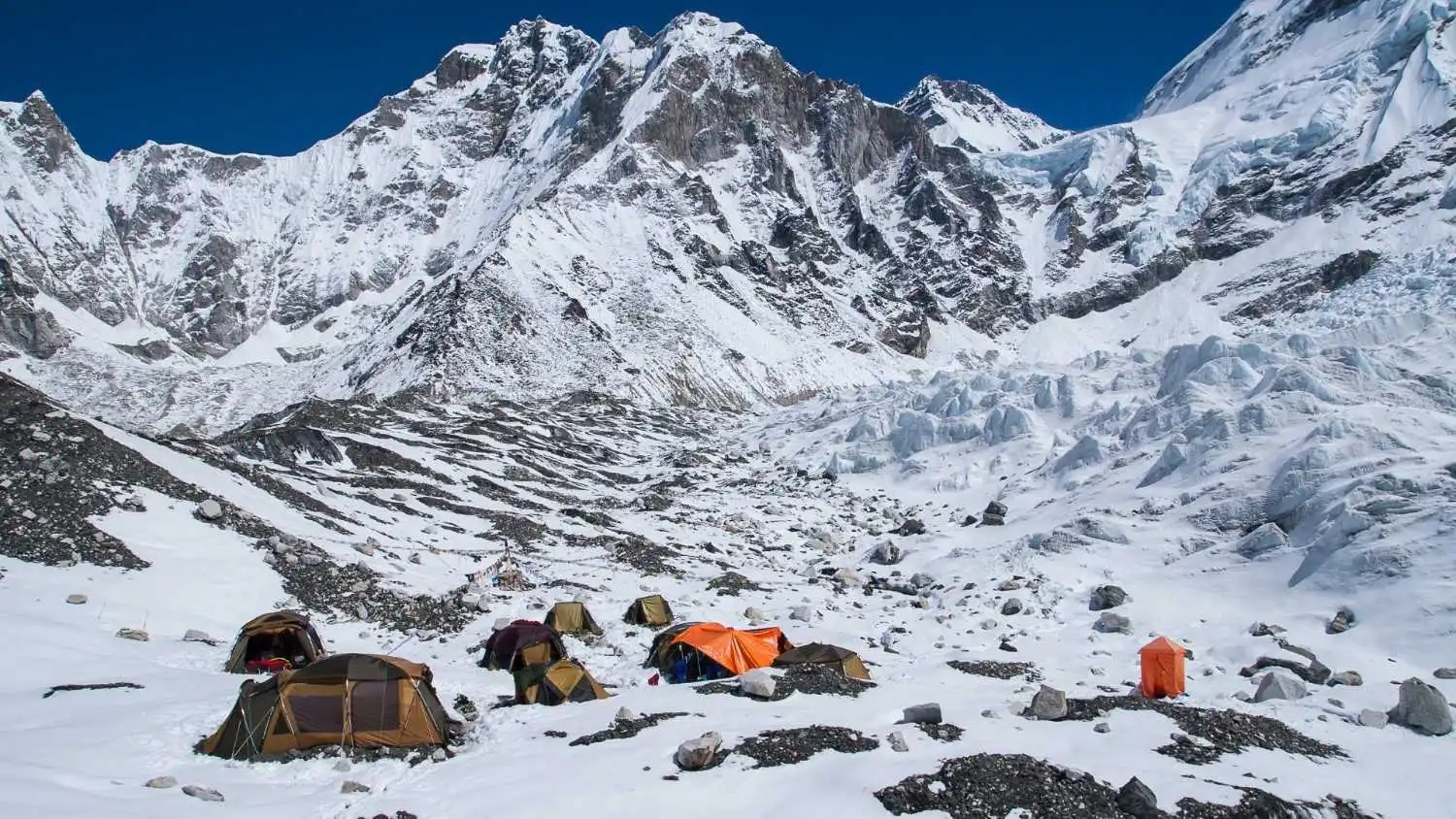
This is the longest and most mentally traumatic part of the expedition. Climbers make a chain of rotations from Base Camp up through the higher camps, commonly Camp 1, Camp 2, Camp three, and every so often Camp 4, before returning to Base Camp after each rotation to rest and recover.
Each rotation goes a touch better than the closing. The idea is to stress the frame simply enough so it adapts, then rest so it can adapt to the changes. This cycle repeats over 3 to 5 weeks and is what separates successful summits from failed ones.
During this era, climbers are also looking at the weather closely and looking forward to a reliable summit window to open up.
Weeks 6 to 8: The Summit Push
When the weather window arrives, it’s time. Climbers move up through the camps over numerous days, spending nights at Camp 2, Camp three, and Camp 4 before making the final push to the summit from Camp 4 at around 7,900 meters. The summit day itself is brutal, frequently starting in the dead of night and lasting 12 to 18 hours of non-stop climbing in freezing temperatures and low oxygen.
If everything goes well, climbers reach the summit and begin their descent the same day. There is no celebration on the summit for long. Getting down correctly is just as vital as getting up.
Final Days: Descent and Departure
After the summit, climbers descend back to Base Camp, after which they trek out to Lukla. From there, a brief flight brings them again to Kathmandu. Most expeditions wrap up within a few days of a hit summit, even though climate or bodily recuperation can on occasion extend this period.
What a Typical Day at Everest Base Camp Actually Feels Like
Most humans consider Everest Base Camp as an area of regular action and adrenaline. The fact is a lot quieter than that, and in lots of ways, lots harder.
Everest Base Camp sits at 5,364 meters, where the air has roughly 1/2 the oxygen you will breathe at sea level. Even easy tasks like strolling to the restroom or getting dressed leave you slightly out of breath. Your frame is working extra time simply to function usually, and that takes a toll on your power and temper over the years.
A traditional day typically starts early. Climbers awaken, take a look at the weather document, and attend a morning briefing with their crew and publications. Breakfast is easy, however excessive in calories because your body burns via power rapid at altitude.
After that, the day depends on where you are within the expedition. On rest days, climbers study, stretch, hydrate, and try to stay cool. On rotation days, they gear up and head towards the better camps.
Meals are eaten in interior dining tents that double as social spaces. The food is particularly respectable at most camps, with hot soups, rice, pasta, and lots of tea. Staying hydrated is a constant concern due to the fact that dehydration hastens the consequences of altitude sickness.
In the evenings, the sounds of the Khumbu Icefall creaking and shifting inside the dark grow to be a familiar backdrop. Many climbers describe it as eerie and a constant reminder of the mountain’s power. Calls to family are a daily ritual for most, a small but important way to stay grounded throughout what can feel like an otherworldly experience.
The hardest part of Base Camp life is not the physical discomfort. It is the waiting. Days blur together, motivation dips, and the uncertainty of when your weather window will come can wear on even the most experienced climbers.
Why the Waiting Is Harder Than the Climbing
Ask any Everest veteran what the toughest part of the day trip becomes, and a shocking number of them will now not say the summit push. They will say the waiting.
Sitting at Base Camp for weeks on end is a mental challenge that most people no longer put together. You educate your body for months before the expedition. You circumvent yourself for the cold, the altitude, the physical needs. But not anything truly prepares you for the psychological weight of simply ready.
Every morning, you wake up hoping these days might be the day the climate clears. You take a look at the forecast, your manual shakes its head, and you move back to your tent. Then you do it once more the next day. And the day after that. For some expeditions, this waiting period stretches on for two to three weeks without a clear end in sight.
The uncertainty is what gets to people the most. You can’t manage the mountain. You can not negotiate with the climate. All you may do is stay an affected person, stay wholesome, and believe the manner. That sort of helplessness is deeply uncomfortable, especially for driven, goal-oriented individuals who are used to making things happen naturally.
There is likewise the intellectual weight of knowing what lies beforehand. The summit push is dangerous. Climbers at Base Camp have time to think about each possible outcome, and that quiet time by myself, together with your mind, can be its very own kind of challenge.
The climbers who do nicely for the duration of this period are generally the ones who discover a recurring, strong connection with their teammates and treat the waiting as a part of the climb, as opposed to a delay to it. Because in lots of approaches, it’s miles. Patience at Base Camp is simply as critical as electricity at the mountain.
What’s Changed for Everest Climbers in 2026?
The 2026 Everest season is one of the most law-heavy in current records. Nepal has introduced a chain of adjustments that affect who can climb, how they climb, and what they may be responsible for for the duration of and after the expedition.
Here is a quick overview of the major updates:
| Change | Impact |
| Permit Fee Increase | Fees have gone up from $11,000 to $15,000 |
| Proposed 7,000m Qualification Rule | Climbers may need to summit a 7,000m peak in Nepal first |
| Mandatory Guide Requirement | Every two climbers must hire a certified Nepali guide |
| Waste Removal Rule | Each climber must bring down 2kg of waste from Camp 2 and above |
| North Side Closure | The Tibet route is closed, pushing all climbers to the Nepal side |
| Shorter Permit Window | Permit validity reduced from 75 to 55 days |
The north aspect of Everest from Tibet is effectively closed for the 2026 season, so all climbers are being funnelled through the Nepal direction. This has raised worries about congestion, with summit numbers predicted to increase to around 850 to 900 climbers this season.
One of the most pointed out changes is the requirement for prior high-altitude climbing experience. Climbers may also now want to have successfully summited a peak of at least 7,000 meters inside Nepal before being eligible for an Everest permit. However, this rule remains under discussion at the committee level as of March 2026 and isn’t yet absolutely enforced.
Solo climbs at the moment are banned, and obligatory GPS tracking devices are required for all climbers. Drones are also being used more appreciably to enhance safety and decrease the danger to Sherpas operating inside the Khumbu Icefall.
On the environmental side, each must now bring down a minimum of 2kg of waste from Camp 2 and above, on top of the present rule that requires 8kg of garbage to be deposited at Base Camp at the end of the day trip.
These modifications reflect a clean shift in how Nepal wants Everest expeditions to be run. The focus is on safety, responsibility, and protecting the mountain for future generations.
Can You Climb Everest Faster?
Fast-Track Expeditions
Some expedition companies provide compressed itineraries that intend to get climbers to the summit in a shorter time-frame. These aren’t shortcuts within the traditional sense. They are designed for climbers who arrive already partially acclimatized and feature a sturdy history of high altitude mountaineering. Even then, the margin for error is a lot smaller.
Hypoxic Tents
One of the most famous tools for pre-acclimatization is the hypoxic tent. These are special sound asleep tents that simulate excessive altitude conditions by lowering the oxygen levels internally. Climbers sleep in them for weeks or months before the day trip, giving their bodies a head start at the acclimatization procedure. This can shave time without working the rotations needed at Base Camp, but it does not cast them off entirely.
Pre-Acclimatization Protocols
Some climbers additionally spend time at high altitude locations earlier than arriving in Nepal. Trekking in different high altitude areas or spending time at elevation helps the frame adaptation before the expedition even begins. Combined with hypoxic tent training, this may make a compressed timeline extra feasible.
But here is the reality test. Faster no longer automatically means more secure. In truth, speeding the acclimatization procedure is one of the main causes of serious altitude illness, choices made under hypoxic strain, and fatalities on the mountain.
Here is a quick myth vs reality breakdown:
| Claim | Reality |
| Everest can be climbed in 2 to 3 weeks | Only possible with extensive pre-acclimatization |
| Faster means safer | Not necessarily, rushing increases risk significantly |
| Anyone can do a compressed expedition | Requires years of preparation and proven high altitude experience |
The Fastest Anyone Has Ever Climbed Everest
Speed information on Everest exists in a category of its own. These are elite athletes and experienced mountaineers who have spent years getting ready mainly for fast ascents. Their times are fantastic, but they have got very little to do with what a normal day trip looks like.
Here are the current records worth knowing:
| Record | Holder | Time |
| Fastest Ascent (With Oxygen) | Tyler Andrews | 9 hours, 55 minutes |
| Previous Oxygen-Assisted Record | Lhakpa Gelu Sherpa | 10 hours, 56 minutes |
| Women’s Speed Record | Phunjo Lama | 14 hours, 31 minutes |
On May 28, 2026, American ultrarunner and mountaineer Tyler Andrews finished the quickest recognized ascent of Everest with supplemental oxygen, achieving the summit from Base Camp in just nine hours and 55 minutes. This shaved over an hour off the preceding record that had been held by Lhakpa Gelu Sherpa considering the fact that 2003.
Andrews also broke the round-trip document, returning to Base Camp in 16 hours and 32 mins, nearly two hours faster than the previous mark. What makes this even more extraordinary is that this became his seventh try at the velocity record and his first successful summit.
On the women’s side, Nepali climber Phunjo Lama holds the record for the quickest ascent by a girl, reaching the summit in 14 hours and 31 minutes and shaving more than eleven hours off the preceding best.
These numbers are jaw-dropping; however, it’s miles critical to place them in context. Andrews and Lama are not normal climbers. They are international elite athletes with years of excessive altitude exposure, specialized training, and thoroughly planned help groups behind them. Andrews, by myself, holds over one hundred quickest recognized time information throughout five continents and formerly competed within the US Olympic Team Trials for the marathon.
For the sizable majority of climbers, that information isn’t a reference point. They are a reminder of what the human frame is capable of at its absolute limit. For everybody else, the 6 to 9 week timeline stays the secure and realistic standard.
Best Time to Climb Mount Everest
Timing plays a huge role in whether your Everest expedition succeeds or not. There are two realistic windows to attempt the summit:
| Season | Advantages | Challenges |
| Spring (March to May) | Most stable weather, longer summit windows, better visibility | Crowded routes, higher costs |
| Autumn (September to November) | Fewer climbers, clear skies post-monsoon | Colder temperatures, less predictable weather |
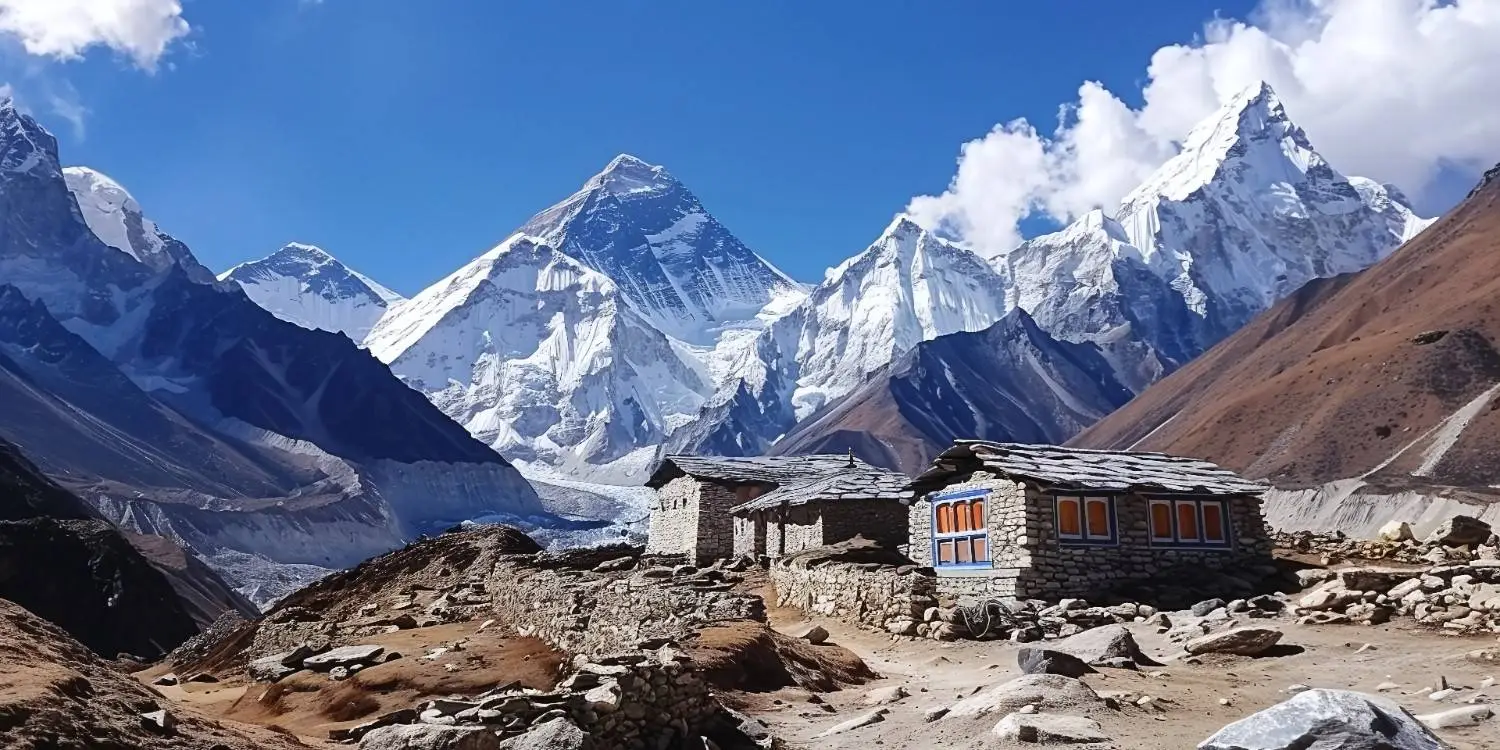
May is widely considered the high-quality month to climb Everest, as temperatures are hotter and the jet flow has moved away from the mountain. The alternative is crowds. Base Camp, at some point in the spring peak season, resembles a tent metropolis.
Autumn is the quieter alternative. Post-monsoon skies are crystal clean with remarkable visibility, though less warm temperatures and rapidly changing climate add to the technical issue.
Winter and monsoon seasons aren’t viable for most expeditions due to excessive winds, heavy blizzards, and dangerously low temperatures.
How Much Does It Cost to Climb Everest?
Climbing Everest is as much a financial commitment as it is a physical one. The total expedition cost in 2026 ranges between $35,000 on the lower end and $100,000 or more for premium or luxury packages.
Here is where that money typically goes:
| Expense Category | Estimated Cost |
| Climbing Permit | $15,000 |
| Guide Services & Sherpa Support | $10,000 – $25,000 |
| Oxygen | $3,250 – $10,000 |
| Equipment & Gear | $5,000 – $10,000 |
| Insurance | $3,000 – $5,000 |
| Logistics & Agency Fees | $5,000 – $15,000 |
The well-known permit price from the Nepal side is $15,000 in keeping with person for the spring season, a 36{34a887646408a4f9253855cc892a27833eaf14e4eb214d8ef06e0a7a48137591} growth from the preceding charge of $11,000. And this is simply the place to begin. Oxygen by myself costs around $650 per bottle, and most climbers use at least five bottles, which adds up to more or less $3,250 at minimum.
Budget expeditions with minimum offerings can come in around $45,000, even as summit-class guided applications can exceed $130,000. One aspect really worth retaining in mind is that reducing charges on Everest frequently means reducing corners on safety, and that could be a threat no summit is worth.
Do You Need Experience Before Climbing Everest?
The short answer is yes, absolutely. Everest is not a mountain you work up to overnight. It demands years of high-altitude climbing experience, strong technical skills, and a level of physical fitness that takes a long time to build.
Here is a realistic progression table based on where most climbers start:
| Experience Level | Suggested Climb |
| Beginner Trekker | Everest Base Camp Trek |
| Intermediate | Island Peak (6,189m) |
| Advanced | Mera Peak / Lobuche (6,400m+) |
| Everest Aspirant | Higher Altitude Expeditions (7,000m+) |
Previous High Altitude Climbs
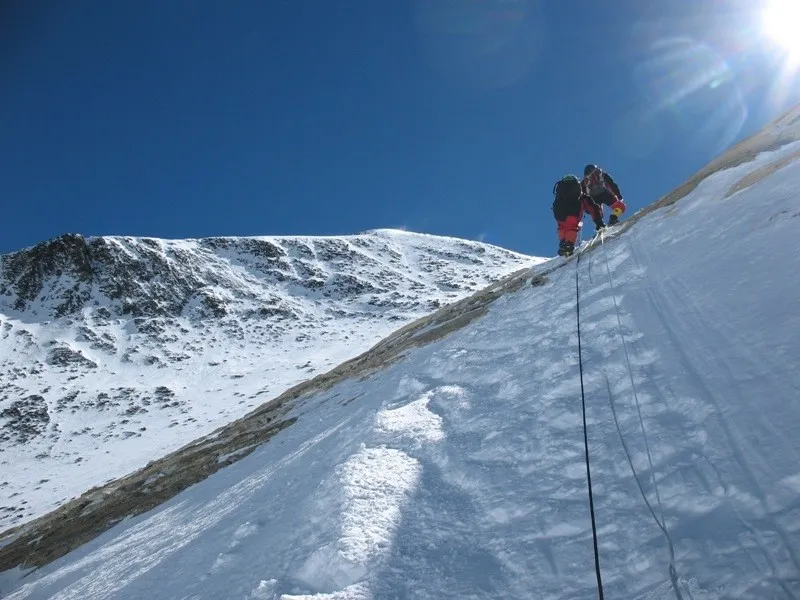
Climbers should now have effectively summited a peak of at least 7,000 meters inside Nepal before being eligible for an Everest permit. This isn’t only a rule on paper. It exists due to the fact that high altitude mountaineering includes capabilities that can only be learned by means of genuinely doing it, such things as managing supplemental oxygen, studying mountain climate, and making life-or-death decisions under physical strain.
physical fitness
Getting to the summit of Everest requires months of committed training before the excursion even starts offevolved. Cardiovascular endurance, electricity education, and consistent time spent at altitude are all non-negotiable components of the training method.
Where to Start
If Everest is your long-time purpose, the pleasant component you may do right now could be to start smaller. Peaks like Island Peak and Mera Peak are remarkable access points into high-altitude mountaineering within the Himalayas. They teach you the basics of glacier travel, rope work, and altitude control in hard, however, extra forgiving surroundings. Lobuche Peak is another sturdy alternative for climbers geared up to step things up earlier than focusing on the bigger mountains.
Each climb you whole brings you one step towards being really ready for Everest, now not simply bodily, but mentally too.
FAQs
1. How long does it take to climb Mount Everest?
A complete Everest day trip takes 6 to nine weeks from beginning to completion. This consists of the trek to Base Camp, acclimatization rotations, the summit push, and the descent back down.
2. Is the Everest Base Camp trek the same as climbing Everest?
No, they’re completely various things. The Base Camp trek is a trekking path that takes around 12 to 16 days and calls for no technical climbing abilities. Climbing Everest to the summit is a full mountaineering excursion which could last for two months.
3. What is the best time of year to climb Everest?
Spring, specifically April and May, is the most famous and dependable window. Autumn, from September to November, is a quieter alternative, though conditions are much less predictable.
4. How much does it cost to climb Everest in 2026?
Most climbers spend between $45,000 and $100,000+, depending on the operator and services included. The permit alone costs $15,000 for the spring season.
5. Do I need prior climbing experience to attempt Everest?
Yes. Nepal has proposed requiring climbers to have summited a peak of at least 7,000 meters earlier than making use of for an Everest permit. Years of enjoying excessive altitude climbing are vital before trying the world’s highest mountain.
6. How many days does the summit push take?
The summit push usually takes 5 to 10 days, including nights at Camp 2, Camp 3, and Camp 4, earlier than the very last push to the summit.
7. Can Everest be climbed faster than 6 weeks?
It is viable for particularly skilled climbers who arrive pre-acclimatized; however, it is not advocated for most people. The popular timeline exists to preserve climbers’ safety.
8. What is the death zone on Everest?
The demise zone refers to any altitude above 8,000 meters where oxygen levels are so low that the human frame begins to go to pot faster than it can recover. Climbers spend as little time as feasible in this quarter.
9. How many people summit Everest each year?
The range varies by way of season. In 2026, summit numbers are expected to reach 850 to 900 climbers because of the closure of the Tibet path, pushing all climbers to the Nepal aspect.
10. What happens if the weather window closes before you summit?
If the climate window closes, climbers return to Base Camp and watch for the subsequent possibility. If no further windows open before the season ends, the excursion is over for that 12 months, and climbers ought to go back the following season.
Conclusion
Climbing Mount Everest takes 6 to nine weeks, and every part of that timeline exists for a purpose. The acclimatization rotations, the readiness, the careful planning around weather windows, all of it adds as much as what makes a secure summit viable.
Not geared up for the overall excursion, but? The Everest Base Camp Trek is a terrific way to revel in the Khumbu region without the extreme needs of a summit try.
Whatever your Everest goal seems like, the proper group makes all the difference. Nepal Outdoor Expeditions brings deep local expertise, skilled Sherpa support, and a true dedication to your protection every step of the way.
Ready to start making plans? Get in contact with Nepal Outdoor Expeditions these days.