When people search for Rainbow Valley photographs, they generally come across images that are difficult to forget. Some display colorful jackets half-buried in snow. Others display figures frozen exactly where they fell, high above the clouds. These aren’t staged. Many of them are real.
Rainbow Valley sits within Everest’s Death Zone on the north side of the mountain, above 8,000 meters. The name itself does not come from whatever lovely. It comes from the brightly colored mountaineering fits, ropes, and equipment that have collected there over many years of summit attempts.
What the pictures show isn’t always a spectacle. They are a record of what takes place while human ambition meets one of the most unforgiving environments on Earth.
The Quick Answer: Why Rainbow Valley Became Famous
Before going deeper, here are the most common questions people ask, answered directly
| Question | Short Answer |
| Where is Rainbow Valley? | On the north side of Everest, within the Death Zone above 8,000 m |
| Why is it called Rainbow Valley? | Bright-colored climbing gear and suits visible on the mountain |
| Are the photos real? | Many are authentic, though some viral images are misidentified or AI-generated |
| Why are bodies still there? | Recovery is extremely dangerous, expensive, and often physically impossible |
| Can climbers see them? | Yes, depending on route and snow conditions |
| Is it on the Nepal or Tibet side? | The Tibet (north) side |
Where Is Rainbow Valley on Mount Everest?
Rainbow Valley sits on the north side of Mount Everest, inside the territory of Tibet. It lies above 8,000 meters, setting it firmly within what mountaineers name the Death Zone.
At this altitude, the air holds much less than one-third of the oxygen available at sea level. The human body cannot permanently acclimatize to this altitude. It gradually begins to deteriorate. Every minute a climber spends above 8,000 meters without supplemental oxygen, their body is slowly shutting down. Judgment becomes impaired, movement slows, and even simple decisions become difficult. The margin for blunders essentially disappears.
Rainbow Valley isn’t always a named geographical feature on any legitimate map. It is a casual time period used by the mountaineering network to describe a selected stretch alongside the north ridge path, near the summit pyramid. Climbers drawing close from the Tibet side skip through or near this place in the route of their very last push toward the top.
The north route and the south route take climbers through very different terrain, and Rainbow Valley is particular to the north. Climbers on the south aspect, approaching via Nepal through the Khumbu Icefall and South Col, do not bypass via Rainbow Valley at all. If you need to understand how the two routes evaluate and what that means for what climbers come upon, our article on Rainbow Valley Everest: North Side vs South Side breaks it down.
Why Is It Called Rainbow Valley?
The name Rainbow Valley has nothing to do with any herbal phenomenon. It comes from color.
Over a long time of expeditions, climbers who did not make it again left behind the whole thing they had been sporting and wearing. Bright crimson, yellow, blue, and orange down fits. Backpacks. Oxygen cylinders. Ropes. All of it preserved by means of the acute bloodless, scattered throughout the snow and rock at intense altitude.
When considered from certain angles, in particular from aerial snapshots and summit technique paths, this accumulation of colorful gear in opposition to white snow creates a nearly surreal visual. That is where the name comes from.
It is really worth noting that Rainbow Valley is not an legit region name. No governing geographic body recognizes it. The term grew organically in the mountaineering network and later unfolded via documentaries, news coverage, and social media. For a fuller rationalization of the valley’s geography and what the Death Zone really does to the human body, see our guide on Rainbow Valley: Everest’s Frozen Zone.
Most Well-Known Bodies Associated With Rainbow Valley
Before stepping into personal tales, one element needs to be stated simply. Not every well-known body found on Everest is positioned in Rainbow Valley. Many articles on line organization all well-known Everest deaths under the Rainbow Valley label, which is factually wrong. Some climbers died on the south side, a few on exceptional sections of the north route, and a few in locations that have no connection to Rainbow Valley at all.
What follows is based on verified records. Where info remain debated or uncertain, this is stated certainly.
Green Boots
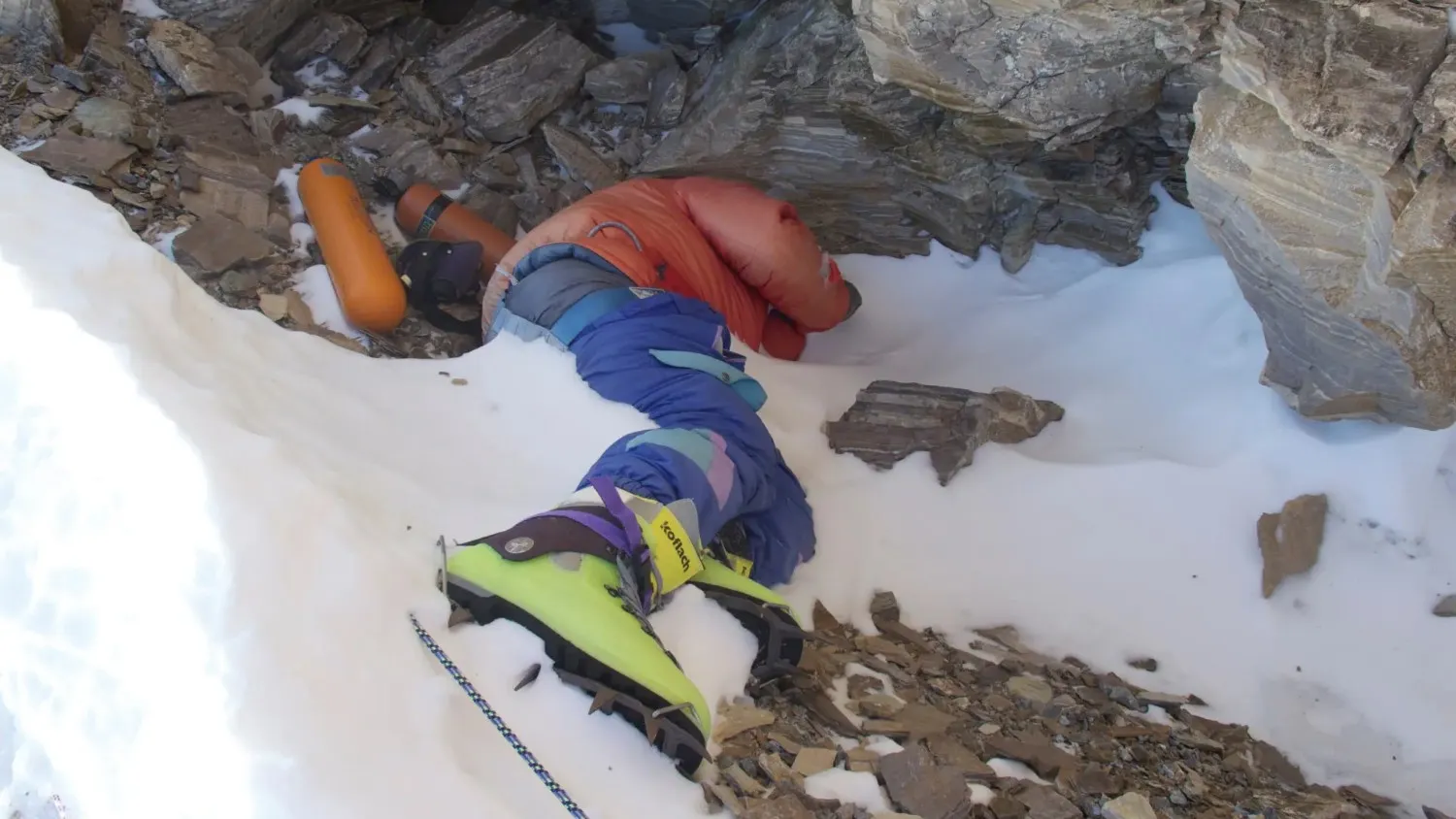
Green Boots is one of the most identified landmarks on the north route of Everest. The name refers to a climber located in a limestone alcove close to the summit, identifiable via the intense inexperienced mountaineering boots on their ft.
Many mountaineers and researchers believe Green Boots was Tsewang Paljor, an Indian climber who died on Everest during the 1996 storm that also claimed many other lives. However, no official source has ever confirmed his identity.
For years, Green Boots served as an unintentional waypoint for climbers on the north path. The alcove has become a known relaxation stop, and the parent interior became a quiet, sobering reminder of what the mountain demands. Reports from recent expeditions suggest that snow may now cover the body or hide it from the main route. However, no official source has confirmed this.
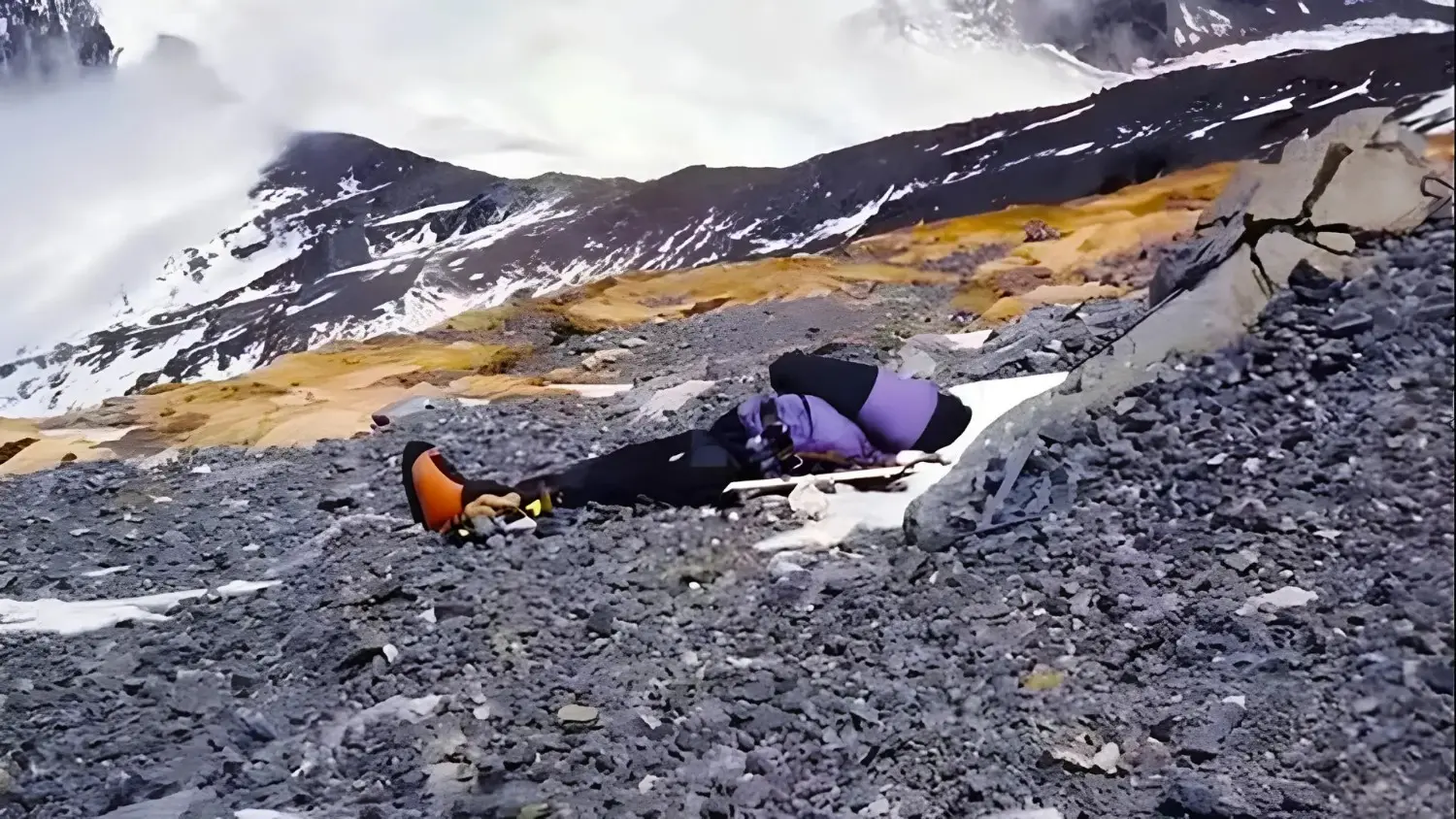
Francys Arsentiev
Francys Arsentiev changed into an American climber who, in 1998, became the first American lady to summit Everest without supplemental oxygen. She did not live on the descent.
After summiting with her husband Sergei Arsentiev, the couple became separated on the way down. Two Uzbek climbers found Francys alive but incapacitated and spent more than an hour trying to help her before their oxygen ran out, forcing them to descend.She handed away at the mountain.
Her tale has become well known now, not simply due to her achievement, but due to what her husband did subsequently. Sergei went again for her, more than as soon as, and disappeared on the mountain during one of the attempts. Their story is one of the most documented and emotionally significant in Everest’s history.
Francys became referred to as Everest’s Sleeping Beauty due to how she seemed when found. You can examine the overall account in our devoted piece on Everest’s Sleeping Beauty, and the whole story of her husband’s search is blanketed in our article on Francys Arsentiev’s husband Sergei Arsentiev on Everest.
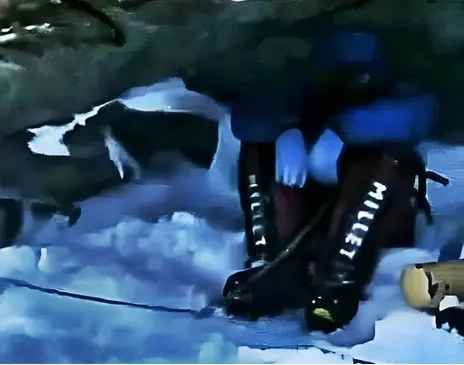
David Sharp
David Sharp was a British climber who died on Everest in 2006, near the Green Boots alcove on the north route. Multiple mountaineering teams found him alive but unresponsive and in extremely critical condition during their summit pushes, making a rescue extraordinarily difficult at that altitude.
His dying prompted one of the most significant ethical debates in current mountaineering. Several teams handed him without trying a severe rescue. When this became public, questions arose about the subculture of summit-at-all-costs that had evolved at the mountain.
The David Sharp case pushed the mountaineering community to have tougher conversations about obligation at extreme altitude, the bounds of what one climber can do for another in the Death Zone, and whether business climbing had modified Everest’s ethical panorama in ways that needed addressing.
Other Climbers Commonly Linked to Rainbow Valley
A few other climbers are part of Everest’s documented records at excessive altitude.
Hannelore Schmatz, a German climber, died on the south side of Everest in 1979 during descent after a successful summit. She was seen near the South Col for years before subsequently disappearing, possibly carried away by way of wind and shifting snow.
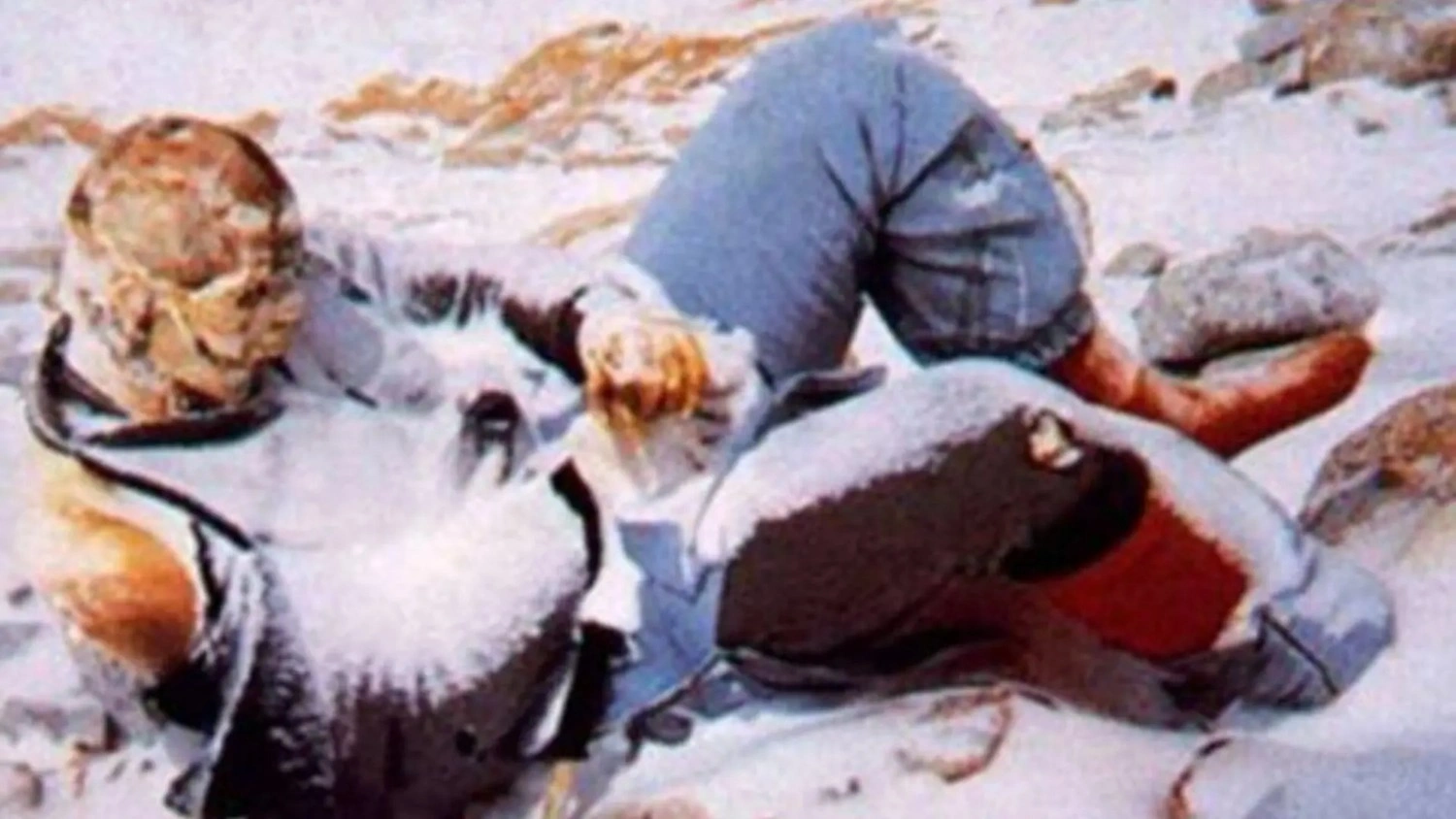
Everest fatality records also document Marko Lihteneker and climbers from various nationalities, although the media gives their stories far less attention than those of the climbers mentioned above.
It is crucial to deal with those as ancient records instead of points of interest. Each name represents someone who accepted critical danger in pursuit of one of the hardest physical goals on Earth.
Are Rainbow Valley Pictures Authentic?
Many pictures circulating online under the Rainbow Valley label are authentic. Verified expedition photographers and documentary filmmakers have captured pictures on Everest’s north path that show the harsh realities of the Death Zone. These are authentic pieces of information about mountaineering history.
But not everything classified as a Rainbow Valley photograph simply comes from Rainbow Valley. A large variety of viral pictures are both misidentified, taken from distinctive sections of Everest, or sourced from completely exceptional mountains. AI-generated imagery is also turning into a real problem, with fabricated scenes that look convincing enough to fool many viewers scrolling through social media.
If you need demonstrated visual documentation, stick with named excursion resources, established mountaineering routes, and credible documentary filmmakers. Images without clean attribution or excursion context need to be dealt with skepticism. And beyond media literacy, it’s miles sincerely a matter of appreciation closer to the climbers and their families.
Why Aren’t Bodies Removed From Everest?
The solution isn’t indifference. It comes all the way down to a mixture of bodily truth, logistical issues, and deeply personal decisions.
- The Death Zone works against everything. Above 8,000 meters, a climber is already at the brink of what the body can cope with simply by transferring forward on their own. Moving a frozen body throughout steep, technical terrain while coping with oxygen and physical deterioration is truly not sensible for most teams.
- Recovery missions are major operations. Organized attempts require separate expedition permits, dedicated Sherpa teams, specialized devices, and enormous funding. Each recovery is a full logistical attempt, and achievement is in no way guaranteed, even in the end, that coaching.
- Sherpa safety always comes first. Asking everybody to spend more time in the Death Zone for a recovery attempt is asking them to take on a critical extra risk to their very own lives. That is not a trade-off the mountaineering network takes lightly.
- Some families choose to leave their loved ones there. For them, Everest turns into a resting region rather than a site of loss. Others have requested recovery, with outcomes relying on the body’s place, circumstance, and the season.
For a closer look at what the Death Zone actually does to the human body, our article on Rainbow Valley: Everest’s Frozen Zone covers it in detail.
How Many Bodies Are Believed to Remain on Everest?
No one is aware of the exact number, and any discern you see online should be handled as an estimate in place of a stated number.
The maximum normally cited range is around 200 bodies remaining on Everest, based on historic fatality information minus confirmed recoveries. But that range comes with numerous critical caveats.
- Snow and glacier movement change everything. Bodies that were visible one season can be completely buried the subsequent season. Others that have been covered for years can resurface as glaciers shift. This makes any static matter unreliable over the years.
- Not all deaths are documented in detail. Some climbers have gone missing on Everest without a clear report of where they fell or where they ended up to rest. These cases make a unique matter difficult to establish.
- Recoveries happen, but slowly. Over the years, several bodies had been introduced down or buried at lower altitudes via organized efforts. Each recovery reduces the range, but these efforts are infrequent and logistically demanding, as included within the preceding segment.
- The number grows incrementally each year. Everest sees hundreds of summit attempts annually. Fatalities, at the same time as especially uncommon as compared to general climbers, do nonetheless occur. The universal count does not decrease rapidly enough to offset new losses in bad seasons.
What the numbers reflect, more than anything, is how extreme the environment is and how permanent the consequences of a mistake can be at that altitude.
What Climbers Learn After Seeing Rainbow Valley
Most climbers who bypass this phase of the north route describe it as a moment that changes how they reflect on the mountain. Not because it’s far frightening, however, due to the fact it is clarifying.
- Preparation is not optional. The climbers whose remains are in Rainbow Valley were not casual adventurers. Many had been experienced, healthy, and nicely organized. What Rainbow Valley teaches is that education has to go beyond physical fitness.
- The turnaround decision is the hardest and most important one. A substantial quantity of Everest fatalities take place on the descent, often after a climber pushed past a safe turnaround time to attain the summit. Rainbow Valley is a direct reminder that attaining the pinnacle is only half the climb.
- Supplemental oxygen is not a luxury. Francys Arsentiev’s story, among others, illustrates what occurs whilst climbers attempt the summit without it. At that altitude, the margin between making it and not making it’s far razor thin, and oxygen is a main part of what maintains that margin open.
- Respecting the mountain means knowing when to stop. Everest does not reward stubbornness. The climbers who come back adequately are typically those who made conservative selections at essential moments, even if the summit felt near.
Can Trekkers Visiting Everest Base Camp See Rainbow Valley?
No. Everest Base Camp trekkers can’t see Rainbow Valley, and this is one of the most commonplace misconceptions about it.
Everest Base Camp sits at around 5,364 meters on the Nepal side. Rainbow Valley is above 8,000 meters in Tibet. They are separated by thousands of meters of elevation, entirely specific terrain, and in some instances, a global border.
- Base Camp trekkers see the lower mountain. The classic Everest Base Camp trek takes you via Namche Bazaar, Tengboche, and Gorak Shep earlier than achieving Base Camp. It is a stunning adventure; however, it remains properly underneath the Death Zone at all times.
- Rainbow Valley is only accessible to summit climbers. To reach Rainbow Valley, climbers need a valid Everest summit permit, months of training, acclimatization rotations, and a north-side expedition from Tibet.
- What Base Camp trekkers do see is remarkable on its own. Views of the Khumbu Icefall, the surrounding Himalayan peaks, and the dimensions of the mountain itself make the trek one of the most profitable experiences in the world without needing to go anywhere near the Death Zone.
FAQs
Why is Rainbow Valley famous?
Rainbow Valley became widely known due to photographs displaying the remains of climbers who died on Everest’s north route. The name itself comes from the bright colors of climbers’ suits and equipment visible against the snow, accumulated over many years of expeditions.
Are Rainbow Valley pictures real?
Many are authentic, captured by expedition photographers and documentary filmmakers on the north route of Everest. However, a significant number of pictures circulating online are misidentified, taken from different parts of the mountain, or totally AI-generated. Always check the source before treating a picture as confirmed.
Who is Green Boots on Everest?
Climbers informally call the unidentified mountaineer “Green Boots” because of the bright green mountaineering boots he wore. His body rests in a limestone alcove along Everest’s north route. Most researchers believe the climber to be Tsewang Paljor, an Indian mountaineer who died during the 1996 Everest disaster. However, this identification has never been officially confirmed.
Why are bodies left on Everest?
Recovery above 8,000 meters is extraordinarily risky, logistically complicated, and expensive. Conditions in the Death Zone make it physically very hard to transport a frozen body down steep terrain. In some instances, households have additionally chosen to leave their loved ones at the mountain as a final resting place.
How many bodies remain on Mount Everest?
The most commonly cited estimate is around 200, primarily based on historical fatality records minus confirmed recoveries. However, this is not a proven figure. Snow cover, glacier movement, and undocumented disappearances make an accurate number not possible to affirm.
Can Everest Base Camp trekkers visit Rainbow Valley?
No. Rainbow Valley sits above 8,000 meters on Everest’s north side in Tibet. Everest Base Camp sits at around 5,364 meters on the Nepal side. Only authorised summit climbers on the north route skip through this place.
Is Rainbow Valley on the Nepal or Tibet side?
Rainbow Valley is on the Tibet side, accessed from the north. Climbers coming from Nepal through the south route do not skip through Rainbow Valley.
Are bodies still visible in Rainbow Valley today?
Visibility changes from season to season, relying on snowfall and glacier movement. Some of the bodies that have been seen for years have since been buried. Others have resurfaced after being covered. There is no single answer that applies year to year.
Has anyone recovered from Rainbow Valley?
Yes, some recoveries have been carried out over the years through organized expeditions. However, each recovery is a main mission, and many of the bodies continue to be where they fell due to the dangers and charges involved.
Everest Asks for Respect, Not Just Ambition
Rainbow Valley isn’t always a collection of viral pictures. It is a document of what happens whilst human ambition meets one of the most severe environments on Earth.
The climbers whose testimonies are tied to this region had been actual humans with households, motivations, and a proper love for the mountains. Understanding their memories through verified information and respectful context is far more meaningful than reacting with surprise or curiosity.
The Everest Base Camp trek brings you close enough to sense the majesty of the mountain and recognize firsthand why it commands the respect it does. At Nepal Outdoor Expeditions, every trek and climbing expedition is built around training, protection, and a deep admiration for the mountain and its records.
The actual story of Rainbow Valley isn’t always about the pics. It is about what the ones snap shots ask us to remember.