Rainbow Valley sits on Mount Everest’s North Face in Tibet, at roughly 8,400 meters above sea level. It isn’t always a valley within the traditional sense. It is a stretch of uncovered ridge just under the summit, in which the brightly colored down suits of unrecovered climbers have remained on the mountain today. The name comes from the many colours: pink, blue, yellow, and orange suits scattered throughout the rocky terrain.
Many people count on Rainbow Valley to exist on both facets of Everest. It does not. The time period formally refers to this specific segment of the northern route. Nepal’s South Face has additionally claimed lives above 8,000 meters, but that area contains no equal name or visual identity.
Understanding why Rainbow Valley is tied to the North Face, and how the 2 summit routes fluctuate, answers a query that even experienced trekkers and Everest lovers get wrong.
What Is Rainbow Valley on Mount Everest?
Rainbow Valley is a segment of Everest’s North Ridge, located between 8,300 meters and 8,500 meters, simply beneath the summit on the Tibetan facet. Climbers on the North Col trek skip directly through it at some point in their summit push.
The call has nothing romantic about it. It refers back to the visible remains of climbers who died on the descent and had never been recovered. Their brightly colored excessive-altitude suits, preserved by means of intense cold and dry wind, created an unintended visual marker along the ridge. From a distance, their colours stand out sharply in opposition to the gray and brown rock.
Bodies remain here for one reason: recovery at this altitude is almost not possible. Above 8,000 meters, every movement costs oxygen that the body cannot replenish. Carrying a body down requires multiple rescuers, supplemental oxygen, and technical rigging on uncovered terrain. The risk to a recovery team often exceeds what is considered justifiable, and most expeditions make the difficult decision to leave the fallen where they are.
Rainbow Valley isn’t always a detour or a viewpoint. Every climber on the North Route walks past it. It sits alongside the fixed ropes leading toward the Second Step, one of the most technically stressful sections of the northern ascent.
Is Rainbow Valley on the North Side or the South Side?
Rainbow Valley is on the North Side of Everest, on the Tibetan face. It isn’t at the South Side, and it isn’t visible from Nepal’s Everest Base Camp or anywhere alongside the standard trekking routes in the Khumbu area.
Rainbow Valley is only on Everest’s North Side because the exposed rocky terrain preserves visibility, unlike the snowy South Route. And each has unrecovered climbers above 8,000 meters. But the time period Rainbow Valley applies particularly to the North Face, and there are clear geographic and structural reasons for that.
The North Ridge is predominantly rocky and uncovered. Wind strips the terrain continuously, and there is little snow accumulation to bury or conceal what is left behind. This is why the colored fits stay visible over decades. The South Face, by contrast, entails more snow and ice, specifically around the South Col and above the Balcony. Remains in the southern direction are much more likely to be protected by means of snow or displaced by the Khumbu Glacier’s movement through the years.
A second issue is directional geography. The North Col trek funnels all climbers through a slender corridor near the summit, passing the identical fixed sections year after year. This concentration means that the identical area accumulates a visible history. The South Col direction spreads climbers across a broader snow and ice face above Camp IV, which distributes both the traffic and the chance otherwise.
So while the South Side has its own sobering history above 8,000 meters, Rainbow Valley, as a named, defined area, belongs completely to the North Face in Tibet.
Rainbow Valley North Side vs South Side: Route Comparison
The differences between Everest’s North and South routes pass beyond Rainbow Valley. Terrain, logistics, rescue, entry to, and technical issues all vary drastically between the two. This desk breaks down the key distinctions.
| Feature | North Side (Tibet) | South Side (Nepal) |
|---|---|---|
| Rainbow Valley | Yes (official location) | No official Rainbow Valley |
| Base Camp Altitude | 5,150 m | 5,364 m |
| Summit Route | North Col Route | South Col Route |
| Famous Hazard | Three Steps (rock bands) | Khumbu Icefall |
| Primary Terrain | Rock and exposed ridge | Snow and ice |
| Rescue Access | Extremely limited | Helicopter access to lower camps |
| Climber Traffic | Lower | Significantly higher |
| Technical Difficulty | Higher (rock climbing sections) | Lower technical difficulty overall |
| Permit Authority | China (Tibet Autonomous Region) | Nepal Government |
| Permit Availability | Restricted, fewer issues | More permits are issued annually |
| Bodies Visible | Yes, the Rainbow Valley area | Yes, above South Col, less visible |
| Success Rate | Lower | Higher |
Trekking Gear: Preparedness For Multi-Day Expeditions
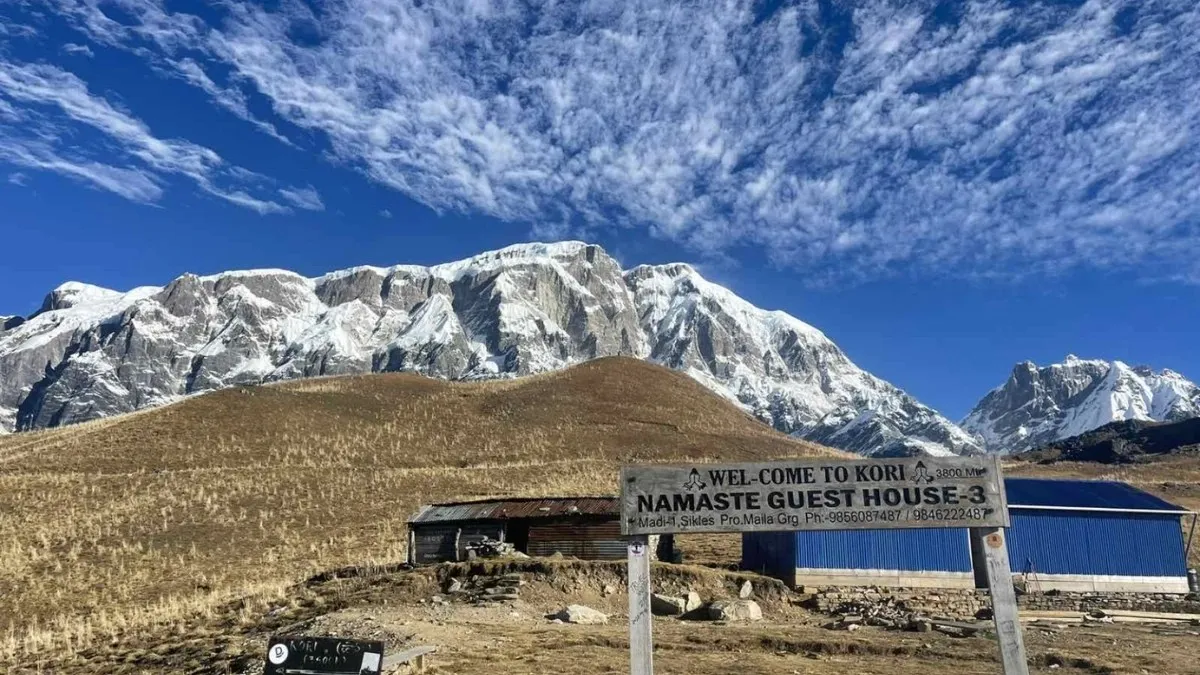
When you’re going for a trek, the list of gear grows a little longer since you’re actually carrying everything you need for several days. You’re going to need a larger backpack, likely over 40 liters, since you’ll be carrying all of your gear. You’ve got your shelter: a tent, sleeping bag, and sleeping pad for comfort. Cooking equipment is also a necessity, such as a small portable stove, fuel, and pots and pans. Layers of clothes that can be adjusted for the altering situations are required; oftentimes, the materials that are moisture-wicking work the best. Heavy, broken-in trekking boots with ankle support are a necessity for multi-day treks. Trekking poles can also make a world of difference for support on your knees, notably when going down a mountain.
Here’s a quick look at what separates the two:
North Side risks:
- The Three Steps, mainly the Second Step, require technical mountaineering at over 8,600 meters. Climbers ascend a close to-vertical rock band the usage of a fixed aluminum ladder, in full high-altitude gear, regularly in darkness for the duration of a summit push.
- The uncovered North Ridge offers no haven from wind. Storms hit with little caution and with complete force at the open terrain above the North Col.
- Rescue infrastructure in the Tibetan region is drastically more limited. Helicopter access to the above Base Camp isn’t always possible at North Side altitudes, and the remoteness of the Tibet approach provides logistical complexity to any emergency.
- Permit restrictions imply fewer groups on the mountain, which reduces crowding but also reduces the wide variety of nearby climbers who can assist in an emergency.
South Side risks:
- The Khumbu Icefall, between Base Camp and Camp I, is one of the most objectively dangerous sections in either direction. Massive seracs shift and fall apart without caution, and every climber crosses them a couple of times during acclimatization rotations.
- The South Col trek sees drastically better climber site visitors, which creates bottlenecks on the Hillary Step and other slim sections near the summit. Crowding at extreme altitude has directly contributed to deaths in Nepal.
- Avalanche exposure is better at the South Face, specifically among Camp II and Camp III on the Lhotse Face.
What both routes have in common is the Death Zone itself. Above 8,000 meters, the human frame deteriorates no matter which side of the mountain a climber stands on. Weather, exhaustion, oxygen depletion, and the sheer remoteness of the summit area create situations in which survival is by no means assured on either route.
Climbers thinking about both aspects ought to study thoroughly and practice with skilled operators. Nepal Outdoor Expeditions works with climbers and trekkers throughout the Everest area and will help you recognize the realities of each route before making any decisions.
Can Everest Base Camp Trekkers See Rainbow Valley?
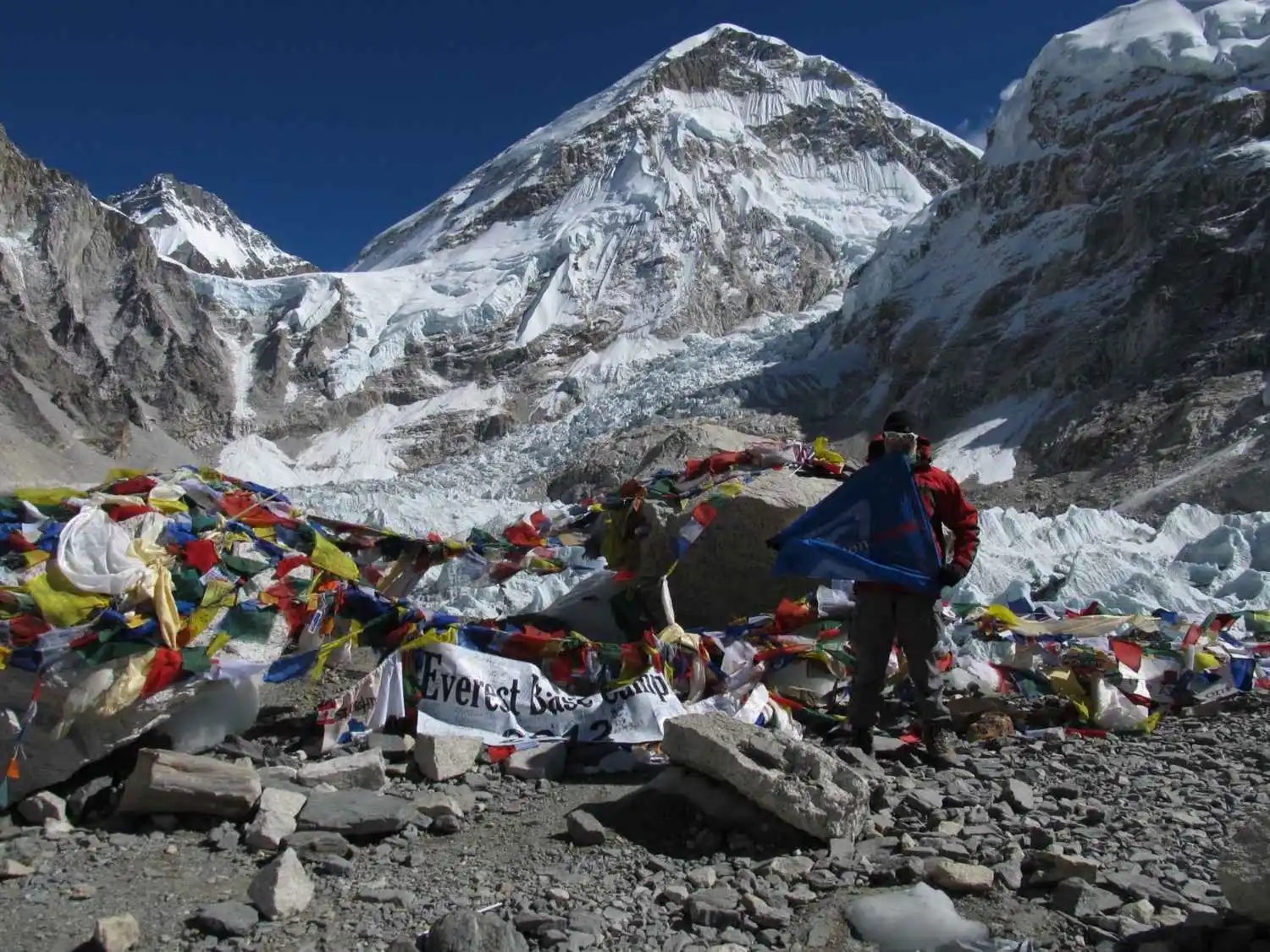
No. Rainbow Valley is not visible from Everest Base Camp in Nepal, and it is not accessible on any standard trekking route in the Khumbu region.
Here is why:
- Location: Rainbow Valley sits at the North Face of Everest in Tibet, at about 8,400 meters. Nepal’s Everest Base Camp sits at the south aspect of the mountain at 5,364 meters. The two are on opposite faces of the identical peak, separated by way of the entire summit massif.
- Altitude gap: Even if a trekker could see across to the North Face, Rainbow Valley is sort of 3,000 meters above Everest Base Camp. At that distance and elevation distinction, character capabilities at the ridge are not distinguishable to the naked eye.
- Route separation: The Everest Base Camp Trek follows the Khumbu Valley through Namche Bazaar, Tengboche, Dingboche, and Lobuche before attaining Base Camp at 5,364 meters. This complete direction remains on Nepal’s southern approach. It no longer moves into Tibet or attains the North Face at any point.
- Tibet access: Reaching the North Face requires a separate permit, a distinct entry point through Tibet, and a technique via Rongbuk Monastery and the Tibetan Base Camp at 5,150 meters. This is a wholly separate day trip, now not an extension of the Nepal EBC trek.
If you are making plans for an Everest place trek and need to discover beyond the standard Base Camp route, the Everest Three Passes Trek covers more of the Khumbu and reaches higher viewpoints throughout the region. For an evaluation of the most famous Everest region hiking options, the Everest Base Camp vs Gokyo Trek guide breaks down each route in detail.
Why Rainbow Valley Matters?
Rainbow Valley gets attention because of its visual impact and the testimonies connected to it. But its significance goes beyond the character tragedies that created it.
It reframes how people understand Everest
The mountain’s reputation has grown progressively during the last 3 years. More permits, more commercial expeditions, and extra media insurance have made the Everest experience more accessible than it actually is. Rainbow Valley is an immediate counter to that perception. It is a reminder that the Death Zone operates outside the bounds of instruction, revel in, and device. No amount of money or guided expedition gets rid of that truth.
It raises genuine ethical questions
The presence of unrecovered climbers on a direction that lots of human beings now try yearly forces a verbal exchange approximately responsibility, consent, and the commercialization of high-altitude hiking. These aren’t comfortable questions; they are essential ones for absolutely everyone severely considering an Everest excursion.
It reflects the limits of rescue infrastructure
The fact that bodies remain on each of the North and South routes isn’t a failure of any single excursion or authorities. It displays the genuine boundary of what’s physically possible above 8,000 meters. Understanding this enables climbers and their families to make more informed selections before committing to an expedition.
It connects to a broader conversation about risk
Every climber who passes through Rainbow Valley at the North Route does so with complete recognition of what surrounds them. That focus is a part of what separates high-altitude mountaineering from other types of journeys. The mountain needs honesty regarding risk in a way that few different environments do.
For those interested in the Everest region without intending to climb, the experience of being near the world’s highest peak is still profound and far more accessible than most people realize. The Everest Base Camp Trek brings trekkers to the foot of the Khumbu Icefall, with views of the South Face and the surrounding Himalayan giants. It is as close as most people will ever get, and for many, it is enough.
For the fuller picture of this place and why it exists at all, our guide to Rainbow Valley: the frozen graveyard of Mount Everest covers the origin and the ethics around it, and a closer look at the photographs people search for covers what those images actually show.
FAQs
What is Rainbow Valley on Mount Everest?
Rainbow Valley is a section of Everest’s North Ridge in Tibet, located between 8,300 and 8,500 meters. The name refers to the brightly colored high-altitude suits of unrecovered climbers visible along this stretch of exposed rocky terrain just beneath the summit.
Is Rainbow Valley on the north or south side of Everest?
Rainbow Valley is located on Everest’s North Face in Tibet. It is not on the South Side and has no named equivalent on the Nepal route, although unrecovered climbers remain on both sides of the mountain above 8,000 meters.
Why is it called Rainbow Valley?
The name comes from the brightly colored down suits worn by high-altitude climbers. Red, blue, yellow, and orange suits belonging to climbers who died on the North Route stand out against the gray rock of the exposed ridge, creating the striking visual contrast that gave the area its name.
Can Everest Base Camp trekkers visit Rainbow Valley?
Rainbow Valley is accessible only to climbers attempting Everest from the North Face in Tibet. It is not part of the standard Everest Base Camp Trek in Nepal.
Are there bodies on both Everest routes?
Yes. Both the North and South routes have unrecovered climbers above 8,000 meters. The concentration of unrecovered climbers in Rainbow Valley is more visible because of the exposed rocky terrain. On the South Side, snow and ice above the South Col make remains much less visible, but the history of fatalities is equally significant.
Why are bodies left on Everest?
Recovery from above 8,000 meters is extraordinarily dangerous and logistically close to impossible. The weight of a body, the oxygen required, the technical terrain, and the risk to recovery teams all make retrieval extremely difficult. In many cases, the mountain becomes the final resting place for those who die at extreme altitude.
Which Everest route passes through Rainbow Valley?
The Everest North Col Route passes through Rainbow Valley during the summit push. Climbers approaching Everest from Tibet pass through this section before reaching the summit, while the South Col Route from Nepal does not pass through Rainbow Valley.
Is Rainbow Valley visible from Everest Base Camp?
No. Nepal’s Everest Base Camp sits on the South Side at 5,364 meters, while Rainbow Valley is on the opposite face of the mountain at about 8,400 meters. They are separated by the entire summit massif and almost 3,000 meters of elevation.