Offering group discounts!
Reserve with a 20% deposit. The balance isn't due until 60 days before departure, and cancellations more than 60 days out get a full deposit refund. How booking works →
 Region
Annapurna Region
Region
Annapurna Region
 Duration
11 Days
Duration
11 Days
 Difficulty
Moderate
Difficulty
Moderate
 Max. Altitude
4130 m
Max. Altitude
4130 m
 Prime Activity
Trekking In Nepal
Prime Activity
Trekking In Nepal
 Season
(March-May) (September-November)
Season
(March-May) (September-November)
 Group Size
2-12 people
Group Size
2-12 people
The Annapurna Base Camp Trek (ABC) is one of those journeys that stays with you long after you return home. It’s not just about reaching the mountains; it’s about how the trail slowly draws you in. With every step, you feel closer to nature, the quiet rhythm of the hills, and even yourself.
Located in the heart of Nepal, the trail passes through the beautiful Annapurna Conservation Area, where terraced fields, peaceful forests, and welcoming villages make the walk feel personal and alive. Rather than racing to the destination, you enjoy a gradual journey where you breathe fresh mountain air, meet welcoming locals, and watch the landscape transform until the towering snow-capped peaks surround you.
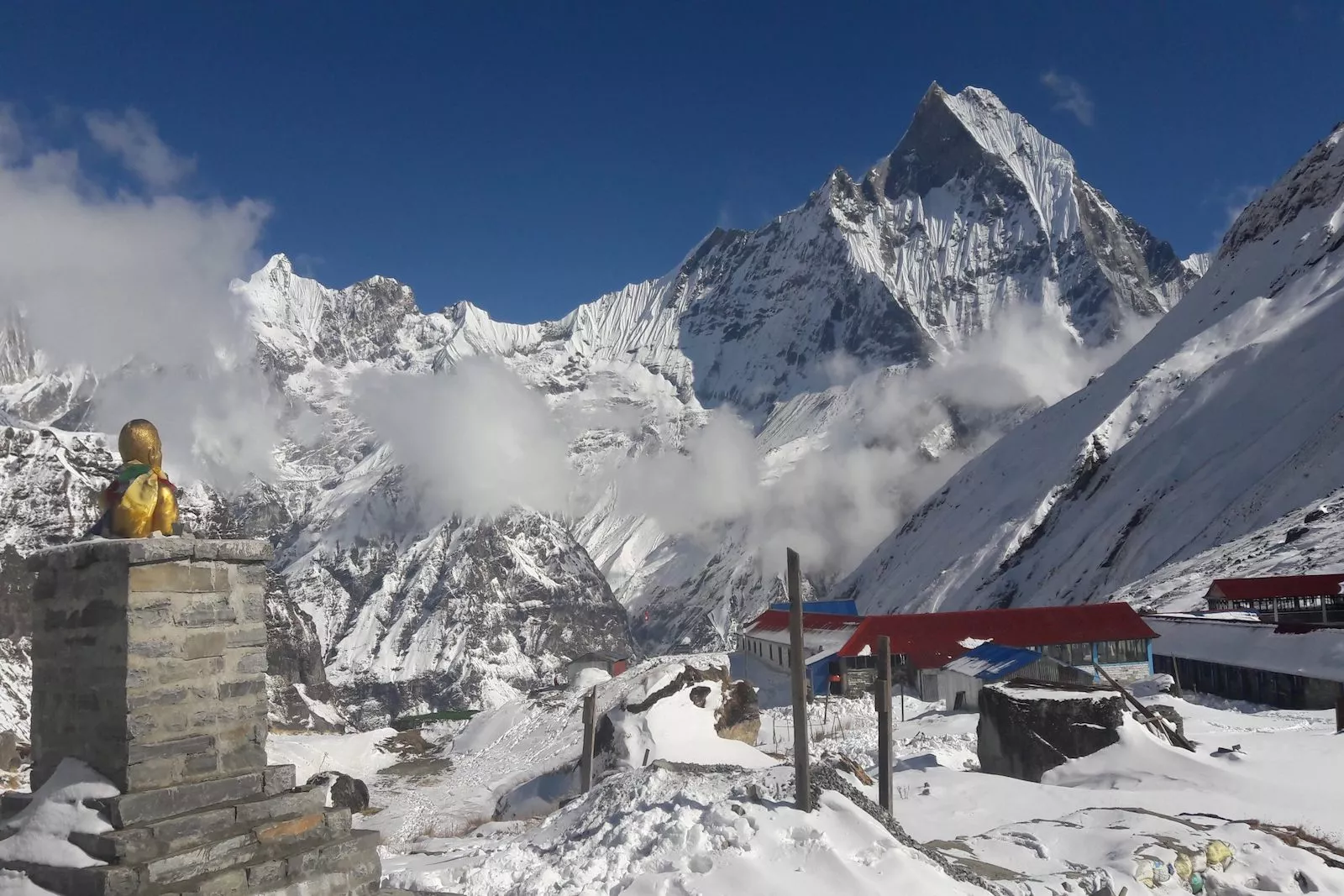
It is not Everest in terms of height, but Annapurna South and Machapuchare possess a grandeur of their own. They rise silently above the valley like timeless guardians watching over the trail.
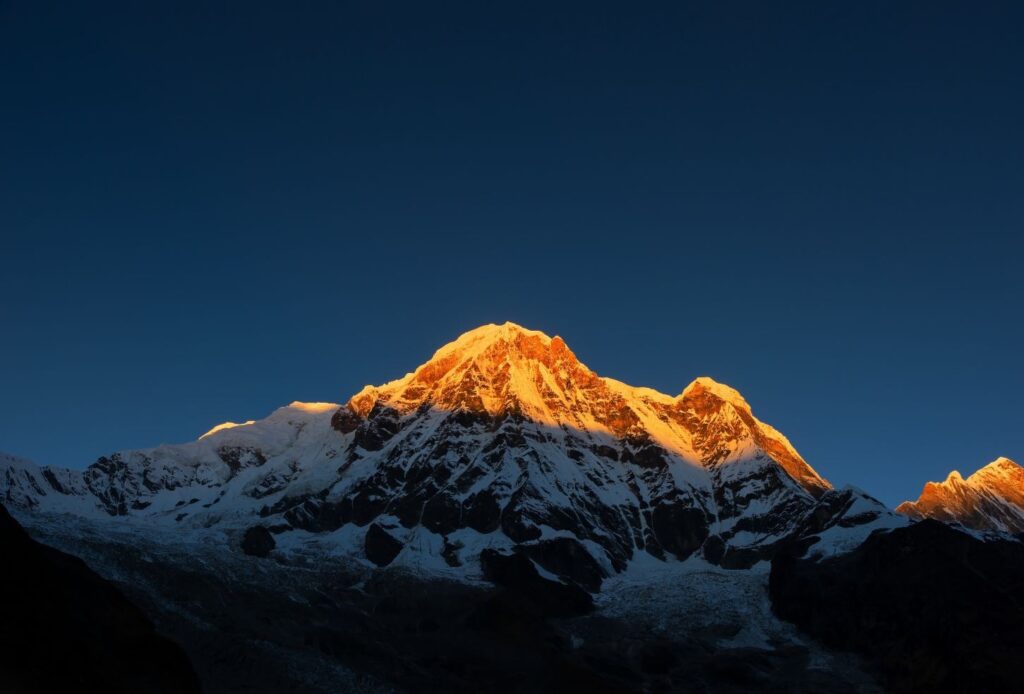
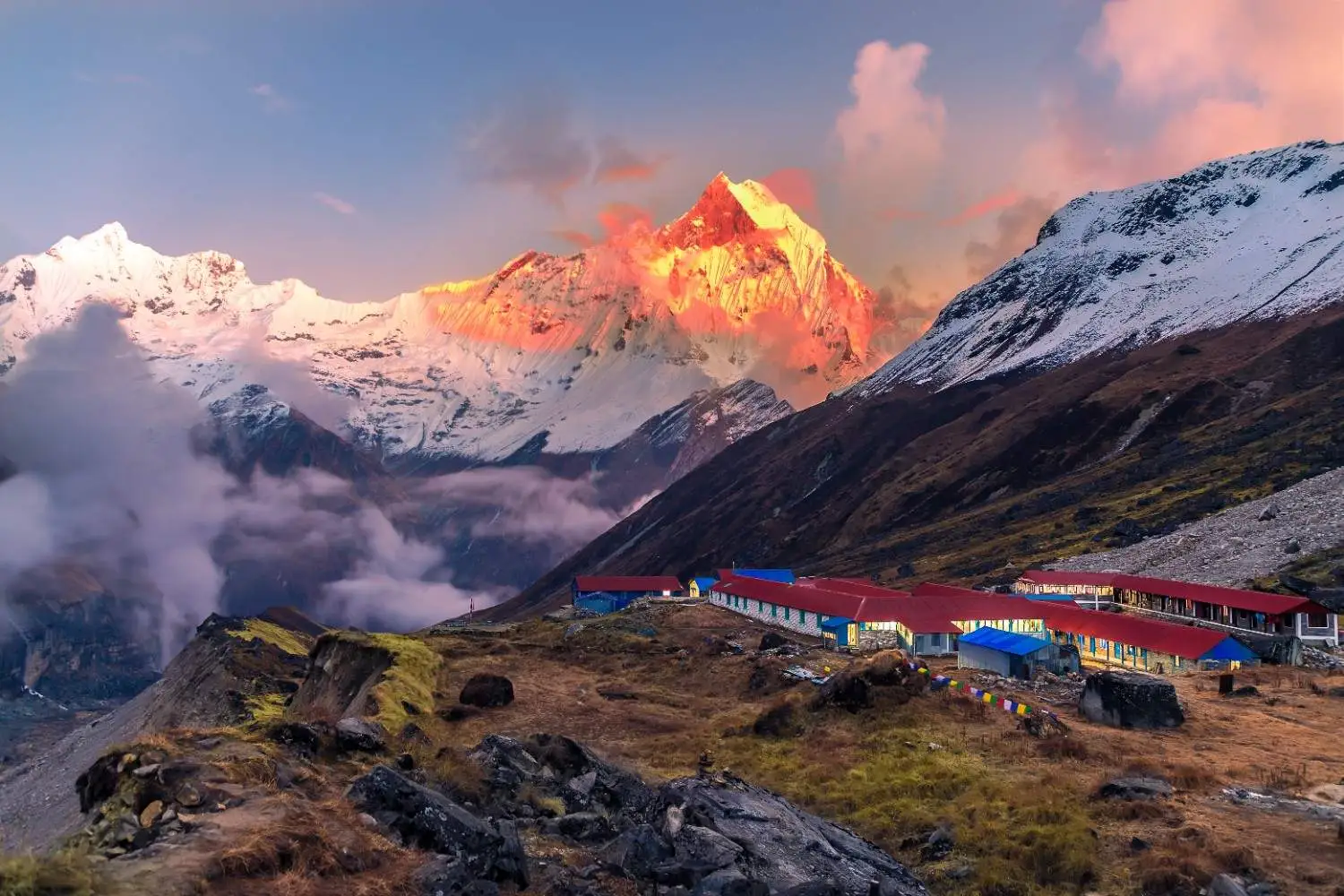
The rewards are simple yet unforgettable. You witness the Annapurna massif, snow-covered peaks glowing in the morning sun, waterfalls cascading through lush valleys, and rhododendron forests bursting into brilliant shades of red during spring.
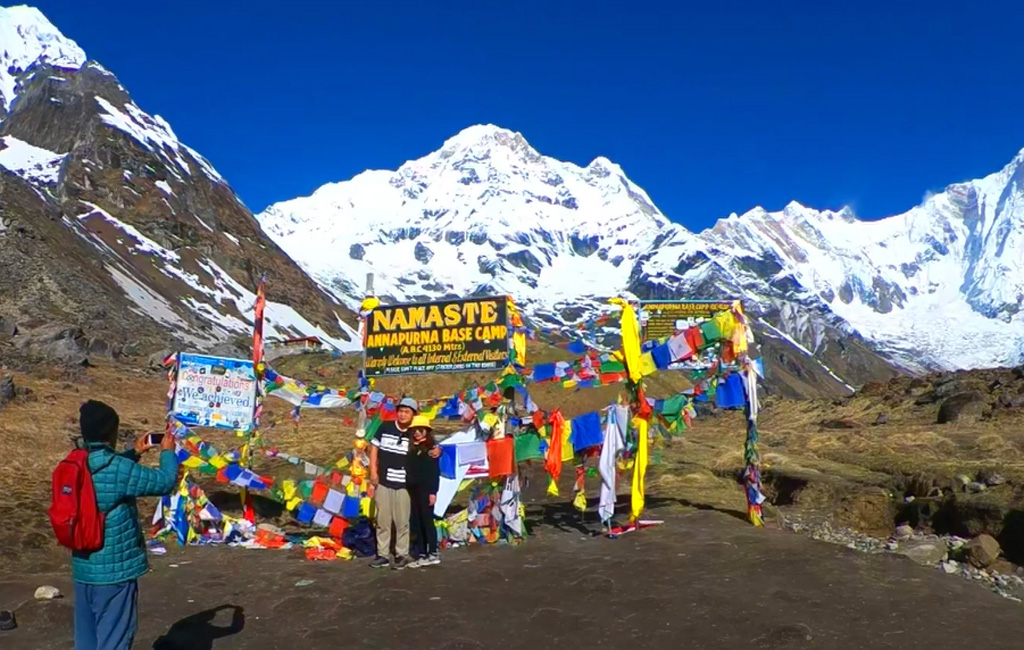
The cultural experience is equally memorable. Along the trail, you pass through villages where life moves at its own pace. Locals tend their yaks, monks chant in small monasteries, and children greet trekkers with cheerful smiles. When you finally arrive at Annapurna Base Camp at approximately 4,130 metres, the scenery changes dramatically. Surrounded by towering Himalayan giants, you feel both humbled and deeply connected to the landscape.
The trail itself offers a rewarding mix of beauty and challenge. From the shaded paths near Nayapul to the steep climbs through Chhomrong and Bamboo, every section has its own character. Suspension bridges cross turquoise rivers, forest trails wind beneath towering trees, and centuries-old stone staircases reflect the footsteps of generations of trekkers and villagers. The journey rewards those who walk steadily and take time to appreciate the scenery.
Every turn reveals something new, from cascading waterfalls and terraced hillsides to glimpses of wildlife such as langurs resting in the trees or colourful Himalayan monals darting through the forest.
Highlights appear throughout the journey. The sunrise over the Annapurna and Dhaulagiri ranges from Poon Hill makes the early morning climb worthwhile. Chhomrong welcomes you with rich Gurung culture, cosy teahouses, and freshly prepared momos that provide welcome comfort after a long day on the trail.
At Annapurna Base Camp, colourful prayer flags flutter beneath towering ice-covered peaks while drifting clouds create an ever-changing mountain panorama. The sense of achievement is immense, but so are the quiet moments along the way, whether beside a peaceful stream, beneath a forest canopy, or watching a herd of yaks wander across the alpine landscape.
Overall, the Annapurna Base Camp Trek is much more than a mountain trail. It is a journey filled with challenge, natural beauty, rich culture, and unforgettable Himalayan scenery. As you return to Pokhara, you take home not only incredible mountain memories but also the feeling of having experienced something truly meaningful.

Hiking to Annapurna Base Camp involves a rapid ascent from approximately 800 metres in the lowlands to 4,130 metres at the base camp. This is a significant change in oxygen levels, and the body must adjust to the thinner air. Altitude sickness, also known as acute mountain sickness (AMS), occurs when the body struggles to adapt to reduced oxygen.
Altitude sickness can affect even experienced trekkers, with consequences ranging from mild discomfort to life-threatening emergencies. Understanding its nature, recognising early symptoms, and taking preventive measures can make your trek safer and more enjoyable.
Symptoms arise as the body responds to lower oxygen levels. Mild AMS typically begins with headache, fatigue, nausea, dizziness, loss of appetite, shortness of breath during activity, and disturbed sleep. These symptoms can usually be managed with rest, hydration, and proper pacing.
Severe AMS is more dangerous. Symptoms may include persistent vomiting, confusion, swelling of hands or feet, loss of balance (ataxia), or fluid accumulation in the lungs or brain (HAPE/HACE). These conditions require immediate medical attention. Ignoring them can turn a dream trek into a serious emergency.
Patience and careful planning are key to preventing altitude sickness. Important strategies include:
If symptoms worsen, descend to lower altitudes, rest, and seek medical consultation. In severe cases, supplemental oxygen may be needed, and evacuation by helicopter may be necessary to prevent life-threatening complications. Trekking with a guide or experienced group can help detect symptoms early and ensure a quick response.
Acclimatisation days are essential, not optional. They allow the body to adjust to altitude, reducing fatigue, headaches, and nausea. Skipping them can lead to slower recovery, poor sleep, and increased risk of severe AMS. These rest days also provide an opportunity to relax in villages, interact with locals, and enjoy the scenery, making them a valuable part of the adventure.
Hiking to Annapurna Base Camp is an exciting experience, but it comes with certain risks, such as altitude sickness, bad weather, falls on rocky trails, or minor injuries. Comprehensive travel insurance is not just recommended; it is essential. It serves as a safety net during emergencies and protects you from unexpected expenses. Insurance provides peace of mind and allows you to enjoy the trek without constantly worrying about possible accidents.
When selecting travel insurance for the Annapurna Base Camp trek, consider the following key elements:
Insurance is particularly important for Annapurna because the remoteness and elevation make self-reliance risky. Even experienced trekkers can face situations where quick evacuation or medical care becomes the safest option.
The route to Annapurna Base Camp is beautiful but unpredictable. Weather conditions can change suddenly, trails may become slippery, and altitude can affect even the fittest trekkers. Without insurance, you would be responsible for helicopter rescues, hospital bills, or emergency care, which can easily cost thousands of dollars. Insurance also offers 24/7 support hotlines that provide guidance in unfamiliar situations, which is invaluable when travelling in a foreign country.
Arriving in Nepal often feels like stepping into a new world, and one of the first tasks is arranging your visa on arrival. This is especially important if you are heading straight into trekking, such as the Annapurna Base Camp trek. The visa process in Nepal is straightforward, and understanding it in advance makes arrival smoother and stress-free.
International travellers require a tourist visa to enter Nepal, which can be obtained on arrival at Tribhuvan International Airport in Kathmandu or at major land border crossings. The tourist visa is valid for tourism purposes only, including trekking, sightseeing, and visiting local communities. It is a multiple-entry visa, meaning you can leave and re-enter Nepal during its validity without needing a new visa.
Your passport must be valid for at least six months, and carrying a passport-sized photograph is helpful. While some airports offer digital photo services, having a photo ready can speed up the process. You may also complete the visa application online before travelling to save time.
Nepal offers three main tourist visa durations:
Visa fees are usually paid in cash, with US dollars widely accepted. Card payments are available at some airports. Visas are free for children under 10 years of age. Citizens of certain South Asian countries may pay reduced fees or none at all due to regional agreements. Visa fees are non-refundable, so it is important to choose the correct duration.
To obtain a visa on arrival:
Processing typically takes 15 to 30 minutes but may take longer during peak trekking seasons in spring and autumn. Completing forms in advance and arriving early can reduce waiting time.
Visa extensions are available at immigration offices in Kathmandu or Pokhara if you wish to stay longer than your initial visa allows. Extensions are issued in 15-day increments, up to a maximum of 150 days per calendar year. Apply for extensions before your visa expires, as overstaying can result in fines.
Certain exceptions to immigration policies exist, but these are limited to nationalities considered a threat to the country. Visa on Arrival is available for most nationalities, though citizens of some countries must apply for a visa at a Nepali embassy before travelling.
Indian nationals do not require a visa to enter Nepal and may do so using either a passport or a voter ID card.
You can explore and connect with the diverse ethnic communities of the Annapurna region. Local culture and traditions add a spiritual dimension and sense of peace to the trek. The region is home to Gurung, Magar, Thakali, Loba, and Manange communities.
The Gurung and Magar communities are primarily located in the southern part of the region and are known for their lively traditions, folk dances, and warm hospitality. The Thakali, Loba, and Manange communities are mostly found in the northern part of the region. Their culture is strongly influenced by Tibetan traditions, reflected in unique architecture, monasteries, and languages.
As a responsible traveller, you can help preserve the Annapurna Conservation Area by:
Learn More About Annapurna Base Camp
Accommodation along the Annapurna Base Camp trek is simple, practical, and surprisingly comfortable considering the remote Himalayan location. Trekkers use teahouses or small lodges in villages along the way. These lodges are family-run and offer more than just a bed; they provide a glimpse into life in the region. By staying in such lodges, you support the local economy, and soon you realize that you are contributing to the livelihoods of villagers.
The main source of overnight lodging on the trek is teahouses. At lower altitudes, lodges are more developed, such as in Nayapul, Tikhedhunga, or Chhomrong, offering individual rooms, en-suite or communal bathrooms, and occasionally small heaters. Trekkers frequent these areas, so facilities are generally well-maintained.
Lodges become more basic higher up the mountain. From Bamboo to Deurali, and further to Machhapuchhre Base Camp and ABC itself, rooms are smaller, heating is limited, and bathrooms are often shared. Hot showers are available at mid-altitude stops, but they are scarce and very expensive at higher elevations.
Lower lodges are comfortable, often wooden, with blanket-covered beds, reading lights, and shared dining rooms. You may find other trekkers enjoying tea or playing cards after a long day of hiking. Further along, comfort becomes minimal. Beds are smaller, mattresses thinner, and blankets less warm. Socialising in these lodges is common; trekkers exchange stories about their day, celebrate small achievements, and enjoy local cuisine.
Power shortages are common, and sometimes the only light source is a kerosene lamp or a solar-powered bulb.
Accommodation on the ABC trek is less about luxury and more about comfort, warmth, and experience. It is about taking a break after a long hike, sharing a meal, washing up in the mountains, and preparing for the next day’s journey.
Food on the Annapurna Base Camp trek is not just sustenance; it is a major part of the experience. After many hours of walking, a hot meal and a warm beverage become essential comforts. Tea houses serve as both restaurants and social spaces where trekkers meet, share stories, and relax after climbing. The menu ranges from traditional Nepali fare to surprisingly familiar Western options, depending on the altitude and location.
In most tea houses, the staple is dal bhat, the typical Nepali meal of lentils, rice, vegetables, and sometimes meat. It is nutritious, filling, and gives tired legs the energy to keep going. Other local dishes include momos (dumplings), thukpa (noodle soup), and porridge for breakfast. Western dishes such as pancakes, sandwiches, pasta, and omelets are also increasingly available at lower and mid-altitude stops like Chhomrong or Bamboo, providing comfort after days on unfamiliar terrain.
Local food is generally cheaper, more filling, and better suited to the energy demands of high-altitude trekking. It also offers a home-cooked taste that is comforting after a long day. Western food can be a relief for those craving familiarity, but relying entirely on it can be costly and less efficient for energy replenishment.
Meal prices increase with altitude. Simple meals are more affordable at lower villages, while higher stops such as Deurali, Machhapuchhre Base Camp, or ABC itself tend to cost more. Hot drinks like tea, coffee, or cocoa are slightly pricier at higher elevations but are often the best morale boosters on cold nights.
Maintaining hydration is essential. Most teahouses provide boiled or treated water; tap water is not safe to drink directly. It is recommended to carry water purification tablets, filters, or a refillable bottle of treated water. Alcohol and excessive caffeine should be avoided, as they dehydrate the body and can interfere with acclimatisation.
Steep trails require more energy. Focus on carbohydrate-rich foods for long-term energy, balanced with protein for muscle recovery. Snack frequently with nuts, chocolate, energy bars, or local treats to maintain blood sugar and energy. Large meals are harder to digest at high altitude, while smaller meals are easier. Soups or porridge, especially in the mornings or after long, cold walks, are particularly comforting.
The preparation of gear is possibly the core of your Annapurna Base Camp (ABC) trek. You may be fit, psyched, and in the right state of mind; however, without the proper gear, even a day out on the trail will become unbearable and unsafe. The Himalayas can be be unpredictable, and you may experience sun, wind, rain, and even snow in a single day. Therefore, packing wisely is essential.
The Annapurna Base Camp trek is a unique experience; however, unpredictable trails, changing weather conditions, and altitude challenges can make the journey demanding. This is where guides and porters become more than just conveniences; they become essential parts of a safe and rewarding trekking experience.
A guide provides navigation support, safety monitoring, cultural insights, and on-trail assistance that makes the trek more comfortable and memorable.
In Nepal, professional trekking guides are members of the Trekking Agencies Association of Nepal (TAAN) and usually receive formal training in tourism, hospitality, outdoor leadership, first aid, and high-altitude trekking. Their experience and education prepare them to manage safety concerns, understand local culture, and organise necessary permits.
Guides help you:
Porters are an important part of trekking in Nepal. They carry heavier equipment such as sleeping bags, extra clothing, food supplies, and shared gear, allowing trekkers to keep their backpacks lighter. During the Annapurna Base Camp trek, ethical trekking practices recommend ensuring porters do not carry more than 20–25 kg (approximately 44–55 lbs) to protect their health and safety.
Many porters come from villages along trekking routes. By hiring them, you support local livelihoods while benefiting from their deep knowledge of the landscape and mountain environment. Their connection to the region adds another meaningful layer to the trekking experience.

Tenzing Sherpa
Have questions? Our travel specialists are here to help plan your perfect adventure.
Chat on WhatsApp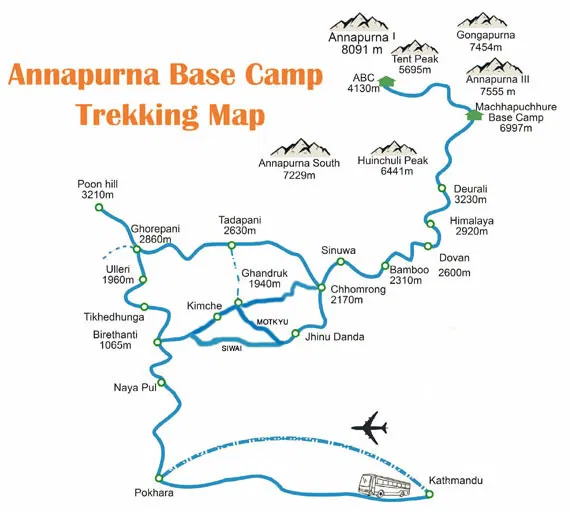
There's something quietly exciting about that first morning, bags by the door, a strong cup of tea, and the open road ahead. The drive from Kathmandu to Pokhara takes you along the Prithvi Highway, winding beside the Trishuli River through terraced hillsides, bustling little towns, and valleys so green they almost don't look real. Somewhere around Malekhu or Mugling, you'll want to pull over for a bite; the roadside daal bhat is worth every minute of the stop. When you finally roll into Pokhara, the pace of life shifts noticeably. The lake is there, calm and wide, with Machhapuchhre's reflection stretching across the water like a painting. Spend the evening however feels right: a slow boat ride to catch the sunset, a wander through the lakeside lanes, or simply sitting with a coffee watching the mountains turn pink. It's the kind of evening that quietly gets you ready for what's coming.
After breakfast, you'll drive about 42 kilometers northwest through the countryside, terraced fields dropping toward rivers, small Gurung and Magar villages tucked into the hillsides, and the occasional glimpse of Annapurna or Machhapuchhre above the tree line. The road follows the Modi Khola River most of the way to Nayapul, where your trek officially begins. Permits get checked here, and then you're off. The trail starts gently, a walk through Birethanti, a pretty riverside village with a handful of teahouses and a good suspension bridge over the Bhurungdi Khola. From there, the path climbs through terraced farmland, bamboo stands, and quiet little settlements like Hile. It's not a long day, but there are a few steep stretches near the end. When you reach Tikhedhunga, settle into a teahouse, have a hot meal, and fall asleep to the sound of a waterfall nearby. That sound will stay with you. Today, we make our way to Tikhedhunga, standing at 1,570 meters in altitude.
Today has a reputation, and it's earned. More than 3,000 stone steps lead up from Tikhedhunga to Ulleri, a Magar village perched on the ridge. It's a real climb; legs will feel it, but the views of Annapurna South and Hiunchuli that start appearing behind you make it easier to keep going. Past Ulleri, the forest takes over. Rhododendron and oak close in around the path, and in the right season, the whole hillside is in bloom. Birdsong fills the air in a way that feels almost theatrical. Small teahouses in Banthanti and Nangethanti are perfect spots to rest, have lunch, and let the morning's effort sink in. As the trail rises toward Ghorepani, the air cools and the trees grow denser. When you finally arrive, you'll find a ridge-top village with wide mountain views of Dhaulagiri, Annapurna South, and Nilgiri. Dinner tastes better at altitude, and the night air is genuinely cold and clean. Today’s destination is Ghorepani, positioned at 2,840 meters above sea level.
Wake-up time is somewhere between 4:30 and 5:00 a.m. Yes, that early. But you won't regret it. The trail to Poon Hill is well-marked and takes about an hour in the dark, headlamps bobbing ahead and behind. What greets you at the top is one of those moments that's hard to describe properly: Dhaulagiri, Annapurna I, Annapurna South, Machhapuchhre, and more, all lit up in gold as the sun rises behind the Himalayas. Spend as long as you want up there. Then head back down to Ghorepani for breakfast before the day's main walk begins. The trail from Ghorepani to Tadapani is lovely in a quieter way. A gentle climb through rhododendron forest brings you to Deurali Pass, where both the Annapurna and Dhaulagiri ranges are visible on a clear day. The descent into Tadapani is steep and shaded, crossing small streams through a forest that feels almost otherworldly. Keep an eye out for Himalayan langurs overhead; they're often around. Tadapani itself sits close to the mountains, and the evening view from there is something else entirely. Our journey today leads us to Tadapani, located at 2,630 meters above sea level.
The morning starts with a descent through thick rhododendron and oak forest, the kind of trail where you half-expect to find a fairy tale around the next bend. As the trees thin out, Annapurna South and Machhapuchhre come into view, both catching the early light beautifully. The route drops steadily toward Kimrong Khola at around 1,750 meters, a good place to stop for lunch by the river. After crossing the suspension bridge, the path climbs back up through terraced fields and traditional Gurung villages. The ascent is real after all that morning downhill, and your legs will know it. But Chomrong is worth it. One of the bigger, more welcoming villages in this part of the Himalayas, it sits with a jaw-dropping close-up of Annapurna South, Hiunchuli, and Machhapuchhre right above it. Get settled into a teahouse, eat well, and let the views do the rest. Our hike today concludes at Chomrong, located at an elevation of 2,140 meters.
From Chomrong, the trail drops steeply down stone steps to Chomrong Khola, where a suspension bridge sways gently over the gorge. Cross it, and the climb back up begins, steady and continuous through terraced fields and forest toward Sinuwa at 2,340 meters. Sinuwa is a good place to pause and breathe. The valley stretches out behind you, and the forest ahead gets noticeably wilder. From here, the trail winds through dense bamboo, oak, and rhododendron to reach Bamboo, aptly named, shaded, and peaceful, a natural lunch stop. The afternoon push from Bamboo to Dovan is a quiet, steady climb through a forest that grows cooler and more shadowed as the altitude rises. Human settlements drop away, and it's just the trees, the trail, and the occasional sound of a stream. Dovan, standing at an altitude of 2,600 meters, is small and simple, a handful of teahouses in the forest, but after today's walking, it feels exactly right.
This is the day everything has been building toward. The trail from Dovan into the Annapurna Sanctuary is stunning from the first step, following the Modi Khola through bamboo and rhododendron forest, climbing steadily through Himalaya (2,920 m) and Deurali (3,200 m), where you might stop to eat before the real push begins. Past Deurali, the landscape starts to shift. Waterfalls tumble off cliffs, Machhapuchhre appears and disappears through clouds, and the forest slowly gives way to open alpine terrain. The path hugs the river and moraine on the way up to Machhapuchhre Base Camp at 3,700 meters, a wild, beautiful spot ringed by great peaks. Take a moment there. Then keep going. Another hour and a half brings you into the Annapurna Sanctuary itself, a vast, glacier-ringed amphitheater with Annapurna I, Hiunchuli, Tent Peak, and Glacier Dome surrounding you on all sides. If the clouds cooperate, the sunset turns everything gold. You'll spend the night here, at 4,130 meters, in the heart of the Himalayas.
Leaving ABC is bittersweet. You've been somewhere genuinely special, and heading down means it's behind you now, but the mountains look different on the way back, and there's something satisfying about retracing this path with fresh eyes. From ABC, the descent moves through MBC and down into the Modi Khola valley, crossing alpine meadows and glacial streams. Annapurna South, Hiunchuli, and Machhapuchhre are all still there, watching you go. Through Deurali and on down through the forests, the air grows warmer, and the rhododendron and bamboo close back in around the trail. Watch your step on the rocky and muddy sections; the descent demands attention. By the time you reach Bamboo, which is at an elevation of 2,345 meters, a hot meal and a warm bunk feel like genuine luxuries.
A gentler day, which the legs will appreciate. The trail from Bamboo winds down through green forest, crossing small streams and passing the occasional waterfall. Sinuwa offers a natural mid-morning break before the path continues along the Modi Khola valley. The route drops gradually through terraced farmland, bamboo groves, and small villages until it reaches Jhinu Danda, a place that has become something of a legend among trekkers for one very good reason: the natural hot springs. After days of mountain walking, soaking in those pools beside the river is one of the better feelings you'll have on this trip. Let tired muscles unwind, watch the water, and let the whole experience settle in. Tonight's teahouse is a quiet, easy end to the high-altitude chapter of the journey which is Jhinu Danda standing at 1,780 meters.
Breakfast in Jhinu Danda, then a drive back down through mid-hill forest to the lowland valleys. The road unspools through terraced fields, river bends, and small village markets, a slow reintroduction to the world below. Pokhara (820 meters) feels different when you arrive this time. The lake is still there, the cafes are still open, and the mountains are still visible above the rooftops, but you've been up there, and that changes how you look at them. The afternoon and evening are yours. Find a good table at a lakeside restaurant, order something you've been thinking about for days, and raise a glass to the trek. You've earned it.
The last leg. An early start from Pokhara, then the long winding haul back along the Prithvi Highway, sharp bends, narrow stretches, and the Trishuli River keeping pace below. Small towns appear and disappear; terraced fields roll past the window. It's a journey that rewards a good playlist and a window seat. When Kathmandu (1,400 meters) appears, it's loud and crowded and familiar in the best way. We'll make sure you're dropped comfortably at your hotel. The Annapurna Base Camp trek is done. Whatever time you have left in the city is yours; rest, explore, eat momos, shop, or simply sit quietly with everything you've just experienced. It tends to take a little while to fully land.
See what past travelers are saying about their experience with Nepal Outdoor Expeditions.
Because your next adventure is impatiently waiting for you.
Last Minute Note: Grab incredible deals on the last minute departure / Book spontaneous trips to hip destinations with limited-time offers and discounted price
Not sure of your dates yet? Hold a departure with a 20% deposit. Cancel more than 60 days out and your deposit is refunded in full. Your first date change is free. If a departure doesn't reach minimum numbers, we'll offer you the nearest alternative date or a full refund, and we'll let you know at least 30 days out.
Before you think of or actually plan any adventurous or relaxing tours, travels, or treks with Nepal Outdoor Expeditions.
If you cancel more than 60 days before departure, we refund your deposit in full. Between 30 and 60 days, the 20% deposit is retained. Inside 30 days the trip cost is non-refundable, since by then we've already paid for your permits, flights, and teahouse bookings. Full detail on our booking page.
20% to reserve your place, with the balance due 60 days before departure. On this trek that's $150 to book and $600 two months before you fly. If you're booking within 7 days of departure, the full amount is due at booking.
Yes, as long as you let us know at least 30 days before your original departure date, your first change is free. Any change after that, or a change requested inside 30 days, is $200 per person.
Annapurna Base Camp Trek