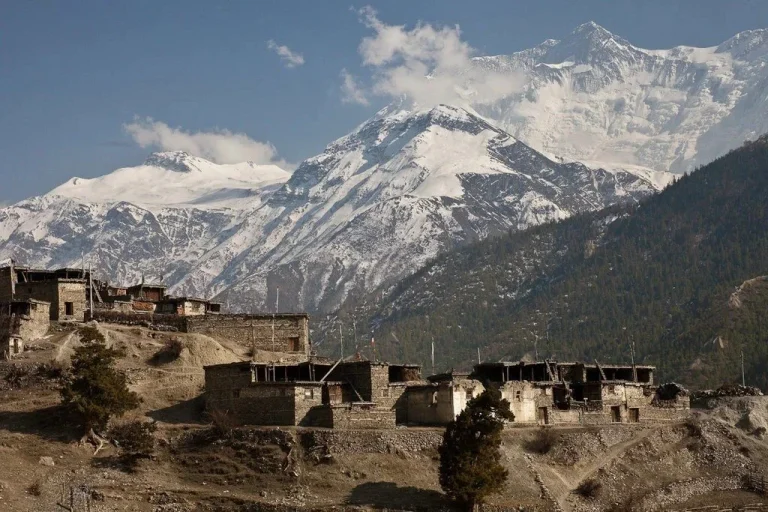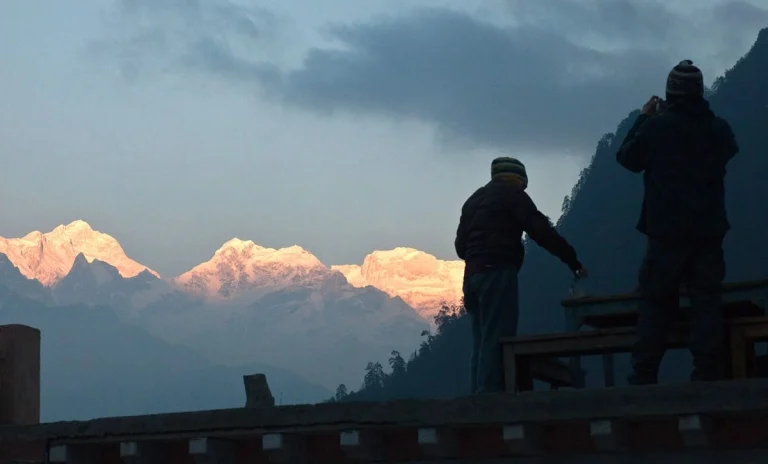
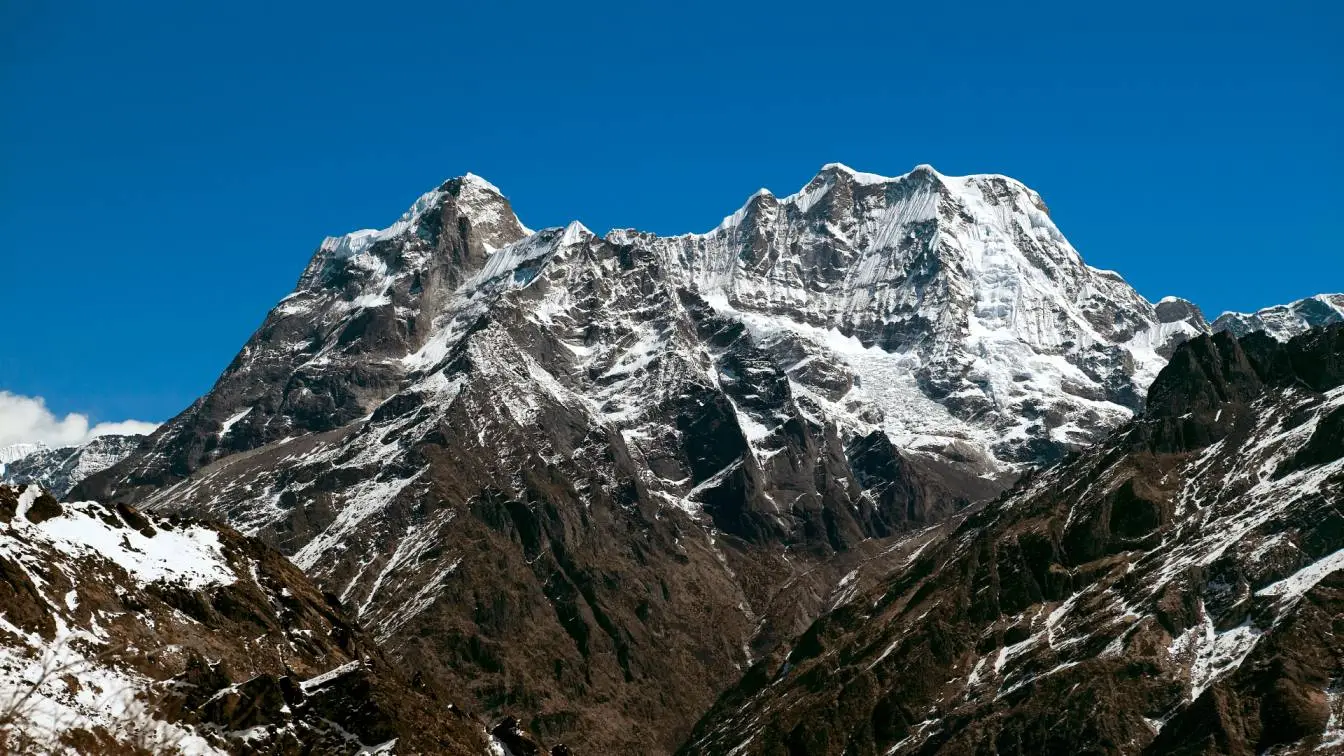
Mera Peak (6,476m) sits quietly in the Hinku Valley of the Khumbu region, away from the busy trekking routes that most visitors take. What makes it stand out is straightforward: from its summit, you get a breathtaking view of five mountains over 8,000m: Everest, Lhotse, Makalu, Cho Oyu, and Kanchenjunga. All five, from a single vantage point. It is a view that only a few locations in the world can offer, and Mera Peak places it within the reach of climbers who have never stood on a high-altitude summit before.
This 10-day itinerary pairs the entire Mera Peak mountain climbing experience with a helicopter go back from Khare to Lukla, slicing 3 to 4 days of descent and replacing it with a 20-minute flight over the Hinku Valley and the glaciers you spent days on foot through. It is designed for trekkers and journey vacationers with limited time who nonetheless want a whole, guided high-altitude climb without rushing the ascent.
At a Glance
- Summit elevation: 6,476m / 21,247ft
- Duration: 10 days
- Difficulty: Moderate (non-technical)
- Best seasons: March-May and September-November
- Helicopter pickup: Khare (5,000m) to Lukla; approx. 20 min
- Cost: USD 3,000-3,500 per person (full expedition with helicopter return)
What Is Mera Peak and Why Do Climbers Choose It?
Mera Peak (6,476m) gives you something almost no other trekking peak in Nepal can, a summit panorama of five mountains over 8,000m: Everest, Lhotse, Makalu, Cho Oyu, and Kanchenjunga. All in one view, from a peak that doesn’t require technical climbing experience to reach. It is at an altitude of 6,476 meters and is a good trekking peak. The climbing is not very technically challenging, but it does require some climbing experience. Along the route, you will gain insight into the tradition and culture of the people of the region, the Sherpas, and their way of life.
Your journey begins with a spectacular flight into Lukla and a trek through quaint Sherpa villages with brightly colored prayer flags waving above ancient monasteries, chortens, and rock-carved Mani stones. From there, the trail branches off the more popular routes into the serene Hinku and Hunku valleys. From the Mera Peak Base Camp, you ascend to the top, an exhilarating accomplishment that will keep you on a thrill high. While Mera Peak is a high-altitude ascent at 6,476m, it is non-technical; slopes stay below 30 degrees, and fixed ropes secure the steeper sections near the summit. The elevation gain from Mera Base Camp to the summit is approximately 1,176m, covered on summit day before dawn.
Detailed Itinerary
Days 1–3: Journey into the Hinku Valley
Day 1: Fly from Kathmandu to Lukla and Trek to Chhutang (2,800m)
Your adventure starts with the exhilarating mountain flight from Kathmandu to Lukla, one of the most spectacular airstrips in the world. After meeting your trekking team, you begin hiking through pine and rhododendron forests. The trail gradually ascends to Chhutang, where you spend the night surrounded by the tranquility of the Himalayas.
Day 2: Trek from Chhutang to Tuli Kharka (4,100m)
Today’s trail climbs through forests before reaching Zatrwa La Pass (4,600m). From the pass, you enjoy panoramic views of the Numbur and Kongde ranges before descending to the alpine meadow of Tuli Kharka.
Day 3: Trek from Tuli Kharka to Kothe (3,580m)
The trail traverses ridges lined with rhododendron forests and descends into the Hinku Valley. Along the way, Mera Peak comes into view for the first time. Overnight stay at Kothe.
Days 4–6: Acclimatization and Preparation
Day 4: Trek from Kothe to Thangnak (4,326m)
Follow the Hinku River upstream through dramatic alpine landscapes. Pass Mani walls and herders’ huts before reaching Thangnak.
Day 5: Trek from Thangnak to Khare (5,000m)
The route climbs steadily along the Dig Glacier, offering excellent views of Charpate Himal. Arrive at Khare, the final settlement before the climbing phase.
Day 6: Acclimatization Day at Khare
Spend the day acclimatizing and practicing basic climbing techniques with your guide to prepare for higher elevations.
Days 7–8: Base Camp and High Camp
Day 7: Trek from Khare to Mera Base Camp (5,300m)
Cross rocky moraines and frozen terrain before reaching Mera Base Camp. Mountain views become increasingly spectacular.
Day 8: Trek from Mera Base Camp to High Camp (5,700m)
The short push from Base Camp to High Camp (5,700m) takes you across an open glacier with the full Khumbu giants coming into view; Everest, Lhotse, Makalu, Cho Oyu, and Kanchenjunga, all visible at once. You spend the night at High Camp, sleeping lightly and resting before the pre-dawn summit push.
Days 9–10: Summit and Return
Day 9: Summit Mera Peak (6,476m) and Helicopter Return to Lukla
Begin the summit push before dawn. After reaching the summit and enjoying a stunning Himalayan panorama, descend to Khare and take a helicopter flight back to Lukla.
Day 10: Fly from Lukla to Kathmandu (1,400m)
Take a scenic mountain flight back to Kathmandu and celebrate the successful completion of your Mera Peak adventure.
Helicopter Return

After climbing the peak of Mera and getting back down to Khare, the return journey becomes a thrilling and luxurious experience. Rather than repeating the same trail for a few days, a helicopter will directly pick you up from Khare. From the helicopter taking off onwards, you will enjoy incredible views of the Hinku Valley from the air, shining glaciers, and great Himalayan giants like Everest, Makalu, and Cho Oyu. Flying above the areas that you trekked for days is a surreal and memorable experience.
Not only does the helicopter transfer save you three to four days of trekking back, but it also allows a fast, comfortable, and safe departure from the mountains. The service typically costs between USD 1,200 and 1,500 per person and is charged by the number of people in the group and by season. It is a highly regarded expense many climbers feel is well worth the money, not only for the time and comfort you save but also for the magnificent flight experience itself, which is a memorable conclusion to the expedition.
Interested in booking this itinerary for your dates? We can confirm helicopter seat availability and give you an exact group quote. Contact us here or reach us on WhatsApp.
Cost and What’s Included
Here’s a straightforward breakdown of what to expect when it comes to pricing:
| Package | Cost per Person (USD) |
|---|---|
| Full 10-day expedition with helicopter return | 3,000 – 3,500 |
| Helicopter return only (Khare to Lukla, shared) | 1,200 – 1,500 |
- What’s included: Climbing permits (Mera Peak, Sagarmatha National Park, Makalu-Barun, TIMS), licensed Sherpa climbing guide, porter service, teahouse and camp accommodation, all meals during the trek, and the helicopter return flight from Khare to Lukla.
- What’s not included: International flights, Nepal visa fees, personal trekking gear, travel insurance, alcoholic and bottled beverages, and tips for your guide and porter.
Pricing varies by group size and departure season. For an exact quote based on your dates and group, contact us here or reach us on WhatsApp; we usually respond within a few hours.
Essential Equipment for Mera Peak
In preparing for your Mera Peak trekking adventure, light packs are a priority. You will be carrying your personal gear with some shared group gear, so lightweight and compact clothing and gear will make the trek a whole lot more comfortable. The Himalayan climate changes quickly, so the ability to layer is necessary. A three-layer system of base, insulation, and shell works best for accommodating warm sun to windy and stormy snows. Do not utilize cotton because it retains moisture and loses insulating ability when damp; instead, select gear that is breathable and quick-drying, such as merino wool or tech synthetics that will remain warm and dry.
To make things even simpler, we also provide a complimentary waterproof duffel bag that the porters will carry for you on the trek. Your duffle belongs to you at the end of the journey. Luggage or non-trek gear that you store and retrieve safely at our office in the city of Kathmandu may be kept. At the actual mountain itself, all of the gear that is technical in nature, tents, ropes, and anchors, and snow gear, will be supplied by Sherpa Expedition & Trekking and hence will not burden you individually.
Recommended Clothing and Equipment List
The Upper Body:
- Base layers: moisture-wicking, quick-drying tops; merino wool or synthetic.
- Insulating layers: fleece or a light down jacket.
- Outer shell: waterproof and windproof hard-shell jacket.
- Softshell jacket: Light and airy coat for medium conditions.
- Climbing Equipment: Helmet and harness to protect on the ropes.
- Hand protection: Liner gloves for mild use and mittens or insulated gloves for summit days.
- Accessories: A gaiter or buff, polarizing sunglasses, and ski goggles in case of strong winds or glare from the snow.
Lower Body:
- Base layers: Moisture-wicking thermal tights that warm you up.
- Insulating trousers: Insulating or fleece trousers for cold days.
- Waterproof trousers: Rugged outer covers to repel wind, snow, and rain.
- Softshell trousers: Robust and ventilated trek trousers.
- Boots: Rigid crampon-compatible mountaineering boots with great ankle support.
- Crampons & gaiters: Required for frozen terrain and in boots in the snow.
- Socks: Thin liner socks and thick wool climbing socks for warmth.
Other Essentials:
- Backpack: A rugged personal gear and climbing gear bag.
- Sleeping bag: With a sub-zero rating to keep you warm.
- Trekking poles: Removable poles to support balance while walking through uneven terrain.
- Headlamp: A reliable source of illumination in the morning ascent.
- Hydration: Insulated bottles to prevent freezing at high altitude.
- Sun protection: High SPF sunscreens against extreme exposure to the sun.
- First-aid kit: Bring personal medicine and supplies.
- High-energy snacks: High-calorie, low-weight snacks such as nuts and energy bars.
Highlights of Mera Peak Climbing with Helicopter Return
- Astonishing aerial view of Khumbu giants (Mahalangur Himalayan Range) from a helicopter while returning to Lukla
- You’ll get to witness the highest 8000 m+ mountains on Earth, including Mt. Everest (8848.86m), from the Mera Peak summit
- Summit views of five 8,000m peaks from a single vantage point; more than any other trekking peak in Nepal
- Suitable for first-time high-altitude climbers with no prior mountaineering experience
- Treasure the hike in the remote and mountainous Hinku and Hongu Valleys
- There are well-established camps at Mera Peak Base Camp and High Camp
- Licensed Sherpa climbing guides with high-altitude certification are included in every group
- Hike and climb with our professional and licensed Sherpa Climbing Guides
Permits, Documents, and Practical Details
Food and Accommodation:
Throughout the trek and ascent, you enjoy a range of teahouse accommodations and simple lodges at the majority of the stops, with tent accommodations at the fundamental and higher camps. The accommodations are simple but warm and cozy, where you rest after long trekking days. Meals are a classic combination of Nepali and more recognizable world cuisine to keep you going at high altitudes in order to ascend. Breakfasts are hearty, with substantial lunches and hot evening meals with snacks and tea/coffee between meals. Dietary restrictions are typically no issue with advanced warning.
Documents Needed for Helicopter and Trekking Departure
- Passport: A passport is required for helicopter travel and permit requirements.
- Climbing Permit: Photocopy of the Mera Peak climbing permit.
- Trek Itinerary: A copy of your confirmed trekking plan.
- Emergency Contacts: Names and telephone numbers of emergency contacts in case of emergencies.
- Medical Information: Any pertinent medical history or special health needs.
- Helicopter Confirmation: Booking confirmation and passenger information for the helicopter return.
The Permits Needed for Mera Peak
- Mera Peak Climbing Permit: Government permits to ascend Mera Peak.
- Sagarmatha National Park Permit: Necessary to trek inside the boundary of the park.
- Makalu-Barun Conservation Area Permit: Required for the parts of the trek that go through the conserved area.
- TIMS Card (Trekkers’ Information Management System): Takes care of your safety and registration while you trek in Nepal.
Alternative Treks
- Island Peak (6,189m): More technical than Mera Peak, involving a near-vertical headwall section that requires basic ice-axe and crampon skill. Better suited to climbers who want their next challenge after Mera. Usually combined with the Everest Base Camp trek.
- Everest Base Camp Trek: No summit involved, but the approach through Namche Bazaar, Tengboche, and the Khumbu Icefall viewpoint is one of the most iconic treks in the world. A natural companion trip before or after Mera Peak.
- Annapurna Circuit: A lower-altitude circuit trek best for trekkers who prefer cultural immersion and long ridge walks over technical climbing. Different audience from Mera Peak, but worth considering for return visits.
Not sure which is right for you? We’re happy to help you compare based on your fitness, timeline, and climbing goals.

Conclusion
Ten days is not a long time. But it is enough to walk into a remote Himalayan valley, climb a 6,476m summit ringed by five of the world’s highest peaks, and fly back over it all in a helicopter. For most climbers, Mera Peak is where the Himalayas stop being a thing you read about and start being a place you’ve actually been.
If you’re ready to plan this trip, or just want to know if it’s the right fit for your fitness and schedule, get in touch with us. We respond quickly and can build a custom itinerary around your dates.
FAQs
1. Is Mera Peak suitable for beginners?
Yes, Mera Peak is a good starting point for first-time high-altitude climbers. It is a non-technical climb with slopes under 30 degrees, so no prior mountaineering experience is required. That said, you should be in good physical shape and have some trekking experience before attempting it.
2. How many days is the Mera Peak climb with a helicopter return?
The standard Mera Peak expedition takes 10-15 days. The original answer references a 10-day itinerary with a helicopter return. Confirm with your team whether this is an actual package you offer before publishing.
3. What is the best time to climb Mera Peak?
The ideal climbing seasons are the autumn (September–November) and the spring (March–May), with clear and stable visibility.
4. What is included in the helicopter return?
The helicopter flight collects you from Khare and deposits you at Lukla, saving you 3–4 days of trekking, but with magnificent views from the helicopter of the Himalayas below you.
5. What permits do I need for Mera Peak?
You need three permits: the Mera Peak climbing permit, the Makalu-Barun National Park permit, and a Khumbu Rural Municipality permit. Our team arranges all of these before your expedition begins, so you do not need to sort them independently.
6. What documents do I need to carry on the Mera Peak trek?
Carry a passport, climbing permit, trekking schedule, medical history, emergency contacts, and helicopter flight confirmation.
7. What is the accommodation like on the Mera Peak trek?
Base and high camp accommodations are in tents, and the trekking lodges and teahouses are utilized on the trail with simple but warm and cozy rooms.
8. What food is available on the Mera Peak trail?
There is Nepali food and normal foreign food that is served at the house. Breakfasts, lunches, dinners, snacks, and tea and coffee are provided, and guests’ specific dietary requirements are typically taken care of.
9. What gear do I need to bring?
Carry personal gear and items suitable for high-altitude mountaineering. We provide technical climbing equipment like tents, ropes, sleeping gear, ice pitons, and down jackets.
10. Do I need mountaineering experience?
There is no climbing experience, but you will require excellent physical condition, previous trekking experience, and adaptability at altitude.