In May 1996, Green Boots became one of the most well-known sites on Mount Everest, and now India is attempting to take it home. The Indo-Tibetan Border Police (ITBP) issued a tender in June 2026 for an advisory high-altitude group to recover the frozen remains at more or less 8,500 meters on the mountain’s northeastern ridge. This mission is carried out to return the remains of Dorje Morup to his family in Delhi by October 2026. The climber has now been identified as Lance Naik Dorje Morup, not Tsewang Paljor. This guide explains the full story behind Green Boots, including who he was, how officials confirmed his identity, what happened during the 1996 disaster, why his body remained on Everest for so long, and why recovery teams now consider his retrieval one of the highest-risk missions in climbing history.
Quick Facts
| Attribute | Details |
| Name | Dorje Morup |
| Nickname | Green Boots |
| Nationality | Indian |
| Organization | ITBP (Indo-Tibetan Border Police) |
| Location on Everest | Northeast Ridge (approximately 8,500 m / 27,890 ft) |
| Altitude | Approximately 8,500 m (27,890 ft) |
| Year of Death | 1996 |
How Did Green Boots Get His Name?
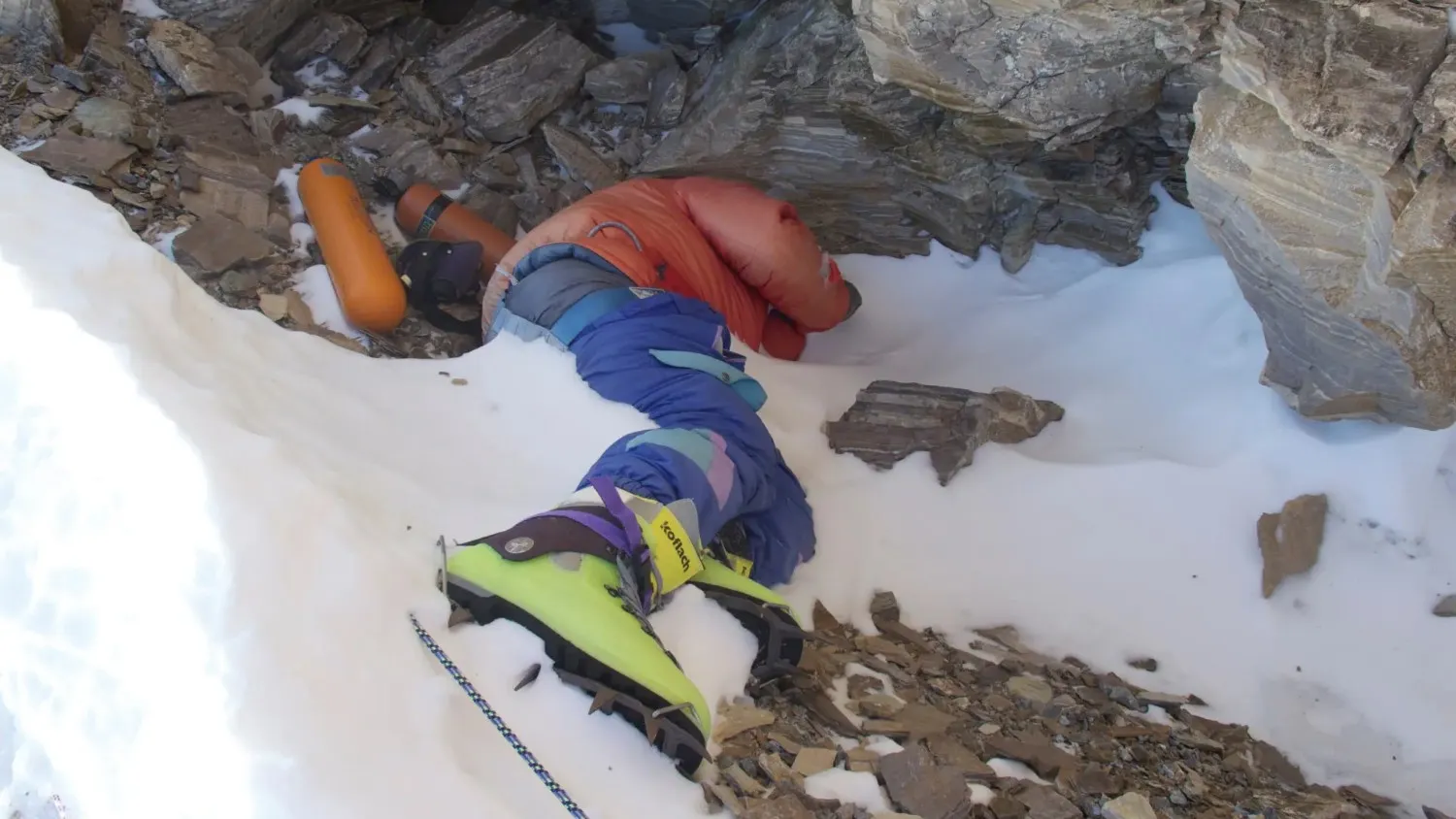
Green Boots earned his nickname from a pair of bright green, inexperienced Koflach mountain climbing boots, and climbers on Everest’s north aspect have used his resting region as a checkpoint for almost thirty years.
Everest holds an estimated 200 or more bodies on its slopes; none has been photographed, mentioned, or documented as thoroughly as Green Boots. Millions of people are searching for his story now, as India has launched an official mission to recover him, and because DNA evidence has finally answered a question mountaineers have debated since 1996.
Climbers who want the fuller context around Everest’s different well-known stays can also examine Everest’s Sleeping Beauty: The True Story of Francys Arsentiev.
Was Green Boots Finally Identified?
Green Boots was widely believed to be Tsewang Paljor, a 28-years old-vintage ITBP constable who died in the same 1996 typhoon. That notion held for nearly 30 years, primarily based on tools and circumstantial matching in place of thorough testing.
DNA testing was conducted ahead of the 2026 recovery mission, which changed that. Tender files reviewed by The Guardian and AFP confirmed the remains surely belong to Lance Naik Dorje Morup, a fellow ITBP climber who summited alongside Paljor and Subedar Tsewang Smanla that day. The Indian government has officially confirmed his identity.
The confusion made sense given the circumstances. Paljor and Morup died within hours of each other, inside the identical stretch of terrain, carrying comparable high-altitude equipment, with no formal identity viable for decades. Only DNA testing could confirm the identity, especially run to put together for this recovery project.
The 1996 Everest Disaster
Dorje Morup died during one of the deadliest seasons in Everest’s history. On May 10, 1996, a six-man ITBP group tried the first Indian ascent from Everest’s north side. Three of them, Subedar Tsewang Smanla, Head Constable Tsewang Paljor, and Lance Naik Dorje Morup, pushed for the summit late in the day regardless of worsening weather.
A violent typhoon hit the mountain that afternoon, the same storm that killed several climbers on Everest’s south side and became the subject of Jon Krakauer’s Into Thin Air. The North Aspect disaster acquired far less global attention; however, it was just as extreme. All three ITBP climbers who continued upward died within the Death Zone. None of their bodies got here down.
Reports at the time also pointed to a nearby Japanese climbing team that handed the struggling Indian climbers without stopping to assist. India lodged formal court cases over the shortage of assistance, although the complaints were later withdrawn. The incident nevertheless comes up in debates about summit ethics on Everest these days.
Morup is the best one of the three whose remains have ever been determined. His resting region, later nicknamed Green Boots, became the unintended memorial to a disaster most climbers only companion with the south side.
Why were green boots left on Mount Everest?
Green Boots’ body remained on Everest for almost 30 years because shifting a body out of the dying sector is way more difficult than hiking through it. Above 8,000 meters, oxygen levels drop to more or less a 3rd of sea level, and every additional minute spent operating, instead of shifting towards safety, raises the risk of death for the rescuer.
A frozen human body weighs significantly more than a living climber, and inflexible limbs make it nearly not possible to move through narrow, icy terrain like the Northeast Ridge. Recovery teams would want to tug or decrease the lifeless weight across the uncovered rock and ice using the same fixed ropes that other climbers rely upon to live to tell the tale.
Cost adds to any other barrier. High-altitude body recovery missions routinely run into tens of hundreds of dollars per try, and achievement is never assured. For many years, no authorities or family members pursued Morup’s case with enough investment or diplomatic access to pursue it, especially considering Everest’s north side sits within Tibet and requires Chinese permission to operate.
That combination, intense altitude, physical trouble, and cross-border logistics, stored Green Boots precisely where the typhoon left him till 2026.
Why Is India Planning to Recover Green Boots After Nearly 30 Years?
India is convalescing Green Boots now because DNA testing has eventually shown his identity as Lance Naik Dorje Morup, giving his family and the government a concrete motive to bring him home in place of departing with an unnamed body on the mountain. The ITBP issued a formal request in June 2026, inviting professional high-altitude restoration businesses to bid for the mission, with commands to supply the stays to Delhi by October 2026.
DNA Testing Confirmed Green Boots’ Identity
For most of the past 30 years, people widely believed Green Boots was Tsewang Paljor, even though a 1997 Himalayan Journal article, supported by expedition member P.M. Das, had already recorded the body as Dorje Morup’s, discovered sheltered underneath a boulder close to Camp 6, along with his rucksack intact. DNA testing conducted ahead of the 2026 mission, move-checked against ITBP service information, showed that Das’s account: the remains belong to Morup, not Paljor. Documents reviewed through The Guardian and AFP confirmed the DNA findings before the ITBP finalized its report.
Confirmed identity opened the door to family closure
Morup’s family lived without confirmation for decades, unsure whether Green Boots was even their relative. DNA confirmation finally gave them a factual basis to grieve and request his return, allowing proper funeral rites according to their own religious practices.
The ITBP is treating this as a duty to a fallen officer, not a private request.
Morup died in active duty attempting India’s first ascent of Everest from the north side. The ITBP is organizing and funding the restoration directly, reflecting the equal institutional dedication security forces generally show closer to bringing fallen personnel home, in preference to leaving the effort to family assets.
Recovery planning has improved significantly since 1996
The ITBP’s tender requires companies with proven high-altitude retrieval experience, ideally within the last five years on Everest itself, a demand that narrows the pool to actually qualified groups. It calls for at least six Sherpas able to run above 8,000 meters and permits up to 40 days for the mission, accounting for the region’s unpredictable climate. This level of planning did not exist in previous years, whilst no employer had assembled a comparable specialized recovery group for a case like this.
International coordination makes the mission legally possible.
Green Boots’ body sits in Chinese-administered Tibet, and a Chinese expedition, possibly the China Tibet Mountaineering Association, reportedly moved it similarly under its boulder in 2014 to make it less visible from the course. Any Indian restoration group desires formal permission from Chinese authorities before hiking, and the most practical course for bringing Morup’s stays home runs through Nepal. That makes this a three-country mission, not a single national effort.
This mission additionally fits a broader shift already underway on the mountain. Nepal has run annual high-altitude cleanup missions since 2019 and introduced a five-year Everest Cleaning Action Plan in late 2025 aimed at recovering more bodies and treating them with dignity instead of leaving them as route markers. For the fuller account of the way identity affirmation and family involvement form a recovery like this, see Francys Arsentiev’s Husband Sergei Arsentiev on Everest, which covers a comparable case on Everest’s south side.
Why Is Recovering Bodies from Everest So Dangerous?
Recovering a body from Everest’s death zone is risky due to the fact rescuers face the precise equal lifestyles-threatening conditions that killed the person they are retrieving, even while carrying a lifeless weight in preference to climbing unburdened.
- Helicopters can’t reach the death zone: Everest’s thin air and unpredictable winds prevent aircraft from operating safely above roughly 7,000 meters. Since Green Boots rests at about 8,500 meters, recovery teams must complete every mission above that altitude on foot.
- Oxygen levels create hard time limits: At 8,500 meters, the air holds about a third of the oxygen available at sea level. Recovery teams work in quick bursts using supplemental oxygen, and every minute spent maneuvering a frozen body raises the odds of exhaustion, frostbite, or fatal errors in judgment.
- Ice walls and avalanche-prone slopes surround the route: The Northeast Ridge combines steep technical terrain with risky snowpack, and rescuers transferring a body have less distance and less flexibility to react to unexpected avalanche danger than a climber shifting underneath their own energy.
- High winds can shut down an entire mission without warning: The same kind of unexpected storm that killed Dorje Morup and his teammates in 1996 can still strike Everest’s higher slopes with little notice, forcing recovery groups to desert and strive mid-mission.
- A frozen body is far harder to move than a living climber: Rigid limbs, additional weight from gear and ice, and the desire to remain free before shifting all of them slow down a recovery team operating with almost no margin for error.
How Many Bodies Remain on Mount Everest?
Everest holds an estimated 200 to 250 bodies throughout its slopes, even though no person has finished a full survey of the mountain’s higher elevations. The determination comes from a long time of expedition reviews, manual observations, and low recovery missions in preference to a reliable count, and maximum remains sit down above 8,000 meters, where rescue teams can hardly ever attain them adequately. Green Boots himself remained visible at the Northeast Ridge for almost 30 years for exactly this reason, and climbers have long used well-known stays like his as informal checkpoints on the route.
Climate alternate is starting to alternate that photo. Melting ice and taking flight, glaciers have started exposing bodies that stayed buried underneath snow for many years, including newly visible remains, while recovery teams occasionally bring others down. Nepal has responded with annual excessive-altitude cleanup missions since 2019, and its 2025-2029 Everest Cleaning Action Plan consists of trials of heavy-lift drones constructed to ferry waste and remains down from the high camps.
India’s project to get better Dorje Morup fits into this same shift in the direction of treating recovery as a matter of dignity, in place of leaving bodies as everlasting permanent landmarks. Cost, weather, and terrain nevertheless block most attempts, but the course of the tour on Everest is clear. For context on wherein maximum of Everest’s stays concentrate, see Rainbow Valley, Everest North Side vs South Side.
Green Boots and the Ethics of Everest
Green Boots’ recovery has reopened a debate mountaineers have argued over for many years: must bodies live on Everest, or must climbers and governments make every effort to carry them home? Families regularly need closure; however, every recovery attempt places living rescuers at real threat, which forces expedition leaders and governments to weigh their own family’s grief against a rescue team’s safety.
Sherpa communities convey their own perspective to this debate, shaped in large part through Buddhist ideals of managing human stays with care and admiration. That’s part of why the ITBP’s tender for Dorje Morup in particular requires the recovery group to comply with religious and cultural protocols throughout the mission, not simply technical protection standards. Environmental issues add another layer, due to the fact that every recovery excursion adds fixed ropes, oxygen canisters, and human visitors to a mountain already strained by overcrowding and waste.
The mountaineering community remains divided on where to draw the line. Some argue authorities should carry out recovery wherever it is technically possible, especially after they identify a body and the family requests its return. Others argue Everest’s death area should remain as it is, treating unrecovered climbers as a part of the mountain’s history in place of issues to solve. Morup’s case pushes that communication ahead as his family, in the end, has a call and a real desire to work with.
What This Recovery Means for Future Everest Expeditions
Green Boots’ recovery alerts to an actual shift in how governments and excursion operators think about Everest’s dead. For nearly three years, our bodies, like his, stayed on the mountain by default, with value, technical issues, and a shortage of identity running together to keep recovery off the table. India’s task proves that a mixture may be overcome while identification, funding, and political will align.
Professional recovery groups are getting a permanent capability, not a one-off effort. The ITBP’s tender requirements, at least six elite Sherpas with tested high-altitude retrieval experience, point towards recovery turning into a specialized service as opposed to an improvised mission assembled after the fact.
Earlier, Everest recoveries frequently trusted non-public donations or a family’s own resources. India’s direct involvement through the ITBP shows that the government is willing to fund and organize these missions when they involve its fallen personnel.
Technology is beginning to close gaps that used to make recovery impossible. Nepal’s trials of heavy-lift drones for excessive-camp cleanup point closer to a future where at least a few recoveries no longer depend completely on human climbers risking their lives at extreme altitude.
Environmental and dignity worries are now part of the same communique. Everest’s cleanup plans increasingly deal with waste removal and body recovery as linked desires, each aimed toward restoring the mountain as opposed to simply managing it. Future missions will possibly observe Morup’s case as a model, pairing DNA identification with dependent, authorities-backed recovery efforts rather than leaving the mountain’s lifeless as permanent landmarks. For the exact location and history behind the name itself, our guide to Green Boots Cave covers where the site sits and how it earned its name.