
Offering group discounts!
Reserve with a 20% deposit. The balance isn't due until 60 days before departure, and cancellations more than 60 days out get a full deposit refund. How booking works →
 Region
Annapurna Region
Region
Annapurna Region
 Duration
8 Days
Duration
8 Days
 Difficulty
Challenging
Difficulty
Challenging
 Max. Altitude
5416 m
Max. Altitude
5416 m
 Prime Activity
Trekking In Nepal
Prime Activity
Trekking In Nepal
 Season
(March-May) (September-November)
Season
(March-May) (September-November)
 Group Size
1-12 people
Group Size
1-12 people
The Annapurna Circuit is one of the most celebrated trekking routes in the world, and the 8-day trek brings you directly to the heart of it. No filler days, no unnecessary detours. Just the most iconic stretch of the circuit, packed into a week that works for people with real schedules.
This package takes you from the beautiful lower valleys around Chame all the way up through the dramatic landscapes of Manang, across the legendary Thorong La Pass at 5,416 metres, and down to the sacred temple city of Muktinath. Along the way, you walk through Gurung and Manangi villages, cross suspension bridges over glacial rivers, and wake up each morning to views of Annapurna II, Gangapurna, and Tilicho Peak standing right in front of you.
This isn't a watered-down version of the Annapurna Circuit. It is the circuit where it matters most. The high-altitude meadows, prayer flags on the pass, and aroma of juniper smoke in the teahouse at night capture everything that makes the Annapurna Circuit special. What gets trimmed are the lower trail sections that, while scenic, do not add the altitude or experience that most trekkers come here for.
Nepal Outdoor Expeditions has been running this route for years, and the 8-day layout works because it is designed around how altitude genuinely affects your body. Acclimatization is built into the itinerary rather than added as an afterthought. You spend the proper amount of time in Manang, ascend steadily, and cross the pass when your body is prepared.
If you've been putting off the Annapurna Circuit Trek because you thought you needed three weeks, this package offers a more time-efficient way to experience its most iconic sections.
The 8-day Annapurna Circuit Trek follows the most important and high-altitude section of the classic circuit, taking you directly through the part of the route that most trekkers remember for the rest of their lives.
It starts in Kathmandu, where you drive north through winding mountain roads, tracing the Trishuli and Marsyangdi River valleys before reaching Chame on the first day. The mountains start making their presence felt long before you arrive. Annapurna II, Annapurna IV, and Lamjung Himal are already visible by the time you settle in for the night.
From Chame, the trail climbs progressively through pine forests and apple orchards into the broader, drier landscapes of Pisang. The valley begins to open up here, and the peaks start showing themselves more clearly for the first time. A short detour to Upper Pisang offers one of the finest viewpoints of the surrounding Annapurna range.
From Pisang, you move into Manang, the cultural and geographical heart of this trek. The Manangi people have lived in this valley for hundreds of years, and the historic Braga Monastery, built before the town, is a quiet reminder of the long history of human settlement at these altitudes. You spend a full day in Manang, both to acclimatize properly and to experience an area that feels truly removed from the rest of the world.
Above Manang, the landscape changes completely. The trees disappear, the air becomes thinner, and the terrain turns rocky and windswept as you pass through Yak Kharka before reaching Thorong Phedi. The night here is cold, the teahouse buzzes with quiet anticipation, and the morning starts well before sunrise.
Crossing Thorong La Pass at 5,416 metres is the most challenging day of the trek. You climb for hours in the early morning before reaching the summit, where one of the most expansive Himalayan panoramas awaits. The descent into Muktinath takes you into a very different landscape that is drier, warmer, and steeped in centuries of spiritual importance for both Hindus and Buddhists.
From Muktinath, you pass through Jomsom, continue beyond the dramatic Kali Gandaki Gorge, and travel all the way down to Pokhara, where the trek formally ends.
Many people discover the Annapurna Circuit and immediately assume it requires weeks of holiday time they simply do not have. The 8-day Annapurna Circuit Trek exists to change that thinking without cutting out what makes this route worth doing.


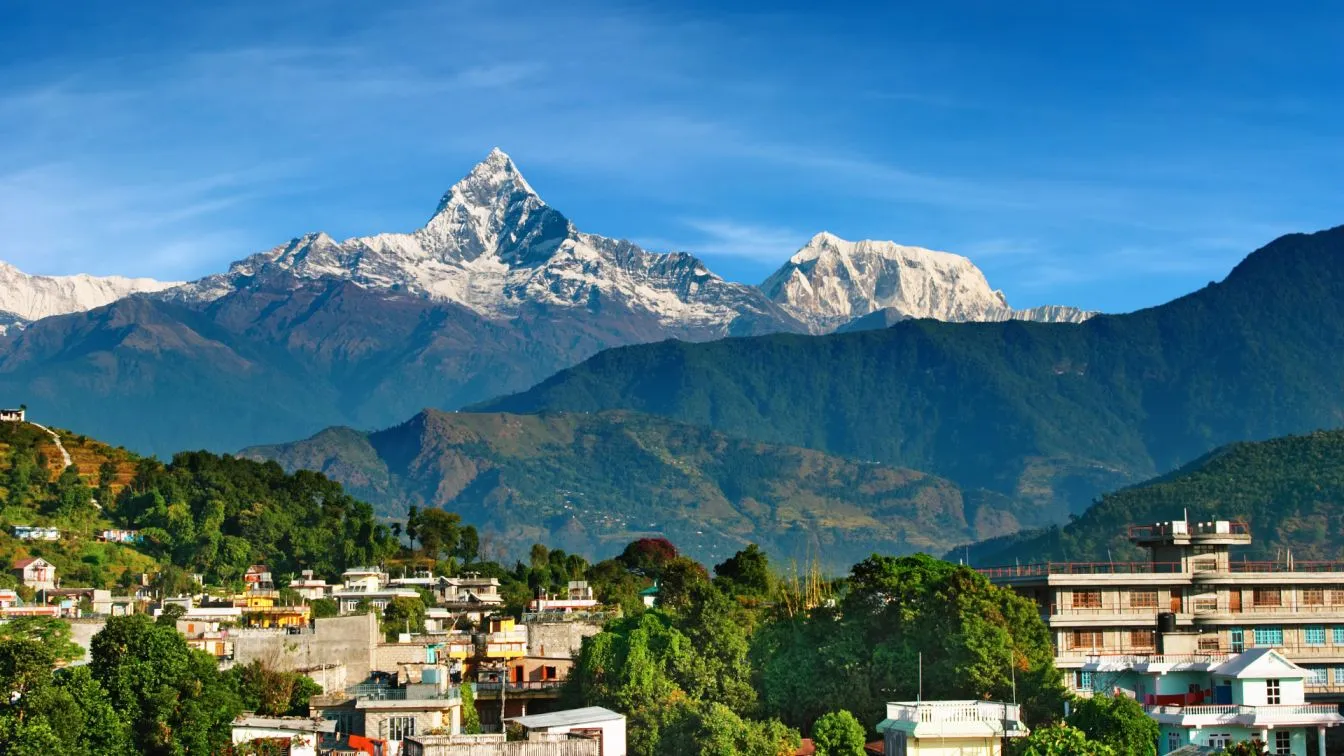
The Annapurna Circuit can be trekked in most seasons; however, the weather changes considerably depending on when you pass. Here is what every season in reality appears like at the trail.
Spring offers one of the best seasons for this trek and for a suitable cause. The skies are generally clear, the temperatures are comfortable in the course of the day, and the lower valleys come alive with rhododendron blooms in shades of purple, red, and white. Mornings at the trail experience clean and energetic, and the mountain perspectives are at their sharpest earlier than the pre-monsoon haze builds up later in May. Thorong La Pass is reliably open, and the teahouses are nicely stocked. If you need the entire scenic diversity of the Annapurna region, spring delivers it continually.
Autumn is the most popular trekking season in Nepal, and the Annapurna Circuit is no exception. The monsoon clears out with the aid of late September, leaving behind skies that are almost exceptionally clear and air that is smooth and crisp. Visibility is at its best for the duration of this window, meaning the mountain perspectives from Manang, the bypass, and Muktinath are as clean as they get. Teahouses are busy, and the trail has extra trekkers on it; the conditions make it well worth it. October is broadly taken into consideration the best month for this trek.
Winter trekking on the Annapurna Circuit is a different form of experience. The crowds disappear almost entirely, the teahouses are quieter, and the landscape takes on a stark, stripped-back beauty that some trekkers actually prefer. The trade-off is actual, although. Temperatures at Thorung Phedi and above drop well below freezing at night, and Thorong La Pass can be entirely covered after a heavy blizzard. If you are thinking about an icy trek, go along with an experienced operator who monitors pass conditions closely and has a contingency plan if the crossing becomes hazardous.
The 8-day Annapurna Circuit is rated moderate to challenging. Here is an honest breakdown of what that actually means on the trail.
The daily walking is demanding but manageable for anybody who engages in regular physical activities. You aren’t scrambling over technical terrain or using ropes. What you will do is hike uphill for numerous hours a day, often on rocky and choppy paths, with a daypack on your back. The longest and hardest day is Day 7, the skip crossing, wherein you climb 856 meters earlier than descending over 1,600 meters in a single day. Your legs will feel it, particularly on the way down.
This is the aspect that catches most trekkers off guard. Physical effort is one challenge, but altitude adds a layer that fitness alone can’t fully prepare you for. You sleep at 4,560 meters the night before the bypass, and summit at 5,416 meters the following morning. Above 4,000 meters, headaches, fatigue, and slower breathing are common even for healthy trekkers. The acclimatization day in Manang is constructed into the itinerary in particular to reduce this chance, and your guide monitors show everybody each day for any signs of Acute Mountain Sickness (AMS).
Most days involve 5 to 7 hours of walking. Day 6 is shorter, at around 4 to 5 hours. Day 7 is the longest at 8 to 9 hours, which includes the descent to Muktinath. Trails are typically well-marked; however, they can be steep, rocky, and uncovered in sections above Manang.
You do not need to enjoy earlier trekking; however, you do need a base level of fitness. If you could comfortably walk uphill for two to a few hours with out preventing, you are in a good starting point. Training with loaded walks and stair climbing in the weeks before departure makes a major difference on the path.
Travel insurance is mandatory for this trek. It is a requirement for joining any Nepal Outdoor Expeditions package and for good reason.
At altitudes above 4,000 meters, medical emergencies require immediate attention, and the only practical evacuation method is a helicopter evacuation. A single rescue flight within the Himalayas can cost anywhere between USD 3,000 and USD 7,000, depending on your location along the trail. Without insurance, that cost falls completely on you.
Your policy must specifically cover the following:
Standard travel insurance policies often do not include high-altitude insurance by default, so take a look at your policy carefully before departure. If your current provider does not cover Himalayan hiking, consider specialized travel insurance providers.
Purchase your insurance earlier than arriving in Nepal. Once you are in Kathmandu, it is generally too late to set up adequate insurance for a trek that begins in days.
Two permits are required to trek the Annapurna Circuit, and both are included in your Nepal Outdoor Expeditions package deal. Here’s what each permit covers.
This allows you access to the Annapurna Conservation Area, which covers the entire hiking place together with Manang, Thorong La Pass, and Muktinath. The rate immediately supports conservation efforts and the maintenance of trails and infrastructure in the location. It presently charges NPR 3,000 for overseas nationals and NPR 1,000 for SAARC nationals.
The TIMS card is a safety and monitoring document that registers your presence on the path. It facilitates the government to find trekkers in case of emergency and is obligatory for all organized treks in Nepal. It currently charges NPR 2,000 for overseas nationals trekking with a registered organization.
Both are organized by Nepal Outdoor Expeditions before the trek begins. You do not need to go to any permit office yourself. Carry both permits for the duration of the trek as they’re checked at a couple of checkpoints along the path.
This section is not meant to discourage you. It is supposed to make sure you arrive prepared, due to the fact that the trekkers who recognize altitude are the ones who have the safest experience on this path.
The Highest point of this trek is Thorong La Pass at 5,416 meters. You also sleep at 4,560 meters, the night before the crossing at Thorong Phedi. These are extreme altitudes, and your body needs time and the proper conditions to address them correctly.
Acute Mountain Sickness (AMS) can affect anyone regardless of age or health level. The maximum common early symptoms are chronic headache, nausea, dizziness, loss of appetite, and difficulty sleeping. If these signs and symptoms appear, the most crucial element is to stop climbing higher until they pass. More extreme signs like confusion, loss of coordination, or respiratory problems require immediate descent and clinical attention.
The itinerary is constructed around proper acclimatization. The slow elevation gain through Chame, Pisang, and Manang gives your body time to adjust earlier than the final ascent. The dedicated acclimatization day in Manang is the most crucial day of the entire itinerary. Short hikes to better elevations during that rest day actively assist your body to produce extra red blood cells and adapt to the thinner air. Skipping or rushing this day notably increases your risk on the pass.
Your guide checks in with each trekker every day, listening to energy levels, appetite, sleep quality, and any suggested signs and symptoms. Pulse oximeters are carried in the course of the trek to monitor blood oxygen levels at key altitude factors. Nothing is left to guesswork.
In the event of a serious altitude-associated emergency, helicopter evacuation is available from multiple factors along the path, including Manang and Muktinath. Nepal Outdoor Expeditions coordinates without delay with rescue offerings, and that is one of the key motives for having complete journey coverage, as emergency evacuation coverage is mandatory for all trekkers, which is why comprehensive travel insurance is required before joining the trek.
You can see homes that are Tibetan Buddhist-influenced villages like Manang and Pisang. The route follows the Muktinath temple, which is a sacred place for both Hindus and Buddhists. You can explore the Gurung and Magar culture and tradition, and experience the unique Thakali cuisine and Gurung hospitality. Also, you can experience natural wonders like walking in a diverse ecosystem that ranges from tropical forest to alpine forest. Moreover, the trail also takes you across the world-famous Thorong La Pass. You get to pass through the world’s deepest gorge, which is the Kali Gandaki Gorge.
The ecosystem of the Annapurna region has been significantly impacted by increasing tourism. Trekkers have some responsibilities towards the environment to preserve the beauty of the Himalayas for our own good and for future generations. Here are some ways to practice environmental responsibility:
These are the matters your guide needs each trekker to know before arriving at the trailhead. Small preparations that make a real difference once you are on the path.
Now, trekkers seek a balance between adventure and the outside world while on a trek to be connected. Here are some expectations of modern travelers that we try to meet:
The classic Annapurna Circuit traditionally takes 14 to 21 days. So the natural question is: what sections are omitted, and does it matter?
The 8-day version begins at Chame instead of Besisahar, which means that the lower phase of the circuit via Bhulbule, Jagat, and Dharapani is covered by road transport instead of trekking. These lower sections are scenic, but they are additionally the most forested and least alpine sections of the trail. They no longer consist of any sizeable high-altitude terrain, fundamental bypass crossings, or the dramatic landscapes that most people photograph once they think about the Annapurna Circuit.
Everything that surely defines the Annapurna Circuit continues to be right here. Pisang, Manang, the acclimatization day, Yak Kharka, Thorung Phedi, the bypass crossing, and Muktinath are all a part of this itinerary. These are the sections that lie above 3,000 meters, in which the landscapes turn dramatic, the culture becomes increasingly influenced by Tibetan traditions, and the trek turns into the kind of experience people remember for years.
Trekking routes in the Annapurna region have changed considerably over the last decade. Road construction has prolonged all the way to Chame and beyond, which means the lower trail sections that once felt faraway now run along or close to a motorable road for almost the entire way. What has been lost in street construction has turned into, lamentably, the wilderness experience of these lower days. The 8-day version basically skips what the street has already modified and goes immediately to the elements of the circuit that continue to be truly untouched.
For trekkers with limited time, it’s also truly the most honest version of the circuit to be had. You are not rushing via highlights or sacrificing acclimatization to suit everything in. The itinerary is designed across the terrain, not around a calendar.
Loved this beginner trek? Once you’re comfortable on the trails, why not level up? Nepal is full of thrilling, high-altitude adventures that offer breathtaking views and real Himalayan challenges.
Here Are Some Adventurous Treks You Might Like:
Every night during the trek is spent in a teahouse, and this is truly part of the experience. These are small, family-run lodges that cater specifically to trekkers. While they are simple, they provide everything you need after a long day on the trail.
Rooms are primarily twin-share or double rooms with a bed, blankets, and a pillow. Most teahouses have shared bathrooms, although a few in larger stops such as Manang offer attached bathrooms. Hot showers are available at most places, commonly for a small extra charge. Charging facilities are available along the route, although you can expect to pay a small fee for charging electronic devices.
The teahouses become simpler and colder above 4,000 metres, making your arrival in Pokhara on Day 8 feel even more rewarding. On the final night, you stay in a comfortable hotel in Pokhara, a well-earned upgrade after a week in the mountains.
All food throughout the trek is included, from the first breakfast in Chame to the last dinner in Pokhara. The food along the route is straightforward, filling, and varied enough to keep you fuelled throughout the journey.
Breakfasts typically consist of porridge, eggs cooked to your preference, toast with jam or honey, and milk tea or coffee. Lunch is normally eaten at a teahouse along the trail and might include a bowl of noodle soup, fried rice, a vegetable burger, or traditional dal bhat.
Dinners are usually the largest meal of the day. Dal bhat is the local staple and an excellent choice because teahouses often offer refills at no additional cost. Thakali cuisine, Tibetan bread, pasta, momos, and potato dishes are also commonly available on teahouse menus as you move through different cultural areas along the route.
Above Manang, menus become more limited and prices increase slightly because supplies must be carried in by porter or mule. Eating locally available food rather than ordering dishes that require ingredients to be transported from lower elevations is often the more practical choice at high altitude.
Kathmandu to Chame: The trek starts with a full day’s drive from Kathmandu to Chame. The journey takes roughly 9 to 10 hours, passing through Besisahar and a series of smaller mountain villages as the valley narrows and the altitude increases. Private vehicles are used for the journey, making the trip more comfortable and allowing flexible rest stops along the way.
Muktinath to Pokhara: On the final day, you travel from Muktinath down to Pokhara. The scenic 7 to 8-hour journey passes through Jomsom, Marpha, Tatopani, and Beni. The landscape changes dramatically as you descend from the high-altitude terrain into the green hills surrounding Pokhara.
All transportation mentioned in the itinerary is included in the package cost.
You do not need to overpack for this trek. Your porter carries the main bag, but your daypack stays with you throughout the trek, so pack only the essentials. Here are the items that actually matter on this route.
Most Important Items for This Trek

Tenzing Sherpa
Have questions? Our travel specialists are here to help plan your perfect adventure.
Chat on WhatsAppKathmandu: 1,400m / 4,593 ft Chame: 2,670m / 8,759 ft Elevation Gain: 1,270m / 4,166 ft Meals: Breakfast, Lunch, Dinner Accommodation: Teahouse / Lodge Your 8-day Annapurna Circuit adventure starts no longer on a trail, but on a road. After breakfast in Kathmandu, you board a comfortable vehicle and head northwest, tracing the banks of the Trisuli and Marsyangdi Rivers as the town noise slowly fades and the mountains begin pulling your attention out of the window. The first six hours take you to Besisahar, an active city that feels like the final proper breath of the lowlands. From there, the street winds through a string of smaller settlements, Sange, Bhulbule, Ngadi, Dharapani, Baggarchhap, Timang, and Koto, every one a touch higher, a touch quieter, and a touch extra dramatic than the last. By the time you pull into Chame, Annapurna II, Annapurna IV, and Lamjung Himal are standing in front of you. Settle in, relax nicely, and let the mountains remind you why you came.
Chame: 2,670m / 8,759 ft Pisang: 3,300m / 10,498 ft Elevation Gain: 630m / 2,066 ft Meals: Breakfast, Lunch, Dinner Accommodation: Teahouse / Lodge This is the day the trek clearly starts, and it begins fantastically. The trail out of Chame follows the Marsyangdi River through fascinating forested paths, the kind that make the elevation gain feel almost effortless. You pass through Bhratang Village early on, and a little farther ahead, a quiet memorial marks the spot where Japanese mountaineer Akira Ochiai lost his life on these slopes. It is a short, humbling pause during an otherwise uplifting day. Apple orchards appear alongside the path, and a suspension bridge takes you into the small village of Dhukur Pokhari, a good spot to stop for lunch, surrounded by towering mountains. The very last stretch opens up with sweeping perspectives of Annapurna II, Annapurna IV, and Pisang Peak. When you attain Pisang, make the effort to explore both Lower and Upper Pisang. The views from Upper Pisang, where you spend the night, are really one of the best viewpoints on the whole circuit.
Pisang: 3,300m / 10,498 ft Manang: 3,519m / 11,545 ft Elevation Gain: 219m / 718 ft Meals: Breakfast, Lunch, Dinner Accommodation: Teahouse / Lodge Today's elevation gain is mild, but the richness of what you walk through more than makes up for any modest elevation gain. The trail climbs above the valley, supplying stunning perspectives of Manang Valley and Tilicho Peak beforehand. After passing through Humde, where the small mountain airstrip sits on a surprisingly flat plateau, the northeast face of Annapurna III comes into full view, and it stops most trekkers in their tracks. The real spotlight of the day is Braga, a Tibetan village whose structure feels centuries old due to the fact maximum of it is. The Braga Monastery, perched dramatically above the village, was constructed around 900 years ago and is the most important in the Manang area. Step inside if you can. It consists of a quiet gravity that stays with you long after you depart. After crossing numerous suspension bridges over the Marsyangdi River, you arrive in Manang, a proper mountain town with teahouses, bakeries, and trekkers comparing notes over hot drinks.
Manang: 3,519m / 11,545 ft Meals: Breakfast, Lunch, Dinner Accommodation: Teahouse / Lodge You have climbed over 2,500 meters since leaving Kathmandu, and your body needs an afternoon to adjust before you push higher. Acclimatization days now and then get dismissed as relaxation days, but in Manang, there's actually plenty to do, and most of it makes the crossing of Thorong La Pass substantially safer. Short hikes to Bhojo Gumba, Gangapurna Lake, the Ice Lakes, or Chongkar Viewpoint are all exceptional alternatives depending on how your body is feeling. The views from these spots, Gangapurna Peak, Tilicho Peak, Annapurna III, Pisang, and Chulu Peak, all visible from these viewpoints, are really worth each step of the extra effort. Some trekkers additionally attend the altitude illness communication on the Himalayan Rescue Association, which may sound technical but turns out to be surprisingly interesting and practical at this level of the trek. In the evening, simply wander through the metropolis. Manang has a warm, unhurried atmosphere, and its Tibetan-encouraged tradition is quietly fascinating if you take the time to explore it.
Manang: 3,519m / 11,545 ft Yak Kharka: 4,120m / 13,517 ft Elevation Gain: 601m / 1,971 ft Meals: Breakfast, Lunch, Dinner Accommodation: Teahouse / Lodge Leaving Manang behind, the trail climbs through pine forests earlier than reaching Tenki Village, in which you depart the familiar Marsyangdi Valley and head north into the Jar Sang Khola Valley. The landscape changes dramatically here. It will become more open, more exposed, and more raw. Juniper bushes replace the pines, yaks graze inside the extensive pastures beside the path, and the sky feels somehow bigger than it did in the valley below. Gunsan Village is a natural pause point, with particularly smooth and unobstructed views of Annapurna II and Annapurna IV framing the trail in advance. The remaining walk to Yak Kharka is fairly straightforward, crossing a wooden bridge over a stream before the teahouses become visible. At 4,120 meters, the air is much thinner, the evenings cool fast, and the stars, if the sky is clear, are top-notch. Get a hot meal early and relax nicely. The next two days are the most demanding of the complete trek.
Yak Kharka: 4,120m / 13,517 ft Thorung Phedi: 4,560m / 14,960 ft Elevation Gain: 440m / 1,443 ft Meals: Breakfast, Lunch, Dinner Accommodation: Teahouse / Lodge Today is shorter in distance; however, the altitude makes each meter seem earned. The trail crosses a suspension bridge over the valley earlier than following a narrow mountain route, rocky underfoot and dazzling in every path. Thorung Phedi sits at the base of the skip like a base camp, and the ecosystem there displays exactly that atmosphere. Trekkers arrive quietly, devour nicely, and go to bed early. You will reach Thorung Phedi in about 4 to 5 hours, leaving an excellent part of the afternoon free. Use that point wisely. Eat a proper meal, drink plenty of water, and sleep as early as you may manage. The teahouse will, in all likelihood, be humming with quiet anticipation as everyone quietly prepares for the early morning pass crossing. Tomorrow is the biggest challenge of the trek.
Thorung Phedi: 4,560m / 14,960 ft Thorong La Pass: 5,416m / 17,769 ft Muktinath: 3,760m / 12,335 ft Elevation Gain: 856m / 2,808 ft Meals: Breakfast, Lunch, Dinner Accommodation: Teahouse / Lodge This is the day everything builds towards. You begin well before dawn, headlamps slicing through the dark, breath seen within the cold air, the trail rising regularly above Thorung Phedi into the high-altitude landscape above. It is not a technical climb; however, it needs everything you have: endurance, consistent breathing, and the mental determination when your legs are asking you to stop. And then you definitely are at the pinnacle. Thorong La Pass at 5,416 meters, prayer flags snapping in every path, and the complete Himalayan horizon opening up around you. Annapurna II, IV, Gangapurna, Himalchuli, Tilicho, and Dhaulagiri all spread out before you. Take it slow up there. You have earned every minute of it. The descent to Muktinath is steep and lengthy, losing via the dramatic Kali Gandaki Gorge in a way that tests your knees as well as your lungs. But Muktinath waits at the lowest, one of the most sacred sites inside the Himalayas, respected equally by Hindus and Buddhists. The temple complex is home to 108 holy water spouts and an everlasting flame that has been burning continuously for over 2,000 years. After the raw physical drama of the pass, arriving right here feels quietly profound in a way that is tough to place into phrases.
Muktinath: 3,760m / 12,335 ft Pokhara: 820m / 2,690 ft Elevation Loss: 2,940m / 9,645 ft Meals: Breakfast, Lunch, Dinner Accommodation: Hotel The final chapter of the trek trades trail for the road. After breakfast in Muktinath, you board a comfortable vehicle and start the lengthy, scenic drive all the way down to Pokhara, roughly 7 to 8 hours of dramatically moving landscape as the high-altitude wasteland gradually gives way to green hills, river valleys, and finally the warm, lakeside city below. The direction takes you via Jomsom, beyond the Kali Gandaki Gorge, via the village of Tatopani known for its warm springs, and through Beni, where the street eventually levels out near Pokhara. By the time you arrive, the comparison is almost disorienting in the best possible way. Restaurants, the sound of music from lakeside cafes, and Phewa Lake glittering in the night light. After eight days in the Himalayas, Pokhara feels welcoming, comfortable, and well-deserved.
See what past travelers are saying about their experience with Nepal Outdoor Expeditions.
Because your next adventure is impatiently waiting for you.
Last Minute Note: Grab incredible deals on the last minute departure / Book spontaneous trips to hip destinations with limited-time offers and discounted price
Not sure of your dates yet? Hold a departure with a 20% deposit. Cancel more than 60 days out and your deposit is refunded in full. Your first date change is free. If a departure doesn't reach minimum numbers, we'll offer you the nearest alternative date or a full refund, and we'll let you know at least 30 days out.
Before you think of or actually plan any adventurous or relaxing tours, travels, or treks with Nepal Outdoor Expeditions.
If you cancel more than 60 days before departure, we refund your deposit in full. Between 30 and 60 days, the 20% deposit is retained. Inside 30 days the trip cost is non-refundable, since by then we've already paid for your permits, flights, and teahouse bookings. Full detail on our booking page.
20% to reserve your place, with the balance due 60 days before departure. On this trek that's $220 to book and $880 two months before you fly. If you're booking within 7 days of departure, the full amount is due at booking.
Yes, as long as you let us know at least 30 days before your original departure date, your first change is free. Any change after that, or a change requested inside 30 days, is $200 per person.
8 Days Annapurna Circuit Trek