
Offering group discounts!
Reserve with a 20% deposit. The balance isn't due until 60 days before departure, and cancellations more than 60 days out get a full deposit refund. How booking works →
 Region
Everest Region
Region
Everest Region
 Duration
16 Days
Duration
16 Days
 Difficulty
Technical
Difficulty
Technical
 Max. Altitude
6189 m
Max. Altitude
6189 m
 Prime Activity
Peak Climbing In Nepal
Prime Activity
Peak Climbing In Nepal
 Season
(March-May) (September-November)
Season
(March-May) (September-November)
 Group Size
1-12 people
Group Size
1-12 people
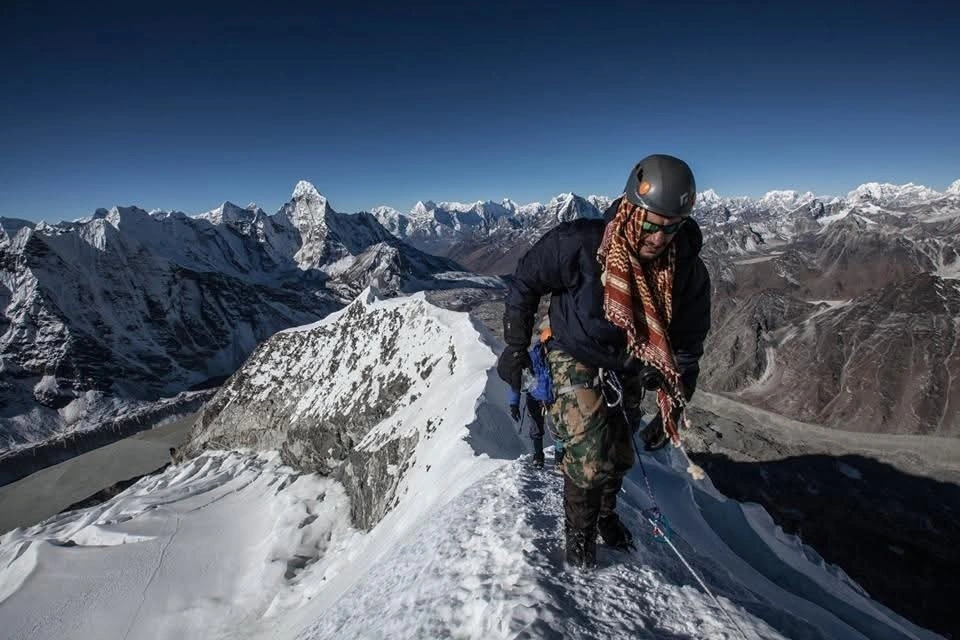
Island Peak Climbing (also known as Imja Tse) is one of Nepal’s most thrilling and scenic climbing experiences. Standing tall at 6,189 meters, this expedition offers a perfect introduction to Himalayan mountaineering—ideal for beginner climbers aiming for their first peak. From stunning glacier ascents to cultural immersion in Sherpa villages, this journey is both a physical and spiritual high.
Located in the Khumbu region, the Island Peak climbing route takes you through the iconic Everest Base Camp trail, offering views of Lhotse, Ama Dablam, Nuptse, Makalu, and Everest itself. The climb combines classic trekking experiences with alpine climbing challenges using crampons, ice axes, and ropes.


The best seasons for climbing are spring (March–May) and autumn (September–November). Clear skies, mild temperatures, and safer trail conditions make these months perfect.
Avoid the monsoon (June–Aug) due to slippery trails and the winter (Dec–Feb) because of extreme cold and heavy snow.
Join our island peak climbing packages with certified guides, full support crew, and safety-first plans. Book now or contact us for a tailored climbing experience!
During the trekking phase, you’ll mostly stay in teahouses. These are simple mountain lodges run by local families. The rooms are basic—usually just a bed, blanket, and maybe a small table—but they feel warm and welcoming after a long day on the trail. In places like Namche or Dingboche, you might find slightly better facilities, sometimes even with attached bathrooms or hot showers (though these often come with an extra cost).
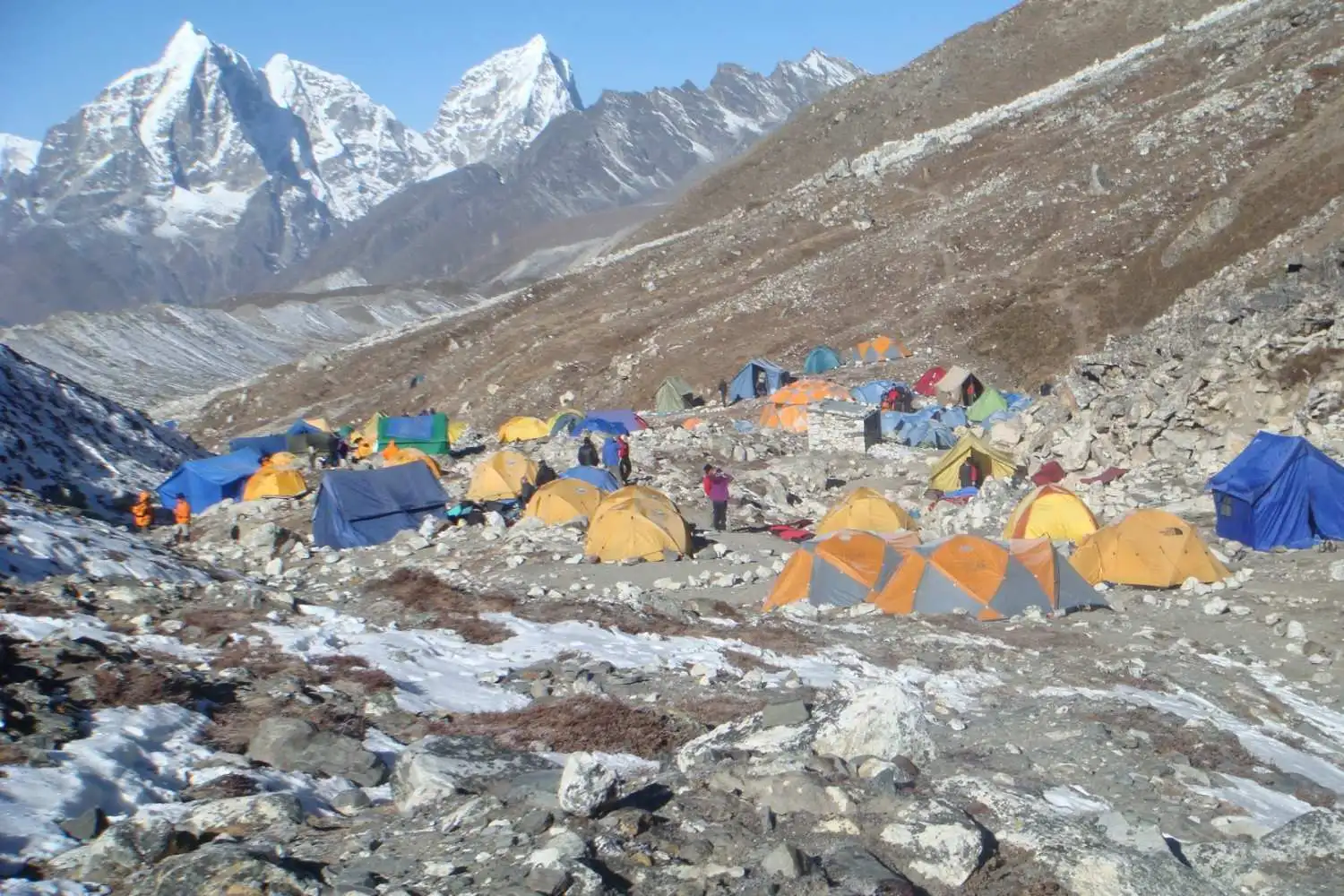
As you go higher and approach Island Peak Base Camp, things get more rugged. Here, you’ll stay in tents. It’s a proper camping experience, surrounded by vast Himalayan landscapes and complete silence except for the wind. The tents are shared, and while it may feel a bit rough compared to teahouses, it’s all part of the adventure. Sleeping at that altitude, under open skies, is something you don’t forget easily.
Food
Food along the route is simple, filling, and exactly what your body needs. In teahouses, you’ll get a decent variety of meals. Dal bhat is the go-to option—fresh, energy-packed, and often refillable. Besides that, you’ll find noodles, soups, fried rice, pasta, eggs, and even pancakes in some places.
As you gain altitude, the menu becomes more limited, but meals remain warm and nourishing. After hours of trekking, even a simple bowl of soup can feel incredibly satisfying.
At Base Camp, meals are prepared by the expedition team. The food is basic but hearty—usually rice, lentils, vegetables, potatoes, and sometimes noodles or porridge. It’s not about variety here; it’s about keeping you fueled and ready for the climb ahead.
Climbing a Himalayan peak above 6,000 meters is no small challenge—and Island Peak (6,189 m) is no exception. While it’s often called a “practice peak for Everest,” that label can be misleading. The climb is physically demanding, involves technical sections, and the altitude gain is serious. Treating it like just another trek won’t be enough—you’ll need proper preparation to truly enjoy and succeed on this journey.
In general, people prepare for high-altitude treks about 8–12 weeks in advance. But for Island Peak, it’s wise to give yourself more time—around 4 to 6 months. This gives your body and mind enough time to adapt and build the strength and endurance needed for the climb.
Here’s how you can prepare:
Strength plays a huge role in this expedition. From trekking through steep trails to using ropes and walking on icy slopes with crampons, your muscles will be constantly tested. Building overall body strength will make the climb safer and more manageable.
Some helpful exercises include:
Cardio training is what builds your stamina and keeps you going when the air gets thinner. At high altitudes, your body struggles with lower oxygen levels, so improving your endurance beforehand really helps.
You can include:
Physical strength is important, but your mindset matters just as much—especially if this is your first alpine climb. There will be moments of discomfort, fatigue, and even self-doubt. Staying mentally strong can make all the difference.
To prepare mentally:

Tenzing Sherpa
Have questions? Our travel specialists are here to help plan your perfect adventure.
Chat on WhatsAppThere's something about that early morning Lukla flight that never gets old. As the small aircraft lifts off from Kathmandu, you'll find yourself pressed against the window, watching the city sprawl give way to deep river valleys and forested ridges. Then, almost without warning, the great white peaks fill the horizon and suddenly everything feels very real. Once you land at Lukla, you'll meet the rest of the team, sort out any last-minute gear needs from the local shops, and fuel up with a proper breakfast before setting off. The trail to Phakding follows the rumbling Dudh Koshi River through forests and past some lovely little waterfalls. It's a gentle start to what lies ahead, and by the time you settle into your teahouse at Phakding, you'll already feel the mountains working their magic on you.
This is one of those days that reminds you why people keep coming back to the Khumbu. The trail winds north along the Dudh Koshi, crossing and recrossing the river on a series of suspension bridges, including the iconic Hillary Suspension Bridge, where prayer flags snap in the wind above the rushing water far below. You'll pass through small Sherpa villages like Benkar, Jorsale, and Chhuma, and stop at Monjo to enter Sagarmatha National Park. The final push up to Namche is steep, and it will test your legs a bit, but the reward waiting at the top more than earns that effort. Namche Bazaar, the lively Sherpa capital, greets you with its horseshoe-shaped layout, colorful lodges, and, on a clear day, your very first peek at Everest rising above the ridge. Nuptse, Lhotse, Thamserku, and Kwangde Ri also make their grand appearance. It's a view you won't forget.
Your body has climbed fast over these past couple of days, and today is its chance to catch up. Don't be tempted to push through and skip this day; acclimatization is what keeps the rest of the trip enjoyable and safe. That said, resting doesn't mean doing nothing. A popular option is hiking up to the Hotel Everest View at 3,962 meters, the highest hotel in the world, where the mountain views are simply outrageous. The Syangboche viewpoint and airstrip is another worthwhile leg-stretcher. If you'd rather keep things light, Namche itself offers plenty to explore: the villages of Khunde and Khumjung, the Hillary School, the Sagarmatha National Park Museum, and a bazaar full of gear and local goods. If your rest day falls on a Saturday, you're in luck; that's when traders from across Khumbu gather for the weekly market, and it's quite a scene.
Feeling refreshed after your rest day, you'll head deeper into the Khumbu toward Tengboche. The trail dips back down through beautiful rhododendron and juniper forests alongside the Dudh Koshi before climbing back up through Phunki Thanga and then steeply to Tengboche itself. Tengboche Monastery, the oldest in Nepal, sits at the top of a ridge surrounded by some of the most dramatic mountain scenery anywhere on earth. Everest, Lhotse, Nuptse, and Ama Dablam all crowd the skyline. If you time it right, you can catch the monks' daily puja ceremony around 3 p.m., a quiet and moving experience that puts the whole adventure in a different kind of perspective. Nights here feel special, a monastery bell, the Himalayan silence, and those towering peaks glowing in the last of the light.
Today takes you further into the Khumbu, and the landscape starts to shift noticeably. The lush forests gradually thin out as you gain altitude, and the trail opens up into wide alpine pastures and river valleys. You'll cross several suspension bridges through the Imja Valley, with Ama Dablam, Nuptse, and Cholaste providing constant company along the way. As you near Dingboche, the trail forks; you'll take the right-hand path over a suspension bridge and climb up into what locals call the "summer valley." The fields here are ringed with stone walls built to protect crops from the wind and wandering livestock, and the whole place has a wonderfully remote, end-of-the-road feel. It's a satisfying day's walk, and Dingboche's teahouses are welcoming after the climb.
Your second acclimatization day follows the same golden rule as the first: go high, sleep low. Today's hike up to Nangkharsang Hill at 5,100 meters does exactly that and it's absolutely worth every step. From the top, you get a sweeping panorama that includes Ama Dablam, Island Peak (your target!), Lhotse, Makalu, and more peaks than you can count. It's a useful moment to actually look at Island Peak from a distance and start visualizing what the next few days hold. Back down in Dingboche, you'll have time to explore the village, chat with fellow trekkers and climbers, and simply enjoy the slower pace. This is the last permanent settlement on the route, and there's a quiet camaraderie among everyone who passes through here.
The day starts on easy ground, a pleasant walk across open terrain toward Thukla. From there, however, the trail climbs steeply to Thukla Pass, where you'll find a collection of stone memorials for climbers who lost their lives on Everest's slopes. It's a sobering and quietly powerful place; most people pause here for a moment before moving on. Beyond the pass, the trail follows the lateral moraines of the Khumbu Glacier, the highest glacier in the world at around 4,900 meters. The terrain feels genuinely high-altitude now, and it's worth slowing your pace and drinking water regularly. The views from Lobuche village are a fine reward though, with Pumori, Khumbutse, Lobuche Peak, Ama Dablam, and Nuptse all visible from a single spot.
Few days in a life of adventure match this one. You'll set out early, trekking to Gorakshep, the last huddle of teahouses before the glacier, drop your heavy pack, grab some food and water, and then push on toward Everest Base Camp at 5,364 meters. The path out to base camp crosses the Khumbu Glacier, weaving between ice formations and rocky moraine. It demands attention, but the growing presence of Everest above you keeps the energy up. Standing at base camp, surrounded by the tents of expeditions bound for the summit, is one of those moments that hits differently than you expect. Then it's back to Gorakshep for a hard-earned rest.
Headlamps on, layers on, alarm set for well before sunrise. The climb to Kalapatthar in the dark is a Khumbu tradition, and when the first orange light catches Everest's summit ridge and spills down across Nuptse, Lhotse, and Pumori, you'll understand immediately why no one skips this. The 360-degree panorama from the top is as good as mountain views get anywhere in the world. After soaking in the sunrise and taking entirely too many photographs, you'll descend all the way down to Dingboche. It's a long drop in altitude, but it passes quickly with scenery like this. A good night's sleep in Dingboche, and then the focus shifts fully to Island Peak.
A relatively easy morning today, which is a welcome change after the previous few days. The trail to Chukkung follows the Imja Khola on a gentle, mostly leveled path through wide open valley terrain. Chukkung is a summer settlement, used by herders during the warmer months, and it has an untouched, peaceful atmosphere that you don't often find elsewhere on this route. The real highlight here is the view. Lhotse's massive south face fills the sky to the north, while Island Peak sits right there in front of you, now closer than ever. Ama Dablam and Nuptse add to the already extraordinary backdrop. It's a short day, so use the afternoon to rest, prepare your gear, and get mentally ready for what's ahead.
This is the day the whole trip has been building toward. Leaving Chukkung, you'll head south before turning into the main valley, passing alongside both the Imja and Lhotse glaciers on your way into the Imja Valley. The scenery is raw and dramatic, all ice and rock and sky. Arriving at Island Peak Base Camp, you'll get your first proper look at the southwestern face of the mountain you're about to climb. The tents go up, the guides run through the plan for tomorrow, and the atmosphere among the team is a mix of quiet excitement and healthy respect. Sleep comes early tonight; you'll need it.
The alarm goes off in the early hours and this is it. Summit day. Island Peak sits in the 6,000-meter category and, while it's often described as a training peak for Everest-class objectives, that absolutely does not mean it's a walk in the park. The upper sections involve real mountaineering, including fixed ropes on steeper ground and careful navigation around crevasses. Your guides will be with you every step of the way, keeping the pace measured and the safety margins solid. When you finally pull yourself up onto that summit ridge and the full panorama opens up, Ama Dablam, Lhotse, Makalu, Nuptse, and what feels like every peak in Nepal laid out around you, it's one of the most extraordinary feelings you'll ever experience. Take it in. You earned it. Then it's back down to base camp and all the way to Chukkung for a celebration that's entirely deserved.
With the summit behind you, the return journey begins. The legs feel the descent more than you might expect after yesterday's long effort, but the dropping altitude works in your favor and breathing gets noticeably easier as you lose elevation through the day. You'll pass through Pangboche and Debuche, cross back through the alpine meadows and forests of the Imja Valley, and wind your way along the suspension bridges before climbing up one final time to Tengboche. The monastery looks just as beautiful on the way back as it did on the way up, maybe even more so now that the pressure of the climb is behind you.
Leaving Tengboche behind, you drop steeply back down toward the Dudh Koshi River and re-enter the rhododendron and juniper forests that felt so lush on the way up. The peaks look different from this direction, or maybe you just look at them differently now, and the trail back to Namche feels familiar and comfortable. Namche greets you like an old friend. The lodges are warm, the food options are good, and the bazaar is full of last-minute souvenirs worth taking home. It's a good evening to reflect on what you've achieved and treat yourself to something nice at dinner.
The final trekking day. There's always a bittersweet feeling about this one. You retrace the familiar trail through Phakding and Monjo, back along the Dudh Koshi with its suspension bridges and prayer flags, and through the pine and rhododendron forests that felt so fresh at the start. The last 45 minutes to Lukla involves a bit of an uphill push, but nothing you can't handle after everything you've just done. Lukla feels different on the way back; smaller, busier, and full of other adventurers just beginning their journeys. You'll spend the evening sharing stories over dinner and getting ready for the flight home tomorrow.
The same little airport, the same short runway perched on a hillside, but everything feels different now. As the plane climbs away from Lukla and the Himalayan peaks recede behind you, you'll find yourself already replaying the whole thing in your head. The flight back to Kathmandu passes over forests, rivers, and hill towns, and within 40 minutes you're back in the city. A private transfer will take you to your hotel, and the adventure officially comes to a close. We hope this journey has given you memories that stay with you for the rest of your life, and we'd love nothing more than to see you back in the mountains again someday.
See what past travelers are saying about their experience with Nepal Outdoor Expeditions.
Because your next adventure is impatiently waiting for you.
Last Minute Note: Grab incredible deals on the last minute departure / Book spontaneous trips to hip destinations with limited-time offers and discounted price
Not sure of your dates yet? Hold a departure with a 20% deposit. Cancel more than 60 days out and your deposit is refunded in full. Your first date change is free. If a departure doesn't reach minimum numbers, we'll offer you the nearest alternative date or a full refund, and we'll let you know at least 30 days out.
Before you think of or actually plan any adventurous or relaxing tours, travels, or treks with Nepal Outdoor Expeditions.
If you cancel more than 60 days before departure, we refund your deposit in full. Between 30 and 60 days, the 20% deposit is retained. Inside 30 days the trip cost is non-refundable, since by then we've already paid for your permits, flights, and teahouse bookings. Full detail on our booking page.
20% to reserve your place, with the balance due 60 days before departure. On this trek that's $439 to book and $1,756 two months before you fly. If you're booking within 7 days of departure, the full amount is due at booking.
Yes, as long as you let us know at least 30 days before your original departure date, your first change is free. Any change after that, or a change requested inside 30 days, is $200 per person.
Island Peak Climbing