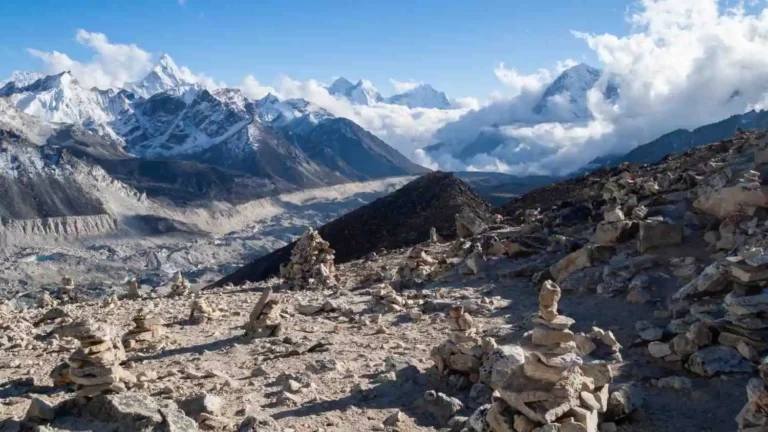

Everest Base Camp Helicopter Tour is designed to support the belief that adventure and comfort can coexist. Within 45 or 50 minutes, you can fly into the heart of the Khumbu region, land at the iconic Kalapatthar viewpoint for swoon-worthy panoramas, have a pampered breakfast at the iconic Everest View Hotel, and fly away with life-long memories – all in 4 or 5 hours. It is the shortest route back to the top of the world with no compromises on the experience.
When you have always wanted to be eye to eye with giant Mount Everest but have no days to spare or the resources to spend weeks hiking, the Everest Base Camp Helicopter Tour might be your dream come true, a time-saving pathway to wonder and awe. Visualizable is the experience of flying over the clouds, flying past snow-covered mountains, and landing right below the base of the tallest mountain on Earth within hours. This is not a sightseeing tour. It is an adventure that characterizes travelling in Nepal.
See the world at the highest point in style in a 4-hour ride to the air by helicopter out of Kathmandu. Fly over the mythical Khumbu region, land at Kalapatthar (5645 meters), and have great close-up views and a fine breakfast at the renowned Everest View Hotel in Syangboche.
What is the Everest Base Camp Helicopter Tour?
The Everest Base Camp Helicopter tour is a luxurious air tour that enables trekkers to avoid the 12+ days of strenuous trekking to reach Everest Base Camp. Either leaving Kathmandu or Lukla, a helicopter ride takes you on a spectacular flight over the Khumbu, with jaw-dropping vistas of giant mountains, dimensional valleys, and dangling glaciers.
Tour adding a brief visit to Kala Patthar (5,645 meters), the most recommended viewing place of Mt. Everest, and a casual breakfast break at Hotel Everest View, one of the highest luxury hotels in the world, is also included in the tour.
Quick Facts About the Everest Base Camp Helicopter Tour
| Detail | Information |
| Duration | Approx. 4–5 Hours |
| Starting Point | Kathmandu |
| Highest Elevation | Up to 5,545 m (Kala Patthar Area) |
| Landing Stops | Lukla & Hotel Everest View |
| Everest Base Camp Landing | Not Guaranteed |
| Best Seasons | March–May, September–November |
| Trekking Required | No |
| Suitable For | Families, Seniors, Luxury Travellers |
Why are Travellers Choosing Helicopter Tour over Trekking?
Everest Base Camp trek is quite a massive thing, and not everyone can do it. Two weeks of trekking at high altitude is not everyone’s cup of tea. Most visitors now prefer to fly to Everest, and this is because of time constraints, health reasons, or simply the individual preference that this is through flight. A helicopter tour is an alternative option for individuals who:
- Have very little time in Nepal.
- DO NOT physically fit to make long-duration hikes.
- Prefer comfort with no sacrifice in the scenery.
- Would like to see the Himalayas at a bird’s-eye level.
A combination of adventure, convenience, and experiencing the altitude offers a wonderful honeymoon trip to couples, families, or seniors. The above experience provides an experience that trekking cannot replace. A whole bird’s-eye view of the Khumbu region, in which you can see the giant mountains Lhotse, Ama Dablam, and Makalu towering above you.
Highlights of the Helicopter Tour
- The world’s highest peak, Mt. Everest (8,848m above mean sea level)
- Will be able to view the other two peaks; Panoramic views of Lhotse, Nuptse, Ama Dablam, and Makalu peaks over 8,000m above sea level as seen along the Trail.
- Khumbu glaciers.
- The Khumjung and Namche villages, where you can get a chance to explore Sherpa culture and the village.
- Monastery (Tangbuche and Khumjung)
- Lukla Airport- the most dangerous airport in the world.
- Touch down at Kala Patthar to take photos, a few dozen kilometers away from Everest.
- Hotel Everest View breakfast with a view of the beautiful Mt. Everest.
- No Physical Strain for any age group.
- Time taken: 4 to 5 hours out of Kathmandu.
The crystal clear mountain views are likely to be in between:
-
Spring (March to May): This is the time when the Everest region is made vibrant by rhododendron flowers and mountaineers planning summit forays.
-
Autumn (September to November): It’s crisp, the sky is blue, and visibility is optimal.
-
Avoid the monsoon seasons (June to August) when fog and rains can wreak havoc with air travel.
-
Winter (December to February) is a possibility but bone-cold and unstable conditions prevail.
Detailed Itinerary for year 2025-2026
Duration: About 4 hours (Hotel to Hotel)
Best Season: September-november, March-may
Flight Type: Group & Share Flight Type.
05:50 AM pickup at the hotel in Kathmandu
Your journey starts with an early morning transfer to the helicopter terminal at Kathmandu Domestic Airport, which will be around 6 to 7 am, starting after breakfast. Polished morning air and the golden sunrise over the city make the beginning of an unforgettable day. Once you arrive, you will do a briefing on safety, a weight check, and a flight briefing with your qualified pilot.
06:40 AM Lukla (2,800m) Scenic Flight.
Without much ado, the helicopter takes off, and you get a bird’s-eye view of Kathmandu Valley and proceed northeast to the Himalayas. It takes only a few minutes before snow-capped mountains come in sight. After 45 minutes of flight, you will land at the Lukla Airport, which is considered to be the gateway to Everest, to take a 10 -12 minute refueling. This is your first minute of Himalayan air.
07.50 AM Fly Over Khumbu Valley
The flight departs Lukla and heads up the Dudh-Kosi River to the center of the Khumbu Valley. Be on the lookout for Namche Bazaar, the capital of the Sherpa, as well as the holy monastery of Tengboche. The sights of Ama Dablam, which is also commonly referred to as the Matterhorn of the Himalayas, are amazing. The helicopter rises to higher elevations, providing you with a panoramic view of some of the highest ranges on Earth.
08:25 am Everest Base Camp & Kala Patthar Overfly (5,250m)
Depending on weather conditions, helicopter weight, and aviation regulations, the pilot may either hover for photographs or make a brief landing near Kala Patthar. Landing directly at Everest Base Camp is rare and cannot be guaranteed. Most Everest helicopter tours provide aerial views of Everest Base Camp and the Khumbu Glacier while offering the best photo opportunities around Kala Patthar and Hotel Everest View.
08.45 AM Breakfast at the pleasure Hotel Everest View (3,880m)
The flight down is scenic with a soft landing at the world-renowned Hotel Everest View, the third-highest luxury hotel in the whole world. Here you will get a cozy breakfast with Everest in all its glory, an experience only a handful can share. You will have approximately 50-60 minutes to rest, enjoy the panorama, and freshen up in the air of the mountains.
09:45 AM (Approx.) Return Flight via Lukla
The helicopter retraces the scenic Khumbu Valley route back to Lukla for a short refueling stop before continuing to Kathmandu. Depending on weather conditions, air traffic, and operational requirements, timings may vary slightly. Most Everest Base Camp helicopter tours take approximately 4-5 hours from hotel pickup to hotel drop-off.
Around 11:00-11:45 AM Arrival in Kathmandu & Hotel Drop-Off
Arrival time varies depending on weather conditions, air traffic management, and helicopter operations on the day of the flight.
Travel Tip: Bring sunglasses, warmth, and a camera with a wide-angle lens because you will get way better aerial shots.
Can it be Safe?
Yes. Their helicopters are high-altitude-capable, state-of-the-art, and the pilots are well-trained professionals who have thousands of flying hours in the Himalayas. Most tour operators normally carry oxygen cylinders as a precautionary measure.
However, you will fly between more than 5,000 meters, so some changes of altitude, such as dizziness or headache, might happen, namely during the short landing at Kala Patthar. This is the reason that we only take a short break there, normally between 10 and 15 minutes. People with heart or breathing complaints or pregnant women are advised to consult with their doctor beforehand.
Types of Helicopter Tour Packages
One size doesn’t fit all. We offer different packages depending on what you’re looking for:
- Standard: This is the shortest flight one can take out of Kathmandu or Lukla, and the flight has a stop in an area near Kala Patthar, a beautiful viewpoint of Everest.
- Shared Group Tours: Here, you travel with 4-5 other travelers. Saves money.
- Private Charter: The ideal way for couples, photographers, or anyone who wants a personalized encounter. You come up with the schedule.
- Long Scenic Tours: These include such destinations as Gokyo Lakes, Tengboche Monastery, or Namche Bazaar.
The Feeling of the Everest Experience
The day begins early most of the time. Once you have a briefing and a safety briefing, you are quickly seated in a high-altitude-capable, state-of-the-art helicopter. The moment the rotors start roaring, the city is left behind in the trail, and in a few minutes, the Himalayan titans come into sight.
Lukla refuel and take in one of the world’s most unique airports is usually the first stop. That is followed by the best part, flying in deep valleys, along snow-covered ridges. Depending on the weather, the pilot lands at Kala Patthar, here a short throw away from base camp. Then you will have photos: 10 to 20 minutes. Others will fly back after stopping at Hotel Everest View for breakfast.
Projection/Cost Breakdown
Prices shown are typical 2026 market rates and may vary depending on season, helicopter availability, group size, government tax policies, and fuel surcharges. Always confirm the latest pricing before booking.
- Shared Tours: $1,100 to $1,700 per head
- Private Charters: $3,000 to $5,000 per tour (5 passengers max)
Everest Helicopter Tour: What to Bring?
While the tour is short, the weather in the mountains is unreliable. We need some items along with you, including:
1. Passport (Passport or ID)
At the airport, you will go through a check-in procedure with a valid passport or any government-issued ID to authenticate and permit you to board. Take it with you in some empty pocket or pouch.
2. Warm jacket (fleece/ waterproof)
Although Kathmandu may be hot, the Himalayas are cold- especially above 4,000 meters. A windproof/waterproof coat or a fleece will also make you comfortable in short landings.
3. Gloves, Hat, Sunglasses, sunscreen
The sun is so intense at high altitude, and the wind is so nasty. With sunglasses to avoid glare on the snow, sunburn-preventing sunscreen, gloves, and a hat to keep off the cold breeze, you are now set.
4. Camera or Smartphone and additional batteries
The landscape is just stunning and will make you desire to record all of it. Batteries get depleted at a faster rate in cold weather conditions; hence, pack a power bank or an extra set of batteries to capture those once-in-a-lifetime moments.
5. Light and Water Snacks
The tour is brief; however, it is worthwhile to be hydrated at altitude. Always have a small bottle of water and a few light snacks (energy bar or chocolate) to have a mid-day pick-me-up.
6. Pack Light: Weight Limitations
Helicopters are restricted in their weights, and it is therefore important not to overpack. Keep things easy and safe by bringing only the bare necessities in a small backpack.
Best Info-Everest Base Camp Helicopter Tour
Sharing a helicopter vs. Private Flights
Small groups of up to 1 to 2 persons prefer a private Everest Base Camp helicopter tour because it offers them comfort, plenty of space, and complete control. It is your decision on where to land, when to stop, and even how long to take pictures. Besides, a lighter helicopter is able to elevate more and provide even better views.
In a shared flight, it will be less expensive, and you may have to change seats to get the most spectacular views. Very good for anyone on a tight budget, but still having the experience of Everest.
Best Time-Weather of the Tour
Everest can be flown all year round, but September to May has skies at their best. Stay away during the monsoon (July to mid-September), as the season is wet and cloudy.
- Spring (Mar to Jun): Wildflowers are in full bloom, moderately sunny (15 to 20 °C) days/cold nights/morning (-5 to +5 °C).
- Autumn (Sep to Dec): Most crystalline views, cooler (-5 to -10 °C mornings, 15 to 20 °C days).
- Winter (Dec to Mar): Coldest (-10 to -15 °C nights) and usually sunny and clear.
Strong sunlight and less oxygen will be experienced at an altitude of above 4,000m. Take high SPF sunscreen with sunglasses and warm layers.
Everest Base Camp Trek with Helicopter Return
Many trekkers now choose the Everest Base Camp Trek with Helicopter Return as a time-saving alternative to the traditional round-trip trek. After reaching Everest Base Camp or Gorakshep, trekkers can fly back to Kathmandu by helicopter, avoiding several days of descent. This option has become increasingly popular among travellers with limited time or those seeking additional comfort after completing the trek.
COVID safety storage
- Full vaccination or a negative PCR test is needed
- Before flights, helicopters are sanitized
- MASKS & sanitizers given
- Refund in full in case your travel is cancelled because of COVID-related problems.
What is the point of helicopter- flying Everest?
Without the amazing views, the tour gives an insight into the life of the Sherpas, the mystical highlanders of Everest. Sherpas are Tibetan Buddhists, and their villages are festooned with monasteries, stupas, and prayer flags. The mainland can be found in the background of Everest, which has the most popular monastery known as Tengboche Monastery.
Facts about Everest & the Khumbu Region
Everest is located in the Khumbu region on the border between Nepal and China.
1. Habitat location: Solu- Khumbu, Nepal:
Everest is located in the northeast of Nepal in the district of Solu-Khumbu of the massive Mahalangur range of the Himalaya. It is the Sherpa land of famous climbers and extensive hospitality.
2. Altitude:
Everest Base Camp 5,364 meters(17,598 feet)
Mt. Everest Peak: 8,848.86 meters (29,031 feet), which is the highest above the surface of the Earth.
3. Kathmandu accessibility:
Access to Everest is through Lukla Airport, the only airport in the world with one runway that takes 35 minutes by air or 1 hour by helicopter. Lukla forms the beginning point of trekking and helicopter flights to the Everest Base Camp.
4. Sagarmatha National Park:
The whole area of Khumbu constitutes Sagarmatha National Park, which is a UNESCO World Heritage Site. It is not just that it is home to the tallest mountains in the world, but rather that it is the home of diverse terrains: pine and rhododendron woods, glacial valleys, and rare animals, such as the snow leopard, which is a red panda, and the Himalayan thar.
Did You Know?
- Everest is getting taller: The increasing tectonic activity makes Everest taller by about 4 mm per year.
- Climbers in the world, the Sherpas: They are acclimatized to high altitudes and have better lung capacity and high-oxygen capacity.
- Lukla is dubbed the most dangerous airport in the world: It has a steep and short runway at an altitude of 2,800 m on a cliff.
- Sagarmatha is known to be Everest: Sagarmatha in Nepali translates to Forehead in the Sky; in Tibetan, it is known as Chomolungma, or Goddess Mother of the World.
- Rhododendron forests flower in spring: These forests turn the routes into a natural garden with altitude levels of 2000-4000 meters.
Final Thoughts: Is It Worth It?
Once in Nepal, and Everest starts calling your name, all you have to do is take a shortcut to the top of the world via a helicopter tour. It may be a bucket list entry, a last-minute adventure, or a well-thought-out trip, the trip to Everest Base Camp Helicopter Tour is a genius option to experience touching the sky without even sweating. Trekking strengthens the soul, but flying creates memories quickly, bright, and stunning.
It is the experience that you will reminisce about to your grandchildren. No blisters. None of those altitude tents. Only the glimpse of the Himalayas from the bird’s eye and the total silence of the rooftop of the world in the lens of your very feet. Whether you are a photographer and need a perfect shot of the Himalaya, a couple on a honeymoon looking to make some lifetime memories, or a working tourist who will be glad to afford extra height of pleasure, the Everest Base Camp Helicopter Tour is that type of vacation that takes away more than it takes. Loved the idea of our Everest Base Camp helicopter tour, but crave the iconic trekking experience? We also offer the perfect hybrid adventure: the Everest Base Camp Trek with helicopter return.
Frequently Asked Questions (FAQs) about EBC Helicopter Tour
1. What is the duration of the Everest Base Camp Helicopter Tour?
The complete tour normally takes us 4 to 5 hours back and forth to Kathmandu. This will involve base camp sightseeing, viewing points, refueling stops, and a very short landing at Kala Patthar or at the Everest Base Camp before arriving back for breakfast.
2. Is it possible to make landings at the base camp of Everest?
The shortest way of flying to the reachable Everest Base Camp is not frequent due to the limitations of altitude, weather, and environment. Most tours arrive in Kala Patthar (5,545 m), which in truth provides a superior panoramic view of Everest than the base camp does.
3. What is the highest elevation into which the tour will go?
Kala Patthar has a helicopter altitude of 5,500-5 600 meters. It is among the greatest helicopter accessible checkpoints in the world.
4. Is the Everest helicopter tour safe?
Oh, it is quite safe. The helicopters have regularly passed their maintenance due date, the pilots have strict high-altitude flight training, and they will have severe weight regulations to ensure the safety of the passengers.
5. Maximum number of occupants in a helicopter?
A helicopter can normally accommodate a maximum of 5 passengers in addition to the pilot. In the event the group is heavy, then the flight can be divided into shuttles to balance weight.
6. Will I have to have some previous trekking experience?
Say not so! This tour is tailored to suit individuals who do not wish to or are unable to make 12 days trek. Anybody of normal health can participate.
7. When is the tour most desirable?
The spring months of March to May and the autumn months of September to November are best. Safe flights are experienced during these periods because there is clear weather and skies are predictable.
8. What is the tour fee?
The price of a shared helicopter seat is typically USD 1,100 to 1,700 per person, and a personal charter is USD 3,000 to 5,000 (depending on the season or operator).
9. What should happen when the weather conditions are poor?
Flights take place only in safe, clear weather. In the event of the weather changing to unfavorable, the tour will definitely get postponed, rescheduled, or canceled, depending on the company policy.
10. Is there time in the Everest camp?
Yes! Passengers get about 10-15 minutes at Kala Patthar, where a photo opportunity is enjoyed. It is not possible to have an extended stay due to the thin air and the possibility of altitude sickness.
11. Does the tour include breakfast?
Yes, and the majority of them have a fancy breakfast in the Everest View Hotel in Syangboche- the most luxurious hotel in the world. An insider of the trip is dining in the presence of Everest.
12. Attire to take on the helicopter tour?
Insulate yourself by wearing warm clothes, gloves, sunglasses, and sturdy shoes, because it is also cold at high altitudes. Even in spring or in autumn, the temperature on top of Everest may fall to a temperature that is lower than zero.
13. Is the helicopter oxygenated?
Yep, there is additional oxygen on board available in more helicopters in case one of the passengers may get into discomfort up in the air. The training on coping with that is provided to crewmembers and pilots.
14. Is the touring open to people (children, elderly)?
Yes, there is no vigorous walking involved, and so age is unimportant. However, kids under the age of 3 and those with serious cardiac or respiratory disorders are advised to consult a physician.
15. So, at what point do you plan to make the reservation for the Everest Base Camp Helicopter Tour?
You would also do well to make your reservation at least 2 3 weeks in advance, especially in the peak trekking seasons (the spring and autumn). This will ensure the convenience of seats and more doable schedules.