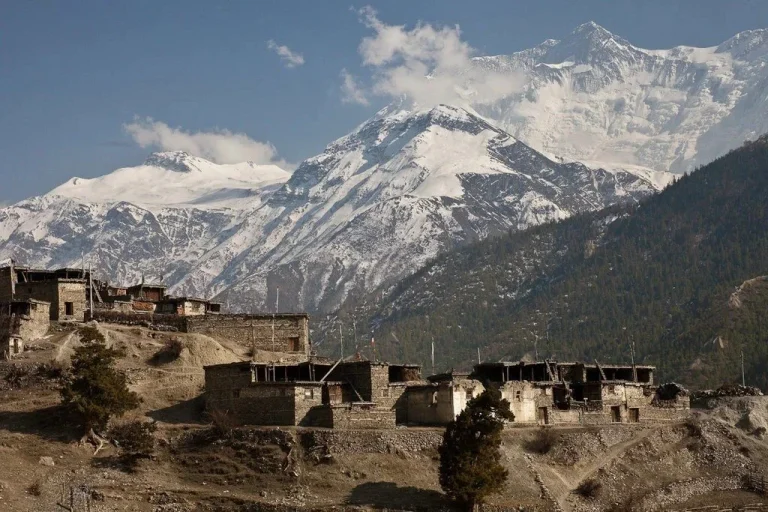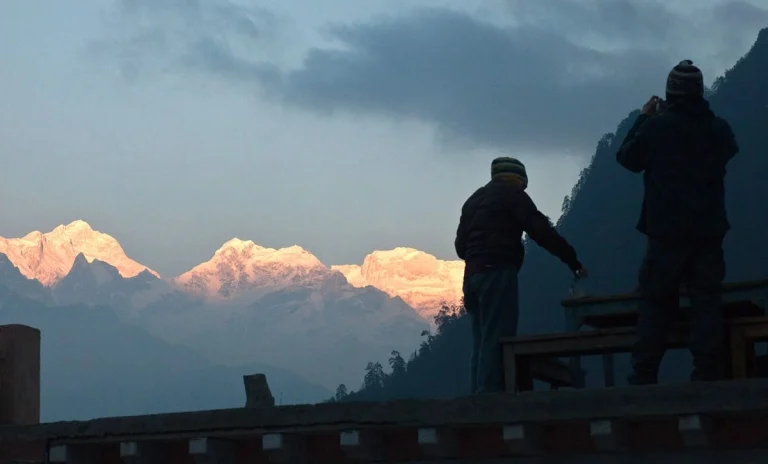
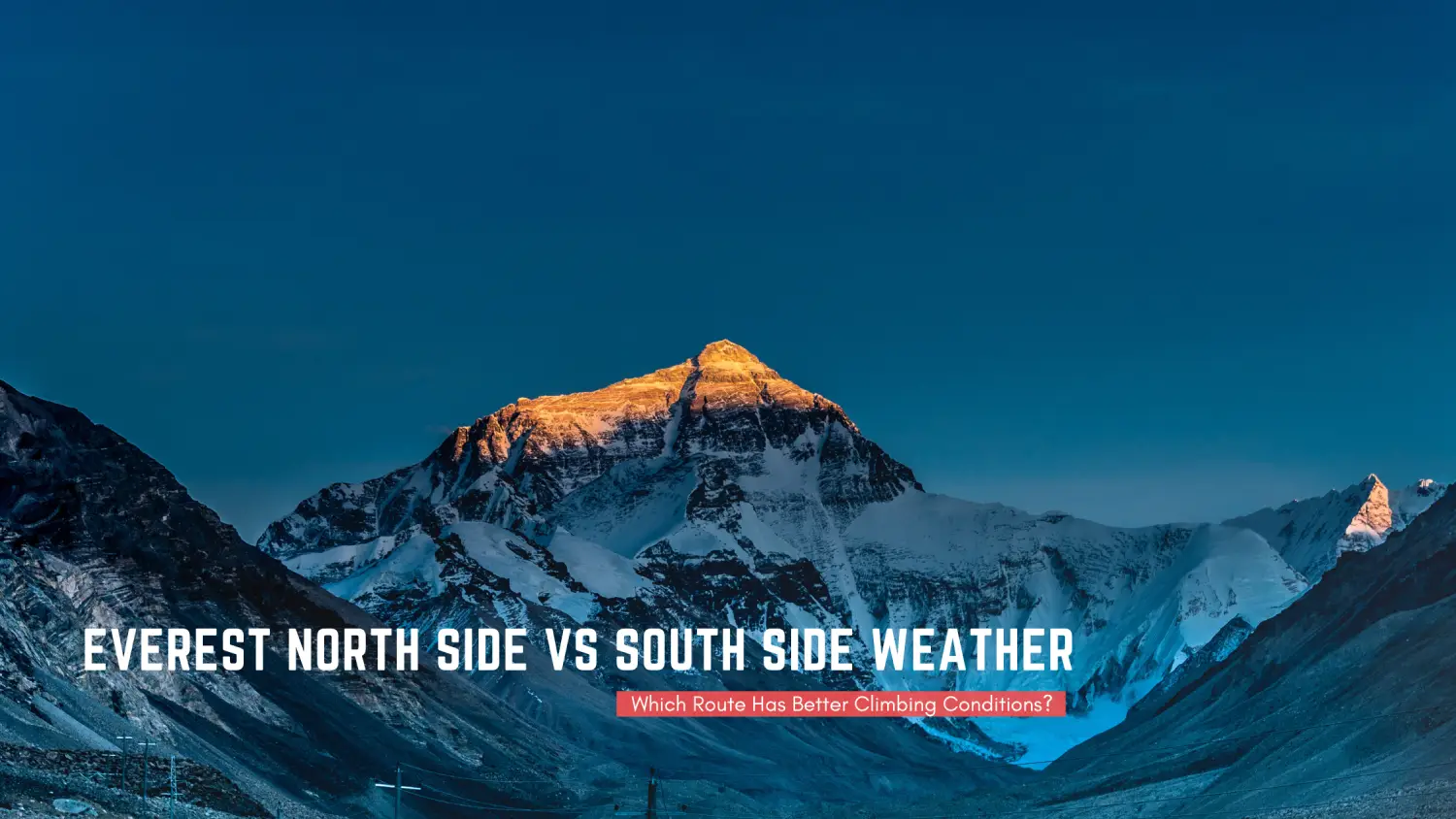
The North Side and South Side of Everest result in the same summit, but they experience two very different weather systems. The North Side rises from the Tibetan Plateau. The South Side begins in Nepal’s Khumbu Valley. That geographical difference creates significant differences in wind, temperature, sunlight, and moisture that climbers experience throughout the expedition.
The North Side experiences stronger winds because it sits directly in the path of the jet stream crossing Tibet. The South Side receives significantly more snowfall because it is directly exposed to moisture carried by the Indian monsoon. Mornings on the North feel chillier and drier. Afternoons in the South bring increasing cloud cover and reduced visibility. Even rescue operations differ depending on which side a climber is on, due to the fact that car access and helicopter support work in a different way on every route.
Everest North Side vs South Side Weather: Quick Comparison
The weather on the North and South sides differs enough that climbers plan their entire expedition around it. Here’s a side-by-side look at how the two routes compare.
| Factor | North Side (Tibet) | South Side (Nepal) |
| Average temperatures | Colder overall, especially at night | Slightly milder, more daytime warmth |
| Wind exposure | Higher, direct jet stream exposure | Lower, partly shielded by ridgelines |
| Snowfall | Lighter, drier climate | Heavier, monsoon-influenced |
| Avalanche risk | Lower avalanche frequency | Higher, mainly through the Khumbu Icefall |
| Sunshine | Clearer skies, more direct sun exposure | More cloud buildup, especially in the afternoons |
| Humidity | Lower humidity, drier air | Higher humidity from monsoon moisture |
| Summit weather | Clear but windy | Warmer but less predictable |
| Rescue access | Vehicle access to Base Camp, but slower high-altitude response | Helicopter rescue available closer to Base Camp |
| Weather stability | More stable in terms of precipitation, less stable in wind | More stable in wind, less stable in precipitation |
| Main hazards | Wind chill, frostbite, exposed rock, and ice | Icefall collapse, avalanches, sudden snow |
This table provides a quick answer. But the reasons behind those numbers rely just as much as the numbers themselves, and that’s what separates a climber who reacts to bad weather from a person who plans around it.
For climbers still comparing routes at a broader degree, this ties in with the Everest Base Camp Trek planning guide, where seasonal timing plays a big role in expedition success.
Why the Weather Is Different on Each Side of Everest
The weather changes so much between the two sides because they lie on opposite sides of the mountain, not because one side is truly “harsher.” The North Side faces the dry Tibetan Plateau. The South Side faces the wet lowlands of Nepal. That distinction in geography controls almost everything else, from wind speed to snowfall to how clean the sky appears on a given day.
Here’s why this happens:
The Tibetan Plateau dries out the North Side.
Tibet sits at a much higher base elevation than Nepal, and the land around it is far drier and more open. There is very little moisture in the air to start with. So by the time weather systems reach the North Side of Everest, they bring less moisture and less snow. This is also why the North Side has more exposed rock and hard ice as opposed to gentle snow cover.
The Indian monsoon feeds moisture into the South Side
Nepal lies much closer to the Bay of Bengal and the Indian Ocean. During the monsoon months, moist air travels north and hits the Himalayas from the south. The South Side of Everest catches this moisture directly; This is why the North Side has more exposed rock.
The rain shadow effect blocks moisture from reaching the North
Once monsoon clouds unload their moisture on the southern slopes of the Himalayas, little or no moisture is left to cross over to the northern side. This is known as the rain shadow effect, and it is the same reason that places like Tibet are dry while regions just south of the Himalayas get heavy rainfall. Everest’s North Side lies within this dry zone.
Elevation and mountain orientation change how wind and sun behave
The North Side faces open plateau terrain, so wind moves across it with almost nothing to slow it down. The South Side sits inside a valley system, with ridgelines and other peaks acting as a natural wind barrier. This geographical setup explains why wind speeds differ significantly between the two routes.
Together, those four elements explain nearly every weather pattern you’ll read about on this web page. Once you recognize the geography, the wind, temperature, and snowfall differences all begin to make sense on their own.
If you’re weighing these weather patterns against timing your expedition, our guide on the best time to climb Everest breaks down how season and weather work together.
Temperature Comparison
The North Side feels colder every day, commonly because of dry air and lower humidity. The South Side feels a bit warmer during the day thanks to stronger solar exposure; however, once you’re deep in the Death Zone, each side becomes extremely cold regardless of which route you took.
North Side: dry, cold that bites harder
The air on the North Side incorporates very little moisture. Dry air contains less water vapour, allowing heat to escape more quickly after sunset. As a result, nighttime temperatures on the North Side often feel considerably colder, even when the actual air temperature differs only slightly from the South Side.
A few reasons for this:
- Lower humidity allows the ground and surrounding rock to lose heat more rapidly after sunset, making camps feel significantly colder overnight.
- Camps get less shelter from the wind, so cold air keeps shifting through
- Less cloud cover overnight means heat escapes into the sky more quickly
South Side: warmer days, but still dangerous at altitude
The South Side benefits from extra direct solar during the day, and the encircling terrain retains some warmth inside the lower camps. This makes daylight temperatures particularly more bearable, mainly around Base Camp and Camp 1.
But do not mistake “milder” for “safe.” Once climbers reach the Death Zone above 8,000 meters, temperatures drop sharply on all sides. On the south side of Everest (Nepal), the weather is generally warmer during the day. As a result, descending to lower elevations is usually easier and more comfortable.
Realistic temperature ranges during the climbing season
During the primary climbing window in April and May, expect something like this:
- North Side Base Camp: -15°C to -5°C at night, slightly above freezing during the day
- South Side Base Camp: -10°C to 0°C at night, a few degrees hotter all through the day
- Death Zone on both sides: -30°C to -40°C, occasionally less warm with wind relax
These numbers shift slightly from year to year; however, the pattern stays steady. The South feels milder at lower elevations. Once you’re in the Death Zone, it makes little difference whether you climbed from the north or the south. Extreme cold affects everyone.
If you are nevertheless figuring out when to devise your experience around these temperature swings, our guide on the best time to climb Everest covers this in more detail.
Snowfall and Precipitation
Snowfall patterns differ from wind patterns. The South Side receives heavier snowfall because it is directly exposed to monsoon moisture. The North Side stays drier, so climbers there encounter more exposed rock and hard ice rather than soft snow.
South Side: monsoon moisture means more snow
Nepal sits tons towards the source of monsoon moisture, so climate systems reaching the South Side nonetheless deliver a great amount of water vapor. This will become snowfall on the mountain, especially during the pre-monsoon buildup in late spring.
This creates a few real effects for climbers:
- Snow conditions change frequently, every so often, within a single day
- Fresh snow can hide crevasses that had been visible just days in advance
- Trails want re-marking extra regularly as snow buries vintage tracks
North Side: dry climate means firmer ground
By the time weather systems reach the North Side, most of the moisture has already been used up crossing the Himalayas from the south. This leaves the North drier than normal, with lighter blizzards during the season.
Because of this dry sample, climbers at the North often face:
- Exposed rock sections rather than a snow-protected floor
- Hard-packed ice that requires careful footwork
- Firmer trekking surfaces that hold crampons nicely, however, punish any slip
What this means for climbers
Neither sample is automatically easier. Soft snow in the South can cover hazards; however also cushions falls. Hard ice at the North holds your footing well but provides little margin for error. Climbers want different skills and different equipment strategies, which depend on which side they select, and expedition teams plan their technique around this from day one.
If you want to see how snow and season join more extensively, our Everest Base Camp Trek guide talks about how snow conditions shift through the trekking months too.
Wind Exposure: How Strong Are the Winds on Each Side?
| Location | Typical Wind Speed During Spring Climbing Season |
| North Ridge (North Side) | 40–80 km/h |
| South Col (South Side) | 20–60 km/h |
| Jet stream events (both routes) | 100–160 km/h |
The North Side is exposed directly to the Tibetan Plateau, allowing strong westerly winds and the jet stream to strike the mountain with little obstruction. The South Side is partially shielded by surrounding ridges, so although high winds still occur, average wind speeds during the climbing season are generally lower.
During the 2023 Everest climbing season, strong jet stream winds delayed rope-fixing work and pushed back summit attempts for several expeditions. The delays highlighted how wind conditions can dictate the entire climbing schedule.
Avalanche Risk
Avalanche danger works in a different way on each side, and that is where many climbers become confused. The South Side sees more avalanches, in general, because of the Khumbu Icefall. The North Side sees fewer avalanches, but that does not mean it’s the more secure route. It just matters that the hazards suggest themselves in a distinctive form.
South Side: the Khumbu Icefall is the main threat
The Khumbu Icefall sits early at the South Side route, and it’s one of the most mentioned dangers on the whole mountain. This section is composed of large ice blocks, referred to as seracs, which can shift or collapse with little or no warning. Climbers should pass this icefall a couple of times during an expedition, which means repeated exposure to the same danger.
Add in a clean blizzard from the monsoon effect, and you also get a combination that increases avalanche hazard similarly. Snow builds up on steep slopes, and while it releases.
North Side: fewer avalanches, but not a free pass
The North Side has drier weather, so there may be less buildup of the sort of snow that triggers huge avalanches. This does bring the avalanche numbers down as compared to the South. But the mountain simply trades one risk for another right here.
Strong winds at the North Side often blow snow away and expose bare ice underneath. This creates more rockfall danger, given that loose rocks that might typically take a seat under a snow layer are left exposed and can come free. Climbers, nonetheless, want to stay alert, just for an exclusive type of threat.
North Side: dry air keeps the sky clear
Since the North Side sits in a drier climate, there is less moisture around to form clouds. As a result, climbers regularly get lengthy stretches of clear sky, which allows route locating and gives higher views of the terrain beforehand. Clear skies also make it simpler to identify changing weather early because there is less cloud cover blocking the view of what is coming.
South Side: clouds build up fast in the afternoon
The South Side deals with more moisture in the air, so clouds tend to form quickly because the day warms up. Mornings regularly begin clear and calm; however, by means of early afternoon, clouds can roll in and reduce visibility within an hour or two. This is one of the main reasons why guides push climbing teams to depart early in the day on this route, before the weather has a chance to change.
How Weather Affects Expedition Logistics
Weather influences nearly every stage of an Everest expedition, from transporting supplies to determining safe summit windows. It forms the complete plan for a day trip, from how tools get to Base Camp to how quickly a rescue team can reply if something is going incorrect. The North and South sides face this in very different ways.
North Side: vehicles help, but the wind still slows things down
One major advantage of the North Side is that cars can drive almost all the way to Base Camp. This makes shifting equipment and substances a great deal easier as compared to the South, where everything needs to be carried or flown in.
But once climbers move above Base Camp, wind takes over as the main undertaking. Fixed ropes need calm, sufficient weather to put in accurately, and teams regularly become ready for days for an excellent, favorable weather window before this work can begin. Summit pushes get delayed for the same purpose. When the wind refuses to settle, whole schedules shift, occasionally pushing summit attempts back through every week or more.
South Side: icefall crossings and flight delays shape the schedule
The South Side relies closely on the Khumbu Icefall for shifting substances among camps, and weather plays a role here, too. Fresh snowstorms or risky situations can shut down icefall crossings for an afternoon, which slows down how quickly groups can stock higher camps with food, oxygen, and gear.
Getting to Base Camp itself also depends on the weather. Flights to Lukla, the small mountain airstrip most climbers use to start their trek, get delayed or cancelled often, whilst clouds roll in. This isn’t always a small inconvenience for both. Multi-day weather delays at Lukla have pushed back whole expedition timelines earlier than climbers even reach Base Camp.
Helicopter support gives the South Side an edge in emergencies.
When something is going wrong, the South Side has a real advantage. Helicopters can reach Base Camp and even a few better camps in good weather, which makes rescue and evacuation faster. The North Side does not have this option in the same manner, for the reason that terrain and guidelines make helicopter rescue much tougher to arrange. This is one of the quieter variations between the 2 routes, but it plays a significant role if an emergency occurs high in the mountains.
Why does this matter when picking a route
Weather-related delays are a daily occurrence on every side. What factors are causing those delays? North Side climbers wait out the wind. South Side climbers wait out snow, icefall situations, and flight schedules. Neither route avoids delays completely, so constructing more days into any expedition timeline is sensible, irrespective of which side you select.
If you are exploring which route best suits your level of experience and comfort with these types of delays, our team at Nepal Outdoor Expeditions can walk you through the planning details for both options.
Which Side Has Better Summit Weather?
This is the question most climbers in reality need answered, and the practical answer is that neither side wins outright. Summit weather in the North comes with clear skies but harsh winds. Summit climate in the South comes with an extra haven; however, less predictable snow. Which one is “higher” genuinely relies on what a climber can manage.
North Side Summit weather
Pros:
- Clearer skies during summit pushes, which helps with visibility and route finding
- Less snowfall overall, so the path tends to stay more consistent
Cons:
- Much colder temperatures near the top
- Strong, sustained wind that can force teams to delay or turn back
South Side Summit weather
Pros:
- Slightly warmer conditions, which feel like a small mercy near 8,000 meters
- More natural shelter from ridgelines lowers wind exposure
Cons:
- Snow conditions can shift fast, even close to the summit, on a given day
- Avalanche hazards remain a real concern right up to the final push
So which side actually has it easier?
Neither route consistently offers better summit weather because each presents a different set of challenges. A climber who handles cold and wind may find the North better suited, despite the colder temperatures. A climber extra worried about snow instability and icefall crossings would possibly feel more relaxed at the South, despite the milder wind.
The key takeaway here is that summit weather isn’t always about choosing the “simpler” side. It is about choosing the side whose demanding situations support your training, your gear, and your comfort level. Some climbers do higher climbing with a steady wind. Others do better at managing the conversion of snow. Both are actual dangers, just different ones.
Which Route Is Better for Most Climbers?
Weather is a huge element, but it isn’t always the most effective factor that decides which route suits you. Experience, technical talent, rescue support, and how much form you want around you all depend on it, too.
The North side usually fits climbers who have already got strong high altitude experience, because the reason is that wind and cold leave little room for errors. The South side feels slightly more supported, but the Khumbu Icefall nonetheless needs actual talent on every occasion you cross it.
Helicopters can often reach climbers fast on the South side, while the North side does not provide that same speed because of terrain and access rules. For many climbers, this is the very last decision.
Permits additionally work in another way. China manages the North side, and Nepal manages the south side, and this impacts team length, timing, and how the whole expedition is planned.
In the end, no course wins for anybody. If you need stronger rescue backup, the South side is likely the better fit. If you select fewer crowds and do not mind harsher winds, the North side would possibly fit your needs better.
FAQs
Which side of Everest is colder?
The North side feels colder, especially because the air is drier. Dry air contains less water vapour, which reduces the atmosphere’s ability to retain heat after sunset.
Is the North side windier than the South side?
Yes, by way of an excellent margin. The North side sits right within the route of the jet flow, while the South side receives some shelter from surrounding ridgelines. This is one of the biggest differences between the 2 routes.
Why does the South Side receive more snow?
The South side sits closer to the Indian monsoon, so the air reaching it nonetheless carries plenty of moisture. By the time weather systems cross over to the North side, most of that moisture is already long gone.
Does the North side have fewer avalanches?
Yes, usually because of the weather. But this does not make the North side safer, typically. Strong winds there expose bare ice and unfastened rock, which brings ownnal risks.
Which side has better summit weather?
Neither side wins outright. The North gives clearer skies, but much harsher winds. The South gives milder temperatures, but less predictable snow. It clearly comes down to which conditions you are better prepared to address.
Can helicopters rescue climbers on both sides?
Not equally. The South side has a sturdy helicopter guide, and rescues can happen fairly fast in appropriate weather. The North side does not now have the same setup, so rescue options are extra constrained there.
Which route is more weather-dependent?
Both routes depend on the weather pretty heavily, just in special methods. The North side waits on the wind. The South side waits on snow, icefall conditions, and flight schedules to Lukla.
Which side is better for first-time Everest climbers?
Many first-time climbers lean toward the route of the South side due to stronger help systems and faster rescue access. That stated, the right preference nevertheless depends on your experience and the way you plan to put together your expedition team.