Three weeks or more of leave. That’s what most people think. And that’s what keeps many people from planning holidays or vacations to Nepal, especially when they want an adventurous or adrenaline-fueled trip. But what if we tell you that even a short trek in Nepal makes that possible.
Being a locally established trekking and travel agency, we at Nepal Outdoor Expeditions can say that we have witnessed hundreds of first-timers land at Tribhuvan Airport looking slightly terrified and leave four days later looking like something rearranged itself inside them. That’s why we recommend a lot of travellers to try a short trek in Nepal.
A short trek in Nepal, even a four-day one, gets into you. The altitude does something to your lungs and your thinking simultaneously. The trails are real mountains, not gentle countryside walks dressed up with a dramatic name. And the views? Look, we could describe them, but Dhaulagiri at sunrise from Poon Hill is one of those things where words actively get in the way.
What we run here are proper short treks. Not “lite” versions of real treks. Not tourist-friendly strolls with mountain wallpaper. The Ghorepani Poon Hill trail climbs over 1,800 metres of elevation. Mardi Himal High Camp sits at 4,500 metres. Kyanjin Ri in Langtang pushes past 4,700. These are the Himalayan mountains. The short part refers to how many days you’re out there, not to what you see or what you feel by the end of it.
We’ve put this guide together because the question we get most often, more than permit questions, more than packing questions, more than budget questions, is some version of: “Is a short trek in Nepal actually worth it, or will I feel like I missed something?”
This guide covers every route worth knowing, what each trail actually feels like day by day, not just the elevation numbers and difficulty ratings. It covers real costs, the 2026 permit changes that most blogs haven’t caught up with yet, how to pick the right trek for your specific schedule and fitness level, and what to pack without bankrupting yourself at an outdoor gear shop before you fly. Read through it, pick your trail, and stop finding reasons to wait another year.
What Counts as a Short Trek in Nepal?
No official body sat down and defined it, but in practical terms, anything between two and ten days on the trail. That’s the window. You fly in, you lace up, you sleep in teahouses, you eat dal bhat until you start craving it specifically, you see mountains that make your previous idea of “big” feel embarrassing, and you’re back in Kathmandu before your return flight becomes a problem.
Short does not mean small. This needs saying clearly because people arrive with the assumption that the real Nepal, the proper, serious, this-is-why-people-come Nepal, is somewhere further down the trail, past the two-week mark, accessible only to people with more leave and better knees. That’s wrong. Poon Hill at 3,210 metres is not a consolation prize for people who couldn’t do the Annapurna Circuit. Mardi Himal High Camp at 4,500 metres is not a beginner’s version of something better. These are Himalayan viewpoints in their own right. The mountains don’t save their best angles for the long-haul trekkers.
What short treks do ask of you, honestly, without the softening that some agencies apply, is a reasonable fitness base. Four to seven hours of walking per day on uneven mountain terrain. Real elevation gain. An altitude that your body will notice, sometimes loudly. You don’t need to be training for anything. You do need to be someone who moves regularly, whose idea of physical effort isn’t finding parking closer to the entrance. Start walking, hills if you can find them, six to eight weeks before you fly. Everything else we sort out.
The Best Short Treks in Nepal: Region by Region
1. Ghorepani Poon Hill Trek: 4 to 5 Days (The One That Converts People)
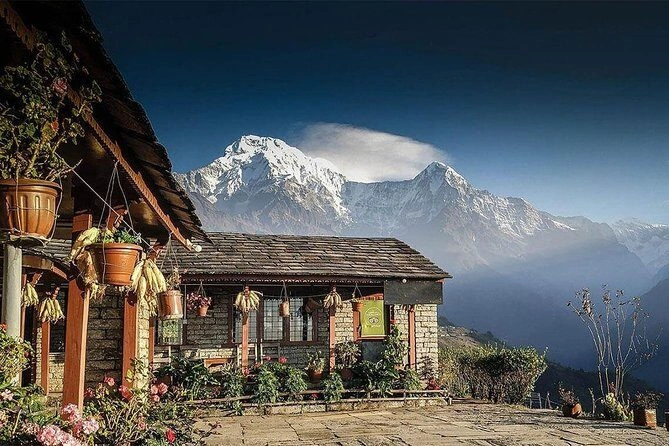
Best for: first-timers, families, people who want maximum return on limited time
This one probably is the best short trek destination in Nepal; we recommend any first-time trekker to try. The Ghorepani Poonhill Trek starts from Nayapul, a dusty roadside town about an hour and a half outside Pokhara. After that, we pass through so many places so quickly that one’ll barely register them. In a while, we find ourselves crossing through Tikhedhunga, up the famous stone staircase to Ulleri that will make your thighs aware of their own existence, into the rhododendron forests that in spring (March and April especially) go completely berserk with colour. Red. Pink. White. Whole hillsides of it. You walk through for hours. It sounds cinematic because it genuinely is.
Ghorepani itself is a ridge village at 2,860 metres. Cold at night, staggering at sunrise. From there, it is a 45-minute climb to Poon Hill at 3,210 m. Most trekkers do that before breakfast, within the darkish, headlamps on, moving with the particular focused energy of people who’ve been told something lovely is coming. What’s coming: Dhaulagiri (8,167m), Annapurna South (7,219m), Machhapuchhre (6,993m), Hiunchuli (6,441m), all of them catching the first sunlight while we stand there in a down jacket with a thermos of tea, completely speechless.
The 4 Day Ghorepani Poonhill Trek by Nepal Outdoor Expeditions offers you slightly more breathing room within the forest section. Meanwhile, the Ghorepani Poon Hill Ghandruk Trek drops you through the Gurung village of Ghandruk on the return. Stone homes, millet terraces, women weaving outdoors doorways, a network that has been here for a very long. In addition to that, the mountains feel more like neighbours than something for attractions. That extra half-day changes the whole character of what you bring home.
- Maximum altitude: 3,210m.
- Difficulty: moderate.
- Minimum age we’d put on it: around 10, with fit and experienced parents.
- Probably the single most recommended short trek in Nepal for first-timers, and it earns that recommendation every season.
2. Mardi Himal Trek: 7 Days (The One with Comparatively Less Crowd)

Best for: trekkers who want solitude, serious altitude, something to feel quietly proud of
If you ask any of our guides, a short trek in Nepal that they would repeatedly want to do themselves, most of them would have the Mardi Himal Trek as their answer.
This trekking route runs a ridge that sits immediately in the shadow of Machhapuchhre, the 6,993 metres high Fishtail peak that has never been summited because Nepal considers it sacred, and no mountaineering permits have been issued; you cannot pass it. But from Mardi Himal High Camp at 4500 meters, you can see it so close that it stops feeling like a mountain you are looking at and starts to feel like you are invading something. The scale up there is completely different than any lower trails. Even quieter, in fact, fewer humans, extra sky, the kind of silence that has texture at its height.
Seven days from Pokhara. Harder than Poon Hill, it climbs further, and the upper sections push your lungs in ways the lower trail doesn’t prepare you for. Come with some fitness and come knowing that the effort is the point.
3. Chisapani Nagarkot Trek: 2 to 3 Days (Right Outside Kathmandu)
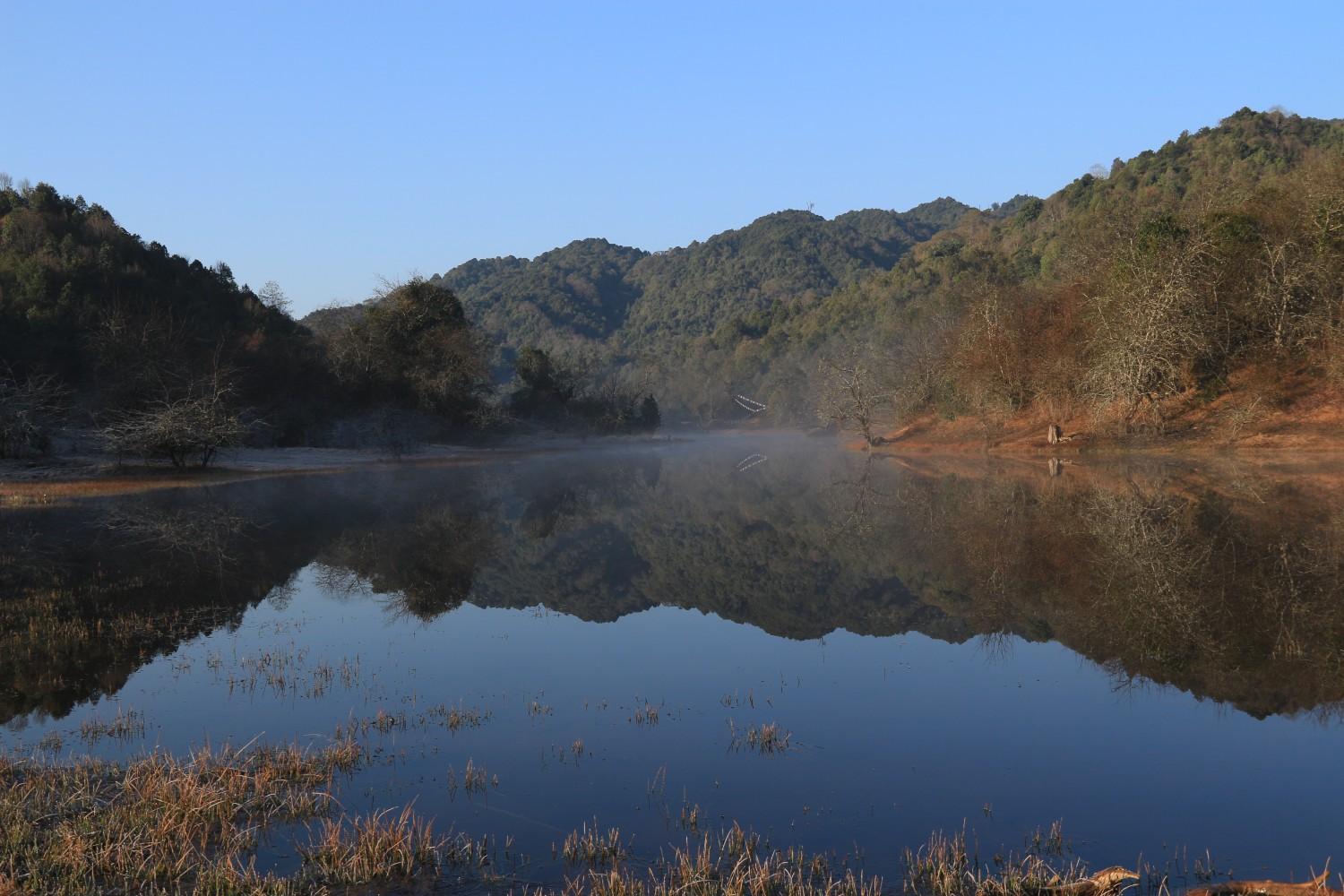
Best for: tight schedules, layovers with ambition, people who need to see a Himalayan sunrise before they leave
You’re in Kathmandu. You have two days, maybe three. You cannot in good conscience fly out of Nepal without seeing a mountain properly. The Chisapani Nagarkot Trek is what exists for exactly this situation.
The trail leaves the Kathmandu Valley on foot via Shivapuri National Park, sal forest, birdsong, actual clean air, all things the city doesn’t offer, climbs to the ridge village of Chisapani at 2,175m, and continues to Nagarkot, where on a clear morning the Himalayan panorama stretches roughly 200 kilometres from Dhaulagiri in the west to Kanchenjunga in the far east. Everest is in there. It’s visible before 7 am, before breakfast, from a two-day walk out of the capital.
No serious altitude, no technical sections, and no internal flight. Just a proper walk through rural Nepal that most visitors to Kathmandu never take because they assume the mountains require more time to reach. They don’t.
4. Langtang Valley Trek: 7 to 8 Days (The One That Surprises Everyone)
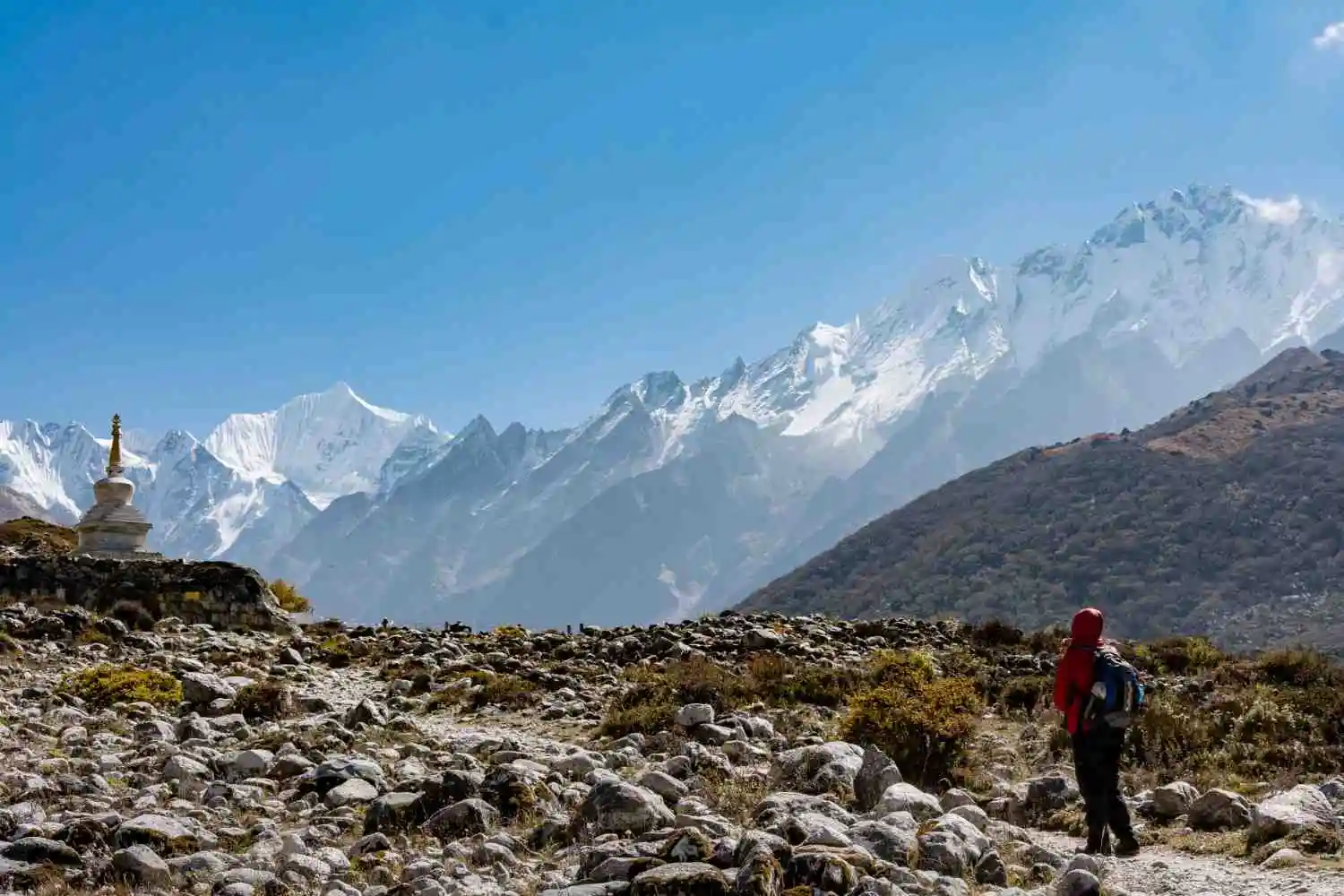
Best for: people who want serious mountains without the Annapurna crowd, cultural immersion, and no domestic flight stress
Langtang Valley is probably the most underrated short trekking destination in Nepal. We call this understanding that “underrated” is a phrase that gets applied to a lot of things, but in this example, it’s just right.
Two hours by road from Kathmandu, you reach the trailhead, Syabrubesi. No domestic flight. No Lukla Reservation Lottery. The Langtang Valley trek climbs through a bamboo rhododendron forest, certainly dense, certainly inexperienced, the kind of forest that makes noise.
Just inside the high snow valley sits Langtang Lirung (7,227 m) immediately in front of you in Kyanjin Gompa. There is a yak cheese-making facility that ran in the 1950s because of it. There’s Kyanjin Ri at 4,773 meters, although you have to push for it, with views all the way to Gangchenpo and views down the entire length of the valley that justify every meter of the climb.
The 2015 earthquake hit the valley hard. This is where communities have rebuilt; slowly, stubbornly, with the unique resilience of humans who have no choice but to preserve. Choosing Langtang means your cash goes to family-run tea houses and locally produced food. That’s not a minor component for this valley’s development.
A little more to push and the Langtang Gosaikunda trek crosses the Lauribina Pass at 4,610 meters and drops to the sacred alpine lakes of Gosaikund at 4,380 meters, one of the most popular full-size Hindu pilgrimage sites within the Himalayas, and a herb-dominated area looking totally painted with your feet. Worth it if your legs have more days in them.
5. Everest View Trek and Pikey Peak: 5 to 7 Days (Everest, Without the Full Expedition)
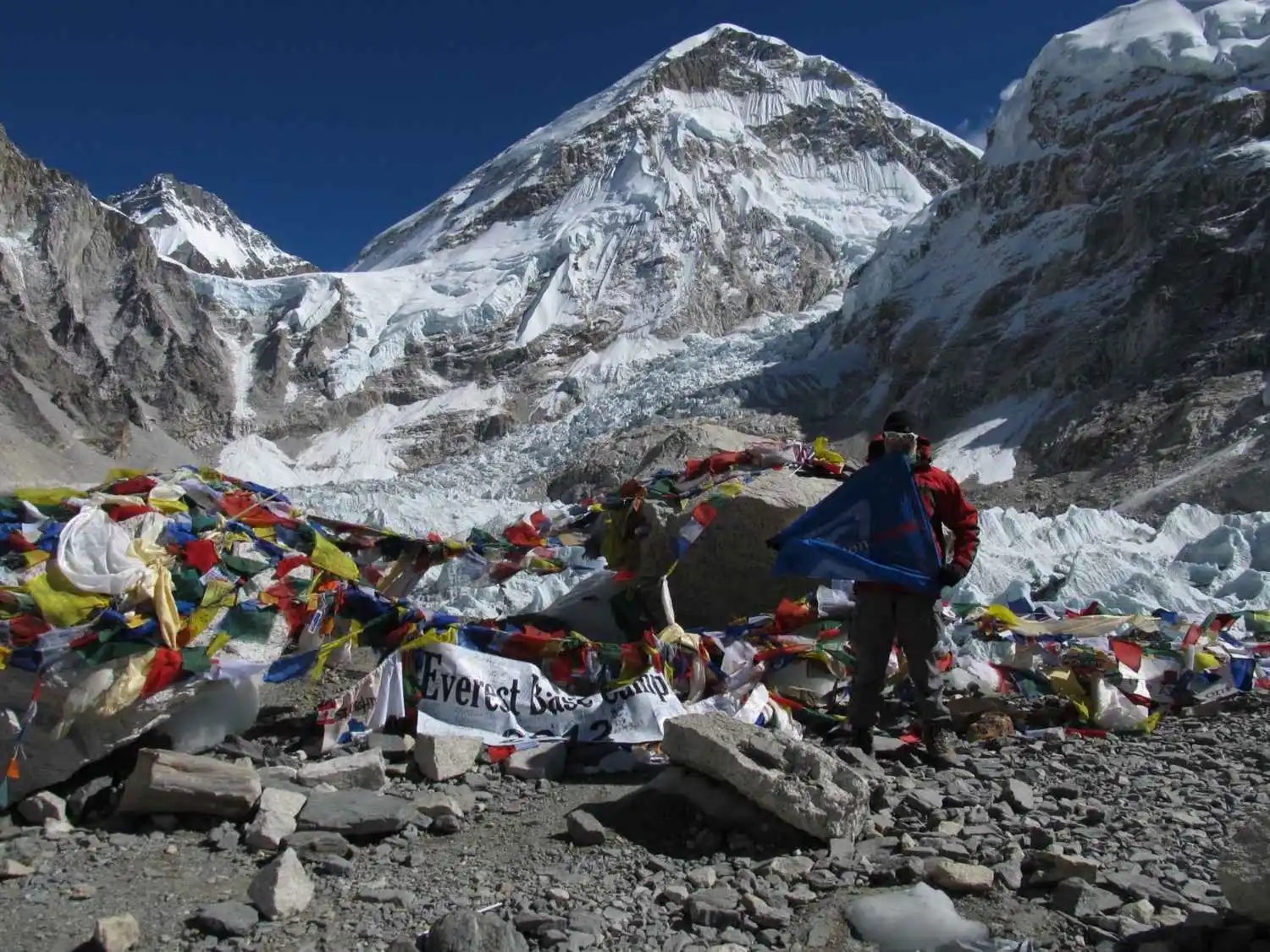
Best for: people who want to see Everest on a short trip, those with limited time in the Khumbu
Here’s something that surprises people: you don’t have to walk to Base Camp to see Everest. You just need enough altitude and the right direction.
The Everest View Trek takes you to Namche Bazaar at 3,440m and then up to the Hotel Everest View at around 3,880m, one of the highest-altitude hotels on Earth, which is either a remarkable engineering achievement or a slightly unhinged idea, depending on how you look at it, and from the terrace, Everest is right there. Lhotse beside it. Ama Dablam angled perfectly to the south. All real, all enormous, none of it behind glass.
The Pikey Peak trek is a unique route altogether, accessed from near Lower Solu before starting the main Khumbu route, much less trafficked, the additional neighborhood in character offers one of the sweeping Everest panoramas anywhere on the entire trek to the summit of Pike Peak (4,065 metres). Sir Edmund Hillary said this was his favorite point of view within the Khumbu. We are not the kind to argue with the legend himself.
Both are legitimate quick treks within the vicinity of Everest that do not require the 12-day commitment of the whole Everest Base Camp trek. Though if the schedule opens up, go all in. After all, it’s always best to go all the way if you can.
6. Dhampus Sarangkot with Paragliding: 5 Days (The One That Adds a Third Dimension)

Best for: people who’ve already done Poon Hill, anyone who wants something genuinely unusual
Five days of trekking through the mountains above Pokhara, Dhampus village, Australia camp (which has nothing to do with Australia and the entirety of the campsite with uninterrupted Annapurna views), to Sarangkot, followed by a paraglider, where you descend from a cliff on the last day.
Piloted by someone who does this every morning and visibly loves it. Below you: Phewa Lake. Ahead of you: the entire Annapurna range. Above you: nothing but air. The Dhampus Sarangkot Trek with Paragliding is unlike anything else we run. The trekking section is quieter than Poon Hill, more agricultural in character, with terraced farmland, traditional villages, and Machhapuchhre hanging above the whole scene like it’s been placed there deliberately.
The paragliding tandem flight is twenty minutes long and almost universally described by the people who do it as the best twenty minutes of the entire trip. If you’ve already ticked Poon Hill and want something different, this is it.
How Much Does a Short Trek in Nepal Cost?
A properly guided short trek in Nepal, certified guide, porter, all permits, teahouse accommodation, all meals along the way, runs between $400 and $950 USD for maximum 4-7 day routes. Our Ghorepani Poon mountain trek starts at $400. Mardi Himal from $495. Dhampus Sarangkot with Paragliding is higher because of the flight cost. Chisapani Nagarkot is at the lower end.
What that doesn’t include: your Nepal visa ($50 USD for 30 days, payable at Tribhuvan Airport on arrival), international flights, travel insurance (get a policy with emergency helicopter evacuation cover, this is not optional, it is genuinely necessary), personal drinks beyond what comes standard, and tips for your guide and porter, which are customary and matter to the people receiving them.
We don’t bury costs in the small print. The number we quote covers the trek. Full stop.
When to Go: The Honest Season Breakdown
October is the answer. If you can only go once and you want to choose one month, October in Nepal is as good as trekking weather gets anywhere on Earth.
The monsoon has finished, the air has been scrubbed clean by months of rain, the skies are sharp and blue from first light to last, and the mountain views are so clear that the first morning tends to produce a specific stunned silence in trekkers who weren’t quite expecting it to look like that. November is nearly as good.
Both months are peak season for a reason. March and April are the spring window. Rhododendrons below 3,500 metres, warm enough during the day that you’re not suffering, slightly more cloud than autumn, but mostly fine. March is quieter before the season builds. April is busier, especially on the Poon Hill trail, but still beautiful.
December and January are cold, pretty cold at altitude, reduced to double figures at Gorkhep, and uncomfortable at Poon before dawn. The skies are regularly spectacularly clear, and the trails are empty. The winter weather is certainly worth less for shorter treks like Chisapani Nagarkot or Dhampus. For anything that pushes above 3,000 meters, percentages, and therefore know what you are signing up for.
June, July, August: Monsoon. We’ll be direct: most short treks in Nepal aren’t enjoyable during the monsoon season. Trails are slippery, views are largely absent behind clouds, and leeches appear on the lower forest sections in numbers that surprise people who weren’t warned. The Mustang rain shadow area stays drier, but everything else gets wet. Unless you have a specific reason to come in this window, wait.
Permits for Short Treks in Nepal: What Actually Changed in 2026
This section is worth reading carefully because a lot of information online is out of date.
- TIMS card: Discontinued for most major trekking routes as of 2025. If a blog or agency is telling you that you need a TIMS card for Poon Hill or Langtang, they haven’t updated their information. You don’t.
- ACAP permit (Annapurna Conservation Area): Required for all Annapurna region short treks without exception, Poon Hill, Mardi Himal, Ghandruk, Annapurna Panorama, all of them. Currently, costs NPR 3,000 for foreign nationals (roughly $22–25 USD). We handle this for every trekker on every departure.
- Langtang National Park Permit: Required for Langtang Valley and Gosaikunda treks. Similar cost bracket.
- Sagarmatha National Park Permit: Required for Everest region routes, including Everest View Trek and Pikey Peak. Included in our packages.
Mandatory Guide Rule for Short Trek in Nepal (2026)
This one is big. Nepalese authorities have issued a rule that all foreign trekkers must follow an authorized guide on certain routes. This rule applies to every route and checkpoint. As a foreign traveler, you cannot legally trek alone on these routes.
Every Nepal Outdoor Expeditions Package includes an authorized neighborhood guide, one who has genuinely changed before regulation and remains authentic regardless. A perfect guide is the difference between trekking and enjoyment, and we have by no means handled it compulsorily.
For current permit fees, the Nepal Tourism Board is the authoritative source. For conservation area specifics, check the Annapurna Conservation Area Project directly.
How to Pick the Right Short Trek for You
If you’re confused about the right short trek to choose, ask yourself these four questions and answer them honestly.
How many days do you sincerely have?
Not the optimistic version, realistic, two days counting arrival day, departure day, flight delay, and Kathmandu restoration time, and a buffer at each drop: Chisapani Nagarkot.
- 4 to 5 days: Poon Hill without question.
- 7 days: Mardi Hills, Langtang, Pikey Peak.
- 8 or more days: You might check out the Langtang Gosaikunda, the 7-day Annapurna base camp trek, or the Everest View combination.
What does your body actually do right now?
Not what it used to do, not what you intend to do before you fly. What it does today. Poon Hill is accessible for most adults who move regularly. Mardi Himal High Camp and Kyanjin Ri demand more. Know which category you’re in.
What do you want to walk away feeling?
“I want to feel genuinely small in front of something enormous”, Langtang or Annapurna Base Camp. “I want a beautiful walk through traditional Nepal with serious views but nothing brutal”, Poon Hill or Chisapani. Or “I want something I can’t easily explain to people who haven’t been”, Mardi Himal or Pikey Peak.
Mountain or culture: what pulls harder?
Langtang is the cultural answer: Tamang and Gurung villages, yak farmers, cheese made by hand at 3,800 metres, monasteries that predate tourism by centuries. Mardi Himal is the mountain answer: fewer people, more altitude, more sky. Poon Hill is the balance. All three have both, just weighted differently.
What to Pack for a Short Trek in Nepal
You do not need to dress yourself in outside protection before you return. Thamel in Kathmandu has tools for almost the whole thing, condo and buying, often the same builders substantially reduce the fees that you would pay at home. But some things need to come with you.
Boots
Broken walking shoes with ankle support. This is the only item that cannot be sourced at the last minute and cannot be compromised. New boots on the day considered one of the mountain trails cause blisters during the day and pain by the third day of use. Wear them for weeks before flying. Go up in them. Thank you ft in ways that may be hard to exaggerate.
Layers
A layer of three of them.
A base layer that repels moisture, a middle fleece, and an outer shell that is wind and water-resistant. That mixture covers every scenario from sunny midday passages at 2,000 meters (potentially 20°C) to pre-dawn viewpoints at 3,200 meters (probably -5°C). Add a down jacket for anything pushing above 3,000 meters.
One day percent. 20-25 liters for what it carries for hours of lounging. Your porter takes your original bag, usually between 10-12kg, so you have enough of the day’s water, snacks, digital camera, front layer, and rain cover. Keep it short. Your shoulders will learn each gram in five hours.
Small things more important than counting people
Headlamp with extra battery, teahouse electricity unreliable enough to “power out”, dinnertime communication trends are part of trekking poles, an obligatory uphill walk, and close to important on long descents when your knees start to take on their assessment.
Sunscreen and lip balm, UV hype at altitude is competitive in ways that catch humans off guard every season. Basic pharmaceutical drugs: paracetamol, ibuprofen, rehydration salts, blister complexes. Dymox for altitude if you want, communicate with your doctor before you leave home, not at the trailhead.
Why a Short Trek in Nepal Does Something That Longer Trips Sometimes Don’t
Here’s the thing nobody puts in the itinerary description.
On the second or third morning of a short trek in Nepal, something shifts. It happens at different points for different people. Sometimes it’s a steep climb when your legs are hurting, and your mind goes genuinely quiet, not the performative quiet of someone trying to be mindful, but the actual absence of noise that happens when your body is working hard enough to crowd everything else out.
At times, it’s a teahouse dinner, dal bhat, and conversation with someone from a completely different part of the world, both of you laughing about something that happened on the trail today that you’d never be able to explain at home.
Meanwhile, sometimes, it’s just stepping outside at 5 am in the cold and looking up and seeing more stars than you knew the sky was capable of.
Nepal does this to people. Partly it’s the altitude and effort, the physical work clears the mental static in a way that normal life rarely manages. Partly it’s the landscape, which is just relentlessly, almost confrontationally beautiful. And partly it’s the people. The teahouse families. The guides who know these trails the way you know your own street. The porters who carry loads you couldn’t manage do it with a cheerfulness that makes you reassess what you consider difficult.
You don’t need a month for any of that to happen. You need four days, the right trail, and the willingness to actually go.
Book Your Short Trek in Nepal with Nepal Outdoor Expeditions
We are a local, licensed trekking agency based in Kathmandu. Not a booking platform. Not an aggregator. An actual team of people, guides, logistics, support, who work these trails and know this country from the inside.
Our guides are local. They didn’t learn about these mountains from a training manual; they grew up in them. Some of their families built teahouses on the routes we run. When something unexpected happens in the Himalayas, and on any long-enough stretch of mountain trail, something eventually does, local knowledge and experience are exactly what you want standing next to you.
Every short trek we operate includes a licensed guide, porter support, all necessary permits, teahouse accommodation, and all meals on the trail. No hidden additions. No surprises at checkout.
Browse our short trekking packages, the full Annapurna region, and the Everest region for every route we run. Not sure which one makes sense for your dates and fitness level? WhatsApp Tenzing directly at +977 9767998270. Honest answer, zero sales pressure, no script.
The right season fills faster than you’d expect. Don’t wait until next year to do what you could do this October.
Frequently Asked Questions about Short Treks in Nepal
What is the shortest hike in Nepal?
Chisapani Nagarkot, 2 to 3 days out of Kathmandu, reaches 2,175 meters with views of Everest and the Himalayas on a clear morning. If you also want much less time on the trail, the first day of the Poon Mountain Trail from Nayapul to Tikhedhunga serves as a long day hike. But if it can be 3 days, Chisapani Nagarkot is the most complete short walking experience accessible directly from the capital.
Which Nepal trek can be accomplished in three or five days?
Ghorepani Poon Hill in 4-5 days is the standard answer and reasonable for most humans. Chisapani Nagarkot in 2-3 days. Dhampus Sarangkot with paragliding in five days for those in or near Pokhara. Poon Hill wins the scenes, by almost any measure, today.
What is the easiest quick trip for beginners in Nepal?
Ghorepani Poon Mountain, almost every skilled guide says this, and they are right. The road is nicely-maintained, the tea houses are constantly dependable, the altitude is serious enough to feel like the Himalayas pushing out into risky territory, and the path is clear. Chisapani Nagarkot is technically lower and lighter but less dramatic. For the primary walking tour in Nepal that gives you the complete experience in a practical bundle, Poon Hill.
Do you need a guide for a short trek in Nepal?
Yes, legally required under Nepal’s 2025 regulations on all designated trekking routes, which include every trail in this guide. Beyond the legal requirement: a good local guide transforms the experience in ways that are hard to quantify until you’ve done a trek both ways. They know the weather, the trail conditions, which teahouse to trust on a given night, and how your body is handling the altitude before you’ve noticed yourself. Don’t skip the guide.
How much does a short trek in Nepal cost?
Budget $400–$950 USD for a typical 4-7 day guided short trek in Nepal, fully inclusive of guide, porter, permits, accommodation, and meals on the trail. Nepal visa ($50 for 30 days) and international flights are separate. Travel insurance covering emergency helicopter evacuation is non-negotiable; sort this before you fly.
What is the best time for a short trek to Nepal?
October, after all. Post-monsoon clarity, solid weather, good high temperatures. November is a close second. Spring, March-April, is another key window, slightly warmer, where rhododendrons bloom at lower elevations. Avoid June through August unless you really love hiking in the rain. By February February is cold but possible on reduction routes with the right gear.
Can you hit the Everest on a short trek in Nepal?
The Everest View Trek is 3,880 meters, with Everest, Lhotse, and Ama Dablam immediately visible. At 4,065 metres, Pikey Peak gives one of the most expansive Everest panoramas within the Khumbu River, both of which Sir Edmund Hillary referred to as his preferred perspective within its vicinity, which does not require a total 12-day EBC commitment.