
Quick Answer: How Much Does an Everest Body Recovery Cost?
Recovery costs increase with altitude and technical difficulty. A body near Camp II or Camp III costs significantly less to retrieve than one placed within the Death Zone above 8,000 meters, where each hour of work requires supplemental oxygen and places rescuers at excessive risk.
| Location on Everest | Estimated Cost Range | Why |
| Lower camps (Base Camp to Camp II) | $30,000 – $50,000 | Easier access, shorter carry distance, and possible helicopter support |
| Mid-mountain (Camp III to Camp IV) | $50,000 – $80,000 | Steeper terrain, more Sherpa labor, higher oxygen use |
| Death Zone (above 8,000 m) | $80,000 – $100,000+ | Extreme altitude, frozen or embedded bodies, days of manual lowering |
Every recovery operation is different. Weather, the precise position of the body, how long it’s been frozen in the region, and route conditions on the day of the operation can all push prices higher than these estimates suggest.
These figures cover Sherpa exertions, oxygen, permits, and transport logistics, no longer the emotional or moral weight the selection carries for a family. The subsequent sections break down precisely where this cash is going and why the process is so demanding, starting with the largest question households and researchers ask: what makes it cost a lot in the first place.
Why Is Everest Body Recovery So Expensive?
Everest’s body recovery costs so much because it combines extreme altitude, risky terrain, specialized manpower, supplemental oxygen, helicopters, and permits into a single operation that can take several days to complete. Each of those factors adds its own cost, and collectively they turn a single recovery into one of the most costly undertakings in mountain climbing.
Below are the main elements that drive the price up, defined one by one.
The Biggest Cost Drivers Behind an Everest Recovery
Skilled Sherpa Recovery Teams
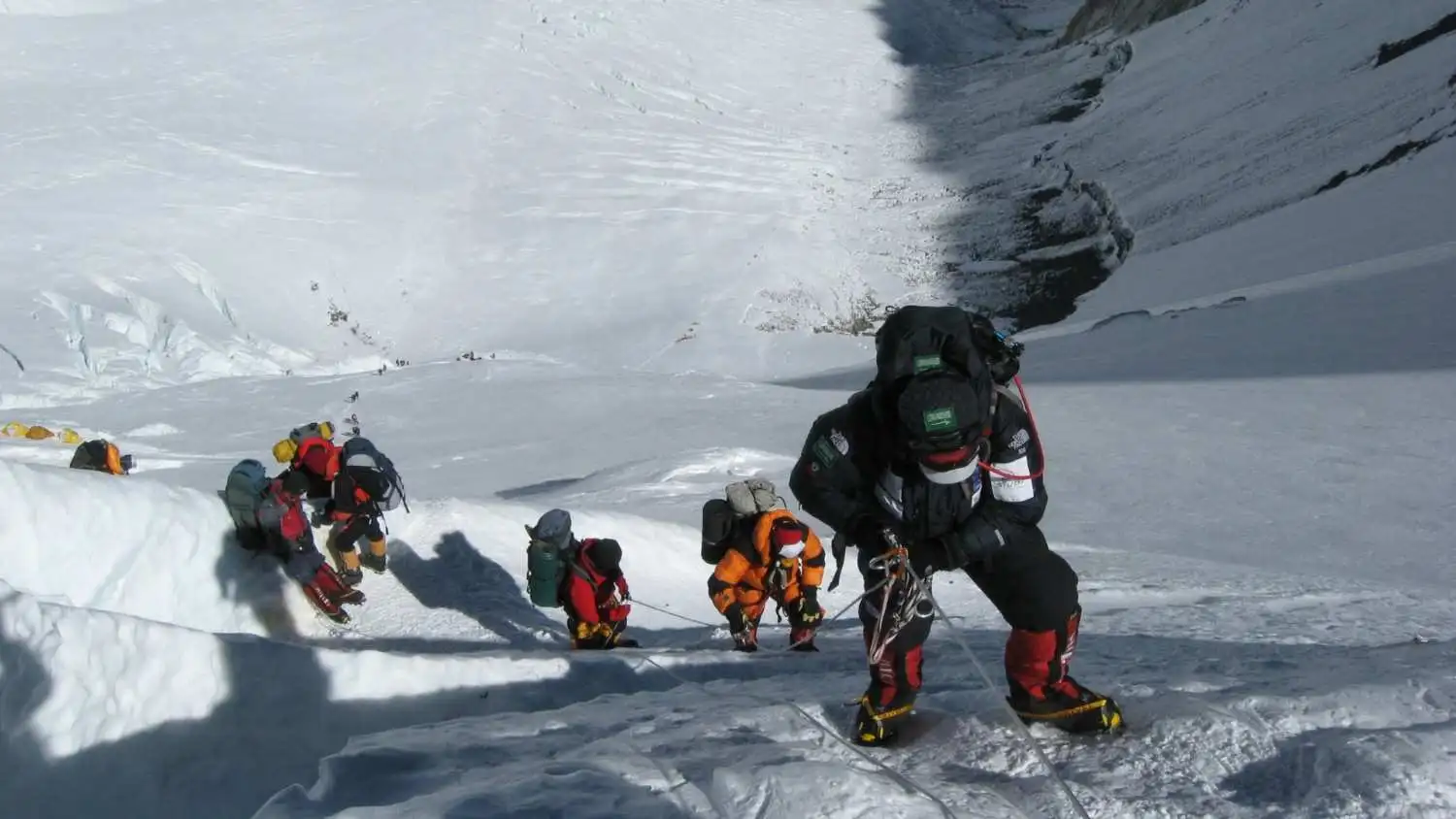
Most missions need 6 to 12 skilled Sherpas working over more than one day. The bodily pressure is excessive because every step at high altitude needs full effort just to breathe. Because of the threat involved, Sherpas earn danger pay on top of regular pay. The same groups guiding climbers through the Everest Expedition are often the ones called for recovery work, because they understand the route better than anyone.
Frozen Bodies Become Much Heavier
A body freezes solid within hours and often fuses to rock or ice. Teams, now and then, want to dig or chip it free. That layer of ice provides real weight, which means extra manpower is needed to move it even a brief distance. Some bodies can be freed within an hour. Others take a full day.
Supplemental Oxygen
Every team member requires supplemental oxygen at altitude, and one mission can use dozens of cylinders. It gets fed on for the duration of the climb, the recovery itself, and the descent. Since oxygen needs to be carried up earlier, its price is built into the operation from the start.
Helicopter Costs
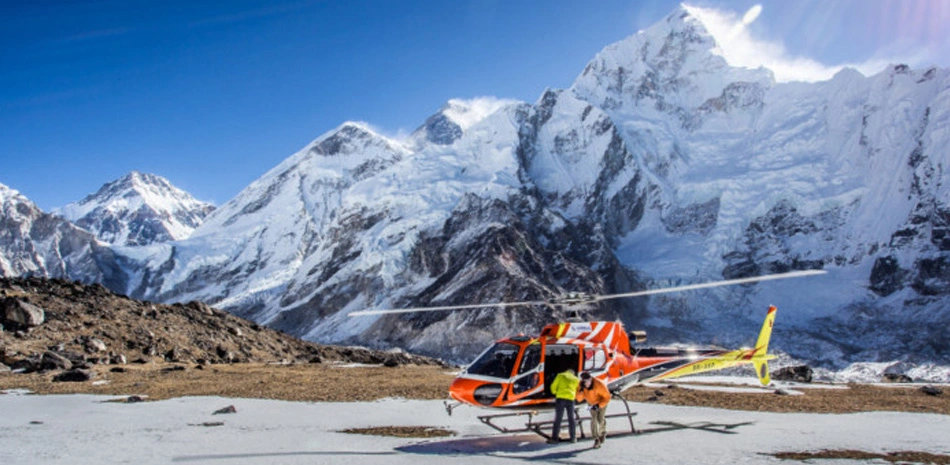
Helicopters can not properly retrieve bodies from high camps or the summit area. The body must be carried down by hand to a lower elevation first. This manual stage is commonly the longest, most annoying part of the venture, and it incurs costs before helicopter expenses even follow.
Expedition Logistics
Beyond the climb, a project needs permits, coordination with Nepal’s mountaineering authorities, conservation authorities, extra guides, and transport as soon as the body reaches Kathmandu. These logistical costs significantly increase the overall recovery cost.
Why Can’t Helicopters Recover Bodies from the Summit?
Helicopters can not reach the summit because the air is just too thin for rotors to generate sufficient lift at the top. At around 8,849 meters, engines lose power and rotor blades cannot generate enough lift. The weather turns unpredictable within minutes, too, which rules out any secure landing attempt close to the pinnacle.
Most helicopters used in Everest operations can fly and hover safely around Camp II, at roughly 6,400 meters. Above that, thin air and excessive winds make rescue or recovery flights too unstable, even for experienced pilots. This is why guided transport still plays the most important role in any restoration venture. Sherpas deliver or decrease the body with the aid of hand through the top camps, transferring it down little by little until it reaches an elevation where a helicopter can effectively land or hover for pickup.
This is why Everest body recovery missions take days instead of hours. It’s additionally why the value of Sherpa labor makes up such a large share of the overall bill. Anyone planning an Everest climb via a guided path, just like the Everest Base Camp Trek, will observe the same helicopter limits observed for emergency evacuations, not just recovery missions. It’s because skilled guides plan routes and turnaround times so carefully.
How Does an Everest Body Recovery Actually Work?
A recovery venture follows a clear sequence, shifting from planning to the final return of the body to the family. Each step depends only on the one before it, and skipping beforehand is not a choice at this altitude.
- Team assembly: Coordinators select a group of skilled Sherpas and guides based on the body’s location and the terrain involved.
- Route assessment: The team studies the climate, snow conditions, and the safest route to reach the site earlier than committing to the climb.
- Climb to the area: The team ascends to the area in which the body lies, often retracing the same annoying path the climber once took.
- Freeing the body: If ice or rock has fused around the body, the group cautiously digs or chips it loose.
- Securing and decreasing: The team wraps and secures the body, then descends by using a rope and hand through steep or technical sections.
- Transport to a pickup factor: The team lowers the body all the way down to an elevation at which helicopter access becomes possible.
- Air transport to Kathmandu: Once at a safe elevation, a helicopter transports the body the rest of the way.
- Identification and repatriation: Nepalese authorities verify the climber’s identity, and the body is ready for return to the family.
Who Pays for an Everest Body Recovery?
In most instances, the family of the deceased climber will pay for recovery, regularly with guidance from coverage or the expedition operator involved. Government investment is rare and commonly confined to precise circumstances; it is no longer a standard part of the process.
Expedition groups frequently help coordinate the venture, considering that they have the local contacts and Sherpa teams needed to prepare it fast. But the monetary burden nonetheless falls in particular on the family unless stable coverage is in place. This is why experts strongly caution climbers to carry comprehensive expedition insurance before attempting Everest, because a policy that covers high-altitude rescue and recovery can prevent a family from facing six-figure costs during an already difficult time.
Government involvement generally stays limited to oversight and occasional guidance in extreme cases, in place of direct funding. Nepal Department of Tourism plays a coordinating role, but they do not generally cover recovery costs themselves.
Why Are Many Bodies Left on Mount Everest?
Many bodies stay on Everest because recovery is too risky, too pricey, or not possible given where the body lies. Each case gets evaluated on its own, and leaving someone at the mountain is in no way treated as an ordinary choice.
Danger to rescuers is frequently the greatest danger. If a body sits in an avalanche-prone vicinity or a spot that would put a rescue team at extreme risk, guides and Sherpas may determine the risk isn’t worth the risk to living climbers. No circle of relatives or expedition company can ethically ask a team to risk extra lives for a recovery mission.
Cost plays a role, too. Without coverage or family funds to cover tens of lots of bucks, a recovery operation may additionally in no way pass ahead, even if it’s technically feasible.
Location topics are just as good a deal. Some bodies relax in crevasses, on risky ice, or in spots so far flung that achieving them competently is not sensible with cutting-edge devices and approach.
Weather provides another layer of unpredictability. Even a well-planned mission can get called off if situations turn risky partway through, and rescheduling is not feasible before winter sets in.
Finally, one’s own family wishes convey actual weight. Some families choose to bury their cherished one on the mountain, viewing it as a more restful resting place instead of pursuing a hard and expensive recovery. Cases like Everest’s Sleeping Beauty, Francys Arsentiev, replicate just how private and complex these selections may be for the humans left behind.
Nepal’s Current Rules on Recovering Bodies
Nepal now requires climbers to hold insurance covering body recovery, with coverage amounts ranging from $20,000 to $200,000, according to retrieval. This shift makes day trip groups and climbers financially prepared for recovery expenses, in preference to leaving families to face the cost on their own after a tragedy.
These rules took effect on September 1, 2025, as part of a wider replacement of Everest hiking rules covering permits, mandatory necessities, and protection requirements. Alongside recovery insurance, Nepal also made high-altitude rescue and scientific coverage obligatory, tying recovery planning into the same policy climbers already want for emergency evacuation.
The authorities’ technique nonetheless leaves room for judgment on a case-by-case basis. Regulations push companies to keep a recovery plan and insurance in place, but they don’t ensure that all and sundry are recovered. Terrain, weather, and risk to rescue groups nevertheless determine what’s realistically possible.
This matters for everybody making plans for an Everest try, given that coverage requirements now immediately affect trip cost and planning. Operators like Everest Expedition can assist climbers in recognizing what insurance Nepal’s current guidelines require.
Since guidelines shift among hiking seasons, always verify the current requirements with Nepal’s Department of Tourism or an authorized operator before finalizing a climb.
Famous Everest Recovery Missions That Changed Mountaineering
A handful of cases have shaped how the mountaineering world thinks about restoration, protection, and the bounds of what rescue groups can try. Each one pushed operators and Sherpa teams to rethink their approach to danger.
Searchers found George Mallory’s body in 1999, 75 years after he disappeared during his 1924 summit attempt. The discovery resolved a long-standing mystery in mountain climbing history and gave researchers actual insight into how our bodies adapt to intense altitude, facts that still inform recovery planning nowadays.
David Sharp’s death in 2006 sparked worldwide debate after different climbers passed him with out preventing to assist. The case pushed the mountain climbing community to establish clearer standards for when climbers should help a person in distress, and it remains a reference point in conversations about ethics on the mountain.
The 2014 Khumbu Icefall avalanche killed sixteen Sherpas in a unmarried incident, marking one of the deadliest days in Everest’s history. It caused significant modifications in how excursion agencies plan icefall crossings and control Sherpa safety, changes that also shape path planning today.
Green Boots have become one of the mountain’s most iconic landmarks for many years, and a 2024 Chinese-led effort brought new attention to identity and restoration from the north facet. For the full background on that case study Who Was Green Boots?
Everest Recovery vs Everest Rescue: What’s the Difference?
Everest recovery and Everest rescue are two exclusive operations with special desires, urgency levels, and value structures. Rescue specializes in saving a living climber. Recovery focuses on retrieving the body of a person who has already died.
| Factor | Everest Rescue | Everest Recovery |
| Goal | Save a living climber | Retrieve a deceased climber’s body |
| Urgency | Immediate, time-critical | Planned, not time-sensitive |
| Typical Cost | $10,000 – $50,000+ | $30,000 – $100,000+ |
| Helicopter Use | Common, often the primary method | Limited to lower elevations only |
| Team Size | 2-6 rescuers | 6-12 Sherpas |
| Duration | Hours | Several days |
Rescue missions flow speedily due to the fact that every minute impacts survival odds. Teams frequently use helicopter long-line extraction while climate and altitude allow it, mainly at high-altitude camps where a plane can safely perform. Recovery missions, then again, are deliberate earlier without a life-or-death time stress, which allows teams to look ahead to a clear weather window and plan the most secure viable route.
Cost differs too, particularly because restoration often entails navigating extreme altitude and manually transporting more weight over technical terrain, work that rescue missions don’t constantly require in the same way. Anyone analyzing approximately climbers stranded within the Rainbow Valley photos will be aware of this same distinction: a number of those climbers needed rescue that by no means came in time, while their region nowadays falls under restoration discussions instead.
Is Everest Insurance Worth It?
Everest coverage is well worth it, and as of September 2025, it is also mandatory for everybody climbing from the Nepal side. Policies now must cover twist of fate, health, emergency rescue, and body recovery, with coverage amounts starting from $20,000 to $200,000 depending on the plan.
Comprehensive insurance generally consists of helicopter evacuation, search and rescue operations, body recovery, repatriation of remains, and scientific treatment for injuries sustained for the duration of the climb. Without this type of policy, a family may face a six-figure bill without an economic guide at the worst possible time.
Coverage limits range considerably between insurers, so it’s well worth checking the fine print before selecting coverage. Some plans cap helicopter evacuation at a lower quantity than body restoration, while others package the whole thing under one mixed limit. A policy that appears low-cost in advance can close extreme gaps if it does not cover recovery from intense altitude, in which costs run highest.
For absolutely everyone making plans to climb, reviewing insurance requirements early makes the complete process smoother. It’s a conversation worth having without delay with a skilled operator. Reach out to Nepal Outdoor Expeditions to get clarity on what coverage your particular route and trip type require before booking.
Given how costly and technically stressful a real recovery operation is, coverage isn’t always only a formality. It’s the distinction between a family facing a devastating loss alone and having actual assistance behind them.
FAQs
How much does it cost to recover a body from Mount Everest?
Costs normally vary from $30,000 to $100,000, depending on altitude, terrain, and weather. Recoveries from the Death Zone above 8,000 meters tend to sit on the better side of that range.
Who pays for Everest’s body recovery?
The family can generally pay regularly with guidance from insurance or the travel business. Government investment is uncommon and restricted to specific cases, no longer a preferred part of the system.
Why are bodies left on Mount Everest?
Danger to rescuers, excessive value, tough place, and bad weather all play a role. Some households additionally choose to leave a cherished one on the mountain as opposed to pursuing recovery.
How many Sherpas are needed to recover a body?
Most missions use 6 to 12 skilled Sherpas, working over multiple days depending on the body’s location and situation.
Can helicopters recover bodies from Everest?
Not from the summit or high camps. Thin air limits helicopter performance above roughly 6,400 meters, so our bodies should be carried down with the aid of a hand before a helicopter can help.
How long does an Everest recovery mission take?
Most missions take several days, from preliminary path assessment to the very last helicopter delivery to Kathmandu.
Have all the Everest deaths been recovered?
No. Some locations are too risky or physically inaccessible, and the family needs to leave a body behind deliberately.
Does travel insurance cover Everest recovery?
Only specialized high-altitude day trip coverage covers recovery, and it’s now obligatory for Nepal-facing climbs. Standard travel coverage commonly might not encompass this insurance.