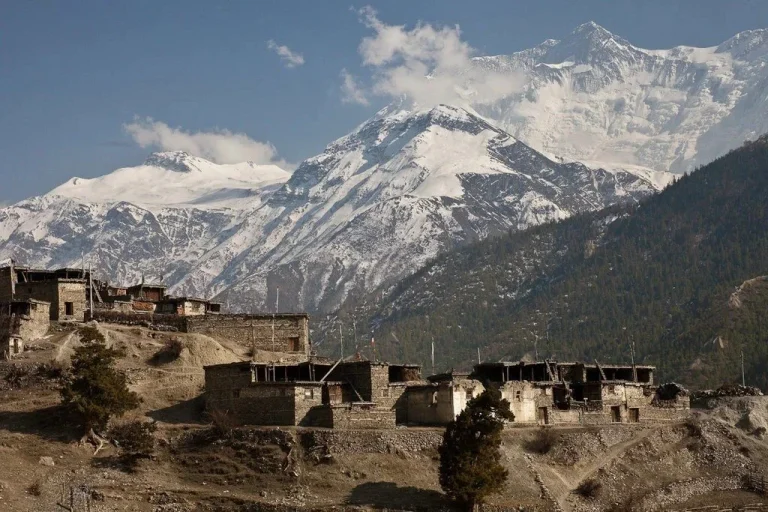
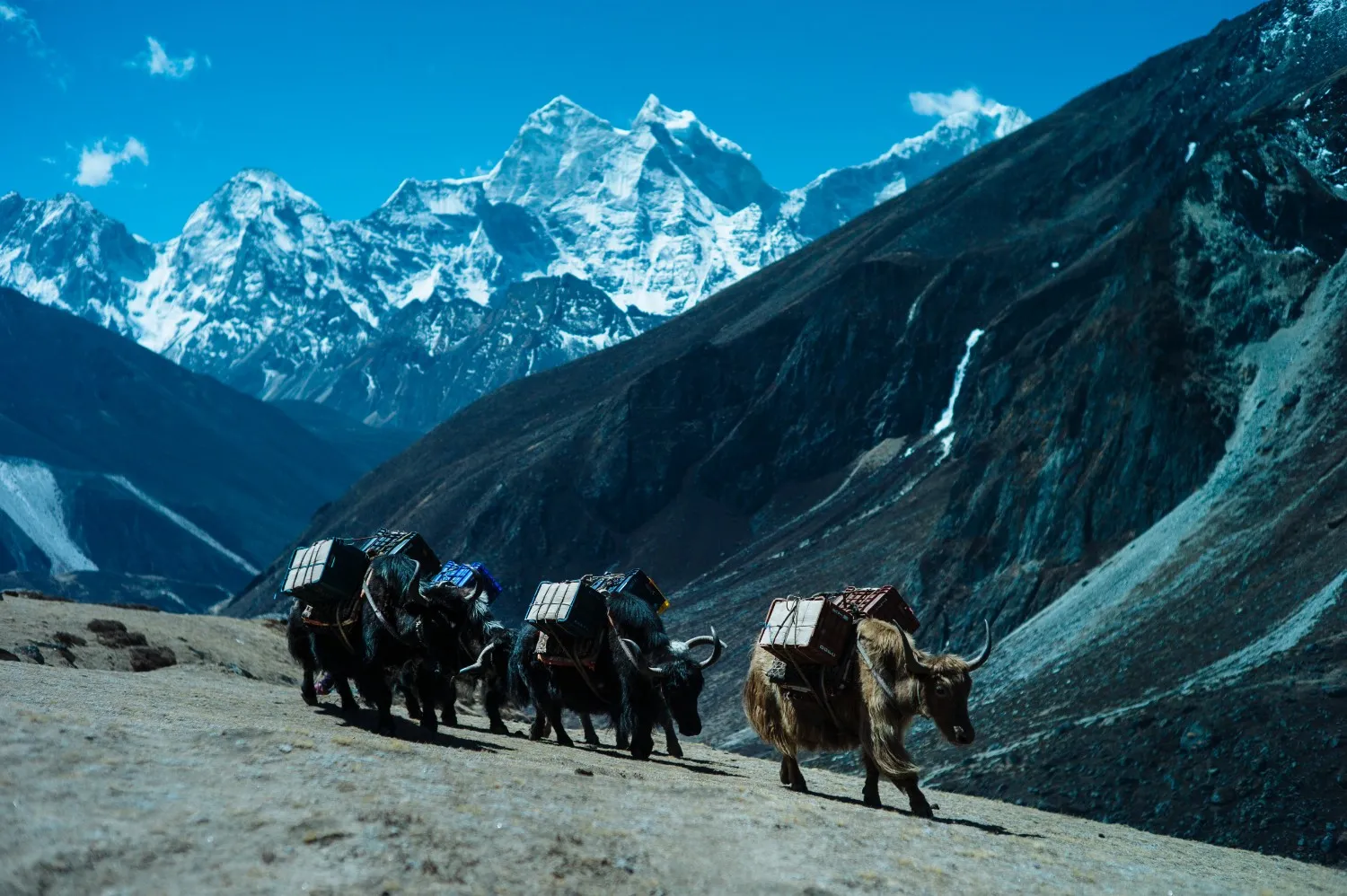
Mount Everest is home to a surprising range of animals across three altitude zones. Lower slopes (2,800m-4,000m) shelter red pandas, Himalayan black bears, and langur monkeys. Mid-altitudes (4,000m-5,500m) are home to snow leopards, blue sheep, yaks, and Himalayan tahr. Above 6,000m, bar-headed geese, yellow-billed choughs, and the tiny Himalayan jumping spider survive conditions almost no other creature can.
Yet Everest supports a surprising range of wildlife across different altitude zones. However, there is one thing that shocks the majority: life does not entirely vanish on Everest. The reality, however, is more interesting than that.
Although it is true that the higher the altitude, the lower the number of animals you will come across, Everest is not a deserted place. Various animals have adapted to dwell at different levels on the mountain and formed their own different zones of existence. As you climb Everest, you will find that the mountain is good at supporting various animals according to the altitude.
The forest valley is full of wildlife.
The rugged central parts are home to tough animals, and even close to the peak, some wonderful animals have contrived to live. Each zone supports different species, and each one has developed unique adaptations to cope with the challenges of that altitude. The knowledge of these zones makes us realize how strong nature can be, even in the most severe conditions of the world.
Quick Look at Everest Wildlife by Altitude Zone
| Altitude Zone | Elevation Range | Animals Found |
|---|---|---|
| Lower Altitude | 2,800m to 4,000m | Red panda, Himalayan black bear, musk deer, Himalayan monal (danphe), langur monkeys |
| Mid Altitude | 4,000m to 5,500m | Himalayan tahr, blue sheep (bharal), snow leopard, yak, Himalayan marmot |
| High Altitude | Above 6000m | Bar-headed goose, Himalayan jumping spider, yellow-billed chough |
Animals Found in the Everest Region by Altitude
Lower Altitudes (2,800m to 4,000m)
The lower elevations of the Everest region are rich in biodiversity, with dense forests, river valleys, and diverse wildlife habitats. These are the low slopes that are densely forested, green valleys, and cliffs of rock. The atmosphere is less strenuous to breathe, and it is not as frosty as it is at higher altitudes. This is the reason why numerous animals call this zone their home. It is nearly a new world compared to the bleak and icy mountains in the distance that you can see.
1. Red Panda
Think of an animal that is fluffy, cute, and as large as your house cat. That’s the red panda. Their small size and striking appearance make them one of the most beloved mammals in the Himalayas. However, these small creatures are wild animals that inhabit the bamboo forest above Everest.
Red pandas are night owls. They rest in the day in the trees and emerge only when it becomes dark. They become active at night and feed mainly on bamboo, along with insects and occasional small prey.

These animals also help in the growth of the forest by dropping seeds while eating their food. This aids the growth of new plants; hence, these little animals are required in forests.
Red pandas rely heavily on bamboo forests for food and shelter. Across the Everest region, local communities and conservation authorities are working to preserve these habitats through protected areas, sustainable forestry practices, and wildlife conservation initiatives.
Red panda populations continue to decline because of habitat loss and fragmentation.
2. Himalayan Black Bear
The Himalayan black bear looks like a big and strong bear with a great deal of black fur and a white spot upon its chest resembling a V-shaped lightning bolt. That’s what the Himalayan black bear looks like, and it is one of the most impressive animals on the lower slopes of Everest.
Surprisingly, these bears are good climbers and swimmers. You would not have guessed that such a big and heavy animal could climb trees, but they do it frequently to get food. They look through the forest to find fruits, nuts, and any other insects that they can consume.
They play an important ecological role by scavenging carrion and consuming fallen fruit. They sweep away dead animals and fallen fruit, which would otherwise rot on the ground.

These bears attempt to avoid people most of the time. They are aware that we are dangerous and therefore remain in the forests. However, with the winter and lack of food, some bears become desperate and roam around villages in search of scraps.
It is at this stage that human-wildlife conflicts occasionally occur. Local inhabitants are at times forced to drive the bears away or guard against the hunting of their animals.
Similar to red pandas, these bears are also victims when trees are destroyed. They require huge spaces to move and hunt; hence, when their houses are reduced, they find it difficult to sustain themselves.
3. Musk Deer
The musk deer is a strangely looking animal. It is small, less than half the size of a small dog, and the males possess these long, sharp teeth, which project out of their mouths. Well, it really looks humorous. Their elongated canine teeth give them an unusual appearance compared to other deer species. These teeth are not used to fight but to be showcased to females and demonstrate their masculinity.
These are deer that are masters of the rocky land. They inhabit steep, rocky slopes on which normal animals would not be able to stand. But the musk deer spring round the rocks like springs. They are so good at jumping that they can hardly be caught by predators. Their size also enables them to penetrate tight spaces where large hunters are unable to track them.

The most interesting fact about musk deer is that they have a strong-smelling scent that is discharged by a gland close to the tail.
To extract this scent, humans have been hunting musk deer ever since hundreds of years to use it in perfumes and medicines. Due to this hunting, musk deer are being wiped out at a rapid rate. It is one of the most tragic stories of wildlife in the Everest region.
These small deer feed on lichen and certain plants, which grow on rocks and trees. They are shy, solitary animals that spend most of their time foraging among rocky slopes and forested habitats.
Unfortunately, the valuable musk they produce has made them a target for poachers. People are today striving to safeguard them and prevent illegal hunting, but it is a battle against time to ensure that they are not lost to extinction.
4. Himalayan Monal (Danphe)
One of the most beautiful birds you could ever see on Everest is the Himalayan Monal. The natives refer to it as Danphe, and it is the national bird of Nepal. When you happen to see one, you will know why people are so proud of it.
The males are brightly colored in an iridescent plumage that displays vibrant shades of blue, green, red, and gold. Their plumes are glossy blues and greens and reds and golds, which appear to be glowing in the sun.
These are hardy birds that inhabit the rocky and forested slopes of lower Everest. They’re not like typical birds that stay hidden in trees. Rather, Himalayan monals roam on the ground, scratching and pecking the ground in search of food.

They consume insects, worms, tiny seeds, and the roots of plants. You may hear their loud and peculiar calls echoing through the mountains in the daytime. It is a sound that people of the area are familiar with and enjoy listening to.
The only interesting thing about these birds is that they are faithful to their homes. After they settle on a place to reside, they will be there for years together. They build their nests in rocky crevices or under thick bushes where predators can’t easily reach them.
The color of female monals is way less than that of males. They are brown and dull-colored, which in fact makes them blend with their environment and be safe and guard their eggs.
5. Langur Monkeys
Langur monkeys are intelligent primates that have long tails and round faces, which make them appear almost human-like. They are social animals that exist in groups known as troops, and occasionally the groups consist of 10 or 30.
They are very social animals and need one another to survive, play with one another, groom each other to keep clean, and provide security to the young ones. In the case of the langurs, there is no bigger experience than observing a troop of them as a tight-knit family with everybody having a role and everybody being important.
The first sighting of langur monkeys was in the lower parts of Everest more than 30 years ago by the local herders and hunters who were familiar with the mountains. These observations have since been verified by visitors and the local communities that have witnessed numerous interactions with these amazing creatures ever since.

With time, individuals have come to know more about their behavior and how they live in the Everest region. These monkeys are still frequently observed in the woodland within the environs of the mountain today.
Young langur monkeys are roughly equal to a large house cat, and an average troop may consist of 10-30 individuals. Langurs can endure cold weather and tough conditions in the mountains, thanks to their thick fur that keeps them warm during harsh winters.
They also possess extremely powerful limbs and long tails that can enable them to jump long distances among trees, at times leaping as much as 50 feet up into the air. These adaptations render them fully adapted to live in the Everest forests.
Mid-Altitude (4,000m to 5,500m)
The higher up Mount Everest you go, the less air there is, and the temperature decreases drastically. The trees are very few and far between, and the landscape becomes rocky and barren. This is a harsh and challenging environment, yet here some of the most difficult animals on the planet can be found. These animals have developed distinctive skills to endure where other animals cannot.
1. Himalayan Tahr
The Himalayan tahr is a wild goat that appears tough and rugged and is designed aptly to survive on mountainous cliffs. These are fat animals with shaggy fur that warms them during the freezing weather. The male is heavier and bigger in size than the female and may often be as heavy as a grown-up man.
They are curved and muscular in appearance, giving them the appearance that they were meant to live in the mountains. Thousands of years have passed with the Himalayan tahr living on the Everest slopes.
Since this primitive period, mountaineers and the local communities have observed such animals repeatedly thousands of times. Tahrs are still commonly found today grazing on steep slopes and climbing cliffs, which most animals would fear.

When born, the young Himalayan Tahrs are approximately the size of a medium-sized dog. Adult males have weights up to 100 pounds, and the female is smaller.
Tahrs grow exceptionally thick fur, similar to a winter coat, to withstand the snow and freezing temperatures of the mid-altitude zones. Their feet also have rough pads that grip rocks effectively, allowing them to climb even steep vertical surfaces without slipping.
This impressive skill can assist them in avoiding predators as well as in locating food where other animals are unable to.
2. Blue Sheep (Bharal)
The Blue Sheep, also called the bharal, is one of the most unexpected animals that you will encounter in the mid-altitudes of Everest. It is not really blue, as the name suggests. Rather, it is greyish-blue in color, and this enables it to blend in seamlessly with the rocky terrain.
They resemble a combination of a sheep and a goat, and they are extremely strong mountain climbers that do not appear to follow the law of gravity.
Blue Sheep have been in the Everest region ever since time immemorial. The ancient hunters and mountain communities in the area have been studying and hunting these animals since time immemorial.

Climbers and researchers have seen Blue Sheep on the rocky slopes of the mountain so frequently over the past several decades that such sightings are now the norm. Each visit confirms that these creatures are a valuable and successful component of the Everest ecosystem.
Young Blue Sheep weigh about 40 to 50 pounds when fully grown. They dwell in large herds that may have hundreds of animals moving together over the rocky outcrops.
Blue sheep grow exceptionally thick wool that acts like a winter blanket, helping them withstand the extreme cold and thin air of the mid-altitude regions.
They have strong hind legs that help them jump and climb with such accuracy; their agility allows them to navigate cliffs and rocky terrain with remarkable precision. These amazing powers cause them to be well adapted to their hazardous mountain home.
3. Snow Leopard
Snow Leopard is also referred to as an ounce and one of the most magnificent animals in the Everest region. Unluckily, these beautiful cats are classified as vulnerable and facing ongoing conservation challenges. There are very few snow leopards, just some 6,000 in the whole world, and they are extremely rare and valuable.
These evasive snowcats are so timid and reclusive as to keep to themselves, living in remote areas of the wild and remote alpine terrain rarely visited by humans.
The initial sighting of snow leopards dates back to the early 1960s in the Everest area by the local Sherpa residing in villages beneath the base camp. Starting from that time, there have been many confirmed sightings by both visitors and native communities.

Mountain climbers, researchers, and local herders have observed these incredible creatures for decades. Every sighting is a special one since these animals are so hard to see in the wild.
When born, young snow leopards weigh a few pounds and are about the size of a big pet cat. On average, litters bear between 2 and 3 cubs. Snow leopards grow thick, luxurious fur to withstand the cold Himalayan climate and stay warm in snowy conditions.
Their huge paws act as natural snowshoes, which evenly distribute their weight on the snow to prevent sinking. These are powerful cats, good hunters, and very patient and accurate when it comes to stalking of Blue Sheep and other prey, and, as such, they are the master predators of the high mountains.
4. Yak (domestic & wild)
The yak is a shaggy and giant animal that has been in the Everest region for thousands of years. These magnificent animals grow long, thick hair that hangs down around their bodies like a skirt, protecting them from the cold.
People raise domestic yaks, while wild yaks roam freely in the mountain wilderness, and both species remain highly adapted to life at high altitudes.
Since ancient times, the Everest region has been recording the presence of yaks by local herders and mountain communities. History has indicated that these animals were used and seen by human beings thousands of years ago. In recent decades, trekkers and climbers have come across yaks innumerable times on the slopes of Everest.

Nowadays, yaks still play a vital role in the lives of local Sherpa people, and they are still regularly seen around the area.
The young yaks are little and tough and, when fully grown, weigh about 100 to 150 pounds. They are herded animals that may move in dozens across the rocky landscape and grasses. Yaks have extremely thick fur, which keeps them fully covered against the harsh winds and freezing temperatures to survive in the extreme cold and thin air of high-altitude regions.
Their strong legs and well-constructed bodies allow them to transport heavy loads over mountainous routes. These adaptations make yaks indispensable to both local communities and high-altitude expeditions.
5. Himalayan Marmot
The Himalayan marmot is a huge, fat rodent resembling a fat guinea pig or a large ground-dwelling rodents that resemble oversized squirrels. These are furry animals that are unexpectedly adorable and have short legs, making them stooped to the ground. Nevertheless, marmots are tough survivalists despite their small size; they can survive in the rough mid-altitude regions of Everest where not many other creatures can.
The Everest ecosystem has been home to Himalayan marmots since time immemorial. These animals have been observed since ancient times by local herders and mountain communities.
Climbers and researchers have also recorded numerous experiences with marmots on the meadows and slopes of the mountain over the decades. Such common observations indicate that marmots are still a significant and flourishing component of the mid-altitude habitat.

Mature young Himalayan marmots are barely 1 to 2 pounds and are therefore the smallest at mid-altitude. They cohabit in subsurface burrow complexes known as colonies and may have dozens of marmots living together. Marmots survive the cold and thin air in the mountains by having dense fur, which perfectly insulates their bodies.
Their legs are short and powerful, and enable them to dig burrows fast and evade danger. This is possible due to these adaptations enabling marmots to survive in one of the most hostile places on Earth, as they most of the time hibernate throughout the long and harsh winters.
Planning to Trek the Everest Region?
The wildlife you see depends heavily on the season and the specific route. The Everest Base Camp Trek passes through prime habitat for yaks, blue sheep, and marmots, while routes like the Gokyo Valley Trek offer excellent bharal sightings and better snow leopard habitat. If wildlife is a priority for your trek, contact our team, and we can suggest the route and timing that gives you the best chance of meaningful encounters.
High-Altitude (Above 6,000m)
After 6,000 meters, you are in a place where there is hardly any life. The air is so thin that even with oxygen tanks, breathing becomes hard. The temperatures drop way below zero, and the winds may blow up to a point to knock them off their feet. But somehow, some extraordinary creatures have managed to survive in this extreme environment that otherwise does not seem to have ways of surviving. These animals are some of the most extreme forms of nature.
1. Bar-Headed Goose
The bar-headed goose is a migratory bird that undertakes one of the most remarkable migrations in the animal kingdom. The heads of these geese are marked with black and white striations, which are easily identifiable.
These remarkable birds migrate past Mount Everest every year as they travel between their breeding grounds in Central Asia and their wintering grounds in India. They are the only birds that habitually fly so high up in the air, and the air is perilously thin.
Bar-headed geese have been overflying Everest in what the local communities term their seasonal migration. According to stories transmitted by Sherpa families, these birds have been performing this fantastic voyage for thousands of years.

Climbers have observed these geese during migration periods while ascending the mountain over the last few decades. Whenever they spot these birds, the sight amazes mountaineers and showcases the remarkable capabilities of nature.
Fully grown bar-headed geese weigh between 5 and 6 pounds, making them light enough to soar with remarkable ease. They also fly in large flocks, often consisting of hundreds or even thousands of birds moving together in massive groups.
Bar-headed geese have developed specialized blood that helps them use oxygen more efficiently than other birds, allowing them to survive the extreme cold and low-oxygen conditions at high altitudes.
Their strong wings enable them to fly to heights that most animals would not be able to reach. These fantastic skills enable them to do one of the riskiest things in the animal kingdom: to cross the highest mountain in the world with perseverance and prowess.
2. Himalayan Jumping Spider
One of the tiniest and least expected creatures you can expect to come across at high altitudes on Everest is the Himalayan jumping spider. This small spider is hardly larger than your fingernail, but it is one of the hardiest animals that lives over 6,000 meters.
These small hunters possess large frontal eyes, which makes them known for their exceptional vision and makes them interested in what surrounds them.
The Himalayan jumping spiders have been living in the highest altitudes of Mount Everest for generations and generations. Local climbers and scientists have recorded these small animals living on the frozen mountainsides.
Mountaineers have observed these remarkable spiders for decades while climbing toward the summit, where they appear to be among the only creatures capable of surviving. These common occurrences affirm that jumping spiders are the toughest creatures at high altitudes.

Young Himalayan Jumping Spiders are microscopic upon birth and are not much more than half an inch when mature. They are solitary hunters on the frozen ground, though so small. To endure the severe cold and harsh conditions at high altitudes, they possess special antifreeze-like proteins in their bodies that prevent them from freezing.
Their strong hind legs enable them to leap unbelievable distances in comparison to their body sizes, enabling them to seek insects and to avoid predators.
Jumping spiders are among the highest-altitude arthropods known to science, with these amazing adaptations, because they can survive at altitudes where almost all other life is utterly unable to survive.
3. Yellow-Billed Chough
The Yellow-billed chough is a very daring and clever bird; it takes its abode as high as possible on Everest. These are entirely black birds with the exception of their bright yellow beaks and legs, which stand out against the snow.
Yellow-billed choughs are scavengers that feed near climbers by searching for food scraps abandoned on the mountain. Surprisingly, they are not afraid, and they will approach human beings very closely, exhibiting little fear of humans.
The yellow-billed choughs have been making their livelihood in the highest elevations of Everest for so many generations.
These birds are familiar to locals of Sherpa communities since ancient times. Throughout the last few decades, a great number of climbers have reported their sightings of these spectacular birds at high altitudes.

Such sightings are so frequent that yellow-billed choughs have become archetypal of high-altitude mountaineering and their bold and inquisitive nature.
When fully grown, young yellow-billed choughs are so light that they weigh only 5 or 7 ounces. They coexist in small groups called flocks, which go about in search of food in the frozen land.
Yellow-billed choughs grow dense feathers to withstand the cold temperatures and thin air at high altitudes, creating an effective layer of insulation. They have strong wings that enable them to fly easily in the thin air that can’t support other birds.
Their smarts and daring add to these adaptations and make them the most noticeable and easily remembered animals that climbers can see during their trip to the top of Everest.
How Animals Survive on Mount Everest
Mount Everest is one of the harshest environments on Earth. As altitude increases, temperatures drop drastically, reaching around -40°C at the summit, cold enough to freeze exposed skin within minutes. The air contains very little oxygen, and powerful winds can exceed 200 km/h, making survival extremely difficult for most animals.
Despite these extreme conditions, some animals have developed remarkable adaptations that allow them to survive. Over thousands of years, they have evolved unique physical and biological features suited to this environment.
Many animals grow thick fur that acts as insulation, protecting them from freezing temperatures. Others have developed specialized blood and lung systems that help them absorb oxygen more efficiently in the thin mountain air.
Some species have also adapted their metabolism to use less oxygen and conserve heat, enabling them to survive with limited food and energy. In addition, several animals migrate seasonally, moving to lower elevations during harsh conditions and returning when the environment becomes more favorable.
From tiny jumping spiders to large yaks, Everest’s wildlife demonstrates nature’s resilience and the extraordinary ability of life to adapt and survive in extreme environments.
Threats to Animals on Mount Everest
Mount Everest’s animals are facing increasing pressure from multiple environmental and human-related threats. Climate change is the greatest threat. Global warming is causing snow and ice on Mount Everest to melt at an unprecedented rate.
It implies that animals are deprived of their habitats and food supply. Perfectly adapted animals in extreme cold conditions fail to perform in the warmer weather, just a few degrees warmer.
Another big issue for the wildlife in Everest is tourism. Thousands of climbers visit the mountain every year, creating noise, pollution, and disturbances to animal habitats. Climbers abandon trash and garbage that pollute the environment.
The presence of humans all the time scares off some of the shy animals, such as the snow leopards, and causes them to leave their natural habitat. The heavy foot traffic can damage fragile alpine vegetation and soil on which animals rely to feed and provide shelter.
Development in the nearby areas is also a source of habitat disturbance. As villages and towns expand around Everest, people clear forests to create space for development.
Animals lose the ability to survive and to get food. Animal populations decrease when the habitat becomes smaller and smaller. Some of the species that previously prospered in the Everest region are finding it hard to survive due to the loss of their habitat.
Conservation Efforts in the Everest Region
People are making significant efforts to protect the wildlife of Mount Everest as they recognize the growing environmental threats in the region. Authorities have established several national parks and protected areas around the mountain to provide safe habitats where wildlife can survive with minimal human disturbance.
In these conservation areas, tourism and development activities are carefully controlled. Restricted access helps preserve natural ecosystems and gives animals the space they need to thrive. Park rangers also patrol these regions to prevent poaching and protect endangered species such as the Snow Leopard.
Local communities, especially the Sherpas, play a vital role in conservation efforts. Having lived in the Everest region for generations, they possess deep knowledge of the mountain environment. Many now work as guides, rangers, and conservation workers, helping protect wildlife while educating visitors about responsible tourism.
Sherpa families also pass conservation values to younger generations, ensuring long-term environmental protection. Communities work alongside conservation organizations to monitor wildlife, restore forests and grasslands, plant trees, and clean polluted areas.
By combining traditional knowledge with modern conservation practices, the Everest region is becoming a safer habitat where people and wildlife can coexist sustainably.
Trek with a Team That Knows the Region.
Our guides have walked these trails for years and know where and when wildlife is most likely to appear. If seeing Himalayan wildlife up close is part of why you want to come to Nepal, we would love to help you plan a route that makes that as likely as possible. Get in touch with our team or explore our Everest region treks to start planning. Responsible wildlife viewing helps protect the ecosystems that make the Everest region unique.
Explore more from Nepal Outdoor Expeditions:
- Everest Base Camp Trek 2026/2027
- Gokyo Valley Trek – excellent wildlife habitat along the route
- 12 Most Popular Sunrise Viewpoints in Nepal
- Nepal Travel Guide for First-Time Visitors 2026
FAQs
1. Do any animals actually live on Mount Everest?
Yes, animals live in the Everest region, but not all of them inhabit the summit area. Most wildlife lives at lower and middle altitudes because these areas provide more food and shelter. Only a few highly adapted species, such as certain spiders and birds, can survive in the extremely high-altitude environment.
2. What is the most famous animal found on Mount Everest?
The snow leopard is widely regarded as the most iconic animal of the Everest region. It is famous because of its beauty and infrequent occurrence. These creatures are quite timid, and they merge well with rocky formations; that is why people can hardly observe these creatures.
3. Are there animals living at the top of Mount Everest?
No, not even the very top of Mount Everest is so extreme that animals can live there permanently. The absence of oxygen, low temperatures, and high winds are such that survival is virtually impossible. Some birds are capable of flying above the summit, although none live there permanently.
4. Which animal lives at the highest altitude on Everest?
The Himalayan jumping spider is one of the highest living animals. Researchers have discovered it at exceptionally high altitudes, where it preys on tiny insects carried by the wind. It demonstrates that even small organisms can adapt to harsh environments.
5. Can trekkers see wildlife during the Everest Base Camp trek?
Yes, wildlife is usually visible to trekkers, particularly at lower and mid altitudes. Common sightings include yaks, Himalayan monals, marmots, and blue sheep. You may even see some of the rarer animals if you’re lucky and silent, but these are rather uncommon.
6. What animals does Sagarmatha National Park protect?
Sagarmatha National Park protects a full range of Himalayan wildlife, including snow leopards, red pandas, Himalayan black bears, musk deer, Himalayan tahrs, blue sheep (bharal), yaks, langur monkeys, and over 150 bird species, including the Himalayan monal (Nepal’s national bird). The park covers 1,148 square kilometers and includes the upper Khumbu Valley and several high-altitude glaciers.
7. Is it safe to trek through wildlife areas near Everest?
Yes. The wildlife in the Everest region is largely shy and avoids human contact. The only animal that occasionally creates issues near villages is the Himalayan black bear during late autumn when food is scarce. On the main trekking routes, encounters are almost always visual sightings from a safe distance. Your guide will brief you on any current animal activity in the area before you set off each day.