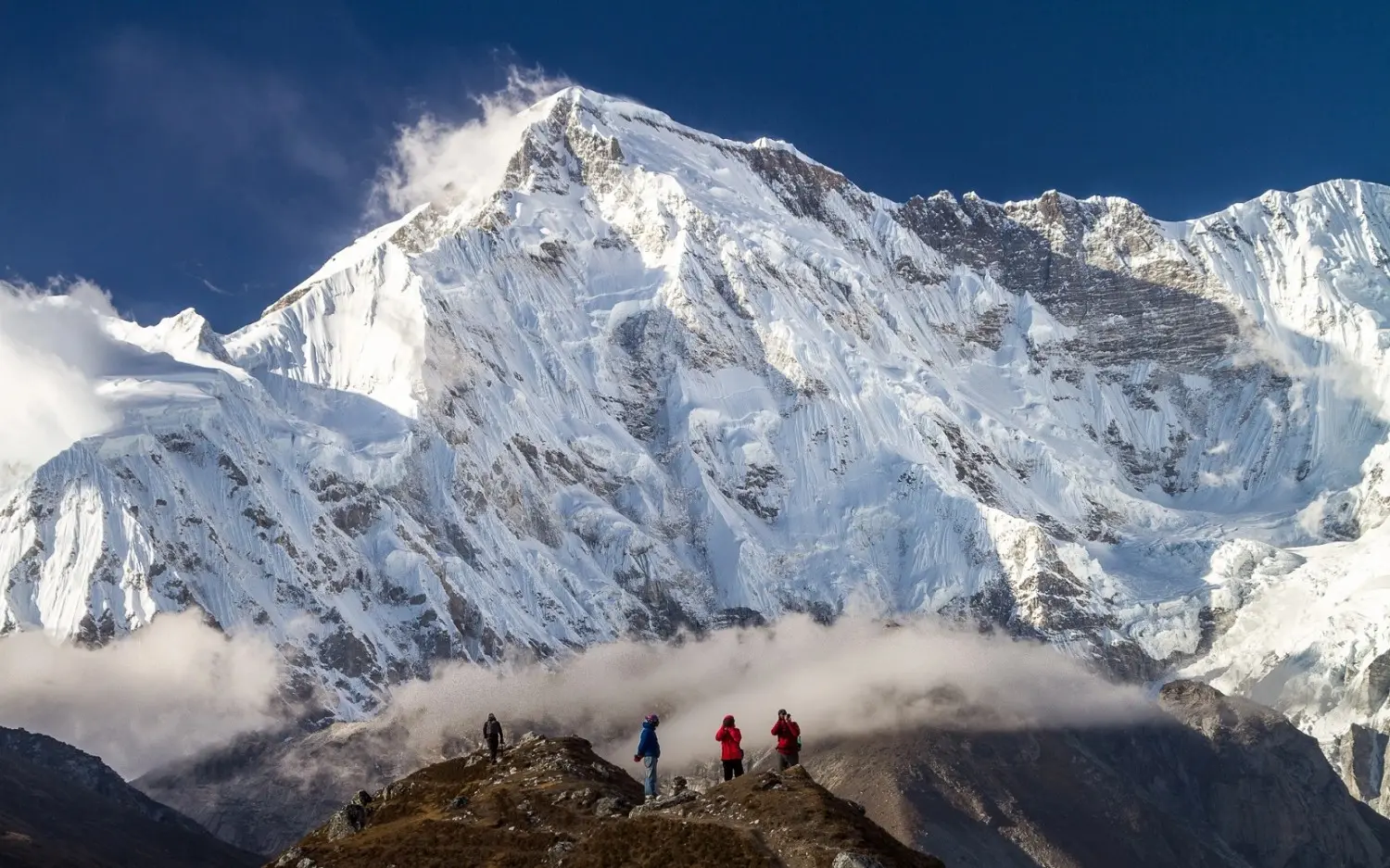
Most people entering the Everest area take the same route. They go to Lukla, go through Namche Bazaar, go to Base Camp, and then head back the same way they came. It’s a wonderful experience, and nobody’s arguing otherwise. However, if you’re one of those people who has ever looked at a map of the Khumbu region and wondered what’s out there besides the one route everybody takes, the Everest Three High Passes Trek is the answer to your question.
This challenging route crosses three high mountain passes: Kongma La (5,535 m), Cho La (5,420 m), and Renjo La (5,360 m), while also including Everest Base Camp and Kala Patthar. Instead of retracing your steps, the trek forms a circuit through remote valleys, glacial landscapes, and iconic destinations such as the Gokyo Lakes. Along the way, you’ll enjoy experiences and viewpoints that the standard Everest Base Camp trek simply cannot offer.
Quick Facts
- Location: Everest Region, northeastern Nepal
- Duration: 18-21 days (depending on route and acclimatization days)
- Difficulty Level: Moderate to very challenging (suitable for experienced trekkers)
- Maximum Elevation: 5,535 meters (Kongma La Pass, the highest of the three passes)
- Best Seasons: Spring (March to May), Autumn (September to November)
- Permits Required: Sagarmatha National Park Entry Permit, Khumbu Pasang Lhamu Rural Municipality Permit, Environmental Green Fee
- Group size recommendation: 2-10 trekkers
What Exactly Is the Everest Three High Passes Trek?
The Everest Three High Passes Trek is an 18-21-day advanced trekking route in Nepal’s Khumbu region that crosses three high-altitude passes: Kongma La (5,535m), Cho La (5,420m), and Renjo La (5,360m), while also visiting Everest Base Camp and the Gokyo Lakes. Each pass offers unique experiences, from crossing the glacier terrain of Cho La to reaching Renjo La, which provides panoramic views of Everest, Lhotse, Makalu, and Cho Oyu. The route also includes the stunning Gokyo Lakes, a highlight not found on the standard Everest Base Camp trek.
Due to its difficulty and longer trekking days, previous high-altitude trekking experience is highly recommended. Trekkers who have completed routes like Everest Base Camp or Annapurna Circuit often adapt better to the challenge. For beginners, Everest Base Camp remains the better introduction to high-altitude trekking, while the Three High Passes Trek suits those seeking a more advanced Himalayan adventure.
The Three Passes That Define This Trek
1. Kongma La Pass (5,535 m)
Kongma La is the highest of the three passes, and it demands serious effort. The climb feels longer than expected as the trail winds through rocky moraine and gradually gains altitude. Even with proper acclimatization, the elevation can still feel challenging. Your legs grow heavier, and breathing becomes more difficult as you ascend.
At the top, however, the effort becomes worthwhile. Views of Makalu, Baruntse, Island Peak, and the vast Khumbu Glacier create one of the trek’s most memorable moments. The descent toward Cho La is steep and requires careful footing. It is a demanding day, but most trekkers consider Kongma La one of the highlights of the journey.
2. Cho La Pass (5,420m)
Cho La has earned its reputation as one of the trek’s most challenging sections. Most of the route remains manageable, but the glacier near the top completely changes the experience. Depending on the ice conditions, the terrain can become steep and slippery, making crampons especially useful.
The crossing demands concentration, as every step requires attention. A guide becomes valuable not only for navigation but also for assessing ice conditions and choosing the safest route. After crossing the pass, the descent into the Gokyo Valley brings a strong sense of accomplishment. It is more than physical fatigue; it is the satisfaction of overcoming a truly demanding section of the trek.
3. Renjo La Pass (5,360m)
Renjo La often becomes the highlight that trekkers remember most after the journey. The climb from Gokyo is steady and well-marked, feeling gentler compared to the previous passes. However, the view from the top is what truly makes it unforgettable.
From Renjo La, trekkers can see Everest, Lhotse, Makalu, Cho Oyu, and the entire Gokyo Valley with its shimmering lakes below. Many consider it one of the best viewpoints in the Khumbu region because of its wide panoramic scenery. After the challenge of the earlier passes, Renjo La feels like a reward. The descent toward Lungden is easier, giving trekkers time to reflect on the experience and enjoy the surroundings.
Day-to-Day Itinerary (Sample)
|
Day |
Route | Overnight Altitude | Approx. Distance | Walking Hours |
Key Highlights |
| 1 | Fly to Lukla and Trek to Phakding | 2,610 m | 8 km | 3-4 hrs | Scenic mountain flight, first day of trekking |
| 2 | Phakding to Namche Bazaar | 3,445 m | 10-12 km | 5-6 hrs | Hillary Bridge, entrance to Sagarmatha National Park |
| 3 | Acclimatization Day in Namche | 3,445 m | 4-5 km | 2-3 hrs | Everest View Hotel hike, altitude adjustment |
| 4 | Namche Bazaar to Tengboche | 3,860 m | 10 km | 5-6 hrs | Tengboche Monastery, Everest panoramas |
| 5 | Tengboche to Dingboche | 4,390 m | 11 km | 5-6 hrs | Ama Dablam views, alpine landscapes |
| 6 | Dingboche to Chukkung | 4,730 m | 5 km | 3-4 hrs | Gradual ascent into the upper Imja Valley |
| 7 | Chukkung to Lobuche via Kongma La Pass | 4,925 m | 11-12 km | 7-9 hrs | Cross Kongma La Pass (5,535 m), a challenging high-altitude day |
| 8 | Lobuche to Gorakshep and Everest Base Camp | 5,180 m | 12-14 km | 7-8 hrs | Visit Everest Base Camp and Khumbu Glacier |
| 9 | Kala Patthar and Trek to Dzongla | 4,830 m | 10-12 km | 7-8 hrs | Sunrise from Kala Patthar (5,545 m) |
| 10 | Dzongla to Gokyo via Cho La Pass | 4,700 m | 10-12 km | 7-8 hrs | Cross Cho La Pass (5,420 m) and reach Gokyo Valley |
| 11 | Acclimatization and Exploration Day in Gokyo | 4,700 m | 4-6 km | 2-4 hrs | Hike Gokyo Ri, views of Gokyo Lakes and Everest |
| 12 | Gokyo to Lungden via Renjo La Pass | 4,370 m | 12-14 km | 7-8 hrs | Cross Renjo La Pass (5,360 m), stunning mountain panoramas |
| 13 | Lungden to Namche Bazaar | 3,445 m | 16-18 km | 6-7 hrs | Long descent through Sherpa villages |
| 14 | Namche Bazaar to Lukla | 2,860 m | 18 km | 6-7 hrs | Final trekking day through the Dudh Koshi Valley |
| 15 | Fly from Lukla to Kathmandu | 1,400 m | – | – | Scenic return flight and trip completion |
Acclimatization Days
- Day 3: Namche Bazaar acclimatization day.
- Day 11: Gokyo acclimatization and exploration day.
High Pass Crossings
- Kongma La Pass (5,535 m)– Day 7
- Cho La Pass (5,420 m)-Day 10
- Renjo La Pass (5,360 m)-Day 12
Trek Statistics at a Glance
- Duration: 15 Days
- Highest Elevation: Kala Patthar (5,545 m)
- Total High Passes Crossed: 3
- Difficulty Level: Challenging
Best Seasons: Spring (March-May) and Autumn (September-November)
What This Trek Actually Shows You Along the Way
The Three High Passes Trek offers memorable experiences throughout the journey rather than one single highlight. Over three weeks, trekkers explore some of the most beautiful and least-visited parts of the Khumbu region.
- Everest Base Camp and Kala Patthar: Watching Everest from Kala Patthar at sunrise creates one of the trek’s most unforgettable moments. Everest Base Camp itself feels inspiring and humbling rather than crowded.
- Gokyo Lakes: The Gokyo Lakes stand out for their striking blue-green waters, surrounded by snow-covered, rocky landscapes. Located above 4,700 meters, they rank among the trek’s most scenic locations.
- Ngozumpa Glacier: As the longest glacier in the Himalayas, Ngozumpa Glacier impresses trekkers with its immense size and dramatic landscape. Walking alongside it highlights the scale of the region.
- Sherpa Villages and Culture: Villages such as Thame and Khumjung receive fewer visitors than the main Everest Base Camp route. Their quieter atmosphere offers a deeper insight into Sherpa culture and traditional mountain life.
Trek Insights
When Should You Actually Go?
The two seasons that will be suitable for the trek will be spring (March-May) and autumn (September-November), and both seasons will be good in their own way. Spring will be good because of the weather and the rhododendrons in full bloom lower down the trail. It will be really beautiful in the early days of the trek. Autumn will be good because it is cleaner and crisper. The skies will be clearer after the monsoon rain has washed everything out, and the visibility of the passes will be spectacular on a good day. October and November will be the preferred choice of any experienced trekker because the weather will be good, the skies will be clear, and the mountains will be visible more often than at any other time of the year.
The drawback of the popular seasons is the crowds, especially in the areas that coincide with the regular base camp route. Autumn is especially popular, and the tea houses in the Namche and Tengboche areas fill up quickly. The parts of the Three High Passes route that diverge from the main route are quite quiet, however, which is one of the underappreciated advantages of this route. If you want quiet and don’t mind somewhat variable weather, the shoulder weeks at the beginning or end of the popular seasons in late March or late November can be good, and the trails will be much quieter.
One important logistical detail during peak trekking seasons is the Lukla flight diversion to Ramechhap. In spring and autumn, many flights to Lukla operate from Manthali Airport instead of Kathmandu due to air traffic congestion. This means trekkers often need to leave Kathmandu very early in the morning or travel to Ramechhap the night before their flight.
Tea Houses, Dal Bhat, and Everything in Between
Accommodation is in tea houses all the way, and if you have not done a tea house trek before, it is worth knowing about before you go. At the lower altitudes around Namche and Phakding, the tea houses are very comfortable, with some even offering heated dining areas, good wifi, and menus that go beyond the basics. At the higher altitudes, things get simpler, and this is just the nature of being high up in a remote mountainous area. Rooms get smaller, blankets get thicker, and hot showers become a luxury item. However, this is something that most people get used to very quickly, and there is something oddly pleasant about the simplicity of it all.
The food follows the same trend. Dal bhat is the fuel that keeps the trekkers going on this route and for good reason. It is hot, it is delicious, and it has plenty of carbs. Moreover, they will keep your plates filled without you even asking. You can get your fill of pasta, fried rice, soups, noodles, and even the occasional apple pie as you move from village to village. The higher you go, the fewer the options become simply because everything has been carried on somebody’s back. Food is more important than one realizes at high altitudes, and it is worth ordering the good stuff even on the days when your appetite is not quite what you would like it to be.
What This Trek Is Going to Cost You
Before you even begin your journey, there are a few things to take care of, and it is better to know about them as soon as possible rather than at the last minute. The permits required for this trek include the Sagarmatha National Park Entry Permit and the Khumbu Pasang Lhamu Rural Municipality Permit, both of which can be obtained in Kathmandu or Monjo. As of 2026, the Khumbu Pasang Lhamu Rural Municipality Permit costs NPR 3,000 per person for foreign nationals and NPR 2,000 for SAARC nationals, while children under 10 can trek free of charge. Trekkers should also budget for the new environmental “Green Fee” introduced in 2026. An additional NPR 1,000 is now added to trekking permits in the Everest region to support waste management and conservation efforts
The cost of the trek, overall, will depend quite a bit on how you choose to do it. If you are a budget-independent trekker and have to arrange all the tea houses and logistics yourself, the cost to get through the whole circuit will be around 1,500 to 2,000 USD. If you opt to have a fully guided trek with a reputable agency, including a licensed guide and porter, this will be closer to 3,000 to 4,500 USD or more, depending on the agency and the type of service. While this is obviously more expensive, it does remove a great deal of the guesswork from the equation, especially over the pass sections.
Getting Yourself Ready Before You Even Land in Kathmandu
Preparing properly for the Three High Passes Trek makes a huge difference. Success on this route depends not only on fitness but also on having the right gear, preparation, and mindset. Arriving prepared helps you tackle the passes with confidence and enjoy the journey safely.
|
Gear Item |
Recommended Equipment |
Why It Matters |
| Clothing & Layers | Down jacket, waterproof shell, base layers, fleece | Temperatures can drop well below freezing at higher elevations, especially during early mornings and evenings. |
| Footwear | Waterproof, broken-in trekking boots | Reduces the risk of blisters and provides stability on rocky, uneven, and snowy terrain. |
| Sleeping Bag | Rated to at least -10°C | Teahouse blankets may not provide enough warmth above 4,500 meters. |
| Crampons or Microspikes | Lightweight traction devices | Essential for icy sections on Cho La Pass and occasionally useful on Kongma La Pass. |
| Trekking Poles | Adjustable trekking poles | Improve balance and reduce strain on knees during long descents and steep climbs. |
| Backpack | 50-60L trekking backpack | Provides enough space for essentials without encouraging overpacking. |
| Daypack | 20-30L lightweight pack | Keeps water, snacks, layers, and valuables easily accessible during the day. |
| Water System | Reusable water bottles or hydration bladders | Staying hydrated is critical for acclimatization and overall performance. |
| Sun Protection | Sunglasses, sunscreen, lip balm | UV exposure is significantly stronger at high altitude. |
| Headlamp | Rechargeable or battery-powered | Useful for early-morning summit hikes and navigating teahouses after dark. |
Quick Packing Tips
- Prioritize lightweight, multi-purpose gear.
- Test all equipment before arriving in Nepal.
- Keep your daypack as light as possible, especially if you hire a porter.
- Pack layers rather than bulky clothing to adapt to changing mountain conditions.
What This Route Gives You That Base Camp Simply Cannot
The honest answer to the question of why someone would choose to take this trek over the more popular Base Camp trek is that it offers the whole picture, not just a part of it. While the Base Camp trek follows a single trail through a single valley, it does so in a wonderful fashion. This trek offers the whole Khumbu region, entering other valley systems and other landscapes that the more popular trek never encounters. You see more, you understand more, and you feel a sense of the place in a complete fashion.
Crowds also play an important role in shaping the trekking experience. The sections that overlap with the Everest Base Camp route can become busy during peak season. However, once you move toward Gokyo or cross the higher passes, the crowds thin out significantly.
Walking through the mountains alone feels very different from trekking alongside large groups, and the Three High Passes Trek gives you both experiences. If you have already completed the Everest Base Camp Trek, this route offers a natural next challenge. For first-time trekkers with enough fitness and experience, it provides a more complete Himalayan adventure with greater variety and scenery.
FAQs
How difficult is the Everest Three High Passes trek compared to the Everest Base Camp trek?
Considerably harder, and it is worth being straight about that. The Base Camp trek follows a relatively straightforward trail all the way through. This route adds three high-altitude pass crossings, stretches to three weeks, and takes you through terrain that gets genuinely technical in places. People who have done both almost always say the Three High Passes Trek is in a completely different category, physically and mentally.
Do I need prior high-altitude trekking experience to complete the Everest Three High Passes Trek?
It is not a strict requirement, but it makes a real difference. Going above 5,000 meters for the first time on a route that crosses three passes at that height is a big ask for your body. Having done at least one previous high-altitude trek gives you a much better sense of your own limits before committing to something this demanding. It is not about being elite; it is about knowing yourself well enough to make good decisions when things get hard up there.
Which of the three passes is the most challenging?
Most people point to Kongma La. It is the highest at 5,535 meters, and the long, relentless ascent on loose rocky terrain at that altitude breaks people down more than anything else on the route. Cho La gets attention for its glacier crossing, which is genuinely technical when icy. Renjo La is the most manageable of the three, which feels like a well-timed reward after everything that came before it.
What kind of physical fitness and preparation is required?
You do not need to be an athlete, but you do need to be genuinely fit and honest with yourself about it. Three weeks of big elevation days at high altitude demand real cardiovascular fitness. Getting comfortable with long uphill days before you leave, through hiking, running, or cycling, will serve you better than almost anything else. People who arrive fit and acclimatize patiently tend to have a very different experience than those who hope the excitement carries them through.
Is it possible to complete the trek without a guide or porter?
No. As of the 2026 trekking season, Nepal strictly enforces the mandatory licensed guide rule across National Parks, Conservation Areas, and regulated trekking regions, including the Everest region. Trekkers are no longer allowed to complete the Three High Passes Trek independently without a licensed guide.
Authorities can remove trekkers from the trail, issue fines, or blacklist future trekking permits if they are found trekking without a registered guide. Hiring a guide is now both a legal requirement and an important safety advantage on a demanding route like the Three High Passes Trek.
Interestingly, Nepal recently relaxed permit rules for some restricted-area treks in 2026, allowing solo travelers to obtain restricted-area permits under certain conditions. However, this change does not apply to the Everest region’s mandatory guide regulations.
How many days is the Three High Passes Trek?
The Everest Three High Passes Trek typically takes 15 to 18 days to complete. The duration depends on your itinerary, acclimatization schedule, weather conditions, and whether you include side trips such as Everest Base Camp or Gokyo Ri.
What is the success rate of the Three High Passes Trek?
Most well-prepared trekkers complete the Three High Passes Trek. Success rates are generally high when trekkers follow proper acclimatization schedules, maintain a steady pace, and trek during favorable weather conditions.
Can beginners do the Three High Passes Trek?
The Three High Passes Trek is not recommended for complete beginners. Trekkers should have good physical fitness, previous multi-day trekking experience, and confidence hiking at high altitude.