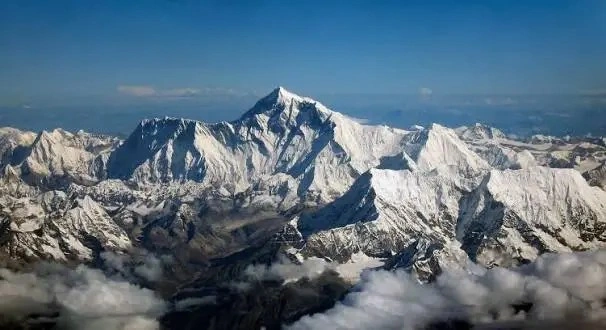
Short answer: technically, yes, but practically not consistently. Whether you can see Mount Everest from Kathmandu depends on the weather, the time of year, and precisely where you are standing. Kathmandu sits 160 km from Everest in a straight line, and that distance alone changes what you should expect.
Most travelers imagine Everest towering over Kathmandu’s skyline, as it appears in photos taken from the Khumbu region. That’s not the reality. From Kathmandu, Everest is one small, distant peak among dozens of Himalayan giants, and on a hazy day, it may not be visible at all.
This guide answers the question clearly: whether Everest is seen, from which viewpoints, during which season, and what you can realistically expect to see. It also covers higher alternatives for more reliable ways to see Everest, including an Everest mountain flight, a helicopter tour, and treks into the Everest region itself, if a clear, close-up view of the mountain matters more to you than a distant glimpse from the valley.
The Short Answer: Can You Really See Mount Everest from Kathmandu?
Yes, but only on exceptionally clear days, typically during autumn or wintry weather mornings, earlier than haze builds up. Even then, Everest seems like a tiny, distant peak surrounded by different Himalayan mountains, not a dominant landmark in the skyline. Most travelers cannot pick it out without a guide, a directional board, or a zoom lens, because dozens of similar-looking peaks sit alongside the same horizon.
| Factor | Reality |
|---|---|
| Distance from Kathmandu | Approximately 160 km (99 miles) in a straight line |
| Visibility with the naked eye | Possible, but Everest appears very small |
| Best season | Autumn (Sept-Nov) and winter (Dec-Feb) |
| Best time of day | Early morning, before haze and clouds build up |
| Reliable viewpoint in the valley | No single spot guarantees a view every day |
| Best nearby viewpoints | Chandragiri Hills, Nagarkot, Shivapuri National Park |
| The most reliable Everest views | Mountain flight or helicopter tour |
Why Is Everest So Difficult to See from Kathmandu?
Everest is hard to look at from Kathmandu mainly because of distance, haze, and its position behind taller-looking Himalayan peaks, not because of the Earth’s curvature. At 160 km away, Everest sits some distance back, where pollution, humidity, and atmospheric dust scatter light and blur the view on all but the clearest days.
Distance plays the biggest role. Everest is one of the more remote 8,000-meter peaks seen from the Kathmandu Valley. Closer mountains like Langtang Lirung and Ganesh Himal sit much closer to the valley and clearly appear large and more outstanding, despite the fact that they may be shorter than Everest.
Atmospheric haze is the real impediment, not curvature. Kathmandu Valley traps dust, automobile emissions, construction dust, and pollutants, especially outside the monsoon-wiped-clean months. This haze layer thickens through the day because the temperatures rise in the valley, which is why early morning offers the best(and on occasion simplest) viewing window.
Humidity adds another layer of interference. Moisture inside the air scatters sunlight, softening outlines and decreasing contrast between the mountain and the sky, even on days that appear clean at ground level.
Everest also isn’t the nearest high mountain to Kathmandu. Peaks like Dorje Lakpa and Gaurishankar sit closer to the valley and regularly get mistaken for Everest by travelers who are not familiar with the skyline. Everest sits in addition back inside the Himalayan range, in part obscured by those closer summits depending on your exact point of view.
None of this makes Everest invisible. It makes Everest a mountain where you need the ideal conditions, the higher elevation, and frequent local guidance to surely spot. The subsequent segment covers precisely where in and around Kathmandu offers you the best chance.
Where Can You See Everest from Kathmandu?
The best places to see Everest from Kathmandu are Chandragiri Hills, Nagarkot, and Shivapuri National Park, due to the fact that all 3 sit at higher elevations with a clearer eastern horizon than the valley ground itself.
Chandragiri Hills
Chandragiri Hills sits just outside Kathmandu and is reachable via cable car, making it the most convenient option for travelers to be short on time. On clear mornings, the hilltop offers panoramic views of the Himalayas, and Everest is occasionally seen with many of the remote peaks. Directional boards at the viewpoint assist in picking out which peak is really Everest, because it would not stand out visually from this distance.

Nagarkot
It is a well-known sunrise viewpoint east of Kathmandu, with one of the clearest jap horizons inside the valley. Everest becomes visible right here most effectively under ideal conditions, usually on clean autumn or winter mornings before haze sets in.
Shivapuri National Park
Shivapuri National Park sits at a higher elevation than the maximum valley viewpoints, which reduces the haze layer between the observer and the mountain. Experienced photographers with telephoto lenses occasionally capture Everest from here, although it nonetheless calls for clear weather.
Within Kathmandu Valley itself, recognizing Everest is technically viable from certain expanded parts of the city on crystal-clear mornings; however, it is unusual and not something to rely on.
For trekkers who need a guaranteed near-up view in preference to a distant glimpse, an Everest View Trek takes you into the Khumbu region itself, where Everest is unmistakable.
Can You See Everest from Kathmandu Airport?
Usually no. Kathmandu’s Tribhuvan International Airport doesn’t provide a reliable Everest view, and most tourists may not spot it whilst landing, departing, or waiting within the terminal.
Aircraft direction matters more than most humans recognize. Runway course and the flight direction a plane takes rely upon wind conditions and air traffic, not on giving passengers a mountain view. Even on flights that manifest to pass near the Himalayan range, Everest might also sit down on the other aspect of the aircraft from your seat, or too a long way within the distance to identify.
The weather is the identical limiting factor as anywhere else in the valley. Haze, cloud cover, and humidity around Kathmandu affect visibility from the airport just as they do from any floor-stage perspective. A clear day improves your odds, but there may be no guarantee tied to a specific flight or gate.
Don’t plan a round of an airport view of Everest. Some domestic flights heading towards Lukla or other mountain airstrips skip towards the Himalayan range and offer short glimpses of high peaks, but this is not the same as a dedicated Everest sighting from Kathmandu airport itself.
Best Time to See Everest from Kathmandu
The best time to see Everest from Kathmandu is at some stage in autumn (September to November) and winter (December to February), when the air is driest and haze is at its lowest. Visibility drops sharply for the duration of the monsoon and stays inconsistent through spring.
Autumn (September–November) gives great average visibility. The monsoon rains wash dirt and pollution out of the atmosphere, and strong post-monsoon weather patterns keep skies clear for weeks at a time, mainly in the early morning hours.
Winter (December–February) is likewise very dependable, frequently matching or exceeding autumn situations. Cold mornings imply less atmospheric moisture, and clean skies are common earlier than the daytime heating increases haze. The tradeoff is colder temperatures at viewpoints like Nagarkot and Chandragiri Hills.
Spring (March–May) is more variable. Visibility can still be good, particularly early in the season; however, growing temperatures and agricultural burning cause haze as spring progresses.
Monsoon (June–August) brings the worst visibility of the year. Heavy cloud cover and excessive humidity block mountain perspectives on maximum days, making this the season to avoid if seeing Everest is a concern.
| Season | Months | Visibility |
|---|---|---|
| Autumn | Sept-Nov | Best |
| Winter | Dec-Feb | Very good |
| Spring | Mar-May | Variable |
| Monsoon | Jun-Aug | Worst |
For a deeper seasonal breakdown specific to trekking conditions, see our guide on the best time to visit Everest Base Camp.
Can You See Everest with the Naked Eye?
Yes, Everest may be visible with the naked eye from certain Kathmandu viewpoints on clear days; however, it seems like a small, distant peak rather than a dramatic, near-up mountain. Don’t count on the type of view you’ll get from the Khumbu region itself.
Size and distance work against clean identification. At 160 km away, Everest occupies a tiny part of the horizon, similar in apparent size to dozens of different excessive peaks around it. Without prior knowledge of precisely where to look, most travelers look right past it.
Binoculars or a zoom lens enormously improve the experience. They may not create a view that is not there on a hazy day; however, on clear mornings, they assist in separating Everest’s outline from the encompassing peaks and make the sighting experience more rewarding.
Local guidance helps identify between “technically seen” and “really identified.” Directional boards at viewpoints like Chandragiri Hills and guides familiar with the skyline are often the difference between glancing at a distant mountain range and knowing you have, without a doubt, noticed Everest.
The realistic expectation: naked-eye viewing is possible, not assured, and rarely as dramatic as images propose. For a view where Everest is unmistakable and close, with no need for a clean Kathmandu morning, an Everest Base Camp Trek or a mountain flight remains the more reliable preference.
Mountains You Can See More Easily Than Everest
Langtang Lirung, Dorje Lakpa, Gaurishankar, Ganesh Himal, and Jugal Himal are all less difficult to see from Kathmandu than Everest, seeing that they sit towards the valley and seem large on the horizon, despite the fact that they may be shorter peaks.
This is exactly why so many sightseers mistake those mountains for Everest. A closer, lower peak can appear taller and more dominant than a higher one, simply because of perspective. Without neighborhood know-how or directional markers, it is a clean mistake, as much as making one.
| Mountain | Height | Distance from Kathmandu | Often Mistaken for Everest |
|---|---|---|---|
| Everest | 8849 m | ~160 km | – |
| Langtang Lirung | 7227 m | ~60 km | Yes |
| Dorje Lakpa | 6988 m | ~55 km | Yes |
| Gaurishankar | 7134 m | ~90 km | Yes |
| Ganesh Himal | 7422 m | ~65 km | Occasionally |
| Jugal Himal | 6563 m | ~60 km | Occasionally |
Notice the pattern: each mountain in this list sits much closer to Kathmandu than Everest does, and this is the reason why they appear so distinguished in the skyline. Everest’s true peak does not translate into visual dominance from this distance.
If you correctly identify Everest subjects for you, in preference to guessing on the skyline, a trek into the Everest region gets rid of the ambiguity entirely. Our Everest Base Camp Trek via Gokyo Lakes also passes several of those peaks up close, so you can see exactly how they compare to Everest firsthand.
Best Ways to See Everest Without Trekking
If trekking isn’t a part of your plan, the most reliable ways to see Everest are a mountain flight, a helicopter tour, or a shorter trek like the Everest View Trek, each offering a special balance of price, time, and closeness to the mountain.
Everest Mountain Flight
A mountain flight is a one-hour scenic flight departing from Kathmandu, flying along the Himalayan range with Everest as the centerpiece. Every passenger receives a window seat, and the flight team points out the most important peaks along the way. It’s the fastest way to assure a near, unobstructed view of Everest without committing to days on the trail. Explore the Everest Mountain Flight for info.
Everest Helicopter Tour
A helicopter excursion goes further than a fixed-wing flight, often landing near the Everest area for closer views and, depending on the operator, breakfast at a hotel like Hotel Everest View. It’s a more immersive, better-value option for vacationers who need to truly stand near Everest without multi-day trekking.

Everest View Trek
For those with some days available but no interest in attaining Base Camp, the Everest View Trek is a shorter trek into the lower Khumbu area. It offers near, unmistakable views of Everest and surrounding peaks without the altitude and time dedication of a full excursion. See the Everest View Trek itinerary.
Everest Base Camp Trek
For vacationers looking for the entire experience, the Everest Base Camp Trek remains the final way to look Everest up close, walking directly into its shadow over more or less two weeks.
Is It Worth Trying to See Everest from Kathmandu?
For casual travelers with restricted time, sure, it is well worth trying, as long as expectations stay sensible. For tourists who particularly want an assured, memorable view of Everest, Kathmandu alone is not a good plan.
If you’re already in Kathmandu for different reasons, a clear morning journey to Chandragiri Hills or Nagarkot costs little money and time. Even if Everest does not show itself, you will still get authentic Himalayan views and a feel of the mountains surrounding the valley. There’s no real disadvantage to attempting, only the chance of disappointment if you expected Everest to stand out on the skyline.
If seeing Everest is the main priority, as opposed to an advantage for the duration of a Kathmandu stay, do not let climate and timing dictate your departure. A mountain flight, helicopter excursion, or trek into the Everest region guarantees what a hilltop viewpoint in Kathmandu can’t.
The sincere guidance: deal with Kathmandu viewpoints as a nice bonus, not a plan. Build your itinerary around a Luxury Everest Base Camp Trek or a mountain flight if Everest is on your journey, and consider any glimpse from Kathmandu as a welcome bonus in preference to the primary event.
This difference between what is viable and what is assured is the difference between leaving Kathmandu satisfied or leaving disappointed.
Common Myths About Seeing Everest from Kathmandu
Several continual myths form unrealistic expectations about seeing Everest from Kathmandu. Clearing those up helps travelers plan around facts rather than assumptions.
- Myth 1: Everest is visible each day: False. Visibility relies heavily on season, weather, and time of day. Many days provide no view at all, specifically for the duration of the monsoon and hazy spring afternoons.
- Myth 2: Everest is the tallest-looking mountain from Kathmandu: False. Because Everest sits farther away than peaks like Langtang Lirung and Gaurishankar, those closer mountains often appear larger and more prominent, even though Everest is taller.
- Myth 3: You can easily identify Everest after you see it: False. Everest seems like one small peak among many similarly looking Himalayan summits from this distance. Most travelers want directional boards or a guide to confirm which peak they are virtually searching for.
- Myth 4: Any tall Himalayan peak visible from Kathmandu is Everest: False. This is the maximum common mix-up, and it explains why so many tourists go away from Kathmandu believing they have seen visible Everest once they’ve honestly seen a specific, closer mountain.
Knowing these myths earlier sets practical expectations, whether or not you are viewing from a Kathmandu hilltop or planning a trek toward the Everest Base Camp via Gokyo Lakes for an unmistakable, up-close view.
FAQs
Can you see Mount Everest from Kathmandu?
Yes, but only on quite clean days, ordinarily during autumn and wintry weather mornings. Even under perfect conditions, Everest seems like a small, remote peak amongst many comparable-looking Himalayan summits, so most travelers want guidance to perceive it effectively.
How far is Everest from Kathmandu?
Everest sits approximately 160 km (99 miles) from Kathmandu in a straight line. That distance is the principal motive; it appears so small and clean to miss in comparison to closer peaks on the identical horizon.
Can you see Everest from Kathmandu airport?
Usually no. Runway route, flight path, and aircraft orientation rely on wind and air traffic conditions instead of mountain perspectives, and haze around the valley, in addition, reduces the odds of a clear sighting.
Which place near Kathmandu has the best Everest view?
Chandragiri Hills, Nagarkot, and Shivapuri National Park provide the first-grade views because all three sit at higher elevations with clearer eastern horizons than the valley floor itself.
What is the easiest way to see Everest?
An Everest mountain flight is the fastest, most reliable alternative. It’s around a one-hour flight where every passenger receives a window seat and close aerial views of Everest, regardless of floor-level haze in Kathmandu.
Is a mountain flight worth it?
Yes, mainly for travelers on a tight schedule. It ensures a close, unmistakable view of Everest that a Kathmandu hilltop perspective simply cannot promise, because it isn’t always dependent on valley weather.
Can you see Everest without trekking?
Yes. A mountain flight, a helicopter excursion, or a clean morning from a Kathmandu point of view can all offer a view of Everest without putting foot on a trekking trail.
What season offers the clearest Everest views?
Autumn (September–November) and iciness (December–February) offer the clearest, most regular visibility, thanks to drier air and decreased haze as compared to spring and monsoon months.