Mingma David Sherpa is one of the most successful high-altitude climbers of these modern times. His life of utter hardship and the experience of endless physical labor have led to record-breaking mountaineering, leadership in Himalayan tourism, environmental campaigning, and politics. Since his early years, dragging huge loads over mountain tracks and crossing the most perilous summits on the globe, his life has been filled with the marvelous changes driven by tenacity, hard training, and a goal.
Mingma was born in an isolated Sherpa village in eastern Nepal, in a poor family that was full of poverty, isolation, and physical suffering. But it was these very conditions that built the stamina, mental strength, and adaptability that would later fuel historic ascents of the world’s highest mountains.
With time, his mission grew not only to solo climbing but also to entrepreneurship, community leadership, and national political aspirations. His adventure today is a monument to the power of perseverance and the possibility of changing both personal fate and the desires of the people.
From Peaks to Politics: Mingma’s Vision for Nepal
Mingma David Sherpa is a politician who has aligned with a logical progression of community advocacy work, driven by years of expedition experience and environmental activities.
Political Entrance and Party Adhesion
Mingma joined politics in mid-2025 under the banner of the Nepali Congress. But differences of ideology and organizational constraints led him to resign. He later joined the Rastriya Swatantra Party (RSP) as a candidate for Sankhuwasabha-1 in the 2026 parliamentary by-elections.
Political Entry and Party Alignment
His campaign aims to solve long-term infrastructure deficits in the mountains. Core priorities include:
- Improvement of rural roads and airstrips
- Heli-pad construction as an emergency
- Medical centers in high altitudes
- Workforce development in tourism
- Guide training academies
- Openness of governance and anti-corruption reforms
These programs are aimed at economic improvement, disaster management, and sustainable tourism growth.
Grassroots Mobilization and Public Response
In the various districts of Taplejung, Meringden, and others, campaign rallies have drawn large crowds of youth, trekking professionals, and families living in rural areas. Mingma’s life experience is very close to the voters, as they have firsthand experience with the difficulties of living in the mountains.
Legacy and Long-Term Impact
Mingma David Sherpa’s experience shows how Sherpa identity has changed in the context of mountaineering worldwide. Sherpas no longer have to serve in logistical support programs; they are now leaders in climbing, business, environmental activism, and governance.
Entrepreneurial innovation, technical mastery, and political involvement make Mingma a symbol of a new generation of Himalayan leadership – a conservative leadership, yet progressive in nature.
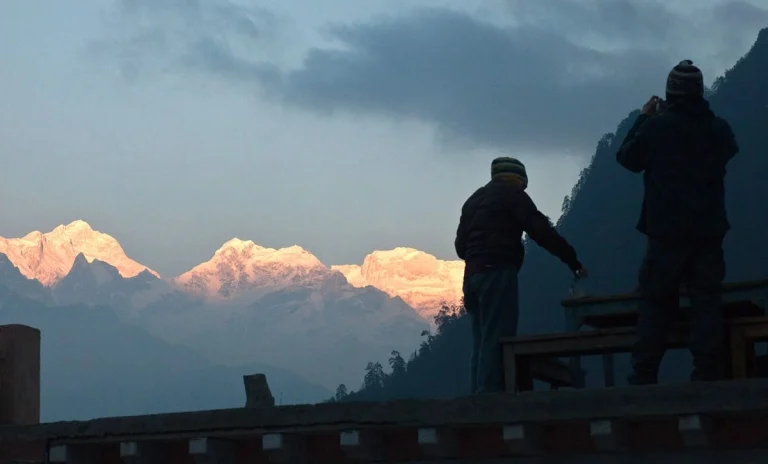
Born Among Giants: Early Life in the Shadow of Kanchenjunga
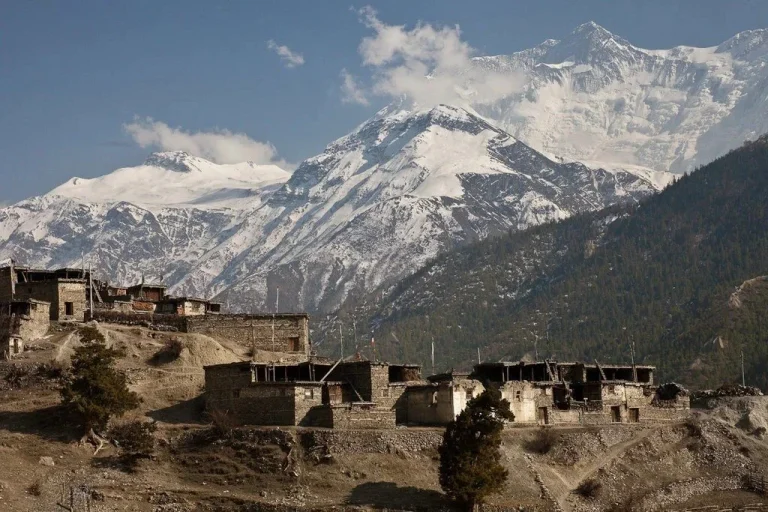
Life in the Himalayan highland can hardly be comfortable, and even less promising. To Mingma David Sherpa, childhood was marked by a background in which survival was often considered more important than schooling, and physical labor was the order of the day. The high altitudes, inhospitable climate, and socioeconomic demands of eastern Nepal shaped character and stamina long before mountaineering was even a dream.
Childhood in Remote Eastern Nepal
Mingma David Sherpa was born on May 16, 1989, in Nepal’s Sankhuwasabha district, near Mount Kanchenjunga. He grew up in an area with rugged hills, remote communities, limited roads, and unpredictable weather. Winters often bring temperatures below -20 °C, while monsoon rains trigger landslides and floods that further isolate mountain communities.
Economic hardship conditions daily life. Families depended on subsistence farming, yak herding, and seasonal trekking and tourism work. There was no certainty in food security and little access to healthcare, education, and basic services.
Political unrest and nationwide bandhs during the Maoist insurgency in Nepal often interrupted formal schooling when it was available. Schools would even close for months, and children were left at home or working in the fields.
Early Obligations and Corporeal Training
Since he was young, Mingma was engaged in physically demanding activities. The gathering of firewood, herding of yaks, terraced fields, and hauling of goods on narrow mountain paths were a part of their daily life. These exercises, tiring as they were, naturally built upper body strength, balance, and overall strength.
It became customary to walk for several hours each day at high altitudes. Heavy loads were carried along narrow, often unstable paths, and long days of labor in cold, oxygen-thin conditions gradually forced the body to adapt. Without any formal training, necessity itself became the teacher. Over time, this daily exertion developed exceptional cardiovascular endurance and muscular strength.
Entry into Trekking and Tourism Work
At just 18, driven by limited educational opportunities and economic necessity, Mingma was drawn into Nepal’s trekking industry. In 2007, he found work as a kitchen helper and porter on expeditions to Annapurna Base Camp. Carrying loads exceeding 40 kilograms over steep ascents and icy trails quickly became part of daily life.
These early journeys offered more than a paycheck. They introduced him to expedition logistics, mountain safety, and the technical world of alpine climbing. By observing veteran Sherpas manage ropes, cross glaciers, and read rapidly shifting weather patterns, an entirely new realm of possibility opened before him. What began as a means of survival gradually evolved into curiosity, ambition, and a vision for long-term goals.
Lessons from the Ice: Mentorship and Climbing Foundations
The acquisition of skills in Himalayan mountaineering typically does not involve academic avenues. Rather, learning takes place through mentoring, observation, and experience. The pillars of technical climbing competence were built on direct instruction and apprenticeship experience in expedition settings, as in the case of Mingma.
Expert Power of a Seasoned Everest climber
An influential figure in Mingma’s early life was his maternal uncle, an experienced mountaineer who had scaled Everest three times. He brought over the fundamentals of alpine practice; through informal mentorship, he taught handling the rope, positioning anchors, using crampons, arresting with the ice axe, traveling on glaciers, and rescuing at crevasses.
The training sessions took place in real settings, often during active expeditions. The team avoided controlled environments and rehearsed simulations. Instead, they trained in freezing winds, unstable ice, and extreme physical fatigue. Every lesson produced direct results, while the instructors instilled a strict commitment to precision and care.
Sherpa climbing culture also found its way through this mentorship – some form of ethical organization that practiced teamwork, humility, nature-respect, and responsibility for all. Such values would be the focus of Mingma’s leadership philosophy.
Apprenticeship on Everest Expeditions
Mingma was promoted to a kitchen assistant on Everest expeditions between 2008 and 2010. Long periods in high-altitude base camps exposed him to the operations of the expeditions. The normal daily routine consisted of preparing equipment, maintaining the oxygen system, weather checking, route evaluation, and emergency planning.
It led to the development of observational learning as one of the main learning techniques. Senior Sherpas also demonstrated route selection on glaciers, the placement of ropes in hazardous icefalls, and the execution of summit expeditions during narrow weather windows. These techniques were absorbed by Mingma over time, and he acquired the ability to make intuitive judgments about terrain and risk management.
Formative Loss and Renewed Purpose
The terrible event of losing his uncle in the 2014 avalanche at Khumbu Icefall significantly influenced the mindset of Mingma. The event highlighted the risks of working at high altitudes and clarified the need for enhanced safety requirements and leadership development among Sherpa climbers.
The event only strengthened people’s determination rather than motivating them to avoid it. It facilitated long-term investment in the professionalization of Sherpa leadership, further technical training, and improvements in expedition safety standards across the Nepalese climbing industry.
First Summits and Technical Mastery
The shift of expedition support to an elite mountaineer was a turning point in Mingma’s career. The technical expertise, situational awareness, and mental stability attained during early summit experiences were the qualities needed to survive in harsh alpine conditions.
First Everest Ascent at Age 21
Mingma climbed Mount Everest at the young age of 21 in 2010. The climb was the culmination of years of physical training, guidance, and logistical preparation. They were involved in rope mending throughout the Khumbu Icefall, moving fragile seracs, and arranging safe passage for expedition members.
These tasks required watchfulness. The Khumbu Icefall is changing every day: crevasses open unexpectedly, and ice towers fall without warning. Every crossing entailed real-time decisions, accurate maneuvering, and concentration.
Training in High-Altitude Judgment
The subsequent expeditions contributed to enhanced knowledge of altitude physiology, interpretation of weather, and route control. The pressure to make decisions became core to survival. Wind speed, oxygen absorption rate, snow stability, and temperature variation were issues that had to be considered simultaneously.
With repeated exposure, instinctive risk evaluation became perfected, leading to quick reactions in emergencies. Over time, these abilities enabled Mingma to become a climber and expedition leader, capable of handling complex operations in a dangerous environment.
The 2015 Nepal Earthquake and Psychological Resilience
Mingma also suffered the devastating Nepal earthquake in 2015 while climbing the Lhotse Face. Base camps were attacked by huge avalanches, hence massive casualties. The fact that they managed to survive when co-workers died heightened the realization of being vulnerable to high-altitude work.
The incident solidified strategic objectives: to enhance expedition safety measures, strengthen the effectiveness of rescue efforts, and advance leadership among Sherpas, who focus on preparation, communication, and emergency measures.
Conquering the Giants: Record-Breaking Mountaineering Feats
The years 2016-2021 saw a veritable rampage of success, which made Mingma one of the rarest in the history of the Himalayas. His achievements changed people around the world’s attitudes towards Sherpa mountaineering and leadership.
Youngest to Climb All 14 Eight-Thousanders
In 2019, Mingma became the youngest climber to complete the full circuit of the fourteen 8,000-meter peaks. All the mountains were characterized by different technical difficulties:
- Everest: Endurance and crowd control
- K2: Extreme technical climbing and unstable ground
- Kangchenjunga – Avalanche-prone routes
- Annapurna – High fatality risk and unpredictable snow
- Nanga Parbat – Exposed ridges and weather volatility
This chain had to be accomplished within a constrained time frame and required superhuman physical, logistical, and psychological strength.
Project Possible and Speed Climbing
Mingma has contributed to Nirmal Purja’s performance in Project Possible, which redefined high-altitude performance. The summiting of eight 8,000-meter peaks in just six months and six days shattered long-standing speed records in mountaineering history. The expedition required:
- Rapid acclimatization
- Helicopter-assisted transfers
- Commercial oxygen logistics
- Organized the Sherpas’ leadership
This project revealed that revamped logistics, high-level fitness, and tactical planning can transform Himalayan climbing.
Guinness World Record: Everest to K2 Traverse
Another Guinness-recognized achievement was the fastest combined ascent of Mount Everest and K2, a feat Mingma completed in 61 days and 55 minutes. Linking the world’s highest and second-highest mountains within a single climbing period demanded exceptional physical conditioning, precise logistics, and flawless operational execution.
K2 Dominance and Historic Winter Summit
K2, widely regarded as the most dangerous mountain on Earth, stands at the center of Mingma’s mountaineering legacy. He has successfully summited the peak six times, making him the record holder for the most K2 ascents by a Nepali climber.
A defining moment in mountaineering history came in January 2021, when an all-Nepali team achieved the first-ever winter ascent of K2. The expedition endured temperatures plunging below 60°C, hurricane-force winds, and extreme oxygen deprivation, overcoming decades of failed attempts by climbers from around the world.
High-Altitude Rescue Operations
Beyond his summit successes, Mingma has earned widespread recognition for his extensive high-altitude rescue work. Over multiple Everest seasons, he has helped evacuate dozens of injured climbers through complex helicopter missions, crevasse extractions, and emergency descents under extreme conditions.
These operations highlighted leadership under life-or-death pressure, where the preservation of human life took priority over summit ambitions. Such efforts significantly elevated global recognition of Sherpa-led rescue coordination and professionalism.
Elite Exped: Building Sherpa Leadership and Ethical Tourism
Mingma’s mountaineering success eventually evolved into entrepreneurial leadership. Through Elite Exped, he sought to reshape the traditional dynamics of Himalayan expeditions by empowering Sherpa climbers to make decisions, lead expeditions, and serve as primary guides.
Philosophy and Operations
Founded in 2020, Elite Exped places strong emphasis on safety, professionalism, and Sherpa leadership. The company organizes more than 50 expeditions annually, incorporating technical training, detailed expedition planning, and high-altitude rescue preparedness.
Through locally driven programs, over 200 Sherpas have received professional training, strengthening regional leadership capacity and reducing reliance on foreign expedition managers.
Environmental Conservation Initiatives
Elite Exped integrates environmental stewardship into its core operations. Large-scale cleanup campaigns have removed more than one ton of trash from Everest and surrounding peaks, addressing decades of accumulated waste that threaten fragile alpine ecosystems.
In addition, long-term monitoring of glacier melt and ice degradation contributes to broader climate advocacy, highlighting the accelerating impact of global warming on the Himalayan environment.